


Nausea and vomiting are extremely common symptoms, but they can mean very different things depending on when they occur, what other symptoms accompany them, and how long they last. A short episode may be related to indigestion, a stomach infection, motion sickness, anxiety or something you ate. On the other hand, persistent nausea or repeated vomiting can sometimes point to an underlying medical condition that needs evaluation.
Nausea is the uncomfortable feeling that you may vomit, while vomiting is the forceful emptying of stomach contents through the mouth. They can occur together or separately.
In most people, an occasional episode settles without serious complications. The main concern during prolonged vomiting is dehydration and loss of electrolytes. Persistent symptoms, severe pain, blood in vomit, neurological symptoms or chest pain require prompt medical attention.
What is nausea and vomiting?
Nausea is often described as feeling sick, queasy or unsettled in the stomach. You may feel as though you are about to throw up, even when vomiting never actually occurs.
Vomiting, also called emesis, happens when the muscles of the abdomen and digestive tract contract and force stomach contents back up through the oesophagus and out of the mouth.
The two symptoms are closely related but are not the same. You can have:
- Nausea without vomiting
- Vomiting without much warning nausea
- Nausea followed by vomiting
- Repeated episodes of both
The nervous system, digestive tract, inner ear and various chemical signals in the body can all contribute to nausea and vomiting.
What is the difference between nausea and vomiting?
Nausea is the sensation that you are going to vomit. It may feel like queasiness, an unsettled stomach or an urge to throw up.
Vomiting is the physical act of bringing stomach contents out through the mouth.
Therefore, nausea does not always lead to vomiting. For example, anxiety, migraine, pregnancy, motion sickness, lack of sleep or certain medicines can produce significant nausea without actually making a person vomit.
What causes nausea and vomiting?
There is no single cause of nausea and vomiting. These symptoms can originate from the digestive system, brain, inner ear, hormonal system, heart or other parts of the body.
Common digestive causes
Digestive problems are among the most frequent causes, including:
- Viral gastroenteritis or “stomach flu”
- Food poisoning
- Gastritis
- Acid reflux or GERD
- Peptic ulcers
- Gallbladder problems
- Appendicitis
- Pancreatitis
- Intestinal obstruction
- Gastroparesis
- Inflammatory bowel disease
Viral gastroenteritis and foodborne illness can cause nausea and vomiting along with diarrhoea, abdominal cramps and sometimes fever.
Infections
Viral and bacterial infections can trigger nausea. Gastroenteritis is a particularly common cause. Some infections outside the digestive tract may also cause nausea, especially when accompanied by fever, headache or general weakness.
Pregnancy
Nausea during early pregnancy is commonly called morning sickness, although it can occur at any time of day. In some pregnancies, vomiting becomes severe enough to cause dehydration and require medical treatment.
Medicines and medical treatments
Many medicines can cause nausea or vomiting as a side effect. Cancer chemotherapy, certain pain medicines and some medicines that affect digestion are examples. A newly started medicine should be considered if nausea appears soon after treatment begins.
Motion sickness and inner-ear problems
Travel by car, boat, plane or other moving vehicles can cause nausea when signals from the eyes and balance system do not agree. Vertigo and other vestibular disorders can also cause nausea and vomiting.
Migraine
Nausea can accompany a migraine, particularly when there is a severe headache or sensitivity to light and sound.
Anxiety and emotional stress
Anxiety can absolutely cause nausea. Stress activates the body’s nervous system and can affect digestion, appetite and stomach sensations. Some people experience nausea, stomach discomfort or even vomiting during periods of intense anxiety or stress.
Lack of sleep
Can lack of sleep cause nausea? Yes, it can contribute to nausea in some people. Sleep deprivation may affect appetite, digestion, stress responses and sensitivity to unpleasant sensations. However, persistent nausea should not automatically be blamed on poor sleep; another underlying cause may need to be considered.

What is the main cause of nausea?
There isn’t one universal main cause. In acute cases, common causes include viral gastroenteritis, foodborne illness, migraine, motion sickness, pregnancy and medication effects.
The most likely cause depends on the individual.
For example, nausea with diarrhoea and abdominal cramps may suggest gastroenteritis, while nausea with dizziness and a spinning sensation may point toward a vestibular problem. Nausea with a missed period may raise the possibility of pregnancy.
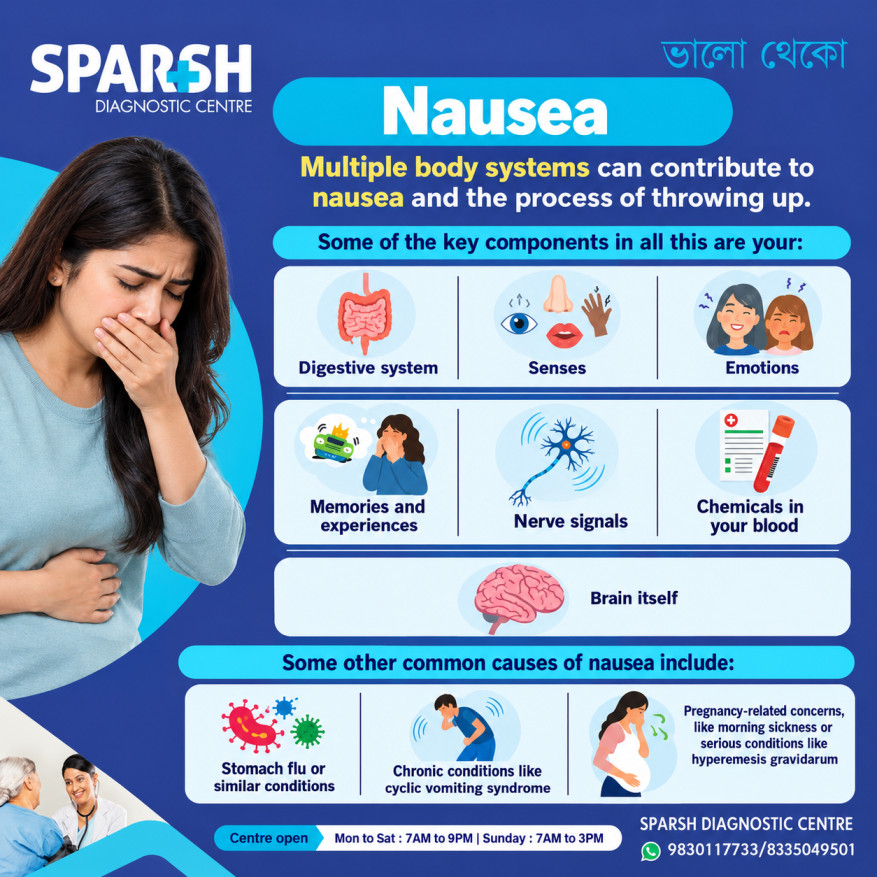
What can cause immediate nausea?
Sudden nausea can have many causes, including:
- Food poisoning or infection
- Motion sickness
- Strong smells
- Anxiety or panic
- Severe pain
- Migraine
- Medication effects
- Alcohol
- Low blood sugar
- Pregnancy
- Vertigo
- Certain toxic substances
Abrupt nausea can occasionally be associated with neurological, toxic or infectious conditions, so sudden severe symptoms accompanied by other warning signs should not be ignored.
What organ problems cause nausea?
Nausea can arise from problems affecting several organs and body systems.
Stomach and intestines: gastritis, ulcers, reflux, obstruction, gastroenteritis and gastroparesis.
Gallbladder: gallstones and inflammation of the gallbladder.
Pancreas: pancreatitis can cause significant nausea and vomiting, often accompanied by upper abdominal pain.
Liver: some liver disorders can cause nausea, particularly when accompanied by other symptoms such as jaundice.
Kidneys: kidney stones and some kidney-related conditions can cause nausea, particularly when significant pain is present.
Brain and nervous system: migraine, concussion, meningitis and other neurological disorders may cause nausea and vomiting.
Heart: nausea can sometimes accompany a heart attack, especially when it occurs with chest discomfort, sweating or shortness of breath.
Is nausea a serious problem?
Usually, nausea by itself is not a sign of a serious problem. It often resolves as the underlying trigger settles.
However, nausea can occasionally be an early symptom of a more significant condition. The severity, duration and accompanying symptoms matter more than nausea alone.
Nausea deserves medical assessment when it is persistent, repeatedly returns without an obvious explanation, causes significant difficulty eating or drinking, or occurs with symptoms such as severe abdominal pain, blood in vomit, dehydration, chest pain, severe headache or neurological changes.
Why nausea but no vomiting?
Nausea does not automatically lead to vomiting.
The brain can produce the sensation of nausea without activating the complete vomiting reflex. This can happen with:
- Anxiety
- Migraine
- Acid reflux
- Hunger
- Dehydration
- Sleep deprivation
- Pregnancy
- Motion sickness
- Certain medications
- Strong smells
- Digestive disorders
This is why someone can feel intensely nauseated but never actually vomit.
Can anxiety cause nausea?
Yes. Anxiety can cause genuine physical symptoms, including nausea.
When you are anxious, the body’s stress response can alter normal digestive activity and increase awareness of sensations in the stomach. Some people experience nausea before an important event, during periods of chronic stress or during episodes of intense anxiety.
However, recurring nausea should not automatically be attributed to anxiety. If symptoms persist or are accompanied by other concerning symptoms, medical evaluation is appropriate.
What helps with nausea and vomiting?
Treatment depends on the cause, but several simple measures can help many people.
Take small sips of fluid
Rather than drinking a large glass at once, take small, frequent sips. Water, clear fluids and oral rehydration solutions can be useful, particularly when vomiting has caused fluid loss.
Choose small meals
Large meals may worsen nausea. Try smaller portions and eat slowly.
Plain foods such as toast, rice, crackers, potatoes or other easily tolerated foods may be easier to manage.
Avoid greasy and spicy food
Fried, fatty, heavily spiced or strongly flavoured foods can make nausea worse in some people. Strong food smells can also trigger symptoms.
Get some fresh air
Fresh air and sitting quietly may help. Movement can make some forms of nausea worse, particularly motion-related nausea.
Ginger may help
Ginger-containing foods or drinks are commonly used to reduce nausea. Some people find ginger tea helpful, although the effectiveness can vary depending on the cause of nausea.
Treat the underlying cause
If nausea is caused by migraine, reflux, infection, medication, pregnancy or another medical condition, treating the underlying problem is often the most effective approach.
Doctors may prescribe anti-nausea medicines when appropriate. The choice depends on the cause and the person’s medical circumstances.
What drink is good for nausea?
There is no single drink that works for everyone.
Good options can include:
- Water in small, frequent sips
- Oral rehydration solution
- Clear broth
- Ginger tea
- Other clear fluids that you tolerate well
If you are vomiting repeatedly, an oral rehydration solution may be more useful than plain water because it provides both fluid and electrolytes.
Avoid alcohol. Very sugary, greasy or strongly flavoured drinks may also aggravate symptoms in some people.
Does coconut water help with nausea?
Coconut water can provide fluid and some electrolytes, so it may be a reasonable drink for someone who is mildly dehydrated and able to tolerate it. However, it is not a specific treatment for nausea and should not replace medical care or an oral rehydration solution when significant fluid and electrolyte replacement is needed.
If every drink triggers vomiting, take very small sips rather than drinking a large amount at once.
What relieves nausea quickly?
There is no guaranteed instant cure because the fastest effective treatment depends on the cause.
For mild nausea, some people get relief by:
- Sitting quietly.
- Taking small sips of a cold drink.
- Getting fresh air.
- Avoiding strong smells.
- Eating a small amount of bland food if hunger is contributing.
- Trying ginger or peppermint tea.
- Taking prescribed anti-nausea medicine when appropriate.
If nausea is caused by motion sickness, migraine, medication or another specific condition, treating that cause may provide better relief than general home remedies.
Can lying down relieve nausea?
Sometimes resting helps, but lying completely flat is not always the best position, particularly after eating.
If you have reflux or a tendency to vomit, lying flat may allow stomach contents to move upward and make symptoms worse.
Instead, try sitting upright or resting with your upper body elevated. MedlinePlus also recommends sitting up after eating rather than lying down.
Should I lay down when nauseous?
If you are very tired, you can rest, but it is generally preferable to keep your upper body elevated rather than lying completely flat.
If you feel that you may vomit, sitting upright or leaning forward can be more comfortable. If you are extremely drowsy or have been vomiting repeatedly, safety becomes more important because of the risk of choking.
How to sleep with nausea?
Nausea can make falling asleep difficult, especially when symptoms become more noticeable at night.
Try these steps:
- Keep your head and upper body slightly elevated.
- Avoid a large meal immediately before bed.
- Take small sips of water if needed.
- Keep the bedroom cool and well ventilated.
- Avoid strong smells.
- Try ginger or peppermint tea if you tolerate it.
- Practise slow, relaxed breathing if anxiety is contributing.
- Keep a container nearby if vomiting is possible.
If nausea repeatedly wakes you at night, occurs after meals or continues for several nights, it is worth discussing with a doctor rather than repeatedly treating the symptom at home.
Why is nausea so bad at night?
Night-time nausea can have several explanations.
Eating a heavy meal late in the evening may worsen reflux or indigestion. Lying down soon after eating can also make reflux symptoms more noticeable.
Anxiety may become more noticeable at night when there are fewer distractions. Migraine, pregnancy, medication effects and certain digestive conditions can also produce nausea at different times of day.
Therefore, severe night-time nausea should be assessed according to the wider pattern rather than assuming that the time of day identifies the cause.
How long does nausea usually last?
The duration depends entirely on the cause.
A brief episode caused by motion sickness, overeating or a temporary trigger may settle relatively quickly. Viral gastroenteritis may last several days. Acute nausea and vomiting are generally defined as lasting up to seven days, while symptoms lasting four weeks or longer are considered chronic in an adult clinical context.
For example, norovirus commonly causes nausea and vomiting for around one to three days, although the exact course varies.
How long is too long to feel nausea?
There is no single time limit that applies to everyone.
As a practical guide, nausea that does not improve within a few days, keeps returning, interferes with eating or drinking, or continues for weeks deserves medical evaluation.
Chronic nausea lasting four weeks or longer has a broad range of possible causes and generally requires a more structured medical evaluation.
Why won’t my nausea go away?
Persistent nausea may happen when the underlying cause has not resolved or has not yet been identified.
Possible explanations include:
- Ongoing gastritis or reflux
- Medication side effects
- Gastroparesis
- Migraine
- Pregnancy
- Anxiety
- Chronic infection or inflammation
- Gallbladder disease
- Metabolic problems
- Vestibular disorders
- Other gastrointestinal or neurological conditions
Gastroparesis, for example, slows stomach emptying and can cause nausea, vomiting, bloating and prolonged fullness after eating. Diabetes is the most common known cause.
Persistent nausea should therefore not simply be masked with repeated self-treatment without investigating the reason.
How long does vomiting usually last?
Vomiting from a short-lived infection or food-related illness may settle within a day or several days, depending on the cause.
However, persistent or repeated vomiting is not something to ignore. MedlinePlus recommends contacting a healthcare provider when an adult has been vomiting for longer than 24 hours, while other clinical guidance recommends evaluation when vomiting persists beyond two days or sooner if warning signs are present.
The inability to keep fluids down is particularly important because dehydration can develop quickly.
What diseases start with nausea?
Nausea may be one of the first symptoms of several conditions, including:
- Viral gastroenteritis
- Food poisoning
- Migraine
- Pregnancy
- Gastritis
- Gastroesophageal reflux disease
- Gallbladder disease
- Appendicitis
- Pancreatitis
- Gastroparesis
- Intestinal obstruction
- Vestibular disorders
- Some neurological conditions
- Certain metabolic disorders
Nausea alone usually cannot identify which disease is responsible. Doctors look at the complete symptom pattern, medical history and physical examination before deciding whether tests are necessary.
When should I worry about my nausea?
Seek urgent medical attention if nausea or vomiting occurs with:
- Chest pain or pressure
- Difficulty breathing
- Severe or worsening abdominal pain
- Blood in vomit
- Vomit that looks like coffee grounds
- Green vomit
- Severe headache, particularly a new or unusual headache
- Stiff neck and fever
- Confusion or fainting
- Severe dehydration
- Very little or no urine
- Suspected poisoning
- Significant neurological symptoms
Chest pain accompanied by nausea, particularly with shortness of breath or pain spreading to the arm, back, neck or jaw, can be a medical emergency.
You should also seek medical advice if nausea repeatedly returns, lasts for several days without improvement, or is associated with unexplained weight loss.
How is nausea and vomiting diagnosed?
There is no single test for nausea and vomiting.
A doctor may ask:
- When did the symptoms begin?
- Are they constant or intermittent?
- Are they related to eating?
- What does the vomit look like?
- Are there abdominal symptoms?
- Is there diarrhoea or fever?
- Are you experiencing headaches or dizziness?
- Could pregnancy be possible?
- Have you recently started a medicine?
- Have you travelled or eaten anything unusual?
- Are you experiencing significant stress or anxiety?
Depending on the suspected cause, testing may include blood tests, urine tests, pregnancy testing, imaging, gastrointestinal investigations or other specialised tests.
Can nausea go away on its own?
Yes. Many short-term causes of nausea resolve without specific treatment.
For example, nausea associated with a temporary stomach infection, motion sickness or another short-lived trigger may settle as the underlying problem improves.
The important point is to monitor hydration and watch for warning signs. Nausea that persists, keeps recurring or becomes progressively worse should not simply be ignored.
Frequently asked questions about nausea and vomiting
Is nausea a serious problem?
Usually, no. Nausea is a common symptom and often resolves on its own. Persistent nausea, severe vomiting, dehydration, severe pain, blood in vomit, chest pain or neurological symptoms require medical assessment.
What helps with nausea and vomiting?
Small frequent sips of fluid, rest, fresh air, small bland meals and avoiding greasy foods and strong smells can help. Treatment should ultimately address the underlying cause.
Why nausea but no vomiting?
Nausea can occur without activating the vomiting reflex. Anxiety, migraine, reflux, pregnancy, motion sickness, hunger, dehydration and medications can all cause nausea without vomiting.
What drink is good for nausea?
Water, oral rehydration solution, clear broth and ginger tea are options that many people tolerate. Take small sips rather than large amounts at once.
Can lying down relieve nausea?
Resting may help, but lying completely flat can worsen reflux. Keeping the upper body elevated is often more comfortable.
Should I lay down when nauseous?
You can rest, but sitting upright or keeping your upper body elevated is generally preferable, especially after eating or when reflux is possible.
Can anxiety cause nausea?
Yes. Anxiety and significant stress can cause genuine physical symptoms, including nausea and sometimes vomiting. Persistent symptoms should still be evaluated rather than automatically attributed to anxiety.
Can lack of sleep cause nausea?
Poor sleep can contribute to nausea in some people, but ongoing nausea should not automatically be attributed to sleep deprivation.
Does coconut water help with nausea?
Coconut water can provide fluids and electrolytes, but it is not a specific treatment for nausea. Oral rehydration solution may be preferable when there is significant fluid loss.
How long does nausea usually last?
It depends on the cause. Short-lived nausea may settle quickly, while infections can last several days. Nausea lasting several days without improvement or recurring frequently should be assessed by a healthcare professional.
How long is too long to feel nausea?
There is no universal cut-off. Nausea that lasts several days, repeatedly returns or persists for weeks warrants medical evaluation.
Why won’t my nausea go away?
Persistent nausea can be caused by ongoing digestive problems, medication effects, migraine, pregnancy, anxiety, gastroparesis, gallbladder disease, neurological conditions and other disorders. Finding the cause is important.
What relieves nausea quickly?
Small sips of fluid, fresh air, avoiding strong smells, sitting quietly, ginger and treating the underlying cause may help. Prescription anti-nausea medicines may be appropriate in some circumstances.
How long does vomiting usually last?
The duration depends on the cause. Short-term infections may cause vomiting for a day or several days. Vomiting that continues beyond 24 hours, prevents adequate fluid intake or is accompanied by warning signs should receive medical attention.
What diseases start with nausea?
Gastroenteritis, food poisoning, migraine, pregnancy, gastritis, reflux, gallbladder disease, gastroparesis and several other conditions can begin with nausea. The symptom alone cannot determine the diagnosis.
What can cause immediate nausea?
Motion, strong smells, anxiety, migraine, medication, alcohol, infection, food poisoning, severe pain and other sudden triggers can cause rapid-onset nausea.
Final thoughts
Nausea and vomiting are symptoms rather than diseases. In many cases, they are temporary and improve with rest, hydration and simple dietary changes. But persistent or severe symptoms deserve attention because nausea can sometimes be the first sign of a digestive, neurological, metabolic, hormonal or cardiovascular problem.
Pay particular attention to how long the symptoms have lasted, whether you can keep fluids down, and whether other symptoms are present. Blood in vomit, severe abdominal pain, chest pain, breathing difficulty, confusion, severe headache, stiff neck or significant dehydration are reasons to seek urgent medical care.
If nausea keeps coming back or does not improve, identifying the underlying cause is more useful than repeatedly trying to suppress the symptom.
Medical disclaimer: This article is intended for general health information and does not replace an examination, diagnosis or treatment plan from a qualified healthcare professional.


[…] Mild nausea […]
[…] Nausea and Vomiting: Nausea, with or without vomiting, is a common symptom of the condition. Vomiting may sometimes be accompanied by blood or a substance that looks like coffee grounds, indicating bleeding in the stomach. […]
[…] 6. Nausea and Vomiting […]
[…] Nausea and vomiting […]
[…] Nausea and vomiting […]
[…] pain, vomiting, […]
[…] Vomiting […]
[…] Nausea and vomiting […]
[…] due to vomiting, diarrhea, or inadequate fluid […]
[…] Nausea and vomiting […]
[…] vomiting or […]
[…] Severe nausea and vomiting […]
[…] Vomiting or diarrhea preventing oral medication intake […]
[…] Nausea […]
[…] Nausea or vomiting […]
[…] Nausea […]
[…] Nausea, vomiting, fruity breath odor, rapid breathing, […]
[…] 5. Vomiting or Nausea […]
[…] Nausea and vomiting […]
[…] Nausea and vomiting […]
[…] Nausea or Vomiting – Often due to bile duct obstruction. […]
[…] colon. It leads to frequent, loose, and often bloody stools, usually accompanied by abdominal pain, nausea, and […]
[…] manifestations include headache, nausea, confusion and in severe cases, seizures or coma. The severity of symptoms depends on how quickly […]
[…] Nausea or vomiting […]
[…] 7. Nausea and Vomiting […]
[…] issues: constipation, diarrhea, nausea, […]
[…] Nausea and Vomiting: Severe sodium deficiency may lead to gastrointestinal symptoms. […]
[…] your body loses more fluid than it takes in—due to excessive sweating, diarrhea, vomiting, or not drinking enough water—you can become dehydrated. Dehydration can cause a drop in blood […]
[…] include nausea, vomiting, confusion, and fruity-smelling […]
[…] Nausea or vomiting […]
[…] Nausea or Vomiting – Common in more intense infections, leading to dehydration. […]
[…] Nausea and vomiting – Common digestive symptoms. […]
[…] Nausea and vomiting […]
[…] Nausea and vomiting […]
[…] Nausea, vomiting, and bloating […]
[…] Nausea or vomiting […]
[…] Digestive issues (constipation, bloating, nausea) […]
[…] Nausea and vomiting […]
[…] symptoms of heart attacks in women often differ — they may experience fatigue, nausea, or back pain instead of classic chest pain, leading to […]
[…] Nausea […]
[…] possible symptoms include blurred vision, nausea, brain fog, anxiety, temperature sensitivity, and difficulty […]
[…] Nausea or vomiting […]
[…] 2. Nausea and Vomiting […]
[…] Headaches, nausea, or vomiting. […]
[…] Nausea, vomiting, or diarrhea […]
[…] Nausea and vomiting […]
[…] Nausea and Vomiting. […]
[…] Nausea and vomiting […]
[…] Nausea or vomiting […]
[…] polio: Some individuals may experience flu-like symptoms such as fever, fatigue, headache, vomiting, stiffness in the neck, and pain in the limbs. These symptoms usually resolve within a few days to […]
[…] Nausea and vomiting […]
[…] Nausea and vomiting […]
[…] Nausea and vomiting […]
[…] Persistent vomiting […]
[…] Nausea and vomiting […]
[…] Nausea and vomiting […]
[…] Nausea and vomiting […]
[…] Nausea and Vomiting – From toxin buildup in the blood. […]
[…] will monitor you for side effects like cramps, nausea, or fatigue. Notify them of any […]
[…] the body to release massive amounts of water into the intestines, leading to watery diarrhea, vomiting, and severe […]
[…] Nausea […]
[…] deposits in the gastrointestinal tract may cause nausea, diarrhea, constipation, or […]
[…] Nausea […]
[…] Nausea or vomiting, which may indicate a strangulated hernia, a medical emergency. […]
[…] Nausea and Vomiting […]
[…] Nausea and vomiting, commonly known as morning sickness, affect many pregnant women, particularly in the early weeks. […]
[…] Nausea […]
[…] Nausea […]
[…] Nausea, bloating, or stomach pain […]
[…] Nausea and vomiting […]
[…] Nausea and vomiting […]
[…] Sweating or nausea […]
[…] 3. Nausea and Vomiting […]
[…] Nausea or vomiting […]
[…] Nausea and vomiting […]
[…] often mimic those of a normal early pregnancy, such as missed periods, breast tenderness, and nausea. However, as the pregnancy progresses, more specific and severe symptoms may develop, […]
[…] symptoms: Nausea, vomiting, bloating, fever, bleeding, and changes in bowel […]
[…] joint (TMJ) dysfunction. The constant state of muscle contraction can also lead to fatigue and a general sense of physical […]
[…] Nausea– May occur due to pain or fever. […]
[…] Vomiting – Gastrointestinal disturbances in moderate to severe cases […]
[…] a woman experiences early pregnancy symptoms such as nausea, breast tenderness, or fatigue, these symptoms may decrease or disappear shortly after the positive […]
[…] Nausea and vomiting […]
[…] issues – Bloating, nausea, constipation, or […]
[…] Abdominal pain or nausea […]
[…] Pancreatitis: Inflammation of the pancreas, or pancreatitis, can occur, causing symptoms like abdominal pain, nausea, and vomiting. […]
[…] NauseaMany individuals experience gastrointestinal discomfort during an attack, which may include nausea or stomach cramping. […]
[…] issues like nausea or […]
[…] include fatigue, muscle weakness, nausea, and salt […]
[…] Persistent Vomiting or Severe Nausea […]
[…] issues (e.g., nausea, […]
[…] Nausea: Some people may experience nausea as part of their allergic reaction. […]
[…] Nausea and Vomiting: Feeling nauseous and vomiting after consuming the allergen. […]
[…] Nausea and vomiting […]
[…] Nausea […]
[…] Nausea and vomiting […]
[…] Nausea and appetite loss (in advanced kidney disease) […]
[…] Conditions like celiac disease, Crohn’s disease, and peptic ulcers can interfere with nutrient absorption, causing weight loss. Accompanying symptoms include abdominal pain, bloating, diarrhea, or nausea. […]
[…] and vomiting – Gastrointestinal loss is one of the most common […]
[…] Nausea and vomiting […]
[…] Diarrhea and vomiting […]
[…] Loss of appetite and nausea […]
[…] Nausea and Vomiting: Gastrointestinal viruses may cause nausea, vomiting, diarrhea, and abdominal pain. […]
[…] virus that causes gastroenteritis, commonly known as the stomach flu. It leads to symptoms such as vomiting, diarrhea, stomach cramps, and fever. The virus spreads easily in crowded places like schools, […]
[…] highly contagious virus that primarily affects infants and young children, causing severe diarrhea, vomiting, fever, and dehydration. It is one of the leading causes of hospitalization due to diarrhea-related […]
[…] Vomiting or diarrhea […]
[…] Severe nausea and vomiting (more than three to four times per day) […]
[…] of kidney failure, such as nausea, loss of appetite, and itchy […]
[…] Nausea or vomiting […]
[…] Nausea, Vomiting, or […]
[…] Nausea and Vomiting: Persistent nausea, sometimes accompanied by vomiting. […]
[…] Upper abdominal pain, nausea, vomiting, bloating, and […]
[…] Nausea and Vomiting: Often leading to dehydration if fluids are not replenished. […]
[…] fever, headache, confusion, altered consciousness, seizures, sensitivity to light, stiff neck, and nausea or vomiting. In severe cases, patients may experience paralysis, coma, or even death if […]
[…] Nausea and vomiting (in severe cases). […]
[…] Loss of appetite and nausea […]
[…] more severe cases, symptoms may include nausea, vomiting, and pain in the lower back or sides. If the infection spreads to the kidneys, additional symptoms […]
[…] Diarrhea or vomiting […]
[…] Nausea and Vomiting: Digestive symptoms may accompany the infection, particularly in severe cases. […]
[…] Nausea and Vomiting: Accompanied by intense pain. […]
[…] dehydration: From vomiting, diarrhea, or excessive fluid […]
[…] Nausea and vomiting […]
[…] when the stomach takes too long to empty its contents, often resulting in symptoms like bloating, nausea, vomiting, and abdominal pain. Gastroparesis can be particularly troublesome for people with diabetes, as it […]
[…] Nausea and vomiting […]
[…] 8) Nausea and Vomiting […]
[…] in some people. Common side effects include fishy aftertaste, digestive discomfort, and mild nausea. For those who experience fishy burps, refrigerating fish oil capsules or trying enteric-coated […]
[…] blood flow away from the digestive system and slowing down digestive processes. This can result in nausea, bloating, constipation, or […]
[…] Sickness: Morning sickness, characterized by nausea and vomiting, is common during the first trimester of pregnancy. It can make it difficult for women to eat […]
[…] Nausea and vomiting […]
[…] symptoms: In some cases, especially in children, the flu can cause nausea, vomiting, and […]
[…] pain: Hypercalcemia can lead to digestive issues such as nausea, vomiting, and […]
[…] Nausea and Vomiting: As the inflammation worsens, some people experience nausea and vomiting due to the disruption of normal digestive processes. […]
[…] Symptoms: These include nausea, vomiting, constipation, and abdominal […]
[…] Nausea and vomiting […]
[…] Nausea and vomiting […]
[…] body, they affect the digestive system, leading to a variety of symptoms, most commonly diarrhea, vomiting, and abdominal […]
[…] whether due to excessive sweating, vomiting, diarrhea, or other factors, can temporarily cause polydipsia as the body attempts to replenish […]
[…] Symptoms: These symptoms include diarrhea, vomiting, nausea, stomach pain, and sometimes fever. These are more common in infants and young […]
[…] its name, morning sickness can occur at any time of the day and is typically characterized by nausea and vomiting. Although it is usually harmless, it can be uncomfortable and, in some cases, debilitating. For […]
[…] condition characterized by intense, debilitating pain, often accompanied by other symptoms such as nausea, vomiting, and sensitivity to light and sound. For many, migraines can significantly impact their quality of […]
[…] Nausea […]
[…] Nausea and Morning […]
[…] During the early stages of pregnancy, many women experience morning sickness, nausea, and aversions to certain foods, which can temporarily reduce their desire to […]
[…] Nausea […]
[…] Nausea, Vomiting, and Diarrhea: Gastrointestinal symptoms such as nausea, vomiting, and diarrhea can occur. […]
[…] which affects gastrointestinal function. This imbalance can result in symptoms like diarrhea, nausea, and abdominal […]
[…] of the appendix, typically causing severe pain in the lower right abdomen, often accompanied by nausea, vomiting, and […]
[…] Nausea or vomiting (may occur after the first symptoms) […]