


Stomach flu is a common term for viral gastroenteritis, an infection that affects the digestive system and can cause sudden nausea, vomiting, diarrhoea, stomach cramps and sometimes fever. Despite its name, stomach flu is not influenza. Influenza affects the respiratory system, while viral gastroenteritis primarily affects the intestines.
For many otherwise healthy adults, stomach flu is short-lived and gets better without specific medical treatment. The biggest concern, particularly when vomiting and diarrhoea are frequent, is dehydration and loss of electrolytes.
Norovirus is one of the most common causes of acute viral gastroenteritis. Other viruses, including rotavirus, adenovirus and astrovirus, can also cause it.
This guide explains how stomach flu begins, what the symptoms feel like, how long it lasts, what you can eat and drink, how it is diagnosed, how to distinguish it from food poisoning or COVID-19, and when you should see a doctor.
What is stomach flu?
Stomach flu, medically known as viral gastroenteritis, is inflammation and infection involving the digestive tract. Viruses can spread through contaminated food or water, contaminated surfaces, or close contact with an infected person. Tiny particles from an infected person’s vomit or stool can spread the infection.
The term “stomach flu” can be misleading because influenza viruses do not cause it. In fact, the infection primarily involves the intestines rather than being a form of respiratory flu.
Common causes include:
- Norovirus
- Rotavirus
- Adenovirus
- Astrovirus
Gastroenteritis itself can also be caused by bacteria, parasites, chemicals and certain medicines. Therefore, not every episode of vomiting and diarrhoea is necessarily viral gastroenteritis.
How does stomach flu begin?
Stomach flu often begins quite suddenly. A person may feel relatively normal and then develop nausea, stomach cramps, vomiting or diarrhoea within a short period.
With norovirus, symptoms commonly develop about 12 to 48 hours after exposure.
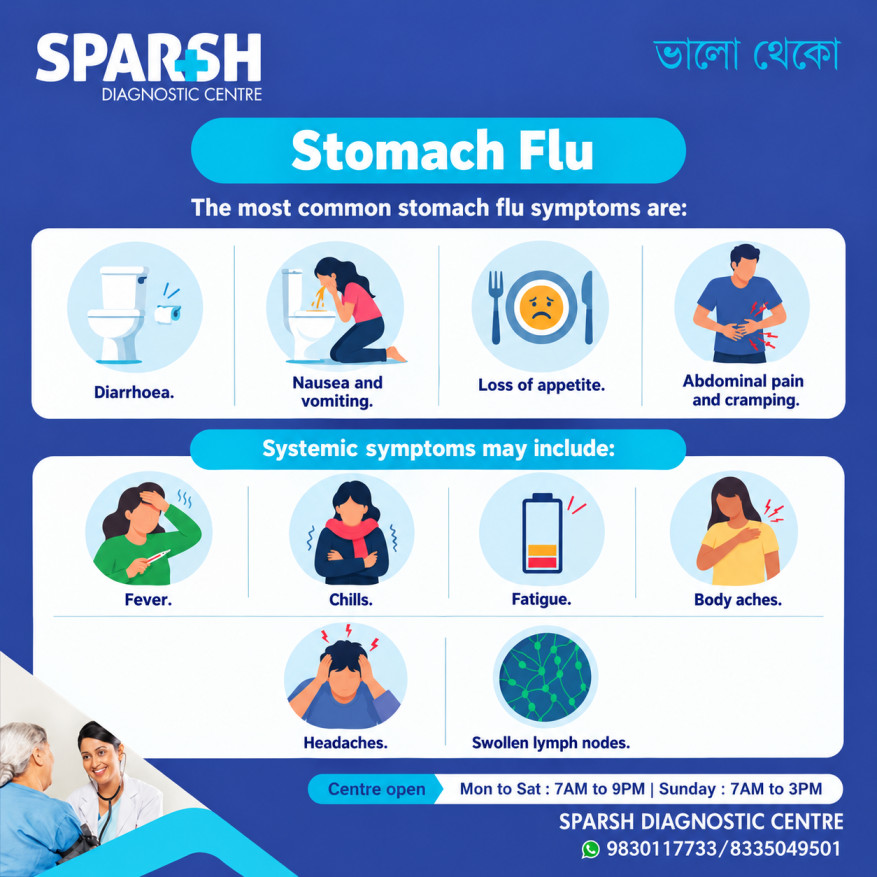
You may initially notice:
- A sudden feeling of nausea
- Stomach discomfort or cramping
- Loss of appetite
- Vomiting
- Loose or watery stools
- Weakness or fatigue
Some people also develop fever, chills, headache or body aches.
The severity can vary considerably. One person may experience mostly diarrhoea, while another may have repeated vomiting and significant dehydration.
What are the symptoms of stomach flu in adults?
The most common stomach flu symptoms in adults are:
Digestive symptoms
Other symptoms
- Low-grade fever
- Chills
- Fatigue
- Headache
- Body aches
- General weakness
These symptoms occur because the infection triggers inflammation and an immune response in the digestive system.
Not everyone experiences all of these symptoms. In adults, vomiting and diarrhoea may be particularly prominent.
What’s the worst symptom of stomach flu?
There is no single “worst” symptom for everyone. However, dehydration can be the most concerning complication because repeated vomiting and diarrhoea can cause substantial loss of water and electrolytes.
Watch for:
- Very dark urine
- Passing urine much less frequently
- Excessive thirst
- Dry mouth
- Dizziness or light-headedness
- Severe weakness
- Difficulty keeping fluids down
Severe dehydration may require medical treatment and intravenous fluids.
What are the stages of stomach flu?
Although stomach flu does not follow exactly the same pattern in every person, it can be understood in four broad stages:
1. Exposure: You come into contact with the virus through an infected person, contaminated food, water or surfaces.
2. Incubation: The virus multiplies in the body before noticeable symptoms develop.
3. Acute infection: Symptoms such as vomiting, diarrhea, cramps and nausea appear, often quite suddenly.
4. Recovery: Symptoms gradually settle as the immune system clears the infection. You may feel weak for a little longer, and some viruses can continue to be shed after symptoms improve.
Understanding these stages is useful because feeling better does not necessarily mean that you immediately stop being contagious.
How long does stomach flu last?
For many people, stomach flu lasts only a few days.
Norovirus illness commonly improves within 1 to 3 days, although symptoms from viral gastroenteritis can sometimes persist longer depending on the virus, the person’s age and their overall health.
So, if you are asking, “How long will gastric flu last?”, the answer is usually a few days, but there is no single duration that applies to everyone.
A person with a weakened immune system, an older adult, an infant or someone who becomes significantly dehydrated may take longer to recover.
If vomiting or diarrhoea continues beyond a few days, is getting worse rather than better, or is accompanied by blood, severe pain or significant dehydration, medical evaluation is important.
How do you treat stomach flu?
There is usually no specific medicine that eliminates the virus responsible for viral gastroenteritis. Treatment focuses primarily on supportive care and preventing dehydration.
1. Replace fluids and electrolytes
This is the most important part of treatment.
Take frequent small sips of:
- Water
- Oral rehydration solution (ORS)
- Clear broths
- Other suitable fluids
If vomiting makes drinking difficult, try taking small amounts frequently rather than drinking a large glass at once.
ORS is particularly useful when there has been substantial fluid loss because it provides both fluid and electrolytes.
2. Rest
Your body needs energy to recover. Get adequate sleep and avoid strenuous exercise until vomiting, diarrhoea and weakness have settled.
3. Eat when you feel able
You do not need to starve yourself. Once your appetite starts returning, you can generally begin eating again. NIDDK notes that a highly restricted diet or fasting does not treat viral gastroenteritis.
4. Medicines may sometimes help
Some adults may use medicines such as loperamide or bismuth subsalicylate for diarrhoea in appropriate circumstances. However, these medicines are not suitable for everyone. If you have fever or bloody diarrhoea, you should seek medical advice rather than simply suppressing the diarrhoea.
Doctors may also prescribe medication to control severe vomiting when necessary.
Do antibiotics treat stomach flu?
No. Antibiotics treat certain bacterial infections, not viral infections. They should not be taken routinely for suspected viral gastroenteritis.
How do you treat stomach flu at home?
For a mild case in an otherwise healthy adult, home care generally involves:
- Drink fluids frequently.
- Use ORS when there is significant fluid loss.
- Take small sips if vomiting is frequent.
- Rest adequately.
- Eat when your appetite returns.
- Avoid foods or drinks that make your symptoms worse.
- Wash your hands thoroughly with soap and water.
- Avoid preparing food for other people while you are sick.
The objective isn’t to “flush” the virus out. It is to support your body while your immune system clears the infection and prevent dehydration.
What are some home remedies for a stomach infection?
Some simple measures can make you more comfortable:
- ORS for fluid and electrolyte replacement
- Water in small, frequent amounts
- Clear soups or broths
- Rest
- Simple meals once your appetite returns
- Avoiding alcohol and excessive caffeine
- Maintaining good hand hygiene
Ginger or other traditional remedies may help some people with nausea, but they should not replace rehydration or medical care.
There is also no scientifically established home remedy that instantly kills the virus.
What kills stomach viruses naturally?
Your immune system is primarily responsible for clearing most viral gastroenteritis infections. There is no proven food, drink, herb or home remedy that reliably “kills” a stomach virus inside your body.
For norovirus, there is currently no specific antiviral treatment routinely used to cure the infection. Supportive care, particularly rehydration, remains the main approach.
Claims that particular drinks, detoxes or supplements can flush out or kill stomach viruses should therefore be treated cautiously.
How do you flush a stomach virus?
You don’t need to—and cannot reliably—flush a stomach virus out of your body by drinking excessive amounts of water, taking laxatives or using detox products.
The sensible approach is to replace what you lose through vomiting and diarrhoea.
Drink enough fluids to maintain hydration, preferably including ORS when appropriate. Taking huge quantities of fluid at once can actually trigger more vomiting.
What’s the best drink for a stomach virus?
For someone with vomiting or diarrhoea, an oral rehydration solution (ORS) is often one of the most useful choices because it replaces both fluid and electrolytes.
Other options can include:
- Water
- Broth or soup
- Certain non-caffeinated fluids
NIDDK notes that adults may use water, fruit juices, sports drinks and broths to replace lost fluids, while people with severe diarrhoea or dehydration may benefit from oral rehydration solutions.
If you cannot keep fluids down or have signs of severe dehydration, don’t continue trying to manage the situation only at home—seek medical attention.
What foods help stomach flu?
There is no mandatory “stomach flu diet.”
When your appetite returns, you can usually gradually return to your normal diet.
Initially, many people find relatively simple foods easier to tolerate, such as:
- Rice
- Khichdi
- Toast
- Bananas
- Potatoes
- Oatmeal
- Plain crackers
- Light soups
- Soft-cooked vegetables
The key is tolerance rather than following a rigid food list.
If a particular food worsens nausea, cramping or diarrhoea, leave it for later and try again once you are feeling better.
What should I avoid if I have stomach flu?
Some foods and drinks can make diarrhoea or stomach discomfort worse. These may include:
- Alcohol
- Excessive caffeine
- Fried or very fatty foods
- Very sugary drinks
- Large quantities of fruit juice
- Foods containing lactose if they worsen symptoms
Temporary lactose intolerance can occur after gastroenteritis and may persist for some people for several weeks.
You also don’t need to fast unless a healthcare professional specifically advises it.
How do I reset my gut after stomach flu?
Your digestive system usually recovers naturally after the infection settles. You do not generally need a special “gut detox.”
A practical recovery plan is:
First: Continue replacing fluids and electrolytes.
Next: Gradually return to your normal diet as your appetite improves.
Then: Include a varied diet containing fruits, vegetables, whole grains and other nutritious foods as tolerated.
If you continue experiencing bloating, diarrhoea, abdominal pain or food intolerance after the infection has resolved, discuss these symptoms with a doctor.
Probiotics are sometimes considered, but evidence regarding their routine use for viral gastroenteritis is still developing, so they should not be viewed as essential for everyone.
Is stomach flu contagious?
Yes. Viral gastroenteritis can be highly contagious.
Norovirus, for example, spreads easily through tiny particles of vomit or stool, contaminated food, contaminated surfaces and close contact with an infected person.
To reduce transmission:
- Wash your hands thoroughly with soap and water.
- Clean contaminated bathroom and household surfaces.
- Avoid preparing food for other people while sick.
- Wash contaminated clothing and bedding properly.
- Stay home while symptomatic.
- Avoid preparing food for others for at least 48 hours after symptoms stop.
Norovirus can remain detectable in stool for longer after recovery, although the greatest risk of transmission is generally during illness and shortly afterward.
How can I tell if I have food poisoning or a stomach bug?
This can be difficult because food poisoning and viral gastroenteritis can cause very similar symptoms.
| Feature | Stomach bug / viral gastroenteritis | Food poisoning |
|---|---|---|
| Main cause | Viruses | Bacteria, viruses, parasites or toxins |
| Common symptoms | Vomiting, diarrhoea, cramps, nausea | Vomiting, diarrhea, cramps, nausea |
| Spread | Often person-to-person or contaminated food/water | Usually contaminated food or water |
| Onset | Often after an incubation period | Can begin within hours or several days depending on the organism |
| Duration | Often a few days | Ranges from hours to several days or longer |
| Fever | Sometimes | Sometimes |
The timing can provide clues but does not prove the cause. For example, some foodborne illnesses can begin within hours, while others take several days. Norovirus commonly begins 12–48 hours after exposure.
If several people who ate the same meal become sick around the same time, foodborne illness may be a consideration. However, diagnosis may require medical assessment and, in selected situations, laboratory testing.
What is mistaken for stomach flu?
Several conditions can look like stomach flu, including:
- Food poisoning
- Bacterial gastroenteritis
- Parasitic infections
- COVID-19
- Medication side effects
- Food intolerance
- Irritable bowel syndrome
- Inflammatory bowel disease
- Appendicitis
- Gallbladder disease
- Pancreatitis
Severe or persistent abdominal pain should not automatically be attributed to stomach flu.
Bloody diarrhoea, black stools, persistent high fever, significant dehydration or severe abdominal pain can indicate a condition requiring medical assessment.
What is the difference between stomach flu and COVID?
COVID-19 is primarily a respiratory infection, but it can also cause gastrointestinal symptoms, including nausea, vomiting and diarrhoea.
Stomach flu, on the other hand, usually presents predominantly with digestive symptoms such as:
- Diarrhea
- Vomiting
- Nausea
- Abdominal cramps
COVID-19 may additionally cause symptoms such as cough, sore throat, congestion, shortness of breath, fever, fatigue or headache.
However, symptoms overlap, so you cannot always distinguish the two based solely on how you feel. If COVID-19 is a possibility because of your exposure or accompanying respiratory symptoms, appropriate testing may help.
How to confirm stomach flu?
There isn’t always a specific test needed for a typical mild case.
A doctor can often diagnose viral gastroenteritis from:
- Your symptoms
- How suddenly they began
- Duration of illness
- Recent food and travel history
- Contact with someone who was sick
- Physical examination
- Signs of dehydration
Stool testing may be considered when symptoms are severe, prolonged, unusual, associated with an outbreak, or when a bacterial or parasitic infection needs to be excluded.
How to confirm if you have stomach flu?
If symptoms are mild and improving within a few days, laboratory confirmation is often unnecessary.
If symptoms are persistent or severe, a doctor may recommend investigations such as stool testing to identify infectious causes. Norovirus testing, when required, can detect viral genetic material or viral antigen.
The important point is that vomiting and diarrhea alone do not prove that the illness is viral.
When should you see a doctor?
Most healthy adults recover without complications, but medical attention is important if you develop warning signs.
See a healthcare professional if you have:
- Severe or worsening abdominal pain
- Blood in the stool
- Black, tarry stools
- Blood in vomit
- Persistent or frequent vomiting
- Diarrhoea lasting more than two days in an adult
- High fever
- Significant dehydration
- Very little or no urine
- Severe dizziness or weakness
- Inability to keep fluids down
People who are pregnant, older adults, infants and young children, and people with weakened immune systems may be more vulnerable to complications and should seek medical advice sooner when symptoms are concerning.
How can stomach flu be prevented?
Because viruses such as norovirus can spread very easily, prevention is important.
Wash your hands thoroughly with soap and water, particularly after using the bathroom and before preparing or eating food. Clean contaminated surfaces and wash potentially contaminated clothing and bedding appropriately.
Hand sanitiser should not be considered a substitute for proper handwashing when norovirus is a concern; CDC specifically recommends soap-and-water handwashing because hand sanitiser alone does not work well against norovirus.
Avoid preparing food for other people while you are sick and for at least 48 hours after your symptoms stop.
Frequently asked questions about stomach flu
How to treat stomach flu?
The main treatment is supportive care: replace fluids and electrolytes, rest, eat as tolerated and manage symptoms appropriately. Antibiotics do not treat viral gastroenteritis.
What are the symptoms of the stomach flu in adults?
Typical symptoms include watery diarrhoea, nausea, vomiting, abdominal cramps, abdominal pain and loss of appetite. Fever, chills, fatigue, headache and body aches can also occur.
How long does a stomach flu last?
Many cases improve within a few days. Norovirus commonly lasts about one to three days, although other viral infections can last longer.
What kills stomach viruses naturally?
There is no proven natural substance that reliably kills a stomach virus inside the body. The immune system generally clears the infection while supportive care helps prevent dehydration.
What foods help stomach flu?
Once your appetite returns, you can generally resume your usual diet. Simple foods such as rice, khichdi, toast, bananas, potatoes and light soups may be easier to tolerate initially. A strict fasting or restricted diet is generally unnecessary.
What is mistaken for stomach flu?
Food poisoning, bacterial or parasitic gastroenteritis, COVID-19, medication side effects and several abdominal conditions can produce similar symptoms.
How to confirm stomach flu?
A doctor may diagnose it based on symptoms and medical history. Stool testing may be used when the illness is severe, prolonged or when another infection needs to be identified.
What are some home remedies for a stomach infection?
ORS, frequent small amounts of fluid, rest and gradual return to food can help manage a mild illness. There is no reliable home remedy that instantly cures viral gastroenteritis.
What is the difference between stomach flu and COVID?
Stomach flu primarily causes gastrointestinal symptoms, while COVID-19 can cause respiratory symptoms as well as nausea, vomiting and diarrhoea. Testing may be necessary when the symptoms overlap.
What are the stages of stomach flu?
The general stages are exposure, incubation, acute infection and recovery.
How can I tell if I have food poisoning or a stomach bug?
The symptoms overlap considerably. The timing of symptoms, exposure to sick people, recent meals and whether others who ate the same food became ill can provide clues, but they cannot always establish the cause.
Is stomach flu contagious?
Yes. Viral gastroenteritis, especially norovirus, can spread very easily through contaminated hands, food, surfaces, vomit and stool.
How do you flush a stomach virus?
You don’t need to flush it out. Replace fluids and electrolytes lost through vomiting and diarrhoea while allowing your immune system to clear the infection.
What’s the worst symptom of stomach flu?
Repeated vomiting and diarrhoea can be particularly problematic because they can cause dehydration. Severe dehydration requires prompt medical attention.
What’s the best drink for stomach virus?
ORS is particularly useful for replacing both fluids and electrolytes. Water, broth and other appropriate fluids can also help.
What should I avoid if I have stomach flu?
Avoid alcohol, excessive caffeine, very fatty foods and highly sugary drinks if they worsen your symptoms. Some people temporarily have difficulty digesting lactose after gastroenteritis.
How do I reset my gut after stomach flu?
You generally don’t need a special detox. Rehydrate, gradually return to a balanced diet and give your digestive system time to recover. Persistent symptoms should be discussed with a healthcare professional.
How long will gastric flu last?
“Gastric flu” is another informal term for stomach flu. Most uncomplicated viral cases improve within several days, although duration varies according to the virus and the individual.
How do you treat stomach flu at home?
Rest, drink fluids frequently, use ORS when appropriate, eat as tolerated and avoid foods or drinks that worsen symptoms. Seek medical care if warning signs develop.
How does stomach flu begin?
It often begins suddenly, with nausea, vomiting, diarrhoea or abdominal cramps. With norovirus, symptoms commonly begin 12–48 hours after exposure.
Final thoughts
Stomach flu is uncomfortable, but most healthy adults recover within a few days. The most important part of managing it is preventing dehydration, not trying to find a way to “flush” or instantly kill the virus.
Drink fluids and electrolytes, rest, eat when you are able, and take sensible precautions to avoid spreading the infection. At the same time, don’t assume every episode of vomiting and diarrhoea is stomach flu. Food poisoning, bacterial infections, COVID-19 and other medical conditions can cause similar symptoms.
If symptoms are severe, persistent or accompanied by blood in the stool or vomit, severe abdominal pain, high fever, inability to keep fluids down or signs of dehydration, seek medical attention promptly.
Medical note: This article is intended for general health education and does not replace diagnosis or treatment from a qualified healthcare professional.
For accurate diagnosis, stool testing, and medical support, visit Sparsh Diagnostic Centre. Our expert team ensures timely care and effective treatment for all gastrointestinal conditions.
Stay healthy. Stay hydrated. And remember — prevention begins with hygiene!
👉 Visit Sparsh Diagnostic Centre to learn more.
#BhaloTheko
Disclaimer:
No content on this site, regardless of date, should ever be used as a substitute for direct medical advice from your doctor or other qualified clinician.
Sources and further reading
- Mayo Clinic – Viral gastroenteritis (stomach flu)
- Cleveland Clinic – Stomach flu
- NIDDK – Treatment of viral gastroenteritis
- MedlinePlus – Gastroenteritis
- CDC – About norovirus


