

Breathing is something we rarely think about until it becomes difficult. Persistent coughing, breathlessness, wheezing or unexplained fatigue can sometimes indicate an underlying respiratory problem. While these symptoms may have several causes, evaluating how well your lungs are working is an important step towards understanding your respiratory health.
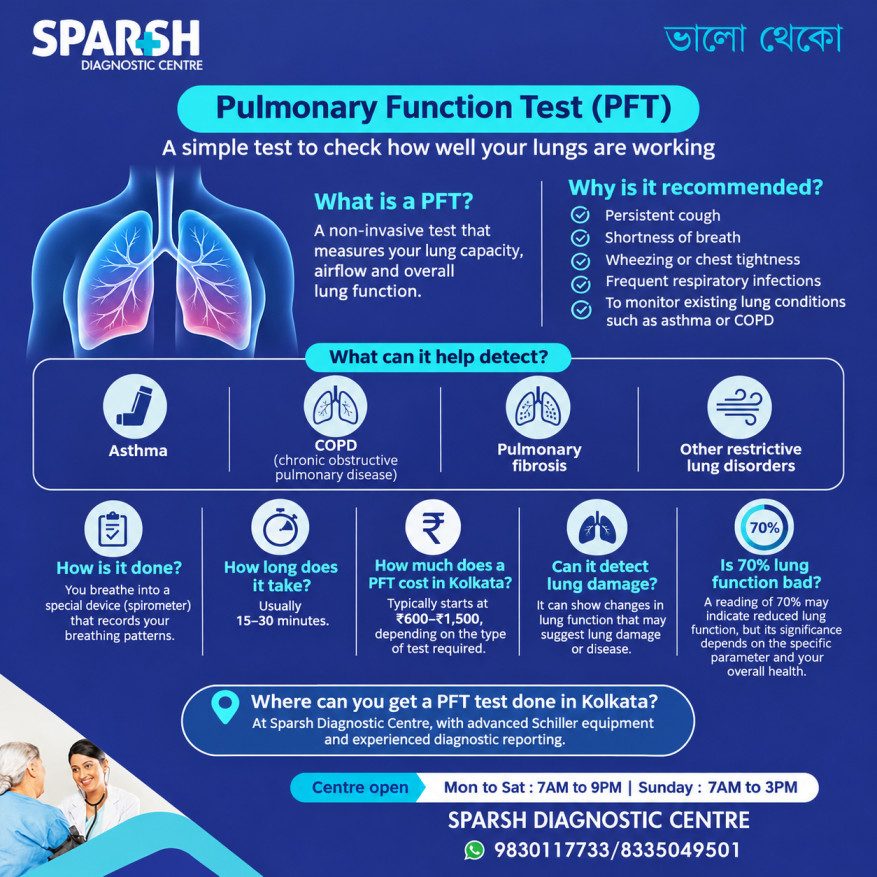
A Pulmonary Function Test (PFT), also known as a lung function test, helps doctors assess how efficiently your lungs work. It measures lung capacity, airflow and other important parameters that provide valuable information about your respiratory health.
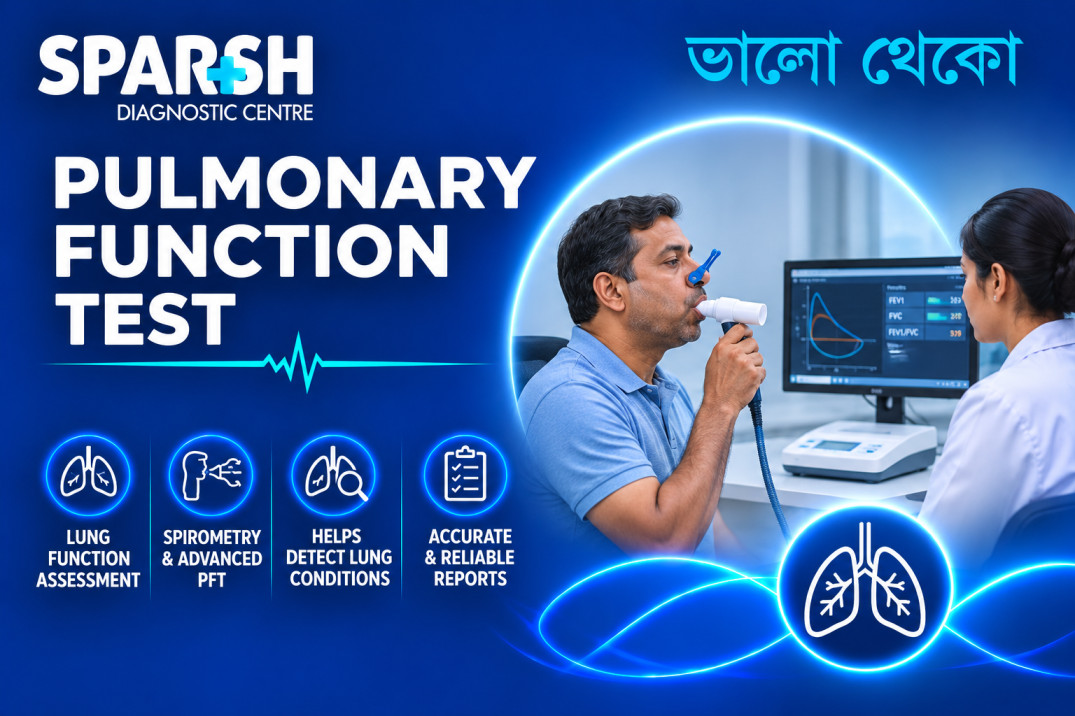
If you are looking for a Pulmonary Function Test in Kolkata, Sparsh Diagnostic Centre offers PFT facilities using advanced Schiller equipment and experienced diagnostic reporting to help assess lung function.
What is a Pulmonary Function Test (PFT)?
A Pulmonary Function Test is a group of non-invasive diagnostic tests that evaluate how effectively your lungs function. These tests measure how much air you can inhale and exhale, how quickly you can breathe out and, depending on the type of test, how efficiently oxygen passes from your lungs into your bloodstream.
One of the most commonly performed PFT procedures is spirometry. During this test, you breathe into a device called a spirometer, which records different aspects of your breathing.
PFT helps doctors identify patterns associated with respiratory conditions such as asthma, Chronic Obstructive Pulmonary Disease (COPD) and other lung disorders. It is also useful for monitoring existing respiratory conditions and assessing how well a patient responds to treatment.
Why might your doctor recommend a PFT?
Your doctor may recommend a Pulmonary Function Test if you experience symptoms that suggest your lungs are not functioning normally.
Some common reasons for undergoing a PFT include:
- Persistent cough that does not improve.
- Shortness of breath during everyday activities.
- Wheezing or noisy breathing.
- Chest tightness or discomfort associated with breathing.
- Frequent respiratory infections.
- Breathlessness during physical exertion.
- Monitoring an existing lung condition.
- Assessing lung function before certain surgical procedures.
- Evaluating the effects of prolonged exposure to dust, smoke or workplace pollutants.
Even if your symptoms appear mild, a PFT can provide useful information that helps your doctor decide whether further investigation or treatment is necessary.
What conditions can a PFT help detect?
A Pulmonary Function Test provides important information about lung function and can help doctors investigate several respiratory conditions.
These include:
1. Asthma: Asthma causes inflammation and narrowing of the airways, making breathing difficult. Spirometry can identify airflow obstruction and help assess improvement following bronchodilator medication.
2. Chronic Obstructive Pulmonary Disease (COPD): COPD is a progressive lung condition that makes it difficult to breathe. PFT helps assess airflow limitation and monitor the progression of the disease.
3. Pulmonary fibrosis: This condition causes scarring of lung tissue, making it harder for the lungs to expand and transfer oxygen efficiently. Lung volume and diffusion capacity measurements can help identify a restrictive pattern.
4. Chronic bronchitis: Persistent inflammation of the bronchial tubes can affect airflow. PFT helps evaluate the extent of airflow limitation.
5. Other restrictive lung disorders: Certain conditions restrict the lungs’ ability to expand fully. Lung volume measurements can help doctors investigate these abnormalities.
It is important to understand that a PFT does not independently confirm every lung disease. Your doctor may recommend additional investigations, such as chest X-rays, CT scans or blood tests, depending on your symptoms and test findings.
What does a PFT measure?
Depending on the type of pulmonary function assessment prescribed, several parameters may be measured.
- Forced Vital Capacity (FVC): The total amount of air you can forcefully exhale after taking a deep breath.
- Forced Expiratory Volume in One Second (FEV1): The amount of air you can forcefully breathe out during the first second.
- FEV1/FVC ratio: The proportion of your total forced exhaled air that comes out during the first second. It helps identify airflow obstruction.
- Peak Expiratory Flow Rate (PEFR): The maximum speed at which you can breathe out.
- Lung volumes: These measurements help determine how much air your lungs can hold.
- Diffusion capacity: This assesses how efficiently gases move from the lungs into the bloodstream.
These measurements help doctors understand whether a patient has an obstructive or restrictive pattern of lung function.
How is a Pulmonary Function Test performed?
A PFT is generally straightforward and does not involve needles or surgical procedures.
For a routine spirometry test, the procedure usually involves the following steps:
- You will be asked to sit comfortably.
- A nose clip may be placed to prevent air from escaping through your nose.
- You will be instructed to take a deep breath and place your lips firmly around a mouthpiece connected to the spirometer.
- You will then be asked to breathe out as forcefully and completely as possible.
- The procedure may be repeated several times to obtain consistent readings.
- In some cases, the doctor may recommend repeating the test after administering a bronchodilator to assess whether airflow improves.
The procedure is generally painless. However, repeated forceful breathing may occasionally cause temporary dizziness or fatigue.
The duration depends on the type of PFT being performed and whether additional measurements are required.
How should you prepare for a PFT?
Proper preparation helps ensure reliable test results.
Before undergoing a Pulmonary Function Test, keep the following points in mind:
- Wear comfortable clothing that does not restrict your chest or abdomen.
- Avoid heavy meals immediately before the test.
- Avoid smoking before the procedure.
- Avoid strenuous physical activity immediately before testing.
- Inform the testing staff about any respiratory symptoms, recent illness or existing medical conditions.
- Carry your doctor’s prescription and previous respiratory investigation reports, if available.
If you use inhalers or other respiratory medication, ask your doctor or the diagnostic centre whether any medication needs to be withheld before the test. Never discontinue prescribed medication without medical advice.
How much does a PFT cost in Kolkata?
The PFT test cost in Kolkata can vary depending on the diagnostic centre, the equipment used and the type of pulmonary function assessment required.
Basic spirometry and comprehensive pulmonary function assessments may have different prices.
Based on publicly available Kolkata diagnostic centre listings, basic PFT prices generally start at approximately ₹600–₹700, while many centres charge around ₹800–₹1,500 or more.
At Sparsh Diagnostic Centre, you can contact our team to confirm the current PFT test price, availability and appointment details.
It is always advisable to check whether the quoted price covers basic spirometry or a more comprehensive pulmonary function assessment.
Can PFT detect lung damage?
A PFT can identify abnormalities in lung function that may indicate underlying lung damage or respiratory disease.
For example, reduced airflow may suggest an obstructive condition such as COPD, while reduced lung volumes may indicate a restrictive lung disorder.
Changes in diffusion capacity may also suggest problems affecting the transfer of oxygen from the lungs into the bloodstream.
However, a PFT does not directly show physical damage or scarring in lung tissue. Imaging investigations such as chest X-rays or CT scans may be needed to identify structural abnormalities.
Your doctor will interpret the PFT findings alongside your medical history, symptoms and other investigation results.
Is 70% lung function bad?
A lung function reading of 70% does not automatically mean that your lungs are severely damaged. Its significance depends on which parameter is being measured.
For instance, if your FEV1 is 70% of the predicted value, it may indicate reduced lung function. However, the interpretation depends on your age, height, sex, reference values and the overall pattern of your PFT results.
A reading of 70% for FEV1 is not the same as an FEV1/FVC ratio of 70%.
Doctors also consider the lower limit of normal and other statistical measures when interpreting pulmonary function results.
Therefore, a single percentage should never be used to diagnose a lung condition or determine its severity without consulting a qualified medical professional.
Where can I get a PFT test done in Kolkata?
If you are looking for a reliable centre for a Pulmonary Function Test in Kolkata, Sparsh Diagnostic Centre offers pulmonary function testing with advanced Schiller equipment.
Our Department of Pulmonology focuses on evaluating respiratory health through appropriate diagnostic investigations and experienced reporting.
Visit Sparsh Diagnostic Centre:
- Address: 231/1, Netaji Subhas Chandra Bose Road, Naktala, Bansdroni, Kolkata, West Bengal – 700047.
- Landline: +91 33 2481 0346 / +91 33 2481 0337.
- Mobile: +91 98301 17733 / +91 83350 49501.
- Email: info@sparshdiagnostica.com.
- Timings: Monday to Saturday, 7 AM–9 PM; Sunday, 7 AM–3 PM.
For appointment details and test-related queries, contact our team before visiting.
Why choose Sparsh Diagnostic Centre for PFT in Kolkata?
When it comes to respiratory investigations, the quality of the equipment and the reliability of diagnostic reporting are important considerations.
At Sparsh Diagnostic Centre, we focus on providing dependable diagnostic services through appropriate technology and experienced professionals.
Some of the key features of our pulmonary function testing facility include:
- Advanced Schiller equipment: Modern pulmonary function testing equipment for assessing important lung function parameters.
- Experienced diagnostic reporting: Test findings are evaluated through experienced diagnostic professionals.
- Patient-focused approach: We aim to make diagnostic procedures comfortable and straightforward.
- Convenient location: Our centre is located at Naktala, Bansdroni, Kolkata, making it accessible to patients from surrounding areas.
Our objective is to help patients and their treating doctors obtain meaningful diagnostic information to support appropriate healthcare decisions.
Take a step towards better respiratory health
Breathing difficulties should never be ignored, particularly when symptoms persist or gradually become worse. Early evaluation can help identify abnormalities in lung function and allow doctors to recommend appropriate investigations and treatment.
If your doctor has recommended a Pulmonary Function Test, visit Sparsh Diagnostic Centre for a reliable assessment of your lung function.
Book your PFT test in Kolkata at Sparsh Diagnostic Centre.
#BhaloTheko