


Have you ever wondered why you have your mother’s eye colour, your father’s hairline, or a family history of diabetes or heart disease? The answer lies partly in genetics. Genetics is the study of genes, heredity and the ways biological information is passed from parents to children. It helps explain why family members share certain characteristics, why some diseases run in families and why people can respond differently to the same medicines or environmental conditions.
Understanding genetics is important not only for learning about your family history but also for making informed healthcare decisions. Genetic information can help doctors assess the risk of certain inherited conditions, recommend appropriate screening and determine whether genetic testing or counselling may be useful.
At Sparsh Diagnostic Centre, understanding the relationship between genetics and health can help individuals and families appreciate the importance of preventive healthcare and informed medical guidance.
What is genetics?
Genetics is the branch of biology that studies genes, DNA, heredity and variation among living organisms. It explains how biological characteristics are transmitted between generations and how differences in genetic information can influence physical traits, development and health.
Your genes contain instructions that help your body grow, develop and function. They influence characteristics such as eye colour, hair texture and aspects of height. They also play a role in how your body processes nutrients, responds to infections and metabolises certain medicines.
However, genes do not determine every aspect of your health. Diet, physical activity, sleep, environmental exposures, age and other factors can influence how genetic tendencies affect you.
For example, someone with a family history of high blood pressure may have a greater predisposition to developing the condition. Nevertheless, regular exercise, a balanced diet, limiting excess salt and following medical advice can help manage several risk factors.
This is why genetics is best understood as one part of the bigger picture of health.
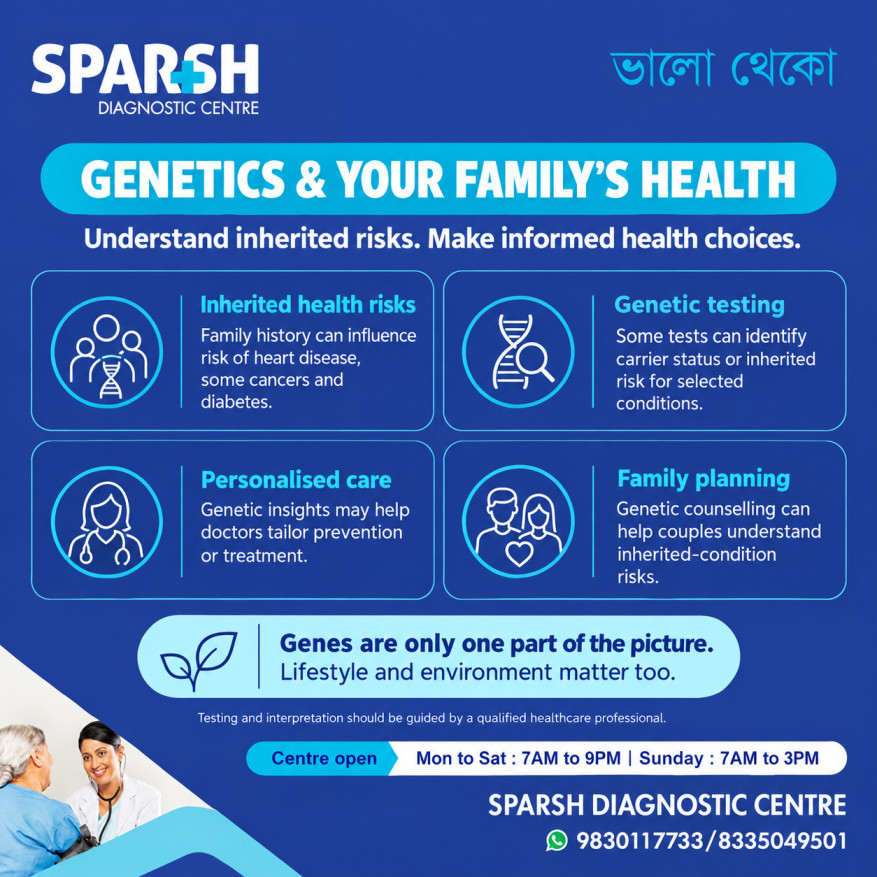
Understanding DNA, genes and chromosomes
To understand genetics, it helps to know how DNA, genes and chromosomes are connected.
- DNA: Deoxyribonucleic acid (DNA) is the molecule that stores the biological instructions needed for the development and functioning of an organism.
- Genes: Genes are specific sections of DNA that provide instructions for producing functional products, including proteins and certain RNA molecules.
- Chromosomes: Chromosomes are organised structures made of DNA and proteins. They package genetic material inside cells and contain many genes.
Most human cells contain 46 chromosomes arranged in 23 pairs. One chromosome in each pair generally comes from the biological mother and the other from the biological father. The 23rd pair consists of sex chromosomes, which commonly include XX or XY combinations, although variations also occur.
Each parent contributes approximately half of a child’s nuclear DNA. The child receives a unique combination of genetic material, which is why siblings can resemble one another without being genetically identical.
Genes can exist in different versions, known as variants. Some variants contribute to normal differences between people, while others can increase the risk of disease or directly cause a genetic condition.
Importantly, not every genetic variation is harmful. Many have no significant effect on health.
What are genetic disorders?
Genetic disorders are conditions caused by changes in genes, chromosomes or other parts of genetic material. These changes may affect how cells function, how organs develop or how the body produces essential proteins.
Some genetic disorders are present from birth, while others may become apparent during childhood or adulthood. Certain conditions are inherited from a parent, whereas others arise from new genetic changes that occur during the formation of an egg or sperm or during early development.
Genetic disorders are generally classified into three broad categories.
1. Single-gene disorders
These conditions result primarily from a disease-causing variant in a particular gene. Depending on the condition, one altered copy of a gene or two altered copies may be required for the disorder to develop.
Examples include sickle cell disease, cystic fibrosis, Huntington’s disease and thalassaemia.
2. Chromosomal disorders
These disorders occur when chromosomes have an unusual number or structure. A person may have an extra chromosome, a missing chromosome or a section of genetic material that has been deleted, duplicated or rearranged.
Down syndrome, for example, is most commonly associated with an extra copy of chromosome 21. Turner syndrome typically involves the complete or partial absence of one X chromosome in some or all cells.
3. Multifactorial disorders
These conditions arise through the combined influence of multiple genetic variants and non-genetic factors. They do not usually follow a simple inheritance pattern.
Examples include many cases of type 2 diabetes, coronary artery disease, high blood pressure and certain cancers.
Having a genetic predisposition does not necessarily mean that a person will develop a disease. The degree of risk depends on the condition, the specific genetic variants involved and other influences.
Are genetics inherited from your mother or father?
You inherit genetic material from both biological parents. For most of your nuclear genome, you receive one copy of each chromosome from your mother and one from your father.
These genetic contributions influence a wide range of characteristics, including physical appearance, metabolism and susceptibility to certain diseases.
Some genetic conditions follow specific inheritance patterns:
- Autosomal dominant inheritance: One disease-causing copy of a gene can be sufficient to cause the condition.
- Autosomal recessive inheritance: A person generally needs disease-causing variants in both copies of a gene to develop the condition.
- X-linked inheritance: The responsible gene is located on the X chromosome. The effects can differ depending on a person’s sex chromosomes and the particular condition.
- Mitochondrial inheritance: Certain genetic conditions involving mitochondrial DNA are passed down through the mother.
For an autosomal recessive condition, two parents who each carry one disease-causing variant may have a 25% chance of having an affected child in each pregnancy, assuming the same inheritance pattern applies. The actual risks for other conditions can differ substantially.
Which parent passes down the most genes?
Neither parent generally passes down more nuclear genes than the other. A child receives approximately 50% of their nuclear genetic material from each biological parent.
There are some important exceptions and distinctions. Mitochondrial DNA is usually inherited from the mother. Sex chromosomes also follow specific inheritance patterns: a biological father typically passes an X chromosome to daughters and a Y chromosome to sons, while a biological mother contributes an X chromosome in the usual XX/XY inheritance pattern.
These differences do not mean that one parent contributes more of the child’s overall nuclear genome.
What causes genetic changes?
Genetic changes, also called genetic variants, can arise in several ways. Some are inherited, while others develop spontaneously or after exposure to particular environmental factors.
Common causes and mechanisms include:
1. Inherited genetic variants: A parent may pass a disease-causing variant to a child through an egg or sperm cell.
2. Random errors during DNA replication: When cells divide, DNA must be copied. Occasionally, mistakes occur during this process, producing new genetic variants.
3. Errors during cell division: Chromosomes may fail to separate correctly when reproductive cells form. This can result in an egg or sperm containing an extra or missing chromosome.
4. Environmental exposures: Ultraviolet radiation, tobacco smoke and certain chemicals can damage DNA. Some types of DNA damage can contribute to acquired genetic changes, including those involved in cancer.
5. New or de novo variants: A genetic change may occur for the first time in an individual, even when neither parent carries the same variant in their blood or other tested tissues.
Not all genetic changes cause problems. Some are harmless, and others may have uncertain effects. A variant’s significance depends on its location, function and the available scientific evidence.
It is also important to distinguish between inherited variants and acquired changes. For example, genetic alterations found in cancer cells often develop during a person’s lifetime and are not necessarily inherited or passed on to their children.
What are examples of genetic diseases?
Genetic conditions vary widely in their causes, symptoms and inheritance patterns. Some affect blood cells, some influence metabolism, and others affect development or the nervous system.
Examples include:
| Genetic condition | Main genetic association |
|---|---|
| Sickle cell disease | Disease-causing variants in the HBB gene |
| Thalassaemia | Variants affecting haemoglobin production |
| Cystic fibrosis | Variants in the CFTR gene |
| Huntington’s disease | A specific repeat expansion in the HTT gene |
| Down syndrome | Usually an extra copy of chromosome 21 |
| Turner syndrome | Complete or partial absence of one X chromosome |
| Duchenne muscular dystrophy | Variants in the DMD gene |
| Haemophilia A | Usually variants in the F8 gene |
| Phenylketonuria (PKU) | Usually variants in the PAH gene |
| Tay-Sachs disease | Usually variants in the HEXA gene |
The symptoms and severity of these conditions can vary. Even people with the same genetic condition may experience different clinical outcomes.
Some diseases, including many cancers and cardiovascular conditions, have both genetic and non-genetic influences. A family history can indicate an increased risk without proving that the disease will develop.
What is chromosome 19?
Chromosome 19 is one of the 22 pairs of numbered chromosomes, also called autosomes, in humans. Most people have two copies, with one inherited from each biological parent.
Chromosome 19 contains a large number of genes involved in different biological processes. These genes contribute to functions such as metabolism, immune responses, cellular activity and other aspects of normal development and health.
Changes affecting chromosome 19 can be associated with particular medical conditions. These may include deletions, duplications or rearrangements of genetic material. The effects depend on which region of the chromosome is affected and which genes are involved.
For example, a deletion affecting a region of chromosome 19 can remove several genes and may be associated with developmental delays, intellectual disability or other medical features.
Chromosome 19 abnormalities are not all inherited. Some arise spontaneously during reproductive cell formation or early development. Other changes affecting chromosome 19 may occur in certain cells during a person’s lifetime, including cancer cells.
A chromosome-related finding must therefore be interpreted in the context of the specific genetic change and the individual’s clinical history.
What is chromosome C?
There is no human chromosome officially named simply “chromosome C” in the standard modern chromosome numbering system.
The term may refer to different things depending on the context. In older cytogenetic classification systems, human chromosomes were divided into groups labelled A through G according to characteristics such as size and centromere position. Group C included chromosomes 6 through 12 and the X chromosome.
Therefore, chromosome C should not be confused with chromosome 13, chromosome 19 or a separate chromosome that everyone carries.
If the term appears on a laboratory report or medical document, it is best to ask the reporting laboratory or healthcare professional what the specific notation means. Accurate interpretation depends on the exact wording and context.
What is the 13th chromosome?
Chromosome 13 is one of the 23 pairs of human chromosomes. Most people have two copies, one inherited from each biological parent. It contains hundreds of genes that contribute to normal growth, development and cellular functions.
One important condition associated with chromosome 13 is trisomy 13, also known as Patau syndrome.
Trisomy 13 occurs when a person has an extra copy of chromosome 13 or extra chromosome 13 material. The most common form involves three copies of the chromosome in the cells, although mosaic and translocation forms also occur.
Patau syndrome can cause serious developmental abnormalities and may affect the brain, heart, eyes and other organs. The features and severity depend partly on the type of chromosomal abnormality.
Other changes involving chromosome 13, such as a deletion or duplication of a segment, can produce different clinical effects. Some chromosome 13 changes have also been identified in certain cancers.
The presence of a chromosome abnormality does not automatically establish a diagnosis based on a symptom alone. Appropriate clinical assessment and, where indicated, chromosome analysis or other genetic testing are needed.
Which diseases are 100% genetic?
The phrase “100% genetic” can be misleading because genetic conditions differ in how directly DNA changes cause disease and how much other factors influence their symptoms.
Some single-gene disorders are directly caused by a disease-causing genetic variant. Examples include Huntington’s disease, sickle cell disease and cystic fibrosis. However, their inheritance patterns and the likelihood of developing symptoms are not identical.
For example, Huntington’s disease is an autosomal dominant condition. A person who inherits the relevant disease-causing HTT variant generally develops the disorder, although the age at onset and clinical course can vary.
Sickle cell disease and cystic fibrosis usually require disease-causing variants in both copies of the relevant gene. Carrying one variant does not ordinarily mean that a person has the full condition.
Chromosomal disorders, such as Down syndrome and Patau syndrome, are also caused by chromosomal abnormalities, although their effects vary among individuals.
By contrast, many common illnesses are not determined by genes alone. Type 2 diabetes, hypertension, heart disease and most cancers involve varying combinations of genetic susceptibility, environmental exposures, lifestyle and other biological factors.
A genetic contribution may be substantial without making a disease inevitable. Genetic counselling can help families understand the implications of a particular diagnosis and the chances of passing a condition to future generations.
How does genetic testing help?
Genetic testing analyses DNA, chromosomes or related biological material to look for particular genetic changes. Depending on the clinical question, testing may help identify a genetic condition, establish carrier status or assess an inherited risk.
Common applications include:
- Diagnostic testing: Investigating symptoms that may be caused by a genetic disorder.
- Carrier testing: Determining whether someone carries a variant associated with a recessive or certain other inherited conditions.
- Prenatal testing: Assessing selected genetic or chromosomal conditions during pregnancy.
- Newborn screening: Identifying certain conditions early so that appropriate treatment or monitoring can begin.
- Predictive or presymptomatic testing: Assessing the risk of developing a particular condition in selected circumstances.
- Pharmacogenetic testing: Examining genetic differences that may influence how a person responds to particular medicines.
Not everyone needs genetic testing. The appropriate test depends on personal medical history, family history, symptoms and the clinical purpose of the investigation.
A negative result does not always rule out a genetic condition, because no single test detects every possible variant. Similarly, a positive result does not necessarily predict exactly how severe a condition will be.
Genetic counselling before and after selected tests can help people understand the benefits, limitations and possible implications for relatives.
Why is family health history important?
Your family health history provides useful information about conditions that may occur more frequently among biological relatives. It can help healthcare professionals recognise patterns that suggest an inherited disorder or an increased risk of common diseases.
When collecting family health information, consider noting:
- Major medical conditions affecting parents, siblings and children.
- Health conditions among grandparents, aunts, uncles and other close relatives.
- The age at which a condition was diagnosed.
- Any history of inherited blood disorders, unusual cancers or unexplained early deaths.
- Known genetic test results or diagnoses within the family.
A pattern of disease among several relatives, particularly when it develops at unusually young ages, may justify further assessment. However, a family history is not a diagnosis, and the absence of affected relatives does not eliminate every genetic risk.
Sharing relevant family information with a doctor can help determine whether additional screening, laboratory investigations, genetic testing or specialist referral is appropriate.
Can genetic diseases be prevented?
Not all genetic diseases can be prevented. Some genetic variants are inherited, while others arise spontaneously. Nevertheless, understanding genetic risks can support early diagnosis, informed family planning and appropriate medical management.
Depending on the condition, useful steps may include:
- Discussing significant family medical history with a healthcare professional.
- Seeking genetic counselling when there is a known inherited condition in the family.
- Considering carrier screening when clinically appropriate, particularly when planning a pregnancy.
- Following recommended prenatal screening and diagnostic pathways.
- Arranging suitable screening or monitoring for conditions associated with an increased inherited risk.
- Maintaining a healthy lifestyle to reduce modifiable risk factors for multifactorial diseases.
For couples with a known risk of passing on a genetic condition, a genetic counsellor or relevant specialist can explain reproductive options and the limitations of available tests.
It is important to avoid assuming that genetic risk reflects personal fault or that every inherited condition can be prevented through lifestyle changes. The aim is to understand risk and make informed healthcare decisions.
Genetics and personalised healthcare
Advances in genetics are helping healthcare professionals understand why diseases develop differently in different people. Genetic information may support more precise diagnosis, risk assessment and treatment selection in appropriate clinical situations.
For example, genetic testing can help confirm certain inherited disorders, identify carriers of particular conditions or guide the use of selected medicines. In oncology, testing specific genetic changes in a tumour may help doctors evaluate treatment options.
However, genetic information is only one part of medical decision-making. Test results must be interpreted alongside symptoms, examination findings, family history and other investigations.
Genetic testing should be selected for a clear clinical purpose, with appropriate medical guidance and a clear understanding of what the results can and cannot tell you.
Genetics plays an important role in understanding heredity, inherited diseases and individual differences in health. Genes and chromosomes carry biological information from parents to children, while new genetic changes can also arise spontaneously or during a person’s lifetime.
Some disorders are caused directly by changes in a single gene or chromosome, whereas many common illnesses develop through a combination of genetic susceptibility, lifestyle and environmental influences.
Knowing your family health history and understanding the role of genetics can help you discuss appropriate screening, testing and preventive care with a healthcare professional. When an inherited condition is suspected, a clear diagnosis and suitable genetic counselling can provide valuable information for individuals and families.
At Sparsh Diagnostic Centre, informed healthcare begins with understanding your health risks and seeking appropriate medical advice. If you have concerns about an inherited condition, speak to a qualified healthcare professional about the next steps.
Frequently asked questions about genetics
1. What are genetic disorders?
Genetic disorders are conditions caused by changes in genes, chromosomes or other genetic material. They may be inherited from a parent or arise from new genetic changes. Examples include sickle cell disease, cystic fibrosis, Huntington’s disease and Down syndrome.
2. What is chromosome 19?
Chromosome 19 is one of the 22 pairs of autosomes in humans. It contains many genes involved in normal biological functions. Certain deletions, duplications or rearrangements affecting this chromosome can cause genetic conditions.
3. Are genetics from mom or dad?
Both parents contribute approximately half of a child’s nuclear DNA. A child inherits one chromosome from each parent in most chromosome pairs. Mitochondrial DNA is usually inherited from the mother.
4. What are the causes of genetic changes?
Genetic changes may be inherited, arise through random errors when DNA is copied, occur because chromosomes do not separate correctly, or develop after certain environmental exposures. Many genetic changes are harmless, while others can affect health.
5. What are examples of genetic diseases?
Examples include sickle cell disease, thalassaemia, cystic fibrosis, Huntington’s disease, haemophilia, Duchenne muscular dystrophy, Down syndrome and Patau syndrome. Their causes and inheritance patterns differ.
6. What is chromosome C?
There is no standard human chromosome officially named chromosome C. In historical chromosome grouping systems, Group C included chromosomes 6–12 and the X chromosome. The exact meaning depends on the context in which the term is used.
7. What is the 13th chromosome?
Chromosome 13 is one of the 23 pairs of human chromosomes. An extra copy or extra chromosome 13 material can cause trisomy 13, also called Patau syndrome. Other changes affecting this chromosome can cause different conditions.
8. What causes genetic problems?
Genetic problems may result from inherited disease-causing variants, new DNA changes, missing or extra chromosomes, or structural chromosome abnormalities. Some health conditions also involve interactions between genes and environmental or lifestyle factors.
9. Which parent passes down the most genes?
Neither biological parent generally passes down more nuclear genes. Each contributes approximately half of a child’s nuclear DNA. Mitochondrial DNA is usually inherited from the mother, and sex chromosomes follow specific inheritance patterns.
10. Which diseases are 100% genetic?
Some disorders, including Huntington’s disease and cystic fibrosis, are directly caused by specific genetic changes. However, their inheritance patterns and clinical outcomes differ. Many common diseases, such as diabetes and heart disease, involve both genetic and non-genetic influences.
11. Can genetic diseases develop even when neither parent has the condition?
Yes. Some conditions arise from new genetic variants or chromosome abnormalities during the formation of an egg or sperm or early development. Other inherited conditions can remain unrecognised in parents who carry a disease-associated variant without having symptoms.
12. Does a family history of disease mean I will develop it?
No. A family history may indicate an increased risk, but it does not guarantee that you will develop the condition. Your actual risk depends on the disease, its inheritance pattern, your genetic background and other factors. A healthcare professional can advise whether screening or genetic counselling is appropriate.
13. When should I consider genetic testing?
Genetic testing may be appropriate when you have symptoms suggestive of an inherited disorder, a known genetic condition in the family, a relevant carrier-screening indication or a specific clinical reason to investigate genetic risk. Discuss the potential benefits and limitations with a qualified healthcare professional.
14. Can genetic testing predict every future health problem?
No. Genetic tests can identify certain variants and help assess selected risks, but they cannot predict every disease. Many conditions are influenced by several genes, environmental exposures, lifestyle and factors that are not fully understood.



[…] Genetic predisposition (though rare) […]
[…] Genetic conditions (e.g., hereditary diffuse gastric cancer) […]
[…] May be linked to overactive sweat glands or genetics […]
[…] Family history of PLD or ADPKD […]
[…] Family history of cardiovascular disorders […]
[…] 2. Genetic Predisposition […]
[…] 8. Genetic Factors […]
[…] Family history of blood clots […]
[…] 2. Genetic Syndromes and Inherited Conditions […]
[…] 2. Genetic Factors […]
[…] and joints. Although it is often associated with aging, lifestyle habits, posture, injuries, and genetics can also play a significant […]
[…] Rhabdomyolysis can occur due to trauma, prolonged immobilisation, extreme exercise, metabolic disorders, infections, toxins, medications, or genetic predispositions. […]
[…] Genetic predisposition […]
[…] Family history of heart disease […]
[…] Genetic susceptibility – Family history of asthma or COPD may increase risk. […]
[…] exact cause of eczema is unknown, but it is believed to be a combination of environmental and genetic factors. It’s often associated with other allergic conditions, such as asthma and hay […]
[…] 8. Genetic Conditions […]
[…] Family history of diabetes […]
[…] the exact cause of PCOS remains unknown, factors such as genetics, hormonal imbalances, and lifestyle contribute to its development. One of the major underlying […]
[…] 4. Genetic Susceptibility […]
[…] Genetic Factors: Hereditary conditions, such as cystic fibrosis, can predispose individuals to pancreatitis. […]
[…] 1. Genetic susceptibility […]
[…] While the exact cause is unknown, it is believed to involve a combination of genetic, immune, and environmental […]
[…] who come together to share not just emotional and social responsibilities but also health and genetic factors that may influence their future life. As couples plan their wedding, they often focus on […]
[…] Genetic Factors […]
[…] 3. Genetic Predisposition […]
[…] Family History: Having a first-degree relative with IBD increases risk. […]
[…] 6. People with a Family History of Heart Disease […]
[…] Genetics […]
[…] Family history: A close relative with kidney cancer raises risk. […]
[…] 2 Genetic Factors […]
[…] Genetics: Family history may play a role. […]
[…] 3. Genetic Factors […]
[…] Causes: Age, joint injury, repetitive stress, and genetics. […]
[…] the skin, joints, muscles, and internal organs, leading to a wide range of symptoms. Some CTDs are genetic, while others are autoimmune conditions where the immune system mistakenly attacks the body’s own […]
[…] 2. Genetics […]
[…] Genetic Predisposition – Family history of hypertension or kidney disease. […]
[…] Genetic predisposition can play a role. […]
[…] Genetics: Family history of autoimmune or joint diseases. […]
[…] History: Genetic predisposition plays a […]
[…] Genetic predisposition – Family history of PMDD, PMS, depression, or mood disorders increases the risk. […]
[…] Genetic condition – Often runs in families. […]
[…] Genetics: Family history of gluten sensitivity or celiac disease. […]
[…] everyone responds to intermittent fasting in the same way. Genetics, lifestyle, and underlying health conditions play a role in determining its […]
[…] 5. Genetic and Family History […]
[…] Genetic predisposition or family history of eating disorders […]
[…] Genetics, lifestyle, eating habits, mental health […]
[…] Genetics: Family history plays a significant role in an individual’s susceptibility to aneurysm. If a close relative has had an aneurysm, there may be an increased risk. […]
[…] Genetics: Family history plays a significant role in the likelihood of experiencing migraines. […]
[…] Genetic and Environmental […]
[…] Genetic disorders (e.g., cystic fibrosis, sickle cell anemia) […]
[…] Genetics: Learning disabilities, including dysgraphia, often run in families. […]
[…] 2. Genetics […]
[…] 1. Genetic Factors […]
[…] Head injury, brain surgery, tumors, infections (e.g., meningitis, encephalitis), genetic mutations, or autoimmune […]
[…] Genetic or chromosomal abnormalities (e.g., Turner syndrome) […]
[…] dystrophy (MD) refers to a group of genetic diseases that cause progressive weakness and degeneration of the muscles that control movement. These […]
[…] Genetic predisposition […]
[…] 2. Genetics […]
[…] Genetics and family history […]
[…] Genetics: There is evidence that a genetic predisposition plays a role in the development of GCA. Certain genetic markers, such as HLA-DRB1 alleles, have been associated with an increased risk of the condition. […]
[…] 2. Genetic Factors […]
[…] 7. Inherited Disorders […]
[…] Genetic predisposition […]
[…] Genetics – A family history of endometriosis increases the risk. […]
[…] Genetics and Family […]
[…] history of genetic […]
[…] Genetics: The majority of people with the disease carry one or both of two specific genetic markers: HLA-DQ2 or HLA-DQ8. However, having these genes does not guarantee the development of the disease; other factors play a role in its onset. […]
[…] 1. Genetics […]
[…] Genetic Factors […]
[…] Genetics and socioeconomic conditions […]
[…] Genetic Predisposition: Some individuals may have inherited enzyme deficiencies that affect how their body handles carbohydrates and alcohol. […]
[…] Family history of kidney disease […]
[…] 1. Genetic Predisposition: […]
[…] Genetics: PCOS tends to run in families, and research indicates that women with a mother, sister, or aunt with PCOS are more likely to develop the condition themselves. Multiple genes may be involved in the development of PCOS. […]
[…] 2. Genetic Disorders […]
[…] Genetics: Family history of liver disease […]
[…] abnormalities, it can lead to end-stage renal disease (ESRD) if left unmanaged. Although it is a genetic condition, early diagnosis and proper treatment can significantly slow its progression and improve […]
[…] Genetics – Some individuals are predisposed to storing more visceral fat. […]
[…] Genetics: Some individuals are prone to higher levels due to genetic factors. […]
[…] 4. Genetics […]
[…] Genetics: A family history of Kawasaki Disease may increase the risk, suggesting a genetic predisposition to the condition. […]
[…] Dystrophy: A group of genetic disorders that cause progressive muscle degeneration and […]
[…] Genetics: Eczema often runs in families, suggesting a genetic predisposition. If one or both parents have eczema or other atopic conditions like hay fever or asthma, their children are more likely to develop eczema. […]
[…] Genetics: A family history of varicose veins increases the likelihood of developing the condition. […]
[…] 7. Genetic Factors […]
[…] Genetics: A family history of thyroid disorders. […]
[…] it is a genetic disorder, the only known risk factor is having a family history of the disease. Individuals with a sibling […]
[…] RLS has no known cause and is often hereditary. Research suggests that genetic factors play a significant role, especially in individuals who develop symptoms before the age of 40. […]
[…] Genetic Factors: […]
[…] Genetic Predisposition – Some types of vasculitis may run in families. […]
[…] 1. Genetic Factors […]
[…] Genetics: No direct genetic link has been identified, but some cases suggest a possible hereditary component. […]
[…] Genetic Factors: Family history of NAFLD or liver disease may predispose individuals to develop the condition. […]
[…] Genetics: Family history plays a role in determining susceptibility to metabolic syndrome. Genetic factors can influence insulin resistance, obesity, and cholesterol levels. […]
[…] Genetic inheritance – In rare cases, Patau Syndrome is inherited due to chromosomal translocations in parents. […]
[…] Healthcare: Each woman’s health needs vary based on genetics, lifestyle, and risk […]
[…] can result from a variety of factors, including lifestyle choices, genetics, and underlying health conditions. Understanding these causes is essential for preventing and […]
[…] Genetics: Family history of cancer can increase risk. […]
[…] c. Genetic Susceptibility […]
[…] function: gas exchange. They can result from infections, inflammation, environmental factors, or genetic predisposition. They range from acute infections to chronic and life-threatening […]
[…] Genetics: A family history of autoimmune diseases increases the risk. […]
[…] Genetics: Family history may play a role. […]
[…] Genetic influence: While genes can predispose someone to diabetes, lifestyle factors often determine whether the condition develops. […]
[…] 3. Genetic Factors […]
[…] exact cause of IBM remains unclear, but it is thought to arise from a combination of genetic predisposition, immune dysregulation, and environmental […]
[…] precise cause of JDM is unknown, but it is believed to result from a combination of genetic, environmental, and immunological […]
[…] is a complex condition with a multifactorial origin. Genetic predisposition plays an essential role, and its onset can be triggered by certain environmental factors. Scientists are still […]
[…] is believed to have a strong genetic component. Studies indicate that individuals with a family history of dyslexia are at a higher risk of […]
[…] Genetics: A family history of diabetes or impaired insulin sensitivity can increase your risk. Certain genetic predispositions can affect how your body produces or uses insulin. […]
[…] is an ever-evolving field, with new discoveries and innovations constantly emerging. Advances in genetics and molecular biology have led to a better understanding of the mechanisms driving the disease, […]
[…] The exact cause of SLE remains unknown, but it is believed to result from a combination of genetic, environmental, and hormonal […]
[…] Genetics: While narcolepsy isn’t typically inherited, certain genetic factors increase susceptibility, such as variations in the HLA-DQB1 gene. […]
[…] is primarily a genetic disorder, passed from parent to child through mutations in the genes responsible for producing […]
[…] Genetics […]
[…] is driven by complex interactions between hormones, immune responses, and genetic predispositions. The symptoms vary widely but often […]
[…] Genetic Factors A rare inherited condition called alpha-1 antitrypsin deficiency can lead to emphysema, even in non-smokers. This protein protects the lungs from damage, and its deficiency makes individuals more vulnerable to environmental irritants. […]
[…] 4. Genetic Disorders: […]
[…] detailed family history can provide clues to hereditary conditions like […]
[…] Family History: A genetic predisposition to hypertension is a significant risk factor. […]
[…] Genetics: While MS is not directly inherited, having a family member with the disease can increase the likelihood of developing it. Studies have identified certain genes that may play a role in the susceptibility to MS. […]
[…] Medications: Statins are a significant trigger, particularly in genetically predisposed individuals. […]
[…] 1. Genetic Susceptibility […]
[…] exact cause of myositis often remains unclear, but it is believed to result from a combination of genetic, environmental, and immune-related factors. Common triggers […]
[…] Type 2 Diabetes: The most common type, often related to lifestyle and genetic factors. […]
[…] 3. Genetic Factors […]
[…] Genetics: Certain genetic markers are associated with an increased risk of developing sarcoidosis, particularly in families with a history of the disease. […]
[…] Genetics: A family history of OA may predispose individuals to the disease. […]
[…] tract. Each person’s microbiome is unique, similar to a fingerprint, shaped by factors like genetics, diet, lifestyle, and environmental influences. It starts to form at birth, influenced by factors […]
[…] factors contribute to hypertension, including lifestyle, genetics, and existing health conditions. Below are some common causes and risk […]
[…] Genetics: A family history of fibroids increases a woman’s likelihood of developing them. If a close relative, such as a mother or sister, has fibroids, the risk is higher. […]
[…] Genetics […]
[…] Genetics: A family history can increase an individual’s susceptibility to the condition. […]
[…] Genetics: Some people are more predisposed to autoimmune diseases due to their genetic makeup. If autoimmune diseases run in your family, you may have a higher risk of developing one. Specific genes related to the immune system may increase this susceptibility. […]
[…] of overeating or a lack of willpower. Various factors contribute to its development, including genetics, environment, metabolism and lifestyle. While excessive caloric intake and sedentary behavior are […]
[…] effectively. Studies have identified numerous genetic markers associated with Type 2 diabetes, but genetics alone do not determine whether a person will develop the disease. Many individuals with a genetic […]
[…] Genetics: Some people may have a predisposition to developing herniated discs due to genetic factors. […]
[…] Genetics: A family history of spinal conditions can increase the risk of developing spondylolisthesis. […]
[…] Genetics: A family history of mouth ulcers may increase a person’s likelihood of developing them. Genetic predisposition plays a role in some cases, especially when no other apparent causes are present. […]