

In recent years, awareness about gluten-related health issues has grown significantly. More people are adopting gluten-free diets due to digestive discomfort, fatigue, or medical conditions. However, there is often confusion between gluten intolerance vs celiac disease.
Although both conditions involve adverse reactions to gluten — a protein found in wheat, barley, and rye — they are fundamentally different in terms of causes, severity, and long-term health impact.
This article explores the differences between gluten intolerance and celiac disease, their symptoms, diagnosis, and treatment, so you can make informed decisions about your health.
What is Gluten?
Gluten is a naturally occurring protein found in grains like wheat, barley, and rye. It gives dough its elasticity and helps food maintain shape. While gluten is harmless for most people, it can cause problems in individuals with gluten intolerance or celiac disease.
Gluten Intolerance (Non-Celiac Gluten Sensitivity)
Definition
Gluten intolerance is a condition where individuals experience unpleasant symptoms after consuming gluten, but without autoimmune reactions or permanent intestinal damage.
Key Characteristics
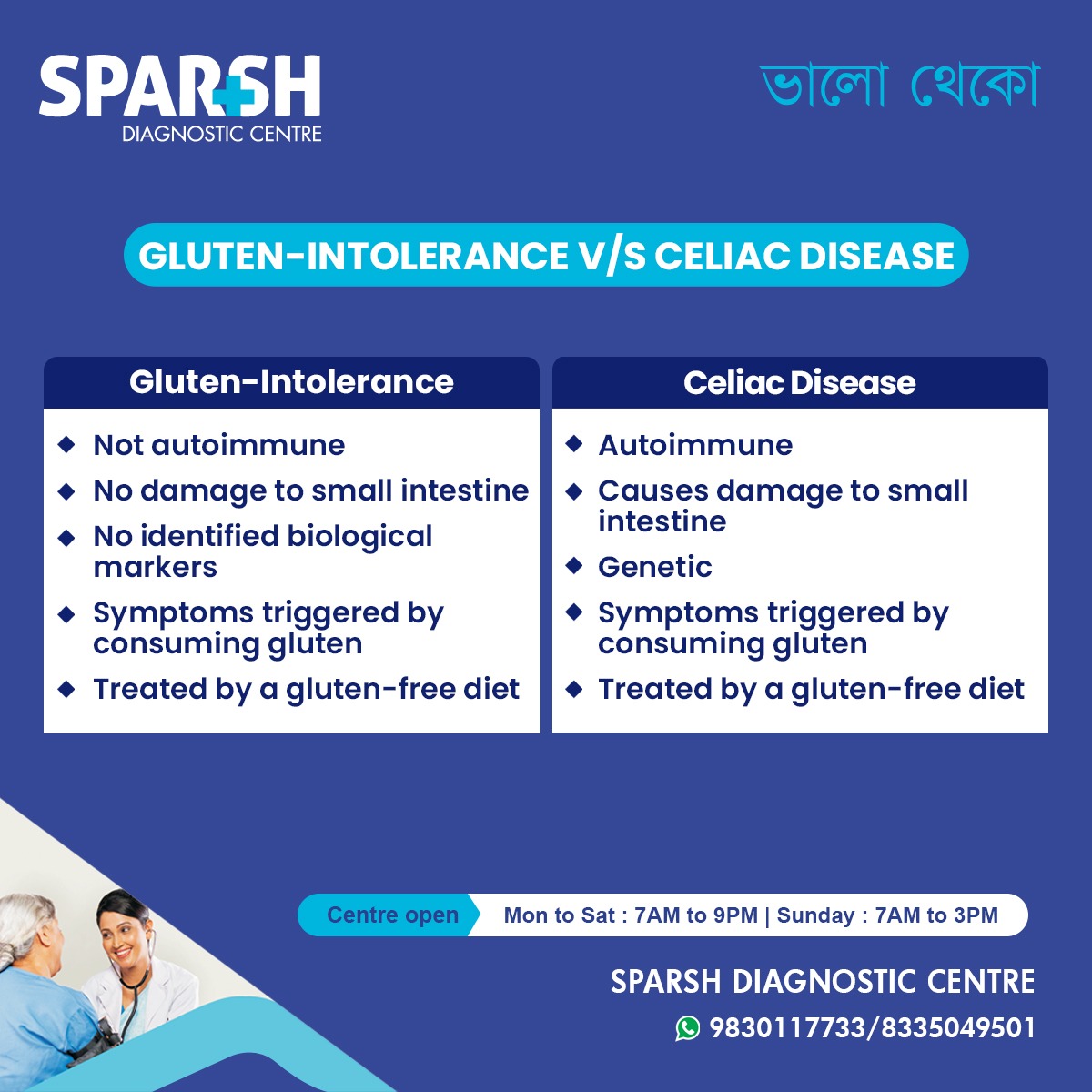
Not autoimmune – The body does not mistakenly attack itself.
No intestinal damage – Unlike celiac disease, the small intestine remains unharmed.
No biological markers – No definitive blood or genetic test confirms the condition.
Symptom-based diagnosis – Diagnosis is based on ruling out celiac disease and wheat allergy.
Symptoms of Gluten Intolerance
Symptoms vary and often appear shortly after gluten consumption.
Treatment
The only effective treatment is a gluten-free diet. Unlike celiac disease, strict lifelong avoidance of gluten is not always necessary — some people may tolerate small amounts.
Celiac Disease
Definition
Celiac disease is an autoimmune disorder where the immune system mistakenly attacks the small intestine after gluten ingestion, causing damage to the intestinal lining.
Key Characteristics
Autoimmune reaction – The immune system attacks healthy tissue.
Causes damage to the small intestine – Leads to villous atrophy (flattening of intestinal villi).
Genetic condition – Often runs in families.
Can cause nutrient deficiencies – Due to poor absorption of vitamins and minerals.
Symptoms of Celiac Disease
Chronic diarrhea or constipation
Abdominal pain and bloating
Fatigue
Celiac disease can also present with non-digestive symptoms, including infertility, depression, and neurological issues.
Complications if Untreated
Increased risk of intestinal cancers
Treatment
The only effective treatment is a strict lifelong gluten-free diet. Even small traces of gluten can cause intestinal damage.
Gluten Intolerance vs Celiac Disease: The Key Differences
Diagnosis
Diagnosing Gluten Intolerance
Based on symptoms
Exclusion of celiac disease and wheat allergy
Symptom relief after removing gluten
Diagnosing Celiac Disease
Blood tests (anti-tTG, EMA antibodies)
Genetic tests (HLA-DQ2 and HLA-DQ8)
If you suspect gluten intolerance or celiac disease, consulting a doctor and undergoing proper testing is crucial.
Gluten-Free Diet: What to Eat and Avoid
Foods to Avoid
Wheat (bread, pasta, chapati)
Barley
Rye
Processed foods with gluten additives
Safe Gluten-Free Foods
Rice
Corn
Millets (jowar, bajra, ragi)
Quinoa
Potatoes
Fresh fruits and vegetables
Pulses and legumes
Tips for Managing Gluten-Free Diet
Always read labels
Look for “gluten-free” certifications
Avoid cross-contamination in kitchens
Opt for naturally gluten-free whole foods
Living with Gluten Intolerance and Celiac Disease
While gluten intolerance mainly affects comfort and lifestyle, celiac disease can have serious long-term consequences if left untreated. Early diagnosis and strict dietary changes can significantly improve quality of life.
Frequently Asked Questions (FAQ)
1. Is gluten intolerance the same as celiac disease?
No. Gluten intolerance causes discomfort after gluten consumption but does not damage the intestine. Celiac disease is an autoimmune disorder that damages the small intestine.
2. Can gluten intolerance turn into celiac disease?
No, gluten intolerance does not progress to celiac disease. However, symptoms may overlap, so proper testing is important.
3. How is celiac disease diagnosed?
Celiac disease is diagnosed through blood tests, genetic tests, and an intestinal biopsy.
4. Can gluten intolerance be tested?
Currently, there is no specific test for gluten intolerance. It is diagnosed by ruling out celiac disease and wheat allergy.
5. Can I eat small amounts of gluten if I have celiac disease?
No. Even tiny amounts of gluten can damage the intestine and cause long-term complications.
6. Is a gluten-free diet healthy for everyone?
Not necessarily. A gluten-free diet is essential for people with celiac disease or gluten intolerance, but for others, it may not provide additional health benefits.
7. Does celiac disease run in families?
Yes, celiac disease has a strong genetic link. If one family member has it, others may also be at risk.
8. Can children develop celiac disease?
Yes. Celiac disease can occur at any age, including childhood.
9. Is gluten intolerance permanent?
It varies. Some people may tolerate gluten in small amounts over time, while others may need to avoid it completely.
10. How can Sparsh Diagnostic Centre help?
We provide advanced diagnostic testing, including blood tests for celiac disease, along with guidance for proper management.
Both gluten intolerance and celiac disease are conditions triggered by gluten, but they differ in causes, severity, and long-term health risks. Gluten intolerance is uncomfortable but not life-threatening, while celiac disease is a serious autoimmune condition requiring lifelong dietary management.
If you experience persistent digestive issues after eating gluten, consult a healthcare professional and get tested. Early diagnosis can help you live a healthier, symptom-free life.
👉 Visit Sparsh Diagnostic Centre for accurate diagnosis and home sample collection services across Kolkata.
#BhaloTheko
Disclaimer:
No content on this site, regardless of date, should ever be used as a substitute for direct medical advice from your doctor or other qualified clinician.


[…] a condition where the body reacts negatively to gluten, a protein found in wheat, barley, and rye. Unlike celiac disease, gluten intolerance does not involve an autoimmune reaction that damages the s… However, it still causes a wide range of uncomfortable digestive and non-digestive […]