Hemophagocytic lymphohistiocytosis (HLH) is a rare, potentially life-threatening condition in which the immune system becomes excessively activated and starts causing widespread inflammation and tissue damage. It can occur in children as well as adults and may develop because of an inherited genetic problem or as a reaction to another illness such as an infection, cancer or autoimmune disease.
HLH can be difficult to recognise because its early symptoms—particularly persistent fever, weakness and low blood cell counts—can look like severe infection, dengue, typhoid, sepsis or other inflammatory conditions.
The good news is that HLH can be treated, and some people make a complete recovery, particularly when the condition is identified early and the underlying trigger is successfully treated.
According to Johns Hopkins Medicine, fever and an enlarged spleen are among the most common features of HLH, while blood-count abnormalities, liver and neurological involvement can occur as the disease progresses.
What is hemophagocytic lymphohistiocytosis?
Hemophagocytic lymphohistiocytosis is a form of severe immune-system dysregulation. Normally, immune cells such as T lymphocytes and natural killer (NK) cells help control infections and eliminate abnormal cells. In HLH, this immune response becomes uncontrolled.
Activated immune cells release large amounts of inflammatory substances called cytokines. This produces a hyperinflammatory state, sometimes described as a cytokine storm.
The excessive immune activation can affect blood cells, the liver, spleen, lungs, brain and other organs.
There are two broad forms:
- Primary or familial HLH: Usually associated with inherited genetic abnormalities affecting immune-cell function.
- Secondary or acquired HLH: Develops in response to another condition, commonly an infection, malignancy or autoimmune/autoinflammatory disease.
In adults, secondary HLH is particularly important because infections and cancers are common triggers.
What are the first signs of HLH?
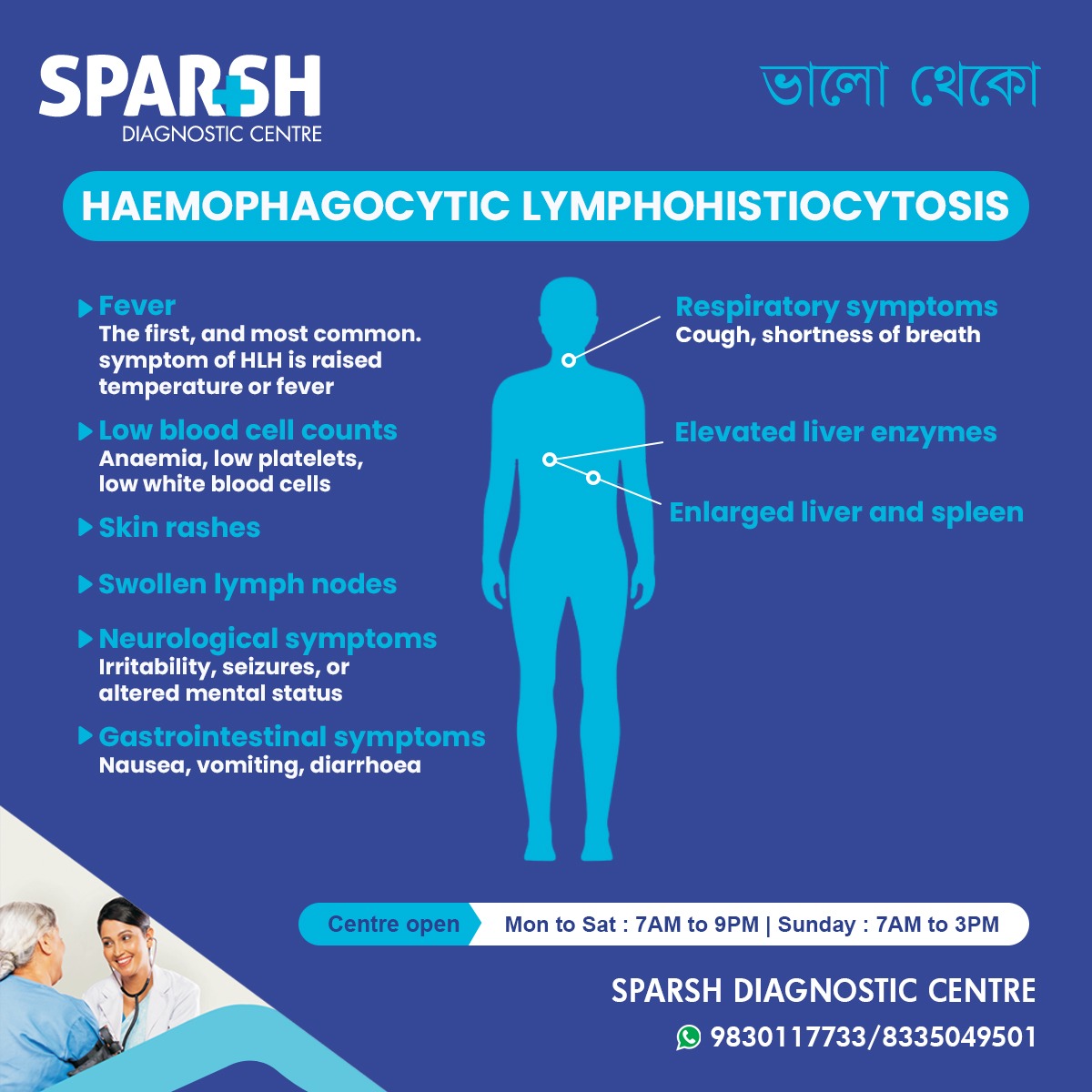
The first signs of HLH are often persistent or recurrent high fever, unusual tiredness and abnormalities in blood counts.
Other early warning signs can include:
- Enlarged spleen or liver
- Low platelet count
- Anaemia
- Low white blood cell count
- Swollen lymph nodes
- Skin rash
- Abdominal discomfort
- Nausea or vomiting
- Changes in liver-function tests
- Very high ferritin levels
- Unexplained inflammation
- Breathlessness or cough
- Neurological symptoms such as confusion or seizures
The important clue is often persistence and deterioration. A person may initially appear to have an infection, but the fever continues, blood counts fall and organs begin showing signs of dysfunction despite appropriate treatment.
Recent adult HLH consensus guidance highlights three particularly useful warning signs: fever, falling blood counts and raised ferritin.
What are the symptoms of HLH disease?
HLH can produce symptoms throughout the body because the inflammation is systemic.
Common symptoms include:
1. Persistent fever
High, prolonged fever is one of the most characteristic symptoms. It may continue despite treatment for a suspected infection.
2. Enlarged spleen and liver
The spleen and liver may become enlarged because of immune-cell activation and inflammation.
3. Low blood cell counts
HLH can cause cytopenias involving red blood cells, white blood cells and platelets.
This may result in:
- Anaemia and fatigue
- Increased susceptibility to infections
- Easy bruising or bleeding
4. Skin changes
Some people develop rashes or other skin abnormalities.
5. Liver problems
HLH may cause elevated liver enzymes, jaundice, abnormal clotting and, in severe cases, liver failure.
6. Respiratory symptoms
Inflammation and organ dysfunction can cause cough, shortness of breath, low oxygen levels or respiratory failure.
7. Gastrointestinal symptoms
Nausea, vomiting, diarrhea and abdominal pain may occur.
8. Neurological symptoms
Severe HLH can affect the nervous system, producing headache, irritability, confusion, weakness, seizures, difficulty walking or altered consciousness.
What causes hemophagocytic lymphohistiocytosis?
HLH occurs because immune cells become excessively activated and fail to switch off appropriately.
Primary HLH
Primary HLH is usually caused by inherited genetic changes that interfere with the ability of cytotoxic T cells and NK cells to regulate immune responses.
Genes associated with familial HLH include PRF1, UNC13D, STX11 and STXBP2, among others.
Secondary HLH
Secondary HLH is triggered by another condition. Common triggers include:
- Viral infections
- Bacterial infections
- Fungal infections
- Parasitic infections
- Cancers, particularly lymphomas
- Autoimmune and autoinflammatory diseases
- Certain medications, rarely
Epstein-Barr virus is a particularly well-recognised infectious trigger, although many other infections can cause HLH.
What infections trigger HLH?
A wide range of infections have been reported to trigger secondary HLH.
These include:
- Epstein-Barr virus (EBV)
- Cytomegalovirus (CMV)
- Influenza
- SARS-CoV-2
- Dengue virus
- HIV
- Hepatitis viruses
- Herpes viruses
- Tuberculosis
- Salmonella, including typhoid
- Malaria
- Leishmaniasis
- Scrub typhus
- Certain fungal infections
In India and other tropical regions, HLH can sometimes complicate infections such as dengue, typhoid, malaria and scrub typhus, making recognition particularly important when a patient deteriorates despite appropriate treatment.
Does dengue cause HLH?
Yes, dengue can trigger secondary HLH, although it is uncommon.
Dengue and HLH can look remarkably similar because both may cause fever, low platelet counts, low white blood cells, liver abnormalities and inflammation.
Dengue-associated HLH may be suspected when a patient with dengue develops persistent high fever, worsening cytopenias, enlarged liver or spleen, very high ferritin, low fibrinogen or progressive organ dysfunction.
A 2025 review of published dengue-associated HLH cases found fever, cytopenias, organ enlargement and liver dysfunction among the common findings.
Can typhoid cause HLH?
Yes. Typhoid fever caused by Salmonella Typhi can rarely trigger HLH.
This is an important consideration when someone with enteric fever develops persistent fever, pancytopenia, hepatosplenomegaly and worsening organ-function abnormalities despite appropriate antibiotics.
Published case reports and systematic reviews have documented typhoid-associated HLH, including cases in India.
However, having typhoid does not mean that a person will develop HLH. It is a rare complication.
Can COVID-19 cause hemophagocytic lymphohistiocytosis?
Yes, COVID-19 has been reported as a trigger for secondary HLH.
Severe COVID-19 can itself produce substantial inflammation and cytokine release, which can overlap with the clinical picture of HLH. In some patients, particularly those with severe or persistent systemic inflammation, COVID-19-associated HLH has been reported.
However, not every severe COVID-19 cytokine response represents true HLH. Doctors need to evaluate the complete clinical and laboratory picture rather than diagnosing HLH solely because inflammatory markers are high.
Can antibiotics cause HLH?
Very rarely, medications including some antibiotics have been associated with HLH.
This should not be interpreted as meaning that antibiotics commonly cause HLH. Infection itself is a much more established trigger.
There are isolated reports of drug-associated HLH, including a published case involving trimethoprim/sulfamethoxazole.
If HLH develops after medication exposure, doctors must carefully consider both the drug and the underlying infection or other illness that may itself have triggered the syndrome.
Which organs does HLH affect?
HLH can affect multiple organs simultaneously.
Commonly involved organs and systems include:
- Spleen: Enlargement is common.
- Liver: Hepatomegaly, elevated enzymes, jaundice and liver dysfunction may occur.
- Bone marrow: Abnormal immune activation contributes to reduced blood-cell counts.
- Lymph nodes: They may become enlarged.
- Lungs: Inflammation can cause respiratory distress.
- Brain and nervous system: Confusion, seizures and other neurological problems can occur.
- Kidneys: Severe systemic inflammation can contribute to kidney dysfunction.
- Blood and clotting system: Thrombocytopenia and coagulation abnormalities may develop.
In severe cases, HLH can progress to multiorgan failure.
Does HLH affect platelets?
Yes. Low platelets, or thrombocytopenia, are a common feature of HLH.
The HLH-2004 criteria define cytopenia as affecting at least two of three blood-cell lineages, with a platelet count below 100,000/µL being one of the thresholds.
Low platelets can increase the risk of bruising and bleeding, particularly when HLH is severe or accompanied by coagulation abnormalities.
What are the diagnostic criteria for HLH?
The commonly used HLH-2004 criteria establish the diagnosis when either a molecular diagnosis consistent with HLH is present or when at least five of eight criteria are fulfilled.
The eight criteria are:
- Fever above 38.5°C
- Splenomegaly
- Cytopenias affecting at least two of three blood-cell lines
- Haemoglobin below 9 g/dL
- Platelets below 100,000/µL
- Neutrophils below 1,000/µL
- High triglycerides and/or low fibrinogen
- Fasting triglycerides above 265 mg/dL
- Fibrinogen ≤1.5 g/L
- Hemophagocytosis in bone marrow, spleen, liver, lymph nodes or another tissue
- Low or absent NK-cell activity
- Ferritin ≥500 µg/L
- Elevated soluble CD25 (soluble IL-2 receptor) ≥2,400 U/mL
These criteria are useful, but HLH diagnosis can be challenging. Not all abnormalities appear at the same time, and clinicians may need to repeat tests as the illness evolves.
How is HLH confirmed?
There is no single test that confirms every case of HLH.
Doctors usually combine:
- Medical history and physical examination
- Complete blood count
- Ferritin
- Triglycerides
- Fibrinogen
- Liver and kidney-function tests
- Soluble CD25
- NK-cell activity testing
- Bone marrow examination when appropriate
- Tests for infections
- Imaging to assess liver, spleen and lymph nodes
- Genetic testing when primary HLH is suspected
A bone marrow examination may demonstrate hemophagocytosis, but its absence does not necessarily exclude HLH, especially early in the illness.
In adults, clinicians may also use the HScore as an additional tool to estimate the probability of HLH.
Is HLH a life-threatening condition?
Yes. HLH can be life-threatening and may progress rapidly if it is not treated.
The excessive inflammatory response can damage tissues, suppress normal blood-cell production, interfere with clotting and eventually cause failure of several organs.
However, life-threatening does not mean inevitably fatal. Early recognition and appropriate treatment can significantly improve the chances of survival. Modern treatment has improved outcomes compared with historical experience.
How does HLH cause death?
When HLH becomes severe, uncontrolled inflammation can result in:
- Multi-organ failure
- Severe liver dysfunction
- Respiratory failure
- Kidney failure
- Shock
- Severe bleeding
- Abnormal blood clotting
- Secondary or opportunistic infections
- Severe neurological complications
The combination of uncontrolled inflammation, organ damage, bleeding and infection can ultimately become fatal.
How long can HLH patients live?
There is no single life expectancy for someone with HLH.
Outcome depends heavily on:
- Whether HLH is primary or secondary
- The underlying trigger
- Age
- How quickly treatment begins
- Severity of organ involvement
- Response to treatment
- Whether the disease relapses
Untreated familial HLH can progress extremely rapidly; GeneReviews reports a median survival of less than two months in untreated infants with active disease.
Adult HLH also has a high mortality rate, but survival varies considerably between causes. Some adults with secondary HLH can recover when the underlying trigger is successfully treated, while malignancy-associated HLH can have a particularly poor prognosis.
Therefore, a diagnosis of HLH does not by itself determine how long a person will live.
Can HLH be cured?
Some forms of HLH can be cured, while others can be controlled or enter remission.
Treatment depends on the type and underlying cause.
Management may include:
- Treatment of the underlying infection or cancer
- Corticosteroids such as dexamethasone
- Immunosuppressive or immunomodulatory treatment
- Etoposide in appropriate cases
- Other targeted immune therapies
- Supportive treatment for organ dysfunction
- Hematopoietic stem-cell transplantation (HSCT)
For familial HLH and some persistent or recurrent forms of HLH, stem-cell transplantation can provide a potentially curative treatment.
Secondary HLH caused by an infection or another treatable trigger may resolve once the trigger is controlled and the excessive immune response is brought under control.
Can you fully recover from HLH?
Yes, some people can fully recover from HLH.
Recovery is more likely when the underlying trigger is identified quickly and treatment successfully controls the hyperinflammation.
For example, infection-associated HLH may resolve after appropriate treatment of the infection combined with treatment to suppress the abnormal immune response.
Primary HLH is different because the underlying genetic problem remains. These patients may require hematopoietic stem-cell transplantation for long-term disease control or cure.
Has anyone survived HLH?
Yes. Many people have survived HLH.
Survival is particularly possible when the disease is diagnosed promptly and treated appropriately. Published treatment studies have demonstrated substantially improved survival compared with untreated disease, and stem-cell transplantation has provided long-term survival for many patients with familial or persistent HLH.
The outcome of an individual patient, however, cannot be predicted from the diagnosis alone.
Can HLH be transmitted?
HLH itself is not contagious and cannot spread from one person to another.
However, familial HLH can be inherited genetically. A child may inherit genetic variants that increase the risk of developing primary HLH.
Secondary HLH, on the other hand, develops because of an underlying condition such as infection, cancer or autoimmune disease. The HLH syndrome itself is not transmitted between people.
How to avoid HLH?
There is currently no guaranteed way to prevent HLH, particularly primary or familial HLH.
For secondary HLH, reducing the risk of its potential triggers can help. This includes:
- Preventing and promptly treating infections
- Following recommended vaccination schedules
- Taking precautions against mosquito-borne infections such as dengue
- Practising food and water hygiene to reduce enteric infections
- Seeking medical attention when a serious infection is not improving as expected
- Managing autoimmune and inflammatory conditions appropriately
- Investigating unexplained persistent fever and falling blood counts
People with a family history of familial HLH may benefit from genetic counselling and appropriate specialist evaluation.
When should you see a doctor?
Persistent high fever should not automatically be assumed to be HLH. Most fevers are caused by much more common conditions.
However, HLH should be considered when fever is persistent or recurrent and is accompanied by falling blood counts, enlarged liver or spleen, very high ferritin, unexplained liver dysfunction or progressive organ problems.
This is especially important when a person appears to be getting worse despite appropriate treatment for an infection.
Frequently Asked Questions About HLH
What is the main symptom of HLH?
Persistent high fever is one of the most common symptoms, often accompanied by an enlarged spleen, low blood counts and systemic inflammation.
Is high ferritin enough to diagnose HLH?
No. Ferritin can be extremely high in HLH, but high ferritin also occurs with infections, liver disease, malignancy and other inflammatory conditions. Diagnosis requires assessment of the overall clinical and laboratory picture.
Does HLH always cause low platelets?
No, but thrombocytopenia is common and is one of the cytopenias included in the HLH-2004 diagnostic criteria.
Can dengue and HLH occur together?
Yes. Dengue can rarely trigger secondary HLH, and the two conditions can have overlapping symptoms and laboratory findings.
Can typhoid trigger HLH?
Yes. Typhoid-associated HLH is rare but documented, including cases where patients developed persistent fever and pancytopenia despite appropriate antibiotics.
Can COVID-19 trigger HLH?
Yes, secondary HLH has been reported following COVID-19, particularly in patients with severe hyperinflammation.
Can antibiotics cure HLH?
Antibiotics can treat a bacterial infection that triggered secondary HLH, but antibiotics alone do not generally treat the abnormal immune activation of HLH. Treatment may require immunosuppressive or other HLH-directed therapy.
Can HLH go away on its own?
Some cases of secondary HLH may resolve after the underlying trigger is controlled, but because HLH can progress rapidly and become fatal, suspected HLH should be evaluated and managed urgently rather than waiting for spontaneous recovery.
Is HLH cancer?
No. HLH is an immune-system disorder. However, cancers—particularly some lymphomas and leukemias—can trigger secondary HLH.
Is HLH the same as sepsis?
No. They are different conditions, although they can look very similar and may occur together. Both can cause fever, low blood pressure, organ dysfunction and abnormal inflammatory markers.
What is the most important thing to remember about HLH?
Early recognition matters. Persistent fever together with falling blood counts, enlarged spleen or liver and markedly elevated ferritin should prompt doctors to consider HLH, especially when a patient is deteriorating despite treatment for an apparent infection.
Final thoughts
Hemophagocytic lymphohistiocytosis is rare, but its seriousness makes awareness important. The condition occurs when the immune system becomes excessively activated, producing inflammation that can damage blood cells and multiple organs.
The symptoms can initially resemble common infections, which is one reason HLH can be difficult to diagnose. Persistent fever, falling blood counts, splenomegaly, very high ferritin and unexplained organ dysfunction are important warning signs.
HLH can be triggered by infections such as EBV, dengue and typhoid, as well as cancers, autoimmune conditions and, rarely, medications. COVID-19 has also been reported as a trigger.
Most importantly, HLH is treatable, and survival is possible. The earlier the condition is recognised and the underlying trigger identified, the better the opportunity to prevent irreversible organ damage. Because HLH can deteriorate quickly, suspected cases require prompt evaluation by an experienced medical team.
For laboratory investigations relevant to unexplained fever, low blood counts, ferritin and other inflammatory abnormalities, patients should consult their treating physician regarding which tests are appropriate for their individual situation.
Sources for further reading:
NCBI Bookshelf – Hemophagocytic Lymphohistiocytosis
Johns Hopkins Medicine – Hemophagocytic Lymphohistiocytosis
Medscape – Hemophagocytic Lymphohistiocytosis Overview
To consult a Doctor or get full body check-up done at Sparsh Diagnostic Centre, call our helpline numbers 9830117733/ 8335049501.
#BhaloTheko
Disclaimer:
No content on this site, regardless of date, should ever be used as a substitute for direct medical advice from your doctor or other qualified clinician.