Does your child need to use the bathroom every few minutes? Are you concerned because your 7-year-old keeps asking to pee, even immediately after using the toilet? Frequent urination in children can be worrying for parents, especially when the behaviour starts suddenly or begins interfering with school, playtime and sleep.
The good news is that frequent urination does not always indicate a serious health problem. Some children develop a temporary condition called benign urinary frequency, in which they feel the need to urinate repeatedly but pass only small amounts of urine. However, frequent urination can also be a sign of a urinary tract infection (UTI), constipation, an overactive bladder or, occasionally, diabetes.
Understanding the symptoms and accompanying warning signs can help you decide when reassurance is enough and when your child needs medical attention.
What is frequent urination in children?
Frequent urination, medically known as urinary frequency, means that a child needs to pass urine more often than is usual for their age and individual circumstances.
Most children urinate approximately four to seven times during the day. However, this varies depending on how much they drink, the weather, their activity levels and their bladder habits. Some children may urinate eight times a day or occasionally more without having an underlying medical condition.
What matters is whether the frequency represents a noticeable change from your child’s usual pattern and whether other symptoms are present.
For example, a child who urinates frequently after drinking plenty of water on a hot day may simply be responding to increased fluid intake. In contrast, a child who suddenly needs to urinate every 10 to 30 minutes, passes only a few drops and has no obvious increase in fluid intake may need further assessment.
It is also important to distinguish frequent urination from producing unusually large quantities of urine. These are not the same thing. Repeatedly passing small amounts may be related to bladder irritation or urinary frequency, whereas passing large volumes of urine alongside excessive thirst can indicate a problem such as diabetes.
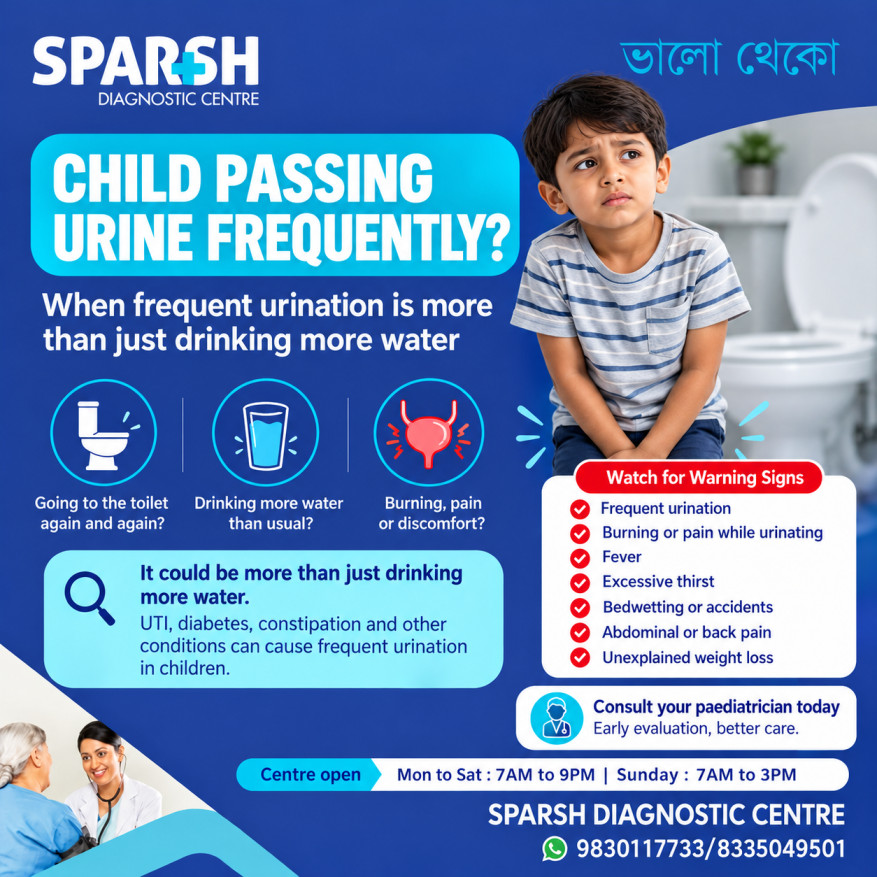
What are the common causes of frequent urination in children?
There are several possible causes of frequent urination in children. Some are temporary and harmless, while others require medical evaluation.
1. Benign urinary frequency or pollakiuria
Pollakiuria is a common cause of sudden daytime urinary frequency in toilet-trained children, particularly those of preschool and primary-school age.
A child with this condition may ask to use the toilet every 5 to 30 minutes, sometimes many times throughout the day. Each visit usually produces only a small amount of urine.
Typical features include:
- Sudden onset of frequent daytime urination.
- Passing small quantities of urine each time.
- No pain or burning during urination.
- No excessive thirst or unusually large urine volumes.
- Usually no significant daytime wetting.
- Relatively normal sleep and general health.
The exact cause is not always known. Stress, changes in routine or emotional tension may contribute in some children, although a clear trigger is not always identifiable.
Benign urinary frequency often improves on its own. Once a clinician has assessed the child and ruled out concerning causes, reassurance and avoiding unnecessary attention to every bathroom visit can help.
2. Urinary tract infection (UTI)
A urinary tract infection occurs when bacteria infect part of the urinary system. It can affect the bladder and, in more serious cases, the kidneys.
Frequent urination may be one of the first symptoms, particularly when the child repeatedly feels the urge to pee but passes only a small amount.
Other symptoms can include:
- Pain or burning while urinating.
- Sudden urgency or difficulty holding urine.
- Cloudy, bloody or unusually foul-smelling urine.
- Pain in the lower abdomen or back.
- Fever, chills or vomiting.
- New daytime accidents or bedwetting.
Younger children may not be able to explain what they feel and might instead become irritable, develop a fever or seem generally unwell.
A suspected UTI should be assessed by a healthcare professional. A urine test, and sometimes a urine culture, can help establish the diagnosis. Bacterial UTIs are generally treated with appropriate antibiotics prescribed by a clinician.
3. Constipation
Constipation is a frequently overlooked cause of urinary problems in children.
When hard stool accumulates in the bowel, it can put pressure on the bladder and affect how it stores and releases urine. This may lead to frequent bathroom visits, urgency, urine leakage or difficulty emptying the bladder completely.
Look for clues such as hard stools, painful bowel movements, infrequent bowel movements, abdominal discomfort or stool staining in the underwear.
Treating constipation through appropriate dietary changes, fluids and medication when necessary may improve associated urinary symptoms.
4. Overactive bladder
An overactive bladder occurs when the bladder muscle contracts before the bladder is sufficiently full. This can create a sudden, strong urge to urinate.
A child may frequently rush to the toilet, cross their legs, squat, fidget or squeeze their thighs together to avoid an accident.
Some children experience daytime wetting as well. Symptoms may occur even when urine tests do not show an infection.
A clinician can assess the symptoms and recommend bladder routines, treatment of constipation and, in selected cases, medication.
5. Drinking excessive fluids
Children naturally need more fluids when they are physically active, spend time outdoors or experience hot weather. Drinking more than usual will generally lead to more frequent urination.
However, persistent excessive thirst combined with frequent urination should not automatically be attributed to drinking habits.
If your child constantly asks for water, passes large quantities of urine, wakes at night to urinate or begins wetting the bed after previously staying dry, arrange prompt medical assessment. These symptoms can be associated with diabetes or other conditions affecting fluid balance.
Do not restrict your child’s water intake to reduce bathroom visits without medical advice.
6. Diabetes mellitus
Diabetes mellitus can cause frequent urination because excess glucose in the blood leads the kidneys to remove more water through urine.
Common warning signs include:
- Passing unusually large amounts of urine.
- Excessive thirst.
- Waking repeatedly at night to urinate.
- New bedwetting in a previously dry child.
- Unexplained weight loss.
- Tiredness or weakness.
These symptoms need prompt medical assessment. If they are accompanied by vomiting, abdominal pain, deep or rapid breathing, marked drowsiness or confusion, seek emergency care because diabetic ketoacidosis may be developing.
7. Stress and changes in routine
Children sometimes develop frequent urination around stressful events, such as starting a new school, moving house, family changes or difficulties with friends.
In some cases, stress may contribute to benign urinary frequency. The child is not necessarily doing this deliberately, and repeated toilet visits should not be treated as misbehaviour.
However, stress should not be assumed to be the cause before possible medical conditions have been considered, particularly when symptoms are new or persistent.
8. Bladder irritation and urinary habits
Certain drinks and products may irritate the bladder in some children. Caffeinated drinks, fizzy drinks and some acidic beverages can contribute to urinary urgency or frequency.
Other habits can also affect bladder function. Children who regularly postpone bathroom visits while playing may develop difficulty recognising or responding to their bladder signals. Some may also have problems emptying their bladder fully.
Encouraging regular bathroom breaks and avoiding unnecessary bladder irritants may help.
Less commonly, structural abnormalities of the urinary tract or problems involving the nerves that control the bladder can cause persistent urinary symptoms. These possibilities may need investigation if symptoms are unusual or accompanied by a weak urine stream, recurrent infections or other concerning signs.
How many times should a 7-year-old pee a day?
A 7-year-old will generally urinate around four to seven times during the day, although individual patterns vary.
The frequency depends on fluid intake, physical activity, temperature, bladder capacity and bathroom habits. Some children may need to urinate more often without having a medical problem.
A child who suddenly begins visiting the toilet 10 to 15 times a day, especially when this is a significant change from their normal routine, deserves attention. The concern increases if they pass only tiny amounts, experience discomfort, develop accidents or show excessive thirst.
Rather than focusing on an exact number, consider the overall pattern. Is your child passing normal amounts of urine? Are they drinking much more than usual? Do they have pain, fever, weight loss or changes in sleep?
These details help a healthcare professional determine whether further evaluation is needed.
Is urinating every 30 minutes normal?
Urinating every 30 minutes throughout the day is more frequent than usual for most school-aged children.
Occasional extra bathroom visits may be explained by drinking plenty of fluids or other temporary factors. However, repeatedly needing to pee every 30 minutes, especially when only a small amount comes out, should not automatically be considered normal.
One possible explanation is benign urinary frequency, particularly if the child is otherwise well and has no pain, excessive thirst or unusual urine output. A UTI, overactive bladder, constipation and other conditions can produce similar symptoms.
Arrange a medical assessment if this pattern persists, starts suddenly or interferes with school and daily activities. Seek more urgent care if your child has fever, pain, blood in the urine, vomiting or excessive thirst with large volumes of urine.
What are the signs of a UTI in children?
The symptoms of a urinary tract infection depend partly on the child’s age and which part of the urinary tract is affected.
In school-aged children, common symptoms include:
- Frequent urination or sudden urgency.
- Burning or pain when passing urine.
- Passing only small amounts despite feeling the need to pee.
- Lower abdominal pain.
- Cloudy, bloody or foul-smelling urine.
- New daytime accidents or bedwetting.
- Fever or feeling generally unwell.
A kidney infection may cause fever, back or side pain, chills, vomiting and significant illness.
Babies and younger children may show less specific symptoms, such as fever, poor feeding, vomiting, irritability or unusual sleepiness.
If you suspect a UTI, arrange a medical assessment promptly. A urine sample is commonly used to check for infection. Do not give leftover antibiotics or start treatment without appropriate medical advice.
When should I be concerned about my child peeing too much?
Frequent urination is more concerning when it begins suddenly, persists, affects normal activities or occurs alongside other symptoms.
Contact a healthcare professional if your child:
- Urinates much more frequently than usual for several days.
- Repeatedly passes only small amounts of urine.
- Experiences pain, burning or difficulty urinating.
- Develops new daytime accidents or bedwetting.
- Has constipation alongside urinary symptoms.
- Has recurrent urinary tract infections.
- Has a weak or interrupted urine stream.
- Develops excessive thirst, unusual tiredness or unexplained weight loss.
Seek urgent medical care if your child has fever with back or side pain, appears seriously unwell, cannot pass urine despite trying, or has visible blood in the urine with significant symptoms.
Excessive thirst and frequent large-volume urination need prompt assessment for diabetes. If these symptoms occur with vomiting, abdominal pain, deep or rapid breathing, or unusual drowsiness, seek emergency care.
If your child is otherwise well but has suddenly started urinating every few minutes, a medical assessment can help distinguish benign urinary frequency from a condition that needs treatment.
How do doctors diagnose frequent urination in children?
Diagnosis begins with understanding the child’s symptoms and usual bathroom habits.
Your doctor may ask:
- When did the frequent urination begin?
- How often does the child use the toilet?
- Does the child pass small or large amounts of urine?
- Is there pain, urgency or urine leakage?
- Has thirst increased?
- Does the child wake at night to urinate?
- Is there constipation or a recent change in routine?
- Has the child lost weight or experienced unexplained fatigue?
A physical examination may also be necessary.
Depending on the findings, investigations may include:
Urine testing: A urinalysis can help identify signs of infection, glucose or other abnormalities. A urine culture may be required when a UTI is suspected.
Blood glucose testing: This may be recommended when excessive thirst, large urine volumes, weight loss or other symptoms suggest diabetes.
Bladder and bowel diary: Recording bathroom visits, approximate urine amounts, fluid intake and bowel movements can help identify patterns.
Additional investigations: An ultrasound or other specialist tests may be considered when symptoms suggest a structural problem, incomplete bladder emptying or recurrent urinary tract issues.
Not every child needs extensive testing. If the history and examination suggest benign urinary frequency and concerning causes have been excluded, reassurance and observation may be sufficient.
How do you treat frequent urination in children?
Treatment depends on the underlying cause. There is no single medicine or home remedy that is appropriate for every child.
Treat the underlying condition
A UTI may require antibiotics. Constipation may need dietary changes and, where appropriate, medication. Diabetes requires prompt medical management. An overactive bladder may need a structured bladder programme and sometimes medication prescribed by a clinician.
Identifying the cause is therefore more useful than simply trying to reduce the number of bathroom visits.
Encourage healthy bathroom habits
For many children with bladder-related symptoms, regular and relaxed bathroom routines can help.
Encourage your child to use the toilet approximately every two to three hours during the day, unless their clinician recommends a different schedule. Allow enough time to empty the bladder comfortably without rushing.
Avoid forcing your child to hold urine for long periods, particularly when they have pain or urgency.
Maintain adequate fluid intake
Children need sufficient water throughout the day. Encourage regular drinking rather than allowing them to become dehydrated.
Avoid restricting fluids as a way to control frequent urination. If your child is unusually thirsty or passing large volumes of urine, seek medical advice rather than limiting water.
Address constipation
Offer age-appropriate fibre-rich foods, adequate fluids and regular opportunities to use the toilet. If constipation persists, consult a healthcare professional about suitable treatment.
Reduce pressure and anxiety
If a clinician has confirmed benign urinary frequency, reassurance is often an important part of treatment.
Avoid scolding, teasing or repeatedly asking whether your child needs to pee. Do not punish bathroom visits or make the child feel embarrassed.
If stress may be contributing, look for changes at school, home or in social relationships and offer support without making every toilet visit a source of discussion.
Use medication only when appropriate
Some children with specific bladder conditions benefit from medication. However, medicines are not routinely necessary for benign urinary frequency.
Do not give your child antibiotics, bladder-relaxing medicines or other treatments without a clinician’s advice.
How can I stop my child from urinating frequently?
The best approach is to identify why the frequent urination is happening.
If your child is drinking more than usual, review their fluid intake without restricting necessary hydration. If constipation is present, address it. If symptoms suggest a UTI or diabetes, seek medical evaluation rather than attempting home treatment.
For a child diagnosed with benign urinary frequency, these practical steps may help:
- Maintain a calm, reassuring approach.
- Keep normal daily routines and activities.
- Offer regular access to the toilet without excessive reminders.
- Avoid caffeine and drinks that appear to trigger symptoms.
- Encourage regular bathroom habits rather than prolonged urine holding.
- Speak with your child’s teacher if bathroom visits are disrupting lessons.
- Follow up with the doctor if symptoms persist, worsen or change.
Do not insist that a child wait longer between bathroom visits until a medical cause has been considered. Bladder training should be guided by the child’s symptoms and the advice of a healthcare professional.
My 9-year-old keeps peeing. Should I be worried?
Not necessarily, but a new or persistent change in a 9-year-old’s urination pattern should not be ignored.
If your child is otherwise well, passes only small amounts of urine and has no pain or excessive thirst, benign urinary frequency may be one possibility. Constipation, bladder habits and an overactive bladder can also contribute.
However, frequent urination accompanied by burning, fever, abdominal pain, new bedwetting or urine leakage warrants medical assessment. Excessive thirst, large quantities of urine, weight loss or unusual tiredness should prompt a prompt evaluation for diabetes.
Observe how often your child urinates, whether the amount is small or large and whether they are drinking more than usual. Share these details with your doctor.
If symptoms are persistent or interfering with school, sleep or everyday activities, arrange an appointment even if your child otherwise seems healthy.
Frequently asked questions about frequent urination in children
Is frequent urination in children always a sign of illness?
No. Some children develop temporary benign urinary frequency without an infection or underlying disease. However, persistent or sudden changes should be assessed, particularly when other symptoms are present.
Can stress cause frequent urination in children?
Stress and changes in routine may contribute to benign urinary frequency in some children. Nevertheless, medical causes should be considered before attributing symptoms to stress.
Can constipation cause a child to pee frequently?
Yes. Stool accumulation can put pressure on the bladder and interfere with normal bladder function. Treating constipation may improve urinary symptoms.
Does frequent urination mean my child has diabetes?
Not necessarily. Frequent urination has many possible causes. However, excessive thirst, large amounts of urine, weight loss and fatigue are warning signs that require prompt assessment for diabetes.
Why does my child keep peeing but only a little comes out?
Passing small amounts repeatedly may occur with benign urinary frequency, a UTI, bladder irritation or an overactive bladder. Pain, fever or other symptoms make medical evaluation particularly important.
Should I wake my child at night to pee?
This is not routinely necessary for every child with daytime urinary frequency. If your child has frequent nighttime urination, new bedwetting or excessive thirst, discuss the pattern with a healthcare professional rather than establishing a night-time routine without understanding the cause.
How long does benign urinary frequency last?
The duration varies. It may improve within weeks, although some children experience symptoms for several months. If symptoms persist, worsen or new symptoms develop, seek reassessment rather than assuming the condition is harmless.
When should I take my child to a doctor for frequent urination?
Arrange an assessment for persistent or sudden urinary frequency, pain during urination, new accidents, constipation with urinary symptoms or changes in the urine stream. Seek prompt care for excessive thirst with large urine volumes and urgent care for severe illness, fever with back pain or symptoms suggesting diabetic ketoacidosis.
Conclusion
Frequent urination in children can have several explanations, ranging from temporary benign urinary frequency to UTIs, constipation, an overactive bladder and diabetes. The pattern of urination, the amount of urine passed and any accompanying symptoms are important clues.
If your child suddenly starts visiting the bathroom every few minutes, do not panic, but do not dismiss the change either. Seek medical advice when symptoms persist, worsen or occur alongside warning signs. With the right assessment and appropriate care, most causes of urinary frequency can be managed effectively.
At Sparsh Diagnostic Centre, appropriate laboratory investigations can support a doctor’s evaluation when urine testing or other diagnostic tests are indicated. The choice of tests should always be guided by the child’s symptoms and the treating clinician’s advice.
Medical disclaimer: This article is intended for general health education and does not replace a consultation with a qualified healthcare professional. Seek urgent medical care if your child has severe symptoms or appears seriously unwell.
To consult a Urologist at Sparsh Diagnostic Centre, call our helpline number 9830117733.
#BhaloTheko
Disclaimer:
No content on this site, regardless of date, should ever be used as a substitute for direct medical advice from your doctor or other qualified clinician.
Sources and further reading
The following reputable medical resources informed this article. They provide additional information about urinary frequency, bladder dysfunction, urinary tract infections and diabetes-related symptoms in children.
- St. Louis Children’s Hospital — Pollakiuria. Information about benign daytime urinary frequency, typical symptoms and management.
https://www.stlouischildrens.org/conditions-treatments/pollakiuria - Children’s Hospital of Philadelphia — Urinary frequency. Guidance on urinary frequency in children, assessment and when symptoms may need further evaluation.
https://www.chop.edu/conditions-diseases/urinary-frequency - National Institute of Diabetes and Digestive and Kidney Diseases (NIDDK) — Symptoms and causes of bladder control problems and bedwetting in children. Information on urinary frequency, overactive bladder, constipation, UTIs and other possible causes.
https://www.niddk.nih.gov/health-information/urologic-diseases/bladder-control-problems-bedwetting-children/symptoms-causes - NIDDK — Diagnosis of bladder control problems and bedwetting in children. Information on clinical assessment, urine and other tests, and bladder diaries.
https://www.niddk.nih.gov/health-information/urologic-diseases/bladder-control-problems-bedwetting-children/diagnosis - NIDDK — Treatment of bladder control problems and bedwetting in children. Guidance on bladder routines, constipation management and treatment options.
https://www.niddk.nih.gov/health-information/urologic-diseases/bladder-control-problems-bedwetting-children/treatment - University of Utah Health — Is your child peeing too often? Frequent urination in young children explained. Discussion of benign urinary frequency, stress, bladder habits and home management.
https://healthcare.utah.edu/the-scope/kids-zone/all/2026/04/your-child-peeing-too-often-frequent-urination-young-children - Children’s Hospital of Philadelphia — Voiding dysfunction. Additional information on urinary urgency, bladder dysfunction, constipation and evaluation.
https://www.chop.edu/conditions-diseases/voiding-dysfunction