

Melanoma is one of the most serious forms of skin cancer, but finding it early can make a major difference. Unlike some other skin cancers, melanoma can spread to other parts of the body if it is not diagnosed and treated in time.
The good news is that melanoma can sometimes be spotted by noticing a change in a mole or a new, unusual-looking mark on the skin. Learning what to look for—and getting suspicious changes checked promptly—is one of the simplest ways to protect your health.
Melanoma begins in melanocytes, the cells responsible for producing melanin, the pigment that gives skin its colour. It commonly develops on sun-exposed skin, including the face, arms, back and legs, but it can also occur on the palms, soles, under the nails and other areas that receive little sunlight.
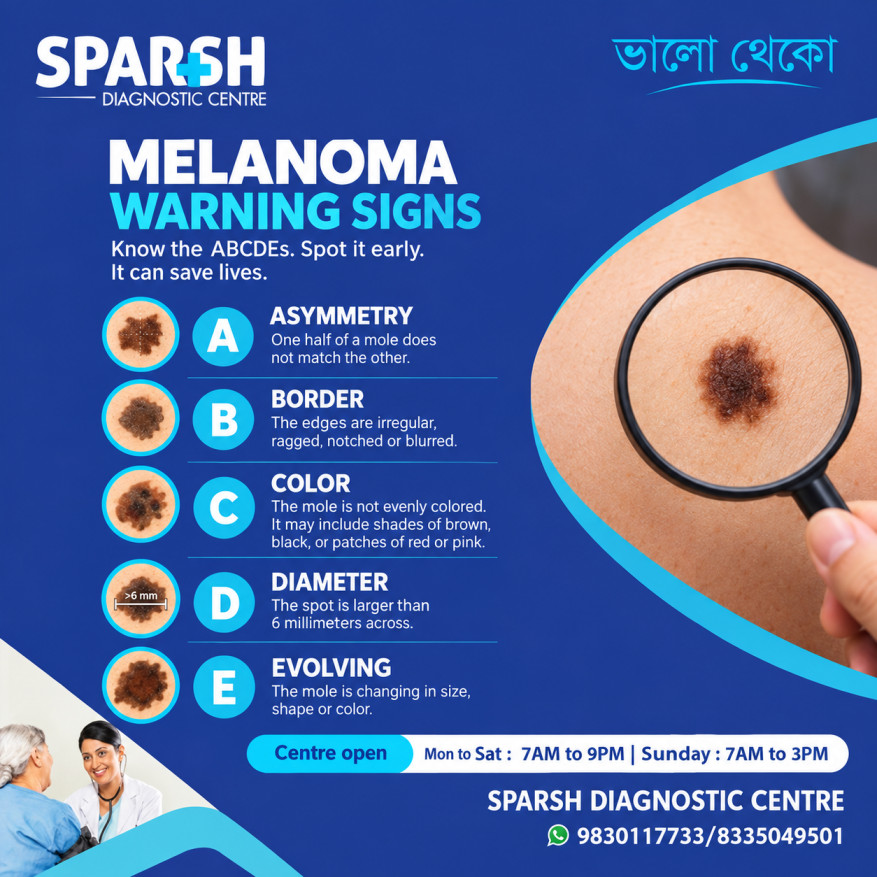
One of the most useful tools for spotting possible melanoma is the ABCDE rule: Asymmetry, Border, Colour, Diameter and Evolving.
What is melanoma?
Melanoma is a type of skin cancer that develops when melanocytes undergo abnormal changes and begin growing uncontrollably. Ultraviolet (UV) radiation from sunlight and tanning devices is an important risk factor, although melanoma can occur in people who have not had significant sun exposure.
It does not always begin in an existing mole. A melanoma can develop in completely normal-looking skin as well.
There are several types of melanoma. Superficial spreading melanoma is the most common and often initially grows outward across the skin. Nodular melanoma tends to form a raised bump and can grow deeper relatively quickly. Other types include lentigo maligna melanoma and acral lentiginous melanoma, which can occur on the palms, soles or beneath the nails.
What are the five warning signs of melanoma?
The five classic warning signs are remembered using the ABCDE rule:
A – Asymmetry: One half of a mole or skin mark does not look like the other half.
B – Border: The edges may be irregular, jagged, notched, blurred or poorly defined.
C – Colour: The colour is uneven or includes different shades, such as brown, black, red, blue or white.
D – Diameter: A suspicious spot may be larger than about 6 millimetres, although melanoma can be smaller.
E – Evolving: The mole or spot changes in size, shape, colour or appearance over time. It may also begin itching, bleeding or crusting.
Not every melanoma displays all five features. Some may show only one or two unusual characteristics, so a changing mole should not be ignored simply because it does not meet every part of the ABCDE rule.
What are 5 signs of melanoma?
If you are looking for a simple list, five important signs include:
- An asymmetrical mole or skin lesion
- An irregular or poorly defined border
- Multiple or unusual colours within the same lesion
- A mole that is growing or becoming larger
- A spot that is evolving or changing in appearance
Other warning symptoms can include itching, pain, inflammation, bleeding, oozing or crusting. A new unusual mark that does not disappear should also be examined.
How does melanoma start?
Melanoma starts when melanocytes develop changes in their DNA. These changes can cause the cells to multiply abnormally, survive when they should normally die and eventually form a cancerous growth.
UV exposure is an important contributor to many melanomas. Repeated sun exposure and episodes of sunburn can increase risk, and artificial sources of UV radiation, such as tanning beds, can also be harmful.
However, sun exposure is not the whole story. Genetics, family history, the number and type of moles a person has, previous melanoma and certain immune-system conditions can also influence risk.
What does cancerous skin look like?
There is no single appearance that identifies cancerous skin.
Melanoma may look like a dark, irregular or changing mole, but it can also appear as a new pigmented mark. Some melanomas may be pink, red or have relatively little pigment.
Other skin cancers can look completely different. A suspicious skin lesion might be a growing lump, a persistent sore, a scaly patch, a bleeding area or a growth that repeatedly crusts and heals.
This is why appearance alone cannot confirm whether a spot is cancerous. A dermatologist may use dermoscopy to examine a suspicious lesion more closely, but a biopsy is generally required to establish a diagnosis.
Are melanomas raised or flat?
They can be either.
Some melanomas are flat, particularly in their earlier stages or in certain types such as superficial spreading melanoma. Others, particularly nodular melanomas, may appear as a raised bump or nodule.
Therefore, a flat mole is not necessarily harmless, and a raised mole is not automatically melanoma. Change and unusual characteristics are more important than whether a lesion is flat or raised.
What does stage 1 melanoma look like?
Stage 1 melanoma does not have one specific visual appearance.
It may look like a small, flat or slightly raised mole with asymmetry, an irregular border, uneven colour or another noticeable change. However, you cannot determine the stage of melanoma simply by looking at it.
Staging depends on factors such as the thickness of the melanoma, ulceration and whether it has spread. Stage 1 melanoma has not spread to lymph nodes or distant parts of the body and is relatively thin compared with more advanced disease.
This is one reason early examination matters. A small-looking lesion can still require medical assessment.
What does a stage 4 melanoma look like?
Stage 4 melanoma also does not have a characteristic appearance.
Stage 4 means that melanoma has spread to distant parts of the body. These can include distant lymph nodes or organs such as the lungs, liver, brain, gastrointestinal tract, bones or other sites.
The original skin lesion may still be visible, but sometimes it may be difficult to identify or may no longer be obvious.
Symptoms of advanced melanoma depend on where the cancer has spread. For example, someone may develop symptoms related to the affected organ. These symptoms cannot be used by themselves to diagnose stage 4 melanoma.
How do I check if I have melanoma?
A regular skin self-check can help you notice changes early.
Choose a well-lit room and carefully examine your skin from head to toe. Look at your:
- Face and scalp
- Neck and ears
- Chest and abdomen
- Arms and hands
- Between your fingers
- Legs and feet
- Soles of your feet
- Palms of your hands
- Under your fingernails and toenails
- Back and buttocks
Use a mirror or ask a family member to help you check areas that are difficult to see, particularly the back and scalp.
Pay attention to new marks and changes in existing moles. Taking photographs of unusual moles can also help you notice whether they are changing over time, although photographs should not replace professional assessment.
Regular self-examination can help identify suspicious changes, but it cannot tell you with certainty whether a lesion is melanoma. If you notice a concerning change, arrange an examination with a qualified doctor or dermatologist.
How to self-check for melanoma using the ABCDE rule
When examining a mole, ask yourself:
A – Is it asymmetrical?
Would one half look different if you divided the mole down the middle?
B – Is the border unusual?
Does it look ragged, scalloped, notched or blurred?
C – Has the colour changed?
Are there several shades within the same lesion?
D – Has it become larger?
Is it growing or becoming noticeably larger?
E – Is it evolving?
Has anything about the mole changed recently?
Also look for bleeding, crusting, persistent itching, pain or inflammation.
If something looks different from your other moles—the so-called “ugly duckling” sign—it is worth having it assessed.
Where is the most common spot to get melanoma?
Melanoma can occur anywhere on the body.
Common locations include the back, arms, face and legs, particularly areas that receive substantial sun exposure.
However, melanoma can also develop in less obvious locations. These include the palms, soles, spaces between the toes and under the fingernails or toenails.
Acral melanoma is particularly important to recognise because it develops in areas that may not receive much sun and can be overlooked. It is also more common among people with darker skin tones.
Who is most at risk for melanoma?
Anyone can develop melanoma, but certain factors increase risk.
People at higher risk may include those with:
- A history of significant UV exposure or sunburn
- Frequent or intense sun exposure
- Use of tanning beds
- Fair skin that burns easily
- A large number of moles
- Atypical moles
- A personal history of melanoma
- A family history of melanoma
- Certain inherited genetic factors
- A weakened immune system
People with brown or Black skin can also develop melanoma, and some forms are more likely to occur in less sun-exposed locations such as the palms, soles and nail beds.
Having darker skin does not eliminate the need for skin checks.
Is melanoma a serious cancer?
Yes. Melanoma is a serious form of skin cancer because it can spread to other parts of the body.
However, seriousness does not mean that melanoma is always fatal. When detected while it is still localised to the skin, melanoma is often highly treatable.
Current American Cancer Society data show a 5-year relative survival rate of more than 99% for localised melanoma, compared with 76% for regional disease and 36% for distant disease. These are population statistics, not predictions for an individual patient.
The difference illustrates why early detection is so important.
Can someone survive melanoma?
Yes. Many people survive melanoma, particularly when it is detected and treated early.
Treatment depends on the stage and characteristics of the melanoma. For localised melanoma, surgery is often the primary treatment. More advanced disease may require combinations of surgery, immunotherapy, targeted therapy, radiation therapy or other approaches.
Survival statistics can be reassuring, but they should always be interpreted in context. Age, overall health, tumour characteristics, stage, treatment response and whether the cancer returns can all affect an individual’s outlook.
Is melanoma 100% curable?
No cancer can honestly be described as 100% curable in every person.
Many early melanomas can be successfully treated, and surgery may completely remove a localised melanoma. But melanoma can recur in some people, which is why follow-up care is important.
For advanced melanoma, modern treatments have significantly expanded treatment options, including immunotherapy and targeted therapy.
If you have been diagnosed with melanoma, your doctor can explain your individual prognosis based on the pathology report and stage.
Will melanoma cause death?
Melanoma can cause death, particularly if it spreads to distant organs and is not controlled by treatment. But a melanoma diagnosis does not mean that someone will die from the disease.
The stage at diagnosis makes a major difference. Current survival data demonstrate substantially better outcomes for localised melanoma than for melanoma that has spread to distant parts of the body.
This is why an evolving mole should not be watched indefinitely at home.
How fast does melanoma spread?
There is no single speed at which melanoma spreads.
Some melanomas can remain relatively slow-growing for a period, while others can behave more aggressively. Nodular melanoma, for example, tends to grow deeper into the skin earlier than superficial spreading melanoma.
The speed of progression also depends on the biology of the particular tumour.
Rather than trying to predict how long a suspicious mole has before it becomes dangerous, it is safer to have a changing or suspicious lesion evaluated promptly.
How to stop melanoma from spreading?
If melanoma has already been diagnosed, the best way to reduce the risk of progression is to follow the treatment plan recommended by your cancer or dermatology team.
Depending on the stage, treatment can include surgery, immunotherapy, targeted therapy, radiation therapy and other approaches.
For people who have not been diagnosed, prevention focuses on reducing avoidable UV exposure:
- Use broad-spectrum sunscreen with appropriate SPF.
- Reapply sunscreen as directed, especially after swimming or sweating.
- Wear protective clothing and a wide-brimmed hat.
- Seek shade when UV levels are high.
- Avoid tanning beds.
- Examine your skin regularly.
- Get suspicious or changing lesions checked.
There is no method that can guarantee melanoma will never develop, but reducing UV exposure and detecting suspicious changes early can help lower risk and improve outcomes.
What is the 2-week rule for melanoma?
The “2-week rule” is primarily associated with the UK’s urgent suspected-cancer referral system. Under relevant NHS/NICE guidance, people with certain suspicious pigmented lesions may be referred for an appointment within two weeks. The criteria include features such as a change in size, irregular shape or irregular colour, with additional features such as larger diameter, inflammation, oozing or altered sensation contributing to assessment.
It is important not to interpret this as meaning that you should wait two weeks before seeking advice.
If a mole is changing, bleeding, becoming painful or otherwise worrying you, arrange medical assessment promptly. The specific referral process and timelines can differ between healthcare systems, including in India.
How is melanoma diagnosed?
A doctor will first examine the suspicious lesion and may use dermoscopy, which provides a magnified view of structures within the skin.
If melanoma is suspected, the definitive diagnosis generally requires a biopsy, in which tissue from the lesion is examined in a laboratory.
If melanoma is confirmed, additional tests may be recommended depending on its characteristics and stage. These can include assessment of nearby lymph nodes and imaging to determine whether the cancer has spread.
How is melanoma treated?
Treatment depends on the type and stage of melanoma.
For many localised melanomas, surgical removal is the main treatment. A surgeon removes the melanoma along with an appropriate margin of surrounding normal tissue. In selected cases, a sentinel lymph node biopsy may be performed to determine whether melanoma has reached the lymphatic system.
For more advanced melanoma, treatment may include:
- Immunotherapy
- Targeted therapy
- Radiation therapy
- Surgery for selected areas of spread
- Other systemic treatments
- Clinical trials
Modern melanoma treatment has changed considerably, giving doctors more options for people with advanced disease.
When should you see a doctor about a mole?
Do not ignore a mole simply because it does not hurt.
Arrange a medical evaluation if you notice:
- A new unusual skin mark
- A mole that is growing
- A mole changing shape or colour
- An irregular border
- Bleeding or crusting
- Persistent itching or pain
- Inflammation around a mole
- A dark streak or mark under a nail without an obvious injury
- A lesion that simply looks different from your other moles
Early evaluation does not mean you have cancer. Most unusual skin changes are not melanoma. But only an appropriate clinical examination can determine whether further testing is needed.
Frequently asked questions about melanoma
Is melanoma a serious cancer?
Yes. Melanoma can spread to lymph nodes and distant organs, making it potentially life-threatening. However, early melanoma is often highly treatable, and outcomes are much better when it is detected before it spreads.
What are the five warning signs of melanoma?
The five classic warning signs are Asymmetry, Border irregularity, Colour variation, Diameter and Evolving appearance. Remember them as the ABCDE rule.
Can someone survive melanoma?
Yes. Many people survive melanoma, particularly when it is diagnosed at a localised stage. Treatment options have also expanded significantly for advanced melanoma.
Is melanoma 100% curable?
No. While many early melanomas can be successfully treated, no cancer has a 100% guarantee of cure. Some melanomas can recur, so follow-up remains important.
What does stage 1 melanoma look like?
There is no specific appearance for stage 1 melanoma. It may be a changing, asymmetrical, irregularly coloured or otherwise unusual mole or skin lesion. The stage cannot be determined by appearance alone.
How do I check if I have melanoma?
Examine your skin regularly from head to toe and use the ABCDE rule. Check difficult-to-see areas such as your back, scalp, soles and nail beds. A doctor must evaluate suspicious lesions, and a biopsy may be needed to diagnose melanoma.
How does melanoma start?
Melanoma starts when melanocytes, the pigment-producing cells of the skin, undergo DNA changes that cause abnormal growth. UV exposure is an important risk factor, but genetics and other factors also contribute.
What does cancerous skin look like?
Cancerous skin does not have one universal appearance. Melanoma may look like a changing or irregularly pigmented mole, while other skin cancers can appear as persistent sores, scaly patches or unusual growths.
Will melanoma cause death?
Melanoma can be fatal if it spreads extensively, but many people are successfully treated, especially when the disease is found early.
Who is most at risk for melanoma?
People with significant UV exposure, repeated sunburn, fair skin, many or atypical moles, a personal or family history of melanoma, or certain immune-system conditions have increased risk. People with darker skin can also develop melanoma, including on the palms, soles and nail beds.
What does a stage 4 melanoma look like?
Stage 4 melanoma does not have a characteristic appearance. Stage 4 describes where the cancer has spread, not how the original skin lesion looks. It can involve distant lymph nodes or organs such as the lungs, liver or brain.
How can I stop melanoma from spreading?
If melanoma is diagnosed, prompt, stage-appropriate treatment is essential. For prevention, reduce UV exposure, avoid tanning beds, use sun protection and have suspicious skin changes assessed quickly.
How fast does melanoma spread?
The rate varies considerably. Some melanomas progress slowly, while others can become invasive more quickly. Nodular melanoma can grow deeper earlier, so suspicious lesions should be assessed rather than monitored for a particular period.
Are melanomas raised or flat?
Both are possible. Some melanomas are flat, while nodular melanoma commonly appears as a raised bump. Shape alone cannot determine whether a lesion is melanoma.
How do I self-check for melanoma?
Perform a head-to-toe skin examination in good lighting. Check your face, scalp, neck, torso, arms, hands, legs, feet, palms, soles, nails and between your toes. Ask someone you trust to examine areas you cannot easily see.
Where is the most common spot to get melanoma?
Melanoma commonly develops on sun-exposed areas such as the back, arms, face and legs. It can also develop on the palms, soles and beneath the nails, so these areas should not be overlooked.
Final takeaway
Melanoma is serious, but early detection can dramatically change the outlook. The most important thing is not to become an expert at diagnosing skin cancer yourself. Instead, learn what is normal for your skin and pay attention when something changes.
Remember ABCDE: asymmetry, border, colour, diameter and evolving. A new or changing mole, unexplained bleeding, persistent itching, crusting or an unusual dark mark deserves professional attention.
If you notice a suspicious lesion, don’t wait for it to become painful or obviously large. A dermatologist or qualified doctor can examine it and decide whether dermoscopy, biopsy or further testing is necessary.
For medical information and diagnostic support, consult a qualified healthcare professional rather than relying on photographs or online symptom checkers alone.
#BhaloTheko
Disclaimer:
No content on this site, regardless of date, should ever be used as a substitute for direct medical advice from your doctor or other qualified clinician.



[…] UVB is more directly linked to DNA mutation, UVA also contributes to skin cancer, including melanoma, by generating free radicals and oxidative stress that damage skin […]
[…] type is squamous cell carcinoma, accounting for nearly 90% of cases. Less common types include melanoma, adenocarcinoma, basal cell carcinoma, and […]
[…] 1. Melanoma […]
[…] Basal cell carcinoma, squamous cell carcinoma, and melanoma […]