Every year on 7 November, India observes National Cancer Awareness Day to highlight the importance of cancer prevention, early diagnosis and timely treatment. The day serves as a reminder that cancer affects not only individuals but also their families and communities. It encourages people to understand the disease, recognise potential warning signs, adopt healthier lifestyles and seek medical advice without unnecessary delays.
Cancer remains a significant public health concern worldwide. However, advances in medical science have improved the diagnosis and treatment of several types of cancer. Many cancers can be treated successfully when detected early, while certain types can be prevented by reducing exposure to known risk factors.
Despite these advances, fear, social stigma, misinformation and limited awareness can prevent people from seeking medical attention at the right time. Some individuals ignore persistent symptoms, while others avoid screening because they are worried about the possibility of a cancer diagnosis.
National Cancer Awareness Day aims to change this mindset by encouraging informed healthcare decisions and making conversations about cancer more open.
Observed every year on 7 November, the occasion provides an opportunity to spread awareness about cancer, understand its risk factors, recognise early warning signs and appreciate the importance of regular health check-ups.
When is National Cancer Awareness Day observed?
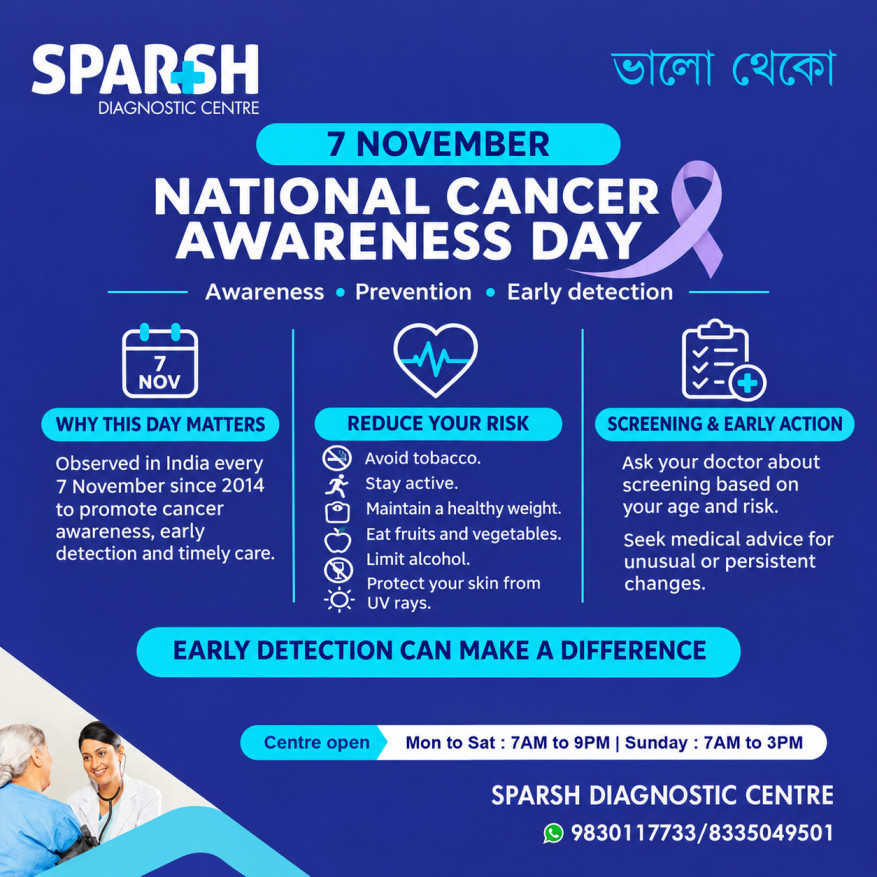
National Cancer Awareness Day is observed annually on 7 November in India.
The day was officially announced in September 2014 by Dr Harsh Vardhan, the then Union Minister of Health and Family Welfare. The initiative was introduced to encourage public awareness about cancer, promote early detection and educate people about lifestyle-related risk factors.
The date also coincides with the birth anniversary of Madame Marie Curie, the Nobel Prize-winning scientist whose pioneering research on radioactivity and the discovery of radium and polonium contributed significantly to the development of radiation-based medical treatments.
Her scientific contributions have had a lasting influence on modern cancer care.
Why is National Cancer Awareness Day celebrated?
National Cancer Awareness Day is celebrated to educate people about cancer and encourage them to take practical steps towards prevention, early detection and timely treatment.
The observance focuses on several important objectives:
1. Promoting early detection
Early detection can significantly improve the chances of successful treatment for many cancers. Awareness encourages individuals to recognise unusual symptoms and consult a healthcare professional rather than waiting for the condition to worsen.
2. Educating people about cancer prevention
Several cancer risk factors are linked to lifestyle choices and environmental exposures. Educating people about tobacco avoidance, healthy eating, physical activity and vaccination can help reduce the risk of certain cancers.
3. Encouraging regular cancer screening
Screening can identify certain cancers or precancerous changes before symptoms develop. National Cancer Awareness Day encourages eligible individuals to discuss appropriate screening options with their doctors.
4. Reducing fear and social stigma
Cancer is often associated with fear, misconceptions and social stigma. Open conversations help people understand that cancer is not contagious and that a diagnosis does not automatically mean a person cannot recover.
5. Supporting patients and cancer survivors
The day also recognises the courage and resilience of people living with cancer and those who have completed treatment. It highlights the importance of emotional support, rehabilitation, follow-up care and access to appropriate medical services.
6. Improving access to cancer-related healthcare
Cancer awareness also draws attention to the need for accessible screening, diagnostic facilities, treatment services and palliative care, particularly in underserved communities.
Ultimately, the purpose of National Cancer Awareness Day is to encourage people to move from fear and uncertainty towards awareness and timely action.
What is cancer and how does it develop?
Cancer is a group of diseases characterised by the uncontrolled growth and multiplication of abnormal cells.
Normally, cells in the human body grow, divide and die in a regulated manner. This process allows the body to replace old or damaged cells and maintain normal tissue function.
However, when changes occur in the genetic material of cells, this regulatory process can become disrupted. Abnormal cells may continue multiplying when they should stop, potentially forming a mass of tissue called a tumour.
Not all tumours are cancerous. Benign tumours generally do not invade surrounding tissues or spread to distant organs. Malignant tumours, on the other hand, can invade nearby structures and spread to other parts of the body through a process known as metastasis.
Some cancers, such as leukaemia, do not usually form solid tumours.
Cancer can develop in almost any organ or tissue, including the breast, lungs, colon, stomach, liver, cervix, prostate, blood and lymphatic system.
The disease may develop due to a combination of genetic changes, inherited susceptibility, lifestyle factors, environmental exposures and certain infections.
What are the common types of cancer?
Cancer can affect people of different ages and backgrounds. Some types are more frequently diagnosed than others.
Common types of cancer include:
Breast cancer: Develops in breast tissue and can affect both women and men, although it is considerably more common in women.
Lung cancer: Often associated with tobacco smoking, although non-smokers can also develop the disease.
Oral cancer: Affects the mouth and may involve the tongue, gums, inner cheeks or other oral structures. Tobacco and alcohol are important risk factors.
Cervical cancer: Develops in the cervix and is strongly associated with persistent infection with high-risk types of human papillomavirus (HPV).
Colorectal cancer: Affects the colon or rectum and may develop from abnormal growths called polyps.
Prostate cancer: Develops in the prostate gland and primarily affects men, particularly as they grow older.
Stomach cancer: Develops in the stomach lining and may be associated with certain infections, dietary factors and other risk factors.
Blood cancers: Include leukaemia, lymphoma and multiple myeloma, which affect blood-forming tissues, lymphatic cells or plasma cells.
Understanding the different types of cancer is important because their risk factors, symptoms, diagnostic approaches and treatment options can vary considerably.
What are the common risk factors for cancer?
Cancer does not have a single universal cause. Different cancers develop due to different combinations of risk factors.
Some risk factors can be modified, while others, such as age and inherited genetic susceptibility, cannot be changed.
Common cancer risk factors include:
Tobacco is one of the most significant preventable causes of cancer. Smoking and smokeless tobacco products increase the risk of several cancers, including oral, lung, throat and esophageal cancers.
Alcohol consumption is associated with an increased risk of several cancers, including cancers of the mouth, throat, oesophagus, liver, breast and colorectal region.
A diet consistently high in processed meats and low in fruits, vegetables and fibre may contribute to certain cancer risks.
4. Physical inactivity and obesity
Excess body weight and inadequate physical activity are associated with an increased risk of several cancers.
5. Certain infections
Persistent infection with high-risk HPV can cause cervical and certain other cancers. Chronic hepatitis B and hepatitis C infections can increase the risk of liver cancer.
6. Excessive ultraviolet radiation exposure
Prolonged exposure to ultraviolet radiation from sunlight and artificial tanning sources can increase the risk of skin cancer.
7. Environmental and occupational exposure
Exposure to certain chemicals, air pollutants, asbestos and other carcinogenic substances can increase the risk of specific cancers.
8. Family history and genetic factors
Some people inherit genetic changes that increase their susceptibility to particular cancers. A strong family history may indicate the need for an individual risk assessment and earlier or more frequent screening.
According to the World Health Organization, approximately 38% of cancers can currently be prevented through avoiding known risk factors and implementing evidence-based prevention strategies.
This highlights the importance of preventive healthcare and informed lifestyle choices.
What are the early warning signs and symptoms of cancer?
Cancer symptoms vary depending on the type of cancer, the organ involved and the stage of the disease.
Some cancers may not produce noticeable symptoms during their early stages. Others may cause changes that are easy to overlook or mistake for common health problems.
Some warning signs that deserve medical attention include:
A lump or unusual swelling in the breast or another part of the body.
A cough that does not improve or persistent hoarseness.
Unusual bleeding or discharge.
Changes in bowel or bladder habits.
A sore or wound that does not heal.
Changes in the appearance, size or colour of a mole or skin lesion.
Persistent pain without an obvious explanation.
White or red patches inside the mouth.
These symptoms do not necessarily indicate cancer. Many can occur due to infections, inflammatory conditions or other non-cancerous diseases.
However, persistent, unexplained or worsening symptoms should not be ignored. A healthcare professional can assess the symptoms and recommend further investigations when necessary.
It is important to remember that waiting for severe symptoms before seeking medical advice can delay diagnosis.
How can cancer be detected early?
Early detection plays an important role in improving cancer treatment outcomes.
There are two important approaches to early detection: early diagnosis and cancer screening.
Early diagnosis
Early diagnosis involves recognising symptoms, seeking medical attention and completing appropriate investigations to identify a disease as early as possible.
For example, a person who notices an unexplained breast lump should consult a doctor rather than waiting for the lump to become painful or increase in size.
Depending on the clinical findings, the doctor may recommend imaging, laboratory investigations or a biopsy.
Cancer screening
Cancer screening involves testing apparently healthy individuals who do not have symptoms to identify possible cancer or precancerous changes.
Screening is recommended for certain cancers and specific age or risk groups. It is not necessary or appropriate for everyone to undergo every available cancer test.
The choice of screening test depends on factors such as age, sex, medical history, family history and individual risk.
Common cancer screening tests
Some commonly used screening methods include:
| Type of cancer | Common screening method |
|---|---|
| Breast cancer | Mammography, as appropriate for age and risk |
| Cervical cancer | HPV testing and/or cervical cytology (Pap test) |
| Oral cancer | Visual examination of the oral cavity, particularly in high-risk individuals |
| Colorectal cancer | Stool-based tests and colonoscopy, depending on eligibility |
A positive screening result does not automatically mean that a person has cancer. Additional investigations may be required to establish a diagnosis.
Similarly, a normal screening result does not guarantee that cancer will never develop.
Screening intervals and eligibility should always be determined according to current medical recommendations and individual risk factors.
Cancer screening in India
India’s public healthcare system has introduced population-based screening initiatives for common cancers.
Under the national programme for prevention and control of non-communicable diseases, screening for common cancers, including oral, breast and cervical cancer, is incorporated into primary healthcare services for eligible individuals aged 30 years and above.
Community health centres, health and wellness centres and other healthcare facilities play an important role in these initiatives.
People should speak with their healthcare providers to understand which screening services are appropriate for them and where they can access them.
How can you reduce your risk of cancer?
Although not every cancer can be prevented, adopting healthier habits can reduce the risk of several types of cancer.
Here are some practical steps individuals can incorporate into their daily lives.
1. Avoid tobacco in every form
Avoid smoking cigarettes, bidis and other tobacco products. Smokeless tobacco, including chewing tobacco and gutka, is also harmful.
Quitting tobacco can reduce the risk of several tobacco-related cancers.
2. Maintain a healthy body weight
Excess body weight is associated with an increased risk of multiple cancers. Maintaining a healthy weight through balanced nutrition and regular physical activity can support overall health.
3. Eat a balanced diet
Include fruits, vegetables, whole grains, pulses and other fibre-rich foods in your daily diet.
Limit processed meats, highly processed foods and excessive consumption of foods high in salt and unhealthy fats.
No individual food or diet can guarantee protection against cancer.
4. Stay physically active
Regular physical activity helps maintain a healthy body weight and supports metabolic health.
Walking, cycling, swimming, dancing and other forms of moderate exercise can be incorporated into daily routines according to individual fitness levels.
5. Avoid or limit alcohol
Alcohol consumption is associated with several types of cancer. Avoiding alcohol is the most effective way to eliminate alcohol-related cancer risk.
6. Consider recommended vaccinations
Vaccination against HPV and hepatitis B can help prevent infections associated with certain cancers.
Speak with a healthcare professional about vaccination eligibility, timing and recommendations.
7. Protect your skin from excessive sunlight
Use suitable sun protection measures, avoid artificial tanning and minimise prolonged exposure to intense sunlight.
8. Do not ignore persistent symptoms
Seek medical advice if you notice unexplained changes in your body. Early medical evaluation can help identify the underlying cause and prevent unnecessary delays.
9. Understand your family history
If close family members have been diagnosed with cancer, discuss your family history with a doctor. Certain inherited genetic conditions may require additional monitoring or risk assessment.
Why is early detection important in cancer treatment?
Early detection can make a meaningful difference in the management of many cancers.
When cancer is diagnosed at an earlier stage, it may be more localised and potentially easier to treat.
Some important benefits of early detection include:
Better treatment outcomes: Many cancers have a higher chance of successful treatment when identified early.
More treatment options: Depending on the cancer type and stage, patients may have access to a wider range of treatment approaches.
Potentially less extensive treatment: Some early-stage cancers can be managed with less extensive procedures or treatment combinations.
Improved quality of life: Timely diagnosis and treatment can reduce complications associated with advanced disease.
Reduced treatment burden: Early intervention may help avoid some of the additional medical and financial challenges associated with advanced cancer.
However, outcomes vary depending on the type of cancer, its biological characteristics, the patient’s overall health and the availability of appropriate treatment.
Early detection does not guarantee a cure, but it can significantly improve the prospects of successful treatment for many cancers.
What colours represent cancer survivors?
Cancer awareness ribbons are widely used to express solidarity with people affected by cancer, celebrate survivors and encourage public awareness.
Lavender is commonly recognised as the colour representing all cancers and cancer survivors. It symbolises hope, support, unity and solidarity with individuals and families affected by the disease.
However, different cancer types have their own awareness ribbon colours. Some commonly recognised examples include:
| Ribbon colour | Cancer awareness |
|---|---|
| Lavender | All cancers and cancer survivors |
| Pink | Breast cancer |
| Gold | Childhood cancer |
| Light blue | Prostate cancer |
| Orange | Leukaemia and kidney cancer |
| Purple | Pancreatic cancer |
| White or pearl | Lung cancer |
| Teal | Ovarian cancer |
| Dark blue | Colon cancer |
| Grey | Brain cancer |
It is worth remembering that awareness ribbon colours are not governed by one universal standard. Some organisations use different colours for the same cancer or cause.
The lavender ribbon remains a widely recognised symbol of support for people affected by cancer in general.
Wearing an awareness ribbon is a simple gesture, but its message can be meaningful: people living with cancer deserve understanding, dignity, compassion and continued support.
How can you observe National Cancer Awareness Day?
National Cancer Awareness Day is an opportunity for individuals, families, healthcare professionals and organisations to contribute to cancer awareness.
You do not need to organise a large event to make a difference. Small, meaningful actions can help spread important information.
Here are some ways to observe the day:
Share reliable information about cancer prevention and early warning signs.
Encourage family members to discuss age-appropriate cancer screening with their doctors.
Organise or participate in cancer awareness programmes.
Support cancer patients and survivors without discrimination or judgement.
Encourage tobacco cessation and healthier lifestyle habits.
Participate in educational sessions organised by healthcare institutions.
Help people understand the importance of timely medical consultation.
Support organisations involved in cancer research, patient care and rehabilitation.
Healthcare institutions can also contribute by organising educational programmes, screening awareness initiatives and community outreach activities.
The role of diagnostic investigations in cancer detection
Diagnostic investigations play an important role in evaluating suspicious symptoms and helping doctors reach an accurate diagnosis.
Depending on the suspected cancer, clinical findings and medical history, a healthcare professional may recommend different investigations.
These may include:
Blood investigations: Certain blood tests can provide information about general health, organ function and specific abnormalities. Some cancers also produce substances known as tumour markers, although these are not reliable standalone screening tests for most cancers.
Imaging investigations: Ultrasound, mammography, CT scans, MRI and other imaging techniques may help identify suspicious abnormalities, assess their extent or guide further evaluation.
Biopsy: A biopsy involves collecting a tissue sample for examination under a microscope. It is often essential for confirming a cancer diagnosis.
Histopathological examination: This involves examining tissue samples to identify abnormal or malignant cells and determine the nature of a suspected lesion.
Cytological examination: This involves examining individual cells or small groups of cells to identify abnormal changes.
Not every patient requires all these investigations. The appropriate diagnostic approach depends on the suspected cancer and the doctor’s clinical assessment.
It is also important to understand that routine blood tests or general health packages cannot rule out all cancers. A normal test result should not replace further medical evaluation when concerning symptoms are present.
Supporting cancer patients and survivors beyond treatment
The journey of a person diagnosed with cancer does not necessarily end when active treatment is completed.
Many survivors require continued medical monitoring, rehabilitation and emotional support.
Some may experience fatigue, physical limitations, nutritional difficulties or emotional distress even after treatment.
Follow-up consultations help healthcare professionals monitor recovery, assess potential treatment-related complications and identify possible recurrence when appropriate.
Family members and caregivers also play an important role. Offering emotional support, accompanying patients to appointments and helping them follow medical advice can make a meaningful difference.
Cancer should never become a reason for discrimination or social isolation. People affected by the disease deserve the same respect, opportunities and dignity as everyone else.
National Cancer Awareness Day reminds us that cancer care must extend beyond diagnosis and treatment to include rehabilitation, survivorship and compassionate support.
National Cancer Awareness Day, observed on 7 November every year in India, is an important reminder that awareness, prevention and early detection must remain priorities in public healthcare.
While cancer continues to affect millions of people worldwide, greater awareness and advances in medical science have improved the opportunities for prevention, diagnosis and treatment.
Avoiding tobacco, maintaining a healthy lifestyle, understanding personal risk factors, following appropriate screening recommendations and seeking medical attention for persistent symptoms are meaningful steps towards reducing the impact of cancer.
Equally important is the need to support individuals living with cancer and those who have completed treatment.
This National Cancer Awareness Day, take a moment to educate yourself and your family. Encourage informed health decisions, challenge misconceptions and remember that timely medical attention can make a difference.
Early detection can make a difference. Awareness can save lives.
Frequently asked questions about National Cancer Awareness Day
1. Why is National Cancer Awareness Day celebrated on 7 November?
National Cancer Awareness Day is celebrated to educate people about cancer prevention, early detection and treatment. It was announced in September 2014 by the then Union Health Minister, Dr Harsh Vardhan. The date coincides with the birth anniversary of Marie Curie, whose scientific discoveries contributed to the development of radiation-based cancer treatment.
2. What is the theme of National Cancer Awareness Day?
The central focus of National Cancer Awareness Day is cancer prevention, early detection, timely treatment and public education. The observance encourages people to adopt healthier lifestyles and understand the importance of appropriate cancer screening.
3. What colours represent cancer survivors?
Lavender is the commonly recognised awareness colour for all cancers and cancer survivors. It represents hope, solidarity and support for individuals and families affected by cancer. Individual cancer types also have specific awareness colours, such as pink for breast cancer and gold for childhood cancer.
4. Is cancer preventable?
Not all cancers can be prevented. However, the risk of developing certain cancers can be reduced by avoiding tobacco, limiting alcohol consumption, maintaining a healthy weight, eating a balanced diet, staying physically active and receiving recommended vaccinations.
5. Can cancer be detected before symptoms appear?
Yes. Certain cancers can be detected before symptoms develop through appropriate screening tests. Examples include mammography for breast cancer and HPV testing for cervical cancer. Screening recommendations depend on age, medical history and individual risk factors.
6. What are the first warning signs of cancer?
Possible warning signs include unexplained weight loss, unusual lumps, persistent cough, abnormal bleeding, changes in bowel or bladder habits, difficulty swallowing and non-healing sores. These symptoms can also occur due to non-cancerous conditions, but persistent changes should be medically evaluated.
7. Is cancer contagious?
No. Cancer itself is not contagious and cannot spread from one person to another through physical contact, sharing food, touching or living together. However, certain infections, such as HPV and hepatitis B, can increase the risk of developing specific cancers.
8. Which cancers are commonly screened for in India?
Population-based screening initiatives in India include screening for oral, breast and cervical cancers among eligible individuals. Screening recommendations and methods depend on individual risk factors and applicable medical guidelines.
9. Does a normal blood test mean that a person does not have cancer?
No. Routine blood tests cannot detect or rule out every type of cancer. Some cancers may not cause noticeable changes in routine blood parameters. Additional investigations, imaging or biopsies may be necessary depending on the symptoms and clinical findings.
10. What should I do if I notice a possible cancer symptom?
Consult a qualified healthcare professional for an appropriate assessment. Depending on your symptoms and medical history, the doctor may recommend further investigations or referral to a specialist. Avoid self-diagnosis and do not delay medical consultation if symptoms persist.
To consult a Doctor at Sparsh Diagnostic Centre, call our helpline numbers +91 98301 17733 and +91 83350 49501.
#BhaloTheko
Disclaimer:
No content on this site, regardless of date, should ever be used as a substitute for direct medical advice from your doctor or other qualified clinician.

Sources and references
1. Press Information Bureau, Government of India: Dr Harsh Vardhan revives National Cancer Awareness Day (19 September 2014).
2. World Health Organization (WHO): Cancer – Fact sheet. Covers cancer risk factors, prevention, symptoms and early diagnosis.
3. World Health Organization (WHO) and International Agency for Research on Cancer (IARC): Four in ten cancer cases could be prevented globally (3 February 2026).
4. PACE Hospitals: National Cancer Awareness Day – History, significance and prevention.
5. Rajiv Gandhi Cancer Institute and Research Centre (RGCIRC): National Cancer Awareness Day.
6. Vikaspedia, Government of India initiative: National Cancer Awareness Day.
7. Aakash Healthcare: National Cancer Awareness Day – What You Need to Do.
8. Press Information Bureau, Government of India: National Cancer Awareness Day – Official Government Information (PDF, November 2024).
9. National Foundation for Cancer Research: Cancer ribbon colours and what they represent.
10. Colors of Cancer: Cancer awareness ribbon colours and awareness months.
Medically reviewed by Dr. Shubhayu Som, MBBS (General Physician)
This article has been medically reviewed by Dr. Shubhayu Som to support the accuracy and clarity of the health information presented.
Medical reviewer: Dr. Shubhayu Som
WBMC Registration Number: 81060
Qualification: MBBS
Specialisation: General Physician
Medical registration: West Bengal Medical Council, Registration No. 81060
Date reviewed on: 7th November 2026