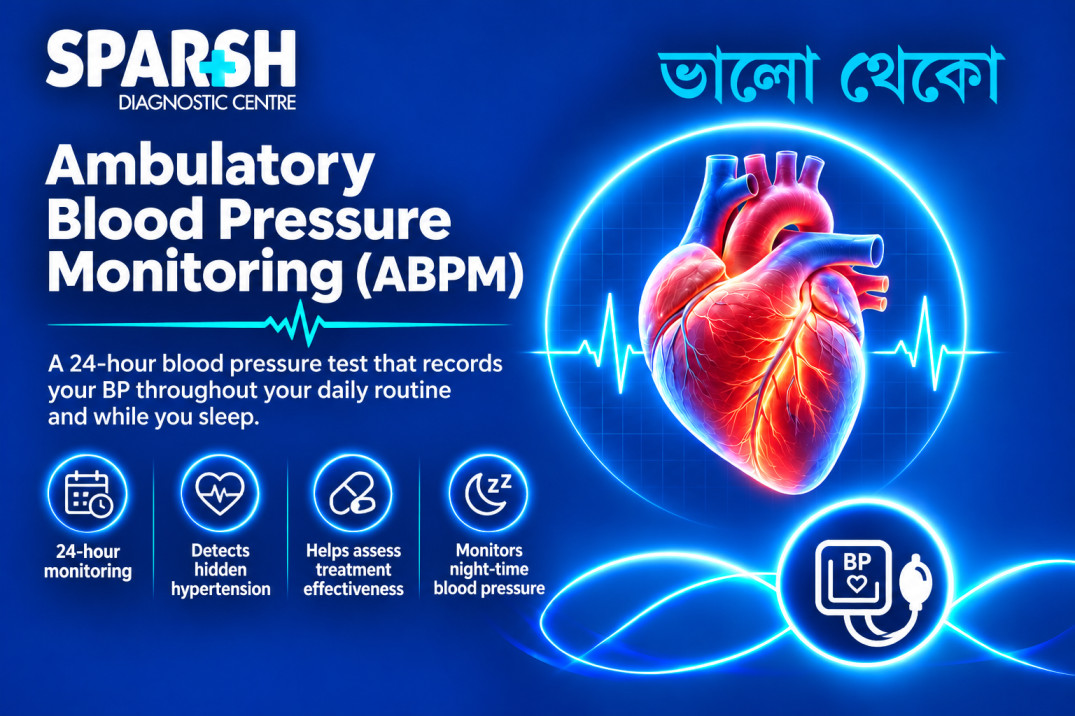
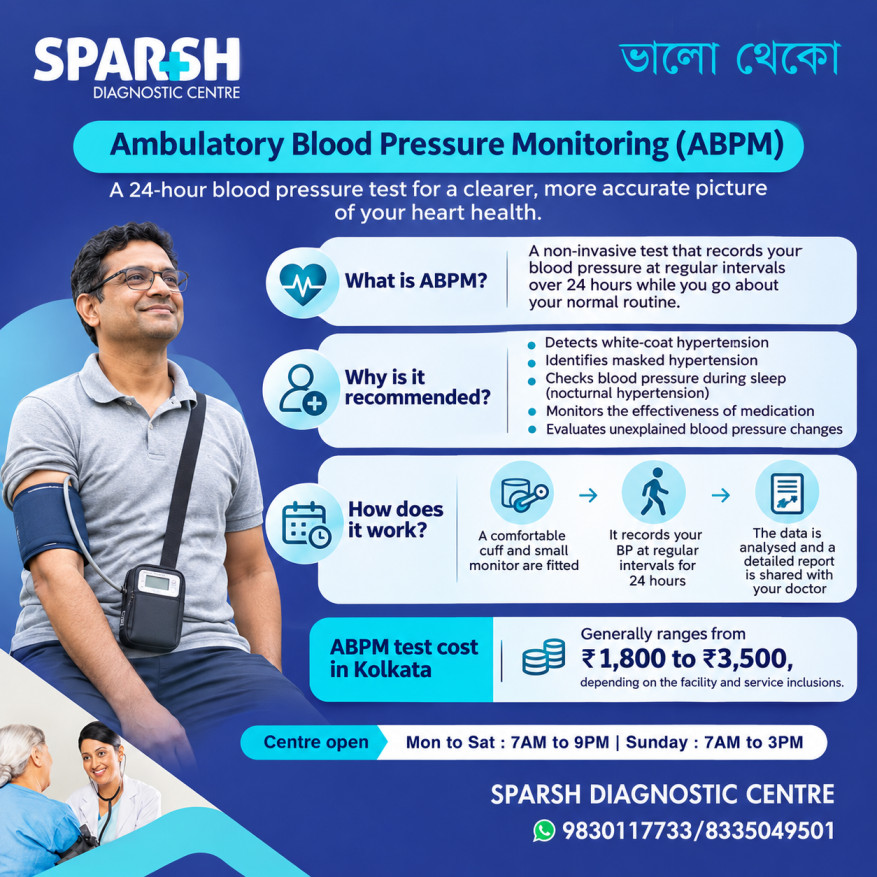
Ambulatory Blood Pressure Monitoring (ABPM) is a non-invasive diagnostic test that measures and records your blood pressure at regular intervals over a period of approximately 24 hours. It uses a small, portable digital monitor connected to a cuff fitted around your upper arm.
Unlike a conventional blood pressure check, which provides a reading at a particular moment, an ABPM test records blood pressure throughout your normal daily routine, including periods of physical activity, relaxation and sleep.
In cardiology, ABPM is particularly useful because blood pressure does not remain constant throughout the day. It naturally changes depending on factors such as stress, physical activity, sleep, medication and emotional well-being.
A person may have normal blood pressure during a doctor’s appointment but experience elevated readings at home or during everyday activities. Similarly, some people experience higher blood pressure in clinical settings because of anxiety.
A 24-hour ABPM test helps cardiologists identify these variations and understand whether blood pressure is consistently elevated.
The information obtained can help doctors diagnose hypertension, evaluate existing treatment and assess cardiovascular risk more accurately.
Why is ambulatory blood pressure monitoring recommended?
A single blood pressure reading may not always provide sufficient information to understand a person’s cardiovascular health. ABPM offers a more comprehensive assessment by recording readings throughout the day and night.
Your doctor may recommend an ABPM test for several reasons.
1. Detecting white-coat hypertension
Some individuals experience elevated blood pressure when visiting a doctor or hospital because of nervousness or anxiety. However, their blood pressure may remain normal in familiar surroundings.
This condition is known as white-coat hypertension.
ABPM helps determine whether elevated readings are limited to clinical settings or reflect consistently high blood pressure.
2. Identifying masked hypertension
Masked hypertension is the opposite of white-coat hypertension. A person’s blood pressure may appear normal during a routine medical examination but remain elevated during regular daily activities.
Since conventional blood pressure checks may fail to identify this condition, 24-hour monitoring can be particularly helpful.
3. Detecting nocturnal hypertension
Blood pressure generally decreases during sleep. However, some individuals do not experience this expected reduction.
Nocturnal hypertension refers to elevated blood pressure during sleeping hours. ABPM allows doctors to evaluate nighttime readings and identify abnormal patterns that cannot be detected through routine daytime measurements.
4. Monitoring the effectiveness of hypertension medication
Patients taking medicines for high blood pressure may require periodic assessment to determine whether their treatment is working effectively.
ABPM helps doctors understand whether medication controls blood pressure throughout the day and night or whether significant fluctuations continue.
It can provide useful information when considering adjustments to medication or its timing. However, medication changes should always be made by the treating doctor.
5. Investigating unexplained blood pressure fluctuations
Some people experience occasional episodes of dizziness, headaches, light-headedness or weakness associated with changes in blood pressure.
When clinically appropriate, ABPM can help doctors correlate reported symptoms with recorded blood pressure readings.
6. Evaluating resistant hypertension
When blood pressure remains elevated despite taking multiple prescribed medications, doctors may recommend ambulatory monitoring.
It helps establish whether hypertension is genuinely uncontrolled outside the clinical environment and provides additional information for treatment planning.
How is an ABPM test performed?
An ambulatory blood pressure monitoring test is relatively simple and does not require hospital admission.
The procedure generally involves the following steps:
Step 1: Fitting the blood pressure cuff
A trained healthcare professional places a specially designed cuff around your upper arm. The cuff is connected through a tube to a compact digital monitoring device.
Step 2: Attaching the portable monitor
The monitor is usually worn around the waist using a belt or strap. It is lightweight and designed to be carried comfortably throughout the monitoring period.
Step 3: Automatic blood pressure measurements
The device is programmed to measure blood pressure at regular intervals, commonly every 15–30 minutes during waking hours and at longer intervals during sleep, depending on the monitoring protocol.
Whenever a reading is taken, the cuff automatically inflates and records your blood pressure.
Step 4: Following your normal routine
You can generally continue your usual daily activities while wearing the device. You may be asked to maintain a diary of your activities, sleep timings, medication and any symptoms experienced during the test.
Step 5: Removing the monitor and analysing the readings
After approximately 24 hours, the monitor and cuff are removed. The recorded readings are downloaded and analysed to prepare a report for clinical interpretation.
The report provides information about daytime, nighttime and average 24-hour blood pressure patterns.
What should you do before and during an ABPM test?
ABPM does not usually require fasting or any special dietary preparation. However, following a few instructions can help ensure reliable readings.
Wear a comfortable, loose-fitting shirt with sleeves that can accommodate the cuff.
Continue your regular daily activities unless your doctor advises otherwise.
Take your prescribed medicines as usual unless specifically instructed to change them.
Avoid getting the monitoring equipment wet. Bathing and showering are generally not permitted while wearing the device.
Keep your arm relaxed and relatively still whenever the cuff inflates.
Avoid strenuous exercise or unusual physical activities during the monitoring period.
Maintain a record of your sleeping hours, medication timings and any symptoms if requested.
Try to follow your usual sleeping schedule.
The cuff may feel slightly tight when it inflates. This is normal and usually lasts only a short time.
How much does an ABPM test cost in Kolkata?
The ABPM test cost in Kolkata generally ranges from approximately ₹1,800 to ₹3,500 or more, depending on the diagnostic provider, equipment, monitoring arrangements and whether the service is conducted at a centre or at home.
Published Kolkata listings provide examples of this variation. For instance, Tata 1mg lists an ABP test at ₹1,800, Kolkata Electro Diagnostic Centre lists ABP monitoring in the ₹2,500–₹3,000 range, and RadPath Labs lists ABPM at ₹3,499.
Home-based services may have different pricing depending on technician visits, equipment delivery, collection and report preparation.
The final cost may depend on:
Duration of monitoring (24 or 48 hours, if prescribed).
Type and quality of monitoring equipment.
Whether the test is conducted at a diagnostic centre or at home.
Technician charges and home collection arrangements.
Report preparation and clinical interpretation.
At Sparsh Diagnostic Centre, Kolkata, patients can contact the centre to enquire about current ABPM test availability, charges and appointment arrangements.
It is advisable to confirm what is included in the quoted price before booking the test.
What information does an ABPM report provide?
An ABPM report contains several measurements that help doctors understand how blood pressure behaves throughout the monitoring period.
Some important parameters include:
Average 24-hour blood pressure: The overall average of readings recorded during the monitoring period.
Average daytime blood pressure: The average readings recorded while the patient is awake.
Average nighttime blood pressure: The average readings recorded during sleep.
Systolic blood pressure: The pressure exerted against artery walls when the heart contracts.
Diastolic blood pressure: The pressure in the arteries when the heart relaxes between beats.
Blood pressure dipping pattern: The extent to which blood pressure decreases during sleep compared with daytime readings.
Doctors may also assess blood pressure variability and early morning changes.
These measurements help identify different patterns of hypertension and guide further medical evaluation. Results should always be interpreted in the context of the patient’s medical history and clinical condition.
Who should consider an ABPM test?
Your doctor may recommend ambulatory blood pressure monitoring if you:
Have repeatedly elevated blood pressure readings.
Experience inconsistent blood pressure measurements.
Have suspected white-coat or masked hypertension.
Are undergoing treatment for high blood pressure.
Have suspected nocturnal hypertension.
Experience unexplained episodes of dizziness or light-headedness.
Have blood pressure that remains uncontrolled despite medication.
The test may also be useful for evaluating blood pressure patterns in patients with certain cardiovascular or kidney-related conditions, depending on their doctor’s assessment.
Why is 24-hour blood pressure monitoring important?
Hypertension is often called a silent health condition because many people do not experience noticeable symptoms even when their blood pressure remains elevated.
Undiagnosed or poorly controlled hypertension can increase the risk of heart disease, stroke, kidney damage and other cardiovascular complications.
Regular blood pressure assessment is therefore important, particularly for individuals with risk factors such as diabetes, obesity, a family history of hypertension and existing cardiovascular disease.
A 24-hour ABPM test provides information that routine blood pressure measurements may miss. By recording readings during different activities and sleep, it gives doctors a better understanding of an individual’s blood pressure profile.
Early detection and appropriate medical management can help reduce the long-term complications associated with uncontrolled hypertension.
Book your ABPM test in Kolkata at Sparsh Diagnostic Centre
Understanding your blood pressure is an important step towards protecting your cardiovascular health. If your doctor has recommended ambulatory blood pressure monitoring, choosing an appropriate diagnostic facility and following the testing instructions can help ensure a useful assessment.
At Sparsh Diagnostic Centre, Kolkata, we believe in making diagnostic investigations accessible and helping patients make informed decisions about their health.
For information about ABPM testing, current charges and appointment availability, get in touch with Sparsh Diagnostic Centre.
Frequently asked questions about ABPM testing
1. Is an ABPM test painful?
No. ABPM is a non-invasive test and does not involve needles or injections. You may experience temporary tightness when the cuff inflates, but this is generally well tolerated.
2. How long does an ABPM test take?
The test usually lasts approximately 24 hours. The monitor records blood pressure automatically at programmed intervals throughout the day and night.
3. Can I sleep while wearing an ABPM monitor?
Yes. You are expected to sleep while wearing the monitor because nighttime readings are an important part of the assessment. The cuff may inflate periodically and cause minor disturbances.
4. Can I go to work during an ABPM test?
Yes. Most people can continue their usual daily activities, including going to work. However, avoid activities that may damage the equipment or interfere with accurate readings.
5. Is ABPM better than a regular blood pressure test?
ABPM provides more comprehensive information than a single clinic reading because it measures blood pressure repeatedly over 24 hours. It can identify white-coat hypertension, masked hypertension and nighttime blood pressure abnormalities.
However, routine blood pressure measurements and home monitoring also have important roles in hypertension management.
6. Does an ABPM test require fasting?
No. Fasting is generally not required. You should follow your normal routine unless your doctor provides specific instructions.
7. What is the difference between ABPM and Holter monitoring?
Both tests involve wearing a portable monitoring device, but they measure different things.
ABPM: Records blood pressure at regular intervals over approximately 24 hours.
Holter monitoring: Continuously records the electrical activity and rhythm of the heart, helping identify abnormal heart rhythms.
Your doctor may recommend either test depending on your symptoms and clinical requirements.
8. Can ABPM detect heart disease?
ABPM does not directly diagnose heart disease. It evaluates blood pressure patterns and helps identify hypertension, which is an important risk factor for cardiovascular disease.
9. How many readings does an ABPM monitor take?
The number depends on the device’s programmed intervals and monitoring duration. A typical 24-hour study may record several dozen readings during waking and sleeping hours.
10. When will I receive my ABPM report?
Report turnaround time depends on the diagnostic facility and the time required for data analysis and clinical interpretation. Confirm the expected reporting time when booking your test.
To get an ABPM test done at Sparsh Diagnostic Centre, call our helpline numbers +91 98301 17733 and +91 83350 49501.
#BhaloTheko