

A C-reactive protein (CRP) test is a simple blood test that can tell you whether there is inflammation somewhere in the body. It is often ordered when a doctor suspects an infection, an inflammatory condition, or wants to monitor how a known condition is responding to treatment.
But there is an important point to understand: CRP is a marker of inflammation, not a diagnosis by itself. A high CRP tells you that something may be causing inflammation, but it usually cannot tell you exactly what the cause is or where it is located.
This is why a CRP result needs to be interpreted alongside your symptoms, medical history, examination and other investigations.
In this guide, we explain what CRP means, the normal CRP level, what can cause a high CRP, whether a CRP of 40 is high, which infections can raise it, how CRP is treated, and what you can do to support healthy inflammation levels.
What is C-reactive protein?
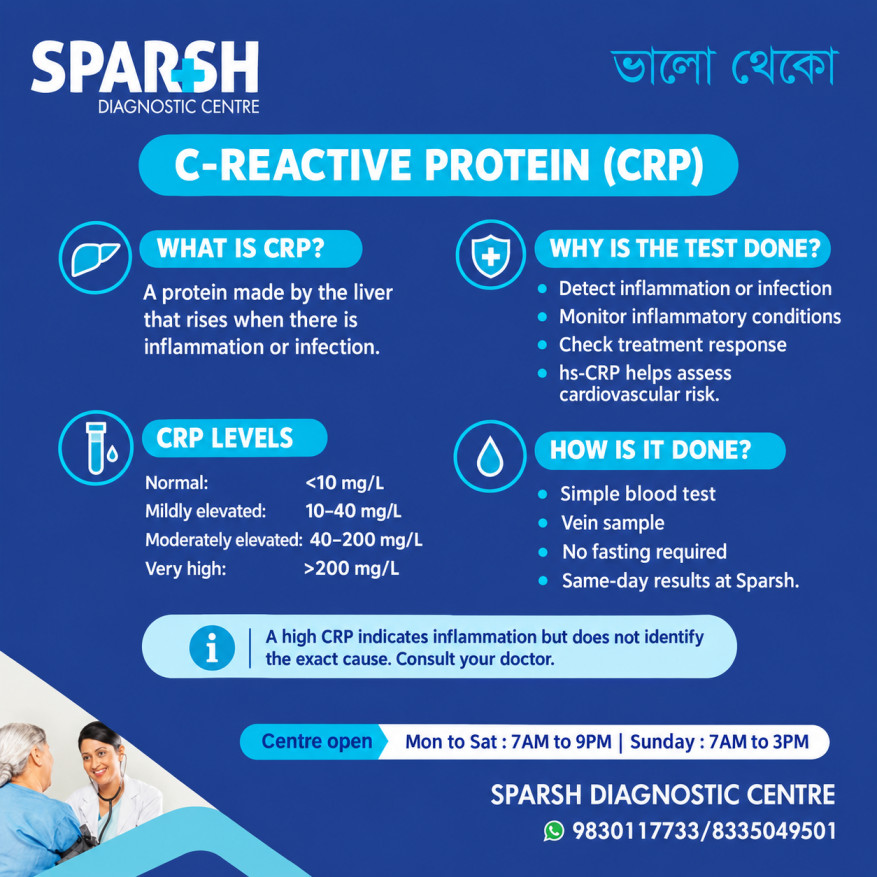
C-reactive protein, commonly called CRP, is a protein produced mainly by the liver. When the body responds to infection, tissue injury or inflammation, CRP levels can rise in the blood.
Inflammation is a normal part of the body’s immune response. It helps the body deal with infections and repair damaged tissues. Once the underlying problem improves, CRP generally falls.
This makes CRP particularly useful for monitoring inflammation over time.
For example, a person with a bacterial infection may have an elevated CRP when they are unwell. If appropriate treatment works and the inflammation settles, a repeat CRP may show that the level is coming down.
However, CRP cannot usually tell you whether the inflammation is caused by bacteria, a virus, an autoimmune disease, an injury or another condition on its own. Doctors therefore use CRP together with other clinical information.
What is a CRP blood test used for?
Doctors may recommend a CRP test for several reasons.
It may be used to:
- Look for evidence of inflammation.
- Support the evaluation of a suspected infection.
- Monitor an inflammatory or autoimmune condition.
- Monitor recovery after surgery or an invasive procedure.
- Assess whether treatment is helping.
- Follow changes in inflammation over time.
- Help assess certain situations where severe infection is suspected.
CRP can be useful because the level tends to rise when inflammation increases and fall as inflammation resolves.
However, CRP should not be interpreted in isolation. A person can have a high CRP for many different reasons, while someone with a serious illness may occasionally have a less impressive CRP result, particularly in certain clinical circumstances.
What is the normal level for CRP?
There isn’t one universal CRP range that applies to every laboratory.
For a standard CRP test, many laboratories consider a result around less than 5–10 mg/L to be within the usual reference range, although the exact reference range depends on the laboratory and testing method.
Some sources describe healthy CRP levels as below approximately 8–10 mg/L, while others use lower limits. This is why you should always compare your result with the reference range printed on your own laboratory report.
It is also important not to confuse a standard CRP test with high-sensitivity CRP (hs-CRP).
hs-CRP is designed to detect much smaller changes in CRP and is primarily used in certain situations to help assess cardiovascular risk. Its interpretation is different from that of a standard CRP test.
A simple guide to CRP levels
The following ranges can provide a general understanding, but they should not be treated as a diagnosis:
| CRP level | General interpretation |
|---|---|
| Less than about 10 mg/L | Often within or close to the usual range |
| 10–40 mg/L | Elevated; may occur with infections or inflammation |
| 40–200 mg/L | Significantly elevated; infection or substantial inflammation should be considered |
| More than 200 mg/L | Very high; can occur with severe infection or major inflammatory processes |
These categories are only broad guides. CRP values overlap considerably between different conditions, and a result must be interpreted in context.
What does it mean if CRP is high?
A high CRP generally means that there is inflammation somewhere in the body.
The cause may be relatively minor, such as a recent infection, or may require medical attention.
Possible causes include:
- Bacterial infections
- Viral infections
- Fungal infections
- Autoimmune diseases
- Rheumatoid arthritis
- Lupus
- Inflammatory bowel disease
- Certain lung conditions
- Significant tissue injury
- Recent surgery
- Some cancers
- Obesity and chronic low-grade inflammation
- Smoking
- Other inflammatory conditions
CRP does not tell you exactly which of these is responsible.
For example, a person with a fever and cough and a person with an autoimmune disease may both have an elevated CRP, even though the underlying causes are completely different.
Is a CRP of 40 high?
Yes. A CRP of 40 mg/L is generally considered elevated.
However, the significance depends on the clinical situation.
A CRP of 40 mg/L may occur with an infection, inflammatory disease or another inflammatory process. It does not automatically mean that the person has a severe bacterial infection.
CRP values can overlap between bacterial and viral infections, and the number alone cannot reliably identify the cause.
For example, studies of febrile illnesses have found substantial variation in CRP levels between different bacterial and viral infections. This is one reason doctors consider symptoms, examination findings and other tests rather than using CRP alone to decide on a diagnosis or treatment.
If your CRP is 40 mg/L, your doctor may consider factors such as:
- Fever or chills
- Cough or breathing symptoms
- Urinary symptoms
- Abdominal pain
- Joint symptoms
- Recent surgery or injury
- Other blood-test results
- How long you have been unwell
- Existing medical conditions
What infections cause a high CRP?
Many infections can raise CRP.
These include:
- Pneumonia and other respiratory infections
- Urinary tract infections
- Kidney infections
- Severe skin or soft-tissue infections
- Bone infections
- Abdominal infections
- Certain gastrointestinal infections
- Some bacterial bloodstream infections
- Viral infections
- Fungal infections
- Some parasitic infections
Bacterial infections can produce substantial CRP elevations, particularly when the infection is significant. However, viral infections can also cause high CRP levels, so CRP alone should not be used to determine whether antibiotics are necessary.
In tropical regions, studies have found elevated CRP levels in illnesses such as dengue, chikungunya, influenza, leptospirosis and several bacterial infections. The amount can vary considerably between infections and individuals.
Does a high CRP always mean infection?
No.
This is one of the most important things to remember about a CRP test.
CRP is an inflammation marker, not an infection-specific marker.
CRP can rise because of:
- Autoimmune disease
- Inflammatory bowel disease
- Arthritis
- Tissue injury
- Surgery
- Certain cancers
- Obesity
- Smoking
- Other inflammatory conditions
Therefore, treating a high CRP without finding the underlying cause is not the right approach.
The goal is to identify and treat why the CRP is elevated.
What is the treatment for high CRP?
There is no single medicine that treats “high CRP.”
Instead, treatment depends on the underlying cause.
For example:
- A bacterial infection may require antibiotics when clinically indicated.
- A viral infection may require supportive treatment and monitoring, depending on the virus.
- An autoimmune condition may require anti-inflammatory or immune-modifying medicines.
- An inflammatory bowel condition may require specific treatment prescribed by a gastroenterologist.
- An injury requires appropriate management and time for healing.
- An underlying metabolic or lifestyle-related inflammatory burden may benefit from weight management, physical activity, sleep improvement and dietary changes.
This distinction is important because CRP itself is not the disease.
The aim is to address the condition causing inflammation and then monitor whether the CRP falls as the underlying problem improves.
Can CRP go back to normal?
Yes.
CRP can return to normal when the underlying inflammation settles.
For example, if an infection is successfully treated and the body recovers, CRP generally falls. Similarly, CRP may decrease when an inflammatory condition becomes better controlled.
A falling CRP can therefore be useful when monitoring recovery.
However, the speed at which CRP falls depends on the underlying condition, the severity of inflammation and how effectively the cause has been addressed.
How to reduce CRP at home
If your CRP is mildly elevated because of chronic low-grade inflammation, lifestyle habits can support overall health and may help improve inflammatory markers.
However, lifestyle measures should not replace medical evaluation when CRP is significantly elevated or you have symptoms of illness.
Helpful habits include:
Eat a balanced, minimally processed diet
Build meals around vegetables, fruits, whole grains, pulses, legumes, nuts and seeds.
A Mediterranean-style dietary pattern has been associated with improvements in inflammatory markers, including CRP, although the strength of evidence varies between studies.
Eat more fibre-rich foods
Vegetables, fruits, beans, lentils, oats and whole grains provide fibre and other nutrients that support overall metabolic health.
Choose healthy fats
Nuts, seeds, olive oil and other sources of unsaturated fats can form part of a balanced eating pattern.
Exercise regularly
Regular physical activity supports cardiovascular and metabolic health. Avoid unusually strenuous exercise immediately before a CRP test because intense exercise can temporarily affect inflammatory markers.
Maintain a healthy weight
Excess body fat can be associated with low-grade inflammation and higher CRP levels.
Avoid smoking
Smoking is associated with increased inflammation and can contribute to higher CRP levels.
Get adequate sleep
Poor sleep and sleep disturbances have been associated with inflammatory changes. Improving sleep is therefore part of a broader healthy lifestyle.
Which foods cause high CRP?
It is more useful to think about overall dietary patterns rather than blaming one particular food for a high CRP.
A diet consistently high in highly processed foods, excess added sugar, refined carbohydrates and unhealthy fats may contribute to an overall pattern associated with inflammation, particularly when it also contributes to excess calorie intake and weight gain.
This does not mean that eating one particular food will suddenly make your CRP high.
Instead, focus on the overall quality of your diet.
Foods to limit include:
- Highly processed snack foods
- Sugary drinks
- Excess sweets and desserts
- Foods high in trans fats
- Excessively refined foods
- Frequent deep-fried foods
- Highly processed meats
At the same time, increase vegetables, fruits, legumes, whole grains, nuts and seeds.
Research reviewing dietary patterns suggests that Mediterranean-style and other healthy dietary patterns may help lower CRP, although results vary and diet should not be considered a treatment for an acute infection.
Which fruit reduces CRP?
There is no single fruit that can reliably be prescribed as a treatment for high CRP.
However, fruits such as:
- Berries
- Apples
- Oranges
- Guava
- Pomegranate
- Papaya
- Kiwi
can be part of a healthy diet.
Fruits provide fibre, vitamins, minerals and various plant compounds. The overall dietary pattern is more important than relying on one “CRP-lowering” fruit.
If your CRP is high because of an infection or another medical condition, eating fruit alone will not treat the underlying cause.
Which vitamin reduces CRP?
Vitamin D has been studied extensively in relation to CRP, but the evidence is not consistent enough to say that vitamin D supplementation reliably lowers CRP in everyone.
Some studies have reported reductions in CRP, while other systematic reviews and meta-analyses have found no statistically significant overall effect.
Therefore, vitamin supplements should not be started simply because a CRP result is high.
If you have a suspected vitamin deficiency, your doctor can recommend appropriate testing and supplementation.
What are the risks of high CRP?
The risk associated with a high CRP depends largely on why it is high.
A temporary rise during an infection may resolve once the infection clears.
Persistent elevation may indicate ongoing inflammation, which can be associated with chronic inflammatory diseases and cardiometabolic risk.
High-sensitivity CRP is also used in specific cardiovascular risk assessments. It should not, however, be confused with the standard CRP test used to investigate acute inflammation.
The important question is therefore not simply, “How do I lower my CRP?” but rather, “Why is my CRP elevated?”
What cancers cause CRP to be high?
CRP can be elevated in some people with cancer because cancer and the body’s response to cancer can involve inflammation.
However, CRP is not a cancer-specific marker.
Elevated CRP has been reported in association with several cancers, but an elevated CRP does not mean that someone has cancer.
CRP can also be elevated because of infections, autoimmune diseases, injuries and many other conditions.
The National Cancer Institute notes that high CRP may occur with cancer as well as several non-cancerous inflammatory conditions.
If CRP remains elevated without an obvious explanation, your doctor may decide whether additional investigations are appropriate based on your age, symptoms, examination and other test results.
Is CRP a tumour marker?
No. CRP is not a tumour marker.
A tumour marker is generally a substance that can provide information related to a particular cancer or group of cancers.
CRP is different. It is a general marker of inflammation.
It may be elevated in someone who has cancer, but it can also be elevated in many people who do not have cancer.
Therefore, a high CRP should not be interpreted as evidence of cancer without other clinical findings.
Is CRP high in liver disease?
It can be.
CRP is produced primarily by the liver, but liver disease does not simply mean that CRP will always be low.
People with chronic liver disease and cirrhosis can have elevated CRP because of ongoing systemic inflammation. In cirrhosis, however, the relationship between CRP and infection can become more complicated, particularly as liver dysfunction becomes more advanced.
This means a CRP result in someone with significant liver disease needs to be interpreted by a clinician alongside liver function, symptoms and other investigations.
Is a high CRP level an emergency?
A high CRP by itself is not necessarily an emergency.
The urgency depends on the person’s symptoms and the suspected underlying cause.
For example, someone with a moderately elevated CRP but no significant symptoms may simply need outpatient assessment and follow-up.
On the other hand, a person with high CRP who has symptoms suggesting a serious infection may need urgent medical assessment.
Seek urgent medical attention if an elevated CRP is accompanied by symptoms such as:
- Severe difficulty breathing
- Confusion or unusual drowsiness
- Severe or worsening chest pain
- Fainting
- Very low blood pressure or extreme weakness
- Persistent high fever with severe illness
- Rapid breathing
- Rapid heart rate with significant illness
- Severe abdominal pain
- Signs of a serious infection
CRP can be elevated in sepsis, which is a medical emergency. But the CRP number itself does not diagnose sepsis.
When should I worry about CRP?
Rather than focusing on one number, consider three things:
How high is the CRP?
A result substantially above your laboratory’s reference range deserves medical interpretation, particularly if it is persistent or rising.
Do you have symptoms?
Fever, chills, breathing difficulties, severe pain, vomiting, confusion or marked weakness may require prompt evaluation.
Is the CRP staying elevated?
A persistently elevated CRP without an obvious explanation may warrant further investigation.
A single mildly elevated result does not necessarily mean something serious. Recent illness, injury, smoking, obesity and other factors can affect CRP levels.
Why does CRP increase during inflammation?
When the immune system detects infection, injury or another inflammatory trigger, it releases signalling molecules that stimulate the liver to produce acute-phase proteins such as CRP.
CRP can rise relatively quickly during an acute inflammatory response.
As the underlying inflammatory stimulus resolves, CRP usually decreases.
This rise-and-fall pattern is one reason doctors sometimes repeat the test rather than relying on one measurement.
CRP vs hs-CRP: what is the difference?
Although both tests measure C-reactive protein, they are used for different purposes.
Standard CRP
Usually used to investigate or monitor inflammation, including suspected infection and inflammatory disease.
High-sensitivity CRP (hs-CRP)
Designed to detect much smaller concentrations of CRP and may be used in selected cardiovascular risk assessments.
A result that is considered meaningful for hs-CRP cardiovascular risk assessment should not automatically be interpreted using the ranges used for an acute CRP test.
How is the CRP test done?
A CRP test requires a small blood sample.
A healthcare professional usually draws blood from a vein in your arm and sends the sample to a laboratory for analysis.
The procedure is quick and generally requires no special preparation for a standard CRP test. However, always follow the instructions provided by your doctor or laboratory.
Certain medicines, supplements and recent strenuous exercise may affect test interpretation, so tell your healthcare provider about relevant medicines and supplements you take.
Does CRP require fasting?
A standard CRP blood test generally does not require fasting.
However, if your doctor has ordered CRP along with other blood tests, such as a lipid profile or glucose testing, you may need to follow fasting instructions for those tests.
Always follow the preparation instructions provided with your laboratory appointment.
What happens if CRP remains high?
If CRP remains elevated, your doctor will usually look for the underlying reason rather than simply trying to lower the number.
Depending on your symptoms, this may involve:
- A physical examination
- Complete blood count
- ESR
- Liver and kidney function tests
- Urine testing
- Imaging
- Cultures when infection is suspected
- Autoimmune testing
- Other investigations based on your symptoms
The appropriate tests depend on the clinical situation.
Can lifestyle changes lower CRP?
They can help with chronic low-grade inflammation, particularly when they improve overall metabolic health.
A practical approach includes:
- Eat plenty of vegetables and fruit.
- Include pulses, beans and whole grains.
- Choose nuts and seeds regularly.
- Prefer unsaturated fats.
- Reduce highly processed foods.
- Avoid smoking.
- Exercise regularly.
- Maintain a healthy weight.
- Prioritise good-quality sleep.
- Manage existing conditions such as diabetes, high blood pressure and high cholesterol with appropriate medical care.
Research examining dietary patterns suggests that Mediterranean-style and other healthy dietary approaches can improve CRP in some populations, although the evidence is not uniform.
Frequently asked questions about CRP
What does it mean if CRP is high?
A high CRP generally indicates inflammation somewhere in the body. Possible causes include infection, autoimmune disease, inflammatory conditions, injury, surgery, obesity and some cancers. CRP does not identify the exact cause on its own.
What infections cause a high CRP?
Both bacterial and viral infections can increase CRP. Pneumonia, urinary infections, kidney infections, bone infections, abdominal infections and severe systemic infections can cause significant elevations. Certain tropical infections can also increase CRP.
What is the normal level for CRP?
The exact normal range varies by laboratory. Many laboratories consider CRP below approximately 5–10 mg/L to be within the usual range, but your laboratory’s stated reference range should take priority.
What is the treatment for high CRP?
There is no specific treatment for CRP itself. Treatment is directed at the underlying cause, such as infection, autoimmune disease, injury or another inflammatory condition.
Is a CRP of 40 high?
Yes. A CRP of 40 mg/L is generally elevated. It can occur with infection or other inflammatory conditions, but the result alone cannot determine the cause.
Which foods cause high CRP?
There is no single food that reliably causes a high CRP. A long-term diet dominated by highly processed foods, excess added sugar and unhealthy fats may contribute to chronic inflammation, particularly when associated with excess calorie intake and weight gain.
Can CRP go back to normal?
Yes. CRP often returns toward normal when the underlying inflammation resolves or is successfully treated.
When should I worry about CRP?
Pay particular attention when CRP is substantially elevated, continues to rise or remains elevated without an obvious explanation, especially when accompanied by fever, severe pain, breathing problems, confusion or other significant symptoms.
What cancers cause CRP to be high?
CRP can be elevated in people with several types of cancer, but it is not cancer-specific. Infection and many non-cancerous inflammatory conditions can also cause high CRP.
Is CRP high in liver disease?
It can be. Chronic liver disease and cirrhosis can be associated with systemic inflammation and elevated CRP. Interpretation becomes more complex in advanced liver disease.
Is a high CRP level an emergency?
Not necessarily. CRP is a laboratory marker, not an emergency diagnosis. Urgency depends on the underlying condition and symptoms. Severe symptoms such as difficulty breathing, confusion, fainting or signs of severe infection require urgent medical attention.
Is CRP a tumour marker?
No. CRP is an inflammation marker rather than a tumour marker.
Which fruit reduces CRP?
No individual fruit has been proven to reliably treat high CRP. Berries, guava, oranges, apples, papaya and other fruits can form part of a healthy, fibre-rich dietary pattern.
How can I reduce CRP at home?
For chronic low-grade inflammation, focus on a balanced diet rich in vegetables, fruits, legumes, whole grains, nuts and seeds, regular physical activity, adequate sleep, avoiding smoking and maintaining a healthy weight. However, significant CRP elevation requires assessment for an underlying medical cause.
Which vitamin reduces CRP?
Vitamin D has been studied for its effect on CRP, but evidence is mixed. Vitamin D supplementation should generally be based on an identified deficiency or medical recommendation rather than used simply to treat a high CRP.
What is the treatment if CRP is high?
Treatment depends on the underlying cause. A bacterial infection may require antibiotics, while autoimmune or inflammatory diseases may require other specific medicines. A high CRP should therefore be investigated rather than treated as a condition on its own.
Final takeaway
C-reactive protein is a useful marker that tells us that inflammation may be occurring somewhere in the body. It can rise during infections, autoimmune diseases, tissue injury and several other conditions.
A high CRP does not automatically mean cancer, a serious infection or an emergency.
Likewise, a CRP of 40 mg/L should not be interpreted in isolation.
The most important question is why the CRP is elevated.
If your CRP result is abnormal, discuss it with your doctor, particularly if you have symptoms or if the level remains elevated on repeat testing. Your doctor may combine the CRP result with your symptoms, examination and other investigations to identify the underlying cause.
For people with mildly elevated CRP associated with chronic lifestyle-related inflammation, healthy eating, regular physical activity, maintaining a healthy weight, avoiding smoking and getting adequate sleep can support better overall health.
Remember: CRP is a clue, not a diagnosis.
👉 Book your CRP Test at Sparsh Diagnostic Centre
#BhaloTheko
Disclaimer:
No content on this site, regardless of date, should ever be used as a substitute for direct medical advice from your doctor or other qualified clinician.

Sources and further reading
- MedlinePlus – C-reactive protein (CRP) test
MedlinePlus: C-reactive protein (CRP) test - Mayo Clinic – C-reactive protein test
Mayo Clinic: C-reactive protein test - Cleveland Clinic – C-reactive protein (CRP) test
Cleveland Clinic: C-reactive protein (CRP) test - Mahajan Imaging & Labs – CRP test normal range in India
Mahajan Imaging & Labs: CRP test normal range in India - National Cancer Institute – C-reactive protein
National Cancer Institute: C-reactive protein - PubMed – Dietary patterns and circulating CRP
PubMed: Dietary patterns and C-reactive protein - PubMed – Healthy dietary patterns and CRP
PubMed: Healthy dietary patterns and C-reactive protein - PubMed – Vitamin D supplementation and CRP
PubMed: Vitamin D supplementation and C-reactive protein - PubMed – CRP and bacterial infection in cirrhosis
PubMed: C-reactive protein and bacterial infection in cirrhosis - PubMed – CRP in cirrhosis and liver disease
PubMed: C-reactive protein in liver cirrhosis



[…] markers (CRP, ESR, […]
[…] help detect anemia, elevated white blood cell counts, and other markers of inflammation, such as C-reactive protein (CRP) or erythrocyte sedimentation rate […]
[…] inflammatory markers (CRP, […]
[…] inflammatory markers (CRP, […]
[…] Inflammatory markers – ESR, CRP […]
[…] markers (CRP, […]
[…] C-Reactive Protein (CRP) and White Blood Cell (WBC) count: Suggest infection or inflammation. […]
[…] CRP (C-reactive protein): Elevated levels (>150 mg/L) suggest necrosis. […]
[…] sedimentation rate (ESR) and C-reactive protein (CRP) – markers of […]
[…] C-reactive protein (CRP): This is another marker of inflammation that is often elevated in GCA. […]