


Noticing blood in your stool can be frightening, particularly when it occurs alongside frequent loose or watery bowel movements. While diarrhea is often caused by temporary digestive disturbances or infections, the presence of blood is a symptom that should never be ignored.
Bloody diarrhea can develop when the lining of the intestines becomes inflamed, infected or damaged. It may be associated with bacterial infections, inflammatory bowel disease (IBD), intestinal ulcers and other gastrointestinal conditions. Sometimes, blood may also come from problems affecting the anus or rectum.
The appearance of blood can vary. You might notice bright red streaks, dark red or maroon blood mixed with loose stools, or blood accompanied by mucus. Other symptoms, such as abdominal cramps, fever, nausea and dehydration, may also occur.
Although some causes are relatively short-lived and resolve with appropriate care, others require prompt medical investigation and treatment.
Understanding the possible causes, recognising warning signs and knowing when to seek medical attention can help prevent complications.
What is bloody diarrhea?
Bloody diarrhea refers to the passage of loose or watery stools containing visible blood. It usually indicates bleeding or inflammation somewhere in the digestive tract, particularly the intestines, colon, rectum or anal canal.
The medical term for blood passed through the rectum is rectal bleeding. When blood is mixed with diarrheal stools, it may indicate inflammation or infection of the intestinal lining, a condition sometimes described as dysentery when accompanied by frequent stools containing blood and mucus.
Bloody diarrhea can occur suddenly, particularly during an intestinal infection, or develop gradually in people with chronic inflammatory conditions.
The amount of blood can range from a few streaks to significant bleeding. Even a small quantity deserves medical attention when it accompanies diarrhea.
It is important to distinguish bloody diarrhea from occasional blood on toilet paper after passing a hard stool. The latter may be associated with haemorrhoids or an anal fissure, whereas blood mixed with loose stools raises concern for an intestinal cause.
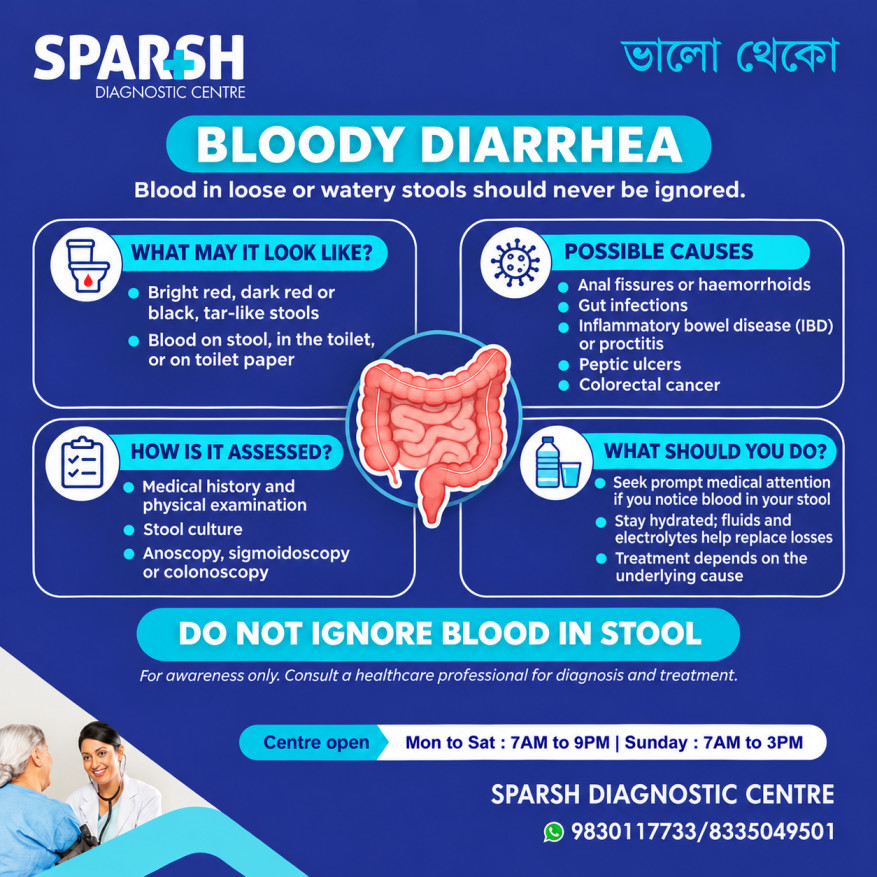
What does bloody diarrhea look like?
The appearance of blood can provide useful clues about its possible source.
Common appearances include:
- Bright red blood: Fresh blood may appear on the surface of loose stools, on toilet paper or in the toilet bowl. It often suggests bleeding from the lower digestive tract, including the colon, rectum or anus.
- Dark red or maroon blood: Blood of this colour may indicate bleeding from higher parts of the colon or small intestine.
- Blood mixed with mucus: Bloody, mucus-filled diarrhea can occur with intestinal infections and inflammatory bowel disease.
- Black, tar-like stools: Black, sticky stools may indicate bleeding from the upper digestive tract, such as the stomach or upper small intestine. This is known as melena and requires urgent medical assessment.
The colour alone cannot establish the source of bleeding. A healthcare professional may need to examine the patient and recommend appropriate investigations.
What are the symptoms of bloody diarrhea?
Bloody diarrhoea may occur alongside several other digestive and general symptoms. These depend on the underlying cause and the severity of the condition.
Common symptoms include:
- Frequent loose or watery bowel movements
- Visible blood in the stool
- Abdominal pain or stomach cramps
- Urgent need to pass stools
- Mucus in the stool
- Fever and chills
- Nausea and vomiting
- Rectal discomfort or pain
- Weakness and fatigue
- Loss of appetite
In more severe cases, significant fluid loss or intestinal bleeding may lead to dehydration, dizziness, fainting and anaemia.
Some individuals may also experience unexplained weight loss, persistent changes in bowel habits or symptoms that repeatedly return. These signs warrant further investigation, particularly when inflammatory bowel disease or another chronic gastrointestinal condition is suspected.
What is the cause of bloody diarrhea?
There are several possible causes of bloody diarrhoea. The most common include intestinal infections and inflammatory conditions affecting the digestive tract. However, other gastrointestinal disorders can also produce similar symptoms.
1. Bacterial intestinal infections
Bacterial infections are an important cause of acute bloody diarrhoea.
Certain bacteria enter the digestive system through contaminated food or water, inadequately cooked food or contact with infected individuals. They can damage or inflame the intestinal lining, resulting in bleeding.
Some bacteria associated with bloody diarrhoea include:
- Shigella: Causes shigellosis, an intestinal infection that can produce fever, abdominal cramps and frequent bloody stools containing mucus.
- Salmonella: Often transmitted through contaminated food, particularly undercooked poultry, eggs and other contaminated products. It can cause fever, abdominal discomfort and diarrhoea, which may sometimes become bloody.
- Campylobacter: Commonly associated with contaminated food, especially undercooked poultry. Symptoms include abdominal pain, fever and diarrhoea that may contain blood.
- Escherichia coli (E. coli): Certain strains, particularly Shiga toxin-producing E. coli (STEC), can cause severe intestinal inflammation and bloody diarrhoea.
- Yersinia: This bacterial infection can cause abdominal pain, fever and diarrhea, sometimes accompanied by blood.
Infections may also spread through contaminated drinking water, poor food hygiene and inadequate handwashing.
2. Inflammatory bowel disease (IBD)
Inflammatory bowel disease refers to a group of chronic conditions that cause inflammation in the digestive tract. The two main types are ulcerative colitis and Crohn’s disease.
Ulcerative colitis
Ulcerative colitis causes inflammation and ulcers in the inner lining of the large intestine and rectum.
The damaged intestinal lining can bleed, resulting in bloody diarrhea. Patients may also experience abdominal cramps, frequent bowel movements, urgency and mucus in the stool.
Symptoms can occur in episodes known as flare-ups, followed by periods when the condition becomes less active.
Crohn’s disease
Crohn’s disease can affect any part of the digestive tract, from the mouth to the anus, although it commonly affects the small intestine and colon.
Inflammation may extend through multiple layers of the intestinal wall. Symptoms include persistent diarrhea, abdominal pain, fatigue, weight loss and, in some cases, blood in the stool.
Both conditions require appropriate medical evaluation and long-term management.
3. Infectious colitis
Colitis refers to inflammation of the colon. When caused by an infection, it is known as infectious colitis.
Bacterial infections, certain parasites and other infectious agents can damage the colon’s inner lining, leading to inflammation and bleeding.
Patients may experience:
- Bloody or mucus-filled diarrhoea
- Abdominal cramps
- Fever
- Frequent bowel movements
- Nausea and vomiting
The treatment depends on the organism responsible for the infection. Stool investigations may help identify the cause.
4. Amoebic dysentery
Amoebic dysentery is an intestinal infection caused by a parasite called Entamoeba histolytica.
It spreads mainly through food or water contaminated with infected faecal matter. The parasite can invade the intestinal lining, causing ulcers and bleeding.
Symptoms may include:
- Bloody diarrhea
- Mucus in the stool
- Abdominal pain
- Fever
- Painful bowel movements
- Weakness and fatigue
Amoebic infection is an important consideration in regions where contaminated food and water are potential sources of infection.
Stool testing can help identify the parasite, and specific anti-parasitic medication may be required.
5. Hemorrhoids and anal fissures
Haemorrhoids are swollen blood vessels around the anus or inside the rectum. They can cause bright red blood during or after bowel movements.
An anal fissure is a small tear in the lining of the anal canal. It commonly develops due to passing hard stools or straining during bowel movements.
Both conditions can cause rectal bleeding. However, they generally produce blood on the toilet paper or the surface of stools rather than blood mixed throughout watery diarrhoea.
If bleeding occurs alongside diarrhoea, other intestinal causes should also be considered.
6. Diverticular disease
Diverticula are small pouches that can develop in the wall of the large intestine. Diverticulosis refers to the presence of these pouches.
Sometimes, blood vessels associated with diverticula rupture, causing bleeding from the colon. This may result in sudden passage of bright red or maroon blood.
Diverticulitis occurs when diverticula become inflamed or infected. It can cause abdominal pain, fever and changes in bowel habits.
Although diverticular bleeding does not always cause diarrhoea, it is an important potential cause of gastrointestinal bleeding.
7. Colorectal polyps and colorectal cancer
Colorectal polyps are abnormal growths that develop on the inner lining of the colon or rectum.
Some polyps can bleed, resulting in visible or microscopic blood in the stool.
Colorectal cancer can also cause bleeding from the digestive tract. Other possible symptoms include:
- Persistent changes in bowel habits
- Unexplained weight loss
- Abdominal discomfort
- Fatigue
- Iron-deficiency anemia
- Blood in the stool
Not everyone with blood in their stool has cancer. However, persistent or recurrent bleeding should never be dismissed, particularly in individuals with additional risk factors or a family history of colorectal cancer.
8. Reduced blood supply to the colon (ischemic colitis)
Ischaemic colitis occurs when blood flow to part of the large intestine becomes reduced.
Insufficient blood supply can damage the intestinal lining and cause inflammation and bleeding.
Symptoms may include sudden abdominal pain, an urgent need to pass stools and bloody diarrhoea.
This condition is more frequently seen in older adults and people with certain cardiovascular or circulatory conditions. Severe cases may require hospital treatment.
Is bloody diarrhea an emergency?
Bloody diarrhoea should always be taken seriously, but whether it is an immediate emergency depends on the amount of bleeding, associated symptoms and the patient’s overall condition.
Seek emergency medical attention immediately if you experience:
- Heavy or continuous rectal bleeding
- Large blood clots in the stool
- Severe or worsening abdominal pain
- Dizziness, fainting or confusion
- Extreme weakness or signs of shock
- Rapid heartbeat or difficulty breathing
- Black, tar-like stools
- Persistent vomiting or inability to keep fluids down
- Signs of severe dehydration, such as very little urine or marked drowsiness
These symptoms may indicate significant gastrointestinal bleeding, severe infection or another serious complication.
Even if the bleeding is relatively small, blood mixed with diarrhoea should be assessed by a healthcare professional promptly. Do not wait several days to see whether it disappears.
Children, older adults, pregnant individuals and people with weakened immune systems may be particularly vulnerable to complications and should receive medical advice without delay.
How long should bloody diarrhea last?
The duration of bloody diarrhoea depends on its underlying cause.
When caused by certain bacterial infections, symptoms may improve within a few days with appropriate supportive care. Some infections, however, can persist for one to three weeks or longer.
For example:
- Campylobacter infection: Symptoms commonly last around one week, although recovery may take longer.
- Shiga toxin-producing E. coli infection: Bloody diarrhoea often lasts approximately three to eight days.
- Salmonella infection: Symptoms may last several days, although some cases can persist longer.
- Inflammatory bowel disease: Symptoms may continue for weeks or recur during disease flare-ups unless appropriately treated.
There is no universally safe waiting period for bloody diarrhoea. Even if the symptoms appear mild or improve temporarily, the presence of blood warrants prompt medical assessment.
Persistent or recurrent bleeding requires further investigation to identify the underlying condition.
How much blood in diarrhea is bad?
There is no specific quantity of blood that can be considered safe when it appears in diarrhoeal stools.
A small streak of bright red blood may result from an anal fissure or haemorrhoid. However, blood mixed with loose or watery stools may indicate inflammation or infection within the intestines.
The amount of visible blood does not always reflect the seriousness of the underlying condition.
For example, a small amount of bleeding may occur with inflammatory bowel disease or an intestinal infection that requires treatment. Conversely, substantial bleeding may indicate a more serious gastrointestinal problem.
Seek emergency medical care if you notice large amounts of blood, blood clots, continuous bleeding or bleeding accompanied by dizziness, fainting, severe abdominal pain or weakness.
Even a small amount of blood mixed with diarrhoea should be discussed with a healthcare professional.
How is bloody diarrhea diagnosed?
Diagnosing bloody diarrhoea involves identifying the source of bleeding and determining the underlying cause.
A healthcare professional will consider the patient’s symptoms, medical history, physical examination and appropriate investigations.
The diagnostic approach may include the following.
1. Medical history and physical examination
The doctor may ask questions about:
- When the diarrhoea started
- How frequently bowel movements occur
- The colour and appearance of the blood
- Whether blood is mixed with stools or appears separately
- Presence of abdominal pain, fever or vomiting
- Recent travel history
- Recent consumption of potentially contaminated food or water
- Recent antibiotic use
- Previous gastrointestinal conditions
- Current medications and medical history
A physical examination may include checking for abdominal tenderness, dehydration and signs of significant blood loss.
Depending on the symptoms, the doctor may also examine the anal and rectal area.
2. Stool tests
Stool investigations are particularly useful when an intestinal infection is suspected.
These may include:
- Stool culture: Helps identify certain disease-causing bacteria, including Salmonella, Shigella and Campylobacter.
- Stool microscopy: May help identify red blood cells, white blood cells and certain parasites.
- Stool antigen or molecular tests: Can detect specific infectious organisms, including certain parasites and bacteria.
- Shiga toxin testing: Helps identify Shiga toxin-producing E. coli, which is important because treatment decisions may differ for these infections.
- Clostridioides difficile testing: May be recommended in patients with relevant symptoms, particularly following antibiotic use.
The exact stool tests depend on the patient’s symptoms and clinical history.
3. Blood tests
Blood investigations may help assess the severity of the illness and identify complications.
Common tests include:
- Complete blood count (CBC): Checks haemoglobin levels, white blood cells and platelet counts. It can help identify anaemia or signs of infection.
- C-reactive protein (CRP): Helps assess inflammation in the body.
- Erythrocyte sedimentation rate (ESR): May provide additional information about inflammation.
- Kidney function tests: Assess kidney function and identify possible complications associated with dehydration or certain infections.
- Electrolyte tests: Help detect imbalances caused by excessive fluid loss.
If a Shiga toxin-producing E. coli infection is suspected, doctors may also monitor blood counts, platelets and kidney function for signs of haemolytic uraemic syndrome (HUS).
4. Anoscopy and sigmoidoscopy
Anoscopy allows a doctor to examine the anal canal and lower rectum using a short viewing instrument.
It can help identify haemorrhoids, anal fissures and other abnormalities.
Flexible sigmoidoscopy examines the rectum and the lower part of the colon. It may be recommended when bleeding or inflammation is suspected in these areas.
5. Colonoscopy
A colonoscopy allows the doctor to examine the entire colon using a flexible instrument fitted with a camera.
It may be recommended when:
- Bleeding persists or repeatedly returns.
- Inflammatory bowel disease is suspected.
- Colorectal polyps or cancer need to be investigated.
- The cause of bleeding remains unclear.
- Other investigations indicate abnormalities in the large intestine.
During the procedure, tissue samples may be collected for laboratory examination when necessary.
Not everyone with bloody diarrhoea requires a colonoscopy. The decision depends on the patient’s condition and the suspected cause.
How is bloody diarrhea treated?
Treatment depends on the underlying cause, the severity of symptoms and whether complications are present.
The main objectives are to control the underlying condition, prevent dehydration, manage blood loss and reduce the risk of complications.
1. Rehydration and electrolyte replacement
Frequent diarrhoea can cause significant loss of water and electrolytes.
Oral rehydration solution (ORS) can help replace lost fluids and essential salts. Patients should drink adequate fluids, particularly when bowel movements are frequent.
People with severe dehydration or those unable to drink enough fluids may require intravenous fluids in a hospital.
2. Treatment of intestinal infections
Treatment depends on the organism responsible.
Some bacterial infections improve with supportive care alone, while others may require specific medication.
Parasitic infections, such as amoebiasis, may require appropriate anti-parasitic treatment.
Antibiotics should not be taken without medical advice. In particular, antibiotics may increase the risk of complications in certain Shiga toxin-producing E. coli infections.
3. Treatment of inflammatory bowel disease
Ulcerative colitis and Crohn’s disease require condition-specific treatment.
Depending on the severity of the disease, treatment may involve anti-inflammatory medicines, corticosteroids, immunomodulators or biologic therapies.
Patients with severe flare-ups may require hospital admission and specialist care.
4. Treatment of other gastrointestinal conditions
When bleeding is caused by haemorrhoids, anal fissures, diverticular disease, polyps or other gastrointestinal conditions, treatment is directed towards the specific problem.
Some conditions may be managed with medication, while others may require endoscopic procedures or surgery.
What should you do if you notice blood in your stool?
If you notice blood in loose or watery stools, do not ignore it or assume that it is simply due to something you ate.
Consider the following precautions while arranging medical assessment:
- Seek medical advice promptly: Blood in diarrhoeal stools needs evaluation to identify its source.
- Maintain hydration: Drink adequate fluids and use ORS to replace water and electrolytes lost through diarrhoea.
- Avoid self-medication: Do not take anti-diarrhoeal medicines such as loperamide without medical advice. These medicines should generally be avoided in bloody diarrhoea.
- Do not start antibiotics independently: The wrong antibiotic may be ineffective or harmful, depending on the infection.
- Maintain food hygiene: Wash your hands thoroughly and avoid preparing food for others while experiencing potentially infectious diarrhoea.
- Monitor your symptoms: Note the frequency of bowel movements, the amount and appearance of blood, fever and any abdominal discomfort.
If symptoms become severe or you experience signs of dehydration or significant blood loss, seek emergency medical attention.
Can bloody diarrhea be prevented?
Not all causes of bloody diarrhoea can be prevented, particularly conditions such as inflammatory bowel disease. However, good food and personal hygiene practices can reduce the risk of several intestinal infections.
Helpful preventive measures include:
- Wash your hands thoroughly with soap and water before eating and after using the toilet.
- Drink safe, clean and properly treated water.
- Wash fruits and vegetables before consumption.
- Cook meat, poultry and seafood thoroughly.
- Avoid consuming food from unhygienic sources.
- Store food at appropriate temperatures.
- Avoid cross-contamination between raw and cooked foods.
- Maintain proper sanitation.
- Follow appropriate precautions when travelling to areas with unsafe food or water.
These measures can help reduce exposure to infectious organisms responsible for gastrointestinal illness.
When should you consult a doctor?
You should consult a healthcare professional whenever you notice blood mixed with loose or watery stools.
Medical assessment is particularly important if bleeding is accompanied by fever, abdominal cramps, mucus in the stool, persistent diarrhoea or unexplained weight loss.
Do not delay consultation if symptoms persist, recur or become progressively worse.
For severe bleeding, fainting, significant weakness, severe abdominal pain or signs of shock, seek emergency medical care immediately.
Early diagnosis can help identify the underlying cause and ensure that appropriate treatment is started.
Frequently asked questions about bloody diarrhea
1. What is the most common cause of bloody diarrhea?
Intestinal infections are an important cause of acute bloody diarrhoea. Bacteria such as Campylobacter, Salmonella, Shigella and certain strains of E. coli can cause inflammation and damage to the intestinal lining, resulting in blood in the stool.
Inflammatory bowel disease, including ulcerative colitis and Crohn’s disease, is another important cause, particularly when symptoms are persistent or recurrent.
2. Is bloody diarrhea an emergency?
Bloody diarrhoea requires prompt medical assessment, but not every case requires emergency hospital admission.
Heavy bleeding, blood clots, severe abdominal pain, dizziness, fainting, confusion, black tarry stools or signs of severe dehydration require immediate medical attention.
Even a small amount of blood mixed with diarrhoea should be evaluated by a healthcare professional.
3. How long should bloody diarrhea last?
The duration depends on the underlying cause. Certain bacterial infections may cause bloody diarrhoea for approximately three to eight days, while other infections can last longer.
Inflammatory bowel disease may cause persistent or recurring episodes.
There is no safe period for simply waiting out bloody diarrhoea. Medical assessment is recommended as soon as blood is noticed.
4. How much blood in diarrhea is bad?
There is no reliable minimum or maximum quantity that determines whether bloody diarrhoea is serious.
Even a small amount of blood mixed with loose stools can indicate an intestinal infection or inflammation.
Large amounts of blood, blood clots or continuous bleeding are particularly concerning and require emergency medical attention.
5. Can a stomach infection cause bloody diarrhea?
Yes. Certain bacterial and parasitic infections can inflame and damage the intestinal lining, resulting in bloody diarrhoea.
Common examples include infections caused by Shigella, Campylobacter, Salmonella, Shiga toxin-producing E. coli and Entamoeba histolytica.
6. Is bloody diarrhea a sign of colorectal cancer?
Bloody diarrhoea does not necessarily indicate colorectal cancer. Infections and inflammatory bowel disease are among the other possible explanations.
However, colorectal polyps and cancer can cause bleeding in the digestive tract. Persistent changes in bowel habits, unexplained weight loss, fatigue and recurrent blood in the stool should be investigated.
7. Can dehydration occur with bloody diarrhea?
Yes. Frequent loose stools and vomiting can cause substantial loss of water and electrolytes.
Signs of dehydration include excessive thirst, dry mouth, dark urine, reduced urination, dizziness and weakness.
Oral rehydration solution can help replace lost fluids and electrolytes. Severe dehydration may require intravenous fluid treatment.
8. Should I take loperamide for bloody diarrhea?
You should not take loperamide or similar medicines to stop bloody diarrhoea unless specifically advised by a healthcare professional.
These medicines can be harmful in certain intestinal infections, particularly Shiga toxin-producing E. coli infections.
The underlying cause should be evaluated before using medication to control diarrhoea.
9. Can bloody diarrhea occur in children?
Yes. Children can develop bloody diarrhoea due to intestinal infections, inflammatory bowel disease and other gastrointestinal conditions.
Infants may have additional causes, including certain forms of colitis and other intestinal disorders.
Children can become dehydrated more quickly than adults. Blood in a child’s stool should therefore be discussed with a paediatrician promptly, particularly when accompanied by fever, abdominal pain, vomiting or reduced urination.
10. Which tests are recommended for bloody diarrhea?
The investigations depend on the suspected cause.
Doctors may recommend stool culture, stool microscopy, stool molecular tests, Shiga toxin testing and blood investigations such as a complete blood count and kidney function tests.
Anoscopy, sigmoidoscopy or colonoscopy may be recommended when a structural or inflammatory cause of bleeding needs further evaluation.
11. Can bloody diarrhea go away without treatment?
Some infections causing bloody diarrhoea may resolve with supportive care, including adequate hydration.
However, the presence of blood should never be assumed to be harmless. Some infections require specific treatment, while other causes, such as inflammatory bowel disease, need ongoing medical management.
A healthcare professional should assess the condition to determine the appropriate course of action.
12. Is blood mixed with mucus in diarrhoea serious?
Blood and mucus together in loose stools can occur when the intestinal lining is inflamed or infected.
Possible causes include bacterial dysentery and inflammatory bowel disease. Medical evaluation is important to identify the underlying condition and determine whether specific treatment is required.
Bloody diarrhoea is an important warning sign that should never be overlooked. Although intestinal infections are a common cause, conditions such as ulcerative colitis, Crohn’s disease, diverticular disease and colorectal abnormalities may also lead to bleeding.
The colour and quantity of blood, associated symptoms and duration of illness can provide useful clues, but they cannot establish a diagnosis on their own.
If you notice blood in loose or watery stools, seek medical advice promptly rather than waiting for the symptoms to disappear. Appropriate stool and blood investigations, along with further gastrointestinal evaluation when necessary, can help identify the cause.
At Sparsh Diagnostic Centre, we believe that awareness and timely investigation play an important role in maintaining good health. Do not ignore blood in your stool. Consult a qualified healthcare professional for appropriate diagnosis and treatment.
To consult a Gastroenterologist at Sparsh Diagnostic Centre, call our helpline numbers +91 98301 17733 and +91 83350 49501.
#BhaloTheko
Disclaimer:
No content on this site, regardless of date, should ever be used as a substitute for direct medical advice from your doctor or other qualified clinician.
Sources and references
The article has been developed using the following medical and healthcare references. These sources cover the causes, clinical presentation, diagnosis, complications and management of bloody diarrhoea.
1. Cleveland Clinic – Rectal bleeding (blood in stool)
https://my.clevelandclinic.org/health/symptoms/14612-rectal-bleeding
2. Gastroenterology – Acute bloody diarrhea: A medical emergency for patients of all ages
Holtz LR, Neill MA, Tarr PI. Gastroenterology. 2009;136(6):1887–1898.
https://www.gastrojournal.org/article/S0016-5085(09)00344-8/fulltext
3. BMJ – Management of bloody diarrhoea in children in primary care
Murphy MS. BMJ. 2008;336:1010–1015.
https://pmc.ncbi.nlm.nih.gov/articles/PMC2364807/
4. Mayo Clinic – Blood in stool in adults
https://www.mayoclinic.org/symptom-checker/blood-in-stool-in-adults-adult/related-factors/itt-20009075
5. MD Anderson Cancer Center – When to worry about blood in your stool
https://www.mdanderson.org/cancerwise/when-to-worry-about-blood-in-your-stool.h00-159779601.html
6. Health – How to identify and treat bloody diarrhea
https://www.health.com/condition/diarrhea/bloody-diarrhea
7. Don’t Forget the Bubbles – How to work up a patient with bloody diarrhoea
https://dontforgetthebubbles.com/how-to-work-up-a-patient-with-bloody-diarrhoea/
8. Johns Hopkins Medicine – Gastrointestinal bleeding or blood in the stool
https://www.hopkinsmedicine.org/health/conditions-and-diseases/gastrointestinal-bleeding-or-blood-in-the-stool
9. Centers for Disease Control and Prevention (CDC) – E. coli infection: Clinical guidance and treatment
https://www.cdc.gov/ecoli/hcp/guidance/index.html
https://www.cdc.gov/ecoli/treatment/index.html
10. National Institute of Diabetes and Digestive and Kidney Diseases (NIDDK) – Symptoms and causes of diarrhoea
https://www.niddk.nih.gov/health-information/digestive-diseases/diarrhea/symptoms-causes
The clinical distinctions and safety recommendations above are supported particularly by the Cleveland Clinic, BMJ, CDC, NIDDK and Gastroenterology references.
Medical review
This article has been medically reviewed and verified by Dr. Shubhayu Som to ensure its medical accuracy and reliability.
Medical reviewer: Dr. Shubhayu Som
Qualification: MBBS
Specialisation: General Physician
Medical registration: West Bengal Medical Council
WBMC Registration Number: 81060
Date medically reviewed: 19th November 2026


[…] Involves the rectum and the sigmoid colon (the lower end of the colon). Symptoms include bloody diarrhea, abdominal pain, and […]
[…] Profuse or bloody diarrhea (or sudden reduction in bowel movements) […]
[…] The symptoms include bloody diarrhea, abdominal pain, fatigue, and weight loss. The condition often goes through periods of flare-ups […]
[…] diarrhea containing blood or […]
[…] E. coli (EHEC): Produces Shiga toxin, leading to bloody diarrhea and kidney […]