


Polymyalgia Rheumatica (PMR) is an inflammatory disorder that causes muscle pain and stiffness, primarily affecting the shoulders, neck, upper arms, and hips. It typically affects adults over 50 years of age and is more common in women. The symptoms often appear suddenly and can significantly impact daily activities, such as getting out of bed, dressing, or lifting the arms.
Although the exact cause of PMR remains unclear, prompt diagnosis and treatment are crucial to relieve pain, restore movement, and prevent complications.
Understanding Polymyalgia Rheumatica
The term “polymyalgia rheumatica” literally means “pain in many muscles with rheumatic origin.” PMR is an autoimmune and inflammatory condition — meaning the immune system mistakenly attacks the body’s own tissues, leading to inflammation in muscles and joints.
This inflammation results in muscle stiffness, particularly after periods of rest or sleep, making mornings especially challenging for people living with PMR.
Who Is at Risk?
PMR most commonly affects:
People over 50 years old
Women (who are two to three times more likely to develop PMR than men)
Individuals of Northern European descent
Although it is rare in people under 50, age remains the strongest risk factor.
Common Symptoms of Polymyalgia Rheumatica
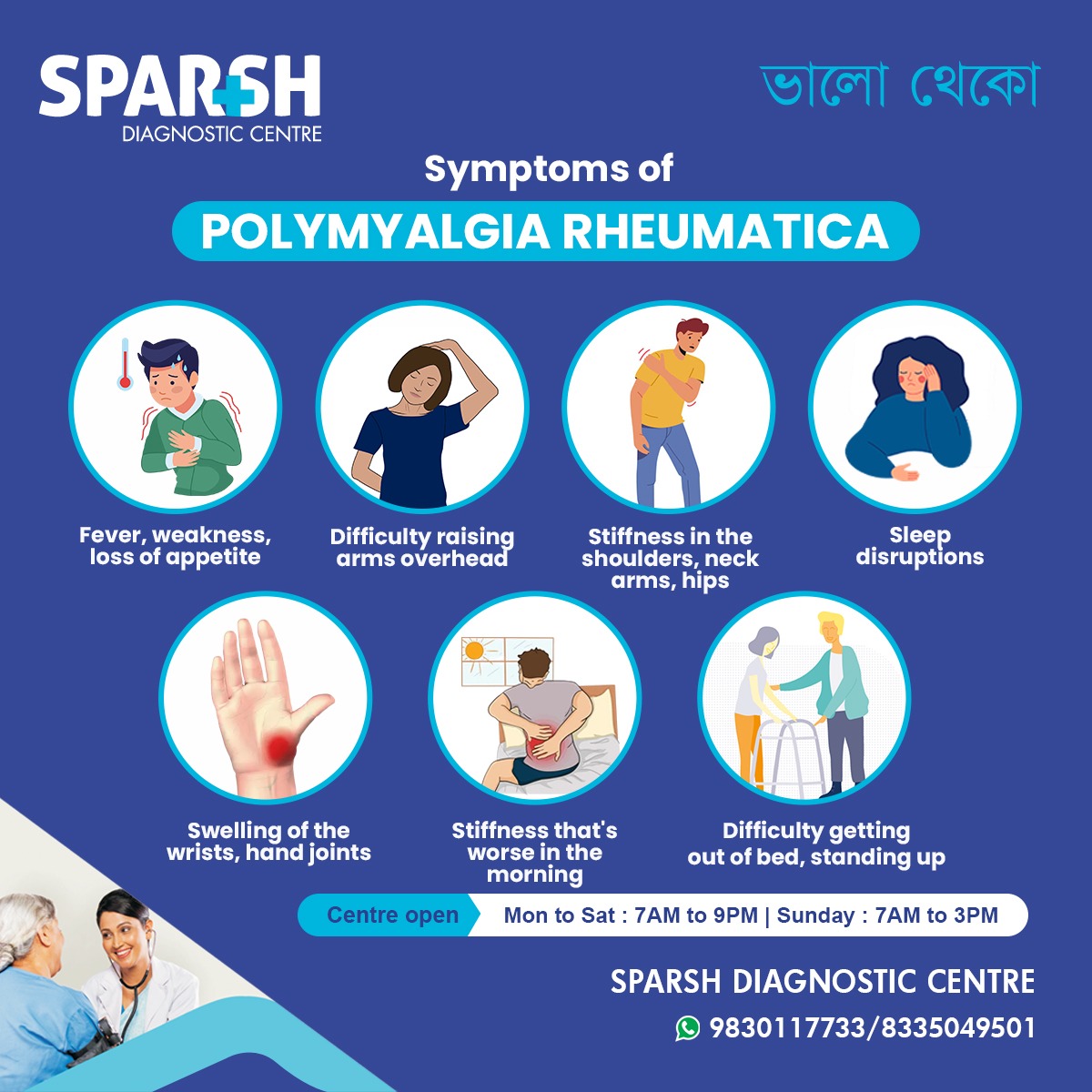
The symptoms of PMR may vary in intensity but generally affect both sides of the body. Based on the infographic by Sparsh Diagnostic Centre, here are the most common signs and symptoms:
1. Muscle Stiffness
Stiffness is the hallmark symptom of PMR, especially in the shoulders, neck, upper arms, and hips. It is most severe in the morning or after long periods of inactivity.
2. Difficulty Raising Arms Overhead
Simple actions like combing hair or putting on clothes can become challenging due to pain and stiffness in the shoulder joints and upper arms.
3. Fever, Weakness, and Loss of Appetite
Low-grade fever, general weakness, and decreased appetite are common systemic symptoms, reflecting inflammation throughout the body.
4. Sleep Disruptions
Pain and stiffness can interfere with sleep quality, leading to fatigue and disturbed sleep patterns.
5. Swelling of Wrists and Hand Joints
Some patients may experience mild swelling in the wrists or small joints of the hands, which can be mistaken for rheumatoid arthritis.
6. Morning Stiffness
Pain and stiffness that are worse in the morning typically last for more than 30 minutes and improve as the day progresses or with movement.
7. Difficulty Getting Out of Bed or Standing Up
The stiffness in hips and thighs makes basic movements like rising from a chair or getting out of bed difficult.
Causes and Triggers of PMR
The exact cause of Polymyalgia Rheumatica is unknown, but researchers believe that both genetic and environmental factors play a role.
1. Immune System Malfunction
PMR is considered an autoimmune condition where the body’s immune system mistakenly attacks healthy tissues, leading to inflammation.
2. Genetic Factors
Certain genes (such as HLA-DR4) may increase the risk of developing PMR, suggesting a hereditary component.
3. Environmental Triggers
Viral infections are believed to trigger PMR in genetically predisposed individuals. Outbreaks have been linked with certain viruses such as parvovirus B19, adenovirus, and human parainfluenza virus.
Possible Complications
If left untreated or poorly managed, PMR can lead to serious complications, including:
Giant Cell Arteritis (GCA):
Up to 15% of people with PMR develop this condition, which causes inflammation of blood vessels in the head and neck. GCA can lead to vision loss if not treated promptly.Prolonged Pain and Disability:
Untreated PMR can cause chronic pain, stiffness, and functional limitations.Side Effects from Long-Term Steroid Use:
While corticosteroids are effective, long-term use can cause side effects such as osteoporosis, high blood sugar, weight gain, and high blood pressure.
How Is Polymyalgia Rheumatica Diagnosed?
There is no single test for PMR. Diagnosis is based on symptoms, physical examination, and blood test results.
At Sparsh Diagnostic Centre, comprehensive evaluation and advanced diagnostic facilities help confirm the diagnosis accurately.
1. Medical History and Physical Exam
The doctor assesses muscle stiffness, joint swelling, and range of motion in shoulders and hips.
2. Blood Tests
Common laboratory tests include:
Erythrocyte Sedimentation Rate (ESR): Elevated ESR indicates inflammation.
C-reactive Protein (CRP): High CRP levels support the diagnosis.
Complete Blood Count (CBC): May reveal mild anemia.
Rheumatoid Factor (RF) and Anti-CCP Antibodies: Usually negative in PMR (to rule out rheumatoid arthritis).
3. Imaging Tests
Ultrasound or MRI: Helps detect inflammation in joints or soft tissues.
PET Scan: Occasionally used to detect vascular inflammation, especially if giant cell arteritis is suspected.
Treatment of Polymyalgia Rheumatica
Treatment aims to reduce inflammation, relieve pain, and maintain mobility. With proper therapy, most people experience rapid improvement.
1. Corticosteroids
Low-dose prednisone is the primary treatment. Most patients notice improvement within days. The dose is gradually tapered under medical supervision over 1–2 years.
2. Nonsteroidal Anti-inflammatory Drugs (NSAIDs)
Mild cases may benefit from NSAIDs like ibuprofen or naproxen for additional pain relief, though they are not a substitute for steroids.
3. Disease-Modifying Antirheumatic Drugs (DMARDs)
If long-term steroids are not well-tolerated, drugs like methotrexate may be added to reduce dependency on corticosteroids.
4. Physical Therapy
Gentle exercises and physical therapy can help maintain joint flexibility and muscle strength.
5. Diet and Lifestyle
Eat a balanced, anti-inflammatory diet rich in fruits, vegetables, and omega-3 fatty acids.
Maintain healthy body weight.
Engage in low-impact activities such as walking or swimming.
6. Regular Monitoring
Routine follow-ups are essential to monitor for relapse, adjust medication, and check for steroid-related side effects.
Prognosis and Recovery
With timely treatment, most individuals recover well and can taper off medication within 1–2 years. However, relapses are common, and symptoms may return during steroid reduction.
The key to successful recovery is:
Early diagnosis
Gradual tapering of medications
Regular monitoring of symptoms and inflammatory markers
At Sparsh Diagnostic Centre, patients receive ongoing care and support to ensure safe recovery and long-term disease management.
Living with Polymyalgia Rheumatica
While PMR can be challenging, it is manageable with the right care approach:
Stay Active: Gentle movement reduces stiffness.
Follow Medical Advice: Never stop steroids suddenly without a doctor’s supervision.
Track Symptoms: Keep a daily log of pain and stiffness to discuss with your doctor.
Monitor Bone Health: Steroids can affect bone density, so calcium and vitamin D supplementation may be necessary.
Seek Support: Emotional and psychological support can make a big difference during recovery.
When to See a Doctor
Seek medical attention if you experience:
Persistent pain and stiffness in shoulders, neck, or hips
Difficulty performing daily activities
Unexplained fever, fatigue, or weight loss
New or severe headaches, vision problems, or jaw pain (could indicate Giant Cell Arteritis)
Early detection can prevent complications and improve quality of life.
Polymyalgia Rheumatica vs. Rheumatoid Arthritis
| Feature | Polymyalgia Rheumatica (PMR) | Rheumatoid Arthritis (RA) |
|---|---|---|
| Age group | Usually over 50 years | Can occur at any age |
| Pain location | Shoulders, hips, neck | Hands, wrists, knees |
| Joint swelling | Mild or absent | Prominent |
| Blood tests | RF and Anti-CCP negative | RF and Anti-CCP positive |
| Response to steroids | Rapid and dramatic | Gradual improvement |
| Associated condition | Giant Cell Arteritis | Joint deformities |
Prevention and Long-Term Care
There is no known way to prevent PMR, but you can reduce risk and manage symptoms effectively through:
Healthy lifestyle habits (balanced diet, regular exercise)
Early treatment of infections
Routine medical checkups for those above 50
Monitoring inflammatory markers periodically
Diagnosis and Management at Sparsh Diagnostic Centre
At Sparsh Diagnostic Centre, a multidisciplinary approach ensures accurate diagnosis and effective management of Polymyalgia Rheumatica.
The centre offers:
Advanced blood and imaging diagnostics
Experienced rheumatologists and internal medicine specialists
Personalized treatment plans
Ongoing follow-up care
If you suspect symptoms of PMR, consult a doctor at Sparsh for early diagnosis and comprehensive care.
📞 Call 9830117733 / 8335049501 to book your appointment today.
FAQs on Polymyalgia Rheumatica
1. What triggers Polymyalgia Rheumatica?
The exact cause is unknown, but it is believed to be triggered by a combination of genetic predisposition and environmental factors like viral infections.
2. Can Polymyalgia Rheumatica go away on its own?
No. Without treatment, symptoms can persist for months or years. Corticosteroid therapy helps relieve symptoms effectively.
3. How long does treatment last?
Treatment usually lasts 1–2 years, but some patients may need low-dose steroids for a longer period under medical supervision.
4. Is PMR life-threatening?
PMR itself is not life-threatening, but if associated with Giant Cell Arteritis, it can lead to complications such as vision loss if untreated.
5. Can exercise help with PMR?
Yes. Low-impact exercises and stretching can improve mobility, reduce stiffness, and enhance overall well-being.
6. Is Polymyalgia Rheumatica a type of arthritis?
No, PMR affects muscles and soft tissues around joints, unlike arthritis, which primarily affects the joints themselves.
7. Can PMR return after recovery?
Yes. Relapses can occur, especially during steroid tapering, but they can be managed with dose adjustments.
Polymyalgia Rheumatica can cause significant pain and stiffness, but with timely diagnosis and proper treatment, most people regain their normal function and quality of life.
If you or a loved one experience symptoms such as morning stiffness, muscle pain, or difficulty moving your arms and hips, don’t ignore them. Early evaluation at Sparsh Diagnostic Centre can make all the difference.
👉 Book your consultation today at www.sparshdiagnostica.com
#BhaloTheko
Disclaimer:
No content on this site, regardless of date, should ever be used as a substitute for direct medical advice from your doctor or other qualified clinician.


[…] Polymyalgia rheumatica (PMR): About 40-50% of people with GCA also have PMR, an inflammatory condition that causes pain and stiffness in the shoulders, hips, and neck. […]