If you’re expecting a baby or have recently welcomed one into your family, you’ve probably come across the term “Group B Strep.” It sounds clinical—and a little intimidating—but understanding it can make a real difference in protecting your newborn.
Group B Streptococcus (often shortened to GBS) is a common type of bacteria that many adults carry without even knowing it. For most people, it doesn’t cause any problems. But in newborns, it can lead to serious infections if not managed properly.
Let’s walk through what it is, why it matters, and what you can do to keep your baby safe—without unnecessary worry.
What Is Group B Strep?
Group B Strep is a type of bacteria naturally found in the digestive tract, urinary tract, and genital area of many healthy adults. In fact, up to 1 in 4 pregnant women carry GBS at some point.
Most of the time, it’s harmless. The concern arises during pregnancy and delivery because the bacteria can be passed from mother to baby during childbirth.
Why Is GBS a Concern for Newborns?
Newborns have immature immune systems, which makes it harder for them to fight infections. If GBS is transmitted during birth, it can lead to conditions such as:
- Blood infections (sepsis)
- Pneumonia
- Meningitis
These infections can develop quickly and become life-threatening if not treated early.
How Do Babies Get Group B Strep?
Transmission usually happens during vaginal delivery if the mother carries GBS in her body. The bacteria can pass to the baby as they move through the birth canal.
There are two main types of GBS infection in babies:
1. Early-Onset GBS (First Week of Life)
This is the most common type and typically appears within the first 24–48 hours after birth.
2. Late-Onset GBS (1 Week to 3 Months)
Less common and not always linked to childbirth—it can sometimes come from environmental exposure.
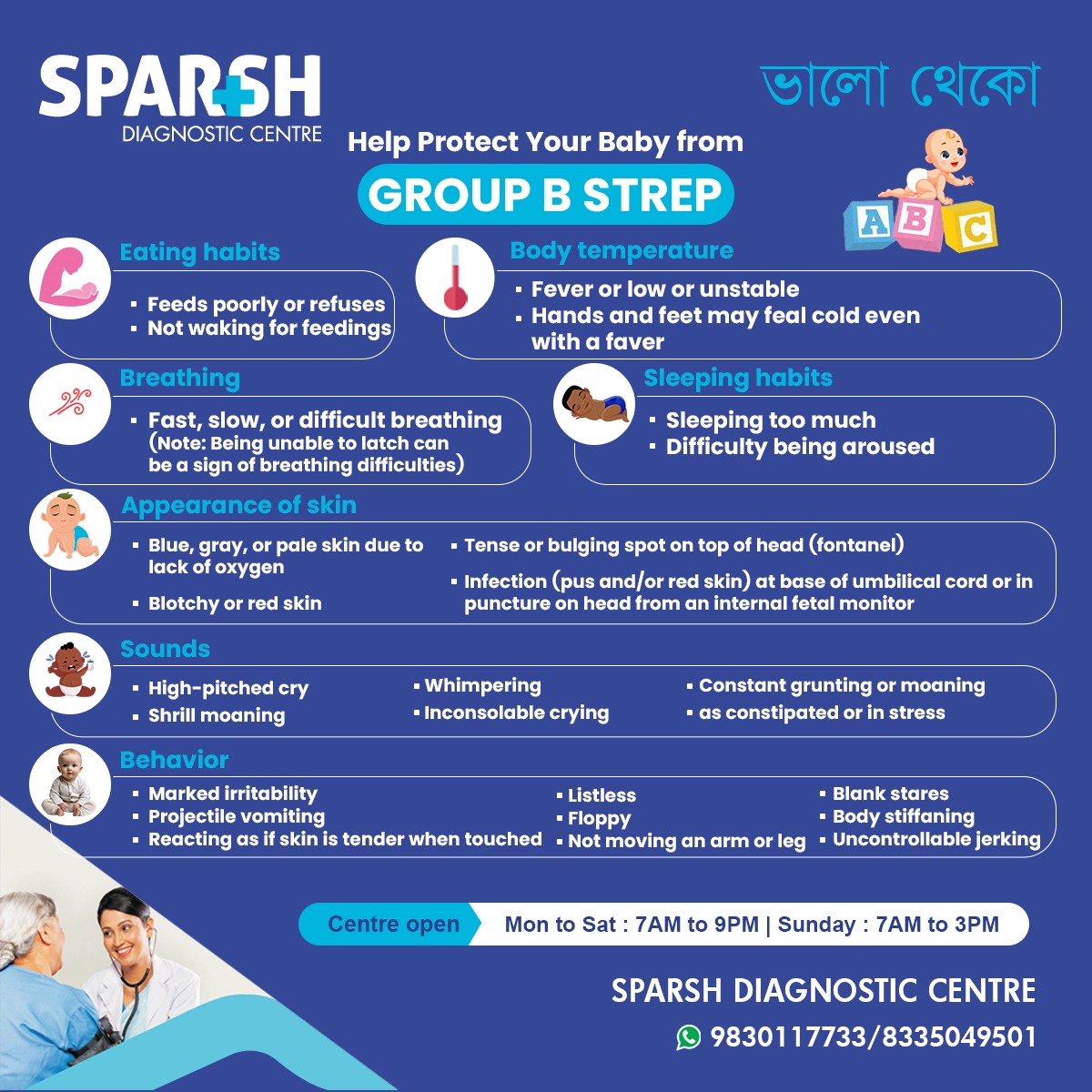
Signs and Symptoms in Newborns
Recognizing early warning signs can be life-saving. The symptoms can be subtle at first but may worsen quickly.
Feeding and Eating Changes
- Poor feeding
- Refusal to feed
- Not waking up for feeds
Body Temperature Issues
- Fever or unusually low temperature
- Cold hands and feet, even with a fever
Breathing Difficulties
- Rapid breathing
- Slow or irregular breathing
- Difficulty breathing
Sleep and Activity Changes
- Excessive sleepiness
- Difficulty waking the baby
Skin and Physical Appearance
- Pale, bluish, or gray skin
- Blotchy or red patches
- Swelling or redness near the umbilical cord
Unusual Sounds
- High-pitched crying
- Constant grunting or moaning
- Inconsolable crying
Behavioral Changes
- Irritability
- Limp or floppy body
- Stiffness or jerky movements
- Lack of movement in limbs
If you notice any of these signs, it’s important to seek medical care immediately.
How Is GBS Diagnosed in Pregnancy?
Screening for GBS is a routine part of prenatal care in many countries.
When Does Testing Happen?
Pregnant women are usually tested between 35 and 37 weeks.
How Is the Test Done?
A simple swab is taken from the vagina and rectum. It’s quick, painless, and highly effective at detecting the bacteria.
What Happens If You Test Positive?
Testing positive for GBS doesn’t mean you’re sick—it just means you’re carrying the bacteria.
The good news? There’s a straightforward way to protect your baby.
Antibiotics During Labor
If you test positive, your doctor will give you antibiotics (usually through an IV) during labor. This significantly reduces the risk of passing the bacteria to your baby.
This preventive step has made a huge difference in lowering newborn infections worldwide.
Can GBS Be Treated Before Labor?
Antibiotics are not usually given during pregnancy because the bacteria can come back. Instead, treatment is timed during labor, when it’s most effective at protecting the baby.
Risk Factors to Be Aware Of
Even if you haven’t been tested, certain factors increase the likelihood of GBS transmission:
- Previous baby with GBS infection
- GBS found in urine during pregnancy
- Preterm labor (before 37 weeks)
- Water breaking 18+ hours before delivery
- Fever during labor
In such cases, doctors may recommend antibiotics during labor even without test results.
How Is GBS Treated in Babies?
If a newborn shows signs of infection, doctors act quickly.
Treatment Includes:
- Immediate hospitalization
- Blood tests and monitoring
- Intravenous antibiotics
Early treatment is highly effective, which is why recognizing symptoms and acting fast is crucial.
Can Group B Strep Be Prevented?
While you can’t completely eliminate GBS bacteria, you can significantly reduce the risk to your baby.
Key Preventive Steps:
- Get screened during pregnancy
- Follow your doctor’s advice if you test positive
- Receive antibiotics during labor if recommended
- Watch for symptoms in your newborn
Is GBS Dangerous for Adults?
For most healthy adults, GBS doesn’t cause problems. However, it can occasionally lead to infections in:
- Older adults
- People with diabetes
- Individuals with weakened immune systems
These cases are less common but may require medical treatment.
Common Myths About Group B Strep
“GBS is a sexually transmitted infection.”
No, it’s not. It’s a naturally occurring bacteria in the body.
“If I tested negative earlier, I’m safe.”
GBS status can change, which is why testing closer to delivery is important.
“A C-section completely eliminates risk.”
Planned C-sections before labor and without ruptured membranes reduce risk, but it’s not always a guaranteed prevention.
When Should You Seek Medical Help?
Contact your doctor immediately if your baby shows:
- Difficulty breathing
- Poor feeding
- Fever or low temperature
- Unusual sleepiness or irritability
- Changes in skin color
Trust your instincts—if something feels off, it’s always better to check.
Living With Confidence as a Parent
Hearing about infections like GBS can feel overwhelming, especially during pregnancy or early parenthood. But here’s the reassuring part:
- Screening is simple
- Prevention is highly effective
- Treatment works well when started early
Staying informed and proactive is the best way to protect your baby.
Frequently Asked Questions (FAQs)
1. Is Group B Strep common?
Yes, it’s very common. Around 20–30% of pregnant women carry GBS without symptoms.
2. Can GBS go away on its own?
It can come and go naturally in the body, which is why timing of testing matters.
3. Does testing for GBS hurt?
No, it’s a quick and painless swab test.
4. Are antibiotics during labor safe?
Yes, they are considered safe and are widely used to prevent newborn infections.
5. Can my baby get GBS after birth?
Yes, though less common. This is called late-onset GBS and may come from environmental exposure.
6. Can breastfeeding spread GBS?
Breastfeeding is generally safe and not a common source of transmission.
7. What happens if GBS is left untreated?
In newborns, untreated GBS can lead to serious complications like sepsis or meningitis.
8. Do all GBS-positive mothers have infected babies?
No. With proper treatment during labor, the risk is very low.
9. Should I be worried if I test positive?
Not necessarily. With proper care, most babies are born healthy and unaffected.
10. Can GBS affect future pregnancies?
Yes, you may carry it again, which is why screening is repeated in each pregnancy.
To consult a Pediatrician at Sparsh Diagnostic Centre, call our helpline numbers 9830117733/ 8335049501.
#BhaloTheko
Disclaimer:
No content on this site, regardless of date, should ever be used as a substitute for direct medical advice from your doctor or other qualified clinician.