


A fever can be unsettling, especially when the thermometer crosses 101°F or 102°F. Add body aches, weakness, chills, headache or a sore throat, and it is natural to wonder whether it is simply a viral infection or something more serious.
Viral fever is a broad term used for a fever caused by a viral infection. It is not a single disease. Different viruses can cause fever along with respiratory symptoms, stomach problems, rashes, muscle aches or other symptoms. Common examples include influenza and other respiratory viral infections, while illnesses such as dengue and chikungunya are also viral infections that can cause significant fever.
Most uncomplicated viral infections improve with supportive care and time. However, fever can also be caused by bacterial infections, malaria, dengue, typhoid and other conditions that may require specific treatment. That is why the pattern of symptoms, duration of fever, age of the patient and other warning signs matter more than the thermometer reading alone.
What is viral fever?
Viral fever occurs when the immune system responds to a viral infection by raising the body’s temperature. Fever itself is therefore a symptom rather than a disease.
Viruses can enter the body through respiratory droplets, close contact, contaminated surfaces, food or water, or insect bites, depending on the virus involved. Respiratory viruses commonly cause fever with cough, congestion or sore throat, while mosquito-borne viruses such as dengue and chikungunya can cause fever with severe body or joint pain.
Viral fever is particularly common when respiratory infections are circulating widely or during seasonal changes. In India, monsoon conditions can also increase the risk of several infections because of crowding indoors, contaminated water and increased mosquito breeding.
Importantly, not every fever during the monsoon is a simple viral fever. Dengue, malaria, typhoid and other infections may initially look similar. Persistent or unusual fever therefore deserves proper medical assessment.
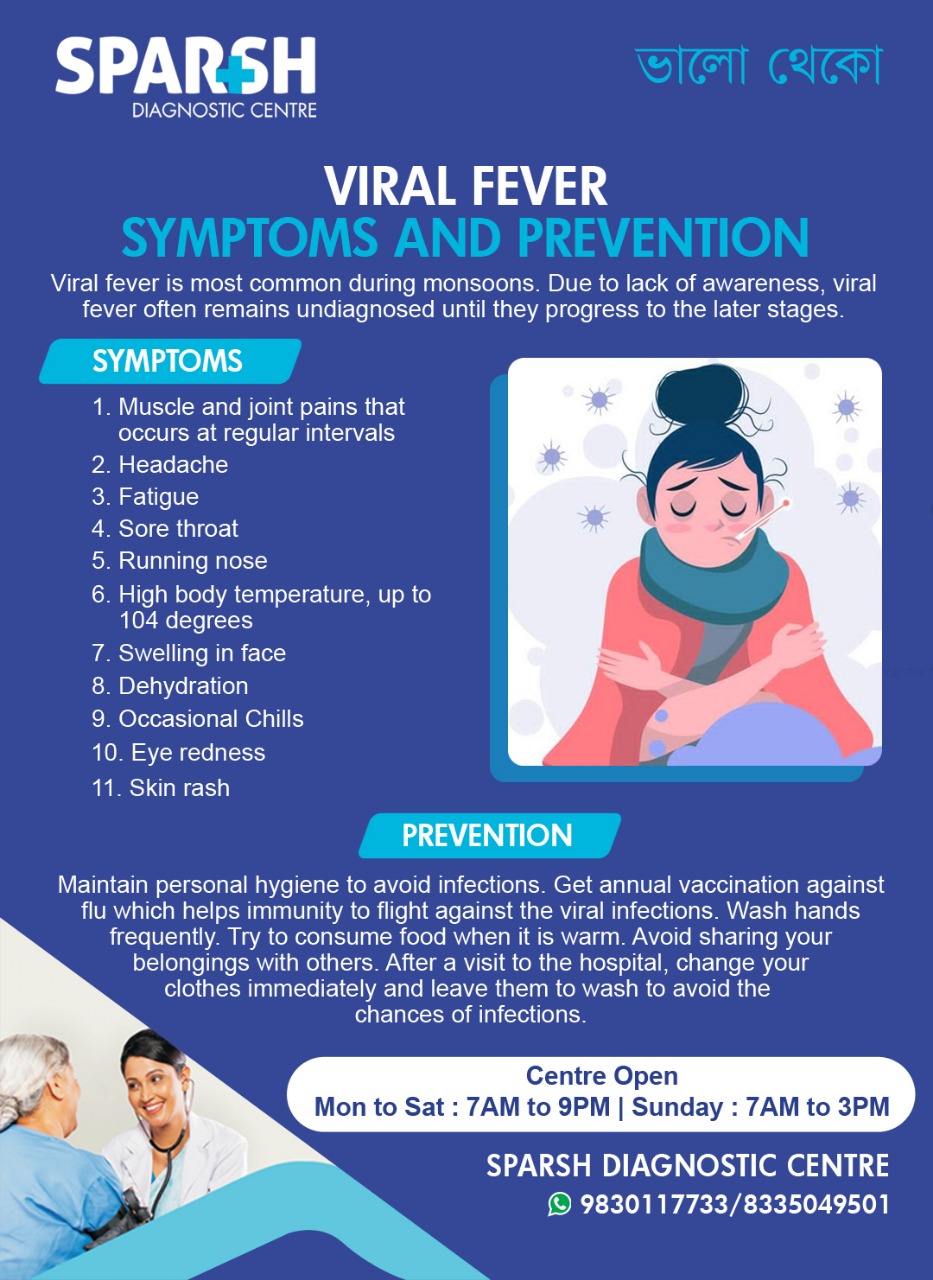
What are the symptoms of viral fever?
The symptoms depend on the virus causing the infection. Common symptoms include:
- Fever or chills
- Headache
- Muscle and joint aches
- Fatigue and weakness
- Sore throat
- Runny or blocked nose
- Cough
- Sweating
- Reduced appetite
- Nausea or mild stomach discomfort
- Vomiting or diarrhea with some viral infections
- Red or watery eyes with certain infections
- Skin rash in some viral illnesses
The combination of symptoms can provide clues. For example, fever with cough and sore throat may suggest a respiratory viral infection, while sudden fever with intense body aches, headache or pain behind the eyes can occur with dengue.
However, symptoms alone cannot always establish the diagnosis. Viral and bacterial infections can overlap considerably, particularly during the first few days.
What causes viral fever?
A wide variety of viruses can cause fever. Some common groups include:
Respiratory viruses
Influenza, rhinoviruses, adenoviruses and other respiratory viruses can cause fever, cough, sore throat, congestion, headache and body aches.
Mosquito-borne viruses
Dengue and chikungunya can cause high fever, headache, muscle pain and joint pain. Dengue can become serious, so fever accompanied by severe abdominal pain, repeated vomiting, bleeding, unusual tiredness or other warning signs should not be dismissed as an ordinary viral fever.
Gastrointestinal viruses
Some viruses cause fever together with vomiting, diarrhea and abdominal discomfort. Dehydration can become the main concern, particularly in young children and older adults.
Other viral infections
Some viruses can cause fever with rash, swollen glands, red eyes or other symptoms. The appropriate treatment depends on the specific infection.
This is why the phrase “viral fever” should not automatically be treated as a final diagnosis. Sometimes testing is needed to identify the actual cause.
How long does viral fever last?
For many uncomplicated viral infections, fever improves within a few days to about a week. Some viral illnesses can last longer, and tiredness or cough may continue even after the fever has disappeared.
There is no single duration that applies to every viral infection. The exact timeline depends on the virus, the person’s age, immune system and overall health.
A fever that continues without improvement, returns after getting better, or is accompanied by new or worsening symptoms should be evaluated by a healthcare professional. Some infections that initially resemble viral fever need specific treatment.
How many days will viral fever last?
A simple viral fever often lasts around 3 to 7 days, although this is only a general guide. Some infections resolve sooner, while others can cause fever for longer.
Rather than focusing only on the number of days, pay attention to the trend. A person who is gradually improving is generally less concerning than someone whose fever is becoming higher, returning after a period of improvement or being accompanied by significant new symptoms.
What are the three stages of viral infection?
There is no universal three-stage model that applies to every viral infection. However, viral illnesses are often broadly described as having three phases:
- Incubation phase: The virus is multiplying in the body, but symptoms may not yet be noticeable.
- Acute illness phase: Symptoms such as fever, body aches, cough, sore throat, vomiting or diarrhoea become apparent.
- Recovery phase: The immune system controls the infection and symptoms gradually settle. Fatigue or cough can sometimes persist after the fever has resolved.
The exact duration of each phase varies significantly between viruses.
What is the difference between viral fever and “normal” fever?
There is no separate medical condition called “normal fever.” Fever is a rise in body temperature that occurs because of an underlying process, commonly an infection.
The important question is what is causing the fever.
A viral fever is caused by a virus. Fever can also result from bacterial infections, malaria, dengue, inflammatory conditions, medications and other causes.
Viral infections often cause symptoms affecting the body more generally, such as fatigue, headache, muscle aches, runny nose and cough. Bacterial infections can sometimes produce more localised symptoms, such as painful urination with a urinary infection or significant throat pain with certain bacterial throat infections.
But these are tendencies, not rules. You cannot reliably determine viral versus bacterial fever from the temperature alone. Medical assessment and, when necessary, laboratory testing may be required.
Which fever is higher, bacterial or viral?
Neither bacterial nor viral fever is consistently higher.
A viral infection can cause a temperature of 102°F, 103°F or even higher. Some bacterial infections can also cause high fever. Conversely, either type of infection can produce only a mild fever.
The height of the fever does not identify the organism causing it. Other symptoms, duration, examination findings and sometimes blood or other laboratory tests are more useful.
Is 102°F normal in viral fever?
102°F (38.9°C) can occur during a viral infection. It is a significant fever, but the number alone does not mean that the illness is dangerous.
For an otherwise healthy adult who is alert, drinking fluids, breathing normally and not experiencing serious symptoms, supportive care and monitoring may be appropriate.
For children, the situation is slightly different. Age, behaviour, hydration and associated symptoms are important. A child with a 102°F fever who is drinking, interacting and reasonably comfortable may be less concerning than a child with a lower temperature who is unusually sleepy, difficult to wake or struggling to breathe.
Very young infants require particular caution. A baby under three months with a temperature of 100.4°F (38°C) or higher should receive prompt medical assessment.
How to cure viral fever fast?
There is no guaranteed way to make a viral infection disappear overnight. Most uncomplicated viral infections need time for the immune system to clear the virus.
The best approach is to support recovery:
- Get adequate rest and sleep.
- Drink plenty of fluids.
- Use oral rehydration solutions if there is significant fluid loss from vomiting or diarrhoea.
- Eat light, nutritious food according to appetite.
- Use paracetamol/acetaminophen when appropriate to relieve fever or discomfort.
- Avoid unnecessary antibiotics.
- Follow medical advice if a specific antiviral medicine is indicated.
- Monitor symptoms rather than repeatedly taking medicines simply to make the thermometer reading normal.
Trying multiple medicines at once does not necessarily speed recovery and can sometimes cause harm.
What medicine is good for viral fever?
For many uncomplicated viral fevers, paracetamol (acetaminophen) is commonly used to reduce fever and relieve headache or body aches. The correct dose depends on factors such as age, weight, health conditions and other medicines being taken.
Do not exceed the recommended dose, and check combination cold-and-flu medicines carefully because some already contain paracetamol.
Some viral infections have specific antiviral medicines, but these are not appropriate for every viral fever. For example, antiviral treatment may be recommended for certain influenza or other specific infections when clinically indicated and started at the appropriate time.
If dengue is a possibility, medical advice is particularly important. CDC guidance recommends paracetamol for fever and advises avoiding aspirin and NSAIDs such as ibuprofen in dengue because of bleeding risk.
Which syrup is best for viral fever?
There is no single “best viral fever syrup.”
For a child who needs medication for fever, a paracetamol syrup formulated for children may be recommended, but the dose must be based on the child’s age/weight and the concentration of the product. Different syrups can contain different concentrations, so parents should not guess the volume.
Never give aspirin to a child for fever. Also avoid combining multiple cold, cough and fever products without checking their ingredients because more than one product may contain the same medicine.
If you are unsure about the correct medicine or dose, speak with a paediatrician or pharmacist.
Is it OK to sleep with a fever?
Yes. Sleep is generally helpful during a viral infection. The body needs rest while the immune system responds to the infection.
You do not need to wake an otherwise stable older child or adult simply to force the fever to disappear. However, caregivers should check on a sick child periodically, particularly if the child is very young or has a high fever.
The concern is not simply that someone is sleeping. It is whether they can be roused normally, are breathing comfortably and are adequately hydrated.
Difficulty waking, confusion, breathing difficulty, bluish lips, seizures or severe weakness require urgent medical attention.
What is the 24-hour rule for fever?
There is no universal medical “24-hour rule” stating that every fever should be treated or tested after exactly 24 hours.
The appropriate response depends on age, symptoms, medical history and the likely cause of the fever.
For example, a healthy adult with a mild viral illness may be monitored initially, whereas a very young infant with fever needs prompt assessment. Similarly, fever accompanied by breathing difficulty, severe dehydration, confusion, persistent vomiting, severe abdominal pain or bleeding should not be managed by simply waiting 24 hours.
For children, healthcare guidance commonly recommends medical assessment when fever persists for several days or when the child appears significantly unwell.
What is the best remedy for a viral infection?
The most useful “remedy” is supportive care while the immune system fights the infection.
Stay hydrated
Fever, sweating, vomiting and diarrhoea can all increase fluid loss. Take frequent sips of water, oral rehydration solution, soups or other suitable fluids.
Rest properly
Do not push through intense exercise or a demanding work schedule while you are acutely unwell.
Eat according to appetite
There is no need to force large meals. Light, easily tolerated foods can help provide energy during recovery.
Keep comfortable
Wear comfortable clothing and avoid excessive blankets or heavy layers.
Treat symptoms sensibly
Paracetamol can help with fever-related discomfort when appropriate. Medication should be used according to the recommended dose rather than simply because a thermometer shows a particular number.
How to reduce fever in a child naturally at night?
If your child has a fever at night, the priority is comfort and hydration, not forcing the temperature back to normal.
You can:
- Offer frequent fluids or breastfeeds where appropriate.
- Dress the child in comfortable, breathable clothing.
- Avoid excessive blankets and overheating.
- Let the child rest.
- Keep the room comfortably cool rather than extremely cold.
- Give age-appropriate paracetamol or another recommended fever medicine if the child is uncomfortable, using the correct dose.
- Check the child periodically, particularly if they are very young or unwell.
Do not use ice baths or very cold water because shivering can make the child more uncomfortable. Do not give aspirin to children.
A child’s behaviour matters enormously. A child who is drinking, responding normally and becoming comfortable after fever medicine is generally less concerning than a child who is unusually drowsy, difficult to wake, dehydrated or struggling to breathe.
Do I need antibiotics for viral fever?
No. Antibiotics do not treat viral infections.
Antibiotics work against certain bacteria, not viruses. Taking an antibiotic “just in case” will not make an uncomplicated viral infection disappear faster.
Unnecessary antibiotic use can also cause side effects and contributes to antimicrobial resistance, making some bacterial infections harder to treat in the future.
An antibiotic may become necessary if a doctor identifies a bacterial infection or a secondary bacterial infection. That decision should be based on clinical assessment and, when appropriate, diagnostic testing.
How can doctors diagnose the cause of a fever?
The diagnosis starts with the history and physical examination.
A doctor may ask:
- When did the fever begin?
- How high has the temperature been?
- Is the fever continuous or intermittent?
- Are there cough, sore throat or breathing symptoms?
- Is there vomiting or diarrhoea?
- Is there a rash?
- Is there severe body or joint pain?
- Has there been mosquito exposure?
- Has anyone else at home been sick?
- Has there been recent travel?
- Are there underlying medical conditions?
Depending on the presentation, investigations may include a complete blood count (CBC), CRP, urine testing, dengue testing, malaria testing, respiratory viral testing or other investigations. The tests should be selected based on the symptoms and clinical suspicion rather than performed indiscriminately.
When should you see a doctor for viral fever?
Seek medical advice if:
- Fever is persistent or worsening.
- Fever continues for several days without improvement.
- Fever disappears and then returns.
- There is difficulty breathing or chest pain.
- There is severe headache, confusion or neck stiffness.
- There is persistent vomiting.
- There are signs of dehydration.
- There is severe abdominal pain.
- There is unusual bleeding from the nose or gums.
- A rash develops along with significant fever.
- The person is unusually sleepy, confused or difficult to wake.
- The patient is an infant, elderly person, pregnant person or someone with significant underlying illness.
In areas where dengue is circulating, fever with severe body aches, headache, pain behind the eyes, rash or abdominal symptoms deserves particular attention. Dengue warning signs can become apparent around the time the fever starts to settle, so improvement in temperature does not always mean the risk has completely passed.
How to stop a viral fever from spreading
If the infection is contagious, preventing transmission is just as important as managing symptoms.
- Wash your hands regularly with soap and water.
- Cover your mouth and nose when coughing or sneezing.
- Avoid sharing cups, towels and personal items.
- Improve ventilation in shared indoor spaces.
- Stay home when you are acutely unwell where possible.
- Clean frequently touched surfaces.
- Maintain safe food and drinking-water practices.
- Take appropriate vaccinations recommended for you, such as seasonal influenza vaccination where indicated.
- During mosquito-borne outbreaks, remove stagnant water and use appropriate mosquito protection.
Monsoon conditions can increase the risk of several infections because stagnant water encourages mosquito breeding and contaminated water can facilitate some illnesses.
Viral fever during the monsoon: don’t assume every fever is “just viral”
This is particularly important in India.
A person with fever during the rainy season may have a common respiratory virus, but dengue, chikungunya, malaria, typhoid and other infections can also occur.
Dengue may cause sudden fever, intense muscle and joint pain, headache, pain behind the eyes, nausea or rash. Malaria can produce fever with chills and sweating. Typhoid may cause prolonged fever and gastrointestinal symptoms.
Because early symptoms can overlap, persistent or severe fever should be evaluated rather than repeatedly treated with over-the-counter medicines.
This is also one reason why taking antibiotics without a diagnosis is a poor strategy. The right treatment depends on the cause.
Frequently asked questions about viral fever
How long does viral fever last?
Many uncomplicated viral fevers improve within 3–7 days, but duration varies depending on the virus and the individual. If fever persists, worsens or returns after improving, seek medical advice.
How to cure viral fever fast?
There is no guaranteed instant cure. Rest, adequate fluids, appropriate nutrition and symptom relief can support recovery. Some specific viral infections may require antiviral treatment prescribed by a doctor.
What medicine is good for viral fever?
Paracetamol is commonly used for fever and discomfort when appropriate. The correct dose depends on age, weight and other factors. Specific viral infections may require specific treatment.
What is the difference between viral fever and normal fever?
Fever is a symptom, not a diagnosis. Viral fever means the fever is caused by a viral infection. Fever can also be caused by bacteria and several non-infectious conditions.
Is 102 fever normal in viral?
A temperature of 102°F can occur during viral infections. However, the temperature alone cannot confirm that the infection is viral or determine its severity.
What is the 24-hour rule for fever?
There is no universal 24-hour rule. The appropriate response depends on age, symptoms, duration and the person’s overall condition.
Is it OK to sleep with a fever?
Yes. Rest and sleep are helpful during illness. What matters is that the person can be roused normally, is breathing comfortably and remains adequately hydrated.
What is the best remedy for a viral infection?
Rest, fluids, appropriate nutrition and symptom management are the mainstays for most uncomplicated viral infections. Specific antiviral treatment may be needed for selected infections.
Which syrup is best for viral fever?
There is no single best syrup. For children, paracetamol syrup may be used when appropriate, but the dose must be based on the child’s age/weight and the product concentration.
How to reduce fever in child naturally at night?
Offer fluids, keep the child comfortably dressed, avoid overheating and allow them to rest. Avoid ice baths and do not give aspirin. Seek medical help if the child is unusually sleepy, dehydrated, struggling to breathe or otherwise very unwell.
Do I need antibiotics for viral fever?
No. Antibiotics do not kill viruses. They should only be used when a bacterial infection is diagnosed or specifically suspected by a healthcare professional.
How many days will viral fever last?
A common viral fever may last around 3–7 days, although some viral infections last longer. Persistent or worsening fever needs medical assessment.
What are the three stages of viral infection?
Viral illnesses can broadly be described as incubation, acute illness and recovery. The timing and symptoms of each stage vary between viruses.
Which fever is higher, bacterial or viral?
Neither is consistently higher. Both viral and bacterial infections can cause high fever. Temperature alone cannot distinguish between them.
How to stop a viral fever?
You cannot always stop a viral infection immediately. The aim is to support recovery with rest, hydration and appropriate symptom treatment while watching for warning signs.
Final takeaway
Viral fever is common and, in many cases, settles without specific treatment. The most important steps are rest, adequate hydration, appropriate fever relief and careful monitoring.
However, “viral fever” should not become a label used for every unexplained fever. Fever can have many causes, and conditions such as dengue, malaria and bacterial infections may initially resemble a routine viral illness.
Most importantly, do not start antibiotics simply because the fever is high. A temperature of 102°F does not automatically mean that antibiotics are required, just as a lower fever does not rule out a significant infection.
If the fever is persistent, unusually severe, keeps returning, or is accompanied by breathing difficulty, severe dehydration, confusion, severe abdominal pain, bleeding, seizures or other concerning symptoms, medical evaluation is the safest approach.
To consult a Doctor at Sparsh Diagnostic Centre, call our helpline number 9830117733.
#BhaloTheko
Disclaimer:
No content on this site, regardless of date, should ever be used as a substitute for direct medical advice from your doctor or other qualified clinician.
Feel free to share this blog post with others to spread awareness about viral fever and its management. Always consult a healthcare professional for personalized advice and treatment options.
Sources and further reading
- Apollo Hospitals – Viral Fever: Symptoms, Causes, Diagnosis and Treatment
Apollo Hospitals – Viral Fever - Max Healthcare – What is Viral Fever?
Max Healthcare – What is Viral Fever? - BLK-Max Hospital – Viral Fever Symptoms & Treatment
BLK-Max Hospital – Viral Fever Symptoms & Treatment - Narayana Health – Viral Fever in Changing Season: Prevention & Care Guide
Narayana Health – Viral Fever Prevention & Care Guide - Citizens Specialty Hospital – How to Differentiate Between Viral Fever and Bacterial Infections
Citizens Hospitals – Viral vs bacterial infections - Lupin Diagnostics – Viral Fever: Causes, Symptoms & Warning Signs
Lupin Diagnostics – Viral Fever - JIET Hospital – Difference Between Viral Fever and Bacterial Fever
JIET Hospital – Viral vs bacterial fever - World Health Organization – Antimicrobial Resistance
WHO – Antimicrobial resistance - CDC – Clinical Care of Dengue
CDC – Clinical Care of Dengue - NHS – High Temperature (Fever) in Children
NHS – Fever in children - American Academy of Pediatrics – Caring for Kids With Colds and Flu
HealthyChildren.org – Colds and flu in children


[…] infection. While it may resemble conditions such as hand, foot, and mouth disease (HFMD) or even viral fevers like dengue and chikungunya, tomato flu has its own set of distinct […]
[…] 1. Fever […]
[…] High Fever: Often above 100.4°F (38°C) […]
[…] Viral Infections: The most common cause of a sore throat is a viral infection, such as the common cold, flu, or mononucleosis. Viral sore throats usually resolve on their own within a week. […]
[…] congestion, cough, or fatigue could be due to chronic sinusitis, allergies, or a more persistent viral infection. It’s essential to speak with a Doctor if symptoms linger beyond the typical duration of a […]
[…] tubes, which are the air passages leading to the lungs. This inflammation typically arises from viral or bacterial infections, although it can also result from irritants like cigarette smoke. Acute […]
[…] commonly known as the flu, is a viral respiratory illness that has been a perennial health problem for centuries. This infectious disease has the potential […]
[…] of measles, a disease believed to have been eliminated. Measles is an extremely contagious viral infection that has been on the rise in many parts of the world bringing significant public health challenges […]
[…] is a highly contagious viral infection that affects both children and adults. It is caused by the varicella-zoster virus (VZV), which is […]
[…] Viral: Pneumonia can be caused by a variety of viruses, including the influenza (influenza) virus, […]
[…] to inflammation, is a condition that affects the brain and causes inflammation often due to viral infections. This blog aims to shed light on this potentially serious condition, covering its causes, symptoms, […]
[…] is a viral disease caused by the mumps virus, which belongs to the family of viruses known as Paramyxoviridae. […]