


When you develop a fever, sore throat, cough, runny nose or body aches, it is natural to want something that will make you better quickly. Antibiotics are often the first medicines people think of. After all, antibiotics can be lifesaving when you have a bacterial infection.
But there is an important distinction that is easy to miss: antibiotics treat bacteria, not viruses.
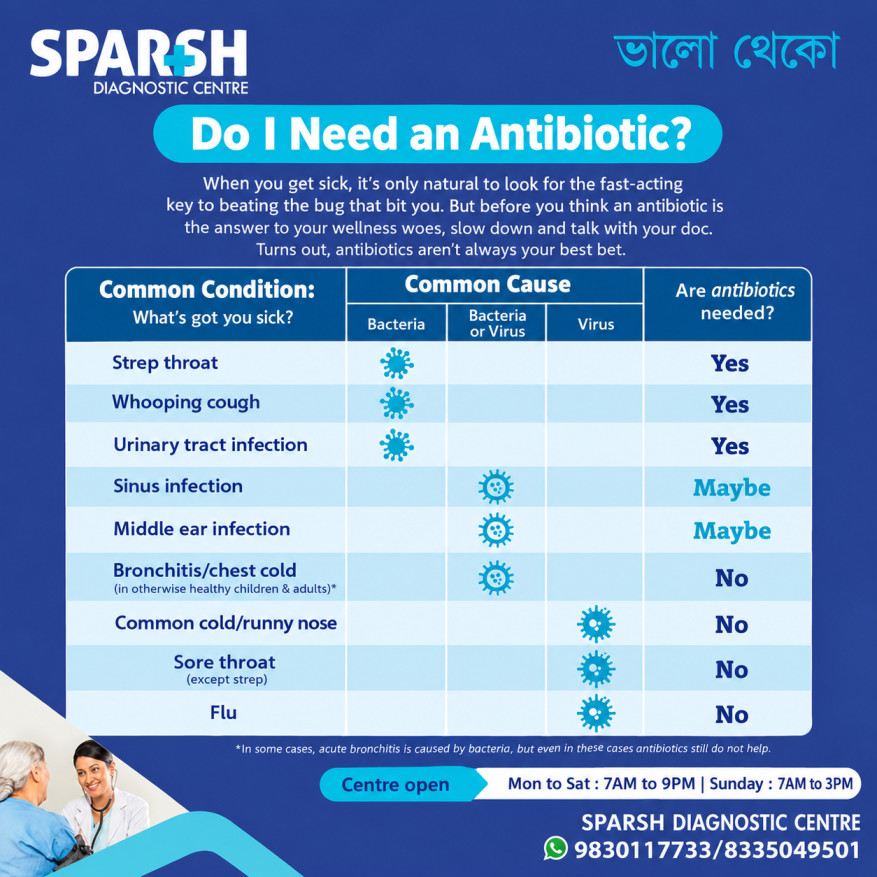
A common cold, influenza, many sore throats and most cases of acute bronchitis are caused by viruses, so antibiotics will not make these illnesses go away faster. The CDC specifically advises using antibiotics only when they are needed because unnecessary antibiotic use can cause side effects and contribute to antibiotic resistance.
That does not mean viral infections should simply be ignored. Some viruses can cause serious illness, and some viral infections have specific antiviral treatments that work best when started early. A viral infection can also occasionally be followed by a bacterial infection, in which case antibiotics may become appropriate.
Understanding the difference can help you avoid unnecessary medicines while getting the right treatment at the right time.
What is the difference between a bacterial and viral infection?
Bacteria and viruses are both capable of causing infections, but they are very different types of organisms.
Bacteria are living single-celled organisms. Some bacteria are harmless or even beneficial, while others can cause infections such as certain urinary tract infections, strep throat, bacterial pneumonia and whooping cough.
Viruses are much smaller infectious agents that need host cells to reproduce. They can cause illnesses such as the common cold, influenza, COVID-19, respiratory syncytial virus (RSV), chickenpox and many gastrointestinal infections.
Antibiotics work against susceptible bacteria by killing them or stopping them from multiplying. They do not target viruses.
This is why taking an antibiotic for a viral infection generally does not shorten the illness.
Is it bad to take antibiotics when a viral infection?
Yes, taking antibiotics unnecessarily for a viral infection can be harmful.
The antibiotic will not kill the virus or speed up your recovery, but you can still experience its unwanted effects. Common side effects include nausea, diarrhea, dizziness, rash and yeast infections. More serious complications can include severe allergic reactions and Clostridioides difficile (C. diff) infection.
There is another important concern: antibiotic resistance.
Antibiotic resistance occurs when bacteria change in ways that make medicines less effective against them. WHO identifies inappropriate and excessive antimicrobial use as important drivers of antimicrobial resistance. In 2023, approximately one in six laboratory-confirmed bacterial infections reported globally were resistant to antibiotic treatment.
So, taking an antibiotic “just in case” is not a harmless precaution.
How do I know if my infection is bacterial or viral?
Unfortunately, you cannot always tell from symptoms alone.
A runny nose, cough, fever, sore throat, headache, tiredness and body aches can occur with several different infections. Even healthcare professionals sometimes need testing, examination and the patient’s medical history to determine the likely cause.
For example, flu and the common cold can produce overlapping symptoms, and symptoms alone cannot reliably confirm influenza. Testing can help identify respiratory viruses such as influenza and COVID-19.
Doctors may consider:
- Your symptoms and how quickly they developed
- How long you have been ill
- Your physical examination
- Whether symptoms are improving or getting worse
- Your age and underlying health conditions
- Blood or urine tests when appropriate
- Throat swabs or cultures
- Respiratory virus tests
- Chest imaging in selected cases
- Other diagnostic tests depending on the suspected infection
For example, a urine test and urine culture can help investigate a suspected urinary tract infection, while a throat test may be used when strep throat is suspected.
Importantly, the colour of your mucus does not by itself prove that you have a bacterial infection. The CDC notes that even thick, yellow or green mucus can occur with viral illnesses.
What are the first signs of a viral infection?
The first symptoms depend on the virus and the part of the body affected.
For respiratory viral infections, early symptoms can include:
- Fever or feeling feverish
- Chills
- Tiredness
- Cough
- Runny or blocked nose
- Sore throat
- Headache
- Muscle or body aches
- Reduced appetite
- Weakness
Some people may also develop vomiting, diarrhea or loss of taste or smell.
Flu, in particular, often begins relatively suddenly, with fever or chills, cough, body aches, headache and fatigue. However, not everyone with flu develops a fever.
These symptoms are not enough to identify a particular virus with certainty. If you are at higher risk of complications, testing and early medical advice may be particularly important.
What are the top 3 viral infections?
There is no single medically recognised “top three” ranking of viral infections because viral infections can be classified by prevalence, severity, location, age group and other factors.
However, three very common viral respiratory illnesses people frequently encounter are:
- Common cold – commonly caused by rhinoviruses and several other viruses.
- Influenza (flu) – caused by influenza viruses and capable of causing anything from mild illness to serious complications.
- COVID-19 – caused by SARS-CoV-2 and ranging from mild disease to severe respiratory illness.
RSV is another important respiratory virus, particularly for infants, older adults and people with certain underlying conditions.
The important point is that common does not always mean harmless. The severity of a viral infection depends on the virus as well as the person’s age, immune status and other health factors.
What are 5 examples of viral infections?
Five familiar examples of viral infections include:
- Common cold
- Influenza
- COVID-19
- Respiratory syncytial virus (RSV) infection
- Chickenpox
Other examples include measles, hepatitis caused by viruses, viral gastroenteritis, dengue, HIV infection and infectious mononucleosis.
Different viral infections behave very differently. Some resolve without specific treatment, while others require antiviral medication, monitoring or hospital care.
Which is more serious, bacterial or viral?
Neither bacterial nor viral infections are automatically more serious.
Both can range from mild to life-threatening.
A simple viral cold may cause little more than a runny nose and sore throat, while certain viral infections can cause pneumonia, encephalitis or other serious complications.
Likewise, a mild bacterial infection may resolve with limited treatment, whereas bacterial pneumonia, meningitis, sepsis or certain bloodstream infections can become medical emergencies.
The seriousness depends on factors such as:
- The specific organism
- The location of the infection
- The severity of the infection
- The person’s age
- Immune function
- Existing medical conditions
- How quickly appropriate treatment is started
For example, influenza can occasionally cause severe complications, including pneumonia, while some bacterial infections can also become life-threatening.
So it is more useful to ask “What infection do I have and how severe is it?” rather than whether bacteria or viruses are inherently worse.
Why do doctors prescribe antibiotics for a viral infection?
Strictly speaking, antibiotics are not prescribed to treat the virus itself.
However, there are several situations that can make this seem confusing.
A bacterial infection may also be present
A person can have a viral infection and subsequently develop a bacterial infection. For example, a respiratory viral illness can occasionally be followed by bacterial pneumonia. In such circumstances, antibiotics may be appropriate for the bacterial infection.
The diagnosis may not be certain initially
Some infections have overlapping symptoms. A doctor may need to make a treatment decision based on the clinical picture while awaiting test results or monitoring how the illness develops.
Antibiotics may be used for prevention in specific circumstances
There are situations where antibiotics are given to prevent bacterial infection, such as certain surgical procedures or particular high-risk exposures.
Therefore, if a doctor prescribes an antibiotic when you appear to have a viral illness, it is reasonable to ask:
“What bacterial infection are we treating or trying to prevent, and why is this antibiotic necessary?”
That can lead to a useful discussion without assuming that the prescription is unnecessary.
Why do doctors not prescribe antibiotics for viral infections?
Because antibiotics do not attack viruses.
Giving an antibiotic to someone with a straightforward viral infection will not make the virus disappear faster. It exposes the person to the potential disadvantages of the medicine without providing the intended benefit.
This is why antibiotics are generally not recommended for illnesses such as the common cold, influenza and most viral bronchitis.
A doctor may instead recommend rest, fluids, symptom-relieving medicines, testing or—when appropriate—an antiviral medicine.
This approach is not about withholding treatment. It is about choosing treatment that matches the cause of the illness.
How to clear a viral infection quickly?
There is no universal medicine that instantly clears a viral infection.
For many uncomplicated viral illnesses, the immune system clears the infection over time. The best approach is usually to support recovery and manage symptoms.
Get adequate rest
Your body needs energy to recover. Reducing strenuous activity and getting enough sleep can help you cope with the illness.
Stay hydrated
Drink enough fluids to replace what you lose through fever, sweating, vomiting or diarrhoea. Water, soups and other suitable fluids can help.
Manage symptoms appropriately
Depending on your condition, a healthcare professional may recommend medicines to control fever, headache, pain or other symptoms.
Consider testing when it matters
If you have symptoms that could be caused by influenza or COVID-19, testing may help guide treatment decisions, particularly if you are at higher risk of severe illness.
Ask about antivirals when appropriate
Some viral infections have specific antiviral treatments. These are different from antibiotics. For certain respiratory viruses, early treatment can be important, particularly in people at increased risk of severe disease.
Avoid relying on unproven “immune boosters” or antibiotics as a shortcut to recovery.
What happens if I have a viral infection and take antibiotics?
Usually, the antibiotic will not treat the viral infection.
You may continue to experience the same viral symptoms while also being exposed to possible antibiotic side effects.
Possible consequences include:
- Diarrhoea
- Nausea
- Vomiting
- Rash
- Yeast infection
- Allergic reaction
- C. diff infection
- Selection for antibiotic-resistant bacteria
There is an additional problem: taking an inappropriate antibiotic can create a false sense that the infection is being treated, potentially delaying appropriate medical assessment.
If you have already taken an antibiotic unnecessarily, do not automatically take more doses or stop a prescribed course without speaking with your healthcare professional. The right action depends on why the medicine was prescribed, which antibiotic you took and your individual circumstances.
What is the 90-60 rule for antibiotics?
The 90-60 rule is a concept from antimicrobial susceptibility and treatment outcomes. It does not mean that you should take antibiotics for 90% of an illness or that antibiotics are 90% effective.
Traditionally, the rule describes an approximate clinical observation:
- About 90% of infections caused by bacteria that are susceptible to the selected antibiotic respond to appropriate therapy.
- About 60% of infections involving resistant organisms or inappropriate antibiotic treatment may still show a clinical response.
The rule has been discussed in antimicrobial susceptibility literature as a general clinical observation rather than an exact prediction for an individual patient.
In practical terms, it reinforces an important message: choosing an antibiotic that is appropriate for the bacterial organism matters.
Modern treatment decisions involve much more than applying a simple 90% or 60% number.
What is the hardest infection to get rid of?
There is no single infection that can accurately be called “the hardest infection to get rid of.”
Some infections are difficult to eradicate because the organism can remain in the body for a long time, hide in particular tissues, become resistant to medicines or evade the immune system.
Examples include certain chronic viral infections and infections caused by antibiotic-resistant bacteria.
The challenge also depends on the individual. A normally straightforward infection can become much more difficult to manage in someone with a weakened immune system or significant underlying illness.
This is another reason not to judge an infection solely by how many days you have been sick.
When should you see a doctor for a viral infection?
Most mild viral respiratory infections can be managed at home, but some symptoms require medical attention.
Seek urgent medical care if you develop signs such as:
- Difficulty breathing or significant shortness of breath
- Persistent chest pain or pressure
- Confusion or difficulty staying awake
- Seizures
- Severe weakness or unsteadiness
- Very little or no urination
- Symptoms that improve and then return significantly worse
- Severe dehydration
These are among the warning signs identified by the CDC for potentially serious respiratory viral illness.
People at higher risk of severe illness—including some older adults, young children, pregnant people and people with certain chronic conditions or weakened immunity—may need medical advice earlier in the illness.
Antibiotics and viral infections: the bottom line
The simplest way to remember the difference is:
Antibiotics → bacteria
Antivirals → certain viruses
Neither replaces your immune system.
If you have a viral infection, antibiotics generally will not make you recover faster. Taking them unnecessarily can cause side effects and contribute to antibiotic resistance.
At the same time, antibiotics remain extremely important when a bacterial infection genuinely requires them. The goal is not to avoid antibiotics—it is to use the right antibiotic, for the right bacterial infection, at the right time and in the right way.
If your symptoms are severe, persistent, unusual or getting worse after initially improving, medical evaluation can help determine whether you have a viral illness, bacterial infection, both, or another condition altogether.
Frequently asked questions
Is it bad to take antibiotics when a viral infection?
Yes, if the antibiotic is unnecessary. It will not treat the virus and can cause side effects and contribute to antibiotic resistance.
How do I know if my infection is bacterial or viral?
Symptoms alone often cannot establish the cause. A healthcare professional may use your symptoms, examination and, when appropriate, tests such as cultures, urine tests, throat swabs or respiratory virus tests.
Why do doctors prescribe antibiotics for a viral infection?
Antibiotics do not treat viruses. If they are prescribed when a viral infection is suspected, there may be concern about a bacterial infection occurring alongside it, a bacterial complication developing, or a specific preventive indication.
Why do doctors not prescribe antibiotics for viral infections?
Because antibiotics target bacteria rather than viruses. Using them for an uncomplicated viral infection provides no benefit against the virus while exposing the patient to potential harms.
How to clear a viral infection quickly?
Most uncomplicated viral infections need time to resolve. Rest, adequate fluids and symptom management can help you recover more comfortably. Some infections, such as influenza or COVID-19, may have antiviral treatment for eligible patients, particularly when started early.
What is the 90-60 rule for antibiotics?
It is an antimicrobial susceptibility concept suggesting that susceptible bacterial infections respond to appropriate therapy approximately 90% of the time, compared with approximately 60% when the organism is resistant or the antibiotic is inappropriate. It is not a rule for deciding whether an individual needs antibiotics.
What are the top 3 viral infections?
There is no official universal “top three” ranking. Common viral illnesses include the common cold, influenza and COVID-19, while RSV and other viruses are also important causes of illness.
What are the first signs of a viral infection?
Depending on the virus, early symptoms can include fever, chills, tiredness, cough, sore throat, runny nose, headache, body aches and weakness.
Which is more serious, bacterial or viral?
Neither category is automatically more serious. Both bacterial and viral infections can range from mild to life-threatening. The specific organism, infection site, severity and patient’s health all matter.
Can your body fight off a viral infection without antibiotics?
Yes. Many viral infections are cleared by the body’s immune system without antibiotics. However, some viral infections can be serious and some have specific antiviral treatments, so medical assessment may be necessary depending on the symptoms and risk factors.
What are 5 examples of viral infections?
Examples include the common cold, influenza, COVID-19, RSV infection and chickenpox. Many other illnesses, including measles, dengue and viral gastroenteritis, are also caused by viruses.
What is the hardest infection to get rid of?
There is no single “hardest” infection. Some chronic infections and infections caused by drug-resistant organisms can be particularly difficult to treat or eliminate, depending on the organism and the patient’s health.
What happens if I have a viral infection and take antibiotics?
The antibiotic generally will not treat the virus. You may still experience the viral illness while being exposed to antibiotic side effects and contributing to the broader problem of antimicrobial resistance.
Medical note: This article is for general health education and does not replace an examination or diagnosis by a qualified healthcare professional. Do not start, stop or change a prescribed antibiotic without discussing it with your doctor or pharmacist.

At Sparsh, we believe in responsible use of antibiotics for optimal health outcomes:
Precise Diagnosis: Targeted testing to differentiate between bacterial and viral infections
Expert Oversight: Guidance from qualified doctors and specialists
Public Education: Clear, reliable information to empower patients
For help or advice, call our helpline at 98301 17733 and 83350 49501.
#BhaloTheko
Disclaimer:
No content on this site, regardless of date, should ever be used as a substitute for direct medical advice from your doctor or other qualified clinician.
Sources and references
- Centers for Disease Control and Prevention (CDC) – Antibiotic Use
https://www.cdc.gov/antibiotic-use/about/ - Centers for Disease Control and Prevention (CDC) – Common Cold: Treatment
https://www.cdc.gov/common-cold/treatment/ - Centers for Disease Control and Prevention (CDC) – Respiratory Viruses
https://www.cdc.gov/respiratory-viruses/about/ - National Health Service (NHS) – Antibiotics
https://www.nhs.uk/medicines/antibiotics/ - World Health Organization (WHO) – Antimicrobial resistance
https://www.who.int/news-room/fact-sheets/detail/antimicrobial-resistance - Cleveland Clinic – Antibiotics
https://my.clevelandclinic.org/health/treatments/16386-antibiotics - National Center for Biotechnology Information (NCBI/PubMed Central) – Review of antibiotic use and antimicrobial resistance
https://pmc.ncbi.nlm.nih.gov/articles/PMC7134768/



[…] are not effective for viral infections and should be used only for bacterial […]
[…] Can antibiotics treat Mono? […]
[…] Certain environmental triggers, such as smoking, nonsteroidal anti-inflammatory drugs (NSAIDs), antibiotics, and high-fat diets, may increase the risk of developing Crohn’s disease or trigger flare-ups in […]
[…] Bacterial Infections: Streptococcus pyogenes, the bacterium that causes strep throat, is a common bacterial cause of a sore throat. Unlike viral infections, strep throat requires antibiotic treatment. […]
[…] They are ineffective against viral infections, such as the common cold or flu, and using them for non-bacterial infections contributes to the problem of antibiotic resistance. They can be classified into two broad […]
[…] used to describe a wide range of fevers caused by viral infections. Unlike bacterial infections, viral infections cannot be treated with antibiotics and usually need to run their course. The body’s immune system fights off the virus, leading […]
Good article
Dear Sir,
Thanks for the kind words of appreciation.
Regards,
Team Sparsh
People should stop taking antibiotics for Viral infections. They do not help. Period!!!
Over use and unregulated use of antibiotics are creating super bugs. We need to be more careful with antibiotic usage.
True!!!
Very informative article
Dear Ma’am,
Thanks for the kind words of appreciation.
Regards,
Team Sparsh