


Oxygen is essential for every cell in the body. Your lungs bring oxygen into the body, your blood carries it, your heart and blood vessels deliver it to tissues, and your cells use it to produce energy. If something interrupts this process, the tissues may not receive enough oxygen. This condition is called hypoxia.
Hypoxia can develop suddenly or gradually. It may occur because of a lung condition such as pneumonia or COPD, a heart or circulation problem, severe anaemia, high altitude, or a problem with the body’s ability to use oxygen. In severe cases, prolonged hypoxia can damage vital organs, particularly the brain and heart.
Understanding hypoxia is especially important when someone develops breathlessness, confusion, rapid breathing, bluish lips or unusually low oxygen saturation on a pulse oximeter.
What is hypoxia?
Hypoxia is a condition in which the body’s tissues or organs do not receive enough oxygen to function normally.
Oxygen reaches tissues through a chain involving the lungs, blood, heart and circulation. Oxygen first enters the lungs when you breathe. It then passes into the bloodstream and attaches to haemoglobin in red blood cells. The heart pumps this oxygen-rich blood around the body, where oxygen eventually reaches individual cells.
A problem anywhere along this pathway can contribute to tissue hypoxia.
Hypoxia is different from simply having a low reading on a pulse oximeter. A person can have low oxygen in the blood without immediate evidence of inadequate oxygen delivery to tissues, while tissue hypoxia can also occur through mechanisms that do not necessarily cause low blood oxygen.
What is hypoxemia vs hypoxia?
The terms hypoxemia and hypoxia are related but not interchangeable.
- Hypoxemia means abnormally low oxygen levels in arterial blood.
- Hypoxia means inadequate oxygen availability at the tissue or cellular level.
Hypoxemia can cause hypoxia because there is less oxygen available for delivery to tissues. However, hypoxia can also occur when blood contains oxygen but the circulation cannot deliver enough of it, or when cells cannot use oxygen properly.
A simple way to remember the difference is:
Hypoxemia = low oxygen in the blood.
Hypoxia = insufficient oxygen at the tissues.
What is the most common cause of hypoxia?
Hypoxemic hypoxia, caused by inadequate oxygenation of the blood, is generally considered the most common type of hypoxia. Lung diseases, impaired breathing, ventilation-perfusion abnormalities, pulmonary shunting and high altitude can all contribute to it.
Common underlying conditions include:
- Pneumonia
- Asthma
- COPD
- Pulmonary edema
- Pulmonary embolism
- Pulmonary fibrosis
- Pneumothorax
- Sleep apnea
- Certain heart conditions
- Severe respiratory depression
- High-altitude exposure
The actual cause needs to be established because treatment depends on the underlying problem.
What are the signs and symptoms of hypoxia?
Symptoms vary depending on how quickly hypoxia develops, how severe it is and which organs are affected.
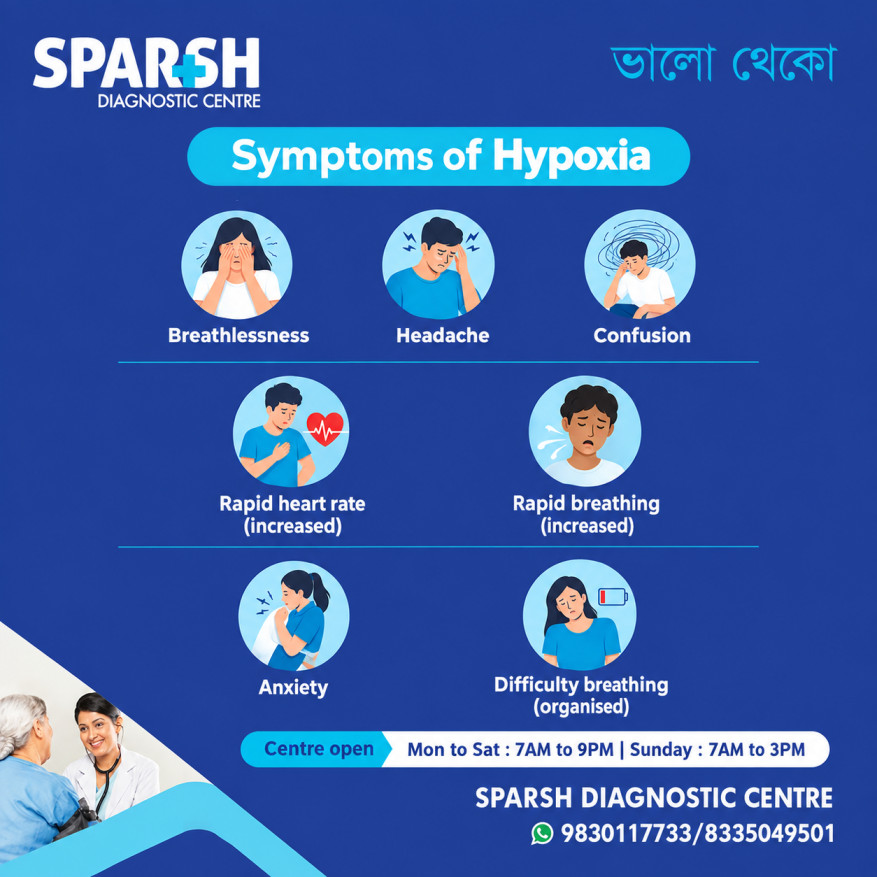
Common signs and symptoms include:
- Breathlessness or difficulty breathing
- Rapid breathing
- Rapid heart rate
- Headache
- Restlessness
- Anxiety
- Confusion
- Difficulty concentrating
- Dizziness
- Weakness or fatigue
- Bluish lips, face or fingernails in more severe cases
- Changes in consciousness in severe hypoxia
Cleveland Clinic notes that severe hypoxia can cause cyanosis, extreme restlessness and changes in heart rate.
What are two early signs of hypoxia?
Two commonly recognised early symptoms are breathlessness and restlessness. Headache, increased breathing rate and increased heart rate may also occur early as the body attempts to compensate for reduced oxygen availability.
Importantly, symptoms aren’t always obvious. Some people with low blood oxygen may have few noticeable symptoms.
Does low SpO₂ mean hypoxia or hypoxemia?
A low SpO₂ primarily indicates reduced oxygen saturation in arterial blood, so it is more directly a measurement of hypoxemia rather than tissue hypoxia.
A pulse oximeter estimates the percentage of haemoglobin carrying oxygen. For most healthy people, normal SpO₂ is generally around 95% to 100%, although acceptable levels can differ depending on underlying lung or heart disease and altitude.
There is no single SpO₂ value that proves tissue hypoxia in every person. Clinical symptoms, medical history and other tests may be needed.
An arterial blood gas (ABG) test can provide more detailed information about arterial oxygen and carbon dioxide levels.
Why shouldn’t you rely only on a pulse oximeter?
Home pulse oximeters can be useful, but their readings can be affected by factors such as:
- Cold fingers
- Poor circulation
- Movement
- Nail polish or artificial nails
- Device limitations
- Low blood oxygen levels
- Skin pigmentation
The FDA advises that pulse oximeter readings should be interpreted alongside symptoms and other clinical information rather than being treated as an absolute diagnosis.
If an oxygen reading is repeatedly low, falling, or accompanied by significant breathlessness, chest pain, confusion or bluish lips, medical assessment is important.
Which organ is first affected in hypoxia?
The brain is particularly sensitive to inadequate oxygen because brain cells have a high and continuous demand for oxygen.
There isn’t a universal rule that one organ is always affected first in every episode of hypoxia. The effect depends on how severe the oxygen deficiency is, how rapidly it develops and the underlying cause. However, the brain and heart are among the organs of greatest concern.
The brain is especially vulnerable to prolonged oxygen deprivation. Severe cerebral hypoxia can lead to loss of consciousness, seizures, permanent neurological injury and death.
What are the four types of hypoxia?
The four classic types are:
1. Hypoxemic hypoxia
This occurs when there isn’t enough oxygen in arterial blood.
Possible causes include:
- Pneumonia
- COPD
- Asthma
- Pulmonary edema
- Pulmonary embolism
- High altitude
- Hypoventilation
- Ventilation-perfusion mismatch
2. Circulatory hypoxia
Here, the blood may contain adequate oxygen, but not enough oxygen-rich blood reaches the tissues.
It can occur with:
- Heart failure
- Shock
- Severe low blood pressure
- Blood-vessel obstruction
- Reduced cardiac output
3. Anaemic hypoxia
In this type, the blood’s ability to carry oxygen is reduced, usually because there isn’t enough functional haemoglobin.
Severe anaemia is a typical example.
4. Histotoxic hypoxia
In this situation, oxygen may reach the tissues but the cells cannot use it effectively.
Cyanide poisoning is a classic example because cyanide interferes with cellular oxygen utilisation.
These categories are useful because they explain why simply giving oxygen is not always the complete solution. Treatment must address the mechanism causing the oxygen problem.
What are the four causes of hypoxia?
The four major mechanisms can therefore be summarised as:
- Inadequate oxygenation of blood — hypoxemic hypoxia
- Inadequate blood flow to tissues — circulatory or stagnant hypoxia
- Reduced oxygen-carrying capacity of blood — anaemic hypoxia
- Failure of cells to use oxygen — histotoxic hypoxia
This classification is clinically useful because each mechanism requires a different approach.
What is silent hypoxia?
Silent hypoxia, sometimes called silent hypoxaemia, describes a situation in which a person’s blood oxygen level is significantly reduced but they do not experience the degree of breathlessness that might normally be expected.
The term received considerable attention during the COVID-19 pandemic, when some patients had low oxygen saturation without obvious respiratory distress.
The important lesson is that absence of severe breathlessness does not always mean oxygen levels are normal.
However, silent hypoxia isn’t limited to one specific disease. A clinician needs to determine why oxygen levels are low.
What is the first stage of hypoxia?
There is no universally accepted four-stage system for hypoxia in everyday clinical practice. Hypoxia can range from mild or early oxygen deficiency to severe tissue oxygen deprivation, and the presentation depends on its cause and duration.
Early compensation may include:
- Faster breathing
- Faster heart rate
- Restlessness
- Headache
- Increased respiratory effort
As oxygen deficiency becomes more severe, confusion, cyanosis, reduced consciousness, abnormal heart rhythms and organ injury may develop.
This is why worsening symptoms should not be ignored simply because they began mildly.
Is hypoxia a cause of death?
Severe or prolonged hypoxia can be life-threatening and can contribute to death.
Cells require oxygen to produce energy and maintain normal function. Prolonged oxygen deprivation can result in irreversible organ injury, particularly involving the brain and heart.
However, hypoxia itself is often a sign or consequence of another medical problem, rather than a disease with one single cause. For example, pneumonia, pulmonary embolism, severe asthma, heart failure, shock or poisoning can all lead to hypoxia.
Promptly treating the underlying cause can sometimes completely reverse the oxygen problem.
Can a person survive hypoxia?
Yes. Many people recover from hypoxia, particularly when the cause is identified and treated promptly.
The outcome depends on:
- How low oxygen levels became
- How long the oxygen deficiency lasted
- Whether the hypoxia was sudden or chronic
- Which organs were affected
- The underlying cause
- The person’s overall health
Brief, mild episodes may resolve without permanent damage, while prolonged severe hypoxia can cause irreversible injury. Brain cells are particularly vulnerable to oxygen deprivation.
Can anxiety cause hypoxia?
Anxiety itself does not usually cause true hypoxia in an otherwise healthy person.
Anxiety or panic can cause rapid breathing, a sensation of breathlessness, chest tightness, dizziness and tingling. These symptoms can feel very similar to low oxygen. In uncomplicated anxiety-related hyperventilation, oxygen therapy is generally not required.
However, anxiety can occur because of hypoxia, so a person shouldn’t automatically assume that breathlessness is “just anxiety.”
If someone has significant breathing difficulty, chest pain, confusion, bluish lips or persistently low SpO₂, the underlying medical cause should be evaluated.
What is the best treatment for hypoxia?
There is no single “best treatment” for every case of hypoxia. The best treatment is treatment of the underlying cause while ensuring adequate oxygen delivery.
Depending on the cause, treatment may include:
- Supplemental oxygen
- Inhaled medicines for airway disease
- Antibiotics for appropriate bacterial infections
- Diuretics for certain cases of pulmonary oedema
- Anticoagulant treatment for appropriate blood clots
- CPAP or BiPAP for selected respiratory conditions
- Treatment of severe anaemia
- Treatment of heart failure or circulatory problems
- Mechanical ventilation in severe respiratory failure
In hospital settings, oxygen delivery can range from nasal oxygen to high-flow systems, non-invasive ventilation or invasive mechanical ventilation depending on the severity and cause.
Do not start or change oxygen therapy on your own simply because a pulse oximeter shows a low number. Oxygen is a medical treatment and the appropriate target can vary between patients.
What are some home remedies for hypoxia?
There is no reliable home remedy that can treat true hypoxia.
If a person has suspected hypoxia, the priority is identifying and treating the cause rather than relying on home remedies.
While waiting for medical advice in a mild situation, practical measures may include:
- Sitting upright if breathing is uncomfortable
- Remaining calm and avoiding strenuous activity
- Moving away from smoke or other respiratory irritants
- Using prescribed inhalers or medicines exactly as directed
- Monitoring symptoms and, when appropriate, SpO₂
- Seeking medical attention if symptoms persist or worsen
Do not use unprescribed oxygen, steam inhalation, herbal remedies or other home treatments as substitutes for medical assessment.
If there is severe breathlessness, confusion, bluish lips, chest pain, fainting or a rapidly deteriorating condition, seek emergency medical care.
Which is worse, hypoxemia or hypoxia?
It isn’t useful to describe one as universally “worse” because hypoxemia and hypoxia describe different points in the oxygen-delivery process.
Hypoxemia refers to low oxygen in arterial blood. Hypoxia refers to inadequate oxygen availability at tissue level.
Severe hypoxemia can lead to tissue hypoxia, but tissue hypoxia can also occur because of poor circulation, anaemia or impaired cellular oxygen utilisation even when blood oxygen isn’t necessarily low.
What matters clinically is determining why oxygen delivery or utilisation is impaired and how severely the patient is affected.
Which organ is most sensitive to hypoxia?
The brain is generally considered the organ most sensitive to oxygen deprivation.
Brain cells have a high metabolic demand and depend on continuous oxygen availability. Severe cerebral hypoxia can quickly lead to neurological dysfunction, unconsciousness, brain injury and, in extreme cases, brain death.
This is why symptoms such as sudden confusion, unusual drowsiness, loss of consciousness or seizures in someone with suspected low oxygen should be treated as medical emergencies.
How is hypoxia diagnosed?
Doctors don’t diagnose hypoxia from symptoms alone. They assess oxygenation and look for the underlying cause.
Tests may include:
Pulse oximetry
A pulse oximeter provides a non-invasive estimate of arterial oxygen saturation.
Arterial blood gas test
An ABG measures arterial oxygen and carbon dioxide and can provide more detailed information about gas exchange.
Blood tests
A complete blood count may help identify anaemia, while other tests can investigate infection, metabolic problems or other causes.
Lung function tests
Pulmonary function testing can help assess how effectively the lungs are working.
Imaging
Depending on the symptoms, doctors may recommend a chest X-ray, CT scan or other imaging to investigate lung or cardiovascular causes.
The appropriate tests depend on the patient’s symptoms and clinical situation.
When should you seek emergency medical care?
Hypoxia can become dangerous quickly. Seek urgent medical attention if there is:
- Severe or rapidly worsening breathlessness
- Confusion or unusual drowsiness
- Blue or grey lips, face or fingernails
- Chest pain
- Fainting or loss of consciousness
- Very rapid or abnormal breathing
- A persistently low or falling oxygen saturation
- A sudden deterioration in someone with a known heart or lung condition
A low pulse oximeter reading should always be interpreted alongside symptoms because home devices aren’t perfectly accurate.
Frequently asked questions about hypoxia
What is hypoxia in simple terms?
Hypoxia means that the body’s tissues are not getting enough oxygen for normal function.
Is hypoxia the same as low oxygen?
Not exactly. Low oxygen in arterial blood is called hypoxemia. Hypoxia refers specifically to inadequate oxygen at the tissue level.
What is the most common cause of hypoxia?
Hypoxemic hypoxia is generally the most common type and can result from lung disease, impaired ventilation, high altitude and other conditions that reduce blood oxygenation.
Does low SpO₂ mean hypoxia?
Low SpO₂ primarily indicates low arterial oxygen saturation, or hypoxemia. It can be associated with tissue hypoxia, but SpO₂ alone cannot establish the presence or severity of tissue hypoxia.
What are the early symptoms of hypoxia?
Breathlessness, restlessness, headache, rapid breathing and increased heart rate can occur early.
Can anxiety lower oxygen levels?
Anxiety and panic can cause intense breathing symptoms, but uncomplicated anxiety-related hyperventilation generally does not cause true hypoxia. Other causes should be considered when oxygen saturation is genuinely low.
Can hypoxia be cured?
Hypoxia can often improve when its underlying cause is successfully treated. Some people may require temporary or long-term oxygen or other respiratory support.
Can hypoxia cause permanent brain damage?
Severe or prolonged oxygen deprivation can cause permanent brain injury. The risk depends on the severity and duration of oxygen deprivation.
Is silent hypoxia dangerous?
It can be. Silent hypoxia means oxygen levels may be low without prominent breathlessness. It was particularly recognised in some patients with COVID-19.
Should I treat low oxygen at home?
A persistently low oxygen reading should not be treated solely with home remedies. The cause should be assessed by a healthcare professional, particularly when symptoms are present.
Final thoughts
Hypoxia is more than simply a low number on a pulse oximeter. It describes inadequate oxygen availability to the body’s tissues and can result from problems involving the lungs, heart, blood, circulation or cellular oxygen utilisation.
Understanding the difference between hypoxia and hypoxemia is important. A low SpO₂ can indicate hypoxemia, but it does not by itself tell you exactly what is happening at the tissue level. Similarly, someone can have significant respiratory disease without immediately experiencing dramatic symptoms.
Early recognition matters because the brain and other vital organs are highly dependent on a continuous oxygen supply. When symptoms such as severe breathlessness, confusion, cyanosis or worsening oxygen saturation occur, prompt medical evaluation can help identify the cause and start appropriate treatment.
For diagnostic evaluation and medical guidance, consult a qualified healthcare professional rather than relying solely on a home pulse oximeter or self-treatment.
Sparsh Diagnostic Centre
Centre open: Monday to Saturday, 7 AM to 9 PM | Sunday, 7 AM to 3 PM
Helpline: 9830117733 / 8335049501
#BhaloTheko
Disclaimer:
No content on this site, regardless of date, should ever be used as a substitute for direct medical advice from your doctor or other qualified clinician.



[…] Hypoxia (low oxygen levels) […]
[…] Hypoxia leading to cardiac arrest […]
[…] Shock or hypoxia […]
[…] Hypoxia (low oxygen levels) […]
[…] injuries can disrupt blood flow, leading to hypoxia and organ […]
[…] Cell Disease: Abnormal red blood cells can block pulmonary vessels, causing hypoxia and increased […]