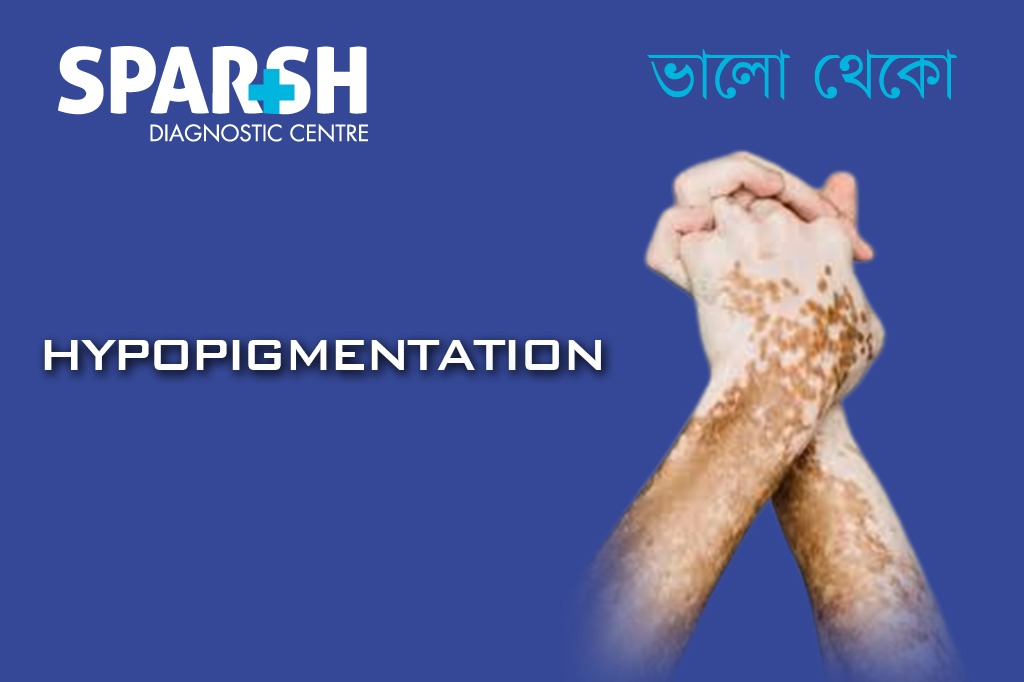
Have you noticed a patch of skin that looks lighter than the surrounding area? It may be tempting to assume that it is vitiligo, a fungal infection or simply a result of sun exposure. However, several different skin conditions can cause lighter patches, and the general term for reduced skin pigmentation is hypopigmentation.
Hypopigmentation occurs when the skin produces less melanin than usual. Melanin is the pigment responsible for much of the colour of your skin, hair and eyes. When melanin production decreases or pigment-producing cells are affected, certain areas may appear lighter than the surrounding skin.
The good news is that hypopigmentation is not always permanent. In many cases, particularly when it follows inflammation, eczema, an injury or certain infections, normal skin colour gradually returns as the skin heals. However, some causes, such as certain genetic conditions and scarring, can result in long-lasting or permanent changes.
So, what causes hypopigmentation? Can it be cured? Is there a cream that can bring the colour back? And when should you see a dermatologist?
Let’s take a closer look.
What is hypopigmentation?
Hypopigmentation means that an area of skin has less pigment than the surrounding skin. It can appear as a small pale spot, several lighter patches or, in some conditions, more widespread loss of pigmentation.
The change happens because melanocytes, the cells responsible for producing melanin, are producing less pigment, have been damaged or are absent from the affected area.
Hypopigmentation can occur in people of any skin tone. However, lighter patches can be particularly noticeable on medium to darker skin because there is a greater contrast between the affected and unaffected areas.
It is important to understand that hypopigmentation is a description of a skin colour change, rather than one single disease. The appropriate treatment depends on why the skin has become lighter.
How does hypopigmentation look?
Hypopigmentation can look different depending on its cause.
Commonly, it appears as:
- Flat patches that are lighter than the surrounding skin
- Pale or almost white spots
- Irregular or well-defined patches
- Multiple small spots that may gradually join together
- Lighter areas following an injury, rash, burn or infection
- Scaly or slightly dry lighter patches in some skin conditions
The colour can range from mildly lighter than the person’s normal skin tone to almost completely white.
The location can also provide clues. For example, tinea versicolor commonly affects the chest, back, abdomen and upper arms, while vitiligo can affect areas such as the face, hands, neck, armpits and genital region.
Because several conditions can look similar, appearance alone is not always enough to determine the cause.
What causes hypopigmentation?
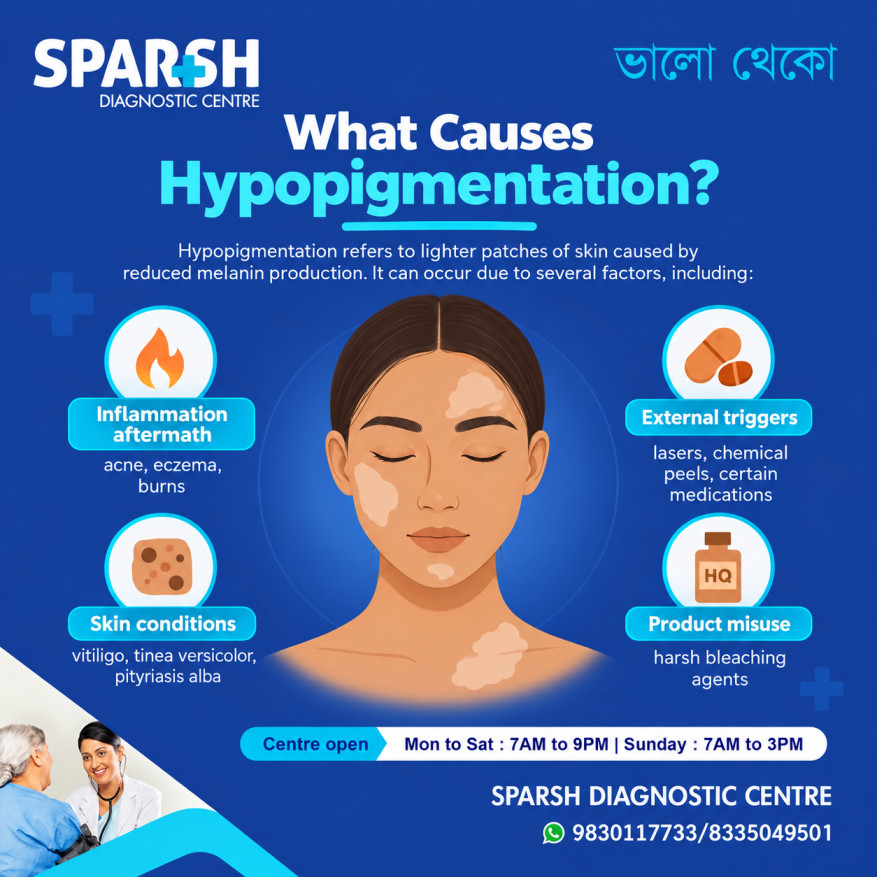
There isn’t one single answer to what causes hypopigmentation. The causes range from temporary skin inflammation to infections, injuries, autoimmune conditions and genetic disorders.
1. Skin injuries and burns
A burn, blister, cut or other injury can damage melanocytes. Once the injury heals, the affected area may remain lighter than the surrounding skin.
This is particularly common after significant inflammation or injury and may gradually improve as the skin recovers.
2. Eczema and other inflammatory skin conditions
Eczema, dermatitis and other inflammatory conditions can sometimes leave lighter patches after the active rash settles.
This is called post-inflammatory hypopigmentation. It may be more noticeable in people with darker skin tones.
The inflammation itself can interfere with normal pigment production, and the colour difference may remain temporarily even after the original rash has disappeared.
3. Vitiligo
Vitiligo is a chronic condition in which melanocytes are lost or destroyed, resulting in areas of reduced or absent pigmentation.
The patches are often sharply defined and may become completely white. They can appear on different parts of the body and may sometimes involve hair growing from the affected skin.
Vitiligo can occur at any age, although it commonly begins earlier in life. It may remain stable or gradually involve additional areas.
4. Tinea versicolor
Tinea versicolor, also called pityriasis versicolor, is a common superficial fungal infection.
It can cause lighter or darker patches, often on the chest, back, upper arms or abdomen. The patches may have fine scaling and can become more noticeable after sun exposure because the surrounding skin tans while the affected areas do not.
It is especially common in warm, humid environments and among people who sweat heavily.
5. Pityriasis alba
Pityriasis alba commonly causes pale, sometimes slightly dry or scaly patches, particularly on the face of children and adolescents.
It is often associated with dry skin or eczema-like inflammation and generally improves over time. However, the pigmentation can take longer to return than the rash itself.
6. Scars
Scarring after an injury, surgery, burn or severe skin inflammation can permanently alter the appearance of the skin.
If melanocytes have been permanently damaged or replaced by scar tissue, the affected area may remain lighter.
7. Certain cosmetic or dermatological procedures
Chemical peels, laser treatments, laser hair removal and other procedures can occasionally cause changes in pigmentation.
The risk can be greater when procedures are performed too aggressively or when the skin is particularly susceptible to pigmentary changes.
8. Genetic conditions
Some inherited conditions can cause reduced pigmentation throughout the body.
Albinism is one example. It results from genetic changes affecting melanin production and is present from birth. People with albinism may also have light-coloured hair and eyes and increased sensitivity to ultraviolet radiation.
What are the main causes of hypopigmentation?
The main causes can be broadly divided into a few groups:
Inflammation: eczema, dermatitis and other inflammatory skin conditions.
Infection: particularly fungal infections such as tinea versicolor.
Skin injury: burns, blisters, trauma and some scars.
Autoimmune disease: especially vitiligo.
Genetic conditions: such as albinism.
Medical or cosmetic treatments: including certain lasers, chemical peels and other procedures.
Identifying the underlying cause is important because treatment for one type of hypopigmentation may not work for another.
Is hypopigmentation the same as vitiligo?
No. Vitiligo is one possible cause of hypopigmentation, but not every light patch is vitiligo.
Vitiligo usually causes clearly defined areas of pigment loss and may gradually affect other parts of the body. Other forms of hypopigmentation may be temporary and can follow an infection, inflammation, eczema or injury.
For example, a pale patch left behind after eczema may gradually return to its normal colour, while pigmentation changes caused by a scar may persist.
This distinction matters because the treatment and prognosis can be very different.
Can hypopigmentation be cured?
Sometimes, yes—but it depends entirely on the cause.
Hypopigmentation caused by inflammation, minor injuries, eczema or some infections may improve substantially or disappear as the underlying problem resolves. In many such cases, pigment slowly returns without specific treatment.
However, hypopigmentation caused by permanent scarring or certain inherited conditions may not be reversible.
Vitiligo also requires a different approach. Although several treatments can help restore pigment or slow progression in appropriate patients, there is no single treatment that permanently cures every case.
The first step, therefore, is not simply trying to increase pigmentation. It is finding out why the pigmentation was lost in the first place.
How can you fix hypopigmentation?
There isn’t one universal treatment for hypopigmentation.
Treatment may involve:
- Treating an underlying fungal infection
- Managing eczema or dermatitis
- Treating inflammation
- Using prescribed topical medications
- Phototherapy in selected conditions
- Managing vitiligo with dermatologist-guided treatment
- Protecting the skin from ultraviolet exposure
- Using cosmetic camouflage where appropriate
For some people, no active treatment is necessary because pigmentation returns naturally.
A dermatologist may use clinical examination and, when appropriate, a Wood’s lamp examination, skin scraping or biopsy to identify the cause.
Which cream is good for hypopigmentation?
There is no single cream that is suitable for all types of hypopigmentation.
This is an important point because using the wrong cream can sometimes irritate the skin and make the underlying problem worse.
If hypopigmentation is related to eczema or inflammation, a dermatologist may prescribe an appropriate anti-inflammatory treatment. If it is caused by a fungal infection such as tinea versicolor, an antifungal medication may be required.
For certain pigmentary disorders, dermatologists may consider treatments such as topical corticosteroids or calcineurin inhibitors, depending on the diagnosis.
Do not start prescription steroid creams, antifungal medicines or pigment-altering products simply because a patch looks lighter. The correct diagnosis should come first.
Which vitamin deficiency can cause hypopigmentation?
People often wonder whether a vitamin deficiency is responsible for their lighter skin patches.
There is no common vitamin deficiency that can be assumed to be the cause of hypopigmentation.
Vitamin and nutritional deficiencies can affect the skin in various ways, but vitamin B12 deficiency is more classically associated with hyperpigmentation, rather than being a common direct cause of hypopigmentation. Research has described pigmentation changes associated with B12 deficiency, including generalized or localized hyperpigmentation.
Some nutritional factors may influence normal skin and pigment biology, but taking vitamin supplements without identifying a deficiency is unlikely to correct an unexplained white or pale patch.
If hypopigmentation is widespread, recurrent or accompanied by other symptoms, a doctor can decide whether blood tests or nutritional evaluation are appropriate.
Can vitamin C treat hypopigmentation?
Vitamin C is often promoted as a skin-brightening ingredient, but that does not mean it can reliably restore lost pigmentation.
Vitamin C has antioxidant properties and plays a role in collagen production. It is widely used in skincare, particularly for concerns involving uneven or excessive pigmentation.
However, hypopigmentation is different from hyperpigmentation. The goal is not to lighten excess pigment but to understand why pigment has been lost.
There is limited evidence that vitamin C alone can reliably repigment hypopigmented skin. If you are using a vitamin C product, sunscreen remains important because lighter patches can be more vulnerable to ultraviolet exposure.
How can I reduce hypopigmentation?
The best way to reduce hypopigmentation is to address its cause.
You can also take steps to make the colour difference less noticeable and protect the affected skin:
Protect your skin from the sun
Use a broad-spectrum sunscreen with an SPF of 30 or higher. Wear protective clothing and avoid excessive sun exposure.
Lighter areas have less natural melanin protection and can be more susceptible to sunburn. At the same time, tanning of the surrounding skin can make hypopigmented patches look more obvious.
Keep the skin moisturised
A gentle moisturiser can help maintain the skin barrier, particularly if dryness or eczema is contributing to the colour change.
Treat underlying skin problems
If the patch appeared after eczema, dermatitis, a fungal infection or another skin condition, treating that condition is often more useful than trying to treat the colour difference directly.
Avoid unnecessary skin treatments
Aggressive exfoliation, unregulated bleaching products and unsupervised chemical treatments may irritate the skin and potentially worsen pigmentation problems.
Consider cosmetic camouflage
Camouflage makeup or self-tanning products can temporarily reduce the contrast between lighter patches and surrounding skin.
What are some home remedies for hypopigmentation?
There is no proven home remedy that can reliably restore pigment in every case.
However, sensible home care can support the skin while the underlying condition is being treated.
Useful measures include:
- Applying a gentle moisturiser regularly
- Using sunscreen every day
- Avoiding unnecessary tanning
- Avoiding harsh scrubs and irritating skincare products
- Keeping eczema-prone skin moisturised
- Avoiding untested bleaching or herbal preparations
- Using cosmetic camouflage if desired
Home care is supportive rather than curative. If the patches are spreading, becoming completely white, developing scales or appearing repeatedly, it is better to have the skin examined rather than experimenting with multiple remedies.
Can hypopigmentation spread?
It can, depending on the cause.
Hypopigmentation caused by a healed injury or temporary inflammation generally does not continue spreading once the underlying problem has resolved.
However, conditions such as vitiligo can involve additional areas over time. Some infections can also produce multiple patches, while tinea versicolor may recur after successful treatment.
This is one reason why a new or expanding light patch should not automatically be assumed to be harmless.
How long will hypopigmentation last?
The answer varies considerably.
Temporary hypopigmentation following inflammation, eczema, infection or injury may improve over weeks to months. Some conditions, particularly pityriasis alba, can take considerably longer for normal pigmentation to return.
The underlying skin problem may disappear before the colour completely returns. In other words, your rash may be gone, but the lighter patch can remain visible for some time.
Permanent pigment loss is more likely when melanocytes have been permanently destroyed or when the change is associated with scarring or an inherited condition.
Is hypopigmentation permanent?
Not necessarily.
Whether hypopigmentation is permanent depends on what caused it.
It may be temporary when caused by:
- Eczema
- Inflammation
- Certain infections
- Minor skin injuries
- Some cases of pityriasis alba
It may be long-lasting or permanent when associated with:
- Significant scarring
- Certain genetic disorders
- Permanent damage to melanocytes
- Some chronic pigmentary conditions
Even when the pigment does not completely return, treatments may sometimes improve the appearance or help manage the underlying condition.
At what age does hyperpigmentation start?
There is an important terminology difference here.
Hyperpigmentation means that an area of skin becomes darker, while hypopigmentation means that it becomes lighter.
There is no specific age at which hypopigmentation starts because different causes occur at different ages.
For example, pityriasis alba is particularly common during childhood and adolescence, while vitiligo can begin at various ages and often develops earlier in life. Genetic conditions such as albinism are present from birth.
If you meant hyperpigmentation, that is a separate issue and can occur due to factors such as sun exposure, hormonal changes, inflammation, medications and ageing.
How is hypopigmentation diagnosed?
A dermatologist usually begins with a detailed examination of the skin.
They may ask:
- When did the patch first appear?
- Has it changed in size?
- Is it spreading?
- Was there a rash or injury beforehand?
- Is the area itchy, scaly or painful?
- Have you recently had a fungal infection?
- Have you used a new cream or cosmetic product?
- Have you undergone a laser, peel or other procedure?
- Does anyone in your family have a similar condition?
Depending on what the doctor sees, further tests may be recommended.
A Wood’s lamp examination can help assess certain pigmentary disorders, while skin scrapings may be useful when a fungal infection is suspected. Occasionally, a skin biopsy may be needed when the diagnosis is uncertain.
When should you see a dermatologist?
Not every pale patch requires urgent medical attention, but you should consider a professional evaluation if:
- A patch is rapidly increasing in size
- New patches are appearing
- The area has become completely white
- Hair within the patch has also turned white
- The skin is itchy, scaly, painful or inflamed
- The patch appeared without an obvious explanation
- Pigmentation changes followed a cosmetic procedure
- The condition is affecting your confidence or quality of life
- You are unsure whether the patch is vitiligo, fungal infection or another skin condition
Early assessment can help identify the cause and prevent inappropriate treatment.
Can hypopigmentation be prevented?
Not every form of hypopigmentation can be prevented, particularly genetic conditions or autoimmune disorders.
However, you can reduce the risk of some acquired pigmentation changes by:
- Protecting your skin from excessive UV exposure
- Treating eczema and inflammatory skin conditions promptly
- Avoiding unnecessary skin irritation
- Following aftercare instructions after dermatological procedures
- Avoiding unregulated skin-lightening products
- Treating fungal infections appropriately
- Avoiding picking or scratching inflamed skin
Good skin-barrier care is particularly important if you are prone to eczema or dermatitis.
Hypopigmentation vs hyperpigmentation
The names can sound confusing, so here’s the simplest way to remember them:
Hypopigmentation = less pigment = lighter skin
Hyperpigmentation = more pigment = darker skin
Both are descriptions of changes in skin colour, not necessarily individual diseases.
They can have completely different causes and require different treatments. A cream designed to reduce dark pigmentation, for example, may not be appropriate for a light patch.
Frequently asked questions about hypopigmentation
Can hypopigmentation be cured?
Some forms can improve or completely resolve, particularly when caused by inflammation, eczema, certain infections or minor skin injuries. Others, including some genetic conditions and scar-related pigment loss, may be permanent. Treatment depends on the underlying cause.
What causes hypopigmentation?
Common causes include skin injuries, burns, inflammation, eczema, fungal infections such as tinea versicolor, vitiligo, pityriasis alba, scarring, certain cosmetic procedures and genetic conditions such as albinism.
Which vitamin deficiency can cause hypopigmentation?
There is no single vitamin deficiency that commonly explains hypopigmentation. Vitamin B12 deficiency is more commonly associated with hyperpigmentation than hypopigmentation. If nutritional deficiency is suspected, testing should be guided by a healthcare professional.
How can you fix hypopigmentation?
The most effective approach is to treat the underlying cause. This may involve antifungal treatment, management of eczema or inflammation, prescription medications, phototherapy or other dermatologist-guided treatments. Some cases need no treatment because pigmentation returns naturally.
How long will hypopigmentation last?
Temporary hypopigmentation can improve over weeks or months, although some conditions may take considerably longer. Permanent pigment loss can occur with scarring, genetic disorders and certain chronic conditions.
Which cream is good for hypopigmentation?
There is no universal hypopigmentation cream. The appropriate product depends on the cause. For example, fungal hypopigmentation needs antifungal treatment, while inflammation-related conditions may require a different prescription. Avoid self-treating with steroid or antifungal creams without a diagnosis.
Can hypopigmentation spread?
Some causes can spread or produce additional patches, particularly vitiligo and certain infections. Hypopigmentation following a healed injury generally does not continue spreading.
Can vitamin C treat hypopigmentation?
Vitamin C has antioxidant and collagen-supporting properties but is not a proven treatment for all forms of hypopigmentation. It should not be relied upon to restore lost skin pigment.
How does hypopigmentation look?
It usually appears as skin that is lighter than the surrounding area. Depending on the cause, patches may be pale, nearly white, round, irregular, sharply defined or slightly scaly.
What are some home remedies for hypopigmentation?
There is no reliable home remedy that restores pigment in every case. Moisturising, daily sunscreen, avoiding harsh skincare products and protecting the affected area from excessive sun exposure can help protect the skin while the underlying cause is addressed.
How can I reduce hypopigmentation?
Treat the underlying cause, protect the affected skin from UV exposure, maintain a healthy skin barrier and avoid unnecessary irritation. Cosmetic camouflage can also reduce the visible contrast between affected and unaffected skin.
At what age does hyperpigmentation start?
Hyperpigmentation and hypopigmentation are different conditions. Hypopigmentation can occur at any age depending on its cause. Some forms, such as albinism, are present from birth, while pityriasis alba commonly occurs during childhood and adolescence and vitiligo can begin at different ages.
Is hypopigmentation permanent?
It can be, but it is not always permanent. Hypopigmentation following inflammation, eczema, some infections or injuries may gradually resolve, whereas scarring and certain genetic conditions can cause permanent pigment loss.
Final thoughts
Seeing a lighter patch on your skin can understandably be worrying, but hypopigmentation has many possible causes, and not all of them are serious or permanent.
The most important step is to avoid guessing the cause based solely on appearance. A patch caused by eczema needs a different approach from one caused by tinea versicolor, vitiligo or a scar. Once the underlying cause is identified, your dermatologist can explain whether the pigmentation is likely to return and whether treatment is necessary.
In the meantime, protect lighter areas from excessive sun exposure, keep your skin moisturised and avoid experimenting with strong creams or home remedies.
If a patch is new, spreading, persistent or changing, getting it assessed by a qualified dermatologist is the safest way to understand what is happening and choose the right treatment.
Visit Sparsh Diagnostic Centre for Expert Skin Evaluation
At Sparsh Diagnostic Centre, we offer advanced diagnostic services and dermatological evaluations to help you identify the cause of hypopigmentation and create an effective treatment plan tailored to your needs.
📍 Location: Kolkata
📞 Call or WhatsApp: 9830117733 | 8335049501
🌐 www.sparshdiagnostica.com
#BhaloTheko
Disclaimer:
No content on this site, regardless of date, should ever be used as a substitute for direct medical advice from your doctor or other qualified clinician.