Hypokinesia is a medical condition that causes a noticeable reduction in body movement. People living with hypokinesia often find that their movements become slower, smaller, or more difficult to initiate. While it is commonly linked to neurological disorders such as Parkinson’s disease, hypokinesia can also appear due to other medical conditions, medications, or lifestyle-related factors.
The term itself comes from the Greek words “hypo,” meaning reduced, and “kinesis,” meaning movement. In simple terms, hypokinesia refers to decreased movement activity. It can affect walking, facial expressions, handwriting, speech, and even simple daily tasks like getting dressed or eating.
Because movement is essential to almost every aspect of life, hypokinesia can significantly impact independence, confidence, and quality of life. The good news is that early diagnosis and proper treatment can help manage symptoms and improve mobility.
In this detailed guide, we will explore hypokinesia in depth, including its causes, symptoms, diagnosis, treatment options, and practical ways to manage the condition.
What Is Hypokinesia?
Hypokinesia is a condition characterized by reduced amplitude or extent of voluntary movements. Unlike paralysis, where movement may be completely absent, hypokinesia involves movement that is present but limited, slower, or less coordinated.
People with hypokinesia may notice:
- Smaller movements
- Difficulty starting movement
- Reduced arm swinging while walking
- Slower reaction times
- Less facial expression
- Quiet or soft speech
The condition is most commonly associated with disorders affecting the basal ganglia, a part of the brain responsible for controlling movement.
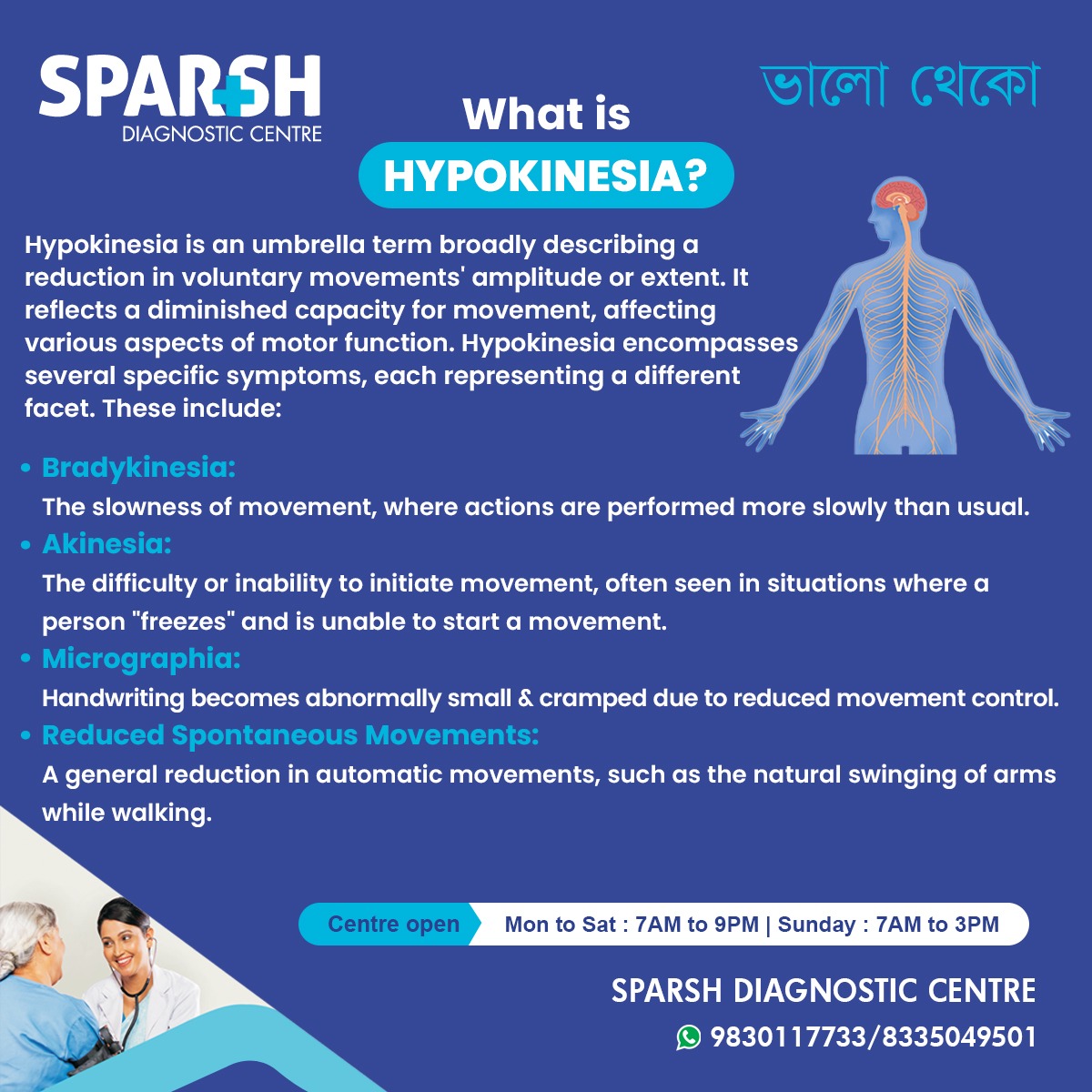
Hypokinesia often overlaps with related movement disorders, including:
Bradykinesia
Bradykinesia refers to slowness of movement. A person may take longer than usual to perform routine tasks.
Akinesia
Akinesia describes difficulty initiating movement or episodes of freezing.
Micrographia
Micrographia causes handwriting to become unusually small and cramped.
These symptoms are frequently seen together in neurological disorders such as Parkinson’s disease.
Causes of Hypokinesia
Hypokinesia can develop due to several underlying conditions. Understanding the cause is important because treatment depends heavily on what is triggering the reduced movement.
Parkinson’s Disease
Parkinson’s disease is the most common cause of hypokinesia. In this condition, nerve cells in the brain gradually lose their ability to produce dopamine, a chemical essential for smooth and coordinated movement.
As dopamine levels decline, movement becomes slower and less fluid.
Common accompanying symptoms include:
- Tremors
- Muscle stiffness
- Balance problems
- Shuffling gait
Other Neurological Disorders
Several neurological conditions can also lead to hypokinesia, including:
- Progressive supranuclear palsy
- Multiple system atrophy
- Huntington’s disease
- Stroke
- Traumatic brain injury
These conditions disrupt communication between the brain and muscles.
Medication Side Effects
Certain medications can interfere with dopamine function and trigger symptoms similar to Parkinson’s disease. This is known as drug-induced parkinsonism.
Medications that may contribute include:
- Antipsychotic drugs
- Some anti-nausea medications
- Certain sedatives
Symptoms often improve once the medication is adjusted or stopped under medical supervision.
Aging
Natural aging can lead to slower movement and reduced muscle coordination. While mild slowing is common in older adults, significant hypokinesia should always be evaluated medically.
Depression and Mental Health Conditions
Severe depression may cause psychomotor slowing, where physical movements and speech become noticeably slower. Although different from neurological hypokinesia, the symptoms can appear similar.
Sedentary Lifestyle
Lack of physical activity can gradually reduce flexibility, muscle strength, and mobility. In some individuals, prolonged inactivity may worsen movement difficulties.
Symptoms of Hypokinesia
The symptoms of hypokinesia can vary from mild to severe depending on the underlying condition.
Reduced Movement
The most recognizable symptom is smaller and slower body movements.
People may notice that they:
- Walk more slowly
- Take shorter steps
- Have difficulty turning
- Struggle with fine motor tasks
Decreased Facial Expression
Some individuals develop a masked facial appearance with reduced blinking and minimal emotional expression.
Soft Speech
Speech may become softer, slower, or monotone.
Muscle Stiffness
Muscle rigidity often accompanies hypokinesia, making movement feel restricted and uncomfortable.
Poor Balance
Difficulty maintaining posture and balance can increase the risk of falls.
Reduced Automatic Movements
Automatic movements such as arm swinging while walking may decrease significantly.
Freezing Episodes
Some people suddenly feel unable to move temporarily, especially while walking through narrow spaces or turning corners.
Fatigue
Simple tasks may require greater effort, leading to physical and mental exhaustion.
How does Hypokinesia Affect Daily Life
Hypokinesia can interfere with everyday activities in many ways.
Difficulty Performing Routine Tasks
Activities like buttoning clothes, writing, cooking, or brushing teeth may become slower and frustrating.
Mobility Challenges
Walking difficulties can affect independence and increase fall risk.
Social Impact
Reduced facial expression and soft speech may make communication harder, sometimes leading to social withdrawal.
Emotional Strain
Living with chronic movement limitations can contribute to anxiety, depression, and reduced self-esteem.
Diagnosis of Hypokinesia
Diagnosing hypokinesia involves identifying both the movement problem and its underlying cause.
Medical History
A doctor will ask about:
- Symptom onset
- Medication use
- Family history
- Changes in mobility
- Associated neurological symptoms
Physical Examination
The physician evaluates:
- Walking pattern
- Muscle tone
- Reflexes
- Coordination
- Handwriting
- Facial expression
Neurological Assessment
Specialized neurological testing helps determine whether the symptoms are linked to Parkinson’s disease or another condition.
Imaging Tests
Brain imaging may include:
These tests help rule out other neurological disorders.
Blood Tests
Blood tests may be used to identify metabolic or hormonal causes contributing to movement problems.
Treatment for Hypokinesia
Treatment depends on the underlying cause and severity of symptoms.
Medications
Dopamine Replacement Therapy
Levodopa is one of the most effective medications for Parkinson’s-related hypokinesia. It helps replenish dopamine levels in the brain.
Dopamine Agonists
These drugs mimic dopamine activity and may help improve movement.
MAO-B Inhibitors
These medications slow dopamine breakdown, helping dopamine remain active longer.
Physical Therapy
Physical therapy plays a major role in improving mobility and flexibility.
Therapists may focus on:
- Balance training
- Gait improvement
- Stretching exercises
- Strength building
- Coordination exercises
Occupational Therapy
Occupational therapists help patients adapt daily activities and maintain independence.
They may recommend:
- Assistive devices
- Home modifications
- Energy-saving techniques
Speech Therapy
Speech therapy can improve voice strength and communication difficulties.
Exercise
Regular physical activity is one of the best ways to manage hypokinesia.
Helpful exercises include:
- Walking
- Yoga
- Tai chi
- Swimming
- Cycling
- Resistance training
Exercise improves flexibility, balance, mood, and muscle strength.
Deep Brain Stimulation (DBS)
For severe cases of Parkinson’s disease, deep brain stimulation may help reduce movement symptoms.
This surgical treatment involves implanting electrodes in specific brain regions.
Lifestyle Tips for Managing Hypokinesia
Daily habits can make a significant difference in symptom control.
Stay Physically Active
Regular movement helps maintain flexibility and mobility.
Create a Safe Home Environment
Reduce fall risks by:
- Removing loose rugs
- Installing grab bars
- Improving lighting
- Using supportive footwear
Maintain Good Nutrition
A healthy diet supports muscle function and overall brain health.
Practice Stress Management
Stress can worsen movement symptoms. Relaxation techniques such as meditation and deep breathing may help.
Build a Support System
Support from family, friends, and healthcare professionals is essential for emotional well-being.
Complications of Hypokinesia
If left untreated, hypokinesia can lead to several complications.
Falls and Injuries
Poor balance increases the likelihood of fractures and head injuries.
Muscle Weakness
Reduced movement can weaken muscles over time.
Joint Stiffness
Limited mobility may contribute to painful joint stiffness.
Loss of Independence
Advanced movement limitations can make self-care difficult.
Mental Health Problems
Depression and anxiety are common among individuals coping with chronic neurological conditions.
Can Hypokinesia Be Prevented?
Not all cases can be prevented, especially those linked to degenerative neurological diseases. However, certain strategies may reduce risk or slow progression.
Exercise Regularly
Physical activity supports healthy brain and muscle function.
Manage Chronic Conditions
Controlling diabetes, high blood pressure, and cardiovascular disease may help protect brain health.
Avoid Unnecessary Medication Use
Only take medications as prescribed and discuss side effects with your doctor.
Seek Early Medical Attention
Early diagnosis often leads to better treatment outcomes.
When to See a Doctor
You should seek medical evaluation if you experience:
- Persistent slowness of movement
- Tremors
- Muscle stiffness
- Balance problems
- Frequent falls
- Difficulty initiating movement
- Changes in handwriting or speech
Early assessment can help identify underlying neurological conditions before symptoms worsen.
Living With Hypokinesia
Living with hypokinesia can be challenging, but many people continue to lead active and fulfilling lives with proper support and treatment.
Key factors that improve quality of life include:
- Early diagnosis
- Consistent medical care
- Regular exercise
- Emotional support
- Healthy lifestyle habits
Treatment plans often work best when tailored to the individual’s symptoms and daily needs.
Frequently Asked Questions (FAQs)
Is hypokinesia the same as Parkinson’s disease?
No. Hypokinesia is a symptom involving reduced movement, while Parkinson’s disease is a neurological disorder that commonly causes hypokinesia.
What is the difference between hypokinesia and bradykinesia?
Hypokinesia refers to reduced movement amplitude, while bradykinesia specifically means slowness of movement. The two conditions often occur together.
Can hypokinesia be cured?
The possibility of reversal depends on the underlying cause. Some medication-related cases improve after treatment adjustments, while neurological causes may require long-term management.
Does exercise help hypokinesia?
Yes. Regular exercise can improve flexibility, strength, balance, and overall mobility.
Is hypokinesia dangerous?
Hypokinesia itself is not usually life-threatening, but it can increase the risk of falls, injuries, and loss of independence.
What are early signs of hypokinesia?
Early signs may include smaller handwriting, slower walking, reduced arm swing, soft speech, and stiffness.
Can anxiety cause hypokinesia?
Severe anxiety or depression may contribute to slowed movements, although neurological evaluation is important to rule out other causes.
Who is most at risk for hypokinesia?
Older adults and individuals with neurological disorders such as Parkinson’s disease are at higher risk.
Hypokinesia is a movement disorder characterized by reduced voluntary movement and decreased motor activity. Although it is strongly associated with Parkinson’s disease, many other neurological conditions, medications, and health issues can also contribute to its development.
Recognizing symptoms early is important for timely diagnosis and effective treatment. With proper medical care, physical therapy, exercise, and lifestyle adjustments, many individuals can successfully manage symptoms and maintain a good quality of life.
If you or a loved one notice persistent movement difficulties, seeking professional medical advice can make a significant difference in long-term outcomes.
To consult a Doctor at Sparsh Diagnostic Centre, call our helpline numbers 9830117733/ 8335049501.
#BhaloTheko
Disclaimer:
No content on this site, regardless of date, should ever be used as a substitute for direct medical advice from your doctor or other qualified clinician.