Bradykinesia is a medical term that literally means “slow movement.” It’s one of the hallmark features of several neurological conditions, most notably Parkinson’s disease. People with bradykinesia often find that everyday movements—such as walking, blinking, or even buttoning a shirt—become noticeably slower and more difficult over time.
While many people assume slowness in movement is simply part of aging, bradykinesia is different. It reflects changes in the brain that affect how the body initiates and controls movement. Understanding what bradykinesia is, why it occurs, and how it can be managed is essential for patients, caregivers, and anyone interested in neurological health.
In this guide, we’ll explore the causes, symptoms, diagnosis, and treatment options for bradykinesia in clear and practical terms.
What Is Bradykinesia?
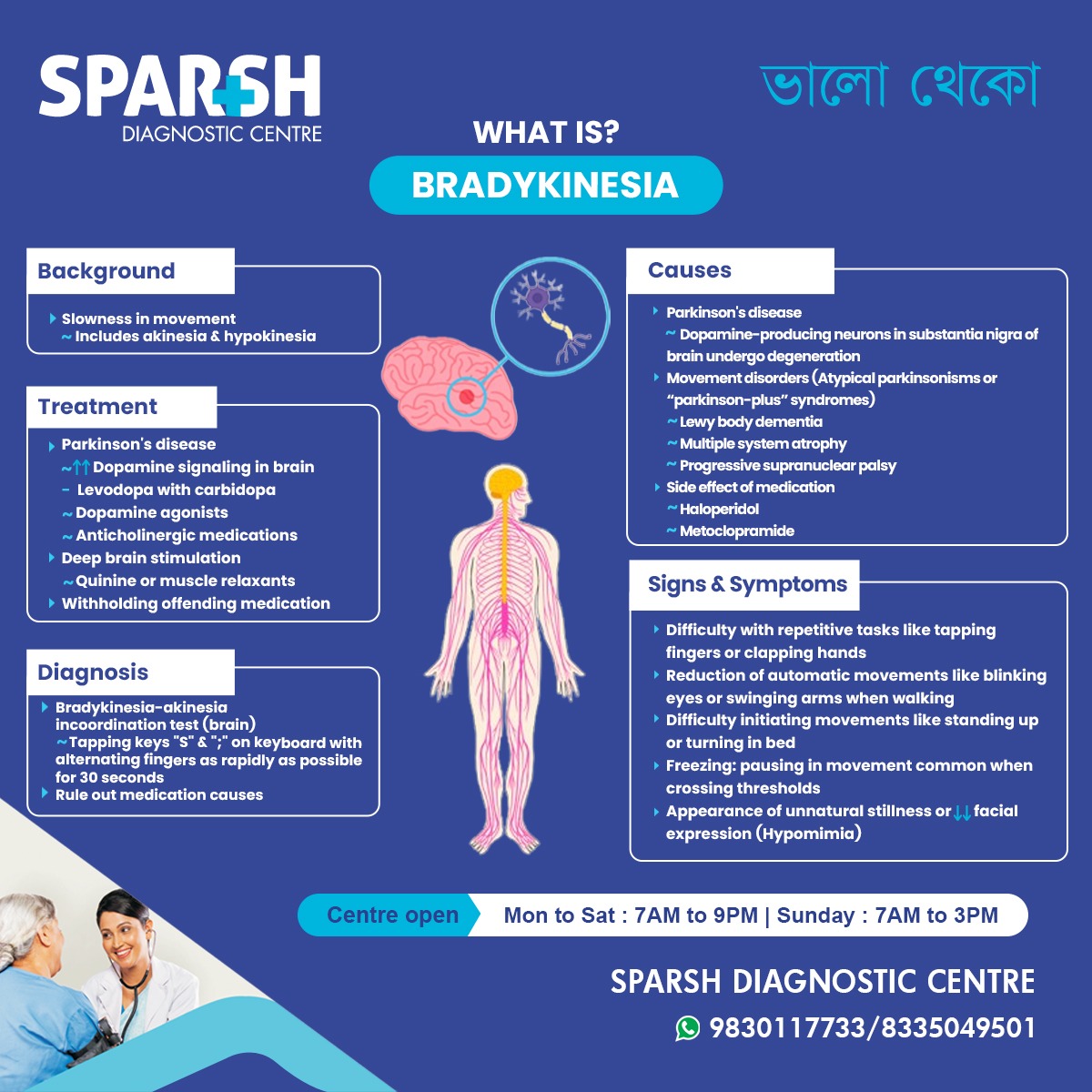
Bradykinesia refers to abnormally slow voluntary movements. It can also include difficulty starting movements and reduced automatic motions that most people perform without thinking.
For example, someone with bradykinesia may notice:
Slower walking speed
Reduced arm swing while walking
Difficulty starting to move after standing up
Slower hand movements during daily tasks
Reduced facial expressions
Bradykinesia is closely related to two other movement problems:
Akinesia – difficulty initiating movement
Hypokinesia – decreased amplitude or size of movement
Together, these symptoms are often seen in neurological disorders that affect the brain’s movement control centers.
How does the Brain Control Movement
To understand bradykinesia, it helps to know how the brain normally regulates movement.
Movement is coordinated by a network of brain structures, particularly the basal ganglia, which help plan and execute motion. These structures rely heavily on a chemical messenger called dopamine.
Dopamine allows nerve cells to communicate effectively and ensures smooth, controlled movements. When dopamine levels drop or the neurons that produce dopamine become damaged, movement signals slow down or become disrupted.
This is exactly what happens in many conditions associated with bradykinesia.
Causes of Bradykinesia
Bradykinesia is not a disease itself. Instead, it’s a symptom of underlying neurological conditions. Several factors and disorders can lead to slow movement.
1. Parkinson’s Disease
The most common cause of bradykinesia is Parkinson’s disease. In this condition, dopamine-producing neurons in a region of the brain called the substantia nigra gradually degenerate.
As dopamine levels fall, the brain struggles to control movement efficiently, leading to symptoms such as:
Slow movements
Muscle stiffness
Tremors
Balance problems
Bradykinesia is often one of the earliest and most noticeable signs of Parkinson’s disease.
2. Atypical Parkinsonism Disorders
Some neurological conditions mimic Parkinson’s disease but have different underlying causes. These are sometimes referred to as “Parkinson-plus syndromes.”
Examples include:
These disorders also affect brain regions responsible for movement, leading to bradykinesia and other motor symptoms.
3. Medication Side Effects
Certain medications can interfere with dopamine signaling and cause symptoms similar to Parkinson’s disease, including bradykinesia.
Common examples include:
Some antipsychotic medications
Drugs used to treat nausea
Certain psychiatric medications
When medication is responsible, symptoms may improve after adjusting or stopping the drug under medical supervision.
4. Brain Injury or Neurological Damage
Damage to the brain from strokes, trauma, or other neurological diseases can also affect movement control.
When brain circuits involved in motor function are disrupted, people may experience:
Slow movements
Reduced coordination
Difficulty initiating motion
5. Degenerative Neurological Conditions
Other degenerative conditions affecting the brain and nervous system may lead to bradykinesia over time. These disorders gradually impair communication between brain cells involved in motor control.
Signs and Symptoms of Bradykinesia
The symptoms of bradykinesia often develop gradually and may initially be subtle. Over time, they can interfere with daily activities and quality of life.
Slower Physical Movements
The most obvious sign is noticeably slower movement. Simple tasks like getting out of a chair or walking across a room may take longer than usual.
Difficulty Performing Repetitive Tasks
People with bradykinesia may struggle with repetitive motions such as:
Tapping fingers
Clapping hands
Typing on a keyboard
These movements often become slower and less coordinated.
Reduced Automatic Movements
Many movements normally occur automatically without conscious effort. Bradykinesia can reduce these natural motions.
Examples include:
Less frequent blinking
Reduced arm swinging while walking
Diminished facial expressions
This can lead to a facial appearance sometimes described as a “masked face.”
Difficulty Initiating Movement
Another hallmark symptom is trouble starting movement.
For example, a person may:
Feel “stuck” before taking the first step
Struggle to begin standing from a seated position
Hesitate before turning or walking
Freezing Episodes
Some individuals experience freezing, where movement suddenly stops for a few seconds.
This often occurs when:
Walking through doorways
Turning corners
Crossing thresholds
Smaller Movements
Movements may also become smaller and less pronounced over time. Handwriting, for instance, may become progressively smaller, a symptom known as micrographia.
How does Bradykinesia Affect Daily Life
Bradykinesia can significantly impact everyday activities. Tasks that once felt automatic may require more effort and concentration.
Common challenges include:
Dressing and grooming
Cooking and eating
Walking and maintaining balance
Writing or typing
Speaking clearly and quickly
These changes can affect independence and emotional well-being, making early recognition and management important.
Diagnosis of Bradykinesia
Diagnosing bradykinesia involves a detailed neurological evaluation. There is no single test that confirms the condition. Instead, doctors assess movement patterns and rule out other causes.
Medical History
Doctors begin by asking about symptoms, including:
When the slow movements started
Whether symptoms are worsening
Any medications being taken
Family history of neurological disorders
Physical and Neurological Examination
During the exam, doctors evaluate movement speed, coordination, and balance.
Patients may be asked to perform tasks such as:
Rapid finger tapping
Alternating hand movements
Walking in a straight line
Standing up from a chair
These tests help identify slowed or reduced movement patterns typical of bradykinesia.
Imaging Tests
Brain imaging may be recommended to rule out other neurological problems.
Possible tests include:
While imaging cannot always diagnose Parkinson’s disease directly, it helps exclude other causes of movement disorders.
Medication Review
Doctors may also review medications that could interfere with dopamine signaling. If drug-induced symptoms are suspected, treatment adjustments may be recommended.
Treatment Options for Bradykinesia
Treatment focuses on addressing the underlying cause of bradykinesia and improving movement control.
Medications That Increase Dopamine
For individuals with Parkinson’s disease, medications that enhance dopamine activity are often the first line of treatment.
Common approaches include drugs that:
Replace dopamine
Mimic dopamine’s effects
Prevent dopamine breakdown
These medications can significantly improve movement speed and coordination.
Dopamine Agonists
Dopamine agonists mimic the effects of dopamine in the brain. They stimulate dopamine receptors and help restore communication between brain cells involved in movement.
Anticholinergic Medications
These medications may help reduce tremors and improve motor control in some patients.
Deep Brain Stimulation
For people whose symptoms do not respond well to medication, deep brain stimulation (DBS) may be an option.
This surgical procedure involves implanting electrodes in specific areas of the brain to regulate abnormal electrical signals. DBS can improve movement symptoms, including bradykinesia, in selected patients.
Physical Therapy
Physical therapy plays a crucial role in managing bradykinesia.
Therapists focus on:
Improving mobility
Strengthening muscles
Enhancing balance
Training patients to take larger, more deliberate steps
Exercise programs may include walking routines, stretching, and balance training.
Occupational Therapy
Occupational therapists help individuals adapt daily activities to maintain independence.
They may recommend:
Assistive devices
Modified tools for eating and dressing
Techniques to simplify routine tasks
Speech Therapy
Because bradykinesia can affect speech muscles, some individuals develop slower or softer speech.
Speech therapy can improve:
Voice strength
Clarity of speech
Breathing control
Lifestyle Strategies That Help
In addition to medical treatment, lifestyle changes can help manage symptoms and improve quality of life.
Regular Exercise
Exercise helps maintain mobility and muscle strength. Activities like walking, swimming, yoga, and stretching can be particularly beneficial.
Balanced Nutrition
A healthy diet supports overall brain health and energy levels. Proper nutrition can also help manage medication side effects.
Consistent Sleep
Sleep disturbances can worsen neurological symptoms. Maintaining a consistent sleep schedule can improve energy and movement control.
Mental Stimulation
Activities such as reading, puzzles, or learning new skills help keep the brain engaged and active.
When to See a Doctor
Slow movement that interferes with daily life should always be evaluated by a healthcare professional.
Seek medical advice if you notice:
Persistent slowness in movement
Difficulty initiating motion
Reduced facial expressions
Shuffling walk or balance issues
Tremors or stiffness
Early diagnosis allows for earlier treatment and better symptom management.
Frequently Asked Questions (FAQ)
What does bradykinesia mean?
Bradykinesia literally means slow movement. It refers to abnormally slow voluntary motions and difficulty initiating movement, commonly associated with Parkinson’s disease and other neurological conditions.
Is bradykinesia the same as Parkinson’s disease?
No. Bradykinesia is a symptom, not a disease. However, it is one of the primary signs of Parkinson’s disease and often helps doctors diagnose the condition.
Can bradykinesia be cured?
There is currently no complete cure for bradykinesia caused by degenerative neurological disorders. However, treatments such as medication, therapy, and lifestyle changes can significantly improve symptoms.
How is bradykinesia diagnosed?
Doctors diagnose bradykinesia through a neurological examination, evaluation of symptoms, and sometimes imaging tests to rule out other causes.
Can medications cause bradykinesia?
Yes. Certain medications that interfere with dopamine signaling can lead to bradykinesia-like symptoms. In many cases, symptoms improve after adjusting or stopping the medication under medical guidance.
Does exercise help with bradykinesia?
Yes. Regular exercise can improve mobility, balance, and muscle strength. Physical therapy programs specifically designed for movement disorders can be particularly helpful.
What are early signs of bradykinesia?
Early symptoms may include:
Slower walking
Smaller handwriting
Reduced facial expression
Less arm swing while walking
Difficulty starting movements
Bradykinesia is a key sign of several neurological conditions, particularly Parkinson’s disease. While it primarily involves slow and reduced movement, its effects can extend into many aspects of daily life—from walking and speaking to writing and facial expression.
The good news is that modern treatments, therapies, and lifestyle strategies can significantly improve symptoms and help people maintain independence.
Early recognition, proper diagnosis, and a comprehensive treatment plan are essential for managing bradykinesia effectively. If you or a loved one notices persistent changes in movement speed or coordination, seeking medical advice is an important first step toward better neurological health.
To consult a Neurologist at Sparsh Diagnostic Centre, call our helpline numbers 9830117733/ 8335049501.
#BhaloTheko
Disclaimer:
No content on this site, regardless of date, should ever be used as a substitute for direct medical advice from your doctor or other qualified clinician.