

Parkinson’s disease is one of the most common neurological disorders affecting movement, balance, and coordination. While many people think of Parkinson’s disease as a single condition, doctors actually classify it into different types. Understanding these types can help patients and families recognize symptoms early, seek proper treatment, and manage the condition more effectively.
Parkinson’s disease mainly affects the nervous system and gradually worsens over time. The disorder develops when dopamine-producing nerve cells in the brain become damaged or die. Dopamine is essential for smooth and coordinated body movement. As dopamine levels drop, symptoms such as tremors, stiffness, and slowed movement begin to appear.
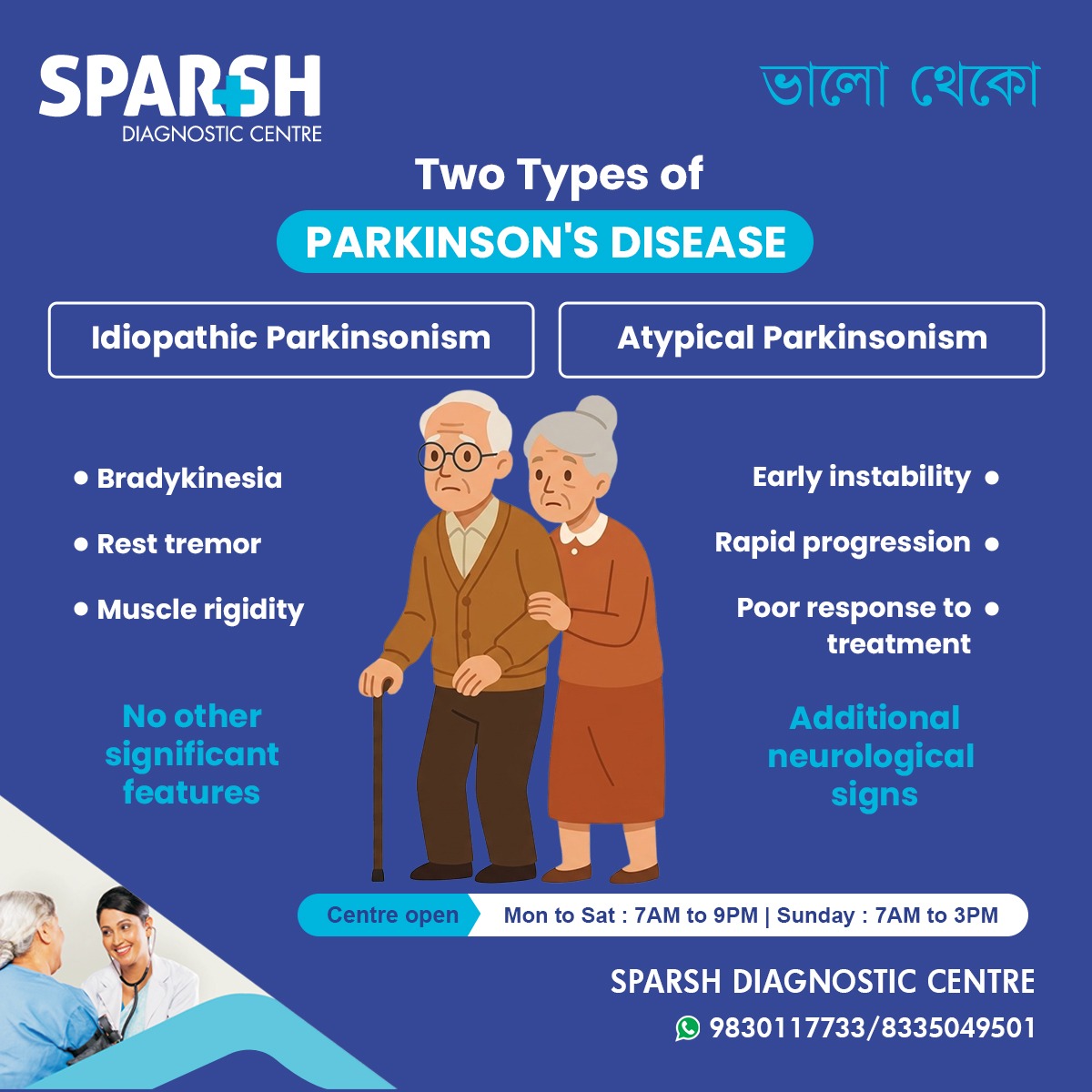
The two major categories are Idiopathic Parkinsonism and Atypical Parkinsonism. Although they may appear similar at first, they differ in causes, progression, treatment response, and long-term outlook.
What Is Parkinsonism?
Parkinsonism is a broad medical term used to describe a group of neurological conditions that cause movement-related symptoms similar to Parkinson’s disease. These symptoms commonly include:
- Tremors
- Muscle stiffness
- Slow movement
- Balance problems
- Difficulty walking
Not everyone with Parkinsonism has classic Parkinson’s disease. Some people may have other disorders that mimic Parkinson’s symptoms but behave differently.
Main Types of Parkinson’s Disease
The two primary categories include:
- Idiopathic Parkinsonism (Classic Parkinson’s Disease)
- Atypical Parkinsonism
Both types affect movement, but their symptoms, progression, and treatment response can vary significantly.
Idiopathic Parkinsonism
Idiopathic Parkinsonism is the most common form of Parkinson’s disease. The term “idiopathic” means the exact cause is unknown. This is what most people refer to when they say “Parkinson’s disease.”
In this condition, the brain gradually loses dopamine-producing cells, especially in a region called the substantia nigra.
Common Symptoms of Idiopathic Parkinsonism
People with idiopathic Parkinson’s disease usually develop symptoms slowly over several years. Common signs include:
Bradykinesia
Bradykinesia means slowness of movement. Simple tasks such as buttoning clothes, walking, or writing may become difficult and time-consuming.
Resting Tremor
A resting tremor usually starts in one hand or arm while the body is relaxed. It often appears as a rhythmic shaking movement.
Muscle Rigidity
Muscles may feel stiff or tight, making movement uncomfortable and less flexible.
Postural Changes
Patients may develop a stooped posture or reduced arm swing while walking.
Balance Problems
Balance difficulties generally appear later in the disease progression.
Small Handwriting
Many people notice their handwriting becoming unusually small, a symptom known as micrographia.
Features That Support Idiopathic Parkinson’s Disease
Classic Parkinson’s disease usually has several distinguishing characteristics:
- Symptoms begin gradually
- Tremor is often present
- One side of the body may be affected first
- Good response to levodopa treatment
- Slow progression over time
- No major early neurological abnormalities
Many individuals continue normal daily activities for years after diagnosis with proper treatment and therapy.
Causes and Risk Factors of Idiopathic Parkinsonism
Although the exact cause remains unclear, researchers believe several factors contribute to Parkinson’s disease.
Age
Risk increases significantly after age 60.
Genetics
Some inherited gene mutations may increase susceptibility.
Environmental Exposure
Long-term exposure to pesticides, toxins, or industrial chemicals may contribute to disease development.
Family History
Having a close relative with Parkinson’s disease may slightly increase risk.
Head Injuries
Repeated traumatic brain injuries may also play a role.
Atypical Parkinsonism
Atypical Parkinsonism refers to a group of neurological disorders that resemble Parkinson’s disease but differ in important ways. These conditions often progress faster and may not respond well to traditional Parkinson’s medications.
Doctors sometimes call these conditions “Parkinson-plus syndromes.”
Key Features of Atypical Parkinsonism
Several signs may suggest atypical Parkinsonism instead of classic Parkinson’s disease:
- Early balance problems
- Frequent falls
- Rapid disease progression
- Poor response to levodopa
- Additional neurological symptoms
- Severe speech or swallowing difficulties early in the disease
Types of Atypical Parkinsonism
Atypical Parkinsonism includes several distinct disorders.
Multiple System Atrophy (MSA)
Multiple System Atrophy is a progressive neurological disorder affecting movement, blood pressure regulation, and autonomic body functions.
Symptoms of MSA
- Parkinson-like stiffness
- Poor coordination
- Dizziness upon standing
- Bladder dysfunction
- Speech problems
- Difficulty swallowing
MSA usually progresses faster than classic Parkinson’s disease.
Progressive Supranuclear Palsy (PSP)
Progressive Supranuclear Palsy affects movement, balance, and eye control.
Common PSP Symptoms
- Frequent backward falls
- Stiff neck and trunk
- Difficulty moving the eyes
- Speech problems
- Cognitive changes
People with PSP often develop severe balance issues much earlier than those with idiopathic Parkinson’s disease.
Corticobasal Degeneration (CBD)
Corticobasal Degeneration is a rare neurodegenerative condition affecting movement and thinking abilities.
Symptoms of CBD
- Stiffness on one side of the body
- Abnormal limb movements
- Difficulty performing learned tasks
- Muscle spasms
- Cognitive decline
Symptoms often begin asymmetrically, meaning one side is more affected.
Dementia with Lewy Bodies (DLB)
Dementia with Lewy Bodies combines Parkinson-like symptoms with cognitive decline.
Common Symptoms
- Visual hallucinations
- Memory problems
- Confusion
- Tremors
- Sleep disturbances
Mental symptoms often appear around the same time as movement problems.
Differences Between Idiopathic and Atypical Parkinsonism
Understanding the differences can help with accurate diagnosis and treatment planning.
| Feature | Idiopathic Parkinsonism | Atypical Parkinsonism |
|---|---|---|
| Cause | Unknown | Neurodegenerative disorders |
| Progression | Slow | Faster |
| Tremor | Common | May be absent |
| Balance problems | Later stages | Early stages |
| Response to levodopa | Usually good | Often poor |
| Additional neurological symptoms | Minimal early on | Common |
| Falls | Later | Early and frequent |
Early Warning Signs of Parkinson’s Disease
Recognizing early symptoms can help patients receive timely medical care.
Tremors
Mild shaking in fingers or hands while resting.
Loss of Smell
Reduced ability to smell may occur years before movement symptoms.
Sleep Disturbances
Acting out dreams during sleep can be an early clue.
Constipation
Digestive slowing is common in early Parkinson’s disease.
Depression and Anxiety
Mood changes may appear before physical symptoms.
Slowed Movement
Everyday activities may begin taking longer than usual.
How is Parkinson’s Disease diagnosed
There is no single test that confirms Parkinson’s disease. Doctors usually rely on:
- Medical history
- Neurological examination
- Symptom patterns
- Brain imaging in some cases
- Response to medication
Specialists called neurologists, especially movement disorder specialists, are often involved in diagnosis.
Treatment Options for Parkinson’s Disease Types
Treatment depends on the specific type and severity of symptoms.
Medications
Levodopa
Levodopa remains the most effective medication for classic Parkinson’s disease. It helps replace dopamine in the brain.
Dopamine Agonists
These medications mimic dopamine effects.
MAO-B Inhibitors
They help preserve dopamine levels in the brain.
Anticholinergic Medications
Sometimes used to reduce tremors.
Patients with atypical Parkinsonism may experience limited benefit from these medications.
Physical Therapy
Physical therapy helps improve:
- Balance
- Flexibility
- Strength
- Walking ability
Regular exercise is strongly recommended for Parkinson’s patients.
Speech Therapy
Speech therapy can help manage:
- Soft speech
- Swallowing difficulties
- Communication problems
Occupational Therapy
Occupational therapists help patients maintain independence during daily activities.
Deep Brain Stimulation (DBS)
Deep Brain Stimulation is a surgical treatment sometimes recommended for advanced Parkinson’s disease that no longer responds well to medication.
DBS is generally more effective for idiopathic Parkinson’s disease than atypical Parkinsonism.
Lifestyle Changes That Help
Although Parkinson’s disease cannot currently be cured, healthy lifestyle habits can improve quality of life.
Regular Exercise
Activities such as walking, yoga, stretching, and strength training can help maintain mobility.
Healthy Diet
A balanced diet rich in fruits, vegetables, fiber, and hydration supports overall health.
Good Sleep Habits
Adequate sleep helps manage fatigue and cognitive symptoms.
Mental Stimulation
Reading, puzzles, and social interaction may support brain health.
Stress Management
Meditation and relaxation techniques can help reduce anxiety and tension.
Complications of Parkinson’s Disease
As Parkinson’s disease progresses, complications may develop.
Mobility Issues
Walking and balance become increasingly difficult.
Swallowing Problems
Difficulty swallowing can increase the risk of choking or pneumonia.
Cognitive Changes
Some patients develop memory and thinking problems.
Depression
Mental health challenges are common and should be addressed early.
Sleep Disorders
Insomnia and daytime sleepiness frequently occur.
Living With Parkinson’s Disease
A Parkinson’s diagnosis can feel overwhelming, but many people continue leading meaningful and active lives for years. Early treatment, regular exercise, emotional support, and ongoing medical care can make a major difference.
Support groups and counseling can also help patients and caregivers cope with emotional challenges.
When to See a Doctor
You should consult a doctor if you notice:
- Persistent tremors
- Slowed movement
- Muscle stiffness
- Frequent falls
- Balance difficulties
- Speech or swallowing problems
Early diagnosis often leads to better symptom management and improved quality of life.
Future Research and Advances
Researchers continue exploring new therapies for Parkinson’s disease, including:
- Stem cell therapy
- Gene therapy
- Neuroprotective drugs
- Advanced brain stimulation techniques
Scientists are also working to identify biomarkers that may help diagnose Parkinson’s disease earlier and more accurately.
Parkinson’s disease is not a single uniform condition. Understanding the different types of Parkinsonism is important because symptoms, progression, and treatment response can vary widely.
Idiopathic Parkinsonism is the classic and most common form, often responding well to medications like levodopa. Atypical Parkinsonism includes several more aggressive neurological disorders that progress faster and may show additional symptoms early on.
Recognizing warning signs early and seeking medical care can improve symptom control and quality of life. With advances in research, therapies, and supportive care, people living with Parkinson’s disease have more treatment options and resources than ever before.
Frequently Asked Questions (FAQ)
What are the two main types of Parkinson’s disease?
The two major categories are Idiopathic Parkinsonism and Atypical Parkinsonism. Idiopathic Parkinsonism is the classic form of Parkinson’s disease, while atypical Parkinsonism includes several related neurological disorders.
What is the difference between Parkinson’s disease and Parkinsonism?
Parkinsonism is a general term for conditions causing Parkinson-like symptoms such as tremors and stiffness. Parkinson’s disease is one specific type of Parkinsonism.
Is atypical Parkinsonism worse than Parkinson’s disease?
Atypical Parkinsonism often progresses faster and may respond less effectively to treatment compared to classic Parkinson’s disease.
What are the first signs of Parkinson’s disease?
Early signs may include tremors, slowed movement, stiffness, constipation, sleep disturbances, and reduced sense of smell.
Can Parkinson’s disease be cured?
Currently, there is no cure for Parkinson’s disease. However, treatments can help manage symptoms and improve quality of life.
Does Parkinson’s disease always cause tremors?
No. Some patients mainly experience stiffness, slowed movement, or balance issues without noticeable tremors.
Who is most at risk for Parkinson’s disease?
Older adults, especially those over age 60, are at higher risk. Genetics and environmental factors may also contribute.
Is Parkinson’s disease hereditary?
Most cases are not directly inherited, but certain genetic mutations may increase susceptibility.
How is Parkinson’s disease diagnosed?
Doctors diagnose Parkinson’s disease through medical history, neurological exams, symptom evaluation, and response to medication.
What treatment works best for Parkinson’s disease?
Levodopa is considered the most effective medication for classic Parkinson’s disease. Therapy, exercise, and lifestyle changes also play important roles.
To consult a Doctor at Sparsh Diagnostic Centre, call our helpline numbers 9830117733/ 8335049501.
#BhaloTheko
Disclaimer:
No content on this site, regardless of date, should ever be used as a substitute for direct medical advice from your doctor or other qualified clinician.


This was one of the clearest explanations of Parkinson’s disease types I’ve read online. The comparison between idiopathic and atypical Parkinsonism was especially helpful.