


Cachexia is a serious, multifactorial metabolic syndrome characterized by progressive loss of skeletal muscle mass, with or without loss of fat mass. Unlike simple starvation or malnutrition, cachexia cannot be fully reversed by nutritional support alone. It is most commonly associated with chronic illnesses such as cancer, chronic kidney disease, heart failure, COPD, and AIDS.
The condition significantly affects quality of life, physical function, response to treatment, and survival rates, making early recognition and management critically important.
Understanding Cachexia: The Background
Cachexia is classified as a hypercatabolic state, meaning the body breaks down muscle and energy stores faster than they can be replaced. This process is driven by:
Chronic systemic inflammation
Hormonal and metabolic dysregulation
Increased resting energy expenditure
Reduced appetite and food intake
Unlike voluntary weight loss, cachexia involves active muscle wasting, even when calorie intake seems adequate.
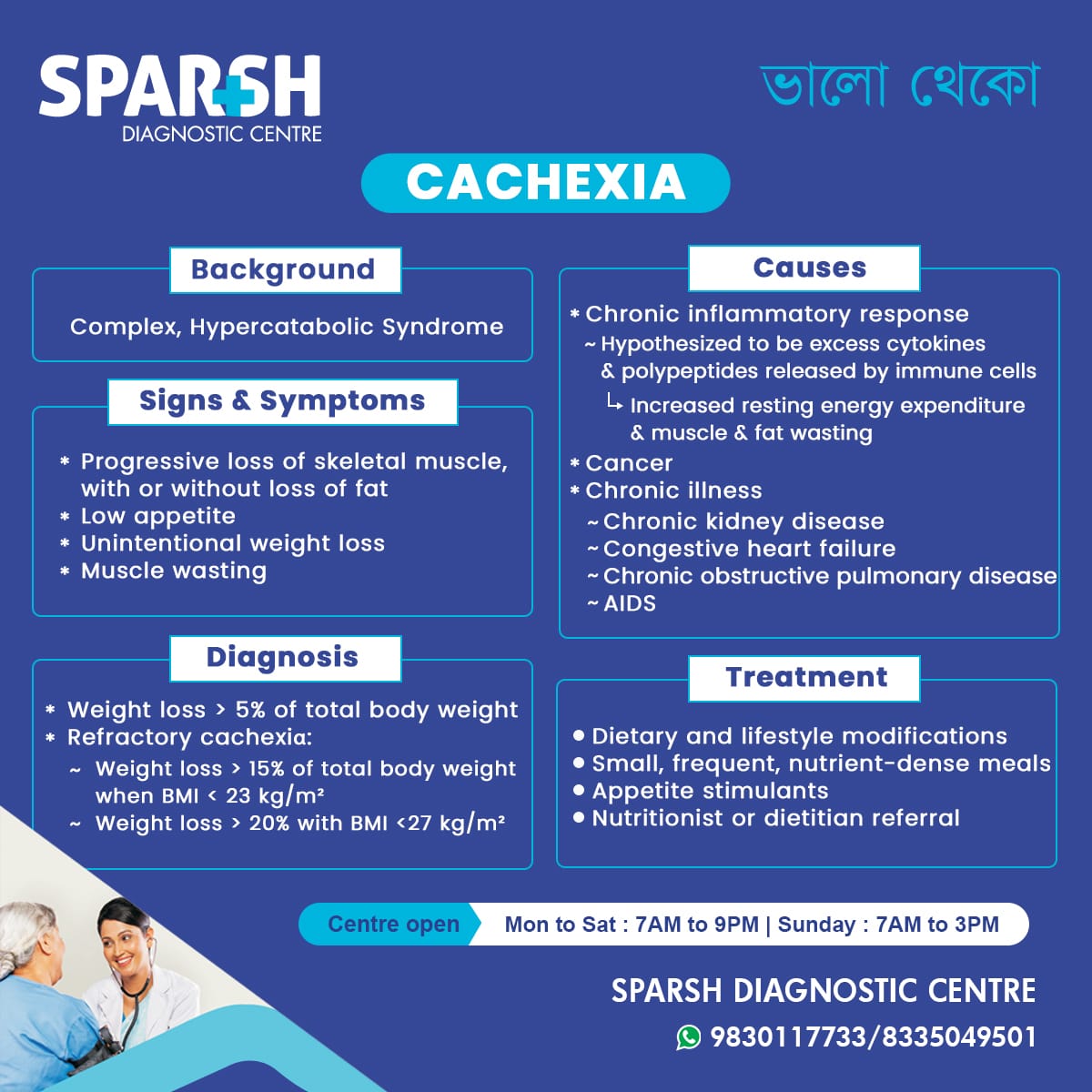
Pathophysiology of Cachexia
The development of cachexia is complex and involves multiple biological pathways:
1. Chronic Inflammatory Response
Pro-inflammatory cytokines such as:
Tumor necrosis factor-α (TNF-α)
Interleukin-1 (IL-1)
Interleukin-6 (IL-6)
These substances promote muscle protein breakdown and suppress muscle synthesis.
2. Increased Energy Expenditure
Patients often experience:
Elevated basal metabolic rate
Inefficient energy utilization
Increased breakdown of muscle and fat
3. Hormonal Imbalance
Reduced anabolic hormones (testosterone, insulin-like growth factor-1)
Increased catabolic hormones (cortisol)
4. Impaired Appetite Regulation
Disruption in appetite-controlling centers in the brain leads to anorexia, further worsening weight loss.
Causes of Cachexia
Cachexia is not a disease itself but a consequence of underlying conditions.
Common Causes Include:
1. Cancer Cachexia
Seen in up to 80% of advanced cancer patients
Common in gastrointestinal, pancreatic, lung, and head-and-neck cancers
Major contributor to cancer-related mortality
2. Chronic Kidney Disease (CKD)
Protein-energy wasting
Reduced physical activity
3. Congestive Heart Failure (CHF)
Increased inflammatory mediators
Reduced nutrient absorption
Poor perfusion of skeletal muscles
4. Chronic Obstructive Pulmonary Disease (COPD)
Increased energy expenditure from labored breathing
Systemic inflammation
Hypoxia-induced muscle loss
5. AIDS
Chronic immune activation
Opportunistic infections
Malabsorption and anorexia
Signs and Symptoms of Cachexia
Cachexia develops gradually but progresses relentlessly if untreated.
Key Clinical Features:
Progressive loss of skeletal muscle mass
Unintentional weight loss
Low appetite or early satiety
Muscle weakness
Reduced physical performance
⚠️ Importantly, cachexia can occur with or without visible fat loss, making muscle assessment essential.
Cachexia vs Malnutrition: What’s the Difference?
| Feature | Cachexia | Malnutrition |
|---|---|---|
| Cause | Chronic disease & inflammation | Inadequate food intake |
| Muscle loss | Severe and progressive | Variable |
| Fat loss | May or may not occur | Common |
| Reversible with nutrition | ❌ No | ✅ Yes |
| Inflammatory markers | Elevated | Usually normal |
Diagnosis of Cachexia
There is no single test for cachexia; diagnosis is clinical and criteria-based.
Diagnostic Criteria Include:
Unintentional weight loss >5% of total body weight over 6–12 months
ORBMI <20 kg/m² with weight loss >2%
ORSarcopenia with weight loss >2%
Refractory Cachexia
A severe form defined by:
Weight loss >15% with BMI <23 kg/m²
Weight loss >20% with BMI <27 kg/m²
Poor response to treatment
Limited life expectancy
Diagnostic Tools Used:
Body weight trends
BMI calculation
Muscle mass assessment (DEXA, CT scan, bioimpedance)
Laboratory tests:
Albumin
Hemoglobin
Functional assessments (handgrip strength)
Stages of Cachexia
Pre-cachexia
Mild weight loss
Early metabolic changes
Potentially reversible
Cachexia
Significant muscle loss
Functional impairment
Requires multimodal therapy
Refractory Cachexia
Severe catabolism
Poor prognosis
Focus shifts to comfort and quality of life
Treatment of Cachexia
Managing cachexia requires a multidisciplinary approach, targeting both symptoms and underlying causes.
1. Treat the Underlying Disease
Cancer therapy
Optimized heart failure or CKD management
Antiretroviral therapy in HIV
2. Nutritional Interventions
Small, frequent, nutrient-dense meals
Oral nutritional supplements
Nutrition alone is supportive—not curative.
3. Appetite Stimulants
Commonly used medications:
Megestrol acetate
Mirtazapine (in selected cases)
4. Exercise Therapy
Resistance training to preserve muscle
Tailored physiotherapy programs
Improves strength and functional capacity
5. Anti-Inflammatory Strategies
Omega-3 supplementation
Emerging targeted therapies (cytokine inhibitors – under research)
6. Psychological Support
Address depression and anxiety
Improve treatment adherence
Enhance quality of life
7. Dietitian or Nutritionist Referral
Personalized nutritional plans
Monitoring intake and tolerance
Ongoing assessment
Complications of Cachexia
If untreated, cachexia can lead to:
Severe physical disability
Poor tolerance to medical treatments
Increased infection risk
Prolonged hospital stays
Higher mortality rates
Prognosis
The prognosis of cachexia depends on:
Underlying disease
Stage at diagnosis
Response to treatment
Early intervention
Early identification significantly improves functional outcomes and survival.
Prevention and Early Detection
While not always preventable, early strategies include:
Regular weight and muscle monitoring in chronic illness
Early nutritional intervention
Prompt treatment of inflammation
Patient and caregiver education
Frequently Asked Questions (FAQ)
1. What is cachexia in simple terms?
Cachexia is a condition where the body loses muscle and weight due to chronic illness, even if the person is eating enough.
2. Is cachexia the same as being underweight?
No. Cachexia involves active muscle breakdown caused by inflammation, not just low calorie intake.
3. Can cachexia be cured?
It cannot be completely cured, but early and comprehensive treatment can slow progression and improve quality of life.
4. Which cancers are most commonly associated with cachexia?
Pancreatic, lung, gastric, colorectal, and head-and-neck cancers.
5. How is cachexia diagnosed?
Through weight loss history, BMI, muscle mass assessment, and laboratory markers.
6. Can nutrition reverse cachexia?
Nutrition alone cannot reverse cachexia, but it plays a crucial supportive role in management.
7. Is cachexia painful?
Cachexia itself is not painful, but muscle weakness and underlying diseases may cause discomfort.
8. Who is at risk of developing cachexia?
Patients with advanced cancer, chronic kidney disease, heart failure, COPD, or AIDS.
9. What is refractory cachexia?
A late stage where weight loss is severe and unresponsive to treatment, often near end-of-life.
10. When should a doctor be consulted?
If there is unintentional weight loss, muscle weakness, or loss of appetite in someone with a chronic illness.
Cachexia is a serious and often overlooked condition that significantly impacts patient outcomes in chronic diseases. Understanding its causes, recognizing early signs, and implementing a multimodal treatment approach can make a meaningful difference in patient care and quality of life.
Early diagnosis, compassionate management, and a coordinated healthcare strategy are key to combating this complex syndrome.
#BhaloTheko
Disclaimer:
No content on this site, regardless of date, should ever be used as a substitute for direct medical advice from your doctor or other qualified clinician.

Sparsh Diagnostic Centre Doctor List


