


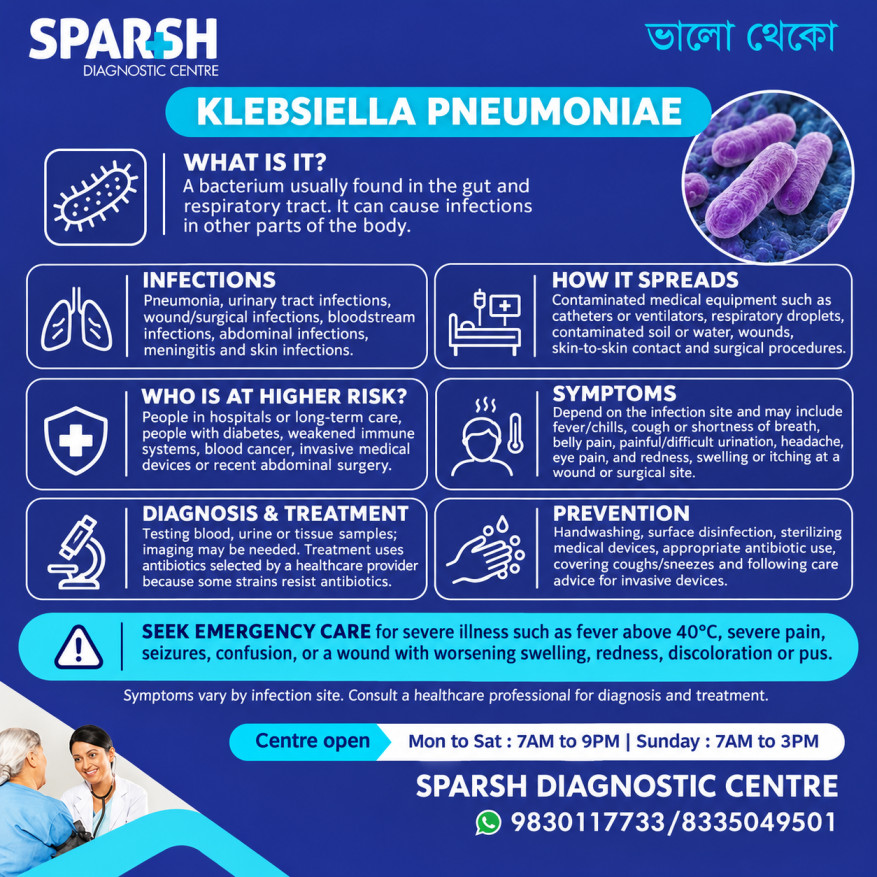
Bacterial infections can affect different parts of the body, ranging from the urinary tract and lungs to the bloodstream and skin. Among the bacteria that healthcare professionals pay close attention to is Klebsiella pneumoniae. Although this bacterium can naturally live in the human intestine without causing harm, it can lead to serious infections when it enters other parts of the body.
Klebsiella infections are particularly concerning in hospitals and healthcare facilities, where patients may have weakened immune systems, undergo surgery or require medical devices such as urinary catheters and ventilators. The growing problem of antibiotic resistance has also made certain Klebsiella infections more difficult to treat.
But what exactly is a Klebsiella infection? How does someone get it? Can it spread from one person to another, and which antibiotics are effective?
Let’s understand the causes, symptoms, diagnosis, treatment and prevention of Klebsiella infections.
What is a Klebsiella infection?
Klebsiella is a group of Gram-negative bacteria commonly found in the environment, including soil and water. Certain species, particularly Klebsiella pneumoniae, can also naturally inhabit the human gastrointestinal tract.
Under normal circumstances, these bacteria may live in the intestine without causing illness. This is known as colonisation. However, when they enter other parts of the body, such as the lungs, urinary tract, bloodstream or wounds, they can cause an infection.
Klebsiella pneumoniae is one of the most clinically significant species because it can cause several types of infections, including:
- Pneumonia (lung infection).
- Urinary tract infections (UTIs).
- Bloodstream infections and sepsis.
- Wound and surgical site infections.
- Skin and soft tissue infections.
- Meningitis.
- Abdominal infections, including liver abscesses.
Not every person who carries Klebsiella bacteria develops an infection. The likelihood of illness depends on several factors, including the person’s immune system, overall health and whether the bacteria have entered a normally sterile part of the body.
What causes Klebsiella infection?
A Klebsiella infection develops when the bacteria enter a part of the body where they can multiply and cause tissue damage.
The bacteria can spread through direct or indirect contact with contaminated hands, medical equipment, surfaces, soil or water. Healthcare settings are particularly important environments for transmission.
Some common causes and sources include:
1. Contaminated medical equipment
Medical devices such as urinary catheters, intravenous lines, feeding tubes and ventilators can provide an entry point for bacteria. If these devices become contaminated or are not handled properly, they can contribute to infections.
2. Hospitalisation and healthcare exposure
Patients receiving treatment in hospitals or long-term care facilities may be exposed to Klebsiella through contaminated surfaces, equipment or contact with infected or colonised individuals.
3. Weakened immune system
People with weakened immunity may have greater difficulty controlling bacterial growth. Conditions such as cancer, diabetes and serious underlying illnesses can increase susceptibility.
4. Surgical procedures and open wounds
Surgical incisions, burns and other injuries can create openings through which bacteria enter the body. Poor wound care or contamination during medical procedures may increase the risk.
5. Prolonged antibiotic use
Repeated or prolonged exposure to antibiotics can disrupt the normal bacterial balance in the body and encourage the survival and multiplication of resistant bacteria.
6. Contaminated water or soil
Klebsiella bacteria can survive in the environment. Contact with contaminated water or soil may contribute to exposure, particularly when bacteria enter through damaged skin or other vulnerable sites.
Who is at higher risk of Klebsiella infection?
Although Klebsiella infections can affect different individuals, certain groups are more vulnerable.
These include:
- People admitted to hospitals, especially intensive care units.
- Elderly individuals and people in long-term care facilities.
- Patients with diabetes.
- Individuals with cancer, particularly blood cancers.
- People with weakened immune systems.
- Patients using urinary catheters or ventilators.
- Individuals who have undergone recent abdominal surgery.
- Patients receiving prolonged courses of antibiotics.
- People with serious underlying medical conditions.
Healthy individuals generally have a lower risk of developing an active Klebsiella infection. However, certain more virulent strains can also cause community-acquired infections in people without a recent hospital stay.
What are the symptoms of Klebsiella infection?
The symptoms depend on which part of the body is infected. A person with a urinary tract infection may experience symptoms very different from someone with Klebsiella pneumonia or a bloodstream infection.
Some individuals may also carry the bacteria without experiencing any symptoms.
1. Klebsiella pneumonia symptoms
When Klebsiella infects the lungs, it can cause pneumonia. Symptoms may include:
- Fever and chills.
- Persistent cough.
- Shortness of breath.
- Chest pain.
- Thick mucus or sputum.
- General weakness and fatigue.
Severe pneumonia may lead to breathing difficulties and require hospitalisation.
2. Klebsiella urinary tract infection symptoms
Klebsiella can enter the urinary tract and cause a UTI. Common symptoms include:
- Burning or pain during urination.
- Frequent urination.
- A sudden or urgent need to urinate.
- Lower abdominal discomfort.
- Cloudy or bloody urine.
- Fever, particularly if the infection spreads towards the kidneys.
A kidney infection may also cause back or flank pain, nausea and vomiting.
3. Klebsiella bloodstream infection symptoms
If the bacteria enter the bloodstream, they can cause bacteraemia and potentially lead to sepsis.
Warning signs may include:
- High fever or unusually low body temperature.
- Chills.
- Rapid heartbeat.
- Rapid breathing.
- Low blood pressure.
- Confusion or disorientation.
- Severe weakness.
- Dizziness.
Sepsis is a medical emergency because it can cause organ damage and become life-threatening.
4. Klebsiella wound and skin infection symptoms
When bacteria enter through an injury or surgical wound, symptoms may include:
- Redness around the affected area.
- Swelling and warmth.
- Pain or tenderness.
- Pus or fluid discharge.
- Delayed wound healing.
- Fever in more serious cases.
5. Klebsiella meningitis symptoms
In rare cases, Klebsiella can cause meningitis, an infection involving the protective membranes surrounding the brain and spinal cord.
Symptoms may include severe headache, fever, neck stiffness, vomiting, sensitivity to light, confusion and seizures.
Anyone experiencing these symptoms requires urgent medical evaluation.

How serious is Klebsiella infection?
The seriousness of a Klebsiella infection depends on the infection site, the strain of bacteria, the person’s general health and whether the bacteria are resistant to antibiotics.
A localised urinary tract infection may respond well to appropriate treatment. However, pneumonia, bloodstream infections and meningitis can become severe, particularly in people with weakened immunity or serious underlying illnesses.
One of the biggest concerns is the development of antibiotic-resistant Klebsiella strains. These bacteria may survive treatment with several commonly used antibiotics, making infections more difficult to manage.
Possible complications include:
- Severe pneumonia and respiratory failure.
- Sepsis and septic shock.
- Kidney damage associated with severe infection.
- Liver abscesses.
- Meningitis and neurological complications.
- Tissue damage and, in rare cases, permanent disability or death.
Early diagnosis and appropriate antibiotic treatment can significantly improve the chances of recovery.
Is Klebsiella contagious?
Yes. Klebsiella bacteria can spread from one person to another, most commonly through direct or indirect contact.
Transmission may occur through:
- Contact with contaminated hands.
- Contact with infected or colonised individuals.
- Contaminated medical equipment.
- Contaminated surfaces in healthcare environments.
- Exposure to contaminated water or soil.
Klebsiella is particularly associated with healthcare-related transmission. For example, bacteria may spread when proper hand hygiene is not followed while caring for patients or handling medical devices.
Importantly, the US Centers for Disease Control and Prevention (CDC) states that Klebsiella does not spread through the air.
People who carry the bacteria without symptoms may also contribute to transmission, particularly in healthcare environments.
Handwashing, appropriate disinfection, sterilisation of medical equipment and proper wound care are important measures for reducing the spread.
How is Klebsiella infection diagnosed?
Accurate diagnosis is essential because Klebsiella infections can resemble infections caused by other bacteria.
A healthcare professional may recommend laboratory investigations depending on the patient’s symptoms and suspected infection site.
1. Urine culture
A urine culture is commonly recommended when a urinary tract infection is suspected.
The test helps identify whether Klebsiella bacteria are present in the urine and whether they may be responsible for the infection.
2. Blood culture
If a bloodstream infection or sepsis is suspected, a blood culture may be performed to identify bacteria circulating in the blood.
3. Sputum culture
For patients with suspected bacterial pneumonia, a sputum sample may be examined to identify the organism responsible for the respiratory infection.
4. Wound or tissue culture
If a surgical wound, injury or skin infection is suspected, a sample of the affected area may be sent for microbiological testing.
5. Antibiotic sensitivity testing
One of the most important investigations is antimicrobial susceptibility testing, commonly called antibiotic sensitivity testing.
This test determines which antibiotics are likely to be effective against the bacteria isolated from the sample.
It is particularly important for Klebsiella because some strains produce enzymes that destroy commonly used antibiotics or have developed resistance to multiple drug classes.
6. Imaging investigations
Depending on the suspected infection, a doctor may recommend imaging such as a chest X-ray, ultrasound or CT scan.
These investigations can help assess pneumonia, abscesses and other complications.
Which antibiotic kills Klebsiella?
There is no single antibiotic that reliably kills every Klebsiella strain.
The choice of antibiotic depends on the infection site, its severity and, most importantly, the antibiotic susceptibility report.
Some Klebsiella strains may respond to antibiotics such as:
- Ceftriaxone.
- Cefepime.
- Piperacillin-tazobactam.
- Ciprofloxacin.
- Levofloxacin.
- Amikacin.
- Meropenem.
- Imipenem.
These are examples of antibiotics that may be considered in particular clinical situations. They are not interchangeable, and their effectiveness cannot be assumed without appropriate clinical assessment and laboratory results.
Understanding antibiotic-resistant Klebsiella
Some Klebsiella strains produce enzymes that break down antibiotics, making treatment more complicated.
Two important forms of resistance are:
1. Extended-spectrum beta-lactamase (ESBL)-producing Klebsiella
These bacteria produce enzymes that can break down several commonly used antibiotics, particularly many penicillins and cephalosporins.
Carbapenem antibiotics, such as meropenem or imipenem, may be considered for certain serious infections caused by ESBL-producing strains, depending on susceptibility results and clinical guidelines.
2. Carbapenem-resistant Enterobacterales (CRE)
Some Klebsiella strains develop resistance to carbapenem antibiotics, which are often reserved for serious bacterial infections.
These infections can be particularly difficult to treat.
Depending on the resistance mechanism and laboratory findings, specialists may consider newer antibiotics such as ceftazidime-avibactam, meropenem-vaborbactam or cefiderocol, among other options.
The availability and suitability of these medicines vary according to the resistance pattern and clinical circumstances.
Why is antibiotic sensitivity testing important?
Taking an antibiotic without knowing whether it will work can delay effective treatment and contribute to further antibiotic resistance.
A culture and sensitivity report helps the treating doctor select an appropriate antibiotic rather than relying solely on guesswork.
Patients should never start, stop or change antibiotics without medical advice. Completing the prescribed treatment as directed is equally important.
How is Klebsiella infection treated?
Treatment depends on the location and severity of the infection.
In mild or localised infections, oral antibiotics may be sufficient. More serious infections may require hospitalisation and intravenous antibiotics.
A typical treatment approach may involve:
1. Identifying the infection
The doctor evaluates the symptoms, medical history and relevant laboratory results to determine the likely infection site and severity.
2. Selecting the appropriate antibiotic
Antibiotics are selected based on the culture and sensitivity report whenever possible. In severe infections, treatment may need to begin before the final report is available and then be adjusted.
3. Managing complications
Patients with severe pneumonia, sepsis or other complications may require additional supportive treatment, including oxygen therapy, intravenous fluids and close monitoring.
4. Monitoring recovery
The treating doctor monitors symptoms, laboratory findings and overall clinical progress to assess whether the treatment is working.
The duration of treatment varies according to the type of infection, its severity and the patient’s response.
How can Klebsiella infection be prevented?
Preventing Klebsiella infection requires good personal hygiene, responsible antibiotic use and strict infection-control practices in healthcare facilities.
Some practical preventive measures include:
- Wash your hands regularly with soap and water.
- Clean your hands before eating and after using the toilet.
- Maintain proper hygiene while caring for someone who is unwell.
- Keep wounds clean and follow medical advice regarding dressings.
- Ensure that medical equipment is properly sterilised.
- Follow infection-control instructions during hospital visits.
- Avoid unnecessary antibiotic use.
- Ensure that urinary catheters and other medical devices are used only when required.
- Follow the healthcare provider’s instructions for managing invasive medical devices.
- Cover your mouth and nose when coughing or sneezing.
Healthcare facilities also play an important role by maintaining appropriate sterilisation procedures, disinfecting surfaces and ensuring that staff follow hand hygiene protocols.
When should you seek medical attention?
Do not ignore symptoms that may indicate a serious bacterial infection, particularly if you have recently been hospitalised or undergone surgery.
Seek prompt medical advice if you experience persistent fever, painful urination, worsening cough, shortness of breath or signs of an infected wound.
Seek emergency medical attention if you develop:
- Severe breathing difficulty.
- Confusion or disorientation.
- Seizures.
- Severe or rapidly worsening pain.
- Signs of shock, such as fainting or extreme weakness.
- A high fever accompanied by severe illness.
- Rapidly worsening redness, swelling or pus around a wound.
Early medical attention is important because severe Klebsiella infections can progress quickly.
Klebsiella is a group of bacteria that can naturally inhabit the human intestine but may cause infections when they enter other parts of the body. These infections can affect the lungs, urinary tract, bloodstream, skin and other organs.
Although many infections can be treated successfully, antibiotic resistance is an increasing concern. Some strains are resistant to multiple antibiotics, making accurate diagnosis and appropriate treatment particularly important.
If you experience symptoms suggestive of a bacterial infection, consult a healthcare professional. Laboratory investigations, including appropriate cultures and antibiotic sensitivity testing, can help identify the organism and guide treatment.
At Sparsh Diagnostic Centre, Kolkata, accurate laboratory investigations play an important role in supporting healthcare professionals in the diagnosis and management of infections.
Frequently asked questions about Klebsiella infection
1. What can cause Klebsiella infection?
Klebsiella infection occurs when bacteria enter parts of the body where they can cause illness. Common sources include contaminated medical equipment, contact with infected or colonised individuals, contaminated surfaces, open wounds and exposure to contaminated water or soil. Hospitalisation, weakened immunity and prolonged antibiotic use can increase the risk.
2. How serious is Klebsiella?
Klebsiella can cause mild to severe infections. A localised UTI may respond well to treatment, while pneumonia, bloodstream infections and meningitis can become life-threatening. Antibiotic-resistant strains are particularly concerning because they limit treatment options.
3. Which antibiotic kills Klebsiella?
There is no single antibiotic that kills every Klebsiella strain. Depending on the susceptibility report, doctors may prescribe antibiotics such as ceftriaxone, cefepime, ciprofloxacin, amikacin or meropenem. Resistant strains may require specialised treatment. Antibiotic selection should always be guided by a doctor and laboratory sensitivity testing.
4. Is Klebsiella contagious?
Yes. Klebsiella can spread through direct or indirect contact, particularly through contaminated hands, medical equipment and surfaces. It is commonly associated with healthcare-related infections. According to the CDC, Klebsiella does not spread through the air.
5. Can Klebsiella be found in urine?
Yes. Klebsiella pneumoniae can be detected in a urine culture. Its presence may indicate a urinary tract infection, particularly when accompanied by symptoms such as burning urination, frequent urination, fever or lower abdominal discomfort. However, bacteria in urine do not always mean an active infection. The result must be interpreted by a healthcare professional.
6. Can Klebsiella infection be cured completely?
Yes. Many Klebsiella infections can be successfully treated with appropriate antibiotics. Recovery depends on the infection site, the patient’s health, the severity of the infection and the antibiotic susceptibility of the bacteria. Resistant infections may require more specialised treatment.
7. What is ESBL Klebsiella?
ESBL stands for extended-spectrum beta-lactamase. It refers to enzymes produced by certain bacteria, including Klebsiella, that can break down several commonly used antibiotics. ESBL-producing infections can be more difficult to treat and require careful antibiotic selection based on laboratory results.
8. What is CRE Klebsiella?
CRE refers to carbapenem-resistant Enterobacterales. These are bacteria that have developed resistance to carbapenem antibiotics. When Klebsiella pneumoniae develops this resistance, it can cause serious infections that require specialised treatment and strict infection-control precautions.
9. Can Klebsiella infection spread from the intestine to other organs?
Yes. Klebsiella may naturally inhabit the intestine without causing symptoms. However, if the bacteria enter other parts of the body, such as the urinary tract, lungs or bloodstream, they may cause an infection.
10. How long does it take to recover from Klebsiella infection?
Recovery time varies depending on the infection site, severity, antibiotic resistance and the patient’s overall health. Some localised infections improve within a few days of appropriate treatment, while severe pneumonia, bloodstream infections and other complications may require prolonged hospital care.
11. Can Klebsiella infection occur without symptoms?
Yes. A person may carry Klebsiella bacteria in the intestine or other body sites without experiencing symptoms. This is known as colonisation. Colonisation is different from an active infection and does not always require antibiotic treatment.
12. How can I prevent Klebsiella infection in hospitals?
Frequent handwashing, proper sterilisation of medical equipment, regular disinfection of surfaces, appropriate catheter care and responsible antibiotic use are important preventive measures. Healthcare workers and caregivers should follow recommended infection-control procedures.
To consult a Doctor at Sparsh Diagnostic Centre, call our helpline numbers +91 98301 17733 and +91 83350 49501.
#BhaloTheko
Disclaimer:
No content on this site, regardless of date, should ever be used as a substitute for direct medical advice from your doctor or other qualified clinician.

Sources and references
The following medical and scientific resources were consulted while preparing this article:
- Centers for Disease Control and Prevention (CDC) – About Klebsiella.
https://www.cdc.gov/klebsiella/about/index.html - Cleveland Clinic – Klebsiella pneumoniae: Causes, symptoms and treatment.
https://my.clevelandclinic.org/health/diseases/klebsiella-pneumoniae - Medscape – Klebsiella pneumoniae overview.
https://emedicine.medscape.com/article/219907-overview - WebMD – Klebsiella pneumoniae: What to know.
https://www.webmd.com/a-to-z-guides/klebsiella-pneumoniae-infection - ID Care – Klebsiella pneumoniae infection.
https://idcare.com/infection/klebsiella-pneumoniae/ - Frontiers in Cellular and Infection Microbiology – Klebsiella pneumoniae infection biology: Living to counteract host defences.
https://pmc.ncbi.nlm.nih.gov/articles/PMC6435446/ - Healthline – Klebsiella pneumonia.
https://www.healthline.com/health/klebsiella-pneumonia - Medical News Today – Klebsiella pneumoniae.
https://www.medicalnewstoday.com/articles/klebsiella-pneumoniae - Clinical Epidemiology, Risk Factors, and Control Strategies of Klebsiella pneumoniae Infection.
https://pmc.ncbi.nlm.nih.gov/articles/PMC8724557/
Medical disclaimer: This article is intended for general health education and should not be considered a substitute for professional medical advice, diagnosis or treatment. Always consult a qualified healthcare professional for individual medical concerns.
Medical review
This article has been medically reviewed and verified by Dr. Shubhayu Som to ensure medical accuracy and reliability.
Medical reviewer: Dr. Shubhayu Som
Qualification: MBBS
Specialisation: General Physician
Medical registration: West Bengal Medical Council
WBMC Registration Number: 81060
Date reviewed on: 24th November 2026



[…] Klebsiella pneumoniae […]
[…] caused by bacteria normally present in the mouth or gastrointestinal tract, including Pseudomonas, Klebsiella, E. coli, and Streptococcus […]