
Plague is one of the oldest infectious diseases known to humanity, often remembered because of the devastating historical outbreaks that changed the course of civilizations. Even though many people associate it with medieval times, plague has not disappeared. It still occurs in certain parts of the world today and remains a serious bacterial infection that requires urgent medical attention.
What makes plague especially important to understand is that it spreads quickly under the right conditions, can affect multiple organs, and may become life-threatening if treatment is delayed. Modern medicine has made plague treatable, but awareness is still essential because early symptoms can easily be mistaken for other illnesses.
This guide explains what plague is, how it spreads, the different types of plague, warning signs, diagnosis, treatment options, and practical prevention steps.
What Is Plague?
Plague is a bacterial infection caused by Yersinia pestis, a bacterium that primarily affects rodents and is transmitted through infected fleas. Humans usually become infected when bitten by fleas that have fed on infected animals, although direct contact with infected tissues or inhalation of respiratory droplets can also spread certain forms of the disease.
Historically, plague caused major pandemics, including the famous Black Death, which killed millions across Europe. Today, cases are rare but still reported in some rural and semi-rural areas where humans come into contact with wild rodents.
How Does Plague Spread?
Plague transmission usually follows a specific chain involving animals, fleas, and humans.
Common modes of transmission include:
- Flea bites from infected fleas carried by rodents
- Direct contact with infected animal tissues or fluids
- Handling infected dead animals
- Inhaling droplets from a person or animal with pneumonic plague
Rodents such as rats, squirrels, and prairie dogs act as natural hosts for the bacteria. Fleas feeding on infected rodents become carriers and can pass the bacteria to humans through bites.
In certain situations, plague can also spread from person to person, particularly in pneumonic plague, where respiratory droplets carry infection.
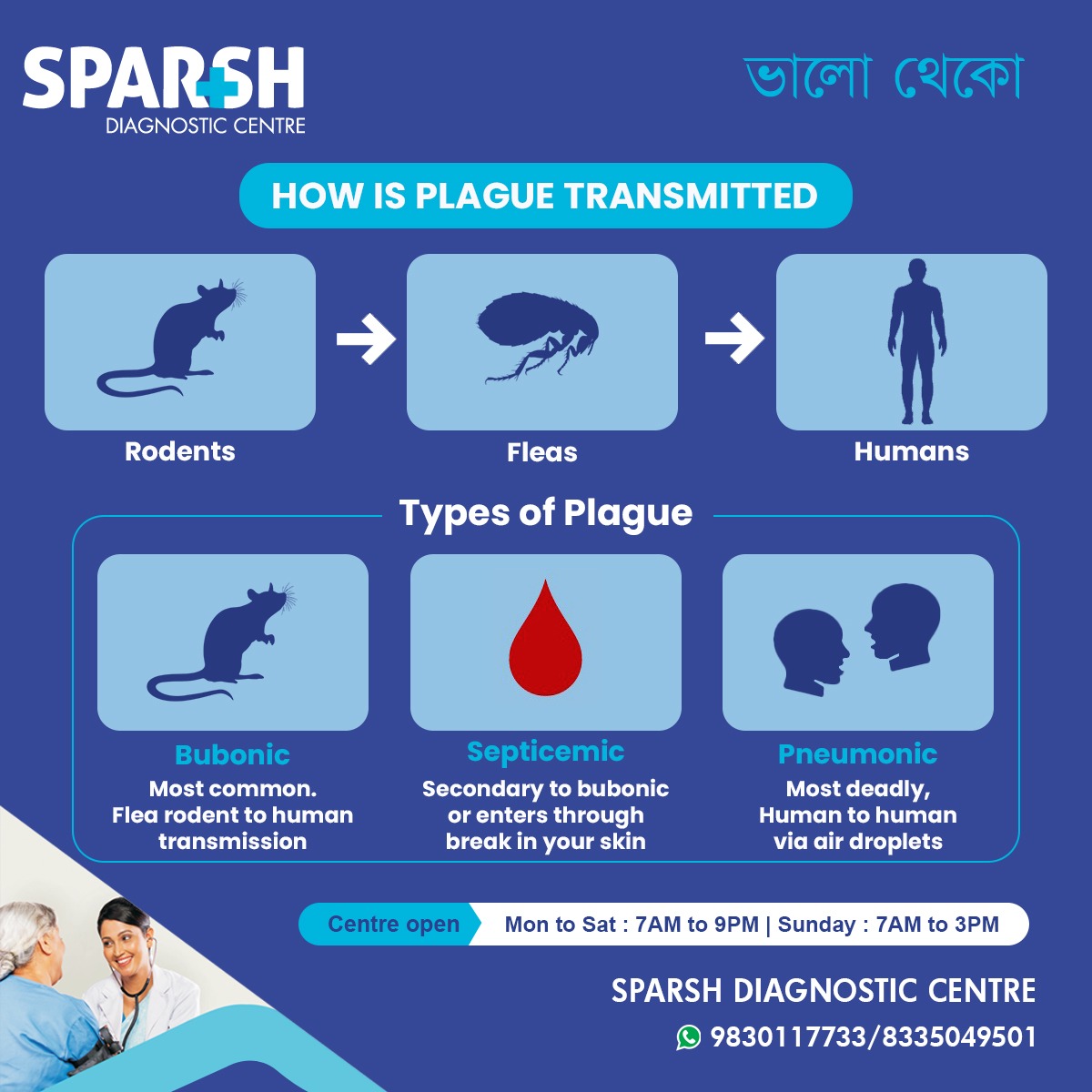
Types of Plague
Plague is classified into three main forms depending on which part of the body is affected.
Bubonic Plague
This is the most common form of plague and usually develops after an infected flea bite.
Key characteristics:
- Swollen, painful lymph nodes called buboes
- Sudden high fever
- Chills
- Extreme weakness
- Headache
The swollen lymph nodes usually appear in the groin, armpit, or neck because the bacteria travel through the lymphatic system.
Without treatment, bubonic plague can spread into the bloodstream.
Septicemic Plague
Septicemic plague occurs when the bacteria enter the bloodstream directly or develop as a complication of bubonic plague.
Symptoms may include:
- High fever
- Severe weakness
- Abdominal pain
- Bleeding under the skin
- Black discoloration of fingers, toes, or nose due to tissue damage
This form progresses rapidly and can become fatal if treatment is delayed.
Pneumonic Plague
Pneumonic plague affects the lungs and is considered the most dangerous type because it spreads through respiratory droplets.
Symptoms often include:
- Sudden fever
- Chest pain
- Difficulty breathing
- Severe cough
- Bloody sputum
Because this form spreads directly from person to person, immediate isolation and treatment are critical.
Symptoms of Plague
Symptoms usually appear within 2 to 6 days after exposure.
Early symptoms include:
As the infection progresses, symptoms depend on the type of plague involved.
Bubonic plague symptoms:
- Enlarged tender lymph nodes
- Severe pain near swollen glands
Septicemic plague symptoms:
- Low blood pressure
- Organ failure
- Skin bleeding
Pneumonic plague symptoms:
- Rapid breathing
- Persistent cough
- Severe lung infection
Because symptoms worsen quickly, early medical evaluation is extremely important.
Causes of Plague
The main cause of plague is infection with Yersinia pestis.
Risk factors include:
- Exposure to rodent-infested environments
- Living in rural endemic regions
- Handling infected animals
- Contact with infected pets
- Flea bites
Pets such as cats can occasionally bring infected fleas indoors or become infected themselves.
Where Is Plague Found Today?
Although plague is rare, it still occurs in several regions worldwide.
Areas where plague is occasionally reported:
- Parts of Africa
- Certain regions of Asia
- Western areas of the United States
- Rural regions with wild rodent populations
Most modern outbreaks occur in areas where rodent control is limited.
Is Plague Still Dangerous Today?
Yes, plague remains dangerous, especially if untreated.
However, unlike historical outbreaks, modern antibiotics are highly effective when given early.
Why early treatment matters:
- Prevents bloodstream spread
- Reduces organ damage
- Lowers mortality risk
- Prevents community transmission
Delayed diagnosis significantly increases complications.
How is Plague diagnosed?
Doctors diagnose plague using a combination of symptoms, exposure history, and laboratory testing.
Common diagnostic methods:
- Blood tests
- Lymph node fluid testing
- Sputum testing in lung infection
- Bacterial culture
- PCR testing
A patient’s travel history and possible rodent exposure often provide important clues.
Treatment for Plague
Plague requires urgent antibiotic treatment.
Common antibiotics used:
- Streptomycin
- Gentamicin
- Doxycycline
- Ciprofloxacin
Treatment usually starts immediately if plague is suspected, even before final lab confirmation.
Additional supportive care may include:
- IV fluids
- Oxygen support
- Monitoring organ function
- Isolation in pneumonic plague cases
Early antibiotic therapy dramatically improves survival.
How Long Does Recovery Take?
Recovery depends on:
- Type of plague
- Severity of infection
- How quickly treatment began
Mild cases treated early often improve within days, while severe cases may require hospitalization for longer periods.
Complications of Plague
Untreated plague can cause serious complications.
Possible complications include:
- Septic shock
- Respiratory failure
- Organ damage
- Tissue death
- Meningitis
In septicemic plague, reduced blood flow may lead to gangrene in extremities.
Can Plague Be Prevented?
Yes, prevention mainly focuses on controlling rodent exposure and flea bites.
Prevention tips:
- Avoid contact with wild rodents
- Keep homes rodent-free
- Use insect repellents
- Control fleas in pets
- Wear gloves when handling animals
- Avoid touching sick or dead animals
In outbreak situations, preventive antibiotics may be given to exposed individuals.
Plague and Public Health Monitoring
Health authorities carefully monitor plague because outbreaks can spread quickly in vulnerable communities.
Public health actions include:
- Contact tracing
- Isolation of infected individuals
- Rodent surveillance
- Flea control measures
- Community education
Rapid public health response prevents wider transmission.
Historical Importance of Plague
Plague has shaped world history in extraordinary ways.
Major historical outbreaks:
- Justinian Plague
- Black Death
- Third Pandemic in the 19th century
The Black Death alone killed millions and transformed social, economic, and medical systems across continents.
Why Awareness Still Matters Today
Although plague is uncommon, awareness remains essential because:
- It still exists in natural reservoirs
- Travel increases exposure possibilities
- Early symptoms resemble many common infections
- Prompt treatment saves lives
Modern healthcare can control plague effectively when recognized early.
When to See a Doctor
Seek immediate medical care if you have:
- Sudden fever after flea bites
- Painful swollen lymph nodes
- Severe cough with breathing difficulty
- Contact with infected animals
- Travel history to plague-prone regions
Fast treatment can prevent severe outcomes.
Frequently Asked Questions (FAQ)
What causes plague in humans?
Plague is caused by the bacterium Yersinia pestis, usually spread through infected flea bites or contact with infected animals.
Is plague contagious?
Bubonic plague usually does not spread directly between people, but pneumonic plague can spread through respiratory droplets.
Can plague be cured?
Yes, plague can be cured with antibiotics if treatment begins early.
How serious is plague today?
It remains serious but is far more manageable than in the past because of modern antibiotics.
Which plague type is most dangerous?
Pneumonic plague is the most dangerous because it affects the lungs and spreads between people.
How fast do symptoms appear?
Symptoms usually begin within 2 to 6 days after exposure.
Can pets spread plague?
Yes, infected fleas carried by pets or direct exposure to infected animals can spread plague.
Is plague common in India?
Plague is very rare in India today, but isolated cases have occurred historically.
Can plague return as a major outbreak?
Large outbreaks are unlikely with current public health systems, but localized outbreaks can still occur.
How can families protect themselves?
Rodent control, flea prevention, and avoiding contact with wild animals are the most effective measures.
To consult a Doctor at Sparsh Diagnostic Centre, call our helpline numbers 9830117733/ 8335049501.
#BhaloTheko
Disclaimer:
No content on this site, regardless of date, should ever be used as a substitute for direct medical advice from your doctor or other qualified clinician.