


An occasional flutter, skipped beat or sudden racing sensation in the chest can be unsettling. Sometimes it is harmless. At other times, an irregular heartbeat can be a sign that the heart’s electrical system needs medical attention.
Arrhythmia is a broad term used for an abnormal heart rate or rhythm. The heart may beat too quickly, too slowly or irregularly. Some arrhythmias cause no symptoms at all, while others can cause dizziness, fainting, chest discomfort, shortness of breath or palpitations. The seriousness depends largely on the type of arrhythmia, why it is happening, how long it lasts and whether it affects the heart’s ability to pump blood effectively.
This guide explains the common causes, warning signs, triggers, diagnostic tests and treatment options for arrhythmia, while also answering some of the most common questions people have about an irregular heartbeat.
What is arrhythmia?
A healthy heartbeat is controlled by a carefully coordinated electrical system. Electrical signals begin in the sinoatrial (SA) node, travel through the upper chambers of the heart and then pass through the atrioventricular (AV) node before activating the lower chambers.
When these electrical signals are generated or conducted abnormally, the heart rhythm can change. This is called an arrhythmia.
Arrhythmias include several different conditions, such as:
- Tachycardia: a heart rate that is too fast.
- Bradycardia: a heart rate that is too slow.
- Atrial fibrillation (AF): an irregular rhythm arising from the upper chambers.
- Atrial flutter: a rapid but more organised rhythm of the atria.
- Premature beats: extra beats that can feel like a skipped or stronger heartbeat.
- Ventricular arrhythmias: abnormal rhythms originating in the lower chambers, some of which can be life-threatening.
- Conduction disorders: problems with the electrical signals travelling through the heart.
Importantly, not every irregular heartbeat means there is a dangerous heart problem. Some premature beats, for example, can occur even in otherwise healthy people.
What are the first signs of arrhythmia?
The first sign can vary considerably from person to person. Some people notice their heartbeat immediately, while others have no symptoms and discover an arrhythmia during a routine examination.
Common early symptoms include:
- A fluttering sensation in the chest
- Racing or pounding heartbeat
- Feeling as though the heart has skipped a beat
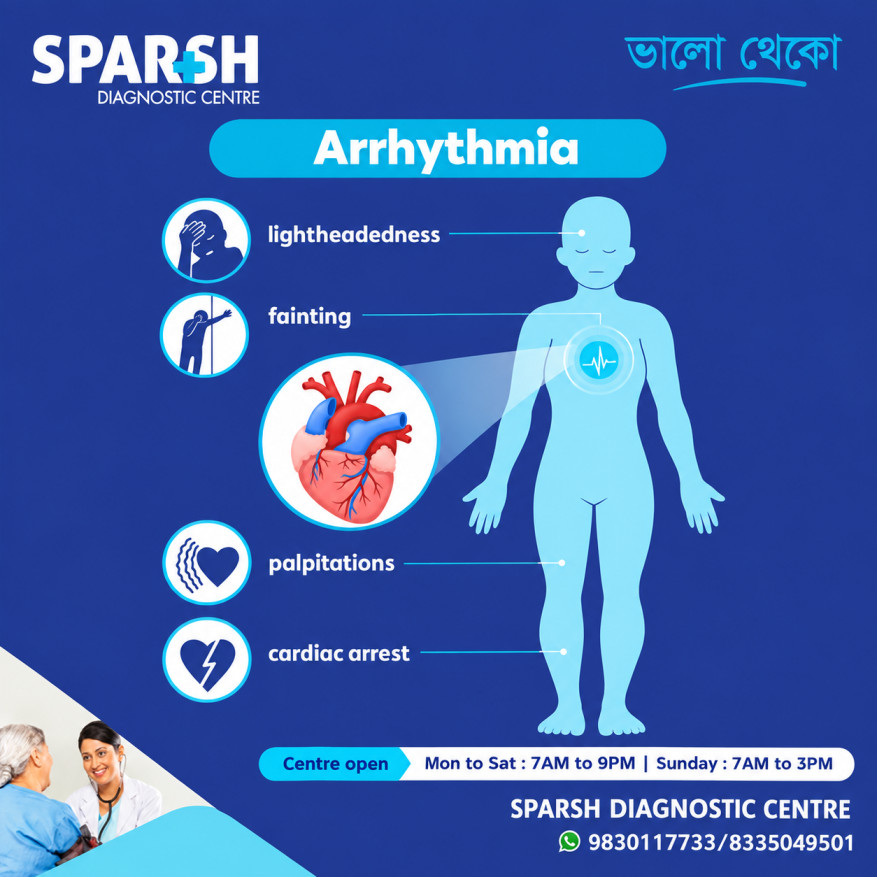
- Dizziness or lightheadedness
- Unexplained tiredness or weakness
- Shortness of breath
- Chest discomfort
- Feeling faint or nearly fainting
Some arrhythmias are completely silent. This is one reason why an abnormal rhythm may occasionally be discovered during a routine ECG or health check.
If palpitations repeatedly occur, last longer than usual or are accompanied by dizziness, fainting, chest pain or breathlessness, medical evaluation is important.
What usually causes arrhythmia?
Arrhythmia usually develops because the electrical signals controlling the heartbeat are being generated or conducted abnormally. However, there isn’t one single cause.
Possible causes and conditions associated with arrhythmias include:
- Coronary artery disease
- Previous heart attack
- High blood pressure
- Heart valve disease
- Cardiomyopathy
- Heart failure
- Congenital heart conditions
- Thyroid disorders
- Sleep apnea
- Kidney disease
- Electrolyte abnormalities
- Certain medications
- Previous heart surgery
- Inherited electrical disorders
- Smoking
- Excessive alcohol consumption
- Stimulant or illicit drug use
Sometimes an arrhythmia occurs without an obvious underlying cause. Genetics can also play a role in certain rhythm disorders.
This is why diagnosing the type and cause of an arrhythmia is more useful than simply knowing that an irregular heartbeat exists.
What triggers arrhythmia?
A trigger is different from the underlying cause. Someone may have a tendency toward arrhythmia, but a particular situation can make an episode more likely.
Potential triggers include:
- Emotional stress or anxiety
- Panic or strong emotional reactions
- Dehydration
- Low potassium, magnesium or calcium
- Excessive caffeine
- Alcohol
- Smoking
- Certain cold and allergy medicines
- Some prescription medicines
- Stimulant drugs
- Intense physical activity in some individuals
- Fever or illness
- Vomiting or coughing
- Poor sleep
Triggers vary from one person to another. Keeping a record of when palpitations occur and what you were doing beforehand can help your doctor identify patterns.
Can stress cause arrhythmia?
Yes, stress can trigger or worsen some arrhythmias.
During stress, the body releases hormones that increase heart rate and change the body’s cardiovascular response. Strong emotional stress, anxiety, anger and sudden fright can trigger an episode in susceptible individuals.
Stress does not mean that every episode of palpitations is “just anxiety.” A genuine arrhythmia can cause symptoms that feel similar to anxiety, and anxiety can also increase awareness of normal or premature heartbeats.
If recurrent palpitations are occurring, it is better to have them assessed rather than assuming that stress is the only explanation.
Can panic attacks cause arrhythmia?
Panic attacks can cause a rapid heartbeat, pounding heart and strong awareness of the heartbeat. The stress response associated with panic can also trigger an arrhythmia in some susceptible people.
However, a panic attack and an arrhythmia are not the same condition. If episodes repeatedly involve a very fast or irregular heartbeat, dizziness, fainting or chest discomfort, a doctor may recommend heart-rhythm monitoring to determine what is actually happening.
Is a heart arrhythmia serious?
It can be, but not every arrhythmia is dangerous.
Some rhythm abnormalities are harmless and may require nothing more than observation. Others can interfere with the heart’s ability to pump blood or increase the risk of complications.
For example, atrial fibrillation can increase the risk of blood clots and stroke, while certain ventricular arrhythmias can cause cardiac arrest.
The important question is therefore not simply, “Do I have an arrhythmia?” It is:
What type of arrhythmia do I have, what is causing it, and does it require treatment?
Is arrhythmia a heart failure?
No. Arrhythmia and heart failure are different conditions.
Arrhythmia refers to an abnormal heart rhythm. Heart failure means the heart cannot pump enough blood to meet the body’s needs.
However, the two conditions can be connected. Some arrhythmias can contribute to heart failure, while people with heart failure can also be more likely to develop arrhythmias. Repeated or untreated arrhythmias may sometimes weaken the heart muscle.
Having an arrhythmia does not automatically mean you have heart failure.
Is cardiac arrhythmia a cause of death?
Certain severe arrhythmias can be life-threatening. In particular, ventricular fibrillation can prevent the heart from pumping blood effectively and can lead to sudden cardiac arrest.
But this does not mean that an irregular heartbeat automatically means a person is at immediate risk of death. Many arrhythmias are manageable and some do not require treatment.
The level of risk depends on the specific rhythm, underlying heart condition and other individual factors.
Seek emergency medical care immediately if an irregular heartbeat is accompanied by fainting, severe chest pain, severe difficulty breathing or collapse. In India, 112 is the nationwide emergency number for emergency assistance, including medical emergencies.
Can arrhythmias be cured?
Some can be completely corrected, while others can be controlled rather than permanently cured.
Treatment depends on the type and cause.
Depending on the situation, treatment may include:
- Treating an underlying medical condition
- Medicines to control heart rate or rhythm
- Medicines to reduce the risk of blood clots in selected patients
- Electrical cardioversion
- Catheter ablation
- Pacemaker implantation
- Implantable cardioverter-defibrillator (ICD)
- Lifestyle changes
- Observation without treatment when the arrhythmia is harmless
The goal may be to restore a normal rhythm, control the heart rate, prevent complications or treat the underlying cause.
Can arrhythmia go back to normal?
Yes, some arrhythmias can return to a normal rhythm on their own or after treatment.
For example, some brief premature beats may disappear without intervention. Certain episodes of abnormal fast rhythms may stop spontaneously, while others may require medication or a procedure.
However, you should not assume that an episode has resolved safely simply because your heartbeat feels normal again. Recurrent episodes should be discussed with a doctor so that the underlying rhythm can be identified.
How to calm arrhythmia?
If you suddenly notice palpitations, sit or lie down somewhere safe, particularly if you feel dizzy or faint. Avoid driving or walking around if you feel unstable.
Depending on the type of arrhythmia, a doctor may teach you specific techniques, such as certain vagal manoeuvres, to slow particular types of rapid heart rhythms. These should not be performed routinely without medical advice because they are not appropriate for every arrhythmia.
If the episode is associated with chest pain, fainting, severe breathlessness or collapse, do not try to manage it at home—seek emergency care.
Does drinking water help with arrhythmia?
Drinking water can help if dehydration is contributing to the episode, but water is not a treatment for every arrhythmia.
Dehydration can contribute to changes in the body’s electrolyte balance and may trigger abnormal heart rhythms in some people.
Staying adequately hydrated is therefore sensible, particularly during hot weather, illness or heavy sweating. However, repeatedly drinking large amounts of water will not correct an underlying rhythm disorder.
People with certain heart or kidney conditions may also have specific fluid restrictions, so hydration advice should be individualised.
How do I stop an arrhythmia?
There is no single method that safely stops every type of arrhythmia.
Some episodes stop spontaneously. Certain rhythm disorders respond to medication or vagal manoeuvres, while others may require medical treatment such as cardioversion or catheter ablation.
Do not take an extra dose of heart medication or someone else’s medicine to try to stop an episode unless your doctor has specifically instructed you to do so.
If the heartbeat is persistently very fast or irregular, particularly with chest pain, fainting or breathing difficulty, seek urgent medical attention.
Does an ECG show heart arrhythmia?
Yes. An ECG, or electrocardiogram, is one of the main tests used to detect and diagnose arrhythmias.
An ECG records the heart’s electrical activity and can show abnormalities in heart rate and rhythm.
However, an important limitation is that an ECG is only a short recording. If your symptoms occur intermittently and your heart rhythm happens to be normal during the test, a standard ECG may not capture the abnormal rhythm.
Your doctor may therefore recommend:
- Holter monitoring: continuous ECG recording for a period of time.
- Event or patch monitoring: useful when symptoms occur less frequently.
- Implantable loop recorder: longer-term monitoring in selected cases.
- Exercise stress testing: records the heart during physical exertion.
- Echocardiography: assesses the heart’s structure and function.
- Blood tests: may check electrolytes and thyroid hormones, among other factors.
How to confirm arrhythmia?
Confirming an arrhythmia generally involves more than checking your pulse.
A cardiologist may begin by asking:
- What symptoms are you experiencing?
- When did they start?
- How long does each episode last?
- Does anything trigger them?
- Do they happen at rest or during activity?
- Have you experienced fainting?
- Do you have a history of heart disease?
- What medicines and supplements do you take?
- Do you consume caffeine or alcohol?
- Is there a family history of rhythm disorders or sudden cardiac death?
The doctor may then perform an ECG and decide whether additional monitoring or testing is needed. Blood tests may be used to look for electrolyte or thyroid abnormalities, while imaging can evaluate the structure and function of the heart.
What will a cardiologist do for arrhythmia?
A cardiologist will first determine what rhythm you have and why it is occurring.
Depending on the findings, the cardiologist may:
- Review your symptoms and medical history.
- Check your pulse and blood pressure.
- Perform an ECG.
- Recommend Holter or other rhythm monitoring.
- Order blood tests.
- Assess the heart’s structure and pumping function.
- Look for underlying conditions such as thyroid disease, high blood pressure or heart disease.
- Decide whether you need observation, medication or a procedure.
- Discuss lifestyle changes and potential triggers.
- Arrange follow-up monitoring.
Not every person with an arrhythmia needs medication or a procedure. Treatment is based on the specific rhythm and its clinical significance.
What should I avoid with arrhythmia?
There is no universal “arrhythmia diet” or list of activities that every patient must avoid. Your restrictions depend on the type of rhythm disorder and its triggers.
Your doctor may advise limiting or avoiding:
- Excessive caffeine
- Alcohol
- Smoking
- Illegal or stimulant drugs
- Medicines that can trigger your particular arrhythmia
- Certain over-the-counter cold and allergy medicines
- Dehydration
- Excessive stress
- Activities that have previously triggered your symptoms
NHLBI also recommends discussing over-the-counter medicines and supplements with your healthcare professional because some can affect heart rhythm.
Do not unnecessarily stop exercise. For many people, appropriate physical activity remains an important part of a heart-healthy lifestyle. The type and intensity should be discussed with your doctor if you have a diagnosed arrhythmia.
Can a healthy heart have arrhythmia?
Yes.
An arrhythmia does not always mean that the heart has structural disease. Some healthy people experience occasional premature beats or other rhythm disturbances.
At the same time, a new, persistent or symptomatic irregular heartbeat should not automatically be dismissed as harmless. An ECG or other monitoring may be needed to identify exactly what is happening.
Can you live a healthy life with arrhythmia?
Yes, many people can live active and healthy lives with an arrhythmia.
The outlook varies significantly depending on the type of arrhythmia and the presence of other heart conditions. Some people require ongoing medication or monitoring, while others may need a procedure or simply periodic follow-up.
Healthy habits can support cardiovascular health. These include:
- Eating a balanced, heart-healthy diet
- Maintaining a healthy weight
- Staying physically active according to medical advice
- Not smoking
- Limiting alcohol when advised
- Managing blood pressure, diabetes and cholesterol
- Getting adequate sleep
- Managing stress
- Taking prescribed medicines as directed
- Attending recommended follow-up appointments
How long can I live with arrhythmia?
There is no single life expectancy for someone with arrhythmia.
“Arrhythmia” describes a large group of conditions, ranging from relatively harmless premature beats to serious rhythm disorders. Prognosis depends on the type of arrhythmia, its cause, the presence of structural heart disease, treatment and other health factors.
For example, a person with occasional benign premature beats may have a very different outlook from someone with a serious ventricular arrhythmia or untreated atrial fibrillation.
That is why an individual prognosis should come from the cardiologist who knows your diagnosis and test results.
Can you live a long life with an irregular heartbeat?
Yes, it is possible to live a long and healthy life with an irregular heartbeat.
The key is understanding what type of irregular heartbeat you have and whether it carries any complications. Some irregular rhythms require little or no treatment, while others need long-term management to reduce risks such as stroke, heart failure or cardiac arrest.
If you have been diagnosed with arrhythmia, following the treatment plan and attending regular medical appointments are important parts of long-term management.
When should you seek urgent medical help?
An irregular heartbeat should be treated as an emergency when it is accompanied by potentially serious symptoms.
Seek emergency care for symptoms such as:
- Chest pain or pressure
- Severe shortness of breath
- Fainting or collapse
- Severe dizziness
- A very rapid heartbeat associated with feeling unwell
- Loss of consciousness
- Signs of cardiac arrest
If someone collapses and is not breathing normally, emergency services should be called immediately and CPR/AED procedures started when appropriate. Ventricular fibrillation, for example, can rapidly lead to cardiac arrest.
In India, 112 is the national emergency response number.
Frequently asked questions about arrhythmia
What is the most common symptom of arrhythmia?
Palpitations are among the most commonly recognised symptoms. They may feel like fluttering, pounding, racing or skipped beats. However, some people have no symptoms at all.
Is every irregular heartbeat an arrhythmia?
Not necessarily. Heart rate naturally changes during exercise, rest and sleep, and occasional premature beats can occur. Persistent or recurrent irregular rhythms should be assessed to determine their significance.
Can caffeine cause arrhythmia?
Caffeine can trigger palpitations or arrhythmia in some people, although the effect varies between individuals. If you notice a consistent relationship between caffeine and symptoms, discuss it with your doctor.
Can dehydration cause arrhythmia?
Dehydration can contribute to arrhythmia, particularly when it affects electrolyte balance. Maintaining appropriate hydration can help, but it does not replace medical treatment for an established rhythm disorder.
Can arrhythmia be temporary?
Yes. Some arrhythmias occur only briefly and then return to a normal rhythm. Others are persistent or recurrent and require ongoing management.
Can an arrhythmia disappear on its own?
Some do, but whether it is safe to simply wait depends on the type of rhythm and the symptoms. Repeated episodes should be evaluated rather than assumed to be harmless.
Does arrhythmia always need treatment?
No. Some clinically insignificant arrhythmias may simply be monitored. Others require medicines, procedures or devices.
Is arrhythmia the same as atrial fibrillation?
No. Atrial fibrillation is one type of arrhythmia. The term arrhythmia covers many different abnormal heart rhythms.
Can stress and anxiety cause palpitations without arrhythmia?
Yes. Stress and anxiety can make the heartbeat faster and make normal or premature beats much more noticeable. However, recurrent symptoms should be assessed if there is uncertainty about their cause.
Which doctor should I see for arrhythmia?
A cardiologist is the appropriate specialist for evaluation of a suspected or diagnosed heart rhythm disorder. In some cases, a cardiologist specialising in heart rhythm disorders, known as an electrophysiologist, may be involved.
Final thoughts
Arrhythmia is not one single disease. It is a broad term covering many different abnormalities of heart rate and rhythm. Some are harmless, while others can have serious consequences.
The most important step is therefore not to panic when you notice a skipped beat or palpitation, but also not to ignore recurring or concerning symptoms. An ECG, and when necessary longer-term rhythm monitoring, can help identify what is actually happening.
If you experience repeated palpitations, dizziness, fainting, unexplained breathlessness or other symptoms suggestive of an irregular heartbeat, speak with a healthcare professional or cardiologist. And if an irregular heartbeat occurs with chest pain, severe breathlessness, fainting or collapse, seek emergency medical care immediately.
Medical disclaimer
This article is intended for general health education and does not replace a medical consultation, diagnosis or treatment plan. Arrhythmias vary widely, so treatment and lifestyle recommendations should be individualised by a qualified healthcare professional.
To consult a Cardiologist at Sparsh Diagnostic Centre, call our helpline number 9830117733.
#BhaloTheko
Disclaimer:
No content on this site, regardless of date, should ever be used as a substitute for direct medical advice from your doctor or other qualified clinician.
Sources and further reading


[…] Cardiac arrhythmias […]
[…] Abnormal heart rhythms […]
[…] like heart failure, arrhythmias, or heart valve disease can impair the heart’s pumping […]
[…] Abnormal heart rhythms (arrhythmia) […]
[…] Cardiac arrhythmias (due to hyperkalemia) […]
[…] Cardiac arrhythmias […]
[…] muscles, nerves, lungs, and kidneys. Left untreated, it can lead to severe complications such as arrhythmias, electrolyte imbalance, and in extreme cases, life-threatening symptoms. Understanding the causes, […]
[…] Arrhythmias […]
[…] Problems – Cardiomyopathy, arrhythmias, congestive heart […]
[…] Arrhythmia, myocardial infarction […]
[…] fibrillation is a type of arrhythmia, or irregular heartbeat, where the electrical signals that coordinate the ventricles become chaotic. Instead of pumping […]
[…] Arrhythmias or conduction issues […]
[…] Family history of arrhythmia […]
[…] may be prescribed to manage underlying conditions, such as high blood pressure, heart failure, or arrhythmias. For […]
[…] Cardiovascular disease (heart failure, hypertension, arrhythmias) […]
[…] Arrhythmias […]
[…] is a type of arrhythmia (irregular heart rhythm) where the heart beats slower than normal. For most adults, a resting heart rate under 60 beats per […]
[…] Abnormal heart rhythms (arrhythmias) […]
[…] each heartbeat occurs in a regular rhythm. Magnesium deficiency has been linked to a higher risk of heart arrhythmias, high blood pressure, and other cardiovascular issues. In fact, studies have found that people who […]
[…] issues: Slow heart rate, arrhythmia, low blood […]
[…] imbalances that can cause cardiac arrhythmias or heart […]
[…] Cardiac arrhythmias […]
[…] conditions: Arrhythmias or heart failure can reduce brain […]
[…] Symptoms: Elevated calcium levels can affect heart rhythm, potentially leading to arrhythmias and high blood […]
[…] to detect arrhythmias, heart attacks, and other […]
[…] Severe arrhythmias (can be life-threatening) […]
[…] Arrhythmias […]
[…] Severe arrhythmias […]
[…] monitor allows doctors to evaluate how the heart responds to different activities and to detect irregular heart rhythms, or arrhythmias, that may occur […]
[…] Cardiac arrhythmias. […]
[…] Arrhythmias or heart failure in severe […]
[…] Issues: Arrhythmias and myocarditis (inflammation of the heart muscle) can occur, leading to cardiovascular […]
[…] levels of potassium and sodium can cause arrhythmias and other […]
[…] Symptoms: Chest pain, fatigue, shortness of breath, irregular heart rhythms. […]
[…] opposite effect, increasing the risk of high blood pressure, cardiomyopathy (heart muscle disease), arrhythmias (irregular heartbeats), and […]
[…] which is vital for blood flow and preventing abnormal heart rhythms. It also reduces the risk of arrhythmias and sudden cardiac death, particularly in people with existing cardiovascular […]
[…] Arrhythmias: Abnormal heart rhythms, such as atrial fibrillation, can affect the heart’s ability to pump blood effectively, leading to shortness of breath, palpitations, and dizziness. […]
[…] 2. Increased Heart Rate: Patients often experience palpitations, rapid heartbeat, or irregular heart rhythms (arrhythmias). 3. Nervousness and Anxiety: Excessive thyroid hormone can lead to feelings of nervousness, […]
[…] Arrhythmias: Abnormal heart rhythms, such as ventricular fibrillation or ventricular tachycardia, are often the immediate cause of cardiac arrest. These arrhythmias disrupt the heart’s normal electrical activity, preventing it from pumping blood effectively. […]
[…] pump blood effectively. These conditions can result in severe complications such as heart failure, arrhythmias (irregular heartbeats), or even sudden cardiac death. Cardiomyopathy is a broad term, and the condition can be caused by […]
[…] (ECG): While not diagnostic of endocarditis, ECGs can reveal arrhythmias or conduction blocks that may occur due to infection-related […]
[…] valve problems can impair the heart’s ability to function properly, leading to heart failure, arrhythmias, stroke, and other cardiovascular […]
[…] 4. Cardiac Arrhythmia […]
[…] debilitating symptoms, reduced quality of life, and a higher risk of severe complications, such as arrhythmias, stroke, and organ damage. Despite its name, heart failure doesn’t mean the heart has stopped […]
[…] the majority of palpitations are benign and not a cause for alarm, they can sometimes be linked to heart rhythm disorders (arrhythmias) or other medical conditions that warrant medical […]
[…] Related to heart problems, such as arrhythmias, structural heart disease, or poor blood flow due to heart valve issues, this type of syncope can […]