Hydatid disease is a parasitic infection that can silently grow inside the body for years before causing noticeable symptoms. Although relatively uncommon in urban settings, it remains an important public health concern in many parts of the world, including certain regions of India. The disease primarily affects the liver and lungs but can also involve other organs, making early diagnosis and appropriate treatment essential.
If left untreated, hydatid disease may lead to serious complications such as rupture of cysts, infection, or damage to vital organs. Fortunately, advances in medical imaging, medications, and surgery have significantly improved outcomes for patients.
In this comprehensive guide, you’ll learn everything you need to know about hydatid disease, including its causes, symptoms, diagnosis, treatment options, and prevention strategies.
What is Hydatid Disease?
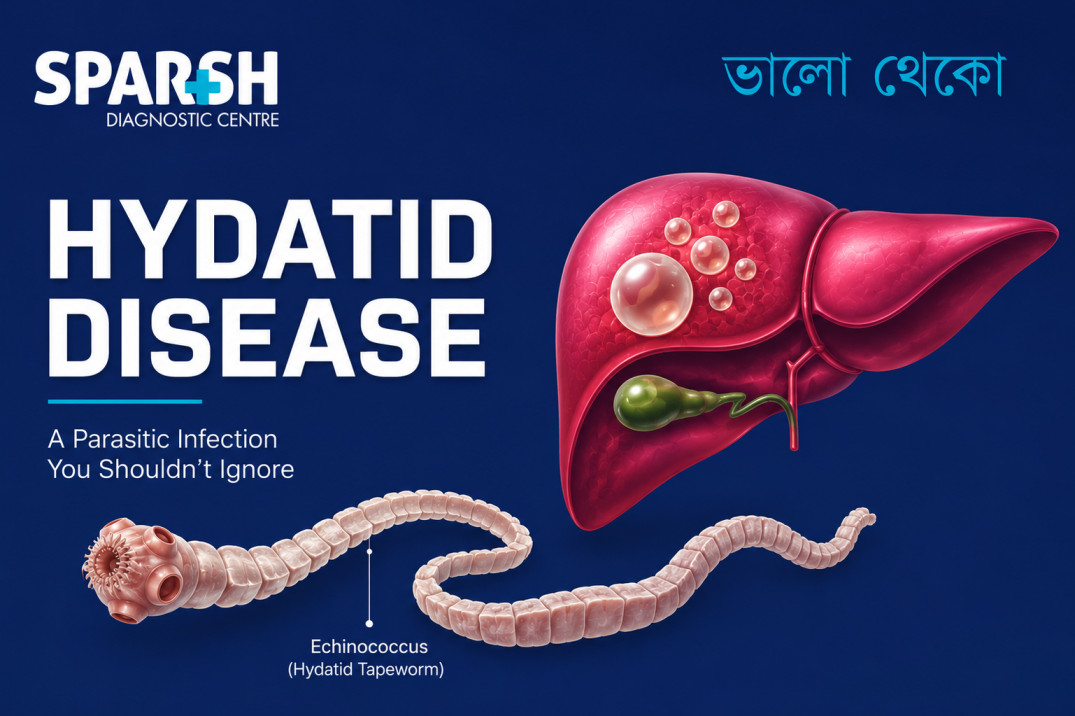
Hydatid disease, also known as echinococcosis, is a parasitic infection caused by the larval stage of the Echinococcus tapeworm. Humans become accidental hosts after ingesting microscopic eggs shed in the feces of infected dogs and other canines.
Once inside the human body, these eggs hatch into larvae, which travel through the bloodstream and form fluid-filled cysts in various organs. These cysts grow slowly over several months or years.
The liver is the most commonly affected organ, accounting for nearly 70% of cases, followed by the lungs. Less commonly, cysts may develop in the brain, spleen, kidneys, bones, or heart.
What Causes Hydatid Disease?
Hydatid disease is caused by infection with the Echinococcus granulosus tapeworm, although other species such as Echinococcus multilocularis can also cause disease.
The parasite has a complex life cycle involving:
- Dogs and wild canines (definitive hosts)
- Sheep, goats, cattle, pigs, and other livestock (intermediate hosts)
- Humans (accidental hosts)
How does infection occur?
Humans become infected when they accidentally swallow tapeworm eggs through:
- Eating contaminated food
- Drinking contaminated water
- Poor hand hygiene after handling infected dogs
- Contact with soil contaminated with infected dog feces
Unlike livestock, humans do not spread the disease further because the parasite’s life cycle usually ends within the human body.
What is Hydatid Disease Tapeworm?
The hydatid disease tapeworm refers to the Echinococcus tapeworm, one of the smallest tapeworms known to infect animals.
Adult worms live inside the intestines of infected dogs without causing significant illness. These worms release eggs into dog feces, contaminating the environment.
When humans accidentally ingest these eggs, the larvae migrate through the bloodstream and develop into hydatid cysts inside organs.
Importantly, humans do not develop adult tapeworms. Instead, they develop the cyst stage of the parasite, which causes hydatid disease.
Who is at Risk?
Certain groups are more likely to develop hydatid disease, including:
- Farmers
- Shepherds
- Livestock handlers
- Veterinarians
- People living in rural areas
- Individuals who own dogs that feed on raw animal organs
- Workers in slaughterhouses
Poor sanitation and inadequate veterinary control also increase the risk of transmission.
Types of Hydatid Disease
There are two major forms:
Cystic Echinococcosis
This is the most common form and is caused by Echinococcus granulosus.
Characteristics include:
- Single or multiple cysts
- Slow-growing lesions
- Most commonly affects the liver
- Usually treatable
Alveolar Echinococcosis
Caused by Echinococcus multilocularis, this form is much more aggressive.
Features include:
- Tumor-like growth
- Invasion into surrounding tissues
- Difficult treatment
- Potentially life-threatening
Symptoms of Hydatid Disease
Hydatid disease often remains silent for many years because cysts grow slowly.
Symptoms usually appear only when cysts become large enough to press against surrounding organs.
General symptoms may include:
- Fatigue
- Abdominal discomfort
- Nausea
- Loss of appetite
- Mild fever
- Unexplained weight loss
The symptoms vary depending on which organ is affected.
What are the Symptoms of Hydatid Liver Disease?
Hydatid liver disease is the most common presentation.
Common symptoms include:
Pain in the Right Upper Abdomen
This is often the earliest symptom as the enlarging cyst stretches the liver capsule.
Abdominal Swelling
Large cysts may produce visible fullness or swelling.
Feeling of Fullness
Patients often feel bloated after eating small meals.
Nausea and Vomiting
Pressure on nearby digestive organs can cause digestive discomfort.
Jaundice
If the cyst compresses the bile ducts, patients may develop:
- Yellow eyes
- Yellow skin
- Dark urine
- Pale stools
Fever
This usually indicates infection of the cyst.
Allergic Reactions
If the cyst ruptures, patients may experience:
- Skin rash
- Itching
- Difficulty breathing
- Severe allergic reaction (anaphylaxis)
A ruptured hydatid cyst is considered a medical emergency.
Symptoms of Lung Hydatid Disease
When the lungs are affected, symptoms may include:
- Persistent cough
- Chest pain
- Breathlessness
- Coughing up blood
- Fever
- Recurrent chest infections
Hydatid Disease in Other Organs
Although less common, hydatid cysts may occur in:
Brain
Symptoms include:
Bone
Patients may develop:
- Chronic pain
- Repeated fractures
- Bone destruction
Heart
Rarely, cysts can cause:
- Chest pain
- Irregular heartbeat
- Heart failure
How is Hydatid Disease Diagnosed?
Diagnosis usually involves a combination of clinical history, imaging, and laboratory tests.
Ultrasound
Ultrasound is the first-line imaging test for liver hydatid cysts.
It helps determine:
- Number of cysts
- Size
- Internal structure
- Stage of the cyst
CT Scan
CT scans provide more detailed images and are useful for:
- Complex cysts
- Surgical planning
- Detecting calcification
- Identifying cyst rupture
MRI
MRI is particularly useful for:
- Brain involvement
- Spine
- Soft tissue lesions
Blood Tests
Doctors may order:
- Complete blood count
- Eosinophil count
- Liver function tests
- Serological antibody tests
Positive antibody tests support the diagnosis but cannot always confirm active disease.
Complications of Hydatid Disease
Without treatment, hydatid cysts may cause:
- Infection
- Rupture
- Internal bleeding
- Biliary obstruction
- Lung collapse
- Secondary spread of infection
- Severe allergic reactions
- Organ failure
These complications can become life-threatening if not managed promptly.
Can Hydatid Disease Be Cured?
Yes. Hydatid disease can often be cured, especially when diagnosed early and treated appropriately.
The choice of treatment depends on:
- Size of the cyst
- Number of cysts
- Organ involved
- Stage of the disease
- Overall health of the patient
Many patients recover completely after successful treatment and regular follow-up.
However, untreated disease may continue to progress, making treatment more complicated.
What is the First-Line Treatment for Hydatid Disease?
The first-line treatment depends on the characteristics of the cyst rather than a single approach for every patient.
Treatment options include:
Anti-Parasitic Medication
Albendazole is considered the primary anti-parasitic drug for many patients.
It works by:
- Killing parasite larvae
- Preventing cyst growth
- Reducing recurrence after surgery
Treatment may continue for several weeks or months.
Sometimes praziquantel is added in selected cases.
PAIR Procedure
PAIR stands for:
- Puncture
- Aspiration
- Injection
- Re-aspiration
This minimally invasive procedure is performed under ultrasound guidance.
It involves:
- Draining cyst fluid
- Injecting a scolicidal agent
- Removing remaining fluid
PAIR is suitable for selected uncomplicated liver cysts.
Surgery
Surgery remains the preferred treatment for:
- Very large cysts
- Complicated cysts
- Ruptured cysts
- Infected cysts
- Multiple daughter cysts
- Cysts compressing nearby organs
Modern surgery may be performed through:
- Open surgery
- Laparoscopic (keyhole) surgery in selected cases
Surgeons take great care to prevent spillage of cyst contents, as this can trigger severe allergic reactions and spread the infection.
Watch and Wait
Inactive or calcified cysts that are not causing symptoms may simply be monitored with periodic imaging.
Not every hydatid cyst requires immediate intervention.
Recovery After Treatment
Recovery depends on:
- Type of treatment
- Organ involved
- Size of cyst
- Presence of complications
Patients generally require:
- Regular imaging
- Blood tests
- Follow-up visits
- Completion of anti-parasitic medication
Long-term monitoring helps detect recurrence early.
Can Hydatid Disease Return?
Recurrence is possible, especially if:
- Cysts rupture during treatment
- Multiple cysts remain untreated
- Medication is not completed
- Follow-up is missed
Regular imaging significantly reduces the chance of delayed diagnosis of recurrence.
How Can Hydatid Disease Be Prevented?
Prevention focuses on breaking the parasite’s life cycle.
Important preventive measures include:
- Wash hands thoroughly after handling dogs.
- Wash fruits and vegetables before eating.
- Drink safe, clean water.
- Deworm pet dogs regularly under veterinary guidance.
- Prevent dogs from eating raw animal organs.
- Improve sanitation in farming communities.
- Dispose of infected livestock organs safely.
- Educate communities in endemic areas.
Public health measures have greatly reduced disease incidence in many countries.
Living with Hydatid Disease
A diagnosis of hydatid disease can feel overwhelming, but most patients recover well with timely medical care. Regular follow-up, adherence to prescribed medications, and imaging surveillance are key to ensuring successful treatment and preventing recurrence.
If you experience persistent abdominal pain, unexplained swelling, jaundice, or symptoms after close contact with livestock or dogs in endemic areas, seek medical evaluation promptly. Early diagnosis often leads to simpler treatment and better outcomes.
Frequently Asked Questions (FAQs)
1. What causes hydatid disease?
Hydatid disease is caused by infection with the larval stage of the Echinococcus tapeworm. Humans become infected after accidentally swallowing parasite eggs found in food, water, soil, or on hands contaminated with infected dog feces.
2. Can hydatid disease be cured?
Yes. Most cases can be cured with anti-parasitic medication, minimally invasive procedures such as PAIR, surgery, or a combination of these treatments. Early diagnosis greatly improves the chances of a complete recovery.
3. What are the symptoms of hydatid liver disease?
Common symptoms include pain in the upper right abdomen, abdominal swelling, nausea, fullness after meals, jaundice, fever (if infected), and, in rare cases, severe allergic reactions if the cyst ruptures.
4. What is hydatid disease tapeworm?
Hydatid disease is caused by the Echinococcus tapeworm. Adult worms live in the intestines of dogs and other canines, while humans develop cysts after accidentally ingesting the parasite’s eggs.
5. What is the first-line treatment for hydatid disease?
Treatment depends on the cyst’s size, location, and stage. First-line options include albendazole therapy, the PAIR procedure for selected uncomplicated cysts, surgery for larger or complicated cysts, or careful observation of inactive cysts.
6. Is hydatid disease contagious?
No. Hydatid disease does not spread directly from one person to another.
7. Which organ is most commonly affected?
The liver is the most commonly affected organ, followed by the lungs.
8. How long does a hydatid cyst take to grow?
Hydatid cysts usually grow slowly over several years, which is why many people remain symptom-free for a long time.
9. Can hydatid cysts become cancerous?
No. Hydatid cysts are not cancer, and they do not turn into cancer. However, they can cause serious complications if left untreated.
10. Can hydatid disease be prevented?
Yes. Good hygiene, regular deworming of dogs, safe disposal of livestock waste, washing fruits and vegetables, and avoiding contact with contaminated dog feces can significantly reduce the risk of infection.
Hydatid disease is a preventable yet potentially serious parasitic infection that most commonly affects the liver and lungs. Because cysts grow slowly, the disease often goes unnoticed until symptoms develop or imaging reveals the problem incidentally. Early diagnosis through ultrasound, CT scans, or MRI, combined with appropriate treatment using medications, PAIR, surgery, or careful monitoring, can lead to excellent outcomes.
If you have persistent abdominal pain, unexplained liver cysts, or risk factors such as close contact with livestock or dogs in endemic areas, consult a healthcare professional without delay. Timely diagnosis and treatment can prevent complications and support a full recovery.
To consult a Doctor or get full body check-up done at Sparsh Diagnostic Centre, call our helpline numbers 9830117733/ 8335049501.
#BhaloTheko
Disclaimer:
No content on this site, regardless of date, should ever be used as a substitute for direct medical advice from your doctor or other qualified clinician.