


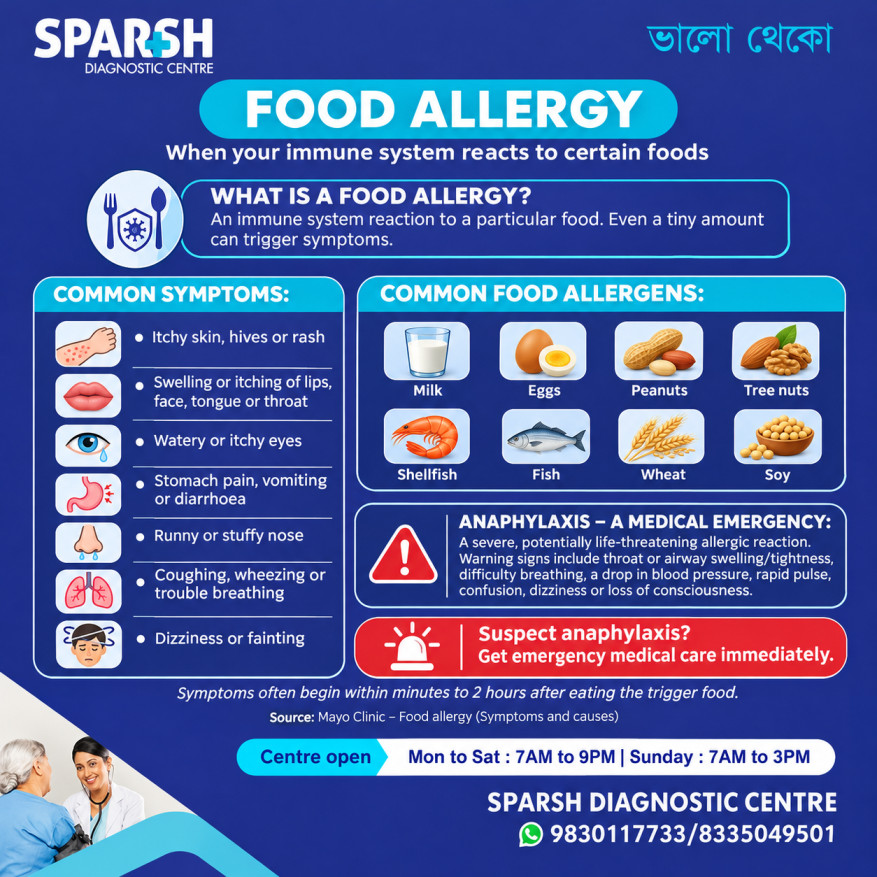
A food allergy is an immune system reaction that occurs when the body mistakenly identifies a particular food or one of its proteins as harmful. Instead of recognising the food as something safe to eat, the immune system treats it as a potential threat and triggers a defensive response.
This reaction can cause symptoms ranging from mild itching and skin rashes to swelling, vomiting, breathing difficulties and, in severe cases, a life-threatening condition called anaphylaxis.
Food allergies can affect both children and adults. They are particularly common during childhood, although some people develop food allergies later in life, even after eating the same food without any problems for years.
An important thing to understand is that even a very small quantity of an allergenic food can trigger a reaction in someone who is allergic to it. The severity of the reaction can also vary. A person who experiences mild symptoms after eating a particular food once may develop a much more serious reaction on another occasion.
Food allergies should therefore never be ignored, even when the initial symptoms appear minor.
How does a food allergy develop?
The immune system normally protects the body against harmful microorganisms and foreign substances. However, in people with certain food allergies, it mistakenly identifies proteins in specific foods as threats.
In many immediate-type food allergies, the immune system produces antibodies known as immunoglobulin E (IgE) against the food allergen.
When the person eats that food again, the allergen interacts with these antibodies, triggering certain immune cells to release chemicals such as histamine. These chemicals produce the symptoms associated with an allergic reaction.
This process explains why food allergies can affect several parts of the body at once, including the skin, digestive system, respiratory system and cardiovascular system.
Not all food-related allergic conditions follow this exact IgE-mediated pathway. Some involve other immune mechanisms and may produce predominantly digestive symptoms.
What are the signs and symptoms of a food allergy?
Food allergy symptoms can vary considerably from one individual to another. Some people experience mild skin irritation, while others develop symptoms involving multiple organs.
Most immediate food allergy reactions begin within a few minutes to two hours after consuming the trigger food. However, certain less common food-related allergic conditions can produce delayed symptoms.
Recognising the early signs is important because some reactions can progress rapidly.
1. Skin-related symptoms
The skin is one of the most commonly affected areas during an allergic reaction.
Symptoms may include:
Itchy skin or persistent itching.
Hives, which appear as raised, red or skin-coloured patches.
Skin rashes or flushing.
Swelling around the eyes, lips or face.
Generalised itching or a feeling of warmth.
Hives may appear in one area or spread across different parts of the body.
2. Swelling of the lips, face and throat
Some individuals develop swelling shortly after consuming an allergenic food.
This may involve:
Swollen lips.
Swelling of the tongue.
Puffiness around the eyes.
Swelling of the face.
Tightness or swelling in the throat.
Swelling involving the tongue or throat is particularly concerning because it can interfere with swallowing and breathing.
3. Digestive problems
Food allergies can also affect the gastrointestinal system.
Common digestive symptoms include:
Stomach pain or abdominal cramps.
Digestive discomfort.
These symptoms may occur alongside skin or respiratory symptoms. Persistent or recurrent digestive problems after eating a particular food should be evaluated by a healthcare professional.
4. Respiratory symptoms
Some allergic reactions affect the airways and breathing.
Warning signs include:
Runny or stuffy nose.
Sneezing.
Persistent coughing.
Tightness in the throat.
Breathing difficulties following food consumption should always be taken seriously, particularly when accompanied by swelling, dizziness or skin symptoms.
5. Cardiovascular and neurological symptoms
Severe allergic reactions can affect blood circulation and the nervous system.
Symptoms may include:
Feeling faint.
Weakness.
A rapid pulse.
A sudden drop in blood pressure.
Loss of consciousness.
These symptoms may indicate anaphylaxis, which requires immediate emergency medical attention.

When should you seek emergency medical attention?
Anaphylaxis is a severe, potentially life-threatening allergic reaction that can develop within minutes of exposure to an allergen.
Warning signs include:
Difficulty breathing or wheezing.
Swelling of the tongue or throat.
Difficulty swallowing.
A sudden drop in blood pressure.
Dizziness or fainting.
A weak or rapid pulse.
Collapse or loss of consciousness.
If anaphylaxis is suspected, administer prescribed adrenaline (epinephrine) using an auto-injector immediately, if available, and seek emergency medical care. Do not wait to see whether the symptoms improve on their own.
Antihistamines are not a substitute for adrenaline in anaphylaxis. Even if symptoms improve after adrenaline, medical evaluation is necessary because symptoms can return.
What are the common food allergies?
Although almost any food can trigger an allergic reaction, certain foods account for the majority of recognised food allergies.
The nine major food allergens identified by the US Food and Drug Administration (FDA) are milk, eggs, fish, crustacean shellfish, tree nuts, peanuts, wheat, soybeans and sesame.
The foods commonly associated with allergic reactions include:
1. Milk allergy
Milk allergy occurs when the immune system reacts to proteins found in cow’s milk.
It is particularly common among infants and young children, although adults can also experience it.
Symptoms may include hives, vomiting, abdominal discomfort, swelling and breathing difficulties.
Milk allergy should not be confused with lactose intolerance. Lactose intolerance occurs when the body cannot properly digest lactose, the natural sugar present in milk. It does not involve an allergic immune response.
People with milk allergies may also need to avoid products containing milk proteins, including certain dairy-based foods and processed products.
2. Egg allergy
Egg allergy occurs when the immune system reacts to proteins found in egg whites or yolks.
It is frequently seen in children, although some individuals continue to experience it into adulthood.
Symptoms may include skin rashes, hives, nasal symptoms, stomach pain and vomiting. Severe reactions can also occur.
Eggs may be present in baked goods, sauces, mayonnaise, pasta and several processed foods. Checking ingredients is important for people with a confirmed egg allergy.
3. Peanut allergy
Peanut allergy is one of the well-known food allergies associated with potentially severe reactions.
Peanuts belong to the legume family and are different from tree nuts. However, some people may be allergic to both.
Symptoms can include itching, hives, facial swelling, vomiting, wheezing and anaphylaxis.
Peanuts and peanut-derived ingredients may be present in snacks, confectionery, sauces and other packaged foods.
4. Tree nut allergy
Tree nut allergies involve reactions to nuts such as:
Almonds.
Walnuts.
Cashews.
Pistachios.
Hazelnuts.
Pecans.
Brazil nuts.
An individual may be allergic to one particular tree nut or several varieties.
Cross-reactivity can occur between certain related nuts. However, being allergic to one tree nut does not automatically mean that a person is allergic to every other nut.
Medical evaluation can help determine which nuts need to be avoided.
5. Fish allergy
Fish allergy develops when the immune system reacts to proteins found in fish.
Common triggers include salmon, tuna, cod and other varieties of fish.
Symptoms may include hives, swelling, digestive discomfort, respiratory problems and, occasionally, anaphylaxis.
Fish allergy can persist into adulthood and may require long-term dietary precautions.
6. Shellfish allergy
Shellfish allergy is another important cause of food-related allergic reactions.
Common triggers include:
Prawns.
Shrimp.
Crabs.
Lobsters.
Crayfish.
Other crustaceans and molluscs.
Some people are allergic to crustaceans, while others may react to molluscs such as mussels and oysters.
Shellfish allergy can cause severe reactions. People with a confirmed allergy should be careful about cross-contact during food preparation, particularly in restaurants and seafood kitchens.
7. Wheat allergy
Wheat allergy occurs when the immune system reacts to proteins present in wheat.
Symptoms may include hives, swelling, vomiting, abdominal pain and breathing difficulties.
Wheat is commonly found in bread, biscuits, cakes, pasta, breakfast cereals and many packaged foods.
Wheat allergy is different from celiac disease and non-celiac gluten sensitivity. These conditions have different underlying mechanisms and require different approaches to diagnosis and management.
8. Soy allergy
Soy allergy occurs when the immune system reacts to proteins found in soybeans.
It is more frequently observed in children, and some children outgrow it as they grow older.
Soy is used in a wide range of foods, including soy milk, tofu, certain sauces, protein products and processed foods.
People with soy allergies should carefully check ingredient lists rather than assuming that a product is free from soy because it does not visibly contain soybeans.
9. Sesame allergy
Sesame is recognised as one of the major food allergens.
It can be present in sesame seeds, sesame oil, tahini and various bakery products, sauces and prepared foods.
In Indian cuisine, sesame may be used in sweets, chutneys, spice preparations and other dishes. Therefore, people with sesame allergies should pay attention to both obvious and less obvious sources.
Important: These nine allergens are recognised as major allergens under US food labelling regulations. They are not an exhaustive list of foods that can cause allergies. Other foods, including certain fruits, vegetables and legumes, can also trigger allergic reactions.
Food allergy vs food intolerance: what is the difference?
Food allergy and food intolerance are often confused because both can cause discomfort after eating certain foods. However, they are two different conditions and require different approaches.
A food allergy involves the immune system, whereas food intolerance generally occurs because the body has difficulty digesting or processing a particular food or ingredient.
| Feature | Food allergy | Food intolerance |
|---|---|---|
| Underlying mechanism | Immune system reaction | Difficulty digesting or processing food |
| Common symptoms | Hives, swelling, itching, vomiting and breathing difficulties | Bloating, gas, cramps and digestive discomfort |
| Amount of food required | Even a tiny amount may trigger symptoms | Symptoms may depend on the quantity consumed |
| Severity | Can be life-threatening | Usually causes digestive discomfort |
| Anaphylaxis | Possible | Not associated with ordinary food intolerance |
For example, lactose intolerance occurs when the body does not produce enough lactase, the enzyme needed to digest lactose in milk. This can lead to bloating, gas, abdominal cramps and diarrhoea.
A milk allergy, on the other hand, occurs when the immune system reacts to proteins in milk. It can cause skin reactions, swelling, vomiting and potentially anaphylaxis.
Another important distinction is between wheat allergy, gluten sensitivity and coeliac disease. Although these conditions may involve similar foods, their underlying mechanisms are different.
If you regularly experience symptoms after eating a particular food, consult a healthcare professional rather than assuming that you have an allergy.
What causes food allergies?
Food allergies develop when the immune system mistakenly identifies certain food proteins as harmful substances.
Although the exact reasons why some people develop food allergies are not completely understood, several factors are known to increase the likelihood of developing them.
1. Family history: People with a family history of allergies, asthma or eczema may have a higher likelihood of developing food allergies.
2. Existing allergic conditions: Individuals with conditions such as eczema, allergic rhinitis or asthma may have an increased risk of food allergies.
3. Childhood and early development: Food allergies frequently develop during infancy and childhood, although they can also appear in adults.
4. Immune system sensitivity: Differences in how the immune system responds to certain proteins can contribute to the development of allergic reactions.
It is important to remember that having one or more risk factors does not necessarily mean someone will develop a food allergy. Similarly, people without a known family history of allergies can also develop the condition.
How are food allergies diagnosed?
Identifying the specific food responsible for an allergic reaction is essential for effective management. A doctor, preferably an allergist or clinical immunologist, can evaluate the symptoms and recommend appropriate investigations.
Food allergy diagnosis generally involves the following steps.
1. Medical history and symptom assessment
The doctor will first ask detailed questions about the symptoms and the foods consumed before the reaction.
Some important details include:
Which food was consumed?
How much of the food was eaten?
Was the food raw, cooked or processed?
How soon did the symptoms appear?
What symptoms occurred?
Have similar reactions happened previously?
Is there a family history of allergies, asthma or eczema?
Maintaining a food and symptom diary can help identify possible patterns.
2. Skin prick test
A skin prick test is commonly used to investigate immediate-type food allergies.
During this test, a small amount of an allergen extract is placed on the skin, usually on the forearm or back. The skin is then gently pricked to allow the substance to come into contact with the immune system.
If a raised bump or wheal develops, it may indicate sensitisation to that allergen.
However, a positive skin test does not automatically confirm that eating the food will cause an allergic reaction. The results must be interpreted alongside the person’s medical history and symptoms.
3. Specific IgE blood test
A specific IgE blood test measures the level of immunoglobulin E antibodies directed against particular food allergens.
A blood sample is collected and tested for antibodies associated with suspected foods.
This test can help identify possible allergic sensitisation, particularly when a skin test is unsuitable or additional information is required.
However, a positive result alone does not establish a clinical food allergy. False-positive results are possible, so test results must be interpreted by a qualified healthcare professional.
4. Oral food challenge
An oral food challenge is considered the most reliable method for confirming or ruling out certain food allergies.
During this procedure, the patient consumes gradually increasing amounts of the suspected food under close medical supervision.
The healthcare team monitors the patient for any signs of an allergic reaction.
Because a severe reaction can occur, an oral food challenge should only be performed in an appropriately equipped medical setting. It should never be attempted at home.
An important precaution: Broad food allergy panels and IgG food sensitivity tests should not be used as a substitute for a proper clinical assessment. Unnecessary testing can lead to incorrect diagnoses and avoidable dietary restrictions.
What is the treatment for food allergies?
The treatment of food allergies focuses on preventing exposure to the allergen, managing accidental reactions and reducing the risk of severe complications.
Although there is currently no universal cure for food allergies, several treatment options can help people manage the condition.
1. Avoiding the trigger food
Avoiding the confirmed allergen is the most important part of food allergy management.
Individuals should understand which foods and ingredients need to be avoided and how to recognise hidden sources of allergens.
For example, someone with a confirmed peanut allergy should check the ingredients of packaged snacks, confectionery, sauces and other processed foods.
It is also important to be aware of cross-contact, which occurs when an allergen unintentionally transfers from one food to another.
This can happen through:
Shared cooking utensils.
Common chopping boards.
Shared frying oil.
Food preparation surfaces.
Manufacturing equipment.
Improperly cleaned kitchen appliances.
Even when a food does not intentionally contain an allergen, cross-contact can make it unsafe for someone with a severe allergy.
2. Antihistamines
Antihistamines may help relieve certain mild allergic symptoms, such as itching and hives.
However, they do not prevent or adequately treat anaphylaxis.
People should not rely on antihistamines when experiencing severe allergic symptoms.
3. Adrenaline (epinephrine)
Adrenaline, also known as epinephrine, is the first-line emergency treatment for anaphylaxis.
People who are at risk of severe allergic reactions may be prescribed an adrenaline auto-injector.
It is important to understand how to use the prescribed device and keep it accessible.
If anaphylaxis is suspected, adrenaline should be administered promptly according to the prescribed emergency plan, followed by immediate medical attention.
4. Oral immunotherapy
Oral immunotherapy is a specialist-supervised treatment in which a patient receives gradually increasing quantities of a specific food allergen over time.
The objective is to increase the amount of allergen a person can tolerate before developing a reaction.
This treatment may reduce the risk of severe reactions following accidental exposure. However, it does not necessarily eliminate the allergy, and patients may still need to avoid the trigger food.
It can also cause allergic reactions during treatment and is not suitable for everyone.
5. Omalizumab treatment
Omalizumab is an injectable medication that may be prescribed for certain patients with food allergies.
It works by targeting immunoglobulin E (IgE), an antibody involved in allergic reactions.
In eligible patients, it can help reduce the risk of allergic reactions following accidental exposure to one or more food allergens.
However, it is not a cure and does not mean that patients can freely consume foods to which they are allergic.
The choice of treatment depends on the patient’s age, medical history, type of allergy and risk of severe reactions.
Is there a cure for food allergies?
Currently, there is no established universal cure for food allergies. However, treatments are available that can help reduce the risk of reactions and improve the quality of life of people living with the condition.
The most reliable approach remains identifying the trigger food and avoiding it.
Treatments such as oral immunotherapy and omalizumab may help selected patients develop a degree of protection against accidental exposure. However, these treatments do not guarantee permanent tolerance or eliminate the need for precautions.
Research into food allergy prevention and treatment is continuing, and newer approaches may become available in the future.
People with confirmed food allergies should consult an allergy specialist before considering any treatment intended to increase their tolerance to a particular food.
Can a food allergy go away over time?
Yes, some food allergies can disappear as a person grows older, particularly certain allergies that develop during childhood.
However, this does not happen with every food allergy.
Children are more likely to outgrow allergies to:
Cow’s milk.
Eggs.
Soy.
Wheat.
On the other hand, allergies to peanuts, tree nuts, fish and shellfish are more likely to persist into adulthood.
Some children with milk or egg allergies develop tolerance during their early years. However, the likelihood and timing of outgrowing an allergy vary from person to person.
Adults can also develop food allergies later in life, including to foods they have eaten regularly for many years.
How do you know if a food allergy has gone away?
The disappearance of symptoms does not necessarily mean that the allergy has resolved.
A healthcare professional may recommend repeat allergy testing and, where appropriate, a medically supervised oral food challenge to determine whether the person has developed tolerance.
Never reintroduce a previously allergenic food into the diet without medical advice, particularly if the person has experienced a severe reaction in the past.
How can you prevent allergic reactions to food?
Although it may not always be possible to prevent the development of food allergies, people with confirmed allergies can take several precautions to reduce the risk of accidental exposure.
Here are some practical measures:
1. Read food labels carefully: Check ingredient lists before purchasing packaged foods. Pay attention to allergen declarations and precautionary statements where available.
2. Ask about ingredients when eating outside: Inform restaurant staff about the allergy and ask about ingredients, preparation methods and possible cross-contact.
3. Avoid sharing food: Children with food allergies should be taught not to exchange snacks or eat food when its ingredients are unknown.
4. Maintain a safe kitchen environment: Use properly cleaned utensils, cookware and preparation surfaces to minimise cross-contact.
5. Inform family members and caregivers: Make sure people responsible for preparing meals or caring for children understand the allergy and know what to do during an emergency.
6. Carry prescribed emergency medication: Individuals at risk of anaphylaxis should carry their prescribed adrenaline auto-injector and ensure that family members know how to use it.
7. Follow up with an allergy specialist: Periodic medical reviews can help assess whether the allergy is changing and whether the management plan needs updating.
These precautions can make everyday activities, including eating at restaurants, attending social gatherings and travelling, safer for people with food allergies.
Frequently asked questions about food allergies
1. What are the first signs of a food allergy?
The first signs of a food allergy may include itching, hives, skin rashes, tingling in the mouth, swelling of the lips or face, nausea and stomach discomfort. Some people may also experience coughing, wheezing or breathing difficulties. Symptoms commonly appear within minutes to two hours after eating the trigger food.
2. What are the 9 most common food allergies?
The nine major food allergens recognised by the US FDA are:
Milk.
Eggs.
Peanuts.
Tree nuts.
Fish.
Shellfish.
Wheat.
Soybeans.
Sesame.
However, almost any food can potentially trigger an allergic reaction in a susceptible individual.
3. Can food allergies develop suddenly in adults?
Yes. Food allergies can develop at any age, including adulthood. A person may develop an allergy to a food they have consumed regularly for several years without experiencing any problems.
New symptoms after eating a familiar food should be medically evaluated rather than dismissed.
4. Is there a cure for food allergies?
There is currently no universal cure for food allergies. However, treatments such as oral immunotherapy and omalizumab may help eligible patients reduce their risk of reactions following accidental exposure.
Avoiding the confirmed allergen and being prepared to manage accidental exposure remain essential.
5. Can a food allergy go away over time?
Yes, some childhood food allergies can resolve as the child grows older. Milk, egg, soy and wheat allergies are more likely to be outgrown than peanut, tree nut, fish and shellfish allergies.
However, this varies between individuals. Repeat assessment by an allergy specialist can help determine whether an allergy has resolved.
6. How quickly do food allergy symptoms appear?
Most immediate food allergy symptoms develop within a few minutes to two hours after eating the trigger food.
However, certain less common food-related allergic conditions can produce delayed reactions. Therefore, the timing of symptoms alone cannot confirm or exclude a food allergy.
7. Can a small amount of an allergenic food cause a reaction?
Yes. Even a very small quantity of a food allergen can trigger an allergic reaction in a sensitive individual.
This is why people with confirmed food allergies must be careful about hidden ingredients and cross-contact during food preparation.
8. What is the difference between a food allergy and lactose intolerance?
A food allergy involves an immune system reaction to proteins in food and can sometimes cause life-threatening anaphylaxis.
Lactose intolerance occurs when the body cannot properly digest lactose, the natural sugar found in milk. It generally causes bloating, gas, abdominal cramps and diarrhoea but does not cause anaphylaxis.
9. Which test confirms a food allergy?
Food allergies are evaluated using a combination of medical history, physical examination and appropriate allergy investigations.
Skin prick testing and specific IgE blood tests can help identify possible allergens. A medically supervised oral food challenge may be recommended when confirmation is needed.
No single blood test should be interpreted in isolation.
10. Is food allergy dangerous?
Food allergies can range from mild to severe. While some individuals experience only itching or hives, others may develop anaphylaxis, which can cause breathing difficulties, a sudden drop in blood pressure and loss of consciousness.
Suspected anaphylaxis requires immediate emergency treatment with adrenaline (epinephrine), if available and prescribed, followed by urgent medical care.
Food allergies are more than just an inconvenience or digestive problem. They involve an immune system response that can affect several parts of the body and, in some cases, become life-threatening.
Recognising the early symptoms, identifying the responsible food and obtaining an accurate diagnosis are essential steps towards managing the condition.
Although there is currently no universal cure, appropriate medical care, dietary precautions and emergency preparedness can help people with food allergies lead healthy and active lives.
If you experience recurring symptoms after eating particular foods, consult a qualified healthcare professional or allergy specialist. Do not attempt to diagnose a food allergy or eliminate several food groups from your diet without appropriate medical guidance.
To consult a Doctor at Sparsh Diagnostic Centre, call our helpline numbers +91 98301 17733 and +91 83350 49501.
#BhaloTheko
Disclaimer:
No content on this site, regardless of date, should ever be used as a substitute for direct medical advice from your doctor or other qualified clinician.
Sources and medical references
The following trusted medical and healthcare resources were consulted while preparing this article on food allergies:
1. Mayo Clinic – Food allergy: Symptoms and causes
Provides information on food allergy symptoms, causes, risk factors, common allergens, immune system responses and anaphylaxis.
2. American College of Allergy, Asthma & Immunology (ACAAI) – Food allergies
Covers common food allergens, allergic reactions, diagnostic procedures, treatment options and food allergy management.
3. Cleveland Clinic – Food allergies: Causes, common examples and cures
Explains food allergy symptoms, causes, diagnosis, treatment options, oral immunotherapy and whether food allergies can resolve over time.
4. MedlinePlus – Food allergy
An informative resource from the US National Library of Medicine covering food allergy symptoms, causes, diagnosis, treatment and the difference between food allergies and food intolerance.
5. American Academy of Allergy, Asthma & Immunology (AAAAI) – Food allergy
Provides information on food allergy mechanisms, IgE antibodies, diagnostic testing, oral food challenges and available treatment approaches.
6. US Food and Drug Administration (FDA) – Food allergies
Explains the nine major food allergens, food labelling requirements, allergen declarations and precautions for avoiding accidental exposure.
7. NCBI Bookshelf – Food allergies (StatPearls)
Provides a clinical overview of food allergies, including their causes, symptoms, diagnostic evaluation, management and treatment approaches.
Medical review
This article has been medically reviewed and verified by Dr. Shubhayu Som to ensure the accuracy and reliability of the medical information presented.
Medical reviewer: Dr. Shubhayu Som
Qualification: MBBS
Specialisation: General Physician
WBMC Registration Number: 81060
Medical registration: West Bengal Medic


[…] with eczema are at a risk of developing food allergies, hay fever and […]
[…] 2. Food Intolerances and Allergies […]
[…] like IBS, while diarrhea could point to inflammatory bowel diseases (IBD), infections, or even food allergies. A specialist can assess the cause and help develop a management plan to regulate bowel […]
[…] is not a food allergy or intolerance but an autoimmune condition. When someone with celiac disease consumes gluten, their […]
[…] intolerance, gluten intolerance (celiac disease), and other food allergies can trigger digestive issues and […]