E-cigarettes and vaping products are often perceived as safer than traditional cigarettes. But vaping is not harmless, and in some people it can lead to a serious inflammatory lung condition known as EVALI, or e-cigarette or vaping product use-associated lung injury.
EVALI can cause breathing problems, chest pain, cough, fever, stomach symptoms and low oxygen levels. In severe cases, it can progress to respiratory failure and may require intensive care.
The condition came to widespread attention during the 2019 vaping-related lung injury outbreak in the United States. Vitamin E acetate, particularly in some THC-containing vaping products, was strongly associated with the outbreak. However, researchers have not established that every case of EVALI is caused by one single substance.
One of the most important things to understand is that EVALI is not diagnosed by a single blood test or scan. Doctors generally diagnose it by combining a history of recent vaping, symptoms, imaging findings and investigations that exclude infections and other causes of lung inflammation.
What is EVALI?
EVALI is a serious lung injury associated with the use of e-cigarettes or vaping products. The inflammation can affect the lungs’ ability to exchange oxygen normally.
Vape aerosols are not simply harmless water vapour. Depending on the product, the aerosol may contain nicotine, ultrafine particles, volatile organic compounds, heavy metals, flavouring chemicals and other substances. Some products, particularly certain THC-containing products, have also been associated with vitamin E acetate.
EVALI may develop suddenly or over several days or weeks. Some patients become seriously ill and require hospitalisation, oxygen therapy or mechanical ventilation.
The condition is different from ordinary irritation caused by vaping. A person can have a cough or throat irritation from vaping without having EVALI. EVALI refers to a more significant lung injury.
What causes EVALI?
The exact cause can vary, but the 2019 outbreak provided strong evidence linking EVALI to certain vaping products.
Vitamin E acetate was strongly associated with the outbreak, especially in THC-containing vaping products. CDC investigations found vitamin E acetate in lung-fluid samples from people with EVALI, while it was not found in comparable samples from people without the condition.
However, this does not mean that every vape product contains vitamin E acetate or that vitamin E acetate explains every possible vaping-related lung injury. Other chemicals and contaminants may also contribute.
Risk appears particularly concerning with THC-containing products obtained from informal sources. During the outbreak investigation, most EVALI patients who used THC-containing products reported obtaining them from informal sources such as friends, family members, dealers or online sellers.
What are EVALI symptoms?
EVALI symptoms can involve both the respiratory and digestive systems. The most common symptoms include:
- Cough
- Shortness of breath
- Chest pain
- Rapid breathing
- Rapid heartbeat
- Fever
- Chills
- Nausea
- Vomiting
- Diarrhea
- Abdominal pain
- Dizziness
- Unexplained weight loss
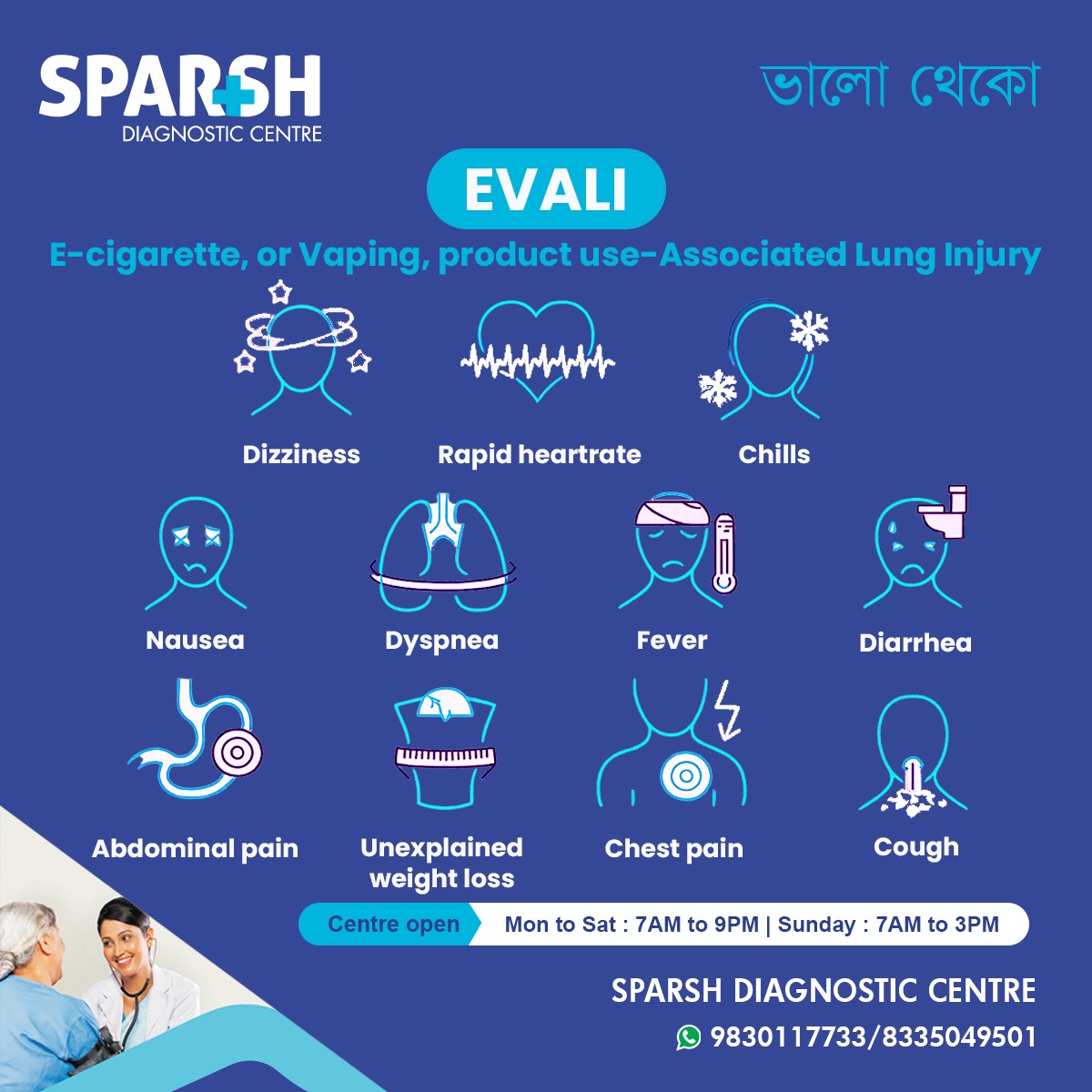
Respiratory symptoms are particularly important. Someone who has recently vaped and develops increasing breathlessness, chest pain or persistent cough should not simply assume that it is a minor effect of vaping.
What are the early signs of EVALI?
Early EVALI can look deceptively similar to a viral infection or flu.
A person may initially experience:
- Mild cough
- Shortness of breath during activity
- Chest discomfort
- Fever or chills
- Fatigue
- Nausea or stomach discomfort
- Reduced appetite
Symptoms may become more pronounced over the following days. Some people develop respiratory symptoms first, while others have prominent gastrointestinal symptoms.
Because pneumonia, influenza, COVID-19 and other illnesses can cause similar symptoms, medical assessment is important.
How fast does EVALI progress?
There is no fixed timeline.
Some people develop symptoms over several days, while others have symptoms that develop over several weeks. EVALI can also become severe relatively quickly once significant lung inflammation and oxygen impairment develop.
This is one reason not to wait for symptoms to become extreme before seeking medical attention.
Severe breathlessness, bluish lips, confusion, severe chest pain or an inability to maintain normal oxygen levels requires urgent medical evaluation.
How to confirm EVALI?
There is no single test that confirms EVALI.
Doctors generally consider EVALI when a person has a compatible illness, a history of recent vaping and evidence of lung abnormalities, while other explanations have been excluded. CDC guidance describes EVALI as a diagnosis of exclusion.
Evaluation may include:
Medical history
The doctor may ask:
- Have you used an e-cigarette or vape recently?
- How frequently do you vape?
- Do you use nicotine, THC or both?
- What type of product do you use?
- Where did you obtain it?
- When did you last vape?
It is important to answer these questions honestly. Vaping history can be an important diagnostic clue.
Oxygen measurement
Pulse oximetry can measure blood oxygen saturation. Low oxygen levels can indicate significant respiratory impairment.
Chest X-ray
A chest X-ray may show abnormalities associated with lung inflammation.
CT scan
A CT scan can provide more detailed images of the lungs and may identify areas of inflammation or hazy opacities that are not as clearly visible on an X-ray.
Blood tests and infection testing
Doctors may order blood tests and tests for infections such as influenza or other respiratory illnesses because these can produce similar symptoms.
Lung function testing
Pulmonary function tests may be performed during follow-up to assess how well the lungs are functioning.
The American Lung Association notes that the diagnosis generally involves ruling out other diseases such as pneumonia, influenza and COVID-19.
How do I know if my lungs are damaged from vaping?
You cannot reliably determine lung damage simply by how you feel.
Some people with respiratory problems experience symptoms such as:
- Persistent cough
- Shortness of breath
- Wheezing
- Reduced exercise tolerance
- Chest discomfort
- Unusual fatigue
However, symptoms alone cannot tell you whether you have EVALI, asthma, an infection or another lung condition.
If you vape and develop persistent respiratory symptoms, a doctor may consider oxygen measurement, chest imaging and pulmonary function testing.
Can EVALI be cured?
EVALI can often be treated successfully, particularly when recognised early, but it should not be considered a condition that can safely be treated at home without medical assessment.
Treatment depends on how severe the lung injury is.
Doctors may use:
- Corticosteroids to reduce inflammation
- Supplemental oxygen
- Other supportive treatment
- Antibiotics when bacterial infection has not yet been excluded
- Antiviral medication when appropriate
- Mechanical ventilation for severe respiratory failure
Cleveland Clinic reports that many people begin feeling better within several days of treatment, although complete recovery can take longer.
How do I get rid of EVALI?
There is no home remedy that reliably eliminates EVALI.
The most important steps are:
- Stop vaping.
- Seek medical evaluation promptly.
- Follow the prescribed treatment.
- Have oxygen levels and lung function monitored when recommended.
- Attend follow-up appointments.
- Avoid restarting vaping after recovery.
Some patients experience recurrent symptoms after treatment, which makes follow-up particularly important.
Do not restart vaping simply because you feel better.
Can EVALI heal by itself?
Mild symptoms may improve after stopping vaping, but you should not assume that EVALI will heal by itself.
EVALI can become serious, and its symptoms overlap with potentially dangerous infections and other lung conditions. Delaying evaluation could allow a serious illness to progress.
If you have recently vaped and are experiencing shortness of breath, chest pain, persistent cough, fever or gastrointestinal symptoms, medical assessment is the safer approach.
Can lungs recover from EVALI?
In many patients, the lungs can improve substantially after EVALI.
However, recovery is not necessarily immediate or complete. A one-year study of patients hospitalised with EVALI found that among those who had follow-up imaging, most showed complete resolution or improvement of previous abnormalities. A small proportion had focal pulmonary scarring.
Another prospective study followed patients for a year to assess respiratory and other long-term outcomes, highlighting the importance of follow-up after the acute illness.
So, the answer is encouraging but not absolute: lungs can recover from EVALI, but some people may have persistent abnormalities or symptoms.
Will lungs heal if you quit vaping?
Stopping vaping is an important step in protecting your lungs.
Quitting removes ongoing exposure to the substances present in vape aerosol and prevents additional vaping-related injury. However, nobody can promise that all existing lung damage will completely disappear.
Recovery depends on factors such as:
- How severe the lung injury was
- How long vaping continued
- Other medical conditions
- Whether there is scarring
- Whether another lung disease is present
- Whether the person continues to smoke or vape
If you have had EVALI, simply stopping vaping should not replace medical follow-up.
Can lungs recover from 10 years of vaping?
There is no reliable way to predict lung recovery solely from the number of years someone has vaped.
Ten years of vaping does not automatically mean that permanent lung damage has occurred, but it also does not guarantee that the lungs are completely healthy.
Long-term research into vaping is still developing. CDC notes that scientists continue to study the immediate and long-term health effects of e-cigarettes.
The best step is to stop vaping and discuss persistent symptoms with a healthcare professional. Depending on the situation, lung function testing and other investigations may be appropriate.
Is vaping worse than smoking?
The answer needs some nuance.
Cigarette smoke contains thousands of chemicals and is extremely harmful. CDC notes that e-cigarette aerosol generally contains fewer harmful chemicals than cigarette smoke, but this does not make vaping safe.
For an adult who already smokes cigarettes, completely switching away from combustible cigarettes may reduce exposure to some toxic chemicals. But using both cigarettes and e-cigarettes—known as dual use—is not a safe compromise and may be associated with worse respiratory outcomes.
For someone who does not smoke, starting to vape provides no health advantage.
Is 100 puffs of vape a day bad?
There is no universally safe number of vape puffs per day.
One hundred puffs every day represents substantial repeated exposure, but the actual dose depends on the device, liquid, nicotine concentration, puff duration and other factors.
Counting puffs can therefore give a false impression of safety. A better goal for someone concerned about their health is to stop vaping rather than trying to identify a “safe” daily puff limit.
Will my lungs be damaged if I vape once?
A single episode of vaping does not mean that permanent lung damage has definitely occurred.
However, it is also impossible to say that one vaping session is completely risk-free. The contents of different products vary, and some people may experience adverse effects.
EVALI is generally associated with recent vaping exposure, and the 2019 outbreak was strongly linked to certain products, particularly THC-containing products and vitamin E acetate.
If someone experiences significant breathing difficulty, chest pain or other concerning symptoms after vaping, they should seek medical care rather than waiting for the symptoms to disappear.
Is vaping once a month bad?
Vaping once a month is less frequent exposure than vaping every day, but there is no established “safe” frequency of vaping.
The risk of developing EVALI or another vaping-related problem cannot be calculated simply by saying “once a month.”
If you do not already use tobacco, there is no health benefit to starting occasional vaping.
Is it okay to hit a vape once?
If you are asking whether one puff is guaranteed to cause permanent damage, no such conclusion can be made.
But if you are asking whether one puff is completely harmless, the answer is also no.
Vape aerosol can contain nicotine and other potentially harmful substances, and nicotine can be addictive.
For a non-user, the safest choice is not to start.
Is 1 puff of a vape equal to one cigarette?
No. One puff of a vape is not equivalent to smoking one cigarette.
Nicotine delivery varies considerably between vaping devices, liquids and puffing patterns. A cigarette also delivers nicotine through a very different combustion process.
Therefore, there is no scientifically reliable rule that says “one vape puff equals one cigarette.”
What is vaper’s tongue?
“Vaper’s tongue” is an informal term usually used to describe a temporary reduction or loss of flavour perception among people who vape.
It may be associated with repeated exposure to strong flavours, dry mouth, changes in taste perception, congestion or other factors.
Vaper’s tongue is not the same thing as EVALI.
It is generally not considered a defining symptom of EVALI. However, if loss of taste occurs alongside significant respiratory symptoms, fever or chest pain, it should not automatically be attributed to vaping fatigue.
What do 2 years of vaping do to you?
There is no single outcome that applies to everyone who has vaped for two years.
Repeated vaping can expose the body to nicotine and potentially harmful substances. Nicotine can cause dependence, while vape aerosol can contain ultrafine particles, heavy metals, volatile organic compounds and other chemicals.
Possible concerns include:
- Nicotine dependence
- Persistent cough
- Respiratory symptoms
- Reduced exercise tolerance
- Worsening of underlying respiratory conditions
- Exposure to potentially harmful chemicals
- Risk of vaping-related lung injury
Scientists are still studying the long-term consequences of vaping, so it would be misleading to claim that two years of vaping inevitably causes a particular degree of permanent lung damage.
What are 5 dangers of vaping?
Five important dangers associated with vaping are:
1. Nicotine addiction
Many vaping products contain nicotine, which is highly addictive.
2. Lung injury
EVALI is a potentially severe example of vaping-associated lung injury.
3. Exposure to harmful chemicals
Vape aerosol may contain heavy metals, volatile organic compounds, ultrafine particles and other potentially harmful substances.
4. Worsening respiratory problems
Vaping may aggravate symptoms in people with existing respiratory conditions.
5. Dual use with cigarettes
Using both cigarettes and e-cigarettes does not eliminate the health risks associated with smoking and may result in greater toxin exposure and poorer respiratory outcomes.
What is the life expectancy of people with EVALI?
There is no reliable life-expectancy figure for someone who has had EVALI.
EVALI is a relatively new condition, and long-term data are limited. Severe acute cases can be fatal, but surviving EVALI does not mean that a person automatically has a shortened life expectancy.
A one-year study of 41 patients found a 4.9% all-cause mortality rate during the follow-up period; importantly, the two deaths occurred in patients with substantial underlying medical conditions and were not directly attributed to EVALI.
Individual prognosis depends on the severity of the lung injury, other health conditions, treatment, recovery and whether the person continues vaping or smoking.
When should you seek urgent medical help?
If you vape and develop significant shortness of breath, chest pain, rapidly worsening breathing, confusion, blue or grey lips, fainting or severe weakness, seek emergency medical care.
Do not assume that severe breathing symptoms are simply “vaper’s cough.”
EVALI can resemble pneumonia, influenza and other illnesses, and severe cases may require hospital treatment, oxygen or mechanical ventilation.
Frequently asked questions about EVALI
Can EVALI be cured?
EVALI can often be treated successfully, particularly when recognised promptly. Treatment may involve corticosteroids, oxygen and other supportive care. Severe cases may require ventilation.
What are the most common EVALI symptoms?
Common symptoms include cough, shortness of breath, chest pain, fever, chills, nausea, vomiting, diarrhoea, abdominal pain, rapid heartbeat and unexplained weight loss.
Can lungs recover from EVALI?
Yes. Many patients show significant improvement or complete resolution of lung abnormalities, although some may have persistent changes or scarring.
How is EVALI confirmed?
There is no single confirmatory test. Doctors use vaping history, symptoms, oxygen measurements, chest imaging and other investigations while excluding infections and other causes.
Can EVALI heal by itself?
Some symptoms may improve after stopping vaping, but suspected EVALI should be medically assessed because the condition can become severe.
Is vaping once a month safe?
There is no scientifically established safe frequency of vaping. Less frequent exposure is not the same as zero risk.
Is one vape puff equal to one cigarette?
No. Nicotine delivery varies greatly between devices, liquids and puffing patterns, so one puff cannot be equated reliably with one cigarette.
Can lungs recover after years of vaping?
They may improve after quitting, but the degree of recovery depends on the individual and whether permanent injury has developed. Long-term effects of vaping are still being studied.
The bottom line
EVALI is a serious lung injury associated with vaping and should not be confused with an ordinary cough or temporary throat irritation. Its symptoms can include shortness of breath, cough, chest pain, fever, chills, nausea, vomiting, diarrhea and abdominal pain.
The condition has no single diagnostic test. Doctors generally make the diagnosis after evaluating vaping history, symptoms, oxygen levels and chest imaging while excluding infections and other causes of lung inflammation.
The encouraging news is that many people recover significantly with appropriate treatment and by stopping vaping. However, some patients may experience persistent respiratory abnormalities or other complications, so follow-up matters.
Most importantly, there is no reliable number of puffs, days or months that can be called completely safe. If you do not vape, the safest choice is not to start. If you currently vape and are concerned about your lungs, stopping and speaking with a healthcare professional is a much better strategy than waiting for symptoms to become severe.
If you have significant breathing difficulty or chest pain after vaping, seek urgent medical attention.
To consult a Doctor or get full body check-up done at Sparsh Diagnostic Centre, call our helpline numbers 9830117733/ 8335049501.
#BhaloTheko
Medically reviewed by: Dr. Soumyajit Das, MD (Pulmonary Medicine/Respiratory Medicine)
Speciality: Consultant Pulmonologist
Reviewed on: 29 August 2026
This article has been medically reviewed by Dr. Soumyajit Das, a qualified pulmonologist, for medical accuracy, clinical relevance and clarity. The information has been reviewed to ensure that it provides reliable and easy-to-understand information about EVALI (e-cigarette or vaping product use-associated lung injury), including its causes, symptoms, diagnosis, treatment, complications, recovery and the potential health effects of vaping.
About the medical reviewer:
Dr. Soumyajit Das is a Consultant Pulmonologist with an MD in Pulmonary Medicine (Respiratory Medicine). His areas of expertise include allergic lung diseases such as asthma, COPD and bronchitis, lung infections, bronchiectasis, tuberculosis, lung cancer, sleep medicine and pulmonary function testing. He also has expertise in respiratory interventions including bronchoscopy, intercostal chest drainage, pleurocentesis and pleurodesis, as well as intensive care interventions including mechanical ventilation.
Disclaimer:
No content on this site, regardless of date, should ever be used as a substitute for direct medical advice from your doctor or other qualified clinician.