Marfan syndrome is a rare genetic disorder that affects the body’s connective tissues. Connective tissue acts like the body’s support system, providing strength and flexibility to structures such as bones, joints, blood vessels, heart valves, eyes, and skin. Because connective tissue is present throughout the body, Marfan syndrome can affect multiple organs and systems.
Although it is a lifelong condition, early diagnosis and proper management allow many people with Marfan syndrome to lead healthy and productive lives. Understanding its symptoms, complications, and treatment options can help individuals seek timely medical care and reduce the risk of serious complications.
What Is Marfan Syndrome?
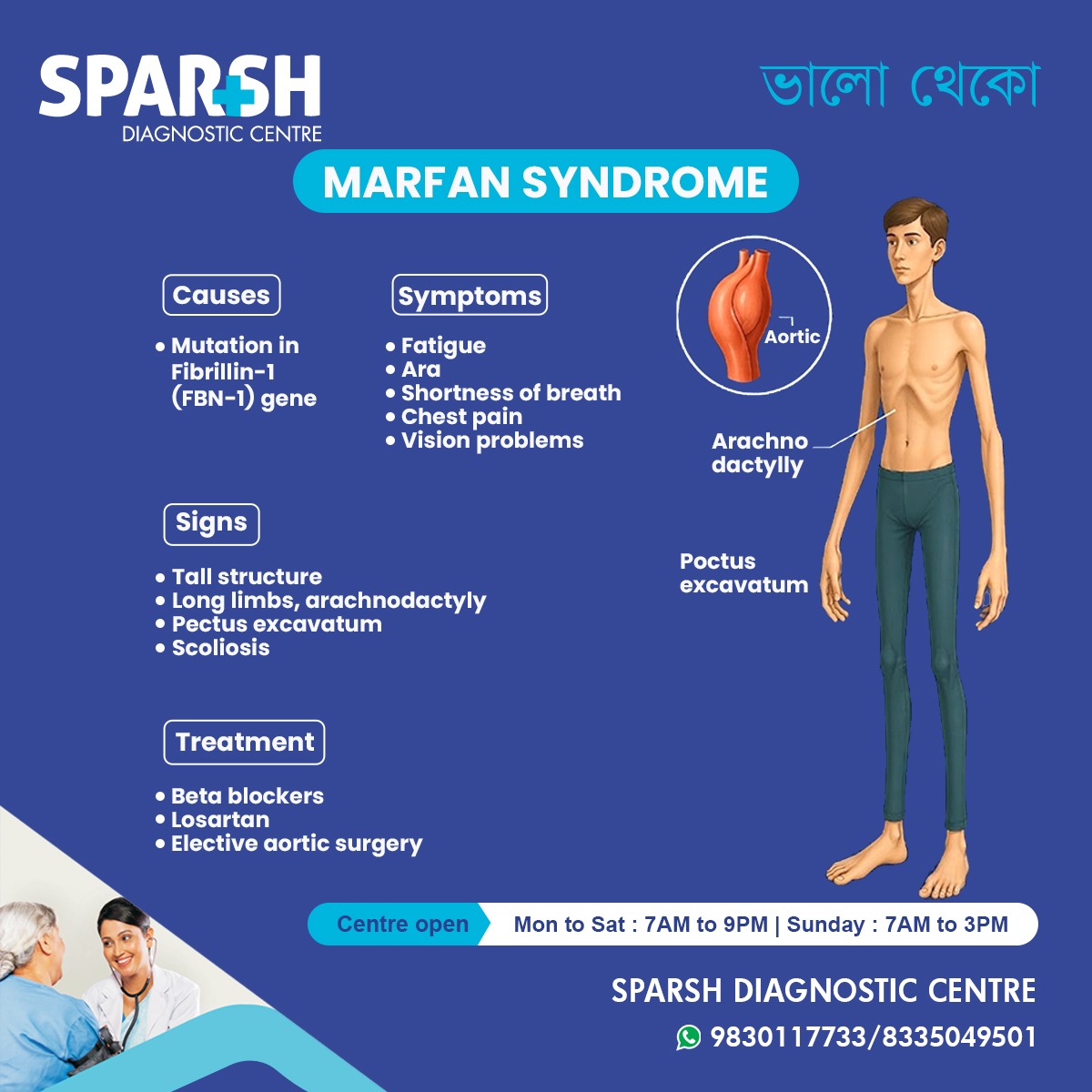
Marfan syndrome is an inherited disorder caused by a mutation in the FBN1 (fibrillin-1) gene. This gene is responsible for producing fibrillin, a protein essential for the formation of connective tissue.
When fibrillin is defective or insufficient, connective tissue becomes weaker and less elastic. As a result, organs and structures that depend on connective tissue—particularly the heart, blood vessels, skeleton, and eyes—can become vulnerable to damage.
Marfan syndrome affects approximately 1 in every 5,000 people worldwide and occurs equally in males and females of all ethnic backgrounds.
What Causes Marfan Syndrome?
The primary cause of Marfan syndrome is a mutation in the FBN1 gene.
Inherited Mutation
Around 75% of cases are inherited from a parent who has Marfan syndrome. Since it follows an autosomal dominant pattern of inheritance, a parent with Marfan syndrome has a 50% chance of passing the condition on to each child.
Spontaneous Mutation
About 25% of cases occur due to a new genetic mutation. In these instances, there is no family history of the disorder.
The mutation disrupts the production of fibrillin and increases the activity of a protein called transforming growth factor-beta (TGF-β), contributing to abnormal growth and weakening of connective tissue.
How Does Marfan Syndrome Affect the Body?
Because connective tissue is found throughout the body, Marfan syndrome can affect multiple systems.
Skeletal System
The disorder often causes overgrowth of bones and changes in body structure.
Cardiovascular System
The heart and blood vessels, particularly the aorta, can become weakened.
Eyes
Connective tissue abnormalities can affect the shape and position of the eye’s lens.
Lungs
Some people may experience breathing difficulties or lung complications.
Skin and Nervous System
Stretch marks and abnormalities involving the spinal cord covering can occur.
Common Signs of Marfan Syndrome
People with Marfan syndrome often have distinctive physical characteristics.
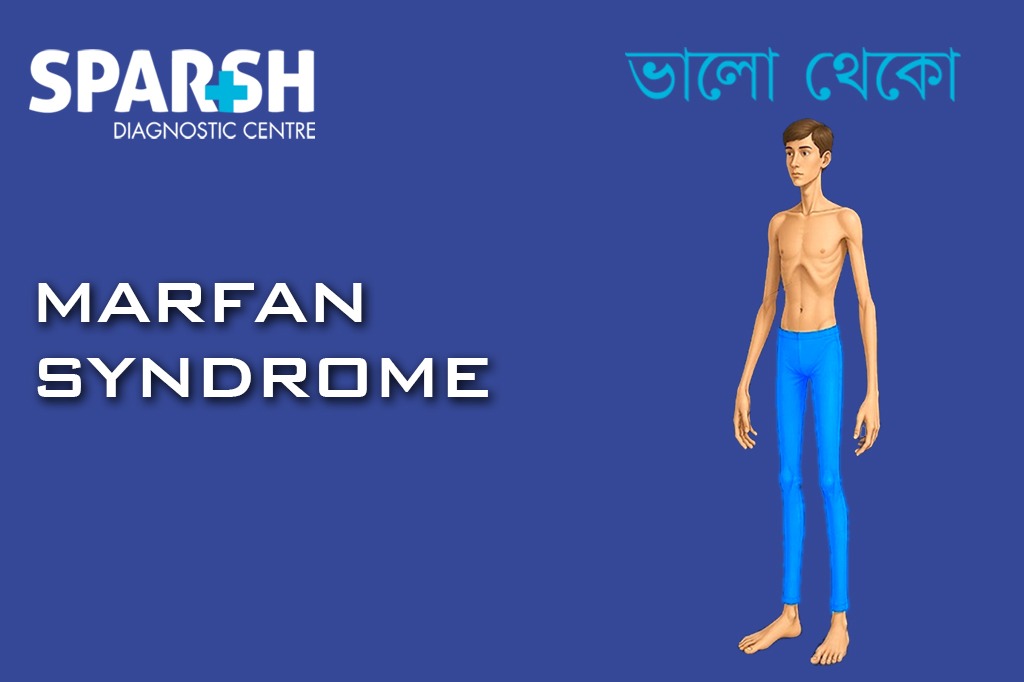
Tall and Thin Build
Most individuals are taller than average and have a lean body structure.
Long Arms, Legs, Fingers, and Toes
Exceptionally long fingers and toes are called arachnodactyly, often described as “spider-like” digits.
Long Arm Span
The arm span may exceed the person’s height.
Curved Spine
Many people develop scoliosis, an abnormal sideways curvature of the spine.
Chest Abnormalities
The breastbone may protrude outward (pectus carinatum) or sink inward (pectus excavatum).
Flexible Joints
Hypermobile joints may bend beyond the normal range of motion.
High-Arched Palate and Dental Crowding
A narrow roof of the mouth can lead to crowded teeth and bite problems.
Symptoms of Marfan Syndrome
Symptoms vary widely from person to person. Some individuals experience mild symptoms, while others develop serious complications.
Cardiovascular Symptoms
- Fatigue
- Shortness of breath
- Chest pain
- Heart palpitations
- Dizziness
- Reduced exercise tolerance
Skeletal Symptoms
- Back pain
- Joint pain
- Flat feet
- Poor posture
- Frequent sprains
Eye Symptoms
- Blurred vision
- Nearsightedness
- Double vision
- Difficulty focusing
Respiratory Symptoms
- Breathlessness
- Sleep apnea
- Recurrent lung infections
Marfan Syndrome and the Heart
Cardiovascular complications are the most serious aspect of Marfan syndrome.
Aortic Enlargement
The aorta, the body’s largest artery, may gradually enlarge due to weakening of its walls.
Aortic Aneurysm
A bulging or ballooning of the aorta can occur.
Aortic Dissection
This is a medical emergency in which a tear develops in the inner wall of the aorta. It can cause sudden severe chest or back pain and may be life-threatening.
Mitral Valve Prolapse
The mitral valve may become floppy, causing blood leakage and irregular heart rhythms.
Because heart complications may develop silently, regular cardiac monitoring is essential.
Eye Problems Associated with Marfan Syndrome
The eyes are commonly affected by Marfan syndrome.
Lens Dislocation
The eye’s lens may shift from its normal position, leading to blurred vision.
Severe Nearsightedness
Many people develop significant myopia at an early age.
Cataracts
Clouding of the eye lens can occur earlier than usual.
Glaucoma
Increased pressure inside the eye may damage the optic nerve.
Retinal Detachment
The retina can separate from the back of the eye, requiring immediate treatment.
Routine eye examinations play a crucial role in preserving vision.
Other Complications of Marfan Syndrome
Lung Problems
People with Marfan syndrome may be more susceptible to:
- Pneumothorax (collapsed lung)
- Sleep apnea
- Breathing difficulties
Pregnancy Complications
Pregnancy places extra stress on the heart and blood vessels. Women with Marfan syndrome require close monitoring because the risk of aortic dissection may increase.
Skin Changes
Unexplained stretch marks may appear even without weight changes.
Dural Ectasia
The membrane surrounding the spinal cord can enlarge and stretch, causing:
- Lower back pain
- Leg numbness
- Headaches
- Abdominal discomfort
How Is Marfan Syndrome Diagnosed?
There is no single test that confirms Marfan syndrome. Diagnosis typically involves a detailed medical evaluation and multiple investigations.
Medical History and Family History
The doctor reviews symptoms, physical characteristics, and family history of connective tissue disorders.
Physical Examination
The physician examines:
- Height and arm span
- Finger and toe length
- Chest structure
- Spine alignment
- Joint flexibility
Echocardiogram
An echocardiogram evaluates:
- Aortic size
- Heart valve function
- Blood flow through the heart
Electrocardiogram (ECG)
An ECG helps identify rhythm abnormalities.
Eye Examination
A detailed eye assessment detects lens dislocation and other vision problems.
Imaging Studies
CT scans and MRI scans provide detailed information about the aorta and other structures.
Genetic Testing
Testing for mutations in the FBN1 gene may confirm the diagnosis and assist in family screening.
Treatment for Marfan Syndrome
There is currently no cure for Marfan syndrome. Treatment focuses on preventing complications and preserving quality of life.
Medications
Beta Blockers
Beta blockers reduce the force of the heartbeat and lower blood pressure, decreasing stress on the aorta.
Angiotensin Receptor Blockers (ARBs)
Medications such as Losartan may slow enlargement of the aorta by influencing TGF-β activity.
Regular Monitoring
Routine follow-up appointments help monitor:
- Aortic size
- Heart valve function
- Blood pressure
- Vision changes
- Skeletal abnormalities
Lifestyle Modifications
Doctors often recommend:
- Avoiding heavy weightlifting
- Avoiding contact sports
- Maintaining healthy blood pressure
- Staying physically active through low-impact exercises
- Following regular medical checkups
Surgical Treatment
Surgery may become necessary if the aorta reaches a dangerous size or enlarges rapidly.
Elective Aortic Surgery
Planned surgery can replace the weakened portion of the aorta before a life-threatening tear occurs.
Valve Repair or Replacement
Damaged heart valves may require surgical repair or replacement.
Orthopedic Surgery
Some individuals may need surgery to correct severe scoliosis or chest deformities.
Eye Surgery
Procedures may be required to treat cataracts, retinal detachment, or lens dislocation.
Living with Marfan Syndrome
Receiving a diagnosis of Marfan syndrome can feel overwhelming. However, advances in medical care have dramatically improved outcomes.
People with Marfan syndrome can often live active and fulfilling lives by:
- Taking medications regularly
- Attending routine medical appointments
- Undergoing recommended imaging studies
- Maintaining healthy lifestyle habits
- Avoiding activities that strain the heart
- Seeking genetic counseling when planning a family
Early diagnosis remains one of the most important factors in preventing serious complications.
Can Marfan Syndrome Be Prevented?
Because Marfan syndrome is a genetic condition, it cannot be prevented entirely. However, genetic counseling can help families understand inheritance patterns and make informed reproductive decisions.
Early diagnosis and proactive management significantly reduce the risk of complications and improve long-term health outcomes.
When Should You See a Doctor?
Seek medical attention if you or your child experiences:
- Unusually tall and thin body build
- Long fingers and limbs
- Chest deformities
- Vision problems
- Shortness of breath
- Chest pain
- Family history of Marfan syndrome
- Sudden severe chest or back pain
Prompt evaluation can help identify the condition before serious complications develop.
Frequently Asked Questions (FAQs)
Is Marfan syndrome rare?
Yes. Marfan syndrome affects approximately 1 in every 5,000 people worldwide.
Is Marfan syndrome inherited?
Yes. Around 75% of cases are inherited from a parent with the condition.
Can Marfan syndrome affect life expectancy?
With modern treatment and regular monitoring, many individuals with Marfan syndrome can have a near-normal life expectancy.
What is the most serious complication of Marfan syndrome?
Aortic aneurysm and aortic dissection are the most serious and potentially life-threatening complications.
Can people with Marfan syndrome exercise?
Yes, but strenuous activities, heavy lifting, and contact sports are generally discouraged. Low-impact exercises are usually recommended.
Does Marfan syndrome affect vision?
Yes. Lens dislocation, severe nearsightedness, glaucoma, cataracts, and retinal detachment can occur.
Is there a cure for Marfan syndrome?
No. There is currently no cure, but medications, monitoring, and surgery can effectively manage the condition.
Can women with Marfan syndrome have children?
Yes. However, pregnancy requires careful monitoring because of increased stress on the heart and aorta.
Conclusion
Marfan syndrome is a genetic connective tissue disorder that can affect the heart, blood vessels, eyes, skeleton, and other organs. Common features include a tall, thin body build, long limbs, flexible joints, chest abnormalities, and vision problems. While the condition can lead to serious complications, particularly involving the aorta, early diagnosis and appropriate treatment have significantly improved outcomes.
Regular medical monitoring, medications such as beta blockers and Losartan, lifestyle adjustments, and timely surgical intervention allow many people with Marfan syndrome to enjoy long, active, and fulfilling lives.
To consult a Doctor or get full body check-up done at Sparsh Diagnostic Centre, call our helpline numbers 9830117733/ 8335049501.
#BhaloTheko
Disclaimer:
No content on this site, regardless of date, should ever be used as a substitute for direct medical advice from your doctor or other qualified clinician.