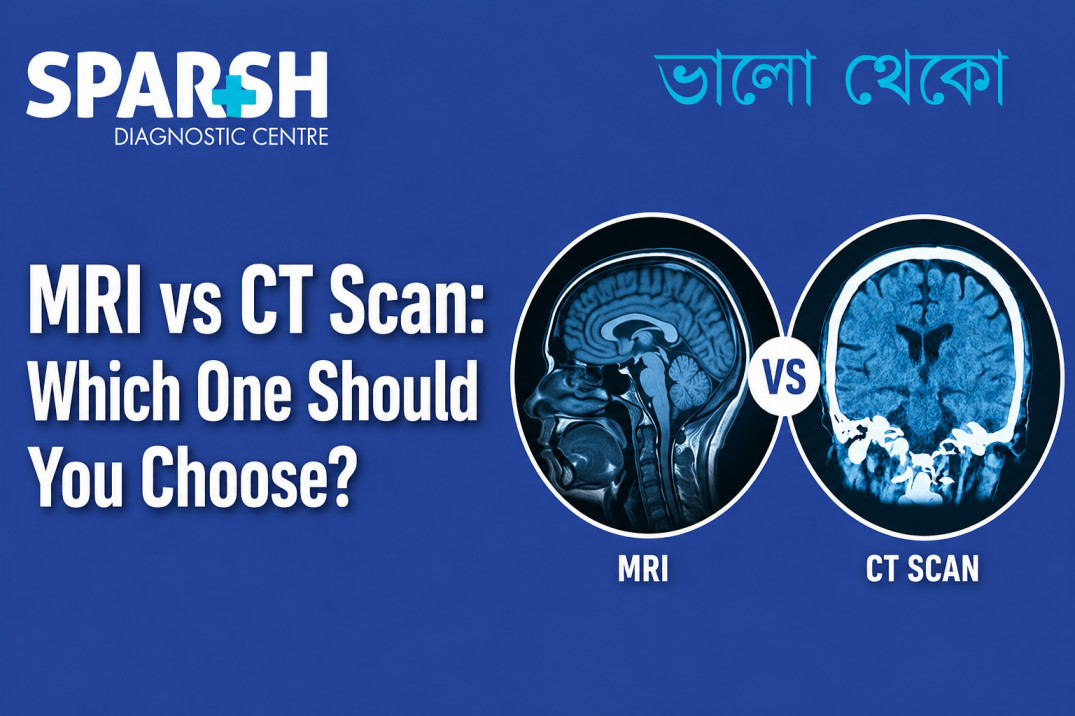
When your doctor recommends a medical imaging test, it’s natural to wonder whether you need an MRI or a CT scan. Although both are powerful diagnostic tools, they work differently and are used for different medical conditions. Choosing the right scan depends on several factors, including your symptoms, the body part being examined, your medical history, and the urgency of the situation.
Many people mistakenly believe that MRI is always better because it produces highly detailed images. Others assume CT scans are the superior option because they are quicker and more widely available. The truth is that neither test is universally better. Each has its own strengths, limitations, and ideal applications.
Understanding the differences between MRI and CT scans can help you feel more informed before your appointment and enable you to have meaningful discussions with your healthcare provider.
In this comprehensive guide, we’ll explain how MRI and CT scans work, compare their advantages and disadvantages, discuss which conditions they are best suited for, and answer the most commonly searched questions about these imaging tests.
What Is an MRI Scan?
MRI (Magnetic Resonance Imaging) is an advanced imaging technique that uses powerful magnets, radio waves, and sophisticated computer software to create highly detailed images of the body’s internal structures.
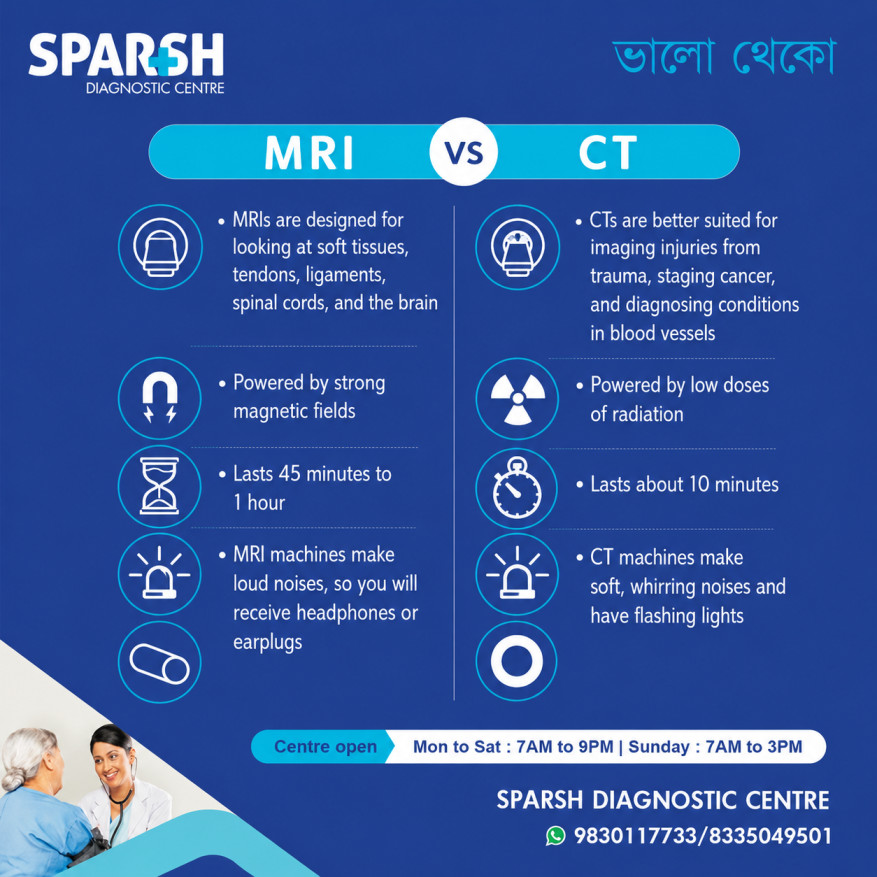
Unlike X-rays and CT scans, MRI does not use ionising radiation, making it an excellent option for patients who may require repeated imaging over time.
MRI scans provide exceptional detail of soft tissues, making them particularly valuable for diagnosing:
- Brain disorders
- Spinal cord problems
- Ligament injuries
- Torn muscles and tendons
- Joint abnormalities
- Liver diseases
- Pelvic disorders
- Certain cancers
- Blood vessel abnormalities
The MRI machine resembles a large tunnel. During the scan, you lie on a table that slides into the machine while it captures multiple cross-sectional images.
Although the scan is painless, it can take anywhere between 20 and 60 minutes, depending on the body part being examined.
What Is a CT Scan?
A CT (Computed Tomography) scan combines multiple X-ray images taken from different angles to create detailed cross-sectional images of the body.
CT scans are extremely fast, making them invaluable during emergencies where rapid diagnosis can save lives.
Doctors commonly use CT scans to diagnose:
- Head injuries
- Internal bleeding
- Bone fractures
- Stroke
- Lung diseases
- Kidney stones
- Appendicitis
- Chest infections
- Trauma following accidents
Most CT scans are completed within 5 to 10 minutes, making them ideal for critically ill patients or those unable to remain still for extended periods.
Unlike MRI, CT scans involve a small amount of ionising radiation. However, the radiation dose is carefully controlled, and the diagnostic benefits generally outweigh the risks when the scan is medically necessary.
MRI vs CT Scan: The Main Differences
Although both scans produce detailed images, they differ significantly in technology, speed, image quality, and clinical applications.
| Feature | MRI | CT Scan |
|---|---|---|
| Technology | Magnetic fields and radio waves | X-rays |
| Radiation | No radiation | Uses low-dose radiation |
| Scan duration | 20–60 minutes | 5–10 minutes |
| Best for | Soft tissues | Bones and emergencies |
| Image detail | Excellent soft tissue detail | Excellent bone detail |
| Emergency use | Less suitable | Highly suitable |
| Cost | Usually more expensive | Usually less expensive |
| Noise | Loud machine | Relatively quiet |
Which Is Better to Get: MRI or CT Scan?
One of the most frequently asked questions is whether MRI is better than CT.
The answer is it depends on what your doctor is looking for.
An MRI is generally the preferred choice when detailed images of soft tissues are required. This includes conditions affecting the brain, spinal cord, muscles, ligaments, joints, reproductive organs, and certain internal organs.
A CT scan is usually the better option when doctors need rapid information, especially during emergencies. It excels at detecting fractures, internal bleeding, lung diseases, and traumatic injuries.
MRI is usually better for:
- Brain tumours
- Multiple sclerosis
- Torn ACL
- Disc prolapse
- Knee injuries
- Liver lesions
- Pelvic disorders
- Spinal cord compression
CT scan is usually better for:
- Bone fractures
- Head injuries
- Internal bleeding
- Stroke assessment
- Lung infections
- Kidney stones
- Chest trauma
- Abdominal emergencies
Rather than asking which scan is better overall, the more useful question is which scan is best for your specific condition. Your doctor will recommend the imaging test most likely to provide the answers needed for accurate diagnosis and treatment planning.
Why Do Doctors Prefer MRI Scans?
Doctors often choose MRI because it provides remarkably detailed images of soft tissues that cannot be visualised as clearly on CT scans.
MRI is particularly valuable for detecting subtle abnormalities in the:
- Brain
- Spinal cord
- Nerves
- Muscles
- Ligaments
- Tendons
- Cartilage
- Internal organs
Another significant advantage is that MRI does not expose patients to ionising radiation, making it a safer choice for individuals who require repeated imaging, such as those with chronic neurological conditions or ongoing cancer surveillance.
MRI can also detect diseases at an earlier stage in many cases because of its superior contrast resolution.
However, despite these benefits, MRI is not always the first choice. In emergencies where every minute counts, CT scans are often preferred because they can be completed much faster.
When Is a CT Scan the Better Choice?
CT scans remain one of the most commonly performed imaging tests worldwide because they are incredibly fast, accurate, and widely available.
Doctors often order a CT scan when they suspect:
- Severe trauma
- Internal injuries
- Broken bones
- Lung diseases
- Kidney stones
- Acute abdominal pain
- Major bleeding
- Certain cancers
For example, if someone arrives in the emergency department after a road traffic accident, a CT scan can quickly identify life-threatening injuries involving the brain, chest, abdomen, or pelvis within minutes.
Similarly, patients with sudden stroke symptoms often undergo an immediate CT scan to determine whether the stroke is caused by bleeding or a blocked blood vessel.
The speed of CT imaging makes it an indispensable tool in emergency medicine.
What Cancers Are Best Seen on MRI?
MRI is one of the most effective imaging tools for detecting and evaluating certain types of cancer, particularly those involving soft tissues. Because it provides exceptional contrast between healthy and abnormal tissue, MRI can help doctors identify the size, location, and extent of many tumours with remarkable accuracy.
Some of the cancers best visualised with MRI include:
Brain and Spinal Cord Tumours
MRI is considered the gold standard for imaging the brain and spinal cord. It can detect very small tumours, show their relationship to surrounding structures, and help surgeons plan treatment. MRI is also useful for monitoring tumour response after surgery, chemotherapy, or radiation therapy.
Breast Cancer
Breast MRI is often recommended for women at high risk of breast cancer, those with dense breast tissue, or when mammograms and ultrasounds provide inconclusive results. It is highly sensitive in detecting breast abnormalities and assessing the extent of known cancers.
Liver Cancer
MRI provides detailed images of the liver and can distinguish between benign liver cysts, haemangiomas, and malignant tumours. It is frequently used to characterise lesions found during ultrasound or CT scans.
Prostate Cancer
Multiparametric MRI has transformed the diagnosis of prostate cancer. It helps identify suspicious areas within the prostate, guides targeted biopsies, and assists in determining whether the cancer has spread beyond the gland.
Uterine and Ovarian Cancer
MRI offers excellent visualisation of the female reproductive organs. It helps assess tumour size, invasion into nearby tissues, and treatment planning for gynaecological cancers.
Colorectal Cancer
MRI is particularly valuable in staging colorectal cancer. It helps doctors determine how deeply the tumour has invaded the bowel wall and whether nearby lymph nodes are involved.
Bone Marrow Cancers
Conditions such as multiple myeloma and certain types of lymphoma can often be evaluated more effectively with MRI than with CT because MRI can detect changes within the bone marrow before bone destruction becomes visible.
While MRI is highly effective for these cancers, it is not always the first imaging test. CT scans, PET scans, ultrasound, and biopsies are often used alongside MRI to provide a complete diagnostic picture.
What Are the Two Major Disadvantages of MRI Scans?
Despite its many advantages, MRI is not suitable for every patient or every clinical situation. Two of its biggest limitations are scan duration and compatibility with metal implants.
1. MRI Scans Take Longer
Unlike CT scans, which are often completed in just a few minutes, MRI examinations typically last between 20 and 60 minutes.
During this time, patients must remain extremely still to avoid blurred images. This can be difficult for:
- Young children
- Elderly patients
- Individuals experiencing severe pain
- Patients with movement disorders
- People with anxiety or claustrophobia
In some cases, sedation may be required.
2. MRI Cannot Be Performed in Everyone
MRI uses a powerful magnetic field, making it unsuitable for certain patients with implanted medical devices or metallic foreign bodies.
Examples include:
- Some older pacemakers
- Certain cochlear implants
- Older aneurysm clips
- Metallic fragments in the eyes
- Some implanted stimulators
Although many modern implants are MRI-compatible, every patient undergoes a thorough safety screening before the scan.
Other limitations include:
- Higher cost than CT scans
- Limited availability in some regions
- Loud noises during the examination
- Longer waiting times for appointments
Why Do Doctors Not Recommend MRI in Some Cases?
Although MRI is an excellent diagnostic tool, doctors may recommend against it depending on the patient’s condition, medical history, or the urgency of the situation.
Some common reasons include:
Medical Emergency
When immediate results are needed, such as after a serious accident or suspected internal bleeding, CT scans are preferred because they can be completed much faster.
Presence of Certain Metal Implants
Patients with specific implanted devices or metallic objects may not be eligible for MRI due to safety concerns.
Severe Claustrophobia
Some individuals experience significant anxiety inside the enclosed MRI scanner. While open MRI systems and sedation are available in some centres, CT scans may sometimes be chosen instead.
Inability to Remain Still
Movement significantly reduces MRI image quality. Patients who cannot stay still because of pain, neurological conditions, or age may not obtain useful images.
Better Alternative Available
Certain conditions are simply better evaluated with other imaging methods.
Examples include:
- Lung diseases
- Rib fractures
- Kidney stones
- Acute bleeding
- Complex bone fractures
In these situations, CT scans usually provide clearer and faster answers.
Which Two Body Parts Are Not Clearly Visible on an MRI?
MRI excels at imaging soft tissues but is less effective for structures with very little water content or those filled with air.
Two areas that are not well visualised include:
Lungs
Because the lungs contain mostly air, MRI produces relatively poor images compared to CT scans.
CT is the preferred imaging technique for diagnosing:
Bones (Outer Cortex)
MRI can detect bone marrow abnormalities exceptionally well but is less effective at showing the hard outer layer of bones (cortical bone).
CT scans remain the gold standard for:
- Fractures
- Bone alignment
- Complex skeletal injuries
- Facial bone trauma
- Spinal fractures
MRI is often used alongside CT when both bone and surrounding soft tissues require evaluation.
Is an MRI Scan 100% Safe?
MRI is widely regarded as one of the safest medical imaging techniques because it does not use ionising radiation.
However, no medical procedure can be considered 100% risk-free for every individual.
MRI is generally safe for most patients, but certain precautions are necessary.
Potential considerations include:
- Strong magnetic fields can interfere with incompatible medical implants.
- Some patients may experience anxiety or claustrophobia.
- MRI machines generate loud noises, so ear protection is routinely provided.
- Contrast agents used in some MRI studies may not be suitable for individuals with severe kidney disease.
For the vast majority of people, MRI is a safe and well-tolerated examination. Before the scan, healthcare providers carefully review your medical history to minimise any potential risks.
Is an MRI or CT Scan Safer?
When safety is a concern, both MRI and CT scans are considered safe when performed for appropriate medical reasons. The choice depends on the clinical situation rather than one test being universally “safer.”
MRI Safety
MRI has the advantage of not using ionising radiation, making it a preferred option for patients who may need repeated imaging, such as those with chronic neurological disorders or ongoing cancer follow-up. However, MRI may not be suitable for individuals with certain implants or metal fragments.
CT Scan Safety
CT scans involve a small dose of ionising radiation, but modern CT technology is designed to use the lowest radiation dose necessary while maintaining image quality. In emergency situations or when rapid diagnosis is essential, the benefits of CT scanning generally outweigh the minimal radiation risk.
Which Is Safer Overall?
- MRI is generally considered safer from a radiation perspective because it does not expose patients to ionising radiation.
- CT scans are extremely safe when medically indicated and remain the preferred choice in many emergency and trauma situations.
Ultimately, the safest scan is the one that provides the most accurate diagnosis while balancing the benefits and potential risks for your individual health condition. Your doctor will recommend the most appropriate imaging test based on your symptoms, medical history, and diagnostic needs.
Which Is Better for the Abdomen: CT or MRI?
When evaluating abdominal conditions, both CT and MRI scans have important roles. The best choice depends on the organ being examined, the symptoms you’re experiencing, and the type of condition your doctor suspects.
CT Scan Is Better for:
CT scans are often the first choice in emergency situations because they are fast, widely available, and highly effective at detecting a range of abdominal problems.
Doctors commonly recommend a CT scan for:
- Acute abdominal pain
- Appendicitis
- Kidney stones
- Bowel obstruction
- Internal bleeding
- Abdominal trauma
- Diverticulitis
- Pancreatitis
- Perforated bowel
A CT scan can usually be completed within minutes, making it invaluable when rapid diagnosis is essential.
MRI Is Better for:
MRI provides superior detail of soft tissues and is often used when a more comprehensive assessment is needed or when CT findings require further evaluation.
MRI is particularly useful for:
- Liver tumours and cysts
- Pancreatic disorders
- Bile duct abnormalities (MRCP)
- Kidney masses
- Pelvic disorders
- Inflammatory bowel disease
- Adrenal gland lesions
- Certain abdominal cancers
For example, if a CT scan identifies a liver lesion but cannot determine whether it is benign or malignant, an MRI may be recommended for further characterisation.
Bottom line: For most emergency abdominal conditions, CT is the preferred imaging test. For detailed evaluation of soft tissues and specific abdominal organs, MRI often provides more information.
Why Did Doctors Order an MRI Instead of a CT Scan?
If your doctor has recommended an MRI instead of a CT scan, it’s usually because MRI can provide more detailed information about the area of concern.
Common reasons include:
Better Soft Tissue Imaging
MRI offers exceptional visualisation of muscles, ligaments, cartilage, nerves, the brain, spinal cord, and internal organs. This makes it ideal for diagnosing conditions that may not be clearly visible on CT scans.
No Radiation Exposure
For younger patients or those requiring multiple follow-up scans, MRI avoids exposure to ionising radiation, making it a preferred option whenever clinically appropriate.
Improved Cancer Evaluation
MRI can better define the size, location, and extent of many tumours. It also helps determine whether cancer has spread into nearby tissues or blood vessels, which is essential for treatment planning.
Assessment of Neurological Conditions
Doctors frequently choose MRI to investigate:
- Persistent headaches
- Seizures
- Multiple sclerosis
- Stroke (especially in later stages)
- Brain tumours
- Spinal cord compression
- Nerve disorders
Joint and Sports Injuries
MRI is considered the gold standard for evaluating:
- Torn ACL
- Meniscus injuries
- Rotator cuff tears
- Cartilage damage
- Tendon injuries
- Muscle tears
These injuries are often difficult or impossible to assess accurately using CT alone.
How to Prepare for an MRI or CT Scan
Preparation depends on the type of scan being performed and whether contrast material is required.
Preparing for an MRI
Before your MRI appointment:
- Inform your doctor about any implanted medical devices, pacemakers, or metal fragments.
- Remove all jewellery, watches, hearing aids, and metallic accessories.
- Wear comfortable clothing or use the hospital gown provided.
- If contrast is required, you may be asked to avoid eating for a few hours beforehand.
- Let the imaging staff know if you are pregnant, have kidney disease, or experience claustrophobia.
Preparing for a CT Scan
Preparation for a CT scan is generally straightforward.
Depending on the examination, you may need to:
- Avoid food for several hours if contrast dye is being used.
- Drink oral contrast before certain abdominal scans.
- Stay well hydrated unless instructed otherwise.
- Inform your doctor about allergies to contrast material.
- Mention any kidney problems or pregnancy before the scan.
Following these instructions helps ensure high-quality images and reduces the risk of complications.
MRI vs CT Scan: Cost Comparison
The cost of MRI and CT scans varies depending on the body part being examined, the use of contrast dye, the healthcare facility, and the city where the scan is performed.
In general:
- CT scans are usually less expensive because they are quicker to perform and require less complex technology.
- MRI scans tend to cost more due to the advanced equipment, longer scan times, and specialised interpretation required.
Although cost is an important consideration, the decision should never be based on price alone. Choosing the imaging test that provides the most accurate diagnosis can prevent unnecessary procedures, delays in treatment, and additional expenses later.
Many health insurance plans cover both MRI and CT scans when they are medically indicated. It’s advisable to check with your insurance provider or healthcare facility regarding coverage and any out-of-pocket costs before your appointment.
MRI vs CT Scan: A Quick Comparison
| Feature | MRI | CT Scan |
|---|---|---|
| Uses radiation | No | Yes (low-dose X-rays) |
| Best for | Soft tissues, brain, spinal cord, joints, ligaments | Bones, lungs, trauma, internal bleeding |
| Scan time | 20–60 minutes | 5–10 minutes |
| Image quality | Excellent for soft tissue | Excellent for bones and chest |
| Suitable for emergencies | Limited | Excellent |
| Cost | Higher | Lower |
| Safe during pregnancy | May be used in selected cases without contrast if clinically necessary | Usually avoided unless absolutely necessary |
| Noise level | Loud | Quiet |
| Claustrophobia concerns | More common | Less common |
Final Thoughts
MRI and CT scans are both indispensable tools in modern medicine, but they serve different purposes. Rather than thinking of one as “better” than the other, it’s more accurate to see them as complementary imaging techniques that help doctors diagnose a wide range of health conditions.
An MRI is often the preferred choice for examining the brain, spinal cord, joints, muscles, ligaments, and many soft tissue disorders. It provides highly detailed images without exposing patients to ionising radiation, making it particularly useful for chronic conditions and follow-up imaging.
A CT scan, on the other hand, is unmatched when speed is essential. It is the first-line imaging test for trauma, fractures, internal bleeding, lung diseases, and many abdominal emergencies. Its ability to produce rapid, accurate results makes it a lifesaving tool in emergency medicine.
The decision between MRI and CT should always be guided by your symptoms, medical history, and your doctor’s clinical judgment. Choosing the right imaging test at the right time leads to faster diagnosis, more effective treatment, and better health outcomes.
If your healthcare provider recommends an MRI or CT scan, don’t hesitate to ask why that particular test is being advised. Understanding the purpose of the scan can help you feel more confident and prepared for your diagnostic journey.
Frequently Asked Questions (FAQs)
1. Which is better to get, an MRI or CT scan?
Neither is universally better. MRI is ideal for imaging soft tissues such as the brain, spine, muscles, and joints, while CT scans are better for evaluating bones, detecting internal bleeding, and diagnosing emergencies. Your doctor will recommend the most appropriate scan based on your condition.
2. What cancers are best seen on MRI?
MRI is particularly effective for detecting and evaluating brain, spinal cord, breast, liver, prostate, rectal, uterine, ovarian, and bone marrow cancers. It provides excellent soft tissue contrast, helping doctors assess tumour size and spread.
3. Why do doctors prefer MRI scans?
Doctors often prefer MRI because it produces highly detailed images of soft tissues without using ionising radiation. It is especially useful for diagnosing neurological disorders, sports injuries, joint problems, and certain cancers.
4. What are two major disadvantages of MRI scans?
The main disadvantages are the longer scan time and the fact that some patients with incompatible metal implants or severe claustrophobia may not be suitable candidates. MRI scans are also generally more expensive than CT scans.
5. Why do doctors not recommend MRI?
Doctors may avoid MRI in emergencies where faster imaging is needed, in patients with certain implanted medical devices, or when CT provides more useful information for conditions such as lung disease, fractures, or internal bleeding.
6. Which two body parts are not visible on an MRI?
MRI is less effective for imaging the air-filled lungs and the hard outer layer (cortex) of bones. CT scans are generally preferred for evaluating these structures.
7. Is an MRI scan 100% safe?
MRI is considered very safe because it does not use radiation. However, it may not be suitable for everyone, particularly those with certain metal implants or severe kidney disease when contrast is required.
8. Which is better for the abdomen, CT or MRI?
CT scans are generally better for emergency abdominal conditions such as appendicitis, kidney stones, and internal bleeding. MRI is preferred for detailed evaluation of the liver, pancreas, bile ducts, pelvic organs, and some abdominal tumours.
9. Why did doctors order MRI instead of CT scan?
Doctors may choose MRI because it provides greater detail of soft tissues, avoids radiation exposure, and offers better evaluation of neurological disorders, joint injuries, and certain cancers.
10. Is an MRI or CT scan safer?
MRI is generally considered safer because it does not use ionising radiation. However, CT scans are also safe when medically necessary and are often the best choice for rapid diagnosis in emergencies.
#BhaloTheko
Disclaimer:
No content on this site, regardless of date, should ever be used as a substitute for direct medical advice from your doctor or other qualified clinician.