


Back pain is a leading cause of discomfort and disability, affecting people of all ages and professions. Whether it’s a dull ache after sitting for long hours or sharp pain due to injury, back pain can severely impact daily life. According to global health data, nearly 80% of people experience back pain at some point in their lives.
At Sparsh Diagnostic Centre, we believe that understanding the root cause of your back pain is the first step toward lasting relief. Let’s explore the common causes, symptoms, diagnostic tests, and treatment options available for managing back pain effectively.
Understanding Back Pain
It can originate from muscles, ligaments, bones, joints, or nerves. The spine is a complex structure that supports body weight, allows movement, and protects the spinal cord. Even a minor imbalance or injury in this system can lead to significant discomfort.
Back pain is often classified into:
Acute – lasting a few days to weeks.
Subacute – lasting between 4 and 12 weeks.
Chronic – persisting for 12 weeks or longer.
Common Causes of Back Pain
Major causes include:
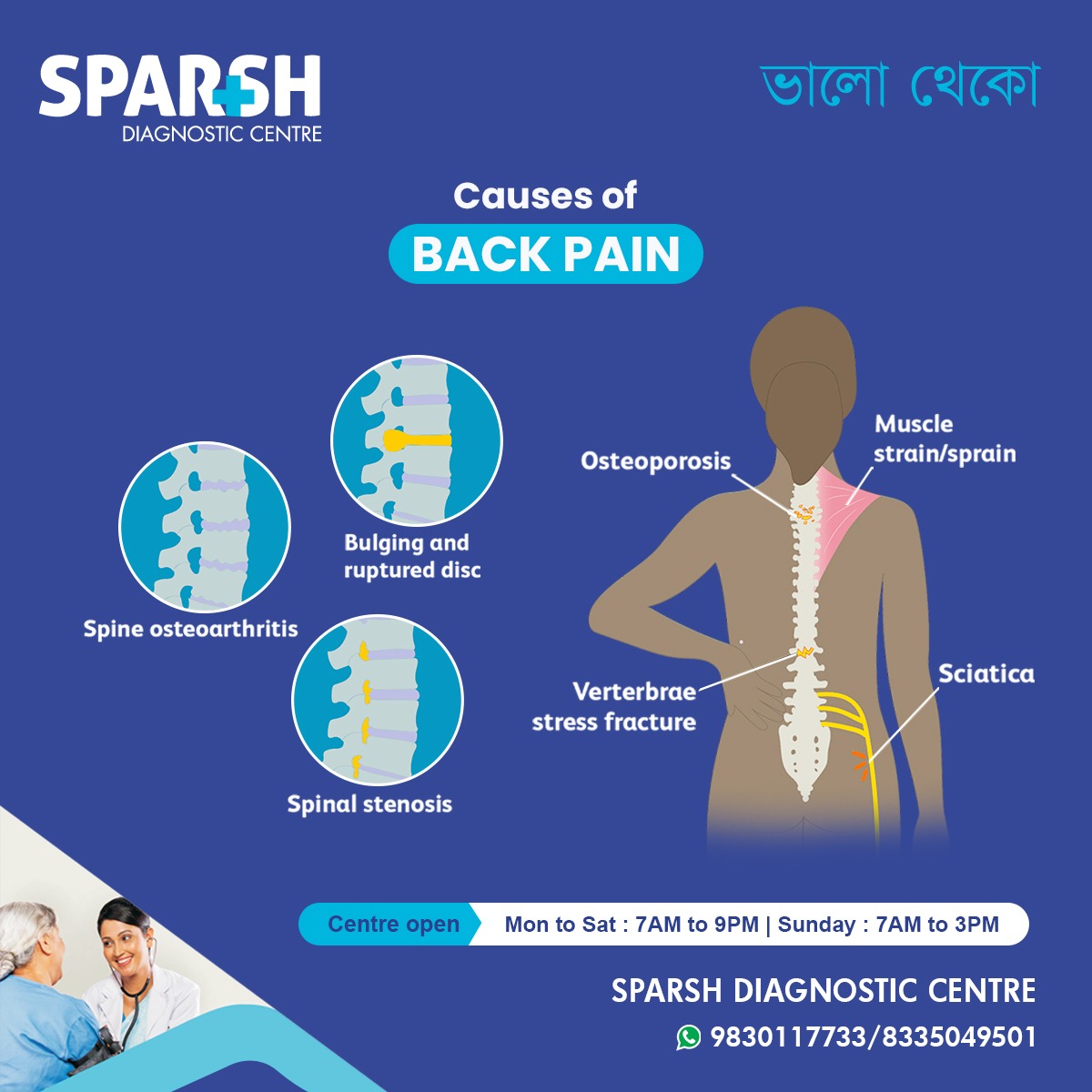
1. Muscle Strain or Sprain
Overstretching or tearing muscles and ligaments around the spine is a common reason for back pain. This can occur due to:
Improper lifting techniques
Sudden movements or twisting
Overexertion during physical activity
Symptoms: Muscle stiffness, pain that worsens with movement, and limited flexibility.
2. Bulging and Ruptured Disc
Intervertebral discs act as cushions between the vertebrae. When these discs bulge or rupture (herniate), they may press on nearby nerves, causing pain.
Symptoms:
Weakness in affected areas
3. Spine Osteoarthritis
Osteoarthritis is the gradual wearing down of cartilage in the spine’s joints. This degenerative condition is more common in older adults and can lead to chronic pain and stiffness.
Symptoms:
Pain that worsens with activity and improves with rest
Stiffness, especially in the morning
Limited range of motion
4. Spinal Stenosis
Spinal stenosis occurs when the spinal canal narrows, putting pressure on the spinal cord or nerves. It commonly affects the lower back and neck.
Symptoms:
Pain or cramping in legs while walking
Numbness or weakness in limbs
Relief when bending forward or sitting
5. Vertebrae Stress Fracture
Stress fractures in the vertebrae, often due to osteoporosis or trauma, can lead to persistent back pain. Such fractures are common among postmenopausal women and older adults.
Symptoms:
Sudden onset of sharp back pain
Height loss or stooped posture
Pain aggravated by movement
6. Osteoporosis
Osteoporosis weakens bones, making them more prone to fractures. When vertebrae lose density, even a minor fall can cause compression fractures leading to chronic back pain.
Symptoms:
Gradual back pain
Loss of height
Spinal deformity
7. Sciatica
Sciatica refers to pain that radiates along the sciatic nerve—from the lower back down through the buttocks and legs. It’s often caused by a herniated disc or spinal stenosis compressing the nerve.
Symptoms:
Shooting pain in one leg
Tingling or burning sensation
Numbness in the affected limb
Other Possible Causes of Back Pain
Inflammatory conditions: Such as ankylosing spondylitis
Infections: Spinal infections like osteomyelitis or discitis
Kidney stones or infections: Can cause pain that radiates to the back
Poor posture or ergonomics: Especially with long hours of sitting
Obesity: Increases stress on the spine
Symptoms of Back Pain
The nature of back pain can vary widely depending on its cause. Common symptoms include:
Dull, aching pain in the lower or upper back
Sharp or stabbing pain during movement
Pain radiating down the legs or arms
Muscle stiffness or tightness
Difficulty standing straight
Reduced range of motion
Numbness or tingling sensations
If back pain is accompanied by fever, unexplained weight loss, numbness, or loss of bladder/bowel control, seek medical attention immediately.
Treatment Options for Back Pain
Treatment depends on the cause, severity, and duration of pain. Here are some approaches used at Sparsh Diagnostic Centre:
1. Rest and Lifestyle Modifications
Short-term rest, maintaining correct posture, and avoiding heavy lifting can ease symptoms.
2. Medications
Pain relievers (NSAIDs): Reduce inflammation and pain.
Muscle relaxants: Help relieve spasms.
Topical creams or gels: Provide localized relief.
Steroid injections: For severe inflammation or nerve compression.
3. Physical Therapy
Physical therapy plays a vital role in strengthening back muscles, improving flexibility, and preventing recurrence. Therapists may guide you through:
Stretching and strengthening exercises
Core stabilization techniques
Posture correction
4. Alternative Therapies
Some patients find relief through complementary approaches like:
Chiropractic adjustments
Acupuncture
Massage therapy
Yoga or Pilates
5. Surgical Treatment
When conservative methods fail, surgical options may be considered:
Discectomy: Removal of a herniated disc.
Laminectomy: Widening of the spinal canal to relieve pressure.
Spinal fusion: Joining vertebrae to stabilize the spine.
At Sparsh Diagnostic Centre, patients are evaluated thoroughly before surgery is recommended.
Prevention Tips for Back Pain
Maintain good posture while sitting and standing.
Exercise regularly to strengthen core muscles.
Lift objects correctly—bend at the knees, not at the waist.
Avoid prolonged sitting; take breaks to stretch.
Maintain a healthy weight.
Sleep on a supportive mattress.
When to Visit a Doctor
Consult a doctor immediately if you experience:
Severe or persistent back pain lasting more than two weeks
Pain radiating to your legs or arms
Numbness or weakness in limbs
Bladder or bowel control issues
Unexplained fever or weight loss
Early diagnosis can prevent complications and lead to faster recovery.
Why Choose Sparsh Diagnostic Centre for Back Pain Evaluation
At Sparsh Diagnostic Centre, our multidisciplinary team of radiologists, orthopedists, and physiotherapists work together to identify the exact cause of your pain. We offer:
State-of-the-art imaging
Accurate diagnosis and reporting
Compassionate care and patient education
Convenient timings (Mon–Sat: 7 AM–9 PM, Sun: 7 AM–3 PM)
Your back health matters to us. Get evaluated today and start your journey toward a pain-free life.
Frequently Asked Questions (FAQ) on Back Pain
1. What is the most common cause of back pain?
The most common cause of back pain is muscle or ligament strain due to improper lifting, sudden movements, or poor posture.
2. Can it be a sign of something serious?
Yes, back pain accompanied by symptoms like numbness, fever, weight loss, or bladder control issues can indicate serious underlying conditions that require immediate attention.
3. How is it diagnosed?
Diagnosis involves a physical exam, medical history, and imaging tests like X-rays, MRI, or CT scans to identify structural problems.
4. What are the best exercises for back pain?
Low-impact exercises such as stretching, walking, swimming, and core-strengthening workouts can help manage back pain.
5. When should I see a doctor for back pain?
If your pain persists for more than two weeks, interferes with daily activities, or radiates down your legs, consult a healthcare provider immediately.
6. How can I prevent back pain at work?
Use ergonomic furniture, maintain correct posture, take frequent breaks, and perform gentle stretches during long hours of sitting.
7. Does obesity contribute to back pain?
Yes. Excess body weight adds stress to the spine and back muscles, increasing the risk of chronic pain.
8. Can it go away on its own?
Mild back pain may resolve within a few days with rest and self-care. However, persistent pain needs medical evaluation.
9. Is surgery always required for herniated discs?
No, most herniated discs can be managed with medications, physical therapy, and lifestyle modifications. Surgery is recommended only in severe cases.
10. Can back pain be linked to osteoporosis?
Yes. Osteoporosis weakens spinal bones, making them prone to fractures, which can cause chronic back pain.
Back pain can result from multiple causes — from muscle strain to degenerative spinal conditions. Timely diagnosis and proper treatment can significantly improve quality of life. If you or a loved one is struggling with back pain, Sparsh Diagnostic Centre offers comprehensive evaluation and advanced imaging for accurate diagnosis and effective management.
📍 Visit us today or book your appointment at:
Sparsh Diagnostic Centre
📞 9830117733 / 8335049501
Centre open: Mon–Sat: 7 AM–9 PM | Sunday: 7 AM–3 PM
🌐 www.sparshdiagnostica.com
#BhaloTheko
Disclaimer:
No content on this site, regardless of date, should ever be used as a substitute for direct medical advice from your doctor or other qualified clinician.


[…] Pain in the Upper Back or […]
[…] Back pain […]
[…] effective in relieving mild to moderate pain, including headaches, dental pain, muscle pain, and back pain. They are often used for short-term pain relief, such as after an injury or […]
[…] General back pain. […]
[…] can be challenging to diagnose because its symptoms overlap with other forms of arthritis and chronic back pain conditions. Here’s what to expect in a diagnostic […]
[…] Posture: Sitting for long periods often leads to poor posture, resulting in back and neck pain, as well as increased risk of spinal […]
[…] to chronic back, neck, and shoulder […]
[…] posture can exacerbate joint pain, especially in the neck, shoulders, and back. Practice sitting and standing with your back straight, and avoid slouching to maintain joint […]
[…] it to appear pink, red, or cola-colored), frequent urination, pain during urination, and lower back pain. These symptoms can also be caused by less serious conditions, so it’s important to seek medical […]
[…] Some people, especially women, may experience upper back pain that feels like a sharp or dull […]
[…] Back Pain: Some individuals experience lower back pain along with other symptoms, which can be attributed to uterine contractions. […]
[…] Lower Back Pain: Persistent pain in the lower back is the most common symptom. […]