Seronegative spondyloarthropathies are a group of chronic inflammatory diseases that mainly affect the joints and spine. These conditions can cause persistent pain, stiffness, swelling, and reduced mobility, especially in the lower back and pelvis. Although they share several common features, each type has its own symptoms and complications.
The word “seronegative” means that these conditions usually test negative for rheumatoid factor (RF), a blood marker commonly found in rheumatoid arthritis. “Spondyloarthropathy” refers to diseases involving the spine and joints.
These disorders often begin in early adulthood and can significantly affect quality of life if left untreated. However, with early diagnosis and proper management, many people can control symptoms and maintain an active lifestyle.
What Are Seronegative Spondyloarthropathies?
Seronegative spondyloarthropathies (SpA) are autoimmune or inflammatory rheumatic diseases that primarily affect:
- The spine
- Sacroiliac joints (where the spine meets the pelvis)
- Peripheral joints
- Tendons and ligaments
Inflammation occurs where tendons and ligaments attach to bones, a process called enthesitis. Many forms of SpA are also associated with the genetic marker HLA-B27.
These conditions may involve organs beyond the joints, including:
- Eyes
- Skin
- Intestines
- Heart
The different types of seronegative spondyloarthropathies often overlap, making diagnosis challenging in some patients.
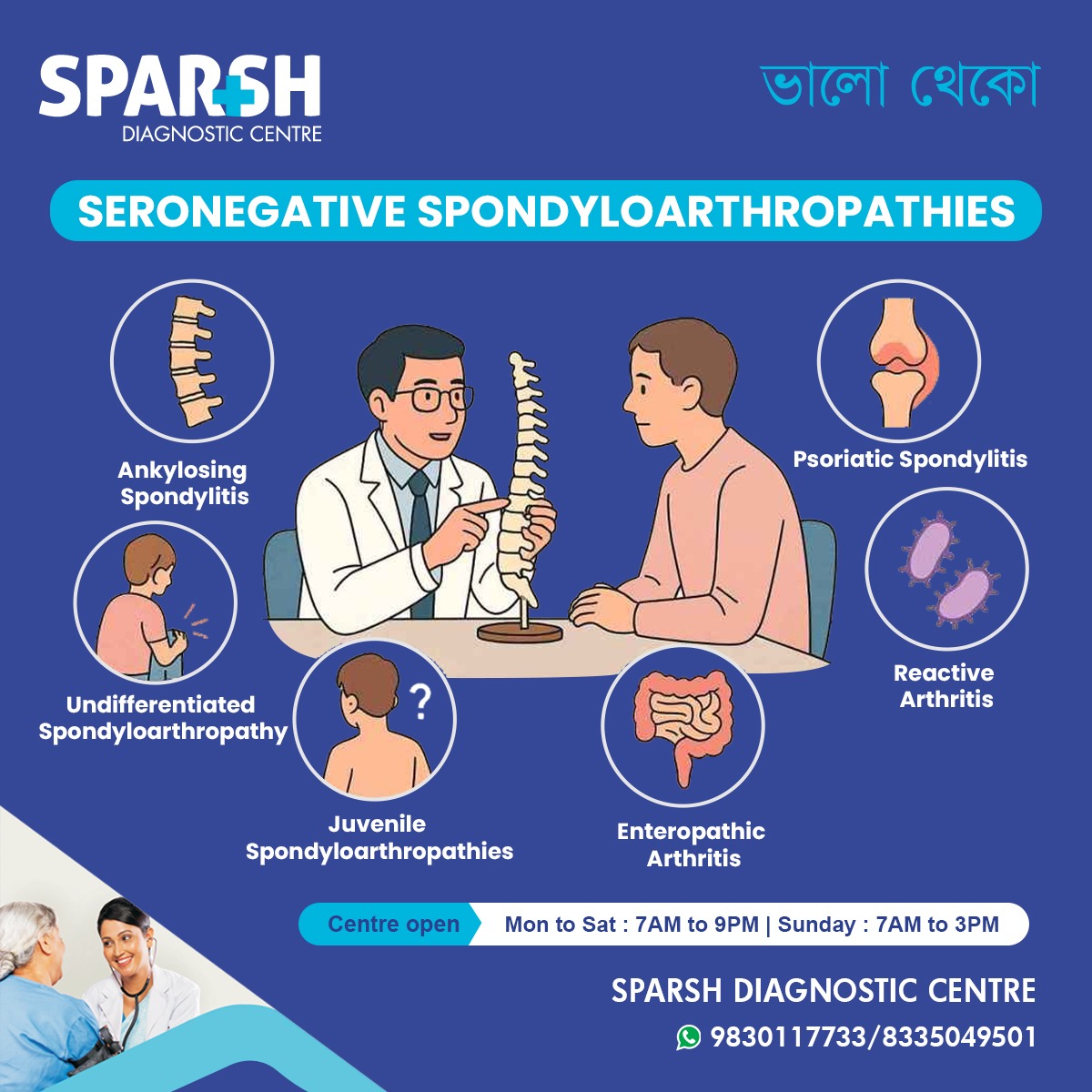
Types of Seronegative Spondyloarthropathies
Ankylosing Spondylitis
Ankylosing spondylitis (AS) is the most common type. It mainly affects the spine and sacroiliac joints.
Over time, chronic inflammation may cause the vertebrae to fuse together, leading to reduced flexibility and a stooped posture.
Common Symptoms
- Chronic lower back pain
- Morning stiffness
- Pain improving with movement
- Fatigue
- Neck pain
- Reduced spinal mobility
AS usually begins before the age of 45 and is more common in men.
Psoriatic Arthritis
Psoriatic arthritis is associated with psoriasis, a skin condition that causes red, scaly patches.
Some people develop joint problems before skin symptoms appear.
Symptoms Include
- Joint pain and swelling
- Sausage-like swelling of fingers or toes
- Nail pitting
- Back pain
- Fatigue
- Skin rashes
Psoriatic arthritis can affect both small and large joints.
Reactive Arthritis
Reactive arthritis develops after an infection, usually involving the gastrointestinal or urinary tract.
Common triggering infections include:
Symptoms Include
- Joint pain
- Swelling in knees and ankles
- Eye inflammation
- Urinary symptoms
- Heel pain
Symptoms often appear several weeks after the infection.
Enteropathic Arthritis
Enteropathic arthritis occurs in people with inflammatory bowel diseases (IBD), such as:
Joint symptoms may flare during periods of bowel inflammation.
Common Symptoms
- Abdominal pain
- Diarrhea
- Joint stiffness
- Back pain
- Weight loss
Some patients experience severe spinal inflammation similar to ankylosing spondylitis.
Juvenile Spondyloarthropathies
These conditions affect children and adolescents.
Symptoms often begin in the lower limbs before involving the spine later in life.
Signs in Children
- Heel pain
- Knee swelling
- Hip pain
- Limping
- Fatigue
Early treatment is essential to prevent growth and mobility issues.
Undifferentiated Spondyloarthropathy
Some patients show symptoms of spondyloarthropathy but do not meet the criteria for a specific subtype.
These individuals may later develop a more defined condition over time.
Causes of Seronegative Spondyloarthropathies
The exact cause remains unclear, but several factors contribute to disease development.
Genetic Factors
The HLA-B27 gene is strongly linked with many forms of spondyloarthropathy.
Not everyone with the gene develops disease, but the risk is significantly higher.
Immune System Dysfunction
The immune system mistakenly attacks healthy tissues, leading to inflammation.
Environmental Triggers
Possible triggers include:
- Infections
- Gut microbiome changes
- Physical stress
- Smoking
Risk Factors
Certain factors increase the likelihood of developing seronegative spondyloarthropathies.
Common Risk Factors
- Family history
- HLA-B27 positivity
- Male gender (especially for AS)
- History of infections
- Psoriasis
- Inflammatory bowel disease
Age also plays a role, as symptoms often begin between 15 and 40 years.
Symptoms of Seronegative Spondyloarthropathies
Symptoms vary depending on the subtype, but several features are common.
Joint and Spine Symptoms
- Chronic back pain
- Morning stiffness
- Joint swelling
- Reduced flexibility
- Pain improving with exercise
- Heel pain
Extra-Articular Symptoms
Inflammation can affect other organs.
Eye Problems
Uveitis is common and may cause:
- Eye redness
- Pain
- Blurred vision
- Light sensitivity
Skin Changes
Psoriasis may appear as:
- Red patches
- Silvery scales
- Nail abnormalities
Gastrointestinal Symptoms
Patients with enteropathic arthritis may experience:
- Diarrhea
- Abdominal cramps
- Rectal bleeding
Fatigue
Persistent inflammation often leads to severe tiredness and low energy.
How Seronegative Spondyloarthropathies Are Diagnosed
Diagnosis can take time because symptoms overlap with other conditions.
Doctors combine medical history, physical examination, imaging, and laboratory tests.
Medical History and Physical Examination
The doctor may ask about:
- Duration of symptoms
- Family history
- Morning stiffness
- Skin or bowel symptoms
- Eye inflammation
During the physical exam, spinal flexibility and joint tenderness are assessed.
Blood Tests
Although rheumatoid factor is usually negative, other tests may help.
Common Tests
- HLA-B27 test
- ESR (erythrocyte sedimentation rate)
- CRP (C-reactive protein)
- Complete blood count
Inflammatory markers are often elevated during active disease.
Imaging Tests
X-rays
X-rays may show:
- Sacroiliac joint damage
- Bone fusion
- Joint erosion
MRI
MRI is highly useful for detecting early inflammation before structural damage appears.
Ultrasound
Ultrasound can identify tendon inflammation and enthesitis.
Treatment for Seronegative Spondyloarthropathies
There is no permanent cure, but treatment can control inflammation, reduce pain, and improve function.
Management often involves a combination of medications, physical therapy, and lifestyle modifications.
Medications
Nonsteroidal Anti-Inflammatory Drugs (NSAIDs)
NSAIDs are often the first-line treatment.
Examples include:
- Ibuprofen
- Naproxen
- Diclofenac
They help reduce pain and stiffness.
Disease-Modifying Antirheumatic Drugs (DMARDs)
DMARDs help slow disease progression.
Common options include:
- Methotrexate
- Sulfasalazine
These are especially helpful for peripheral joint involvement.
Biologic Therapies
Biologics target specific inflammatory pathways.
Examples include:
- TNF inhibitors
- IL-17 inhibitors
These medications can significantly improve symptoms and prevent joint damage.
Corticosteroids
Steroids may be used for short-term symptom control or joint injections.
Long-term use is generally avoided due to side effects.
Physical Therapy and Exercise
Exercise is one of the most important parts of treatment.
Regular movement helps:
- Maintain flexibility
- Improve posture
- Strengthen muscles
- Reduce stiffness
Helpful Activities
- Swimming
- Stretching
- Yoga
- Walking
- Core strengthening
A physical therapist can design a personalized exercise plan.
Lifestyle Changes
Simple lifestyle adjustments can improve overall well-being.
Maintain Good Posture
Proper posture helps reduce spinal strain.
Quit Smoking
Smoking may worsen disease severity and reduce treatment effectiveness.
Eat a Balanced Diet
Anti-inflammatory foods may support overall health.
Focus on:
- Fruits
- Vegetables
- Whole grains
- Omega-3 fatty acids
Manage Stress
Stress can worsen symptoms in some individuals.
Meditation and relaxation techniques may help.
Complications of Seronegative Spondyloarthropathies
Without treatment, complications can occur over time.
Possible Complications
- Permanent joint damage
- Spinal fusion
- Reduced mobility
- Osteoporosis
- Eye damage from recurrent uveitis
- Cardiovascular disease
Early diagnosis greatly reduces these risks.
Living With Seronegative Spondyloarthropathies
Living with a chronic inflammatory condition can be physically and emotionally challenging.
However, many people lead productive and active lives with proper care.
Tips for Daily Living
- Stay physically active
- Follow treatment plans consistently
- Attend regular medical checkups
- Use supportive seating and mattresses
- Pace activities to avoid fatigue
Support groups and counseling may also help improve emotional well-being.
When to See a Doctor
Seek medical advice if you experience:
- Persistent back pain lasting more than three months
- Morning stiffness improving with movement
- Swollen joints
- Recurrent eye inflammation
- Chronic digestive symptoms
- Unexplained fatigue
Early intervention can prevent long-term complications.
Prevention
There is no guaranteed way to prevent seronegative spondyloarthropathies because genetics play a major role.
However, healthy habits may reduce inflammation and improve outcomes.
Preventive Measures
- Avoid smoking
- Stay active
- Maintain a healthy weight
- Treat infections promptly
- Follow medical advice carefully
Prognosis
The outlook varies depending on the type and severity of disease.
Some individuals experience mild symptoms, while others develop progressive joint damage.
Advances in biologic therapies have dramatically improved long-term outcomes for many patients.
With early treatment and ongoing management, many people maintain good mobility and quality of life.
Frequently Asked Questions (FAQs)
What does seronegative mean?
Seronegative means the blood test for rheumatoid factor (RF) is negative, even though inflammatory arthritis is present.
Is ankylosing spondylitis a type of seronegative spondyloarthropathy?
Yes, ankylosing spondylitis is one of the main types of seronegative spondyloarthropathies.
Are seronegative spondyloarthropathies autoimmune diseases?
They are considered autoimmune or immune-mediated inflammatory diseases in which the immune system attacks healthy tissues.
Can seronegative spondyloarthropathies be cured?
There is currently no cure, but medications and lifestyle changes can effectively manage symptoms and slow disease progression.
Is HLA-B27 always present?
No. Many patients have the HLA-B27 gene, but some do not.
What is the difference between rheumatoid arthritis and seronegative spondyloarthropathy?
Rheumatoid arthritis commonly affects small joints symmetrically and usually tests positive for rheumatoid factor, while seronegative spondyloarthropathies often affect the spine and large joints.
Can exercise help?
Yes. Regular exercise is one of the best ways to reduce stiffness, improve flexibility, and maintain mobility.
Do these conditions affect only the joints?
No. They may also affect the eyes, skin, intestines, and heart.
Is psoriatic arthritis always linked to skin psoriasis?
Most patients have psoriasis, but some develop arthritis before skin symptoms appear.
Can children develop seronegative spondyloarthropathies?
Yes. Juvenile forms can occur in children and adolescents.
Seronegative spondyloarthropathies are a diverse group of inflammatory conditions that can affect the spine, joints, skin, eyes, and digestive system. Although these diseases are chronic, modern treatments have made symptom control and long-term disease management far more effective than in the past.
Recognizing early warning signs such as persistent back pain, morning stiffness, swollen joints, or eye inflammation is essential for timely diagnosis and treatment. A combination of medications, exercise, physical therapy, and healthy lifestyle habits can help individuals maintain mobility and improve overall quality of life.
If you suspect symptoms of seronegative spondyloarthropathy, consulting a rheumatologist early can make a significant difference in long-term outcomes.
To consult a Doctor at Sparsh Diagnostic Centre, call our helpline numbers 9830117733/ 8335049501.
#BhaloTheko
Disclaimer:
No content on this site, regardless of date, should ever be used as a substitute for direct medical advice from your doctor or other qualified clinician.