If you’ve recently come across the term HLA-B27—maybe in a lab report or after a doctor’s visit—you’re not alone in wondering what it actually means. It sounds technical, even intimidating, but understanding it doesn’t have to be complicated.
HLA-B27 is not a disease. It’s a genetic marker—a protein found on the surface of your white blood cells—that plays a role in your immune system. However, its presence can be linked to certain autoimmune and inflammatory conditions, especially those affecting the joints, spine, and eyes.
In this guide, we’ll break down everything you need to know about HLA-B27 in a clear, conversational way—what it is, what a positive result means, associated conditions, symptoms to watch for, and when testing is necessary.
What Is HLA-B27?
HLA-B27 stands for Human Leukocyte Antigen B27. It belongs to a group of proteins known as HLA (human leukocyte antigens), which help your immune system distinguish between your own cells and foreign invaders like bacteria or viruses.
Think of HLA proteins as identification badges for your cells. They help your immune system recognize what belongs in your body and what doesn’t.
However, in some people, the presence of the HLA-B27 protein is linked to a higher risk of certain autoimmune conditions—where the immune system mistakenly attacks the body’s own tissues.
Why Is HLA-B27 Important?
HLA-B27 itself doesn’t cause disease. But it’s strongly associated with a group of inflammatory disorders, particularly those that affect the spine and joints.
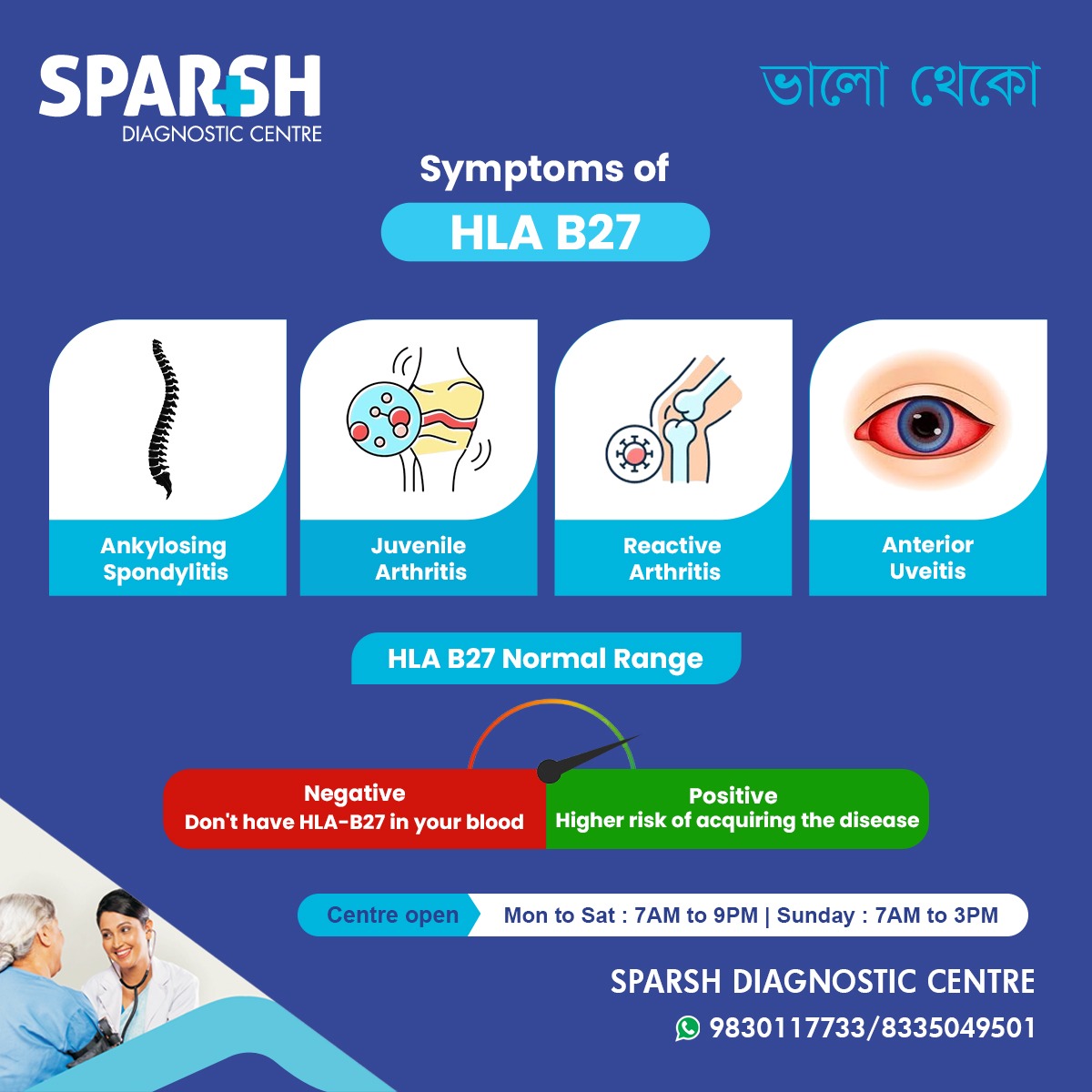
Doctors often use the HLA-B27 test as a supporting diagnostic tool, especially when symptoms suggest conditions like:
- Ankylosing spondylitis
- Reactive arthritis
- Juvenile idiopathic arthritis
- Psoriatic arthritis
- Anterior uveitis (eye inflammation)
It’s important to remember:
👉 Many people with HLA-B27 never develop any disease
👉 Some people without HLA-B27 can still develop these conditions
So, it’s a piece of the puzzle—not the whole picture.
HLA-B27 Positive vs Negative: What Does It Mean?
Negative
- The protein is not present in your blood
- Lower likelihood of associated autoimmune conditions
- Doesn’t completely rule out disease
Positive
- The protein is present
- Higher risk of certain inflammatory conditions
- Not a diagnosis on its own
In simple terms, a positive result indicates increased susceptibility—not certainty.
Conditions Associated with HLA-B27
Let’s explore the most common conditions linked to HLA-B27 in a bit more detail.
1. Ankylosing Spondylitis (AS)
This is the condition most strongly associated with HLA-B27.
- Chronic inflammation of the spine
- Leads to stiffness and reduced flexibility
- Symptoms often begin in early adulthood
- Can cause fusion of spinal bones over time
Common symptoms:
- Lower back pain (especially in the morning)
- Pain that improves with movement
- Fatigue
2. Reactive Arthritis
Reactive arthritis occurs after an infection—often in the gut or urinary tract.
- Joint pain and swelling
- Usually affects knees, ankles, and feet
- May include urinary symptoms or eye inflammation
3. Juvenile Idiopathic Arthritis (JIA)
A form of arthritis that affects children.
- Joint inflammation before age 16
- Can impact growth and mobility
- HLA-B27 is linked to specific subtypes
4. Psoriatic Arthritis
This type of arthritis is associated with psoriasis (a skin condition).
- Joint pain, stiffness, and swelling
- Skin plaques or nail changes
- Can affect any joint
5. Anterior Uveitis
This is inflammation of the eye and is surprisingly common in HLA-B27 positive individuals.
Symptoms include:
- Eye redness
- Pain
- Sensitivity to light
- Blurred vision
This condition requires urgent medical attention to prevent complications.
Common Symptoms Linked to HLA-B27 Conditions
While HLA-B27 itself doesn’t cause symptoms, the conditions associated with it often share overlapping signs:
Joint and Spine Symptoms
- Chronic lower back pain
- Stiffness, especially in the morning
- Pain that improves with activity
Joint Inflammation
- Swelling in knees, ankles, or hips
- Warm, tender joints
Eye Problems
- Redness
- Pain
- Light sensitivity
General Symptoms
- Fatigue
- Reduced mobility
- Difficulty maintaining posture
If you’re experiencing a combination of these symptoms, your doctor may recommend HLA-B27 testing.
Who Should Get Tested for HLA-B27?
You don’t need this test as part of routine health checkups. It’s typically recommended when there are specific symptoms or clinical suspicions, such as:
- Chronic unexplained back pain (especially before age 45)
- Recurrent eye inflammation
- Family history of autoimmune arthritis
- Persistent joint pain without clear cause
Doctors usually combine the test with other evaluations like:
How Is the HLA-B27 Test Done?
The test is simple and straightforward.
- A small blood sample is taken from a vein
- No fasting is required
- Results are usually available within a few days
It’s a one-time genetic test, since your HLA type doesn’t change over time.
Is HLA-B27 Common?
Yes, but it varies by population.
- Around 6–8% of people worldwide carry HLA-B27
- Not all of them develop disease
- Prevalence is higher in certain ethnic groups
Interestingly, only a small percentage of HLA-B27 positive individuals go on to develop conditions like ankylosing spondylitis.
What Causes HLA-B27-Related Diseases?
The exact mechanism isn’t fully understood, but researchers believe:
- The HLA-B27 protein may misfold, triggering an abnormal immune response
- It may present harmful signals to immune cells
- Environmental factors (like infections) may act as triggers
So, it’s usually a combination of genetics + environment.
Can HLA-B27 Conditions Be Treated?
Yes—and early diagnosis makes a big difference.
Treatment options may include:
Medications
- Nonsteroidal anti-inflammatory drugs (NSAIDs)
- Disease-modifying drugs (DMARDs)
- Biologic therapies (target immune pathways)
Lifestyle Changes
- Regular exercise
- Posture correction
- Stretching and physiotherapy
Eye Care
- Steroid eye drops (for uveitis)
- Regular ophthalmology check-ups
The goal is to control inflammation, relieve symptoms, and prevent long-term damage.
Living with HLA-B27: What You Should Know
If you test positive, don’t panic.
Here’s the reality:
- You may never develop any disease
- Awareness helps you catch symptoms early
- Regular follow-ups can prevent complications
Focus on maintaining a healthy lifestyle, staying active, and seeking medical advice if symptoms appear.
When Should You See a Doctor?
You should consult a healthcare professional if you notice:
- Persistent back pain lasting more than 3 months
- Morning stiffness that improves with movement
- Recurrent eye redness or pain
- Unexplained joint swelling
Early evaluation can make a significant difference in long-term outcomes.
FAQs About HLA-B27
1. Is it a disease?
No, it’s a genetic marker—not a disease. It only indicates increased risk for certain conditions.
2. Can you live a normal life with it?
Absolutely. Many people with HLA-B27 live completely healthy lives without ever developing symptoms.
3. Does a positive result mean I will get arthritis?
No. It only increases the risk—it doesn’t guarantee disease.
4. Is it hereditary?
Yes, it can run in families. If a close relative has it, your chances may be higher.
5. Can it be cured or removed?
No, it’s part of your genetic makeup. However, associated conditions can be effectively managed.
6. What is the normal range of HLA-B27?
There’s no “range.” The test result is simply:
- Positive (present)
- Negative (absent)
7. Should I get tested even without symptoms?
Usually not. Testing is recommended only when symptoms or medical history suggest a need.
8. Can lifestyle changes reduce risk?
While you can’t change genetics, staying active, maintaining good posture, and managing inflammation can help reduce complications.
Final Thoughts
HLA-B27 is one of those medical terms that can sound overwhelming at first—but once you understand it, it becomes much less intimidating.
It’s simply a genetic marker that may increase your risk for certain inflammatory conditions. The key takeaway? A positive result is not a diagnosis—it’s just a clue.
If you’re experiencing symptoms or have concerns, the best step is to consult a healthcare provider who can evaluate your overall health—not just a single test result.
To consult a Doctor at Sparsh Diagnostic Centre, call our helpline numbers 9830117733/ 8335049501.
#BhaloTheko
Disclaimer:
No content on this site, regardless of date, should ever be used as a substitute for direct medical advice from your doctor or other qualified clinician.