


Loose motion, commonly called diarrhea, is something most people experience at some point. It can happen after eating contaminated food, drinking unsafe water, picking up a stomach infection, taking certain medicines, or simply because your digestive system has reacted badly to something you ate.
Most short-term episodes settle within a few days. However, diarrhea should not be ignored because repeated watery stools can cause significant loss of water and electrolytes. In some people, particularly young children, older adults and those with certain medical conditions, dehydration can become serious.
The good news is that most uncomplicated cases can be managed at home with adequate fluids, oral rehydration solution (ORS), rest and appropriate food.
What is loose motion?
Loose motion means passing stools that are softer, looser or more watery than usual. Diarrhea is generally defined as passing loose or watery stools three or more times a day, or more frequently than is normal for you. It may also cause abdominal cramps, an urgent need to use the toilet, nausea and sometimes vomiting.
Loose motion can be acute, lasting a relatively short time, or persistent and chronic when it continues for longer periods. The cause matters because treatment for an infection is different from treatment for conditions such as lactose intolerance, irritable bowel syndrome or inflammatory bowel disease.
What is the main cause of loose motions?
The most common causes of acute diarrhea are viral gastroenteritis, food poisoning and medication side effects.
Viral infections can cause sudden watery stools along with nausea, vomiting, abdominal cramps and sometimes fever. Food poisoning may occur after consuming food or water contaminated with bacteria, viruses or parasites.
Other possible causes include:
- Bacterial or parasitic infections
- Contaminated food or drinking water
- Sudden dietary changes
- Food intolerance, such as lactose intolerance
- Certain food allergies
- Antibiotics and some other medicines
- Excessive intake of alcohol or caffeine
- Irritable bowel syndrome
- Inflammatory bowel diseases such as Crohn’s disease or ulcerative colitis
- Celiac disease
- Problems affecting digestion or absorption
If diarrhea keeps returning or continues for a long time, it is important to look beyond a simple stomach infection.
Is loose motion good or bad?
Loose motion is not usually considered good for the body, although it can be the body’s response to an infection or irritating substance in the digestive tract.
Diarrhea may help move infectious organisms or irritants out of the intestines, but repeated watery stools also cause the body to lose water and electrolytes. That is why the biggest immediate concern during diarrhea is dehydration.
So, rather than trying to completely suppress every episode immediately, the priority should be to replace lost fluids and electrolytes while allowing the underlying cause to resolve.
How do you treat loose motion?
Treatment depends on the cause and severity, but for most uncomplicated acute diarrhea, the first step is rehydration.
1. Drink plenty of fluids
Take frequent small sips of water throughout the day. If you feel nauseated, drinking a large amount at once may be difficult, so small, frequent sips can be easier.
2. Use ORS
Oral rehydration solution (ORS) is one of the most useful treatments for diarrhea because it replaces both fluid and electrolytes lost through watery stools. Commercial ORS is generally preferable because it contains the appropriate balance of glucose and electrolytes.
3. Continue eating
You generally do not need to completely stop eating. Once you feel able to eat, choose light, easily tolerated foods and gradually return to your normal diet as symptoms improve.
4. Avoid foods that aggravate symptoms
Very fatty, spicy or heavily processed foods may make symptoms worse. High-fibre foods can also be harder to tolerate during an acute episode.
5. Medicines should be used carefully
Some adults may use anti-diarrheal medicines for symptom relief, but these are not appropriate for every situation. For example, people with bloody diarrhea or fever should seek medical advice rather than simply trying to stop bowel movements with medication.
Antibiotics should not be taken automatically. They only help certain bacterial or other infections and can sometimes cause or worsen diarrhea themselves.
How can I stop diarrhea quickly?
There is no guaranteed home remedy that will stop diarrhea instantly.
The quickest safe approach is usually to replace lost fluids and electrolytes, especially with ORS, rest, and eat small amounts of bland, easily tolerated food. Most acute diarrhea improves on its own over a few days.
For adults, an appropriate anti-diarrheal medicine may sometimes reduce symptoms temporarily, but it should not be used indiscriminately. Blood in the stool, high fever, severe abdominal pain or significant dehydration requires medical evaluation.
How many days is loose motion normal?
A short episode of diarrhea caused by a common stomach infection often settles within a few days.
However, there is no single number of days that is “normal” for everyone.
Adults should contact a doctor if diarrhea lasts more than two days, particularly if it is severe, accompanied by other concerning symptoms, or not improving.
Diarrhea lasting longer or repeatedly returning may require investigation to identify an infection, food intolerance, medication effect or digestive disorder.
What foods help with loose motion?
When you have diarrhea, focus on foods that are relatively simple, easy to digest and not excessively fatty or spicy.
Some useful options include:
- Bananas
- Plain rice
- Rice porridge or rice water
- Toast or plain bread
- Plain crackers
- Boiled potatoes
- Plain oatmeal
- Applesauce or cooked apple
- Plain yogurt or curd, if tolerated
- Well-cooked vegetables
- Clear soups or broths
- Well-cooked eggs
These foods do not literally “stop” diarrhea like a medicine. Rather, they can provide energy and nutrients without placing excessive stress on the digestive system.
Eating small meals several times a day may be easier than eating a large meal while your stomach is unsettled.
Is curd good for diarrhea?
Curd can be a reasonable food during diarrhea if you tolerate dairy well.
Plain curd or yogurt containing live cultures may be helpful for some people because probiotics can support the gut microbiome. Some dietary guidance also suggests probiotic yogurt products may help shorten an episode of diarrhea.
However, curd is not a cure for diarrhea. Some people temporarily become more sensitive to lactose after an intestinal infection, in which case dairy may increase bloating or loose stools.
Choose plain, unsweetened curd rather than heavily sweetened or flavoured yogurt.
Are bananas good for loose motion?
Yes. Bananas are generally a good food choice during loose motion.
They are soft, easy to eat and provide carbohydrates and potassium. Since diarrhea can cause electrolyte losses, potassium-containing foods can be useful as part of an overall recovery diet.
A banana is particularly convenient as a snack or part of a simple breakfast. However, bananas should complement—not replace—ORS and other fluids.
Which fruit is anti-diarrhea?
There is no fruit that can be considered a proven anti-diarrhea medicine.
Among fruits, banana is one of the most commonly recommended choices because it is easy to digest and provides potassium. Cooked apple or applesauce may also be easier to tolerate than raw fruit during an acute episode.
It is generally better to avoid large amounts of fruit juice during diarrhea. Fruit juice contains sugars that can sometimes worsen diarrhea, and the NHS specifically advises avoiding fruit juice and fizzy drinks during diarrhea.
What are 12 foods that help during diarrhea?
If you’re looking for a practical list, consider these 12 options:
- Banana
- Plain white rice
- Rice porridge
- Plain toast
- Plain bread
- Boiled potato
- Oatmeal
- Applesauce or cooked apple
- Plain curd or yogurt, if tolerated
- Clear vegetable or chicken soup
- Well-cooked carrots
- Well-cooked eggs
You don’t have to eat all 12. Choose whatever you tolerate comfortably and increase your food intake gradually as your appetite returns.
Can I eat eggs during diarrhea?
Yes, well-cooked eggs can usually be eaten during diarrhea if you tolerate them.
Boiled or lightly prepared eggs are generally preferable to eggs cooked with large amounts of butter, oil or spicy sauces.
Avoid raw or undercooked eggs, particularly when food poisoning is a possibility. Foodborne infections can themselves cause diarrhea, and raw or undercooked foods may carry a higher infection risk.
What is the best breakfast for diarrhea?
A simple breakfast can be:
- One banana
- Plain toast or soft white bread
- Plain oatmeal or rice porridge
- A small portion of plain curd if tolerated
- Water or ORS as appropriate
You could also have a boiled egg if you feel hungry and tolerate it.
The key is to keep breakfast light, low in fat and easy to digest rather than forcing yourself to eat a heavy meal.
Can I eat salad if I have diarrhea?
It is generally better to avoid raw salads during an acute episode of diarrhea, particularly if you are unsure about the cleanliness of the produce or the source of the water used to wash it.
Raw vegetables can also be harder to digest when your digestive system is irritated. Cooked vegetables may be easier to tolerate. Dietary guidance from Guy’s and St Thomas’ NHS Foundation Trust recommends cooking fruits and vegetables rather than eating them raw while managing diarrhea.
Once your bowel movements return to normal, you can gradually resume your usual diet.
What are some home remedies for diarrhea?
Several simple measures can help you manage diarrhea at home:
ORS
This is the most important home treatment for preventing dehydration.
Water and clear fluids
Drink regularly throughout the day. Small, frequent sips can be useful if you feel nauseated.
Rice or rice porridge
Plain rice is usually easy to digest and can provide energy without being too heavy.
Banana
Bananas provide carbohydrates and potassium and are generally easy to tolerate.
Plain curd
If dairy does not worsen your symptoms, plain curd or yogurt can be included.
Clear soup
Broths can provide both fluid and some nutrients.
Rest
Your body may be fighting an infection, so give yourself time to recover.
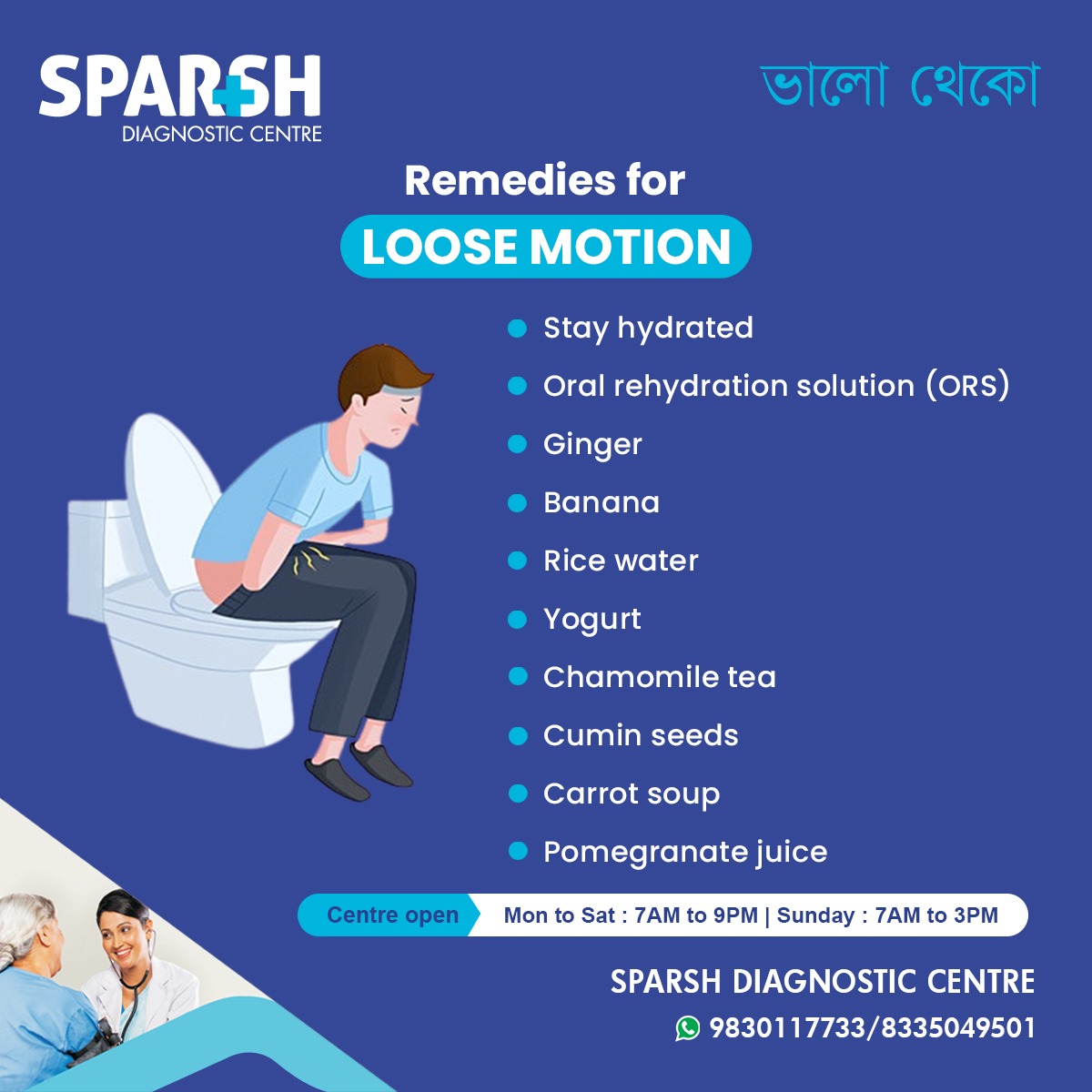
Some traditional remedies, such as ginger tea, cumin water or chamomile tea, may feel soothing for some people, but they should not replace ORS or medical treatment when needed. Evidence for these remedies as treatments that actually stop diarrhea is limited.
Similarly, carrot soup or pomegranate juice should not be considered substitutes for proper rehydration. Large quantities of fruit juice may actually aggravate diarrhea in some people.
What not to eat during diarrhea?
While you don’t necessarily need to follow a highly restrictive diet, certain foods are more likely to aggravate symptoms.
Try to avoid or limit:
- Fried foods
- Very spicy foods
- Greasy curries
- Heavy creamy foods
- Large amounts of sweets
- Fruit juice
- Fizzy drinks
- Alcohol
- Excessive caffeine
- Sugar-free products containing sorbitol or similar sugar alcohols
- Large amounts of raw vegetables
- Very high-fibre foods such as bran, nuts and beans during the acute phase
The exact triggers vary from person to person. As you recover, you can gradually return to your normal diet.
How can I prevent loose motion?
Many cases of infectious diarrhea can be prevented by improving food and water hygiene.
Wash your hands
Wash your hands thoroughly with soap and water after using the toilet and before preparing or eating food.
Drink safe water
Use clean, safe drinking water, particularly when travelling.
Cook food properly
Avoid undercooked meat, poultry, seafood and eggs.
Be careful with raw foods
Wash produce properly and be cautious about eating raw food in places where hygiene may be questionable.
Store food safely
Do not leave cooked food at unsafe temperatures for prolonged periods.
Avoid cross-contamination
Keep raw meat and seafood away from foods that are ready to eat.
Be cautious while travelling
Food and water contaminated with microbes can cause travelers’ diarrhea. Choosing safe food and drinking water can reduce the risk.
When should you see a doctor for loose motion?
Most mild cases improve without medical treatment, but some symptoms should never be ignored.
Seek medical attention if you have:
- Blood, pus or black, tarry stools
- Severe abdominal or rectal pain
- High fever
- Frequent vomiting
- Signs of dehydration
- Severe weakness, dizziness or fainting
- Six or more loose stools in one day
- Diarrhea lasting more than two days in an adult
- Difficulty drinking enough fluids or ORS
- Diarrhea that keeps recurring or becomes chronic
Signs of dehydration include excessive thirst, dry mouth, reduced urination, dark urine, tiredness, dizziness or lightheadedness.
Children, older adults, pregnant people and individuals with weakened immune systems or certain underlying conditions may need medical attention sooner because they can be more vulnerable to complications.
Frequently Asked Questions About Loose Motion
How do you treat loose motion?
The main treatment is replacing lost fluids and electrolytes. Drink plenty of fluids and use ORS to reduce the risk of dehydration. Eat small, simple meals when you can tolerate them and avoid foods that make symptoms worse. Most uncomplicated acute cases settle within a few days.
Is loose motion good or bad?
Loose motion is generally a symptom rather than something that is “good” or “bad.” It can occur when the body is responding to an infection or irritant, but prolonged diarrhea can cause dehydration and electrolyte loss.
What is the main cause of loose motions?
The most common causes of acute diarrhea are viral gastroenteritis, food poisoning and medication side effects. Other causes include food intolerance, allergies and digestive disorders.
How many days loose motion is normal?
A mild episode often settles within a few days. Adults should seek medical advice if diarrhea lasts more than two days, is severe, or is accompanied by warning signs such as blood in the stool, high fever or dehydration.
How can I stop diarrhea quickly?
There is no guaranteed instant cure. The most important immediate step is ORS and adequate fluid replacement. Depending on the cause, a doctor may recommend additional treatment.
What foods help with loose motion?
Bananas, plain rice, rice porridge, toast, oatmeal, boiled potatoes, cooked vegetables, clear soups, plain curd if tolerated and well-cooked eggs are among the foods that may be easier to tolerate.
Is curd good for diarrhea?
Plain curd may be suitable if you tolerate dairy. Yogurt containing probiotics may provide some benefit, but curd should not replace ORS or medical treatment when required.
Are bananas good for loose motion?
Yes. Bananas are generally easy to digest and provide potassium and carbohydrates, making them a practical food during diarrhea.
Which fruit is anti-diarrhea?
No fruit is a proven anti-diarrhea treatment. Banana is one of the better-tolerated choices, while large amounts of fruit juice should generally be avoided because they may worsen diarrhea.
What 12 foods stop diarrhea?
Foods do not necessarily “stop” diarrhea immediately. Helpful options include bananas, plain rice, rice porridge, toast, plain bread, boiled potatoes, oatmeal, cooked apples or applesauce, plain curd if tolerated, clear soup, cooked carrots and well-cooked eggs.
What should I not eat during diarrhea?
Avoid or limit fried and spicy foods, fatty meals, alcohol, excessive caffeine, fizzy drinks, fruit juice, large amounts of sweets and very high-fibre foods while symptoms are active.
Can I eat eggs during diarrhea?
Yes, well-cooked eggs can generally be eaten if you tolerate them. Avoid raw or undercooked eggs.
What is the best breakfast for diarrhea?
A light breakfast such as banana with plain toast, rice porridge or oatmeal can be a good choice. Plain curd or a well-cooked egg can be added if tolerated.
Can I eat salad if I have diarrhea?
It is usually better to avoid raw salad during the acute phase, particularly if hygiene or water quality is uncertain. Cooked vegetables are often easier to tolerate.
What stops diarrhea very fast?
There is no universally safe method that stops diarrhea immediately. ORS is the priority because it replaces lost fluid and electrolytes. Some medicines can reduce diarrhea in appropriate adults, but they are not suitable for every cause or every person.
How can I prevent loose motion?
Good hand hygiene, safe drinking water, proper food storage, thoroughly cooked food, careful handling of raw meat and good food hygiene can significantly reduce the risk of infectious diarrhea.
Final thoughts
Loose motion is common and, in many cases, temporary. The most important thing is not simply to stop every loose stool as quickly as possible—it is to prevent dehydration while your body recovers.
Start with ORS and adequate fluids, eat simple foods as tolerated, rest and avoid foods that aggravate your symptoms. Bananas, plain rice, toast, oatmeal, cooked vegetables and plain curd or yogurt when tolerated can fit into a recovery diet.
If diarrhea is severe, lasts longer than expected, keeps returning, or comes with blood in the stool, high fever, severe abdominal pain, repeated vomiting or dehydration, don’t rely on home remedies alone. Medical evaluation may be necessary to identify and treat the underlying cause.
For diagnostic testing and medical guidance, consult a qualified healthcare professional rather than self-treating persistent or severe diarrhea.
Sparsh Diagnostic Centre reminds everyone to prioritize hydration and health. Stay informed, act early, and consult your doctor if symptoms persist.
Need Help with Loose Motion?
Visit Sparsh Diagnostic Centre for expert consultation and diagnostic support.
📞 Call or WhatsApp: 9830117733 / 8335049501
🕘 Timings: Mon to Sat: 7 AM to 9 PM | Sunday: 7 AM to 3 PM
To consult a Gastroenterologist at Sparsh Diagnostic Centre, call our helpline number 9830117733.
#BhaloTheko
Disclaimer:
No content on this site, regardless of date, should ever be used as a substitute for direct medical advice from your doctor or other qualified clinician.


[…] 6. Loose Motions […]