Meningococcemia is a life-threatening bacterial infection caused by Neisseria meningitidis, a bacterium that can rapidly spread through the bloodstream. Unlike meningitis, which primarily affects the membranes surrounding the brain and spinal cord, meningococcemia leads to bloodstream infection (sepsis) and can progress swiftly to shock, organ failure, and death if not treated promptly.
Although relatively rare, meningococcemia is considered a medical emergency because symptoms can worsen within hours. Early recognition, timely diagnosis, and immediate antibiotic treatment are crucial for survival.
What Is Meningococcemia?
Meningococcemia is a severe infection of the bloodstream caused by the bacterium Neisseria meningitidis. Once the bacteria enter the blood, they multiply rapidly and release toxins that trigger an overwhelming inflammatory response. This response can damage blood vessels, cause abnormal clotting, and reduce blood flow to vital organs.
Meningococcemia may occur:
Alone, or
Along with meningococcal meningitis
Both conditions are collectively referred to as invasive meningococcal disease (IMD).
What Causes Meningococcemia?
The infection is caused by Neisseria meningitidis, also known as the meningococcus. Several serogroups (types) exist, but the most common disease-causing ones include:
Serogroup A
Serogroup B
Serogroup C
Serogroup W
Serogroup Y
How the Infection Spreads
The bacteria spread through respiratory droplets and close contact, such as:
Coughing or sneezing
Kissing
Sharing utensils, drinks, or cigarettes
Living in close quarters (hostels, dormitories, military camps)
Importantly, many people carry Neisseria meningitidis in their nose or throat without symptoms. In rare cases, the bacteria invade the bloodstream and cause severe disease.
Who Is at Risk of Meningococcemia?
While meningococcemia can affect anyone, certain groups are at higher risk:
Infants and young children
Adolescents and young adults
People with weakened immune systems
Individuals without a spleen (asplenia)
People with complement system disorders
Crowded living conditions
Unvaccinated individuals
Seasonal outbreaks are more common during winter and early spring.
Signs and Symptoms of Meningococcemia
Symptoms often begin suddenly and worsen rapidly. Early signs may resemble a flu-like illness, making early diagnosis challenging.
Early Symptoms
Cold hands and feet
Muscle aches
Progressive Symptoms
As the disease advances, symptoms may include:
Severe headache
Drowsiness or difficulty waking
Stiff neck
Pale or mottled skin
Cold extremities despite fever
Characteristic Rash
One of the hallmark signs of meningococcemia is a petechial or purpuric rash:
Small red, purple, or brown spots
Does not fade when pressed
Indicates bleeding under the skin
Suggests advanced disease and sepsis
Late and Dangerous Signs
Confusion or altered consciousness
⚠️ Any suspicion of meningococcemia requires immediate medical attention.

Difference Between Meningococcemia and Meningitis
| Feature | Meningococcemia | Meningococcal Meningitis |
|---|---|---|
| Primary site | Bloodstream | Brain & spinal cord |
| Rash | Common | Less common |
| Shock | Very common | Less common |
| Neck stiffness | May occur | Prominent |
| Speed of progression | Extremely rapid | Rapid |
Both conditions may occur together and are equally dangerous.
How Is Meningococcemia Diagnosed?
Early diagnosis is essential but challenging due to rapid disease progression.
Diagnostic Tests
Blood Culture
Identifies Neisseria meningitidis
Confirms diagnosis
Blood Tests
Markers of infection and inflammation
Clotting profile
Polymerase Chain Reaction (PCR)
Detects bacterial DNA
Useful even after antibiotics are started
Lumbar Puncture
Performed if meningitis is suspected
Examines cerebrospinal fluid (CSF)
At diagnostic centres like Sparsh Diagnostic Centre, rapid laboratory testing plays a vital role in early detection and management.
Treatment of Meningococcemia
Meningococcemia is a medical emergency requiring immediate hospitalisation.
Antibiotic Therapy
Broad-spectrum intravenous antibiotics are started immediately
Common antibiotics include:
Ceftriaxone
Cefotaxime
Penicillin (if sensitivity confirmed)
Treatment begins before test results to avoid delays.
Supportive Care
Patients may require:
Intravenous fluids
Oxygen therapy
Blood pressure support
Mechanical ventilation (in severe cases)
Treatment in an intensive care unit (ICU)
Management of Complications
Treatment of shock
Management of clotting abnormalities
Organ support if failure occurs
Possible Complications of Meningococcemia
Even with prompt treatment, meningococcemia can cause serious complications:
Disseminated intravascular coagulation (DIC)
Limb ischemia and amputations
Hearing loss
Neurological damage
Death
Survivors may require long-term follow-up and rehabilitation.
Prevention of Meningococcemia
Vaccination
Vaccination is the most effective way to prevent meningococcal disease.
Common meningococcal vaccines protect against:
Serogroups A, C, W, and Y
Serogroup B (separate vaccine)
Vaccination is recommended for:
Infants and children (as per national schedule)
Adolescents
College students
Travelers to high-risk areas
Immunocompromised individuals
Antibiotic Prophylaxis for Close Contacts
People who have been in close contact with an infected individual may receive preventive antibiotics, such as:
Rifampicin
Ciprofloxacin
Ceftriaxone
General Preventive Measures
Avoid sharing personal items
Maintain good hygiene
Seek early medical care for sudden fever and rash
Ensure timely vaccination
When to Seek Medical Help
Seek immediate medical attention if someone develops:
Sudden high fever
Rapidly worsening illness
Severe headache or neck stiffness
Drowsiness or confusion
A rash that does not fade on pressure
Early treatment saves lives.
Frequently Asked Questions (FAQs)
1. Is meningococcemia contagious?
Yes, the bacteria can spread through close contact, but the disease itself is not easily transmitted without prolonged exposure.
2. How fast does meningococcemia progress?
Symptoms can worsen within hours, making early diagnosis critical.
3. Can meningococcemia occur without meningitis?
Yes, meningococcemia can occur alone without brain involvement.
4. Is the rash always present?
No, but when present, it is a serious warning sign of advanced disease.
5. Can adults get meningococcemia?
Yes, although infants and adolescents are at higher risk, adults can also be affected.
6. Is meningococcemia curable?
Yes, with early and aggressive treatment, many patients recover fully.
7. How effective are meningococcal vaccines?
Vaccines are highly effective in preventing most serious infections.
8. Can vaccinated people still get meningococcemia?
Rarely, but illness is usually milder in vaccinated individuals.
9. What tests confirm meningococcemia?
Blood culture and PCR testing are the most reliable diagnostic methods.
10. Is meningococcemia fatal?
It can be fatal if untreated, but early intervention significantly improves survival.
Meningococcemia is a rapidly progressing and potentially fatal bacterial infection that requires immediate medical attention. Awareness of early symptoms, access to prompt diagnostic testing, and timely treatment are crucial in preventing severe complications and death.
Vaccination remains the most powerful tool for prevention, while diagnostic centres like Sparsh Diagnostic Centre play a vital role in early detection and management. If you or a loved one experiences sudden fever, rash, or altered consciousness, seek emergency care without delay.
#BhaloTheko
Disclaimer:
No content on this site, regardless of date, should ever be used as a substitute for direct medical advice from your doctor or other qualified clinician.
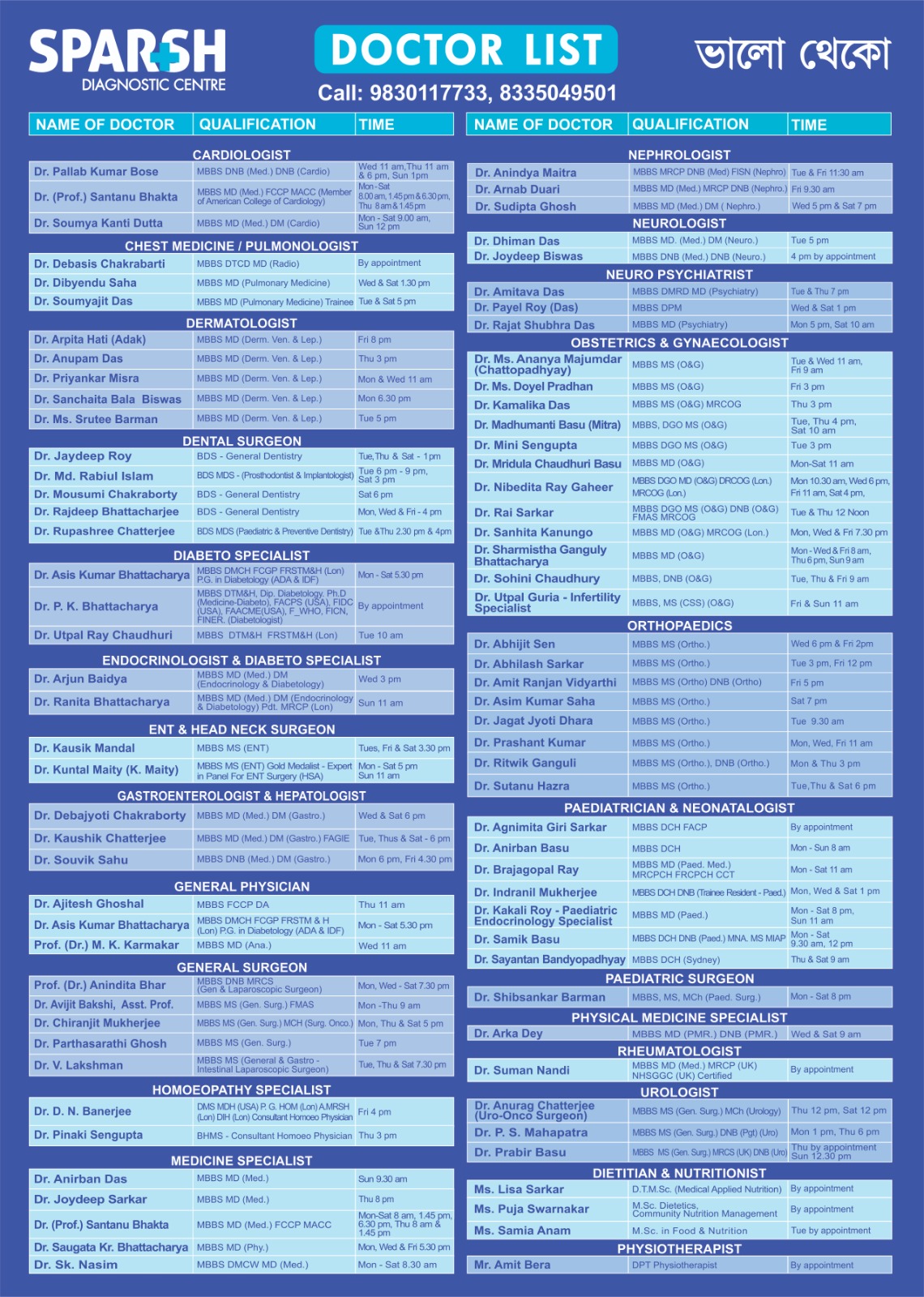
Sparsh Diagnostic Centre Doctor List