When doctors need to understand how much insulin your body is producing, they often recommend a C Peptide Test. Although this test isn’t as commonly discussed as blood sugar or HbA1c tests, it plays a crucial role in diagnosing and managing diabetes and certain pancreatic conditions.
The test measures the level of C-peptide in your blood, which gives healthcare providers valuable insights into your body’s insulin production. Whether you’re newly diagnosed with diabetes, struggling with blood sugar control, or undergoing evaluation for pancreatic disorders, a C-peptide test can provide important answers.
If your doctor has advised you to get this test done, understanding its purpose and interpretation can help you feel more informed and confident about your health.
What Is a C-Peptide Test?
C-peptide, or connecting peptide, is a substance produced by the pancreas when insulin is made. Your body creates insulin in the form of a larger molecule called proinsulin. This molecule splits into two parts:
- Insulin
- C-peptide
Both are released into the bloodstream in equal amounts.
Since C-peptide remains in the blood longer than insulin, measuring it provides an accurate picture of how much insulin your pancreas is producing naturally.
A C Peptide Test is a blood test that determines the amount of C-peptide circulating in your bloodstream.
Why Is a C-Peptide Test Done?
Your doctor may recommend it for several reasons:
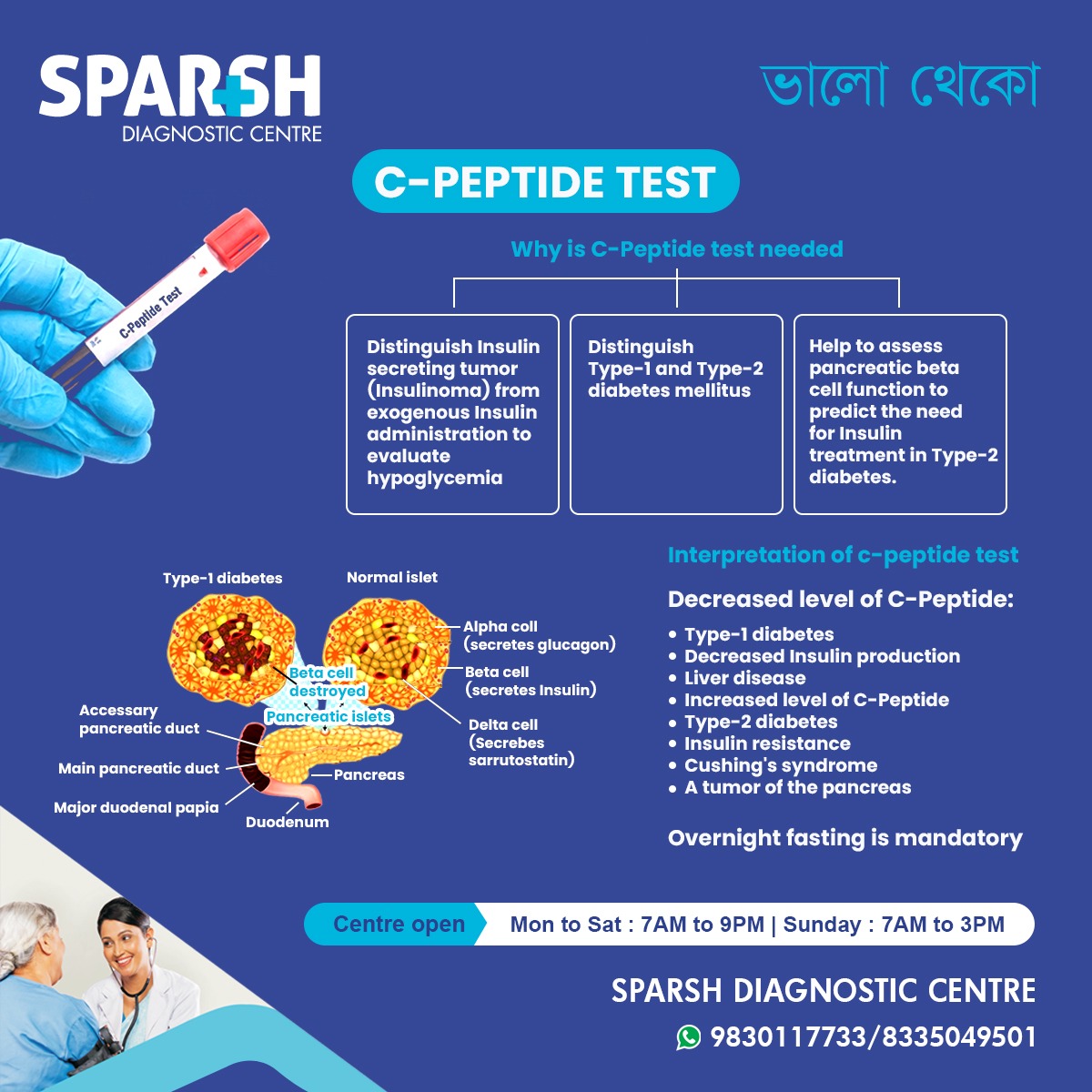
To Differentiate Between Type 1 and Type 2 Diabetes
People with Type 1 diabetes typically produce very little or no insulin, resulting in low C-peptide levels. Those with Type 2 diabetes usually produce insulin, especially in the early stages, leading to normal or high C-peptide levels.
To Evaluate Pancreatic Function
The test helps determine whether the pancreas is functioning properly and producing adequate insulin.
To Investigate Hypoglycemia
If you’re experiencing episodes of low blood sugar, a C-peptide test can help identify whether excessive insulin production is causing the problem.
To Monitor Insulin-Producing Tumors
The test can assist in diagnosing insulin-producing pancreatic tumors and evaluating treatment effectiveness.
To Assess Insulin Requirements
People who have had diabetes for many years may undergo C-peptide testing to determine how much insulin their body still produces naturally.
Who Should Get a C Peptide Test?
Your doctor may suggest this test if you:
- Have newly diagnosed diabetes
- Experience unexplained low blood sugar episodes
- Have difficulty controlling blood sugar levels
- Need to determine the type of diabetes you have
- Are suspected of having a pancreatic disorder
- Require assessment of insulin production
Many people searching for a Blood Test Near Me are surprised to learn that this test can provide essential information beyond routine glucose testing.
How Is the Test Performed?
The test is simple and quick.
Before the Test
Your doctor may ask you to fast for 8 to 12 hours before the blood sample is collected. However, fasting requirements may vary depending on the reason for testing.
During the Test
A healthcare professional will:
- Clean the area on your arm.
- Insert a needle into a vein.
- Collect a small blood sample.
- Send the sample to the laboratory for analysis.
The procedure usually takes only a few minutes.
What Is the Normal Range of C-Peptide?
Normal values may differ slightly between laboratories. In general, fasting levels usually range from:
0.5 to 2.0 nanograms per milliliter (ng/mL)
Your healthcare provider will interpret your results based on:
- Blood glucose levels
- Medical history
- Medications
- Presence of diabetes
- Other laboratory findings
What Does a Low C-Peptide Level Mean?
Low often indicate reduced insulin production by the pancreas.
Possible causes include:
Type 1 Diabetes
The immune system destroys insulin-producing cells, leading to very low or undetectable C-peptide levels.
Advanced Type 2 Diabetes
Some people with long-standing Type 2 diabetes eventually produce very little insulin.
Severe Pancreatic Disease
Conditions affecting the pancreas may impair insulin production.
Certain Medical Treatments
Some diabetes medications can influence insulin and C-peptide levels.
What Happens If C-Peptide Is High?
High levels generally indicate that your body is producing large amounts of insulin.
Possible causes include:
Type 2 Diabetes
Insulin resistance causes the pancreas to work harder and produce more insulin.
Obesity
Excess body weight often increases insulin production.
Insulin Resistance
The body’s cells do not respond effectively to insulin, resulting in elevated insulin and C-peptide levels.
Insulinoma
An insulin-producing pancreatic tumor can cause extremely high levels of insulin and C-peptide.
Certain Medications
Some drugs used to treat diabetes may raise C-peptide levels.
High C-peptide levels do not automatically indicate a serious problem. Your doctor will interpret the results alongside other tests and symptoms.
Is C-Peptide and HbA1c the Same?
No, C-peptide and HbA1c are completely different tests.
C-Peptide Test
Measures how much insulin your pancreas is producing.
HbA1c Test
Measures your average blood sugar levels over the previous two to three months.
Think of it this way:
- C-peptide tells us about insulin production.
- HbA1c tells us about long-term blood sugar control.
Doctors often use both tests together to gain a comprehensive understanding of diabetes.
Can Type 1 Diabetes Have Normal C-Peptides?
Yes, in some situations.
People with newly diagnosed Type 1 diabetes may still produce some insulin because not all insulin-producing cells have been destroyed. During this phase, known as the “honeymoon period,” C-peptide levels may remain normal or slightly reduced.
However, as the disease progresses, C-peptide levels usually decline significantly.
Therefore, a normal C-peptide result does not always rule out Type 1 diabetes.
Is C-Peptide a Tumor Marker?
C-peptide is not considered a traditional tumor marker.
However, it can help diagnose and monitor certain pancreatic tumors known as insulinomas.
Insulinomas produce excessive insulin, which raises both insulin and C-peptide levels. In such cases, the test provides important diagnostic information.
Even though it is useful in identifying insulin-producing tumors, C-peptide is not used as a general cancer screening marker.
How to Fix High C-Peptide?
Treatment depends entirely on the underlying cause.
Improve Diet
Eating a balanced diet rich in vegetables, whole grains, lean proteins, and fiber may improve insulin sensitivity.
Maintain a Healthy Weight
Weight loss often reduces insulin resistance and lowers insulin production.
Exercise Regularly
Physical activity helps the body’s cells respond more effectively to insulin.
Manage Diabetes Properly
Following your prescribed treatment plan can improve glucose control and reduce excessive insulin production.
Treat Underlying Conditions
If high C-peptide levels result from an insulin-producing tumor or another medical condition, specific treatment may be necessary.
It is important not to self-diagnose based solely on laboratory values. Consult your healthcare provider for proper evaluation and treatment recommendations.
What Is the Cost of a C Peptide Test?
The cost of a C-peptide test in India generally ranges between ₹1,500 to ₹2,000, depending on factors such as:
- Laboratory location
- Diagnostic centre facilities
- Whether fasting samples are required
- Additional tests ordered simultaneously
Prices may vary among laboratories and cities.
If you’re looking for a reliable Blood Test Kolkata service, choosing an accredited laboratory ensures accurate reporting and professional guidance.
Why Choose a Reputed Diagnostic Centre?
Laboratory quality can significantly impact test accuracy. Choosing the Best Diagnostic Centre in Kolkata offers several advantages:
- Experienced laboratory professionals
- Modern testing equipment
- Accurate and timely reporting
- Proper sample handling procedures
- Convenient appointment scheduling
- Comprehensive diagnostic services
Searching for a dependable Blood Test Near Me should involve considering quality standards, laboratory accreditation, and experienced medical staff rather than focusing solely on cost.
Preparing for Your C Peptide Test
To ensure accurate results:
- Follow fasting instructions if advised.
- Inform your doctor about all medications.
- Stay adequately hydrated.
- Avoid skipping prescribed medicines unless instructed.
- Carry previous laboratory reports if available.
Proper preparation can help ensure reliable and meaningful results.
Frequently Asked Questions (FAQs)
Is fasting required for a C Peptide Test?
In many cases, fasting for 8 to 12 hours may be recommended. However, your doctor will provide specific instructions based on your condition.
Can the C Peptide Test diagnose diabetes?
The test alone cannot diagnose diabetes. It is usually combined with other tests such as blood glucose and HbA1c.
How long does it take to get results?
Most laboratories provide reports within one day, although turnaround times may vary.
Is the test painful?
The procedure involves only a small needle prick and is generally well tolerated.
Can medications affect C-peptide levels?
Yes. Certain medications and insulin-related treatments may influence test results.
Can children undergo a C Peptide Test?
Yes. The test may be used in children to help diagnose and classify diabetes.
Can high C-peptide levels be reversed?
In many cases, lifestyle changes and proper diabetes management can improve insulin resistance and help lower elevated C-peptide levels.
Is the test safe?
Yes. It is a routine blood test with minimal risk.
The C Peptide Test is an important diagnostic tool that provides valuable information about your body’s natural insulin production. It helps doctors distinguish between different types of diabetes, evaluate pancreatic function, investigate episodes of low blood sugar, and identify certain pancreatic conditions.
Understanding your C-peptide levels can play a significant role in creating an effective treatment plan and improving long-term health outcomes.
If your doctor has recommended this investigation, choosing the Best Diagnostic Centre in Kolkata for your Blood Test Kolkata needs can ensure accurate results, reliable reporting, and a smooth diagnostic experience. When searching for a Blood Test Near Me, prioritize quality, expertise, and accredited laboratory services to receive the best possible care.
To consult a Doctor or get full body check-up done at Sparsh Diagnostic Centre, call our helpline numbers 9830117733/ 8335049501.
#BhaloTheko
Disclaimer:
No content on this site, regardless of date, should ever be used as a substitute for direct medical advice from your doctor or other qualified clinician.