


Rhinovirus infections are extremely common. In fact, rhinoviruses are the most frequent cause of the common cold and account for a substantial proportion of all cold illnesses. Most infections are mild and settle without specific treatment, but that does not mean rhinovirus should always be dismissed as “just a cold.” In babies, older adults, people with asthma, those with weakened immune systems, and people with other medical conditions, a rhinovirus infection can occasionally become more serious.
If you have symptoms such as sneezing, a runny or blocked nose, sore throat, cough, headache, mild fever or body aches, rhinovirus may be one possible cause. However, many other respiratory viruses can produce almost identical symptoms, so symptoms alone cannot reliably tell you which virus is responsible.
This guide explains what rhinovirus is, how it spreads, how long it lasts, whether antibiotics are necessary, how it is diagnosed, what you can do at home and when an infection requires medical attention.
What kind of infection is rhinovirus?
Rhinovirus is a viral infection of the respiratory tract. It belongs to the Picornaviridae family and is one of the main causes of the common cold.
The infection usually affects the upper respiratory tract, particularly the nose and throat. This is why a rhinovirus infection commonly causes a runny nose, sneezing, congestion, sore throat and cough.
Rhinoviruses can also affect the lower respiratory tract in some people. Complications can include bronchitis, bronchiolitis and pneumonia, particularly in vulnerable individuals. Rhinovirus is also an important trigger for asthma attacks.
There are many different rhinovirus types. This is one reason people can get rhinovirus infections repeatedly throughout their lives.
What are the symptoms of rhinovirus infection?
Rhinovirus symptoms can range from barely noticeable to uncomfortable. Some infected people have no symptoms at all.
Common symptoms include:
- Sneezing
- Runny nose
- Stuffy or blocked nose
- Sore throat
- Cough
- Headache
- Mild body aches
- Fever, particularly in children
- Fatigue
- Nasal congestion
- Ear pressure or discomfort
- Increased mucus production
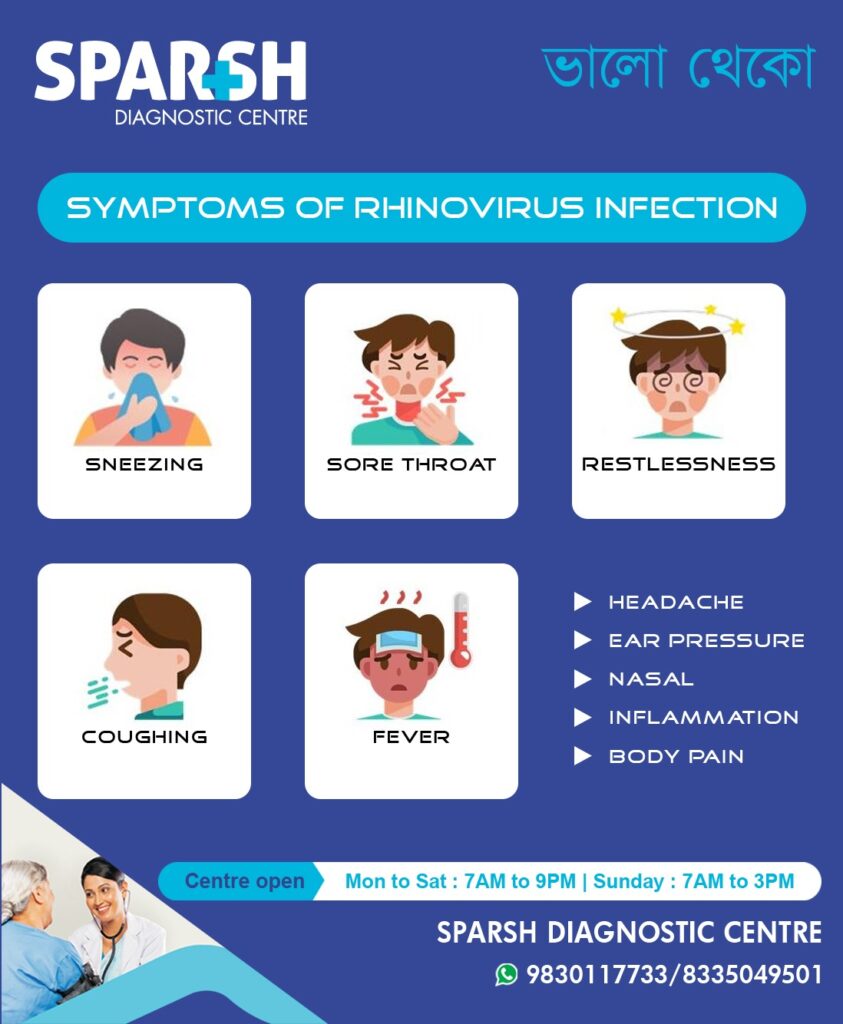
The symptoms shown in the accompanying creative—such as sneezing, sore throat, coughing, fever and headache—are typical respiratory symptoms associated with rhinovirus and other viral infections.
Because rhinovirus symptoms overlap with influenza, COVID-19, respiratory syncytial virus (RSV) and other infections, a symptom checklist cannot confirm rhinovirus by itself.
How does rhinovirus spread?
Rhinovirus is highly contagious and can spread readily from person to person.
The virus can spread through respiratory droplets and particles released when an infected person coughs, sneezes or talks. It can also spread when contaminated hands or surfaces come into contact with the eyes, nose or mouth.
For example, someone with a cold may sneeze into their hand, touch a door handle and leave viral particles behind. Another person may touch that surface and then touch their nose or eyes, giving the virus an opportunity to enter the body.
Close contact, crowded indoor environments and households can therefore make transmission easier.
Is rhinovirus very contagious?
Yes. Rhinovirus is very contagious. Common cold viruses spread particularly easily in households, schools, workplaces and other places where people are in close contact.
People can potentially spread a cold shortly before symptoms appear and remain contagious while they are ill. Cleveland Clinic notes that cold viruses may be spread for up to two weeks, although people are generally most contagious when symptoms are at their worst, particularly during the first few days.
The exact contagious period varies between individuals.
How long do rhinovirus infections last?
Most rhinovirus symptoms improve within about 7 days, although symptoms can sometimes continue for up to 2 weeks.
For adults, a typical uncomplicated infection may look something like this:
Days 1–3: Early symptoms such as throat irritation, sneezing, runny nose and congestion appear.
Days 4–7: Symptoms may become more noticeable or reach their peak. Cough, fatigue, headache and body aches can occur.
Days 8–10: Symptoms generally begin to settle.
After day 10: Most people are substantially better, although a cough or nasal symptoms can sometimes linger.
These are general patterns rather than strict stages. Not everyone follows exactly the same timeline. Cleveland Clinic describes common cold symptoms as early, active and late stages, with symptoms commonly improving by around days 8–10.
How long does rhinovirus last in adults?
In otherwise healthy adults, rhinovirus illness generally lasts around a week, although symptoms can persist for up to two weeks. A cough may sometimes last longer after the main infection has settled.
If symptoms continue beyond 10 days without improvement, become significantly worse, or improve and then return, it is worth speaking with a healthcare professional because another infection or complication may have developed.
What are the stages of rhinovirus?
There is no universally defined medical staging system for rhinovirus infection. However, because rhinovirus commonly causes the common cold, the illness can broadly be understood in three phases:
1. Early stage
The first few days may bring throat irritation, sneezing, nasal congestion and a runny nose.
2. Active stage
Symptoms can become more intense. Cough, headache, fatigue, mild fever and body aches may appear.
3. Recovery stage
Symptoms gradually improve. Nasal symptoms usually settle first, while cough or tiredness may sometimes remain for longer.
The timing varies considerably from person to person.
How is rhinovirus diagnosed?
In most people with a typical common cold, specific rhinovirus testing is not necessary. A healthcare professional can often make a clinical diagnosis based on symptoms and examination.
According to the CDC, healthcare providers typically do not test for rhinovirus. Testing may be considered when someone has severe illness or when identifying the responsible respiratory pathogen would affect medical management. Rhinovirus can be detected using molecular tests such as nucleic acid amplification tests (NAATs), including respiratory virus panels.
A nasal or respiratory swab may therefore be used in selected patients.
Testing can be particularly useful when doctors need to distinguish among respiratory infections in a hospitalized or high-risk patient.
What is the best treatment for rhinovirus?
There is currently no specific antiviral medicine that cures an uncomplicated rhinovirus infection. Treatment is mainly supportive, meaning the aim is to relieve symptoms while the immune system clears the infection.
Helpful measures include:
- Getting adequate rest
- Drinking plenty of fluids
- Using saline nasal drops or sprays for congestion
- Using a humidifier if the air is dry
- Drinking warm fluids to soothe the throat
- Using honey for cough in adults and children over 1 year
- Taking appropriate fever or pain-relieving medication when necessary
- Avoiding smoking and other respiratory irritants
The CDC recommends rest and plenty of fluids for rhinovirus infection.
If you have other medical conditions or take regular medicines, check with a healthcare professional before using over-the-counter cold medicines.
Why can’t rhinovirus be cured?
The phrase “can’t be cured” can sound alarming, but it simply means that there is no specific medicine that eliminates rhinovirus from the body immediately.
Your immune system normally clears the infection on its own. Because there are numerous rhinovirus types, developing one universal antiviral treatment is also challenging.
The good news is that most infections are self-limiting and resolve without complications.
Does rhinovirus infection need antibiotics?
No, uncomplicated rhinovirus infections do not need antibiotics.
Antibiotics treat bacterial infections, whereas rhinovirus is a virus. Taking antibiotics unnecessarily will not make a rhinovirus infection disappear faster.
Antibiotics may become appropriate if a doctor identifies a secondary bacterial infection, such as certain bacterial ear infections or bacterial pneumonia.
This distinction is important because unnecessary antibiotic use contributes to antibiotic resistance and can cause side effects.
How to cure rhinovirus naturally?
There is no proven natural remedy that instantly eliminates rhinovirus. However, several simple measures can support recovery and make you more comfortable.
Rest properly
Your body needs energy to mount an immune response. Avoid pushing yourself through significant fatigue.
Stay hydrated
Drink water and other suitable fluids regularly. Warm liquids may also make a sore throat or congestion feel more comfortable.
Eat nutritious foods
You do not need a special “rhinovirus diet.” Aim for normal, balanced meals containing vegetables, fruits, protein and whole grains as tolerated.
Use saline for nasal congestion
Saline nasal sprays or drops can help loosen mucus and make breathing through the nose easier.
Try honey for cough
For adults and children over 1 year of age, honey can help soothe coughing. Never give honey to a baby younger than 1 year.
Prioritise sleep
Good-quality sleep is particularly useful while recovering from any respiratory infection.
Be cautious about supplements marketed as cures. Evidence for many herbal products and supplements is limited, and “natural” does not automatically mean safe.
Can rhinovirus be bad?
Usually, rhinovirus is mild—but occasionally it can be serious.
The CDC notes that most infections are mild, while severe disease is more likely in people with weakened immune systems, asthma and certain underlying conditions.
Potential complications include:
- Asthma exacerbations
- Wheezing
- Bronchitis
- Bronchiolitis
- Pneumonia
- Sinus infections
- Middle-ear infections
- Worsening of existing respiratory disease
Premature infants, very young children, older adults and people with significant underlying disease may be more vulnerable to severe respiratory infections.
Can rhinovirus cause lung damage?
Rhinovirus can affect the lower respiratory tract and, in some cases, contribute to bronchitis, bronchiolitis or pneumonia.
However, permanent lung damage is not the usual outcome of an uncomplicated rhinovirus infection.
The risk becomes more concerning when a person has asthma, COPD, immune suppression or another condition that makes respiratory infections more dangerous.
Breathing difficulty, persistent chest pain, bluish lips or severe wheezing should never be dismissed as an ordinary cold.
Can you be hospitalized for rhinovirus?
Yes, although hospitalization is uncommon in otherwise healthy people with a mild infection.
Severe rhinovirus-associated respiratory illness can require hospital treatment, particularly in vulnerable patients. Studies of hospitalized adults have documented pneumonia, worsening chronic lung disease, intensive-care admissions and, in severe cases, death.
Hospital treatment may be needed when an infection causes significant breathing difficulty, low oxygen levels, pneumonia, severe asthma exacerbation, dehydration or other complications.
Has rhinovirus killed anyone?
Yes, severe rhinovirus-associated illness can be fatal, although this is uncommon compared with the enormous number of mild infections.
Deaths are generally associated with severe disease, complications or vulnerable patients rather than an ordinary uncomplicated cold. Research in hospitalized adults has documented deaths associated with severe rhinovirus infection, particularly among older adults and people with underlying medical conditions.
So the correct message is neither “rhinovirus is harmless” nor “rhinovirus is dangerous for everyone.” For most people it is mild; for a small subset, it can become serious.
Can rhinovirus cause heart failure?
Rhinovirus is not generally considered a primary cause of heart failure.
However, respiratory viral infections can place additional stress on people who already have cardiovascular disease. Rhinovirus/enterovirus has also been detected among patients hospitalized with cardiovascular and respiratory illnesses.
If someone with established heart failure develops a respiratory infection, symptoms such as worsening breathlessness, swelling, rapid weight gain or chest discomfort require medical assessment.
It is important not to confuse rhinovirus with other respiratory viruses for which cardiovascular complications are more clearly established.
Can rhinovirus cause kidney failure?
Kidney failure is not a typical complication of an uncomplicated rhinovirus infection.
Severe systemic illness, dehydration, low blood pressure or other complications can potentially affect kidney function, particularly in critically ill or medically vulnerable patients. But kidney failure should not be considered a routine consequence of rhinovirus.
If someone develops markedly reduced urine output, severe dehydration, confusion or other signs of serious illness, urgent medical evaluation is appropriate.
Which organ is affected by rhinovirus?
The respiratory tract is the primary system affected.
Rhinovirus most commonly infects the:
- Nose
- Nasal passages
- Throat
- Upper airways
In more severe cases, it can involve the lower respiratory tract, including the bronchi and lungs.
Is rhinovirus worse than COVID?
There is no simple answer because severity depends on the individual, the particular infection and the presence of risk factors.
For most healthy people, rhinovirus produces a common-cold-like illness and usually resolves without serious complications. COVID-19, on the other hand, can cause a broader range of illness and has historically been associated with substantially more severe disease and complications.
However, severe rhinovirus infections can occur, particularly in high-risk individuals. It is therefore not appropriate to assume that a positive rhinovirus result automatically means a harmless illness.
If respiratory symptoms are significant, testing for COVID-19, influenza or other infections may be appropriate depending on the clinical situation.
How many days of isolation are needed for rhinovirus?
There is no universal fixed number of isolation days specifically for rhinovirus.
Current CDC respiratory-virus guidance recommends staying home and away from others while respiratory symptoms are not improving. You can generally resume normal activities when, for at least 24 hours, your symptoms are improving overall and you have been free of fever without using fever-reducing medication. CDC then recommends taking additional precautions for the following 5 days, such as improving ventilation, practicing good hygiene, using a well-fitting mask and keeping some distance from others, especially around people at higher risk.
This is more practical than assuming that everyone with rhinovirus becomes completely non-contagious on a particular day.
How to recover faster from rhinovirus?
There is no guaranteed way to make rhinovirus disappear overnight, but you can give your body the best conditions for recovery.
Rest: Avoid exhausting workouts and unnecessarily long days while you are acutely unwell.
Hydrate: Drink enough fluids to avoid dehydration.
Manage symptoms: Saline nasal rinses or sprays, warm fluids and appropriate symptom-relief medicines can make the illness easier to tolerate.
Sleep well: Give yourself enough time to recover.
Avoid smoking: Smoke can irritate already inflamed airways.
Eat normally: Choose nutritious, easy-to-tolerate meals.
Do not self-prescribe antibiotics: They do not treat rhinovirus.
Most importantly, pay attention to the direction of your symptoms. Gradual improvement is reassuring. Symptoms that become significantly worse after initially improving deserve medical evaluation.
When should you see a doctor?
Most rhinovirus infections can be managed at home. However, medical advice is appropriate if:
- Symptoms last more than 10 days without improvement
- Symptoms improve and then become worse again
- Fever persists for several days
- You develop significant ear pain
- You develop chest pain
- You have difficulty breathing
- You experience severe wheezing
- You become dehydrated
- An existing asthma or chronic lung condition gets worse
- You are immunocompromised
- A very young child, older adult or medically vulnerable person becomes significantly unwell
The CDC specifically recommends medical evaluation for breathing difficulty, dehydration, prolonged fever, symptoms lasting more than 10 days or symptoms that initially improve and then worsen.
Emergency symptoms such as severe difficulty breathing or chest pain require urgent medical care.
How can rhinovirus infection be prevented?
You cannot eliminate the risk completely, but several everyday habits can reduce transmission.
- Wash your hands frequently with soap and water.
- Avoid touching your eyes, nose and mouth with unwashed hands.
- Cover coughs and sneezes.
- Avoid close contact with people who are sick.
- Clean frequently touched surfaces.
- Improve ventilation in indoor spaces.
- Stay home when you are ill.
- Consider wearing a well-fitting mask when recovering and around vulnerable people.
Because rhinovirus can spread before symptoms become obvious and while someone is recovering, good respiratory hygiene is useful throughout the illness.
Frequently Asked Questions About Rhinovirus Infections
Is rhinovirus the same as the common cold?
Not exactly. Rhinovirus is a virus, while the common cold is an illness. Rhinoviruses are the most frequent cause of the common cold, but more than 200 viruses can cause cold symptoms.
How long does rhinovirus last in adults?
Most adults recover within about 7 days, although symptoms can last up to 2 weeks. A cough may occasionally linger longer.
Does rhinovirus need antibiotics?
No. Rhinovirus is a viral infection, so antibiotics do not treat it. Antibiotics may only be required if a doctor identifies a secondary bacterial infection.
Can rhinovirus damage the lungs?
It can cause lower respiratory complications such as bronchitis, bronchiolitis and pneumonia, particularly in high-risk individuals. Permanent lung damage is not typical of an uncomplicated infection.
Can rhinovirus cause heart failure?
Rhinovirus is not normally a direct cause of heart failure. However, respiratory infections can place additional stress on people who already have heart disease or heart failure.
Can rhinovirus cause kidney failure?
Kidney failure is not a typical complication of rhinovirus. Severe illness or dehydration can affect kidney function in vulnerable patients, but this is uncommon.
Can rhinovirus be fatal?
Severe rhinovirus infections can contribute to hospitalization and, rarely, death, particularly among older adults and people with significant underlying conditions.
Can rhinovirus be hospitalized?
Yes. Although uncommon in healthy people, severe respiratory disease caused by rhinovirus can require hospitalization.
How contagious is rhinovirus?
Very contagious. It can spread through respiratory particles and contaminated hands or surfaces. People are generally most contagious during the early, symptomatic phase of illness.
How is rhinovirus diagnosed?
Most uncomplicated cases are diagnosed clinically without testing. In severe cases, a respiratory viral panel or molecular test can identify rhinovirus.
How long should I stay home with rhinovirus?
There is no specific mandatory rhinovirus isolation period for everyone. CDC guidance recommends staying home until your symptoms are improving overall and you have been fever-free without medication for at least 24 hours, followed by additional precautions for five days.
What is the best treatment for rhinovirus?
Supportive care is the main treatment. Rest, fluids and appropriate symptom relief are usually enough for an uncomplicated infection. There is currently no specific antiviral treatment that cures rhinovirus.
How can I recover faster from rhinovirus?
Rest adequately, stay hydrated, eat nutritious food, manage congestion and cough, avoid smoking and give your body time to recover. Avoid unnecessary antibiotics.
Final takeaway
Rhinovirus infections are extremely common and are responsible for many cases of the common cold. For most people, the infection is uncomfortable rather than dangerous and improves within about a week, although symptoms can sometimes last up to two weeks.
There is no specific cure or vaccine for rhinovirus, so treatment focuses on rest, hydration and controlling symptoms. Antibiotics do not treat rhinovirus unless a separate bacterial complication develops.
At the same time, rhinovirus should not always be dismissed as harmless. People with asthma, weakened immunity, chronic respiratory disease and other medical vulnerabilities can develop more serious complications, including lower respiratory tract infections and pneumonia.
If symptoms are unusually severe, last longer than expected, improve and then suddenly worsen, or are accompanied by breathing difficulty or chest pain, medical evaluation is important.
For diagnostic testing or evaluation of persistent respiratory symptoms, speak with a qualified healthcare professional rather than relying on symptoms alone.
To consult a Doctor at Sparsh Diagnostic Centre, call our helpline number 9830117733.
#BhaloTheko
Disclaimer:
No content on this site, regardless of date, should ever be used as a substitute for direct medical advice from your doctor or other qualified clinician.





[…] Viral Infections: Most cases of acute bronchitis are caused by viruses like influenza A and B or rhinovirus. […]
[…] almost everyone experiences, often multiple times a year. Caused by a viral infection, usually by rhinoviruses, the common cold affects the upper respiratory tract and brings familiar symptoms: a runny nose, […]
[…] Rhinovirus: A common cold virus that can exacerbate symptoms in young children. […]