

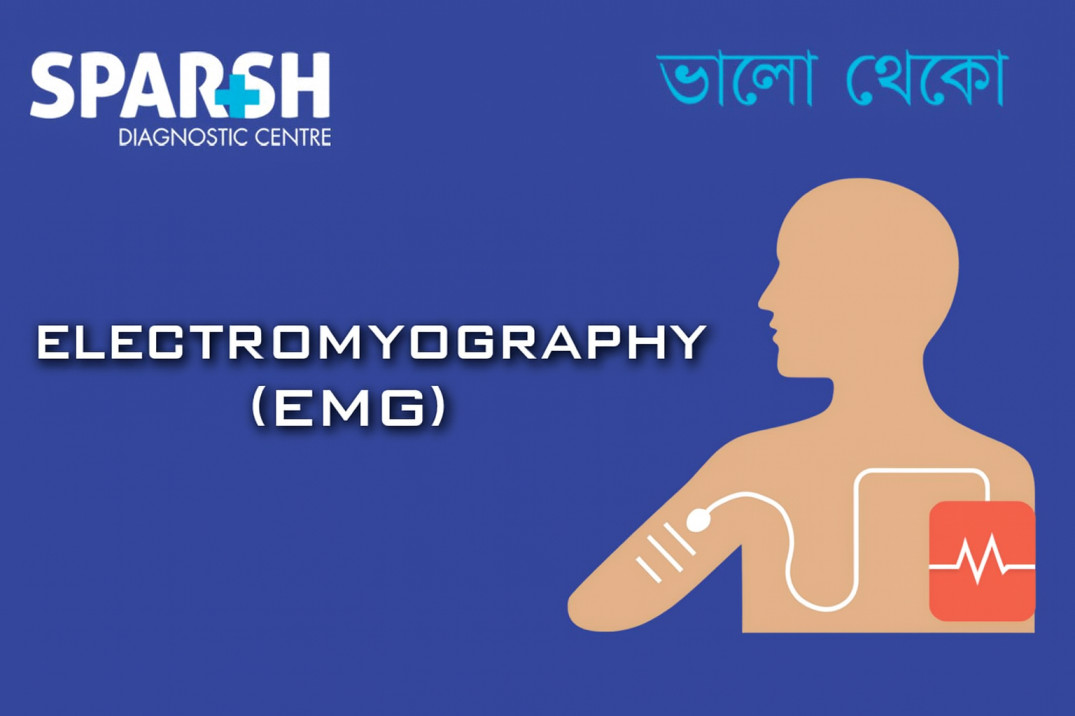
If you have been experiencing numbness, tingling, muscle weakness, twitching, cramps or unexplained pain, your doctor may recommend an electromyography (EMG) test. For many people, the word “needle” can make the test sound more intimidating than it actually is. In reality, EMG is a commonly performed electrodiagnostic test that helps doctors understand whether symptoms are coming from a problem involving the nerves, muscles, or the connection between them.
EMG is also frequently performed together with a nerve conduction study (NCS or NCV). While the nerve conduction portion assesses how electrical signals travel along nerves, needle EMG evaluates the electrical activity produced by muscles. Together, they can provide useful information about the location and nature of a neuromuscular problem.
At Sparsh Diagnostic Centre, Kolkata, EMG and NCS are used as part of neurological evaluation, and the two tests may be performed during the same session for a more complete assessment.
What is an EMG test?
Electromyography, or EMG, is a diagnostic test that records the electrical activity of muscles. Muscles produce electrical signals when they are activated. An EMG allows a trained healthcare professional to assess these signals when a muscle is relaxed and when it is contracted.
During a needle EMG, a very fine electrode is inserted into selected muscles. The electrical activity is displayed on a monitor and may also be converted into sounds that the examiner can hear. The healthcare professional may ask you to relax, gently contract or more strongly contract the muscle at different points during the test.
An EMG is different from an ECG. An ECG records the electrical activity of the heart, whereas an EMG assesses electrical activity in muscles.

EMG vs NCV: what is the difference?
The terms EMG and NCV are often used together, but they are not exactly the same test.
| Test | What it assesses | How it is performed |
|---|---|---|
| EMG | Electrical activity in muscles | Fine needle electrode placed into selected muscles |
| NCS/NCV | Speed and strength of signals travelling through nerves | Surface electrodes and mild electrical stimulation |
An NCS is generally performed before needle EMG when both are required. The combination can help distinguish a nerve problem from a muscle problem.
Why would a doctor order an EMG test?
A doctor may recommend an EMG when your symptoms suggest a problem involving your peripheral nerves, nerve roots, muscles or the communication between nerves and muscles.
Common symptoms that may lead to an EMG include:
- Persistent numbness
- Tingling or pins and needles
- Muscle weakness
- Muscle cramps
- Muscle twitching
- Unexplained muscle pain
- Loss of muscle function
- Symptoms suggesting a pinched nerve
- Difficulty walking or maintaining balance
The American Association of Neuromuscular & Electrodiagnostic Medicine notes that people may be referred for electrodiagnostic testing because of symptoms such as numbness, tingling, pain, weakness or muscle cramping.
An EMG can also help the doctor determine where the problem is located and whether the pattern is more consistent with a nerve disorder, muscle disorder or another neuromuscular condition.
What diseases can EMG diagnose?
EMG does not diagnose every neurological condition by itself, but it can provide important evidence when evaluating several disorders.
Conditions that may be investigated with EMG and/or NCS include:
- Carpal tunnel syndrome
- Peripheral neuropathy
- Radiculopathy, including some cases associated with sciatica
- Nerve compression or entrapment
- Certain nerve injuries
- Motor neuron disorders
- Myasthenia gravis
- Muscular dystrophies
- Inflammatory muscle disorders
- Certain inherited nerve disorders such as Charcot-Marie-Tooth disease
For example, EMG may help identify abnormalities associated with a nerve root problem, while NCS can provide information about how effectively signals travel through peripheral nerves.
Importantly, an EMG is usually interpreted alongside your symptoms, physical examination and other investigations. It is not a stand-alone diagnosis for every condition.
What is an EMG test on legs and feet used for?
An EMG and NCS of the legs and feet may be recommended when symptoms affect the lower limbs.
The test can help investigate:
- Numbness or tingling in the feet
- Burning sensations
- Leg weakness
- Muscle wasting
- Persistent leg pain
- Suspected peripheral neuropathy
- Sciatica or radiculopathy
- Nerve compression
- Certain muscle disorders
- Difficulty walking or unexplained balance problems
For example, if someone has persistent symptoms running from the lower back into the leg, an EMG/NCS may help determine whether a nerve is being affected and whether there is evidence of functional nerve or muscle involvement.
Is an EMG test very painful?
Usually, an EMG is uncomfortable rather than severely painful.
The needle used for EMG is very fine. You may feel a brief prick when it enters the skin and muscle. You may also experience some discomfort when the muscle is contracted while the needle is in position.
The level of discomfort varies from person to person and depends partly on which muscles are being examined. Johns Hopkins notes that there may be slight pain during needle insertion, while Cleveland Clinic states that most people can complete the test without significant difficulty.
If an NCS is performed, you may feel brief tingling or tapping sensations from the electrical stimulation.
Some people experience mild muscle tenderness or bruising afterwards, which generally settles on its own.
How many needles are inserted for an EMG test?
There is no fixed number of needles for every EMG.
The number depends on:
- Your symptoms
- Which nerves or muscles need to be evaluated
- The suspected condition
- Findings during the examination
- Whether one limb or several limbs are being assessed
Johns Hopkins notes that five or more needle insertions may be necessary in some examinations, but the actual number varies according to the individual assessment.
The needle is moved between selected muscles rather than left permanently in one place.
Can an EMG damage nerves?
An appropriately performed EMG is generally considered a low-risk procedure, and serious complications are uncommon.
A fine needle electrode is placed into selected muscles to record electrical activity. There is a small risk of bleeding, infection or nerve injury at the insertion site.
This does not mean that nerve damage is an expected consequence of an EMG. Proper technique, appropriate muscle selection and trained personnel are important.
Tell the healthcare professional before the examination if you take blood thinners, have a bleeding disorder, or have a pacemaker or implanted cardiac device. These factors may require specific precautions.
Is an EMG NCV test safe?
For most people, EMG and NCV are considered safe diagnostic tests.
NCV uses small electrical impulses delivered through electrodes placed on the skin. The stimulation may feel unusual or briefly uncomfortable, but it is controlled and localised. EMG involves a fine needle electrode inserted into selected muscles.
People with pacemakers, implantable cardioverter-defibrillators or other implanted electrical devices should inform the testing team before the examination so appropriate precautions can be taken.
Can an EMG affect your heart?
A routine EMG does not test or stimulate the heart. It records electrical activity in selected skeletal muscles.
However, if you have a pacemaker, implantable defibrillator or another implanted electrical device, tell the doctor or testing team before the examination. Special precautions may be required depending on the type of test and device.
An NCS also uses controlled electrical stimulation on peripheral nerves rather than intentionally stimulating the heart. NHS guidance notes that the electrical stimulation used during nerve conduction testing is localised and does not affect the heart.
What happens during an EMG test?
If you are having both tests, the NCS is commonly performed first.
During NCS:
- Small electrodes are placed on the skin.
- A nerve is stimulated with a brief electrical impulse.
- The response is recorded.
- The speed and strength of the signal are analysed.
During needle EMG:
- The skin is cleaned.
- A fine needle electrode is inserted into a selected muscle.
- The muscle is assessed while relaxed.
- You are asked to contract the muscle in specific ways.
- Electrical activity is recorded.
- The needle is removed and the process may be repeated in other muscles.
The entire examination may take around 30–60 minutes, although more extensive studies can take longer. Cleveland Clinic reports that EMG commonly takes about 60–90 minutes depending on how many muscles are examined.
How should you prepare for an EMG?
Preparation is usually straightforward.
Before your test:
- Wear comfortable, loose-fitting clothing.
- Keep the skin clean.
- Avoid applying creams, oils, lotions or perfumes to the areas being tested.
- Tell the doctor about your medicines.
- Inform the testing team if you take blood thinners.
- Tell them if you have a pacemaker or other implanted electrical device.
Fasting is generally not required unless your healthcare provider gives you different instructions.
What are the first signs of nerve damage?
The early symptoms of nerve problems can vary considerably depending on which nerves are affected.
Common warning signs include:
- Tingling or pins and needles
- Numbness
- Burning sensations
- Shooting or electric-shock-like pain
- Unexplained weakness
- Muscle twitching or cramps
- Reduced sensation
- Problems with balance
- Difficulty with fine movements
However, these symptoms do not automatically mean you have nerve damage. Similar symptoms can occur with muscle disorders, spinal problems, nutritional deficiencies and other medical conditions.
If symptoms persist, worsen or are accompanied by significant weakness, medical evaluation is appropriate.
Does EMG test for nerve damage?
Yes, but with an important distinction.
The EMG portion primarily assesses the electrical activity of muscles and can provide evidence of abnormalities resulting from nerve dysfunction. The NCS/NCV portion directly assesses how electrical signals travel through peripheral nerves.
That is why doctors frequently use EMG and NCS together. The combination can help identify the location and extent of nerve or muscle abnormalities.
How to know if EMG is abnormal?
An EMG is not considered abnormal simply because one number is higher or lower than something you found online.
The specialist interprets several features, including the electrical activity of the muscle when it is relaxed and the pattern of activity when the muscle contracts. Abnormal spontaneous activity or unusual electrical wave patterns can provide evidence of muscle or nerve dysfunction.
NCS results are interpreted using measurements such as:
- Conduction velocity
- Signal amplitude
- Latency
- Waveform characteristics
The expected values can vary according to the nerve tested, the body part examined and other patient factors.
What are normal EMG results?
In simple terms, a normal needle EMG generally shows appropriate electrical activity during muscle contraction and no abnormal spontaneous electrical activity when the muscle is at rest.
A normal result can make certain nerve or muscle disorders less likely, but it does not necessarily rule out every possible cause of symptoms.
Your report should therefore be interpreted in the context of your history, examination and other investigations rather than by looking at one number in isolation.
How to read EMG results?
EMG reports can be difficult to interpret without medical training because they contain technical terms and measurements.
Depending on the laboratory and study, the report may describe findings such as:
- Spontaneous activity
- Fibrillation potentials
- Positive sharp waves
- Motor unit action potentials
- Recruitment patterns
- Amplitude
- Duration
- Nerve conduction velocity
- Latency
The most useful question is not simply “Is my EMG positive?” but rather “What pattern does the report show, and what does it mean in relation to my symptoms?”
Your neurologist or the doctor who ordered the test can combine the findings with your examination and medical history to determine the significance of the result.
What happens when EMG is positive?
People often use the phrase “positive EMG” to mean that the test has detected an abnormality.
However, a positive or abnormal finding is not itself a final diagnosis.
The next step depends on what the EMG/NCS shows. Your doctor may recommend:
- Blood tests
- MRI or another imaging study
- Additional neurological assessment
- Medication
- Physiotherapy
- Management of an underlying condition
- Referral to another specialist
- Further electrodiagnostic testing
For example, an abnormal pattern suggesting nerve-root involvement may be considered alongside symptoms and spinal imaging. Similarly, evidence of peripheral neuropathy may prompt investigation for possible metabolic, nutritional, autoimmune or other causes.
What is the next step after EMG?
The next step is usually reviewing the report with the doctor who requested the examination.
If the results identify a specific abnormality, treatment focuses on the underlying cause rather than the EMG finding itself.
A normal study may also be useful because it can make certain neuromuscular disorders less likely and encourage the doctor to investigate other explanations for the symptoms.
EMG results are therefore best viewed as one piece of the diagnostic puzzle rather than the final answer.
Can an EMG give false results?
Like virtually every diagnostic test, EMG and NCS have limitations.
The accuracy of the examination can be affected by factors such as:
- The timing of the test
- Which nerves and muscles are examined
- The specific condition being investigated
- The severity of the problem
- Technical factors
- Temperature of the limbs during NCS
- The experience of the person performing and interpreting the study
A test can therefore be normal even when symptoms are real, particularly if the suspected condition is outside what the examination can detect or the timing is not appropriate.
Conversely, an abnormal finding does not automatically identify the exact cause of symptoms.
This is why electrodiagnostic testing should be interpreted alongside the clinical examination and other investigations.
How accurate is an EMG test?
There is no single accuracy percentage that applies to every EMG test.
Accuracy depends on what condition is being investigated, the nerves and muscles examined, the timing of the test and the expertise of the clinician interpreting the findings.
For this reason, EMG is most useful when the doctor has a specific clinical question and selects the appropriate nerves and muscles to examine. AANEM emphasises the importance of appropriate medical training in performing and interpreting electrodiagnostic studies.
How long do EMG test results take?
The testing itself is usually completed during the appointment, but the final interpretation and report may take additional time.
Cleveland Clinic states that results are typically available within 24–48 hours, although turnaround times can vary between diagnostic centres and depending on the complexity of the study.
If your doctor needs the results urgently, ask the diagnostic centre about its current reporting time when booking the examination.
What is the cost of an EMG test?
The price depends on what is being tested.
Factors that can affect the cost include:
- EMG alone vs EMG with NCV
- One limb vs both limbs
- Upper limbs vs lower limbs
- All four limbs
- Specialised studies
- The diagnostic centre
- Whether a specialist consultation is included
How much does an EMG test cost in Kolkata?
There is no single fixed EMG price across Kolkata.
For a current market reference, Tata 1mg listings in September 2026 show Kolkata prices of around ₹2,250 for NCV + EMG of both upper or both lower limbs, while an all-four-limb NCV + EMG listing is around ₹3,150. Other Kolkata providers list more extensive EMG/NCV studies at higher prices—for example, approximately ₹4,000–₹4,500 for lower-limb studies and ₹6,000–₹6,500 for four-limb studies.
These are market examples, not a fixed price for every centre. The exact cost at Sparsh Diagnostic Centre can depend on the examination advised and should be confirmed directly before booking.
Is EMG useful for leg pain or sciatica?
It can be, particularly when the doctor suspects that symptoms are related to a nerve or nerve root.
For example, a person with persistent pain radiating from the lower back into the leg, accompanied by numbness or weakness, may undergo EMG/NCS as part of the evaluation.
Importantly, EMG does not produce a picture of a compressed nerve. Imaging such as MRI may be needed to identify structural causes such as a disc problem. EMG instead provides information about functional nerve and muscle involvement.
When should you consider an EMG?
An EMG should generally be performed when a doctor believes the test can answer an important diagnostic question.
You may be referred for electrodiagnostic testing if you have:
- Persistent numbness or tingling
- Unexplained weakness
- Muscle wasting
- Recurrent muscle twitching or cramps
- Suspected carpal tunnel syndrome
- Suspected peripheral neuropathy
- Possible nerve compression
- Radicular symptoms
- Certain unexplained movement or muscle problems
The test is particularly useful when the symptoms and clinical examination suggest that the nerves or muscles may be involved.
Why choose Sparsh Diagnostic Centre for EMG and NCV in Kolkata?
Sparsh Diagnostic Centre provides NCS/NCV testing and EMG as part of neurological diagnostic evaluation. Its published information explains the difference between NCS and EMG and notes that the two may be performed during the same session.
The centre is located at 231/1, NSC Bose Road, Bansdroni, Kolkata, and publishes its current contact details and testing hours online.
If your doctor has advised an EMG or EMG-NCV study, it is useful to confirm which body parts need to be tested, whether both EMG and NCV are required, the preparation instructions and the current test fee before your appointment.
Frequently asked questions about EMG
Is an EMG test very painful?
Most people experience mild to moderate discomfort rather than severe pain. Needle insertion can cause a brief prick or discomfort, and the muscle may feel mildly sore afterwards.
What diseases can EMG diagnose?
It can help investigate peripheral neuropathy, carpal tunnel syndrome, radiculopathy, certain muscle diseases, motor neuron disorders and neuromuscular-junction disorders such as myasthenia gravis. It is interpreted alongside other clinical information.
What happens when EMG is positive?
A positive or abnormal EMG indicates that the study detected an abnormal electrical pattern. Your doctor will determine what that finding means and whether further tests or treatment are required.
Why would a doctor order an EMG test?
Common reasons include unexplained weakness, numbness, tingling, muscle cramps, twitching, pain or suspected nerve compression or neuropathy.
Can an EMG damage nerves?
EMG is generally safe. Nerve injury is a possible but uncommon complication of needle insertion.
How long do EMG test results take?
Turnaround varies, but some centres provide reports within 24–48 hours. Cleveland Clinic gives 24–48 hours as a typical timeframe.
What is the cost of an EMG test?
The price depends on the number of limbs examined and whether NCV is included. Current Kolkata listings show substantial variation, so it is best to confirm the exact package before booking.
How do I know if my EMG is abnormal?
The interpreting specialist looks at electrical activity at rest and during muscle contraction, along with the NCS measurements when performed. An isolated number should not be interpreted without the laboratory’s reference ranges and clinical context.
How many needles are inserted for an EMG?
There is no standard number. Several muscles may be examined, and Johns Hopkins notes that five or more needle insertions may sometimes be required.
What is the next step after EMG?
Your doctor will interpret the report alongside your symptoms and examination. Depending on the findings, you may need imaging, blood tests, specialist review, treatment or further testing.
Can an EMG give false results?
EMG has limitations and can occasionally fail to detect a problem or show findings that need further interpretation. Timing, the condition being investigated and the muscles and nerves selected can all matter.
What are normal EMG results?
Normally, there should not be abnormal spontaneous electrical activity in a resting healthy muscle, and muscle activation should produce an appropriate electrical pattern.
How accurate is an EMG test?
There is no universal accuracy percentage. Its usefulness depends on the suspected condition, timing, muscles and nerves tested, and the expertise of the clinician performing and interpreting it.
What is an EMG test on legs and feet used for?
It may help investigate numbness, tingling, weakness, neuropathy, nerve compression, radiculopathy, unexplained leg pain and certain muscle disorders.
How do I read EMG results?
Look at the report together with your doctor rather than interpreting individual numbers independently. Terms such as latency, amplitude, conduction velocity, spontaneous activity and recruitment describe different aspects of nerve and muscle function.
What are the first signs of nerve damage?
Numbness, tingling, burning sensations, shooting pain, weakness, cramps, muscle twitching and balance problems can occur with nerve disorders. These symptoms can also have other causes.
Can an EMG affect your heart?
A routine EMG records skeletal muscle activity and does not test the heart. Patients with pacemakers or implanted cardiac devices should inform the testing team beforehand.
How much does an EMG test cost in Kolkata?
Current online listings show that prices vary according to the extent of testing. Examples include approximately ₹2,250 for both-limb NCV + EMG and ₹3,150 for all four limbs on Tata 1mg listings, while some specialist centres list more extensive studies at higher prices.
Is an EMG NCV test safe?
Yes. EMG and NCS are generally considered safe. Mild discomfort, temporary soreness or minor bruising can occur. Tell the testing team about blood-thinning medication or implanted electrical devices beforehand.
Does EMG test for nerve damage?
EMG assesses muscle electrical activity and can show changes associated with nerve dysfunction. NCS directly evaluates the speed and strength of electrical signals travelling through peripheral nerves. The two tests are often used together.
Final thoughts
An EMG can sound intimidating when you first hear that it involves a needle, but it is a well-established diagnostic examination that provides valuable information about how nerves and muscles are functioning.
The test can be particularly useful when symptoms such as numbness, tingling, weakness, muscle cramps or unexplained pain make it difficult to identify the underlying problem. In many cases, EMG is combined with an NCV/NCS test because the two examinations provide complementary information.
Most importantly, an EMG result should never be interpreted in isolation. A normal result does not necessarily explain every symptom, while an abnormal result does not automatically represent a particular disease. Your doctor considers the EMG findings together with your symptoms, physical examination, medical history and other investigations before deciding what happens next.
If you have been advised to undergo an EMG or EMG-NCV test in Kolkata, confirm the specific study required, the body parts to be examined, preparation instructions, reporting time and current price with the diagnostic centre before your appointment.
For accurate EMG testing and expert interpretation get in touch with Sparsh Diagnostic Centre. Our team of specialists ensure a safe, comfortable, and informative experience tailored to your health needs.
#BhaloTheko
Disclaimer:
No content on this site, regardless of date, should ever be used as a substitute for direct medical advice from your doctor or other qualified clinician.
Sources and further reading
- Cleveland Clinic – EMG (Electromyography)
- Johns Hopkins Medicine – Electromyography (EMG)
- Mayo Clinic – Electromyography (EMG)
- MedlinePlus – Electromyography and nerve conduction studies
- AANEM – FAQs before electrodiagnostic testing
- Sparsh Diagnostic Centre – Nerve conduction studies


[…] 3. Electromyography (EMG) […]
[…] 3. Electromyography (EMG) […]
[…] Electromyography (EMG): Evaluates nerve function and muscle response […]
[…] 4. Nerve Conduction Studies & EMG […]
[…] Electromyography (EMG) […]
[…] Myasthenia Gravis and Muscular Dystrophies (when used alongside EMG). […]
[…] tests for acetylcholine receptor antibodies, electromyography (EMG), nerve conduction studies, and imaging of the thymus […]
[…] 3. Electromyography (EMG) […]
[…] Electromyography (EMG): EMG is a key diagnostic tool for ALS. It measures the electrical activity of muscles and can reveal signs of nerve damage. A characteristic pattern of muscle denervation and reinnervation is often observed in ALS patients. […]
[…] Electromyography (EMG): Evaluates nerve and muscle function. […]
[…] Electromyography (EMG): Measures muscle electrical activity. […]
[…] 3. Electromyography (EMG) […]