


Carbon dioxide (CO2) is something your body produces naturally every time your cells use energy. Normally, your blood carries CO2 to the lungs, and you breathe it out. When the lungs cannot remove enough CO2, it begins to accumulate in the blood. This condition is called hypercapnia, also known as hypercarbia.
Mild or chronic hypercapnia may cause symptoms such as headaches, tiredness and breathlessness. A sudden or severe rise in CO2 can affect the brain and may cause confusion, disorientation, drowsiness, seizures or loss of consciousness. Acute hypercapnia can therefore be a medical emergency.
This guide explains what hypercapnia means, what causes high CO2 levels, how doctors diagnose it, which CO2 levels are concerning, whether hypercapnia can be reversed, and how it is treated.
What exactly is hypercapnia?
Hypercapnia is an abnormally high level of carbon dioxide in arterial blood. In clinical medicine, a PaCO2 above 45 mmHg is generally considered hypercapnia. PaCO2 refers to the partial pressure of carbon dioxide measured through a blood gas test.
CO2 is a normal waste product of metabolism. It travels through the bloodstream to the lungs, where it is removed during exhalation.
The problem occurs when the body produces more CO2 than the lungs can eliminate or, more commonly, when effective ventilation is reduced. Breathing that is too slow or too shallow can prevent adequate CO2 removal.
Hypercapnia can be:
- Acute: develops relatively quickly and may cause significant symptoms.
- Chronic: develops gradually, allowing the body to compensate to some extent.
- Acute-on-chronic: occurs when a person who already has chronic CO2 retention develops a sudden additional increase.
The distinction matters because someone with chronic lung disease may have a persistently elevated PaCO2 without having the same degree of acute illness as someone whose CO2 has suddenly risen.
How does the body normally remove CO2?
Every cell in the body produces CO2 as part of normal metabolism. The bloodstream transports it to the lungs.
When you inhale, fresh air reaches the alveoli, the tiny air sacs where gas exchange occurs. When you exhale, CO2 moves from the blood into the alveoli and then out of the body.
Effective CO2 removal depends largely on alveolar ventilation — essentially, how much fresh air actually reaches the parts of the lungs involved in gas exchange.
If breathing becomes too slow, too shallow or otherwise ineffective, CO2 can accumulate. NCBI’s StatPearls review notes that PaCO2 is influenced by CO2 production and alveolar ventilation, with inadequate ventilation being central to hypercapnia.
What is hypercapnia vs hypoxia?
Hypercapnia and hypoxia are not the same thing.
Hypercapnia means there is too much CO2 in the blood.
Hypoxia refers to inadequate oxygen availability to the tissues. The related term hypoxemia specifically means a low level of oxygen in arterial blood.
A person can have:
- Hypercapnia without significant hypoxemia
- Hypoxemia without hypercapnia
- Both hypercapnia and hypoxemia
For example, some people with COPD can retain CO2 while their oxygen level remains relatively preserved, particularly in earlier or compensated disease. Conversely, several lung conditions can cause low oxygen without initially causing CO2 retention.
This is why a pulse oximeter alone cannot diagnose hypercapnia. Oxygen saturation tells you about oxygenation; it does not directly measure arterial CO2.
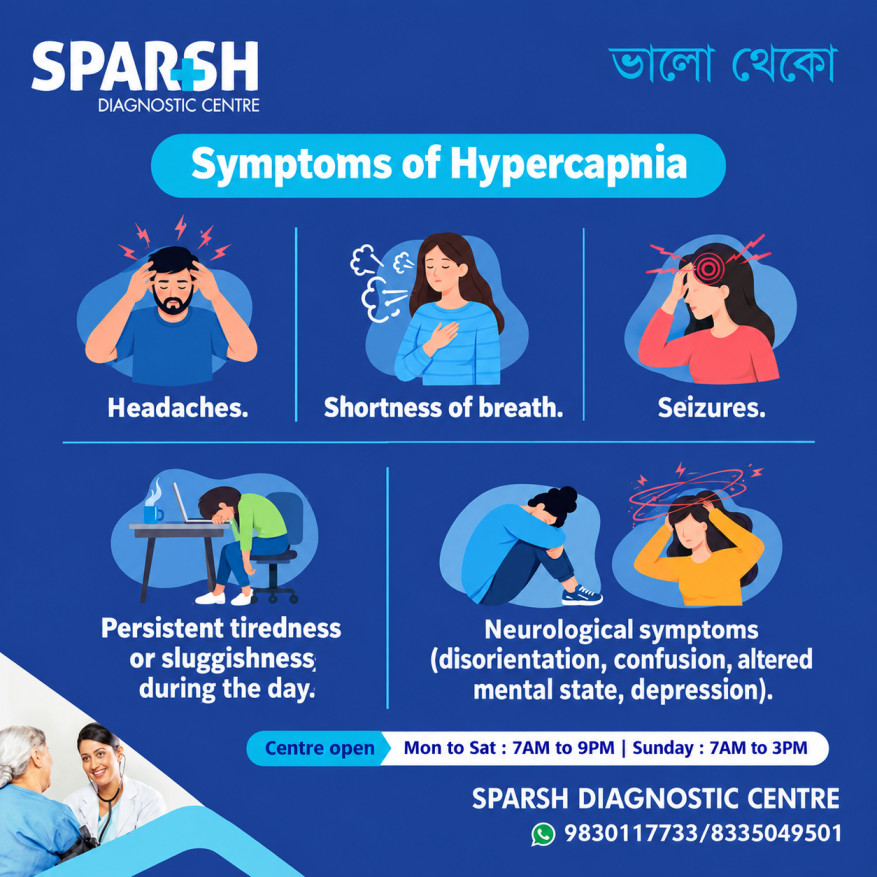
What are the symptoms of hypercapnia?
The symptoms depend on how high the CO2 level is, how quickly it has risen and whether the person has an underlying medical condition.
Common symptoms include:
- Headache
- Shortness of breath
- Persistent tiredness or sluggishness
- Difficulty concentrating
- Dizziness
- Flushed skin
- Nausea
- Irritability
- Sleepiness
- Confusion
More severe hypercapnia can cause:
- Disorientation
- Marked drowsiness
- Altered mental status
- Anxiety or unusual behaviour
- Muscle twitching
- Seizures
- Fainting
- Loss of consciousness
- Coma
These symptoms are broadly consistent with clinical descriptions from Cleveland Clinic and NCBI.
How do you feel when your CO2 is high?
There is no single feeling that proves your CO2 is elevated.
Some people may initially feel headachy, tired, sleepy, breathless or mentally foggy. Others may develop dizziness, nausea or difficulty concentrating. As CO2 rises further, confusion and reduced alertness can occur.
Importantly, symptoms alone cannot tell you your PaCO2. A blood gas test may be needed when hypercapnia is suspected.
What causes high CO2 in blood?
The most common mechanism is inadequate ventilation, meaning the lungs are not eliminating enough CO2.
Potential causes include:
COPD
Chronic obstructive pulmonary disease is an important cause of chronic CO2 retention. Airflow limitation, air trapping and changes in the lung’s gas-exchange system can make it difficult to eliminate CO2 effectively.
Severe asthma
A significant asthma exacerbation can interfere with effective ventilation and, in severe cases, contribute to CO2 retention.
Sleep apnea
Repeated interruptions or reductions in breathing during sleep can affect oxygen and CO2 balance. Sleep apnea is particularly relevant when hypercapnia occurs alongside obesity or other conditions affecting breathing.
Obesity hypoventilation syndrome
In some people with obesity, breathing may not be sufficient to eliminate the CO2 produced by the body. This can lead to chronic hypercapnia.
Neurological and muscular disorders
The brain, nerves and respiratory muscles all contribute to effective breathing. Conditions such as stroke, ALS, muscular dystrophy, myasthenia gravis and Guillain-Barré syndrome can interfere with ventilation.
Chest wall problems
Conditions that restrict the movement of the chest can make adequate ventilation difficult.
Certain medications and drug overdoses
Medicines that suppress the respiratory drive or cause excessive sedation can reduce breathing and contribute to CO2 retention.
Severe respiratory illness
Severe pneumonia, pulmonary problems, respiratory muscle fatigue and other conditions can sometimes result in inadequate ventilation.
Increased CO2 production
Fever, exercise, thyrotoxicosis, sepsis and other states can increase CO2 production. However, in a healthy person, the lungs generally compensate by increasing ventilation. Hypercapnia becomes more likely when the respiratory system cannot adequately increase CO2 elimination.
What is the most common cause of high CO2 levels in blood?
There isn’t one universal cause for every person, because hypercapnia is a syndrome rather than a single disease.
In clinical practice, chronic lung disease — particularly COPD — is an important cause. However, high CO2 can also result from sleep-disordered breathing, obesity hypoventilation, sedative or opioid effects, neuromuscular disorders and other conditions that reduce effective ventilation.
The underlying cause needs to be identified rather than simply treating the CO2 number.
What drugs cause hypercapnia?
Medications that suppress breathing can increase the risk of CO2 retention, particularly when taken in excessive doses or in combination with other sedating medicines.
Examples include:
- Opioids
- Benzodiazepines
- Other sedative medicines
- Certain drugs that significantly depress the central nervous system
Cleveland Clinic specifically identifies opioids and benzodiazepines as medications that can reduce respiratory drive and increase the risk of hypercapnia.
This does not mean that someone should stop a prescribed medication independently. If you suspect a medicine is contributing to breathing problems, discuss it with your doctor.
What CO2 level indicates hypercapnia?
For an arterial blood gas (ABG), a PaCO2 above 45 mmHg is generally considered hypercapnia.
However, the number should always be interpreted alongside:
- Blood pH
- Bicarbonate (HCO3-)
- Oxygen level
- Symptoms
- Whether the elevation is acute or chronic
- The underlying medical condition
For example, a person with longstanding COPD may have a PaCO2 considerably above 45 mmHg while the kidneys have partially compensated for the respiratory acidosis.
What CO2 level indicates respiratory failure?
There is no single CO2 number that by itself proves respiratory failure.
In the appropriate clinical setting, PaCO2 above 50 mmHg accompanied by respiratory acidemia (pH below 7.35) is commonly used as evidence of acute hypercapnic or ventilatory respiratory failure. Merck Manual notes that a PaCO2 above 50 mmHg with pH below 7.35 can confirm ventilatory failure, while also emphasizing the importance of the overall clinical picture.
Guidelines for acute hypercapnic respiratory failure also use persistent respiratory acidosis — for example, pH below 7.35 with PaCO2 around or above 6.5 kPa (approximately 49 mmHg) — when considering non-invasive ventilation after appropriate initial medical treatment.
Importantly, a person with chronic CO2 retention can have a PaCO2 of 60–90 mmHg at baseline without necessarily having acute respiratory failure. In these patients, the change in pH and clinical condition can be more informative than the CO2 number alone.
What is an alarming CO2 level?
An alarming CO2 level is not determined by one number alone.
A rapidly rising PaCO2, particularly when accompanied by low blood pH, worsening breathlessness, severe drowsiness, confusion, disorientation or reduced consciousness, is concerning.
For someone with known chronic hypercapnia, a CO2 value that might look extremely high on paper may be close to their usual baseline. Conversely, a smaller increase can be dangerous if it occurs suddenly and causes significant respiratory acidosis.
Confusion, seizures, severe drowsiness, blue lips or skin, fainting or loss of consciousness require immediate medical attention.
How is hypercapnia diagnosed?
A doctor may use several tests depending on the suspected cause.
Arterial blood gas
An ABG is one of the most useful tests when clinically significant hypercapnia is suspected. It measures:
- PaCO2
- PaO2
- Blood pH
- Often bicarbonate
This helps determine whether CO2 is elevated and whether respiratory acidosis is present.
Pulse oximetry
A pulse oximeter measures oxygen saturation. It is useful for assessing oxygenation but does not directly measure CO2.
Pulmonary function tests
Spirometry and other pulmonary function tests can help identify obstructive or restrictive lung disease.
Blood tests
Additional blood tests may help identify associated or underlying problems, such as thyroid disorders, infection or metabolic abnormalities.
Chest imaging
Depending on the clinical situation, a chest X-ray or other imaging may be used to investigate lung disease.
Sleep testing
If sleep apnea or another sleep-related breathing disorder is suspected, a sleep study may be recommended.
An important point about a routine CO2 blood test
A routine chemistry-panel “CO2” result is not the same thing as PaCO2 on an arterial blood gas.
The routine serum CO2 measurement primarily reflects bicarbonate (HCO3-), whereas an ABG directly measures the partial pressure of CO2.
This distinction is important when interpreting a laboratory report.
How to get rid of hypercapnia?
The answer depends on why the CO2 is high.
The goal is to improve effective ventilation and treat the underlying problem.
Depending on the cause, treatment may involve:
- Treating a COPD or asthma exacerbation
- Treating an underlying respiratory infection
- Adjusting medicines that suppress breathing under medical supervision
- Treating sleep apnea
- Managing obesity hypoventilation
- Using prescribed bronchodilators
- Treating neuromuscular conditions
- Providing non-invasive ventilation when appropriate
- Mechanical ventilation in severe respiratory failure
Simply trying to “breathe out more CO2” without addressing the cause is not an adequate treatment.
How do you remove CO2 from the lungs?
Your body normally removes CO2 through effective ventilation. Fresh air enters the alveoli and CO2-rich air leaves when you exhale.
If CO2 is accumulating because ventilation is inadequate, medical treatment may be needed to improve ventilation.
Non-invasive ventilation such as BiPAP can assist breathing and improve CO2 removal in appropriate patients. In severe cases, mechanical ventilation may be required.
This is different from simply giving more oxygen. Oxygen and ventilation are not interchangeable. In some people with COPD and CO2 retention, uncontrolled oxygen administration can worsen hypercapnia, which is why oxygen therapy should be appropriately prescribed and monitored.
Can exercise lower CO2 levels?
Exercise normally causes the body to produce more CO2, not less. In healthy people, breathing automatically increases during exercise to remove the additional CO2.
Therefore, exercise should not be considered a treatment for established hypercapnia.
If someone has a condition such as COPD, appropriately prescribed physical activity and pulmonary rehabilitation may improve exercise tolerance and overall respiratory function. But the exercise plan should be individualized, particularly when significant CO2 retention is present.
Trying to exercise intensely to “burn off” CO2 can be inappropriate and potentially unsafe.
Can hypercapnia be treated at home?
Mild symptoms caused by a known, stable condition may sometimes be managed as part of a doctor’s existing treatment plan. For example, a person may be instructed to use prescribed inhalers or a prescribed CPAP/BiPAP device.
However, new or unexplained hypercapnia should not be self-treated at home.
Do not:
- Change oxygen flow on your own
- Stop prescribed medication without medical advice
- Take sedatives to manage symptoms
- Assume that breathing exercises will correct significant CO2 retention
- Rely only on a pulse oximeter to determine your CO2 level
If there is confusion, severe sleepiness, seizures, fainting, blue lips or significant difficulty breathing, seek emergency medical care.
How is hypercapnia treated?
Treatment is directed at the underlying cause and the severity of the condition.
Treating the underlying lung condition
COPD and asthma may require bronchodilators, corticosteroids or other condition-specific treatment. Respiratory infections may require appropriate treatment when indicated.
Non-invasive ventilation
BiPAP can support ventilation by providing different pressure levels during inhalation and exhalation. It may be particularly useful for selected patients with hypercapnic respiratory failure.
CPAP is primarily used to maintain airway patency, especially in conditions such as obstructive sleep apnea. BiPAP can provide greater ventilatory assistance when CO2 removal is the specific problem.
Oxygen therapy
Oxygen may be necessary when blood oxygen is low, but it should be administered appropriately. In some patients with COPD, excessive oxygen can contribute to worsening CO2 retention.
Mechanical ventilation
Severe respiratory failure may require invasive mechanical ventilation, particularly when a person cannot adequately breathe independently or cannot protect their airway.
Reversal of medication effects
When respiratory depression results from an overdose of certain medicines, doctors may use specific reversal medications where appropriate.
Is hypercapnia reversible?
Hypercapnia can be reversible in many cases, but the outlook depends heavily on the underlying cause.
For example, hypercapnia caused by a reversible medication effect or an acute illness may improve once the underlying problem is corrected.
Chronic hypercapnia associated with advanced lung, neurological or muscular disease may be more difficult to completely reverse, although treatment can improve ventilation and control symptoms.
The important point is that hypercapnia itself is a finding, not a single disease. Identifying and treating the reason for CO2 retention is the key to management.
When should you seek emergency medical attention?
High CO2 can affect the brain as well as the respiratory system. Seek emergency medical care if someone with suspected or known hypercapnia develops:
- Severe difficulty breathing
- New confusion
- Disorientation
- Extreme drowsiness or difficulty staying awake
- Seizures
- Fainting
- Loss of consciousness
- Blue or grey lips or skin
- Rapid deterioration in their condition
Acute hypercapnia with neurological symptoms can be life-threatening and should not be managed at home.
Frequently asked questions about hypercapnia
What exactly is hypercapnia?
Hypercapnia is an abnormally high level of carbon dioxide in arterial blood, generally defined as a PaCO2 above 45 mmHg. It usually occurs when the lungs cannot eliminate CO2 effectively.
What is hypercapnia vs hypoxia?
Hypercapnia means high CO2, while hypoxia refers to inadequate oxygen at the tissue level. A person can have either condition independently or both at the same time.
How to get rid of hypercapnia?
Treatment depends on the cause. Managing the underlying lung or breathing disorder and improving ventilation are central to treatment. Some patients may require prescribed non-invasive ventilation such as BiPAP, while severe cases may require mechanical ventilation.
What causes high CO2 in blood?
Common causes include COPD, severe asthma, sleep apnea, obesity hypoventilation, respiratory depressant medications, neurological disorders, neuromuscular weakness and conditions that cause inadequate ventilation.
How to remove CO2 from lungs?
The body removes CO2 by breathing it out. When normal ventilation is insufficient, medical treatment may be needed to improve ventilation and CO2 clearance.
What CO2 level indicates hypercapnia?
An arterial PaCO2 above 45 mmHg generally indicates hypercapnia.
What CO2 level indicates respiratory failure?
There is no single number. In an appropriate clinical setting, PaCO2 above 50 mmHg with a pH below 7.35 is commonly used as evidence of acute hypercapnic respiratory failure.
What drugs cause hypercapnia?
Opioids, benzodiazepines and other medicines that suppress respiratory drive can contribute to hypercapnia, especially in high doses or when combined with other sedating substances.
Is hypercapnia reversible?
Often, yes. Reversibility depends on the cause. Acute and medication-related causes may improve considerably after appropriate treatment, while chronic disease may require long-term management.
What is an alarming CO2 level?
There is no universally applicable “danger number.” The CO2 value, blood pH, rate of change, symptoms and underlying condition all matter. A high PaCO2 accompanied by respiratory acidosis or neurological changes is particularly concerning.
How do you feel when your CO2 is high?
You may experience headache, tiredness, breathlessness, dizziness, nausea, sleepiness or difficulty concentrating. More severe elevations can cause confusion, disorientation, seizures or loss of consciousness.
Can exercise lower CO2 levels?
Exercise itself temporarily increases CO2 production. Healthy lungs respond by increasing ventilation. Exercise is therefore not a direct treatment for hypercapnia.
Can hypercapnia be treated at home?
Only when a doctor has already diagnosed the underlying condition and provided an appropriate home-management plan. New, severe or worsening hypercapnia requires medical assessment.
What is the most common cause of high CO2 levels in blood?
COPD is an important cause of chronic hypercapnia, but there is no single cause that applies to everyone. Sleep apnea, obesity hypoventilation, medications and neuromuscular disorders can also cause CO2 retention.
How is hypercapnia treated?
Treatment focuses on the underlying cause and improving ventilation. Depending on severity, treatment can include medications, treatment of infection or airway disease, non-invasive ventilation such as BiPAP, and mechanical ventilation in severe respiratory failure.
Final takeaway
Hypercapnia means that too much carbon dioxide is accumulating in the blood, usually because the lungs are not ventilating effectively enough to remove it.
A PaCO2 above 45 mmHg generally indicates hypercapnia, but the clinical significance depends on whether the condition is acute or chronic and whether the blood has become acidic. A PaCO2 above 50 mmHg accompanied by a pH below 7.35 can indicate acute hypercapnic respiratory failure in the appropriate clinical setting.
The most important thing is not simply to lower the CO2 number. The underlying reason for CO2 retention needs to be identified and treated. If high CO2 is accompanied by confusion, severe drowsiness, seizures, fainting, blue lips or severe breathing difficulty, emergency medical attention is necessary.
To consult a Pulmonologist/Chest Specialist at Sparsh Diagnostic Centre, call our helpline number 9830117733.
#BhaloTheko
Disclaimer:
No content on this site, regardless of date, should ever be used as a substitute for direct medical advice from your doctor or other qualified clinician.



[…] occurs when the lungs cannot remove enough carbon dioxide (CO₂) from the body. This leads to an increase in blood CO₂ levels (hypercapnia) and a decrease in blood pH, making the body more acidic. Since maintaining acid–base balance is […]
[…] when the lungs fail to exchange gases effectively, resulting in low oxygen levels (hypoxemia) or high carbon dioxide levels (hypercapnia) in the blood. It can develop suddenly (acute) or over a prolonged period (chronic), depending on […]