

Obesity and diabetes are closely connected, particularly when it comes to type 2 diabetes. Carrying excess body fat does not simply affect body weight or appearance. Over time, excess fat—especially around the abdomen and internal organs—can interfere with the way the body responds to insulin, making it harder to keep blood sugar within a healthy range.
The relationship can work in both directions. Obesity can increase insulin resistance and the risk of developing type 2 diabetes, while some diabetes treatments and the metabolic changes associated with diabetes can make managing weight more difficult.
The good news is that this connection also creates an important opportunity. Losing even a modest amount of weight can improve insulin sensitivity, blood sugar control and other metabolic risk factors. In some people with type 2 diabetes, substantial and sustained weight loss can even lead to diabetes remission.
Understanding how obesity and diabetes interact can make it easier to take practical steps towards better health.
How is obesity and diabetes related?
The connection between obesity and diabetes is largely driven by insulin resistance.
Insulin is a hormone produced by the pancreas. Its job is to help glucose move from the bloodstream into cells, where it can be used for energy. When a person develops insulin resistance, the body’s cells become less responsive to insulin. The pancreas initially compensates by producing more insulin.
For some time, blood glucose may remain within or close to the normal range. But as insulin resistance increases, the pancreas may struggle to keep up. Blood glucose then begins to rise, potentially progressing from insulin resistance to prediabetes and eventually type 2 diabetes.
Excess body fat can contribute to this process in several ways.
Abdominal fat can be particularly important
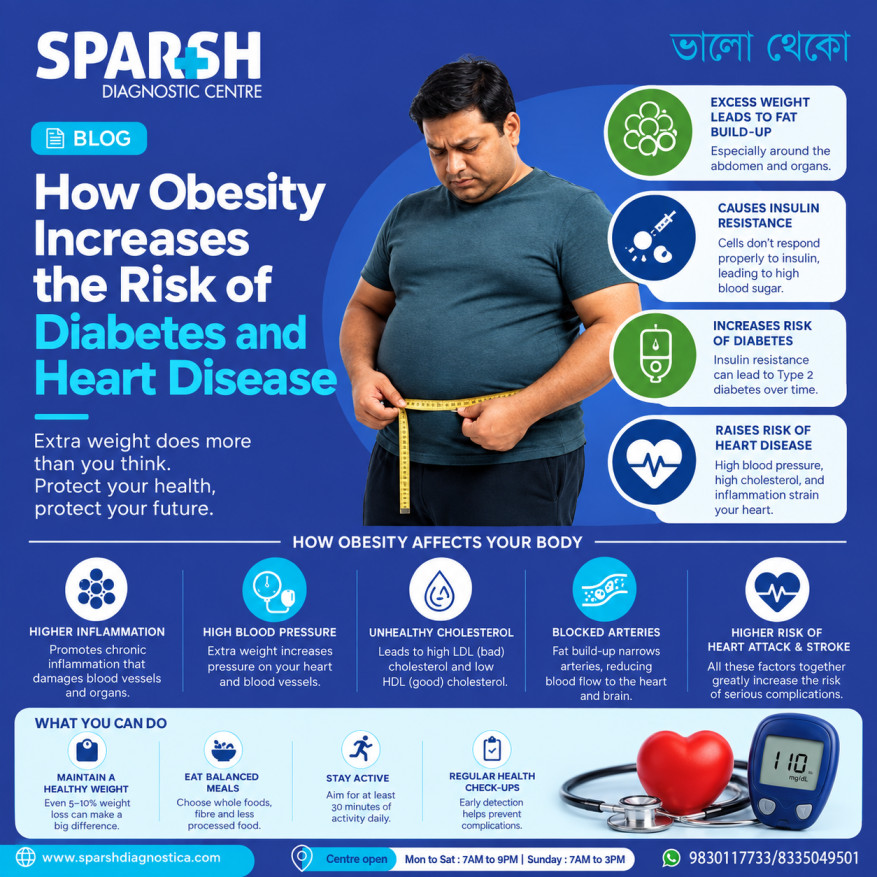
Not all body fat has the same metabolic effect. Excess fat around the abdomen and internal organs is associated with a higher risk of insulin resistance and type 2 diabetes.
Fat can also accumulate in organs such as the liver and pancreas. Excess fat in these tissues can interfere with normal metabolic processes and insulin action.
Research has shown that obesity—particularly increased abdominal and internal fat—is strongly associated with insulin resistance and impaired pancreatic beta-cell function.
Obesity can promote chronic inflammation
Excess adipose tissue is metabolically active. In obesity, changes within fat tissue can promote low-grade inflammation and alter the release of signalling molecules involved in metabolism.
These changes can interfere with insulin signalling and contribute to worsening insulin resistance.
The pancreas may eventually struggle
The pancreas can compensate for insulin resistance by producing more insulin. However, this compensation may not continue indefinitely.
In susceptible individuals, prolonged metabolic stress can contribute to declining beta-cell function. As insulin production becomes inadequate relative to the body’s needs, blood glucose can rise further.
This helps explain why obesity is an important risk factor for type 2 diabetes—but it is important to remember that obesity is not the only cause. Genetics, age, family history, physical activity, diet, sleep, medications, socioeconomic factors and other biological factors also influence diabetes risk.
Does everyone with obesity develop diabetes?
No.
Having obesity increases the risk of type 2 diabetes, but it does not mean that diabetes is inevitable.
Some people with obesity do not develop diabetes, while some people who are not classified as having obesity can develop type 2 diabetes.
Where body fat is stored, how long excess weight has been present, genetics, physical activity, diet, age and other metabolic factors all influence individual risk.
This is why weight should be viewed as one important part of diabetes risk assessment rather than the sole explanation for diabetes.
Why belly fat matters in diabetes
Belly fat is often discussed in relation to diabetes because abdominal and visceral fat are metabolically active.
Visceral fat is stored deeper inside the abdomen around internal organs. Higher levels of visceral fat are associated with insulin resistance and an increased risk of metabolic problems.
A larger waist circumference can therefore provide useful information about metabolic risk alongside measures such as BMI.
However, waist circumference and BMI do not tell the entire story. Your healthcare professional may consider your overall health, family history, blood pressure, cholesterol, blood glucose, medications and other factors when assessing diabetes risk.
What happens when obesity and diabetes occur together?
When obesity and type 2 diabetes occur together, they can reinforce one another.
Excess body fat can increase insulin resistance, making blood glucose harder to control. At the same time, diabetes treatment may sometimes contribute to weight gain.
Certain glucose-lowering medicines, including insulin, sulfonylureas and thiazolidinediones such as pioglitazone, can promote weight gain in some people. This does not mean that people should stop or change their medication themselves. Instead, treatment should be reviewed with a doctor when weight gain becomes a concern.
Current diabetes guidance recommends considering both blood glucose management and weight management when treating people with type 2 diabetes and overweight or obesity.
What foods are good for controlling diabetes?
There is no single “diabetes diet” that works for everyone. The best eating pattern depends on your health, medication, cultural food preferences, lifestyle and nutritional needs.
However, a diabetes-friendly eating pattern generally emphasizes minimally processed, nutrient-dense foods and sensible portions.
Good choices can include:
- Non-starchy vegetables such as spinach, cauliflower, broccoli, beans, gourds, cabbage and cucumber
- Whole fruits in appropriate portions rather than fruit juice
- Pulses and legumes such as dal, chickpeas, rajma and peas
- Whole grains and higher-fibre carbohydrate sources
- Nuts and seeds
- Low-fat dairy or suitable unsweetened alternatives
- Protein-rich foods appropriate to your dietary preferences
- Water and other low-calorie or calorie-free beverages
For an Indian vegetarian diet, meals can be built around combinations such as dal with vegetables, chana with salad, vegetable-based meals with a sensible portion of roti, or curd with vegetables and a fibre-rich carbohydrate source.
Portion size still matters. Even nutritious foods can contribute to excess calorie intake when eaten in very large quantities.
The American Diabetes Association recommends emphasizing non-starchy vegetables, whole fruits, legumes, whole grains, nuts and seeds while reducing sugar-sweetened beverages, sweets, refined grains and highly processed foods.
Foods and drinks to limit
If you have diabetes or are at high risk of developing it, try to limit:
- Sugary soft drinks
- Sweetened packaged beverages
- Excess fruit juice
- Sweets and desserts
- Refined grains in large portions
- Highly processed snack foods
- Foods high in added sugar
- Frequent fried or calorie-dense foods
You do not necessarily have to completely eliminate every food you enjoy. A sustainable eating pattern is generally easier to maintain than an extremely restrictive diet.
Can losing weight reverse diabetes?
For some people with type 2 diabetes, significant and sustained weight loss can lead to diabetes remission.
However, remission is not the same thing as a permanent cure.
The possibility of remission depends on factors such as how long a person has had diabetes, the amount of weight lost, remaining pancreatic beta-cell function, medications and individual biology.
Even relatively modest weight loss can provide meaningful benefits. The 2026 American Diabetes Association Standards of Care states that losing around 5–7% of baseline body weight can improve blood glucose and cardiovascular risk factors, while sustained weight loss of more than 10% generally provides greater benefits and may contribute to type 2 diabetes remission in some people.
For example, someone weighing 100 kg would reach a 5% weight-loss target by losing approximately 5 kg.
More substantial weight loss may produce greater improvements, particularly when it is maintained over the long term.
Importantly, people should never stop diabetes medication simply because their blood sugar improves after losing weight. Medication adjustments should be made with a healthcare professional because blood glucose can change rapidly as weight, diet and activity levels change.
How to stop weight gain in diabetes?
Weight gain in diabetes can have several causes, so the solution is not simply “eat less.”
Start by looking at the bigger picture.
Review your diabetes medicines
Some diabetes medications can contribute to weight gain. If your weight is increasing despite making healthy lifestyle changes, discuss your treatment plan with your doctor.
Depending on your individual circumstances, there may be diabetes or obesity treatments that are more weight-neutral or promote weight loss.
Look at liquid calories
Sweetened tea or coffee, soft drinks, packaged juices, energy drinks and other calorie-containing beverages can add significant calories without creating much fullness.
Replacing sugary drinks with water or unsweetened alternatives can be a simple change.
Prioritize protein and fibre
Protein and fibre can help improve satiety. Including vegetables, pulses, legumes, whole grains, nuts, seeds and appropriate protein sources in meals can make it easier to control hunger.
Watch portion sizes
Healthy foods can still contribute to weight gain if portions are consistently larger than your body’s energy requirements.
A balanced plate with plenty of vegetables, an appropriate protein source and a controlled portion of carbohydrate can be a practical approach.
Stay physically active
Regular physical activity can improve insulin sensitivity, help manage blood glucose and support weight maintenance.
Walking, cycling, swimming, resistance training and other activities can be useful. The appropriate activity depends on your health, fitness level, age and medical conditions.
The National Institute of Diabetes and Digestive and Kidney Diseases notes that physical activity can improve blood glucose, blood pressure, cholesterol and weight management.
Get enough sleep
Poor sleep can make appetite regulation and weight management more difficult. Aim for a consistent sleep routine and discuss persistent sleep problems with a healthcare professional.
How do type 2 diabetics get rid of belly fat?
There is an important misconception to clear up: you cannot selectively burn belly fat by doing abdominal exercises.
Sit-ups and crunches can strengthen abdominal muscles, but they do not specifically tell the body to burn fat from the abdomen.
The most effective approach is reducing overall excess body fat through a sustainable combination of nutrition, physical activity, sleep and, when appropriate, medical treatment.
Create a sustainable calorie deficit
To lose body fat, the body generally needs to use more energy than it takes in over time.
This does not mean starving yourself or following an extreme diet. A moderate, sustainable reduction in calorie intake is usually more practical.
Increase daily movement
You do not need to depend entirely on intense gym workouts.
Walking more, taking stairs, cycling, swimming and reducing prolonged sitting can all contribute to daily energy expenditure.
Include resistance training
Strength training can help preserve or build muscle while losing weight. This is particularly useful because maintaining muscle mass is important during weight loss.
Combine aerobic and resistance exercise
A combination of aerobic activity and resistance training can support cardiovascular health, fitness, insulin sensitivity and weight management.
People with diabetes should discuss new exercise programmes with their healthcare professional when necessary, particularly if they take medications that can cause low blood glucose.
Do not rely on “belly fat burning” products
There is no reliable food, drink, supplement or exercise that can selectively remove visceral fat overnight.
Be cautious of products that promise rapid abdominal fat loss without changes to diet, activity or overall calorie intake.
How much weight should you lose if you have diabetes?
There is no single target that applies to everybody.
For many people with type 2 diabetes and overweight or obesity, an initial goal of 5–7% weight loss can be clinically meaningful.
Greater weight loss may produce additional benefits. The 2026 ADA guidance notes that sustained weight loss above 10% generally produces greater metabolic benefits and may contribute to diabetes remission in some people.
The right target should take into account your starting weight, health conditions, medications, age, nutritional needs and ability to maintain the change.
The goal should not simply be to reach a particular number on the weighing scale. Improving blood glucose, blood pressure, cholesterol, fitness and overall metabolic health also matters.
Can lifestyle changes prevent diabetes?
Yes. For people with overweight or obesity who are at high risk of developing type 2 diabetes, lifestyle intervention can substantially reduce risk.
Current ADA guidance recommends aiming for at least 5–7% weight reduction alongside a healthy reduced-calorie eating pattern and at least 150 minutes per week of moderate-intensity physical activity for adults at high risk of type 2 diabetes.
The earlier these changes are made, the more opportunity there may be to prevent or delay progression from prediabetes to type 2 diabetes.
When should you see a doctor?
Consider speaking with a doctor if:
- You have obesity and a family history of diabetes
- Your blood sugar has been repeatedly elevated
- You have been diagnosed with prediabetes
- You are gaining weight despite making lifestyle changes
- You have difficulty controlling your blood glucose
- You suspect your diabetes medication is contributing to weight gain
- You have increasing waist circumference or other metabolic risk factors
- You are considering weight-loss medication or metabolic surgery
Your doctor may recommend tests such as fasting blood glucose, HbA1c and other investigations based on your symptoms and risk profile.
The bottom line
Obesity and type 2 diabetes are closely linked through insulin resistance, changes in fat distribution, inflammation and declining pancreatic beta-cell function.
The connection is especially important when excess fat accumulates around the abdomen and internal organs. But obesity is only one part of a much larger picture, and not everyone with obesity develops diabetes.
The encouraging part is that the same factors that contribute to the problem can often be modified. Losing even 5–7% of body weight can improve blood glucose and other metabolic risk factors, while greater sustained weight loss can provide additional benefits and may allow some people with type 2 diabetes to achieve remission.
A practical approach is to focus on nutrient-dense foods, sensible portions, regular physical activity, adequate sleep and appropriate medical care rather than chasing rapid weight loss.
If you have diabetes, weight management should be treated as part of your overall diabetes care—not as a separate cosmetic goal.
Frequently asked questions
How is obesity and diabetes related?
Obesity can increase the risk of type 2 diabetes by contributing to insulin resistance. Excess abdominal and visceral fat can interfere with insulin signalling and may also contribute to changes in the liver, pancreas and other tissues. Over time, the pancreas may struggle to produce enough insulin to compensate for increasing insulin resistance.
What foods are good for controlling diabetes?
Non-starchy vegetables, whole fruits, pulses, legumes, whole grains, nuts, seeds, appropriate protein sources and low-fat dairy can form part of a diabetes-friendly eating pattern. Limit sugary drinks, sweets, refined grains and highly processed foods. Portion sizes are also important.
Can losing weight reverse diabetes?
Substantial and sustained weight loss can lead to remission of type 2 diabetes in some people. However, remission is not necessarily permanent and does not mean diabetes can never return. Even 5–7% weight loss can improve blood glucose and other metabolic risk factors.
How can I stop weight gain in diabetes?
Review your medication with your doctor, control portion sizes, prioritize fibre and protein, reduce sugary drinks and highly processed foods, stay physically active, get adequate sleep and monitor your weight over time. Some diabetes medications can promote weight gain, while others may be weight-neutral or associated with weight loss.
How do type 2 diabetics get rid of belly fat?
Belly fat cannot be selectively removed through abdominal exercises. Reducing overall body fat through a sustainable calorie deficit, regular aerobic activity, resistance training, adequate sleep and appropriate medical treatment can gradually reduce abdominal and visceral fat.
Does losing 5% of body weight help diabetes?
Yes. Even modest weight loss can improve blood glucose and other cardiometabolic risk factors in people with type 2 diabetes and overweight or obesity. Greater sustained weight loss may provide greater benefits.
Is obesity the only cause of type 2 diabetes?
No. Obesity is a major risk factor, but type 2 diabetes is influenced by multiple factors, including genetics, family history, age, physical activity, diet, fat distribution, sleep, medications and other biological and environmental factors.
Can exercise lower blood sugar?
Yes. Physical activity can improve insulin sensitivity and help lower blood glucose. Regular activity also supports cardiovascular health and weight management. The type and intensity of exercise should be appropriate for your health and diabetes treatment plan.
Can diabetes medicine cause weight gain?
Some diabetes medicines can contribute to weight gain. Insulin, sulfonylureas and thiazolidinediones are examples. Other treatments can be weight-neutral or promote weight loss. Do not stop or change diabetes medication without discussing it with your doctor.
Is belly fat more dangerous than fat elsewhere?
Higher amounts of abdominal and visceral fat are associated with greater metabolic risk, including insulin resistance and type 2 diabetes. However, waist circumference, BMI and other measurements should be interpreted alongside your overall health rather than considered in isolation.
If you’re concerned about obesity or diabetes, early detection is key. Visit Sparsh Diagnostic Centre for reliable diagnostic services and take the first step toward better health.
#BhaloTheko
Disclaimer:
No content on this site, regardless of date, should ever be used as a substitute for direct medical advice from your doctor or other qualified clinician.

Sources
- American Diabetes Association. Obesity and Weight Management for the Prevention and Treatment of Diabetes: Standards of Care in Diabetes—2026. Diabetes Care, 2026.
View the ADA guidelines - American Diabetes Association. Facilitating Positive Health Behaviors and Well-being to Improve Health Outcomes: Standards of Care in Diabetes—2026. Diabetes Care, 2026.
View the ADA guidelines - Klein S, Gastaldelli A, Yki-Järvinen H, Scherer PE. Why Does Obesity Cause Diabetes? Cell Metabolism, 2022.
Read the research article on PubMed Central - Ruze R, Liu T, Zou X, et al. Obesity and type 2 diabetes mellitus: connections in epidemiology, pathogenesis, and treatments. Frontiers in Endocrinology, 2023.
Read the research article on Frontiers - National Institute of Diabetes and Digestive and Kidney Diseases (NIDDK). Healthy Living with Diabetes.
Read the NIDDK resource - Stony Brook Medicine. The Link Between Obesity and Diabetes. September 4, 2024.
Read the Stony Brook Medicine article
Medical disclaimer: This article is intended for general health education and should not replace individual medical advice, diagnosis or treatment. People with diabetes should consult their doctor or qualified diabetes care team before making significant changes to medication, diet or exercise.


[…] affected due to genetic predisposition combined with sedentary lifestyles, unhealthy diets, obesity, and […]
[…] Being overweight or obese […]
[…] Obesity or overweight […]