Extrapyramidal symptoms (EPS) are movement problems that can develop as a side effect of certain medicines, particularly medications that affect dopamine receptors in the brain. They can range from muscle stiffness and tremors to severe restlessness, abnormal postures and involuntary movements of the face, tongue or other parts of the body.
EPS are most commonly associated with antipsychotic medicines, especially older, first-generation antipsychotics. However, medicines used for nausea, gastrointestinal problems and some other conditions can also cause movement-related side effects.
One important point is that EPS is an umbrella term rather than a single disease. Doctors generally divide drug-induced movement problems into acute symptoms, which can appear relatively soon after starting or increasing a medicine, and tardive symptoms, which tend to develop after longer exposure.
Understanding the difference matters because treatment and the likelihood of recovery can vary considerably.
What Are Extrapyramidal Symptoms?
The term “extrapyramidal” refers to a network of structures in the brain involved in controlling movement, muscle tone, posture and involuntary movements. The basal ganglia are particularly important to this system.
When medicines interfere with dopamine signalling in these areas, abnormal movement patterns can occur. Dopamine-receptor-blocking medicines, particularly antipsychotics, are the major cause of EPS.
Symptoms may affect:
- The face and jaw
- Tongue and mouth
- Neck
- Arms and legs
- Trunk
- Walking and posture
- The ability to remain still
Some people notice symptoms themselves, while others are first told by a family member or doctor that they are moving differently.
What Are the 4 Main Extrapyramidal Symptoms?
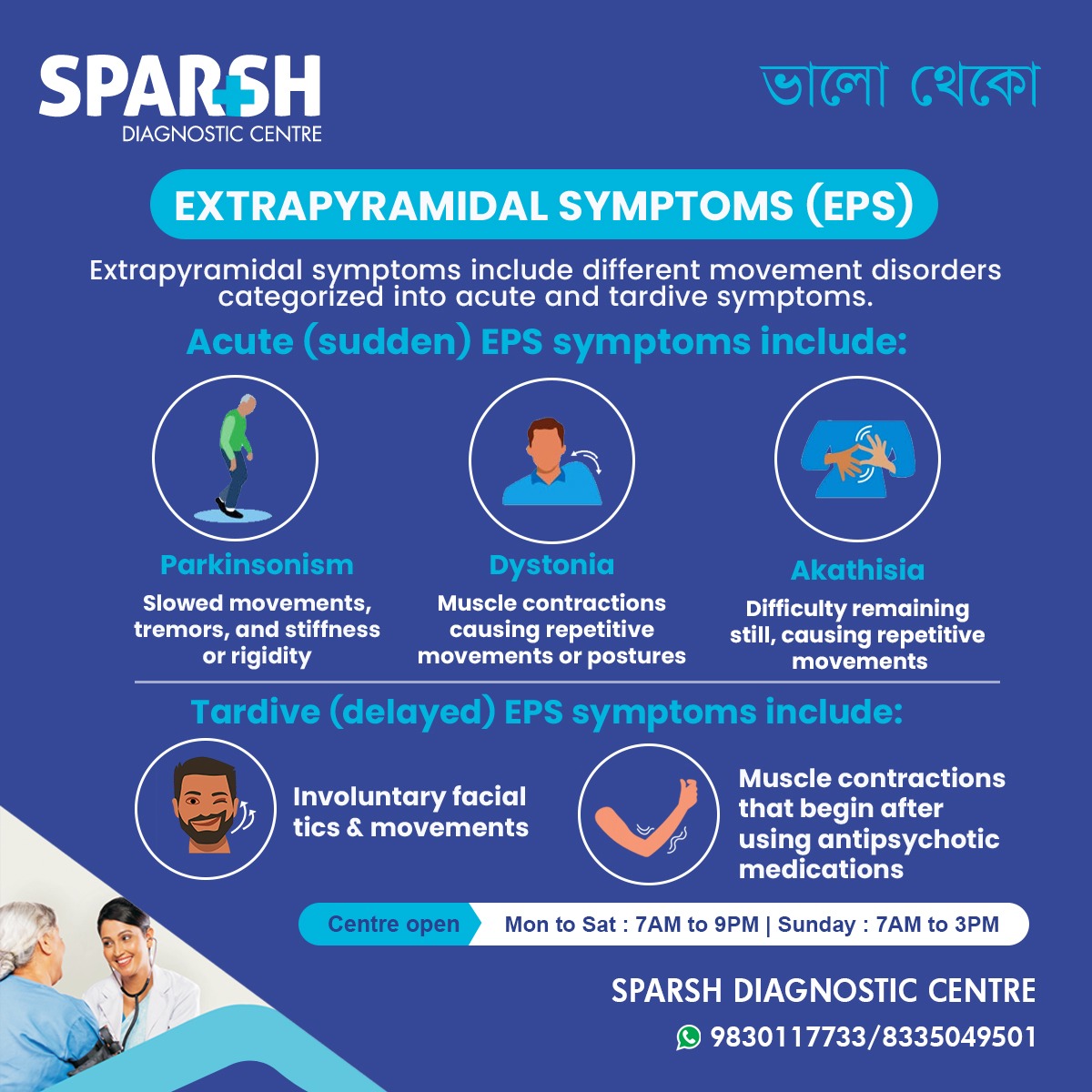
When people ask about the “4 extrapyramidal symptoms,” they are usually referring to four major clinical patterns:
1. Dystonia
Dystonia involves sustained or repetitive muscle contractions that can force a body part into an abnormal position.
For example, the neck may suddenly twist to one side, the eyes may move upward involuntarily, or the jaw may tighten. Acute dystonia can occur within hours or days after starting or increasing certain medicines.
Severe neck or throat muscle spasms can occasionally interfere with breathing and require urgent medical attention.
2. Akathisia
Akathisia is often described as an intense feeling of inner restlessness accompanied by an inability to sit still.
A person may:
- Pace around
- Constantly move their legs
- Rock back and forth
- Shift position repeatedly
- Feel extremely uncomfortable when trying to remain still
It can sometimes be mistaken for anxiety or agitation, which is why recognising the medication connection is important.
3. Parkinsonism
Drug-induced parkinsonism resembles some features of Parkinson’s disease. Symptoms can include:
- Slowed movements
- Muscle stiffness or rigidity
- Tremor
- Stooped posture
- Shuffling walking
- Reduced facial expression
Importantly, drug-induced parkinsonism does not necessarily mean a person has Parkinson’s disease.
4. Tardive Dyskinesia
Tardive dyskinesia (TD) is a delayed movement disorder that can develop after prolonged exposure to dopamine-receptor-blocking medicines.
Typical movements include:
- Lip smacking
- Repetitive chewing
- Tongue movements
- Grimacing
- Rapid blinking
- Jaw movements
- Finger or hand movements
- Pelvic or trunk movements
Tardive dystonia, tardive akathisia and tardive parkinsonism are other delayed movement disorders that may occur.
What Is the Main Cause of EPS?
The main cause of extrapyramidal symptoms is medication-induced disruption of dopamine signalling, particularly from dopamine-receptor-blocking medicines.
Antipsychotic medications are the most important group. First-generation or “typical” antipsychotics generally have a higher EPS risk than second-generation or “atypical” antipsychotics, although newer drugs are not completely risk-free.
Examples include medicines such as haloperidol, fluphenazine, chlorpromazine, risperidone and olanzapine.
EPS risk can increase with factors such as:
- Higher medication doses
- Longer exposure
- Use of first-generation antipsychotics
- Previous EPS
- Older age
- Certain underlying medical conditions
The exact risk varies from one medicine and one person to another.
Other medicines can also cause EPS, including some anti-nausea medicines such as metoclopramide and prochlorperazine. SSRIs, tricyclic antidepressants, lithium, stimulants and several other medications have also been associated with EPS in some circumstances.
Acute EPS vs Tardive EPS
One of the most useful ways to understand EPS is to consider when symptoms begin.
| Type | Typical timing | Examples |
|---|---|---|
| Acute EPS | Hours to days after starting/increasing a medicine | Dystonia, akathisia, parkinsonism |
| Tardive EPS | Usually after months or years of exposure | Tardive dyskinesia, tardive dystonia, tardive akathisia |
This distinction is important because acute EPS is often more reversible, whereas tardive disorders can persist even after the causative medicine is reduced or discontinued.
Does EPS Go Away?
Sometimes, but it depends on the type of EPS.
Acute EPS often improves after the causative medicine is adjusted or appropriate treatment is provided. Cleveland Clinic notes that acute symptoms may sometimes resolve on their own, although medical assessment should not be delayed.
Tardive symptoms are different. Tardive dyskinesia can persist for months, years or indefinitely in some people. It may improve after the offending medicine is withdrawn, but complete recovery cannot be guaranteed.
This is why someone experiencing new involuntary movements after taking an antipsychotic or another potentially causative medicine should speak with their doctor promptly.
Do not abruptly stop an antipsychotic or other prescribed medication without medical advice. Suddenly stopping treatment can cause withdrawal effects or allow the underlying condition to return or worsen.
How Are Extrapyramidal Symptoms Treated?
Treatment depends on which movement disorder is present.
The first step is usually to review the medication responsible. A doctor may consider reducing the dose, changing to another medicine or discontinuing the causative drug when clinically appropriate.
For acute dystonia, medicines such as anticholinergic or antimuscarinic drugs may be used. Examples include benztropine and trihexyphenidyl.
Other treatments may include:
- Benzodiazepines in selected cases
- Medication changes
- Botulinum toxin injections for certain forms of dystonia
- VMAT2 inhibitors for tardive dyskinesia
- Specialist movement-disorder assessment for persistent or severe symptoms
Treatment must be individualised because the medicine causing EPS may be essential for controlling schizophrenia, bipolar disorder or another serious condition.
Tardive Dyskinesia: Why It Matters
Tardive dyskinesia is one of the most important forms of tardive EPS because it can become persistent.
It is primarily associated with prolonged exposure to dopamine-receptor-blocking medicines. The prevailing explanation involves adaptive changes in dopamine signalling and basal-ganglia motor circuits after chronic dopamine D2 receptor blockade.
Symptoms most often involve the mouth and face, but the trunk and limbs can also be affected.
Someone with TD might repeatedly:
- Blink
- Smack their lips
- Chew when there is no food
- Stick out or move their tongue
- Grimace
- Move their jaw
- Tap their fingers
- Move their arms or legs involuntarily
TD can interfere with speaking, eating, swallowing and social interactions.
What Is the Most Commonly Used Drug for Treating Tardive Dyskinesia?
There is not one universally “most commonly used” drug for every patient with tardive dyskinesia.
The two medications specifically approved by the U.S. FDA for TD are the VMAT2 inhibitors:
- Valbenazine
- Deutetrabenazine
Both reduce abnormal movements by modifying monoamine storage and dopamine signalling. FDA documentation identifies both as approved treatments for adults with tardive dyskinesia.
Historically, tetrabenazine has also been used to treat TD, but it is not the same as the newer FDA-approved options for TD.
The choice between treatments depends on the patient’s symptoms, other medications, medical conditions, potential adverse effects and access to treatment. A neurologist or psychiatrist may also consider changing the causative antipsychotic when appropriate.
What Is the Relationship Between Gabapentin and Tardive Dyskinesia?
Gabapentin is an interesting medication in relation to TD because the relationship is not straightforward.
Gabapentin is not one of the main drugs known to cause tardive dyskinesia. In fact, older clinical research investigated gabapentin as a possible treatment for antipsychotic-induced movement disorders, and some reports described improvement in TD symptoms.
However, rare movement disorders have been reported in people taking gabapentin. A 2024 case report described tardive dystonia developing during low-dose gabapentin treatment and resolving after the drug was discontinued. A single case report does not establish that gabapentin commonly causes TD, but it shows why unexplained abnormal movements should be evaluated rather than automatically attributed to one medication.
Therefore, gabapentin should not be considered a standard cause of tardive dyskinesia, and it should not automatically be assumed to be a treatment for TD either.
Which Organ Is Gabapentin Hard On?
Gabapentin is primarily cleared by the kidneys.
Unlike many medicines, gabapentin is not substantially metabolised by the liver. It is eliminated through the kidneys largely unchanged. When kidney function is reduced, gabapentin can remain in the body longer, so the dose may need adjustment.
This means the kidneys are the organ that matters most when considering gabapentin clearance.
People with kidney disease, older adults and those receiving dialysis may require specific dosing adjustments.
That does not mean gabapentin routinely “damages” the kidneys. Rather, kidney function determines how efficiently the body removes gabapentin.
What Are 50 Drugs That Can Cause Tardive Dyskinesia?
This question needs an important qualification: there is no reliable list in which all 50 medications carry the same level of TD risk. The strongest association is with dopamine-receptor-blocking antipsychotics and certain antiemetics. Other medicines have much weaker, rarer or debated associations.
Examples of medicines that have been reported or associated with TD or tardive movement disorders include:
First-generation antipsychotics
- Chlorpromazine
- Fluphenazine
- Haloperidol
- Perphenazine
- Prochlorperazine
- Trifluoperazine
- Thiothixene
- Pimozide
- Loxapine
- Thioridazine
Second-generation antipsychotics
- Risperidone
- Paliperidone
- Olanzapine
- Quetiapine
- Ziprasidone
- Aripiprazole
- Lurasidone
- Asenapine
- Iloperidone
- Cariprazine
- Brexpiprazole
- Clozapine
Other dopamine-blocking or anti-nausea medicines
- Metoclopramide
- Droperidol
- Domperidone
- Trimethobenzamide
Antidepressants and other medicines reported in association with tardive movement disorders
- Amitriptyline
- Trazodone
- Fluoxetine
- Sertraline
- Paroxetine
- Citalopram
- Escitalopram
- Venlafaxine
- Duloxetine
- Imipramine
- Clomipramine
- Phenelzine
- Lithium
- Valproic acid
- Phenobarbital
- Phenytoin
- Lamotrigine
- Levetiracetam
- Hydroxyzine
- Certain antihistamines reported in case reports
- Certain antimalarial drugs
- Some calcium-channel blockers
- Some stimulants
- Certain other dopamine-active medicines reported in case reports
The first group—particularly older antipsychotics and dopamine-blocking antiemetics—is much more clinically important than the latter groups. Sources such as MedlinePlus and Cleveland Clinic specifically identify several antipsychotics, metoclopramide, antidepressants and selected other medicines as associated with TD or tardive movement disorders.
Never stop a suspected medication suddenly simply because you find it on a list. The safest approach is to have the complete medication list reviewed by the prescribing doctor.
How Is Tardive Dyskinesia Diagnosed?
There is no single blood test that confirms TD.
Diagnosis usually involves:
- Reviewing the person’s medication history.
- Establishing when the abnormal movements began.
- Examining the movements carefully.
- Excluding other neurological causes.
- Assessing the severity of symptoms.
Doctors may use the Abnormal Involuntary Movement Scale (AIMS) to document and monitor TD.
This is particularly useful for people taking antipsychotics because subtle mouth, tongue or facial movements can otherwise go unnoticed.
When Should You See a Doctor?
Contact a healthcare professional if unusual movements develop after starting, increasing or changing a medication.
Seek urgent medical attention if movement problems are accompanied by:
- Difficulty breathing
- Severe muscle spasms
- Difficulty swallowing
- Loss of consciousness
- Severe agitation
- Sudden, rapidly worsening neurological symptoms
Early assessment is valuable because identifying medication-related movement disorders quickly can allow treatment to be modified before symptoms become more difficult to manage.
Frequently Asked Questions About Extrapyramidal Symptoms
Are extrapyramidal symptoms permanent?
Not always. Acute dystonia, akathisia and drug-induced parkinsonism often improve when appropriately treated. Tardive disorders, particularly tardive dyskinesia, can be persistent and may continue even after the causative medicine is stopped.
What is the main cause of EPS?
The most common cause is exposure to dopamine-receptor-blocking medications, particularly antipsychotics. First-generation antipsychotics generally carry greater EPS risk, although second-generation drugs can also cause EPS.
Is tardive dyskinesia the same as EPS?
No. Tardive dyskinesia is one type of extrapyramidal or drug-induced movement disorder. EPS is the broader category.
Can EPS happen after only one dose?
Acute dystonia can occasionally occur relatively soon after medication exposure, particularly with susceptible individuals. The timing depends on the medicine, dose and individual risk.
Does stopping the medicine cure tardive dyskinesia?
Not necessarily. Symptoms may improve, but TD can persist after the causative medication has been reduced or discontinued. Any medication change should be supervised by a healthcare professional.
Is gabapentin a treatment for tardive dyskinesia?
Gabapentin has been investigated for TD and some studies and case reports have suggested potential benefit, but it is not one of the two FDA-approved medications specifically indicated for TD. Valbenazine and deutetrabenazine are the established FDA-approved options in the United States.
Is gabapentin bad for the liver?
Gabapentin is not significantly metabolised by the liver. It is primarily eliminated unchanged through the kidneys, so kidney function is particularly important when determining its dosage.
What is the best treatment for tardive dyskinesia?
Treatment depends on the individual. Reviewing the causative medication is important, and valbenazine or deutetrabenazine may be considered for clinically significant TD. A neurologist or psychiatrist can determine the most appropriate approach.
Key Takeaway
Extrapyramidal symptoms are an important group of medication-related movement disorders. The four patterns people most commonly hear about are dystonia, akathisia, parkinsonism and tardive dyskinesia.
The main cause is medication-related disruption of dopamine signalling, particularly from antipsychotic medicines. Acute EPS often improves with appropriate medication adjustment and treatment, while tardive dyskinesia can be more persistent.
If you notice involuntary facial movements, unusual muscle contractions, tremors, severe restlessness or stiffness after starting a medication, don’t ignore the symptoms and don’t stop the medicine on your own. Speak with your doctor so the cause can be identified and treatment adjusted safely.
To consult a Doctor or get full body check-up done at Sparsh Diagnostic Centre, call our helpline numbers 9830117733/ 8335049501.
#BhaloTheko
Disclaimer:
No content on this site, regardless of date, should ever be used as a substitute for direct medical advice from your doctor or other qualified clinician.