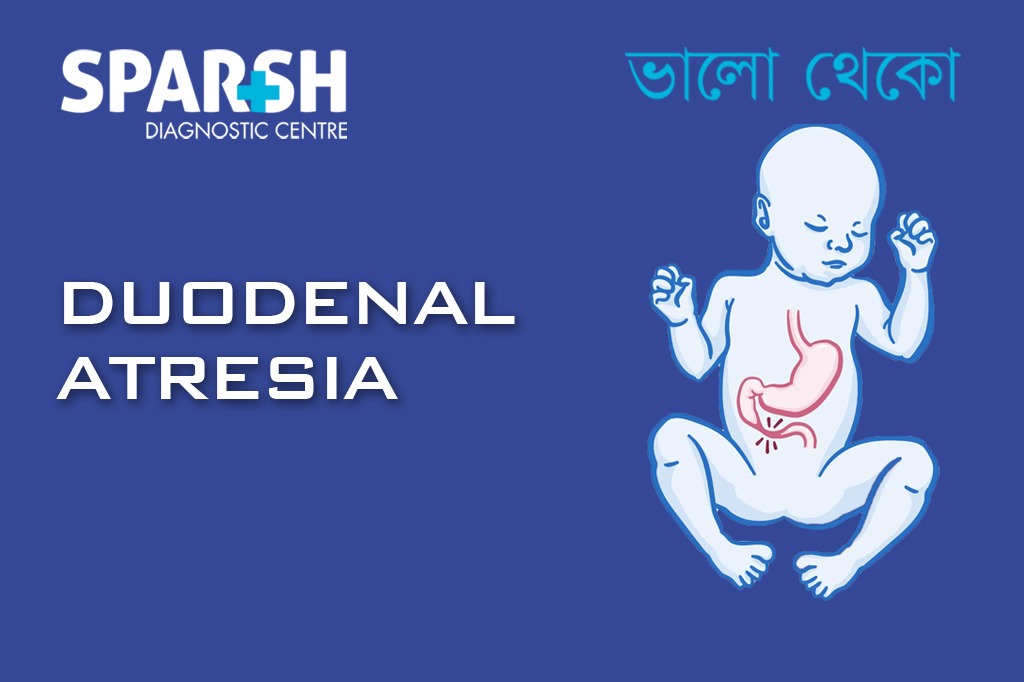
Duodenal atresia is a rare but important congenital condition that affects newborn babies. It occurs when a part of the duodenum—the first section of the small intestine—does not form properly during fetal development. As a result, food and stomach contents cannot pass into the rest of the intestine, leading to a blockage.
Although the condition may sound alarming, modern medical advances have made it highly treatable. In fact, most babies with duodenal atresia recover well after surgery and go on to live healthy lives.
In this article, we’ll walk through what duodenal atresia is, why it happens, the symptoms parents should know about, how doctors diagnose it, and what treatment and recovery typically look like.
What Is Duodenal Atresia?
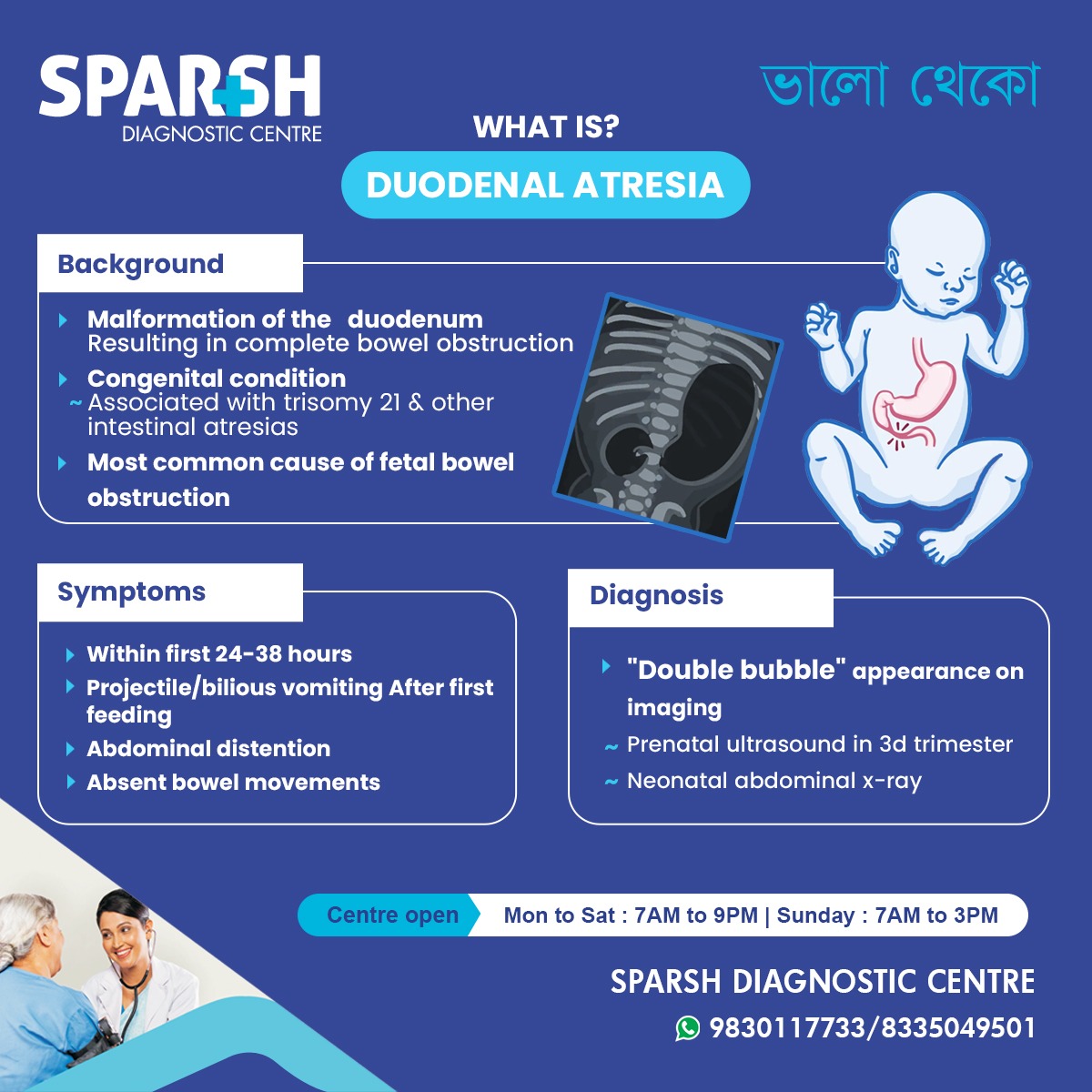
It is a birth defect of the digestive system in which the duodenum is closed or absent in a section. The duodenum connects the stomach to the rest of the small intestine and plays an important role in digestion.
When this portion of the intestine is blocked, food and fluids cannot move forward through the digestive tract. Instead, they build up in the stomach and upper intestine.
Because of this blockage, newborns with duodenal atresia often develop symptoms shortly after birth, especially after their first feeding.
How the Digestive System Normally Develops
To understand duodenal atresia, it helps to know how the digestive system develops before birth.
During early pregnancy, the intestines start as a hollow tube. Around the 6th week of fetal development, this tube temporarily becomes solid as cells grow rapidly. Later, it naturally opens again to form a hollow passage.
In duodenal atresia, this reopening process fails to occur properly, leaving part of the intestine blocked.
This leads to complete obstruction of the duodenum.
Types of Duodenal Atresia
Doctors classify it into a few types depending on how the blockage forms.
Type 1
A thin membrane blocks the intestine, but the bowel itself remains intact.
Type 2
The two ends of the duodenum are separated but connected by a fibrous cord.
Type 3
The most severe type, where the two ends of the intestine are completely disconnected.
Regardless of the type, the result is the same: food cannot move normally through the digestive system.
Causes of Duodenal Atresia
The exact cause is not always clear. However, doctors believe it occurs due to abnormal development during pregnancy.
Some important factors associated with the condition include:
1. Genetic Conditions
Duodenal atresia is commonly linked with Down syndrome (Trisomy 21). In fact, about 25–40% of babies with duodenal atresia also have Down syndrome.
2. Developmental Abnormalities
Problems in fetal intestinal development may prevent the duodenum from reopening.
3. Other Congenital Conditions
Babies with duodenal atresia sometimes have other birth defects involving the:
Heart
Kidneys
Spine
Gastrointestinal tract
However, many babies are born with duodenal atresia without any other abnormalities.
How Common Is Duodenal Atresia?
It is considered rare.
It occurs in approximately:
1 in every 5,000 to 10,000 live births.
Thanks to prenatal screening and improved neonatal care, doctors are now able to detect and treat the condition earlier than ever before.
Symptoms of Duodenal Atresia
Symptoms usually appear within the first 24 to 48 hours after birth.
Because the intestine is blocked, feeding quickly leads to noticeable digestive issues.
Common symptoms include:
1. Bilious Vomiting
One of the most classic signs is greenish vomiting (bile-stained vomit). This occurs because bile from the liver cannot move past the blockage.
2. Vomiting After Feeding
Babies often vomit shortly after their first feeding.
3. Abdominal Distension
The upper abdomen may appear swollen due to trapped fluid and gas.
4. Lack of Bowel Movements
Some babies may fail to pass stool normally.
5. Feeding Difficulties
Since food cannot pass through the digestive tract, feeding becomes difficult.
These symptoms usually prompt doctors to investigate the cause quickly.
Prenatal Signs of Duodenal Atresia
In many cases, it can be detected before birth during routine pregnancy ultrasounds.
Two important prenatal clues include:
Polyhydramnios
This means excess amniotic fluid around the baby. It happens because the baby cannot swallow and absorb amniotic fluid normally.
Double Bubble Sign
Ultrasound may show two fluid-filled bubbles representing:
The stomach
The duodenum
This appearance is known as the “double bubble sign.”
While this finding strongly suggests duodenal atresia, doctors confirm the diagnosis after birth.
Diagnosis of Duodenal Atresia
After a baby is born, doctors confirm duodenal atresia using imaging tests.
1. Abdominal X-Ray
The most common test is an abdominal X-ray.
It typically shows the classic double bubble appearance, indicating air trapped in the stomach and duodenum but not beyond.
2. Prenatal Ultrasound
If suspected during pregnancy, ultrasound can detect the condition before birth.
3. Additional Tests
Doctors may perform further tests to check for associated conditions such as:
Heart defects
Chromosomal abnormalities
Other digestive problems
Early diagnosis helps doctors plan treatment quickly.
Treatment for Duodenal Atresia
Duodenal atresia cannot be treated with medication alone. Surgery is required to correct the intestinal blockage.
Fortunately, surgical treatment is very effective.
Preparing for Surgery
Before surgery, doctors stabilize the newborn by:
Stopping oral feeding
Inserting a nasogastric tube to remove stomach contents
Providing fluids through an IV
Monitoring breathing and vital signs
These steps prevent vomiting and aspiration.
Surgical Procedure
The standard treatment is a surgery called duodenoduodenostomy.
During the procedure:
The surgeon identifies the blocked section of the duodenum.
The two healthy ends of the intestine are connected.
This creates a new pathway for food to pass through.
In some hospitals, surgeons may perform this using minimally invasive laparoscopic techniques.
The surgery typically takes 1 to 2 hours.
Recovery After Surgery
After surgery, babies stay in the neonatal intensive care unit (NICU) for monitoring.
Recovery usually involves:
IV nutrition initially
Gradual introduction of feeding
Monitoring bowel function
Most babies begin feeding normally within 1 to 3 weeks after surgery.
Long-Term Outlook
The long-term prognosis for duodenal atresia is excellent.
With modern surgical care:
Survival rates exceed 95%.
Most children grow and develop normally after recovery.
However, outcomes may depend on whether the baby has:
Down syndrome
Heart defects
Other congenital conditions
Regular follow-up with pediatric specialists ensures proper growth and digestion.
Possible Complications
Although treatment is generally successful, some complications may occur.
Short-Term Complications
Infection
Anastomotic leak (rare)
Feeding intolerance
Long-Term Complications
Slow intestinal motility
Gastroesophageal reflux
Nutritional issues (rare)
Doctors closely monitor babies to detect and manage these problems early.
Can Duodenal Atresia Be Prevented?
Currently, there is no known way to prevent it.
Since the condition develops during early fetal growth, it occurs before many pregnancies are even detected.
However, good prenatal care and routine ultrasounds help identify the condition early so treatment can be planned immediately after birth.
When Should Parents Seek Medical Help?
Parents should seek immediate medical attention if a newborn shows signs such as:
Green or yellow vomiting
Persistent vomiting after feeding
Swollen abdomen
Difficulty feeding
Early treatment significantly improves outcomes.
Living With Duodenal Atresia
For most families, it is a temporary challenge during the newborn period rather than a lifelong condition.
After surgical correction, many children grow up with:
Normal digestion
Normal growth
Healthy development
Regular pediatric checkups help ensure everything progresses smoothly.
Frequently Asked Questions (FAQ)
1. What causes duodenal atresia?
Duodenal atresia occurs due to abnormal development of the duodenum during early pregnancy. It is often associated with genetic conditions such as Down syndrome.
2. Is duodenal atresia life-threatening?
If untreated, it can be serious because the baby cannot digest food properly. However, with surgery, survival rates are very high.
3. Can duodenal atresia be detected before birth?
Yes. Many cases are detected during prenatal ultrasounds, especially when doctors see the double bubble sign or excess amniotic fluid.
4. How soon after birth is surgery performed?
Surgery is usually performed within the first few days of life, once the baby is stabilized.
5. Will my child have digestive problems later in life?
Most children recover completely and have normal digestion after surgery.
6. Is duodenal atresia hereditary?
In most cases, it is not inherited directly. However, it can be associated with chromosomal conditions like Down syndrome.
7. How long is hospital stay after surgery?
The hospital stay usually lasts 2 to 3 weeks, depending on recovery and feeding progress.
Duodenal atresia may sound overwhelming for new parents, but it is a condition that modern medicine handles very well. Early diagnosis, prompt surgical treatment, and supportive neonatal care allow most babies to recover fully.
With appropriate treatment and follow-up, children born with duodenal atresia can go on to live healthy and active lives.
If you suspect digestive problems in a newborn or receive a prenatal diagnosis, consulting pediatric specialists early can make a significant difference in outcomes.
To consult a Pediatrician at Sparsh Diagnostic Centre, call our helpline numbers 9830117733/ 8335049501.
#BhaloTheko
Disclaimer:
No content on this site, regardless of date, should ever be used as a substitute for direct medical advice from your doctor or other qualified clinician.