Pain around the kneecap can make everyday activities surprisingly uncomfortable. Climbing stairs, getting up from a chair, squatting at the gym or sitting with your knees bent for a long time may suddenly become difficult. If you experience these symptoms, you may have heard of a condition called patellofemoral pain syndrome (PFPS).
Also known as runner’s knee, patellofemoral pain syndrome is a common cause of pain at the front of the knee. Although it frequently affects runners and athletes, it can also develop in people who do not participate in sports.
The good news is that most cases can be managed without surgery. Appropriate activity modification, strengthening exercises and physiotherapy can help reduce pain and restore comfortable movement.
In this guide, we explain what patellofemoral pain syndrome is, what triggers it, how it is diagnosed and which exercises may help. We also answer common questions about walking, squats, recovery and the difference between patellofemoral pain and arthritis.
What Is Patellofemoral Pain Syndrome?
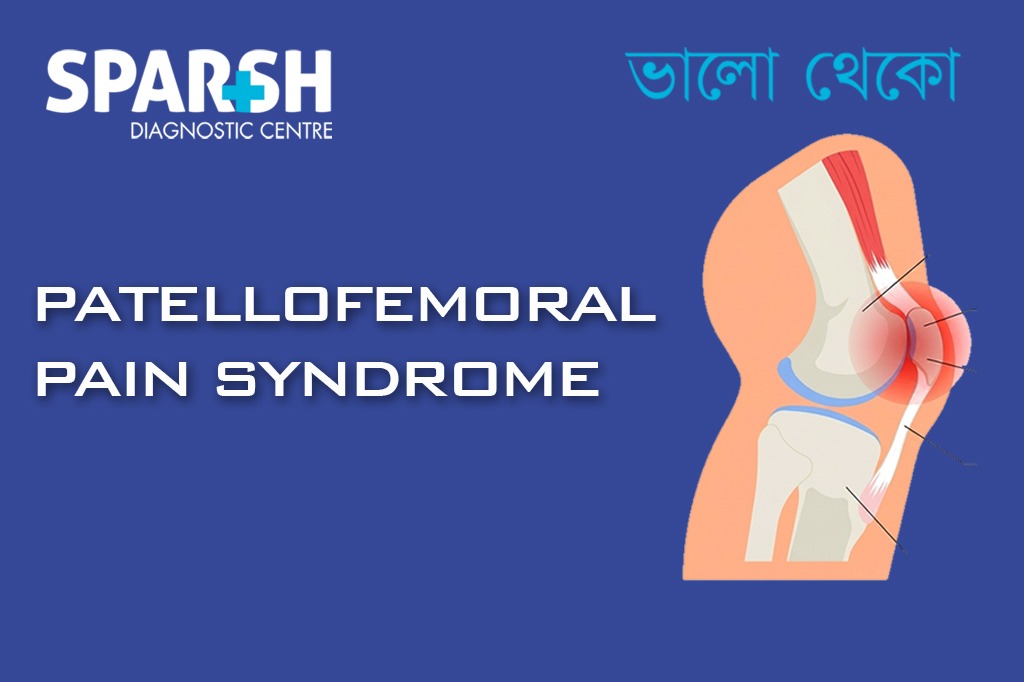
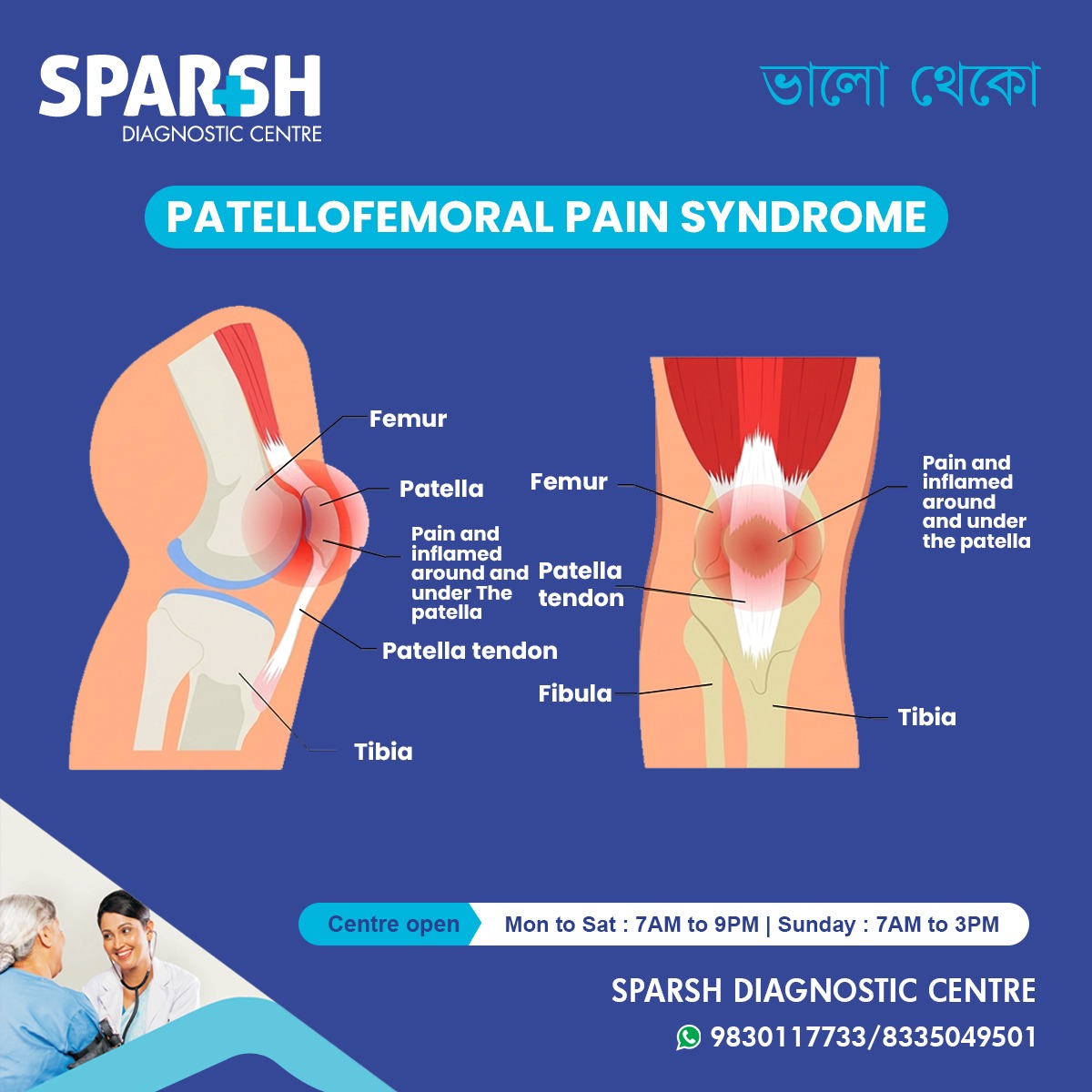
Patellofemoral pain syndrome is pain around or behind the patella, the medical name for the kneecap. The patella sits at the front of the knee and moves within a groove in the thigh bone, or femur, when you bend and straighten your leg.
The patellofemoral joint is the connection between the kneecap and the thigh bone. This joint helps transfer forces generated by the quadriceps muscles during activities such as walking, climbing stairs and standing up.
When the joint is exposed to more stress than it can comfortably tolerate, pain may develop around the kneecap. This can happen after a sudden increase in physical activity, inadequate recovery, muscle weakness or changes in movement patterns.
PFPS does not automatically mean that the cartilage beneath the kneecap is damaged. It is a clinical condition characterised primarily by pain during activities that load the knee while it is bent.
Although the term runner’s knee is commonly used, you do not have to run to develop this condition.
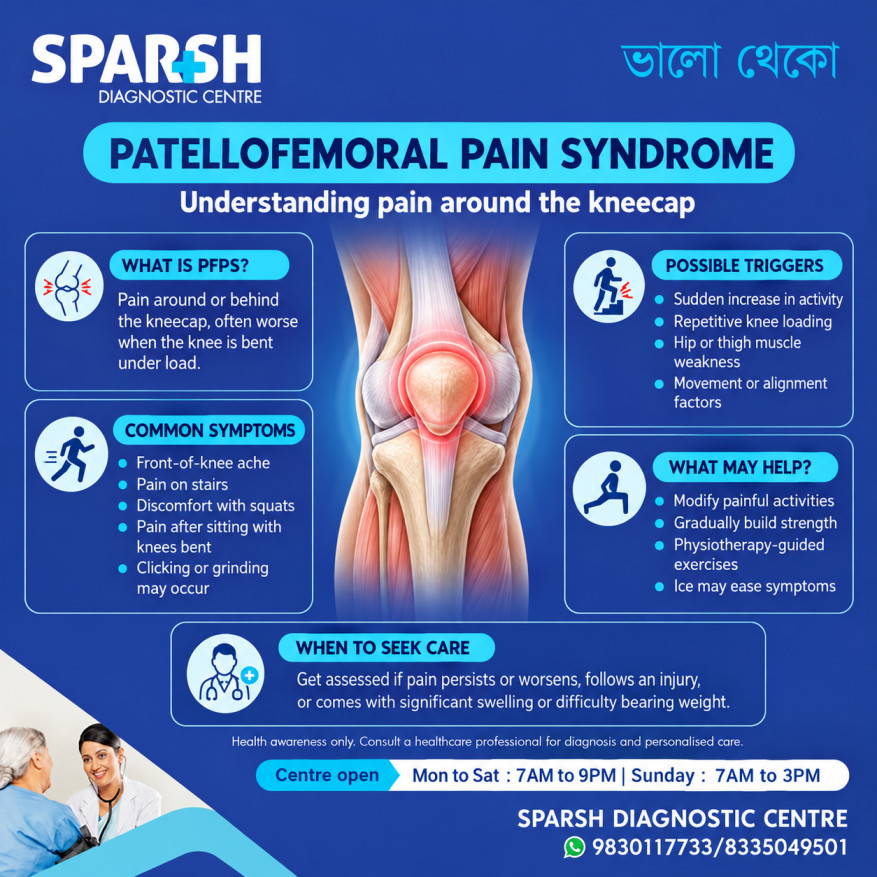
What are the common symptoms of patellofemoral pain syndrome?
Symptoms can develop gradually or appear after a change in activity. They may affect one knee or both knees.
Common symptoms include:
- Pain at the front of the knee: An aching sensation around or behind the kneecap is the most characteristic symptom.
- Pain when climbing stairs: Going downstairs can be particularly uncomfortable because the quadriceps muscles work to control knee bending.
- Discomfort during squats: Bending the knee under load can increase pressure across the patellofemoral joint.
- Pain after prolonged sitting: Sitting with the knees bent for an extended period may cause discomfort when you eventually stand up.
- Pain during running or jumping: Repeated impact and knee loading can aggravate symptoms.
- Clicking or grinding sensations: These may occur, but clicking alone does not confirm PFPS or indicate serious cartilage damage.
Symptoms often improve when the knee is unloaded or the aggravating activity is reduced.
However, significant swelling, a locked knee, an inability to bear weight or a knee that repeatedly gives way should not automatically be attributed to PFPS. These symptoms may indicate another condition that requires assessment.
What triggers patellofemoral pain syndrome?
There is rarely one explanation for every case. Patellofemoral pain usually develops when the demands placed on the knee exceed its current capacity to tolerate them.
Several factors can contribute.
1. A sudden increase in physical activity
Increasing walking distance, starting a gym programme, running more frequently or suddenly adding hill climbs can overload the knee.
The problem is not necessarily the activity itself. It may be the speed at which its duration, intensity or frequency increases.
2. Weakness in the hip and thigh muscles
The quadriceps muscles help control knee movement, while the hip muscles help stabilise the pelvis and lower limb.
Insufficient strength or coordination may make certain movements more demanding. A physiotherapist can assess whether targeted strengthening is appropriate.
3. Repetitive knee loading
Activities involving repeated squats, lunges, jumping, stair climbing or kneeling can aggravate symptoms, particularly when recovery time is inadequate.
4. Changes in movement patterns
Knee movement during squatting, running or landing may influence how forces are distributed. However, no single movement pattern explains every case, and movement differences should be assessed individually.
5. Training errors and inadequate recovery
Suddenly changing workout routines, increasing resistance too quickly or continuing strenuous exercise despite worsening symptoms may contribute to persistent pain.
6. Previous knee injury or anatomical factors
A previous knee injury, instability of the kneecap or differences in joint structure may increase the likelihood of symptoms in some people.
Identifying the relevant contributing factors helps guide treatment more effectively than simply avoiding all knee movement.
How is patellofemoral pain syndrome diagnosed?
Diagnosis usually begins with a clinical assessment by an orthopaedic specialist, sports medicine physician or other appropriately qualified healthcare professional.
The clinician will ask about the location of the pain, when it started, which activities aggravate it and whether there has been a previous injury.
The physical examination may include:
- Checking knee movement and range of motion.
- Assessing quadriceps and hip muscle strength.
- Observing movements such as squatting or stepping down.
- Examining the kneecap and surrounding structures.
- Checking for swelling, instability or signs of other knee conditions.
Imaging is not always necessary. An X-ray may be recommended when arthritis, a bone abnormality or another diagnosis is suspected. MRI may be appropriate when symptoms, examination findings or a suspected internal injury warrant further investigation.
Other possible causes of pain at the front of the knee include patellar tendinopathy, bursitis, cartilage injury, patellofemoral arthritis and problems involving the meniscus or other knee structures.
A proper diagnosis is important because the treatment that helps one condition may not be appropriate for another.
How do you fix patellofemoral pain syndrome?
The mainstay of treatment is usually conservative care, particularly education, activity modification and a structured exercise programme.
There is no single exercise or treatment that works for everyone. The most appropriate plan depends on symptom severity, strength, mobility and the activities that trigger pain.
1. Modify activities that aggravate the knee
Temporarily reduce activities that repeatedly provoke pain, such as deep squats, repeated stair climbing, running or jumping.
This does not mean stopping all physical activity. Instead, maintain comfortable activities while reducing the intensity or volume of movements that irritate the knee.
2. Strengthen the quadriceps and hip muscles
Exercise programmes that target both the hip and knee are commonly recommended for patellofemoral pain.
Depending on the assessment, exercises may include:
- Straight-leg raises.
- Sit-to-stands from a comfortable chair.
- Controlled mini-squats.
- Glute bridges.
- Side-lying hip abduction.
- Resistance-band hip exercises.
- Step-ups at an appropriate height.
Start with manageable resistance and movement ranges. Increase difficulty gradually as strength improves and symptoms remain controlled.
3. Use ice for temporary relief
Applying a cold pack wrapped in a towel for approximately 15–20 minutes may help ease discomfort after an aggravating activity.
Avoid placing ice directly on the skin. Stop if you experience excessive numbness or skin irritation.
4. Consider physiotherapy
A physiotherapist can tailor exercises, assess movement patterns and help determine how quickly to increase activity.
Taping or foot orthoses may be useful for selected individuals, particularly as short-term additions to an exercise programme. They are not necessary for everyone and should not replace appropriate rehabilitation.
5. Use medication cautiously
A healthcare professional may recommend a suitable pain-relieving medicine when necessary. Anti-inflammatory medicines are not appropriate for everyone, particularly people with certain kidney conditions, stomach ulcers, cardiovascular risks or medication interactions.
Do not use painkillers simply to push through an activity that continues to aggravate the knee.
6. Progress gradually
Recovery involves more than making pain disappear for a day. The knee should gradually become better able to tolerate normal daily activities and exercise.
Increase one aspect of training at a time, such as repetitions, resistance or duration, rather than increasing everything simultaneously.
How can I manage patellofemoral pain?
Day-to-day management is about finding a balance between staying active and avoiding excessive irritation.
Consider these practical measures:
- Break up long periods of sitting by standing and moving regularly.
- Use a handrail when necessary to reduce discomfort on stairs.
- Temporarily reduce the depth of squats and lunges.
- Choose comfortable footwear suitable for your activities.
- Allow adequate recovery between demanding workouts.
- Keep a simple record of which activities improve or worsen your symptoms.
- Follow a consistent strengthening programme rather than repeatedly changing exercises.
A useful guide is to monitor how your knee feels during activity and later that day or the following morning. Mild, manageable discomfort may sometimes be acceptable during rehabilitation, but pain that increases substantially, changes your movement or remains worse afterwards suggests that the workload may need adjustment.
There is no universal pain score that is safe for everyone. Follow the limits recommended by your treating professional.
Can patellofemoral pain syndrome heal on its own?
Yes, patellofemoral pain can improve without surgery and sometimes settles with reduced aggravating activity and simple self-care.
However, improvement is not guaranteed if the underlying contributors remain unaddressed. Continuing the same training load despite persistent pain may prolong symptoms.
Many people improve over several weeks, although recovery can take longer depending on the severity of symptoms, the person’s activity level and whether the rehabilitation programme is appropriate.
If your knee pain does not improve after a few weeks of sensible activity modification, or it keeps returning, arrange a clinical assessment. A structured exercise programme may be needed to restore strength and activity tolerance.
Early assessment can also help identify other causes of knee pain that may require different treatment.
Is walking good for patellofemoral pain syndrome?
Walking is often beneficial because it helps maintain general fitness and everyday mobility without the repeated high-impact loading associated with running or jumping.
However, whether walking is comfortable depends on the severity of your symptoms and how much you walk.
If ordinary walking does not significantly increase your pain, you can generally continue at a comfortable pace. If longer walks, hills or stairs cause discomfort, try shortening the distance, choosing flatter routes or taking breaks.
Avoid suddenly increasing your daily step count while your knee is symptomatic.
If walking causes a pronounced limp, worsening pain or increasing swelling, reduce the activity and seek advice if symptoms persist. Severe pain or an inability to bear weight warrants prompt assessment.
The goal is not complete inactivity. It is to maintain a level of movement that your knee can tolerate while gradually rebuilding its capacity.
Can I do squats with patellofemoral pain syndrome?
Yes, many people with patellofemoral pain can continue doing squats, provided the exercise is modified to suit their symptoms and performed with appropriate technique.
Squats are not automatically harmful to the kneecap. In fact, appropriately prescribed squat variations can help strengthen the quadriceps and other muscles that support knee function.
The difficulty is that deeper knee bending and heavier resistance generally increase the demand on the patellofemoral joint.
How to modify squats
Start with a comfortable variation, such as:
- Sit-to-stands: Stand up from a chair and sit down slowly.
- Shallow squats: Bend the knees only as far as is comfortable.
- Supported squats: Hold a stable support to improve balance.
- Controlled repetitions: Move slowly and avoid bouncing at the bottom.
- Gradual resistance increases: Add load only when the current variation is well tolerated.
Keep your feet stable and allow your knees to move in a controlled direction that suits your anatomy. A physiotherapist can help assess your technique and select an appropriate depth.
Avoid forcing deep squats through significant pain. If even shallow squats are uncomfortable, temporarily use a different strengthening exercise and have the knee assessed.
What should I avoid if I have patellofemoral pain syndrome?
You do not necessarily need to avoid any activity permanently. However, certain movements may need temporary modification while symptoms settle.
| Activity or habit | What to do instead |
|---|---|
| Deep squats that cause pain | Reduce squat depth and resistance |
| Sudden increases in walking or exercise | Increase duration and intensity gradually |
| Repeated jumping or sprinting during a flare-up | Choose comfortable, lower-impact activities |
| Long periods sitting with bent knees | Change position and take movement breaks |
| Training through worsening pain | Reduce the workload and reassess |
| Ignoring persistent swelling or instability | Seek an appropriate clinical assessment |
Do not assume that all knee pain is caused by PFPS. Avoid self-prescribing prolonged rest, braces or medication without considering the actual diagnosis.
What is the difference between patellofemoral pain syndrome and patellofemoral arthritis?
Although the names sound similar, these conditions are not the same.
Patellofemoral pain syndrome describes pain around or behind the kneecap, often related to the way the knee tolerates loading during activities such as squatting, walking downstairs or prolonged sitting. It does not necessarily involve cartilage degeneration.
Patellofemoral arthritis occurs when the cartilage in the joint between the kneecap and thigh bone deteriorates. It is a form of osteoarthritis affecting the patellofemoral compartment.
Both conditions can cause pain during knee bending, stair climbing and squatting. Arthritis may also cause stiffness, swelling, grinding and reduced mobility.
A clinical examination and, when appropriate, imaging can help distinguish between them.
Can patellofemoral arthritis be cured?
There is currently no treatment that reliably restores cartilage that has been lost through established osteoarthritis.
However, patellofemoral arthritis can often be managed effectively. Treatment may include strengthening exercises, activity modification, weight management where appropriate, pain-relieving medication and other clinician-recommended interventions.
For severe arthritis that significantly limits daily life despite non-surgical treatment, surgery may be considered in selected cases.
The aim is to reduce pain, improve function and help the person remain as active as possible. Having arthritis does not automatically mean that surgery will be required.
What are the stages of patellofemoral arthritis?
Patellofemoral arthritis does not have one universally used four-stage classification. Clinicians may describe its severity using symptoms, examination findings and imaging classifications.
A simplified way to understand the progression of cartilage changes is:
Early changes: Cartilage may soften or develop subtle irregularities, with little or no visible joint-space narrowing on X-rays.
Mild arthritis: Small cartilage defects or early degenerative changes may be present. Symptoms can include discomfort during stairs, squats or prolonged knee bending.
Moderate arthritis: Cartilage loss and joint changes become more noticeable. Pain may occur more frequently, and some daily activities may become difficult.
Advanced arthritis: There may be substantial cartilage loss, significant joint-space narrowing and, in some cases, bone changes. Pain and stiffness may increasingly interfere with walking and other daily activities.
These descriptions are illustrative rather than formal diagnostic stages. Imaging findings do not always match the level of pain, and not everyone progresses through these stages.
It is also important not to confuse patellofemoral arthritis with patellofemoral pain syndrome. Pain around the kneecap alone does not establish that arthritis is present.
When should you seek medical care?
Most mild cases of anterior knee pain can be managed conservatively, but some symptoms need prompt attention.
Arrange a medical assessment if pain persists for several weeks, repeatedly returns or interferes with everyday activities.
Seek urgent medical care if you experience:
- Severe pain or an inability to bear weight.
- Significant swelling following an injury.
- A knee that becomes locked or cannot be straightened.
- Repeated episodes of the knee giving way.
- A hot, red knee accompanied by fever.
- A sudden deformity or suspected fracture.
These symptoms can indicate conditions other than uncomplicated patellofemoral pain syndrome.
Frequently asked questions about patellofemoral pain syndrome
1. How long does patellofemoral pain syndrome take to heal?
Many people improve within several weeks, often over one to two months, although some need longer. Recovery depends on the severity of symptoms, activity demands and the effectiveness of rehabilitation.
2. Can patellofemoral pain syndrome cause permanent damage?
PFPS does not automatically mean permanent cartilage damage. However, persistent symptoms should be assessed because other knee conditions may be present, and ongoing pain can limit normal activity.
3. Is cycling good for patellofemoral pain syndrome?
Low-resistance cycling may be comfortable for some people. Begin with a short duration and an appropriate seat height. Reduce resistance or stop if cycling increases pain, particularly during repeated knee bending.
4. Should I wear a knee brace for patellofemoral pain syndrome?
A brace is not routinely necessary for uncomplicated PFPS. Some supports may help selected individuals, but evidence does not support using patellofemoral braces as a replacement for exercise-based rehabilitation.
5. Can patellofemoral pain syndrome affect both knees?
Yes. PFPS can affect one or both knees, depending on activity demands, strength, movement patterns and other contributing factors.
6. Is patellofemoral pain syndrome the same as chondromalacia patellae?
No. Chondromalacia patellae refers to changes or damage involving the cartilage on the underside of the kneecap. PFPS describes a pain condition that can occur without demonstrable cartilage damage.
7. Can I climb stairs if I have patellofemoral pain syndrome?
You can often continue using stairs if symptoms are manageable. Reduce unnecessary repeated climbs, use a handrail when needed and avoid pushing through worsening pain. Significant difficulty may warrant professional assessment.
8. Do I need an MRI for patellofemoral pain syndrome?
Not always. Diagnosis is usually based on clinical history and examination. MRI may be recommended if the diagnosis is unclear, symptoms persist despite appropriate treatment or another internal knee problem is suspected.
9. Can exercise make patellofemoral pain worse?
Yes, if the exercise is too demanding, the movement is poorly tolerated or the workload increases too quickly. Appropriate strengthening can help, but exercises should be adjusted according to symptoms and individual assessment.
Conclusion
Patellofemoral pain syndrome is a common cause of pain around or behind the kneecap. It can interfere with walking, climbing stairs, exercising and even sitting comfortably for long periods.
Fortunately, most cases can be managed with appropriate activity modification, progressive strengthening and physiotherapy. Walking and squats do not have to be avoided permanently; the key is to choose variations and activity levels that your knee can tolerate.
If pain persists, worsens or is accompanied by significant swelling, locking or instability, seek professional assessment rather than assuming that the problem is simply runner’s knee.
At Sparsh Diagnostic Centre, we believe that understanding your symptoms is an important step towards making informed decisions about your health. Consult an appropriate healthcare professional for an accurate diagnosis and a treatment plan tailored to your needs.
Medical disclaimer: This article is intended for general health education and does not replace a clinical examination, diagnosis or personalised treatment advice.
To consult an Orthopedic Surgeon at Sparsh Diagnostic Centre, call our helpline numbers 9830117733/ 8335049501.
#BhaloTheko
Disclaimer:
No content on this site, regardless of date, should ever be used as a substitute for direct medical advice from your doctor or other qualified clinician.

Sources and further reading
The following reputable medical resources informed the medical content of this article. They are provided for further reading and reference.
- Cleveland Clinic: Patellofemoral Pain Syndrome (PFPS).
https://my.clevelandclinic.org/health/diseases/17914-patellofemoral-pain-syndrome-pfps - Mayo Clinic: Patellofemoral pain syndrome — symptoms and causes.
https://www.mayoclinic.org/diseases-conditions/patellofemoral-pain-syndrome/symptoms-causes/syc-20350792 - American Academy of Orthopaedic Surgeons (AAOS), OrthoInfo: Patellofemoral Pain Syndrome.
https://www.orthoinfo.org/diseases–conditions/patellofemoral-pain-syndrome/ - Physiopedia: Patellofemoral Pain Syndrome.
https://www.physio-pedia.com/Patellofemoral_Pain_Syndrome - National Library of Medicine, PubMed Central: Update of Risk Factors, Diagnosis, and Management of Patellofemoral Pain.
https://pmc.ncbi.nlm.nih.gov/articles/PMC6942114/ - National Library of Medicine, PubMed Central: Appraisal and Summary of Patellofemoral Pain Clinical Practice Guideline.
https://pmc.ncbi.nlm.nih.gov/articles/PMC7815180/ - Dutch multidisciplinary guideline: Patellofemoral pain and patellar tendinopathy.
https://pmc.ncbi.nlm.nih.gov/articles/PMC11792096/ - NHS inform: Patellofemoral pain syndrome.
https://www.nhsinform.scot/illnesses-and-conditions/muscle-bone-and-joints/leg-and-foot-problems-and-conditions/patellofemoral-pain-syndrome/
Editorial note: The source list is provided for transparency. Before publishing, arrange a review by an appropriately qualified healthcare professional and display the reviewer’s name, qualifications and review date if the article has been medically reviewed.