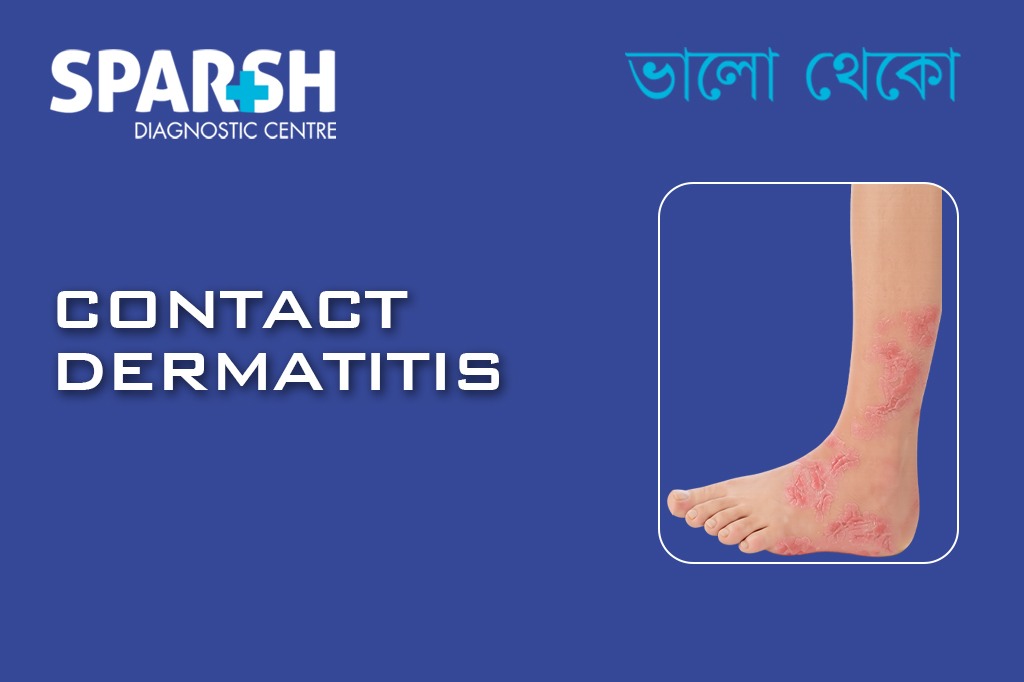
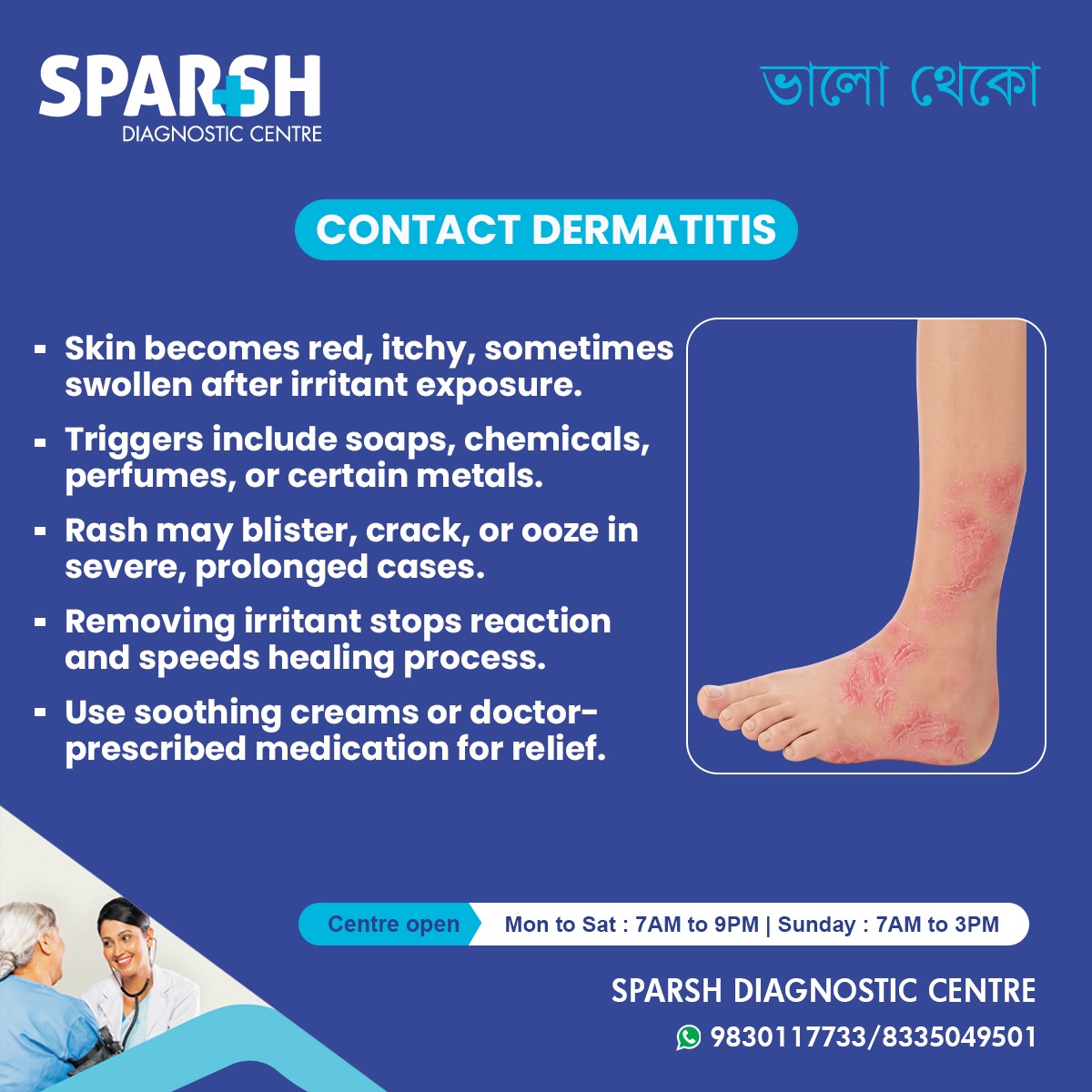
Contact dermatitis is a common skin condition that develops when the skin reacts to something it has come into contact with. The reaction may be caused by direct irritation or by an allergic response. It can make the skin itchy, red, swollen, dry, cracked, blistered or painful.
The good news is that contact dermatitis is usually manageable. In many cases, identifying the substance responsible and avoiding it allows the skin to heal completely. Treatment can also help control itching and inflammation while the skin recovers.
Contact dermatitis can affect anyone, although certain occupations and habits can increase the risk. Frequent hand washing, exposure to cleaning products, cosmetics, hair products, metals, chemicals and other substances can repeatedly irritate the skin.
Understanding what triggers your rash is one of the most important steps towards preventing it from coming back.
What Is Contact Dermatitis?
Contact dermatitis is an inflammatory skin reaction that occurs after direct contact with an irritating substance or an allergen.
There are two main types:
- Irritant contact dermatitis: This happens when a substance directly damages the skin’s protective outer layer. It is the more common type and may develop after repeated exposure to relatively mild irritants such as soap, detergents or water, or after a single exposure to a stronger chemical.
- Allergic contact dermatitis: This occurs when the immune system reacts to a substance to which the person has become sensitised. Common triggers include nickel, fragrances, cosmetics, preservatives and certain plants.
Contact dermatitis is not contagious. You cannot catch it from another person, even if their rash looks severe or blistered.
What Causes Contact Dermatitis?
There are thousands of substances that can irritate the skin or trigger an allergic reaction.
Common irritants include:
- Soaps and detergents
- Disinfectants and antiseptics
- Solvents
- Bleach
- Acids and alkalis
- Cement
- Cleaning products
- Oils and industrial chemicals
- Frequent exposure to water
- Certain cosmetics and personal-care products
Allergic contact dermatitis has different triggers. Common allergens include:
- Nickel in jewellery, belt buckles and other metal objects
- Fragrances
- Hair dyes
- Preservatives in cosmetics
- Certain topical medicines
- Rubber and latex-related substances
- Plants such as poison ivy
- Some ingredients used in personal-care products
A person can also develop sensitivity after repeated exposure. Once someone becomes allergic to a particular substance, even a relatively small amount may trigger a reaction.
What Are Three Signs of Contact Dermatitis?
Three of the most typical signs of contact dermatitis are itching, skin inflammation and a visible rash.
However, the condition can produce several other symptoms. Depending on the cause and severity, the skin may become:
- Red, purple, brown or darker than the surrounding skin
- Itchy
- Dry and scaly
- Cracked
- Swollen
- Burning or stinging
- Covered with small bumps
- Covered with blisters
- Oozing fluid or developing crusts
- Painful or tender
The appearance of a rash can vary significantly according to a person’s natural skin colour. On darker skin, inflammation may appear brown, purple, grey or darker rather than bright red.
The location of the rash can also provide a clue. For example, contact dermatitis caused by a cosmetic may affect the face, while a reaction to a cleaning product may primarily affect the hands.
Where Does Contact Dermatitis Usually Appear?
Contact dermatitis can occur anywhere the skin comes into contact with an irritant or allergen.
Common areas include:
- Hands and fingers
- Face
- Eyelids
- Neck
- Scalp
- Arms
- Legs
- Feet
- Armpits
- Lips
- Genital area
Hands are particularly vulnerable because they come into contact with soaps, detergents, chemicals and other substances throughout the day. Healthcare workers, cleaners, cooks, hairdressers, construction workers and people working with industrial chemicals may be at increased risk.
Irritant vs Allergic Contact Dermatitis
Although both conditions can look similar, their underlying mechanisms are different.
Irritant contact dermatitis occurs because something damages or disrupts the skin barrier. Frequent hand washing is a good example. Repeated exposure to soap and water can gradually remove protective oils from the skin, resulting in dryness, cracking, burning and inflammation.
Allergic contact dermatitis, on the other hand, involves the immune system. A person first becomes sensitised to an allergen. Subsequent exposure can then produce an inflammatory skin reaction, often after a delay.
This distinction is important because avoiding the specific allergen is particularly important for preventing recurrent allergic contact dermatitis.
What Is Type 4 Contact Dermatitis?
Type 4 contact dermatitis refers to allergic contact dermatitis, which is a delayed type IV hypersensitivity reaction.
Unlike immediate allergic reactions, type IV hypersensitivity is primarily mediated by immune cells called T cells rather than antibodies. After a person has become sensitised to an allergen, subsequent exposure can activate these T cells and cause inflammation in the skin.
The reaction may not appear immediately. Symptoms can develop hours or even days after exposure, which can sometimes make identifying the trigger difficult.
For people who repeatedly develop unexplained rashes, a dermatologist may recommend patch testing. During patch testing, small amounts of suspected allergens are placed on the skin under patches. The skin is then assessed for a delayed reaction.
How Do You Get Rid of Contact Dermatitis?
The most important step in getting rid of contact dermatitis is to identify and avoid the substance causing the reaction.
If you continue coming into contact with the trigger, the rash may persist or repeatedly return.
Treatment may include:
1. Avoid the Trigger
Think about anything new or different that came into contact with the affected area. This could include a soap, detergent, cosmetic, perfume, jewellery, hair product, medication or chemical.
If a particular allergen has been identified, avoiding it is the best way to prevent future episodes.
2. Moisturise Regularly
Moisturisers or emollients help reduce dryness and support the skin barrier. They can be particularly useful when the skin is dry, cracked or irritated.
Choose a gentle product without unnecessary fragrances or ingredients that have previously caused a reaction.
3. Use Cool Compresses
A cool, wet cloth placed over the affected area for around 15 to 30 minutes can help soothe itching and inflammation.
4. Avoid Scratching
Scratching can further damage the skin and increase the risk of infection. Keep fingernails short and try to protect particularly itchy areas.
5. Use Medication When Appropriate
Mild cases may improve with simple skin care and avoidance of the trigger. A healthcare professional may recommend topical corticosteroids or other medicines when inflammation is more significant.
The choice and strength of treatment depend on the location and severity of the rash. Stronger topical steroids should not be used casually or for prolonged periods because inappropriate use can cause side effects such as skin thinning and changes in skin colour.
Severe or widespread cases may occasionally require oral corticosteroids under medical supervision.
Will Contact Dermatitis Ever Go Away?
Yes, contact dermatitis often goes away completely, particularly when the responsible irritant or allergen is identified and avoided.
The exact recovery time varies. Mild cases may improve within several days after exposure stops, while other cases can take a few weeks. Mayo Clinic notes that a rash may clear within about 2 to 4 weeks after avoiding the trigger, although individual recovery can vary.
However, contact dermatitis can return if you are exposed to the same trigger again.
Allergic contact dermatitis may require long-term avoidance of the allergen because the sensitivity itself can persist. This is why identifying the cause is so important in people who experience repeated episodes.
If a rash keeps returning despite avoiding suspected triggers, a dermatologist may recommend patch testing or further evaluation.
Is Contact Dermatitis Harmful?
Most cases of contact dermatitis are not dangerous, but they can be uncomfortable and sometimes lead to complications.
Persistent itching and inflammation can interfere with sleep, work and everyday activities. Repeated inflammation may also cause the skin to become dry, thickened, cracked or discoloured.
One of the most important complications is secondary skin infection. Scratching can break the skin, allowing bacteria to enter. Signs of possible infection include increasing pain, rapidly worsening symptoms, pus or other discharge, fever, feeling unwell, or yellowish crusting.
Rarely, allergic reactions can cause more serious symptoms. Difficulty breathing or significant swelling involving the face, mouth or airways requires urgent medical attention.
How Is Contact Dermatitis Diagnosed?
A healthcare professional can often diagnose contact dermatitis by examining the rash and asking detailed questions about your symptoms and possible exposures.
Important questions may include:
- When did the rash begin?
- Where did it first appear?
- What products have recently been used?
- Are you exposed to chemicals at work?
- Have you started using a new cosmetic or skincare product?
- Do you wear jewellery?
- Does the rash improve when you stop using a particular product?
- Does it keep returning?
If allergic contact dermatitis is suspected and the trigger is unclear, patch testing can help identify specific allergens. The test generally involves placing small amounts of potential allergens on the skin and evaluating the area for delayed reactions.
How Can You Prevent Contact Dermatitis?
Prevention largely depends on avoiding known triggers and protecting the skin barrier.
A few practical steps can make a significant difference:
- Use gentle, fragrance-free skincare products if fragrances irritate your skin.
- Avoid products containing an identified allergen.
- Wear appropriate protective gloves when handling irritants.
- Follow workplace chemical-safety procedures.
- Moisturise regularly, especially if you wash your hands frequently.
- Rinse potentially irritating substances from the skin promptly.
- Avoid using multiple new skincare products at the same time.
- Read ingredient labels carefully if you have a known allergy.
- Do not assume that a product labelled “natural” cannot cause a skin reaction.
If your hands are frequently exposed to water or chemicals at work, protecting the skin barrier becomes especially important. Gloves may help, although the material itself should be selected carefully because rubber and other glove components can sometimes cause contact reactions.
When Should You See a Doctor?
You should consider medical evaluation if the rash is severe, widespread, persistent or keeps returning.
Medical advice is particularly important if:
- The rash is affecting your sleep or daily activities.
- The rash involves the face, eyes, mouth or genitals.
- Symptoms are not improving with appropriate self-care.
- You cannot identify what is causing the reaction.
- The rash repeatedly comes back.
- The skin becomes increasingly painful.
- There is pus or other discharge.
- You develop fever or feel generally unwell.
- You suspect the skin has become infected.
Mayo Clinic recommends medical evaluation when a rash does not improve within about three weeks, is severe or widespread, or involves sensitive areas such as the eyes, mouth, face or genitals.
Frequently Asked Questions About Contact Dermatitis
1. How do you get rid of contact dermatitis quickly?
The first step is to stop exposure to the irritant or allergen responsible for the reaction. Cool compresses and regular moisturising can soothe the skin. Depending on the severity, a doctor may recommend a topical corticosteroid or another treatment. The rash may take days or several weeks to fully disappear.
2. Will contact dermatitis ever go away?
Yes. Most cases improve or clear completely when the responsible irritant or allergen is avoided. Mild cases may resolve within days, while others can take two to four weeks or longer. Re-exposure can cause the rash to return.
3. What are three signs of contact dermatitis?
Three common signs are itching, inflammation and a visible rash. Other symptoms can include dryness, cracking, swelling, burning, blisters, scaling and oozing.
4. What is Type 4 contact dermatitis?
Type 4 contact dermatitis is another way of describing allergic contact dermatitis, a delayed hypersensitivity reaction involving T cells. Symptoms can appear hours or days after exposure to an allergen.
5. Is contact dermatitis harmful?
Usually, contact dermatitis is not dangerous, but it can be uncomfortable and may affect quality of life. Scratching can damage the skin and increase the risk of infection. Severe or unusual reactions require medical assessment.
6. Is contact dermatitis contagious?
No. Contact dermatitis is not an infection and does not spread from person to person.
7. Can contact dermatitis spread?
The rash can appear in multiple areas, particularly if different parts of the body have been exposed to the same irritant or allergen. However, contact dermatitis itself is not contagious.
8. How long does contact dermatitis last?
It varies according to the trigger, severity and treatment. Some mild cases settle within days, while others may take several weeks. Continued exposure can make the condition persist.
9. What is the best treatment for contact dermatitis?
The most important treatment is avoiding the substance causing the reaction. Moisturisers, cool compresses and appropriate anti-inflammatory medication can help control symptoms. A healthcare professional can recommend the right treatment based on the severity and location of the rash.
10. Should I see a dermatologist for contact dermatitis?
You should consider seeing a dermatologist if the rash is persistent, severe, recurrent or difficult to diagnose. Patch testing can be particularly useful when allergic contact dermatitis is suspected but the trigger is unclear.
Final Thoughts
Contact dermatitis can be frustrating, especially when the trigger is not immediately obvious. However, identifying what is irritating or triggering your skin is often the key to breaking the cycle.
Whether the cause is a detergent, cosmetic, fragrance, metal, chemical or another allergen, avoiding further exposure gives the skin an opportunity to recover. Moisturising, cool compresses and appropriate medical treatment can make the healing process more comfortable.
If your rash is severe, keeps returning, becomes infected or does not improve, it is worth getting a professional assessment rather than repeatedly treating the symptoms yourself. For people with recurrent allergic contact dermatitis, identifying the specific allergen through appropriate testing can make prevention much easier.
Medical disclaimer: This article is intended for general health education and should not replace an examination or diagnosis by a qualified healthcare professional.
To consult a Doctor or get full body check-up done at Sparsh Diagnostic Centre, call our helpline numbers 9830117733/ 8335049501.
#BhaloTheko
Disclaimer:
No content on this site, regardless of date, should ever be used as a substitute for direct medical advice from your doctor or other qualified clinician.