


Chloride is an essential electrolyte that helps your body maintain fluid balance, regulate blood acidity and support normal nerve and muscle function. Although it is often overlooked, chloride plays an important role in keeping the body’s internal environment stable.
Your body gets chloride mainly from common dietary sources, particularly table salt (sodium chloride). The kidneys help regulate its concentration in the blood by removing excess chloride through urine. When this balance changes, it may indicate dehydration, kidney problems, an acid–base imbalance or another underlying condition.
A chloride blood test measures the amount of chloride circulating in your blood. Doctors often recommend it as part of a routine electrolyte panel to assess fluid balance and investigate certain health concerns.
In this guide, we explain what chloride is used for, the normal chloride levels in the body, what high or low results mean, which foods contain chloride and how to manage an abnormal result safely.
What is chloride?
Chloride is a negatively charged ion formed from the element chlorine. It is one of the body’s major electrolytes, alongside sodium, potassium and bicarbonate.
Electrolytes are minerals that carry an electrical charge when dissolved in body fluids. They help regulate several essential processes, including the movement of water between cells, muscle contractions, nerve signalling and the maintenance of normal blood pH.
Chloride is found in your blood, cells and other body fluids. Most dietary chloride comes from sodium chloride, commonly known as table salt. Your body absorbs chloride from food and eliminates excess amounts mainly through the kidneys.
It is important to distinguish chloride from chlorine. Chloride is a naturally occurring electrolyte needed by the human body, whereas chlorine is a chemical element that may be used in disinfectants and water treatment.
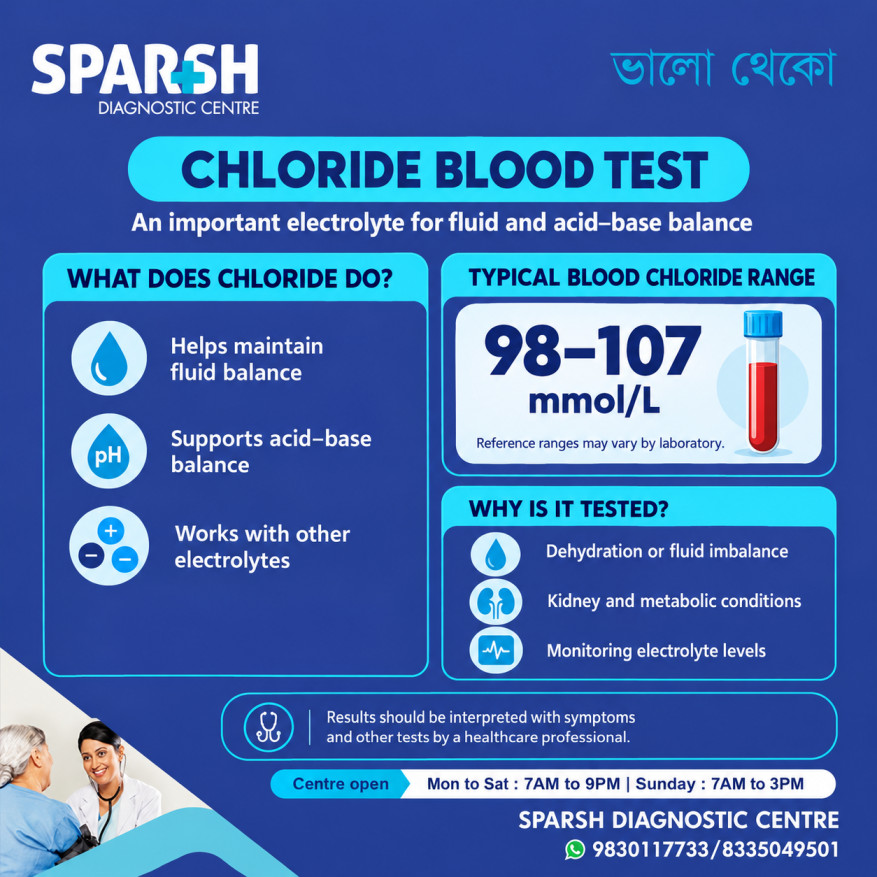
What is chloride used for in the body?
Chloride performs several essential functions that help your body work normally.
1. Maintaining fluid balance
Chloride works closely with sodium to regulate the distribution of water inside and outside cells. This helps maintain an appropriate fluid balance and supports normal blood volume.
Significant changes in chloride concentration may occur when the body loses too much fluid or cannot regulate electrolytes properly.
2. Supporting acid–base balance
Your blood must remain within a narrow pH range for organs and tissues to function correctly. Chloride works alongside bicarbonate and other electrolytes to help maintain this balance.
Abnormal chloride levels can sometimes accompany metabolic acidosis or metabolic alkalosis, conditions in which the blood becomes excessively acidic or alkaline.
3. Helping digestion
Chloride is an important component of hydrochloric acid in the stomach. This acid helps break down food, supports protein digestion and helps the body absorb certain nutrients.
4. Supporting nerve and muscle function
Electrolytes help nerve cells transmit electrical signals and muscles contract and relax. Chloride contributes to the electrical stability of cells and supports normal muscle and nerve activity.
5. Helping regulate blood volume and pressure
By contributing to fluid balance, chloride helps maintain normal blood volume. However, a high-salt diet may increase blood pressure in susceptible individuals, primarily because of its sodium content.
These functions explain why maintaining an appropriate chloride level is important for overall health.
What are normal chloride levels in the body?
For most adults, a commonly used reference range for blood chloride is approximately 98–107 mmol/L. Some laboratories use a range such as 96–106 mmol/L, so the reference interval printed on your laboratory report is the most relevant one for interpreting your result.
| Blood chloride result | General interpretation |
|---|---|
| Below the laboratory’s lower limit | Low chloride, or hypochloremia |
| Within the laboratory’s reference range | Usually considered normal |
| Above the laboratory’s upper limit | High chloride, or hyperchloremia |
Chloride may also be reported in milliequivalents per litre (mEq/L). For chloride, mmol/L and mEq/L have the same numerical value because each chloride ion carries a single negative charge.
A result outside the reference range does not automatically mean that you have a serious medical condition. Your doctor will consider your symptoms, medical history, hydration status and other test results, including sodium, potassium, bicarbonate and kidney function.
What is a chloride blood test?
A chloride blood test measures the concentration of chloride in a blood sample. It is often included in an electrolyte panel, a basic metabolic panel or a comprehensive metabolic panel.
Your doctor may recommend the test to:
- Investigate dehydration or suspected electrolyte imbalance.
- Assess kidney function alongside other tests.
- Investigate prolonged vomiting, diarrhea or unexplained weakness.
- Evaluate possible acid–base disturbances.
- Monitor certain medical conditions or treatments.
- Help investigate symptoms such as fatigue, muscle weakness or breathing difficulties.
The test usually involves collecting a small blood sample from a vein in your arm. The procedure generally takes only a few minutes.
You may not need special preparation for a chloride test alone. However, if it is performed alongside other investigations, your doctor may give you fasting instructions. Always follow the laboratory’s instructions and disclose any medicines or supplements you take.
What causes high chloride levels?
A high blood chloride level is known as hyperchloremia. It may occur when chloride concentration rises above the laboratory’s reference range.
Common causes of high chloride
Dehydration: Losing more water than your body takes in can concentrate electrolytes in the blood. Dehydration may develop during fever, heavy sweating, inadequate fluid intake or gastrointestinal illness.
Kidney problems: The kidneys regulate chloride balance. Certain kidney disorders can interfere with their ability to maintain normal electrolyte and acid–base levels.
Metabolic acidosis: In some forms of metabolic acidosis, chloride rises as bicarbonate falls. This pattern can occur in conditions such as renal tubular acidosis or gastrointestinal bicarbonate loss.
Excessive salt intake: A diet containing large amounts of salt increases chloride intake. However, dietary salt consumption does not necessarily cause an elevated blood chloride result in a person whose kidneys and fluid-regulating mechanisms are functioning normally.
Certain medications and medical treatments: Some medicines can affect electrolyte balance. Chloride levels may also change after particular intravenous fluid treatments.
Diarrhea and other fluid losses: Prolonged diarrhoea can cause the body to lose bicarbonate and fluid, sometimes resulting in a higher chloride level.
An elevated result should therefore be interpreted in context rather than attributed to salt consumption alone.
What happens when chloride is high?
Mild hyperchloremia may not cause noticeable symptoms. When symptoms occur, they are often related to the underlying condition responsible for the abnormal result.
Possible symptoms include:
- Fatigue or unusual weakness.
- Increased thirst.
- Dry mouth or signs of dehydration.
- Nausea or vomiting.
- Deep or rapid breathing in significant acid–base disturbances.
High chloride itself does not reliably predict how unwell someone is. The degree of abnormality, kidney function, bicarbonate level and overall clinical condition are important.
Seek prompt medical attention if an abnormal chloride result occurs alongside significant breathing difficulty, confusion, severe weakness or persistent vomiting.
Should I worry if my chloride is 108?
A chloride result of 108 mmol/L is only slightly above the upper limit of some commonly used reference ranges. Whether it is abnormal depends on the range provided by your laboratory.
If you feel well and your other blood results are normal, a value of 108 does not automatically indicate a serious problem. However, it should not be interpreted in isolation.
Your doctor may review:
- Sodium, potassium and bicarbonate levels.
- Kidney function tests.
- Recent fluid intake, fever, vomiting or diarrhoea.
- Medicines and recent intravenous fluids.
- Previous chloride results, if available.
Depending on the circumstances, your doctor may recommend monitoring, repeat testing or further investigation.
Do not try to correct a borderline result by drinking excessive amounts of water or making drastic dietary changes. The appropriate response depends on the cause of the elevation.
What causes low chloride levels?
Low blood chloride, also known as hypochloremia, occurs when the concentration falls below the laboratory’s reference range.
Possible causes include:
- Prolonged vomiting: Stomach acid contains hydrochloric acid, and repeated vomiting can cause significant chloride loss.
- Certain diuretics: These medicines increase urine production and may contribute to chloride depletion.
- Excessive sweating: Heavy or prolonged sweating can lead to fluid and electrolyte losses.
- Heart failure: Changes in fluid balance and treatment with diuretics may contribute to low chloride.
- Adrenal disorders: Conditions such as Addison’s disease can affect electrolyte regulation.
- Metabolic alkalosis: Chloride levels may fall when the body loses acid or develops an excess of bicarbonate.
- Certain lung conditions: Some chronic respiratory disorders can be associated with electrolyte and acid–base disturbances.
Low chloride is not always caused by inadequate dietary intake. In many cases, it reflects fluid loss, medication effects or an underlying medical condition.
How do you feel if your chloride is low?
Mild hypochloremia may not cause obvious symptoms. When symptoms develop, they depend on how low the level is, how quickly it changes and whether other electrolytes are also abnormal.
Possible symptoms include:
- Muscle weakness or cramps.
- Tiredness and low energy.
- Dizziness or lightheadedness.
- Irritability.
- Muscle twitching.
- Tingling sensations in the fingers or toes.
- Signs of dehydration.
Severe electrolyte disturbances may cause confusion, abnormal heart rhythms, seizures or other serious complications, particularly when several electrolytes are affected.
If you experience persistent vomiting, significant weakness, confusion or worsening symptoms, seek medical assessment rather than attempting to treat the problem with salt or electrolyte supplements yourself.
Is it better to have high or low chloride?
Neither high nor low chloride is desirable. The goal is to maintain chloride within the appropriate reference range for your laboratory and clinical situation.
Chloride is essential for normal body function, but an imbalance in either direction may indicate that fluid regulation, kidney function or acid–base balance has been disturbed.
A high result may be associated with dehydration, certain kidney conditions or metabolic acidosis. A low result may occur after prolonged vomiting, during diuretic treatment or with certain hormonal and metabolic disorders.
It is not helpful to compare high and low chloride as if one were healthier than the other. The important question is why the result is abnormal and whether treatment is needed.
Which food is highest in chloride?
Table salt is one of the most concentrated common dietary sources of chloride. It consists of sodium chloride and supplies both sodium and chloride.
Other sources include:
- Pickles and salted vegetables.
- Papad and salted snacks.
- Packaged soups and instant noodles.
- Salted nuts and savoury mixtures.
- Cheese and other salty dairy products.
- Sauces, chutneys and commercial condiments containing added salt.
- Processed and preserved foods.
Many everyday foods contain smaller amounts of naturally occurring chloride. The exact amount depends on the food, processing method and added salt.
In Indian diets, common sources include namkeen, packaged snacks, salted biscuits, pickles, papad and foods prepared with generous amounts of salt.
If your blood chloride is high, you do not necessarily need to eliminate every food containing chloride. Instead, your doctor may recommend reducing excessive salt intake, particularly if you also have high blood pressure or kidney disease.
What foods should I avoid if chloride is high?
There is no universal list of foods that every person with high blood chloride must avoid. Dietary recommendations depend on the cause of the abnormal result and your overall health.
If your doctor advises you to reduce salt intake, consider limiting:
- Highly salted packaged snacks.
- Pickles, papad and salted mixtures.
- Instant noodles and packaged soups.
- Processed foods with high sodium content.
- Ready-made sauces, salty chutneys and seasoning mixes.
- Foods to which you routinely add extra table salt.
You can flavour meals with lemon, ginger, garlic, herbs and spices instead of relying heavily on salt.
Fresh vegetables, fruits, pulses, whole grains and minimally processed foods can form part of a balanced diet. However, people with kidney disease, heart failure or other conditions may need individual dietary advice, including guidance on fluid and potassium intake.
Do not use potassium-based salt substitutes without medical advice, particularly if you have kidney disease or take medicines that increase potassium.
How to remove chloride from the body
Your kidneys normally remove excess chloride through urine. The body regulates this process in conjunction with sodium, water and other electrolytes.
If your chloride level is high, the aim is not to flush chloride out rapidly. It is to identify and address the reason for the imbalance.
Depending on the cause, management may involve:
- Correcting dehydration: If dehydration is responsible, your healthcare professional may recommend an appropriate fluid intake or rehydration treatment.
- Reviewing dietary salt: Reducing excessive salt consumption may be helpful when advised by your doctor.
- Evaluating kidney function: Kidney-related causes may require further testing and condition-specific treatment.
- Reviewing medication: Your doctor may assess whether a medicine or treatment is contributing to the abnormal result.
- Treating acid–base disturbances: If bicarbonate or blood pH is abnormal, treatment should target the underlying condition.
Do not take diuretics, bicarbonate supplements or other medicines to lower chloride without professional guidance. These treatments may worsen an electrolyte imbalance if used incorrectly.
Will drinking more water lower chloride levels?
Drinking water may help if an elevated chloride result is related to dehydration. However, extra water will not necessarily correct every case of hyperchloremia.
For example, kidney disorders and acid–base disturbances may require specific medical management. Drinking excessive amounts of water can also be harmful because it may dilute blood sodium and cause other electrolyte problems.
If you have heart failure, kidney disease or a condition requiring fluid restriction, follow your clinician’s fluid recommendations rather than increasing your intake independently.
The safest approach is to maintain appropriate hydration and investigate the cause of the abnormal result.
Does boiling water remove chloride?
No. Boiling ordinary drinking water does not reliably remove dissolved chloride. As water evaporates, dissolved minerals and salts may become more concentrated.
If your concern relates to chloride in drinking water rather than chloride in your blood, the appropriate treatment depends on the water’s composition and the reason for treatment.
Reverse osmosis and certain other specialised treatment systems can reduce dissolved chloride. Ordinary boiling is not a reliable method for doing so.
It is also important to distinguish chloride from free chlorine used in water disinfection. These are different chemical forms and do not behave identically during water treatment.
If you are concerned about your drinking water, a water-quality test can help determine whether treatment is necessary.
What medication causes high chloride?
Some medicines and medical treatments can contribute to elevated blood chloride, although the effect depends on the medication, dose, kidney function and other health factors.
Examples include:
- Ammonium chloride: This medicine can increase chloride because it supplies chloride ions.
- Certain corticosteroids: Some corticosteroid treatments can influence fluid and electrolyte balance.
- Some nonsteroidal anti-inflammatory drugs (NSAIDs): Medicines such as ibuprofen and naproxen may affect kidney function and fluid regulation in susceptible people.
- Certain intravenous fluids: Saline solutions contain sodium chloride, and large volumes can contribute to hyperchloremia in some clinical situations.
The relationship between a medicine and chloride levels is not always straightforward. Some medications may instead lower chloride, particularly certain diuretics.
Tell your doctor about all prescription medicines, over-the-counter drugs and supplements you take. Never stop a prescribed medicine or change its dose solely because your chloride result is high.
What increases chloride levels?
Blood chloride may increase because of changes in hydration, kidney function, acid–base balance, medication use or medical treatment.
Common contributing factors include dehydration, certain kidney disorders, bicarbonate loss during diarrhoea, metabolic acidosis and the administration of chloride-containing intravenous fluids.
A high-salt diet can increase chloride intake, but dietary intake alone does not explain every elevated blood result. Healthy kidneys usually regulate chloride effectively.
The most useful next step is to interpret the result alongside sodium, bicarbonate, kidney function and your clinical history.
When should you get a chloride blood test?
A chloride blood test may be appropriate when your doctor is investigating symptoms or monitoring a condition that can affect fluid and electrolyte balance.
You may be advised to have the test if you experience persistent vomiting, diarrhoea, unexplained fatigue, weakness, dehydration or breathing difficulties.
It is also commonly included in routine blood investigations and may be used to monitor people with kidney disease, heart failure or certain metabolic disorders.
The test is simple, but its value lies in helping your doctor understand what may be happening inside your body. Chloride results are most informative when assessed with other relevant blood tests.
If you need a chloride blood test in Kolkata, Sparsh Diagnostic Centre provides diagnostic services to support your healthcare needs. Speak with your healthcare professional about which tests are appropriate for you and how your results should be interpreted.
Frequently asked questions about chloride
What is the normal chloride level in the blood?
A commonly used adult reference range is approximately 98–107 mmol/L, although some laboratories use different limits. Always refer to the range printed on your laboratory report.
Is chloride harmful to humans?
Chloride is essential for life and is not harmful at normal physiological levels. Abnormally high or low blood chloride may indicate an underlying problem. Excessive salt consumption can also contribute to high blood pressure because of its sodium content.
What happens when chloride is high?
High chloride, or hyperchloremia, may be associated with dehydration, kidney problems, metabolic acidosis or certain treatments. Symptoms vary and may include thirst, fatigue, weakness or deeper breathing, depending on the underlying cause.
Should I worry if my chloride is 108?
A result of 108 mmol/L is only mildly elevated against reference ranges with an upper limit of 106 or 107. It does not automatically indicate a serious condition. Your doctor should interpret it alongside the laboratory’s range, other results and symptoms.
How can I lower high chloride levels naturally?
If dehydration is the cause, appropriate hydration may help. Reducing excessive salt intake may also be useful in some circumstances. However, high chloride caused by kidney problems or an acid–base disturbance may require medical treatment.
Will drinking more water lower chloride levels?
It may help if dehydration is responsible, but it is not a universal treatment. Avoid excessive water intake and follow any fluid restrictions recommended by your doctor.
Which foods contain the most chloride?
Table salt is a concentrated source. Pickles, papad, salted snacks, processed foods and salty condiments can also contribute substantial amounts.
What foods should I avoid if chloride is high?
If advised to reduce salt, limit highly salted snacks, pickles, papad, instant foods and salty packaged products. Your doctor or dietitian can recommend an appropriate diet based on the cause of the abnormal result.
Can low chloride make you feel tired?
Yes. Low chloride may be associated with fatigue, weakness, cramps or dizziness, although these symptoms are not specific to chloride deficiency and can occur for many other reasons.
What medications can increase chloride?
Ammonium chloride, some corticosteroids, certain NSAIDs in susceptible individuals and large amounts of chloride-containing intravenous fluids may contribute to elevated levels. Medication effects vary, so seek medical advice before changing treatment.
Does boiling water remove chloride?
No. Boiling does not reliably remove dissolved chloride and may concentrate it as water evaporates. Specialised treatment systems, such as reverse osmosis, may reduce chloride in drinking water.
Is high chloride a sign of kidney disease?
It can be, but it is not diagnostic on its own. Dehydration, acid–base disturbances and medical treatments can also increase chloride. Kidney function tests and other investigations help identify the cause.
Can I prevent chloride imbalance?
You can support normal electrolyte balance by maintaining appropriate hydration, eating a balanced diet and avoiding excessive salt consumption. However, some imbalances result from medical conditions or medications and cannot be prevented through diet alone.
When should I consult a doctor about chloride levels?
Consult your doctor if your result falls outside the laboratory’s reference range, especially if you have persistent vomiting, diarrhoea, unusual weakness or signs of dehydration. Severe breathing difficulty, confusion or marked weakness requires urgent medical assessment.
Conclusion
Chloride is an essential electrolyte that supports fluid balance, digestion, nerve function and the regulation of blood acidity. Maintaining an appropriate level is important, but both high and low chloride results need to be interpreted in context.
A mildly abnormal result, including a chloride level of 108 mmol/L, does not automatically mean that something serious is wrong. The laboratory’s reference range, your symptoms, hydration status, kidney function and other electrolyte results all matter.
Rather than trying to correct the number on your own, discuss an abnormal result with your healthcare professional. Identifying the underlying cause is the most reliable way to determine whether any treatment or follow-up testing is needed.
About Sparsh Diagnostic Centre
Sparsh Diagnostic Centre offers diagnostic services to support informed healthcare decisions. If your doctor has recommended a chloride blood test, contact the centre to enquire about test availability and preparation requirements.
To consult an Doctor or to get your chloride levels checked at Sparsh Diagnostic Centre, call our helpline number 9830117733.
#BhaloTheko
Disclaimer:
No content on this site, regardless of date, should ever be used as a substitute for direct medical advice from your doctor or other qualified clinician.

Sources and further reading
The following authoritative and specialist resources were consulted to develop this article. The content has been reorganised and expanded for readers seeking practical information about chloride and chloride blood test results.
- Harvard T.H. Chan School of Public Health – The Nutrition Source: Chloride
https://nutritionsource.hsph.harvard.edu/chloride/
Covers chloride’s functions, dietary sources, recommended intake and the effects of excess intake or deficiency. - MedlinePlus, U.S. National Library of Medicine – Chloride Blood Test
https://medlineplus.gov/lab-tests/chloride-blood-test/
Explains why chloride is measured, how the test is performed and what high or low results may indicate. - WebMD – Chloride Blood Test: Procedure, Reasons, and Results
https://www.webmd.com/a-to-z-guides/what-is-a-chloride-test
Provides patient-oriented information on test interpretation, common causes of abnormal levels and medication-related considerations. - Proteus Instruments – Chloride
https://proteus-instruments.com/chloride/
Explains chloride in environmental water, its chemical properties and its relevance to drinking-water quality. - PubChem, National Center for Biotechnology Information – Chloride
https://pubchem.ncbi.nlm.nih.gov/compound/chlorid
Provides chemical information about the chloride ion and related toxicological and biological information.




[…] goes unnoticed until detected through routine blood tests. Although it may sound uncommon, elevated chloride levels in the blood can significantly affect the body’s acid–base balance and overall health. […]
[…] imbalances of sodium, potassium, and chloride affect nerve […]
[…] electrolytes such as sodium, potassium, and chloride are carefully replaced to stabilize the body’s […]
[…] further testing, including a sweat chloride test, is conducted. This test measures the amount of chloride (salt) in the sweat, with high levels indicating […]
[…] can result in the loss of essential electrolytes like sodium, potassium, and chloride, which are critical for maintaining normal bodily functions. An electrolyte imbalance can lead to […]
[…] inside cells can lead to dehydration, swelling, and other health problems. Along with sodium and chloride, potassium helps maintain osmotic pressure, which regulates water balance throughout the […]
[…] balance, muscle function, and nerve signaling. These include sodium, potassium, calcium, magnesium, chloride, phosphate, and bicarbonate. An imbalance in these electrolytes can lead to serious health […]
[…] fluid balance in the body. It works in conjunction with other electrolytes, such as potassium and chloride, to regulate the movement of fluids in and out of cells. This balance is crucial for maintaining […]