


Thalassemia is an inherited blood disorder that affects the body’s ability to make haemoglobin, the protein in red blood cells responsible for carrying oxygen. Depending on the type and severity, thalassemia may cause anything from no noticeable symptoms to severe anaemia requiring regular blood transfusions.
This is particularly important in India, where thalassemia is relatively common and carrier screening can play an important role in family planning.
One of the biggest misconceptions is that all thalassemia is the same. Thalassemia minor, thalassemia intermedia and thalassemia major are very different in terms of symptoms, treatment and long-term risks. A person with thalassemia trait may live a completely normal life, while someone with transfusion-dependent thalassemia may require lifelong medical care.
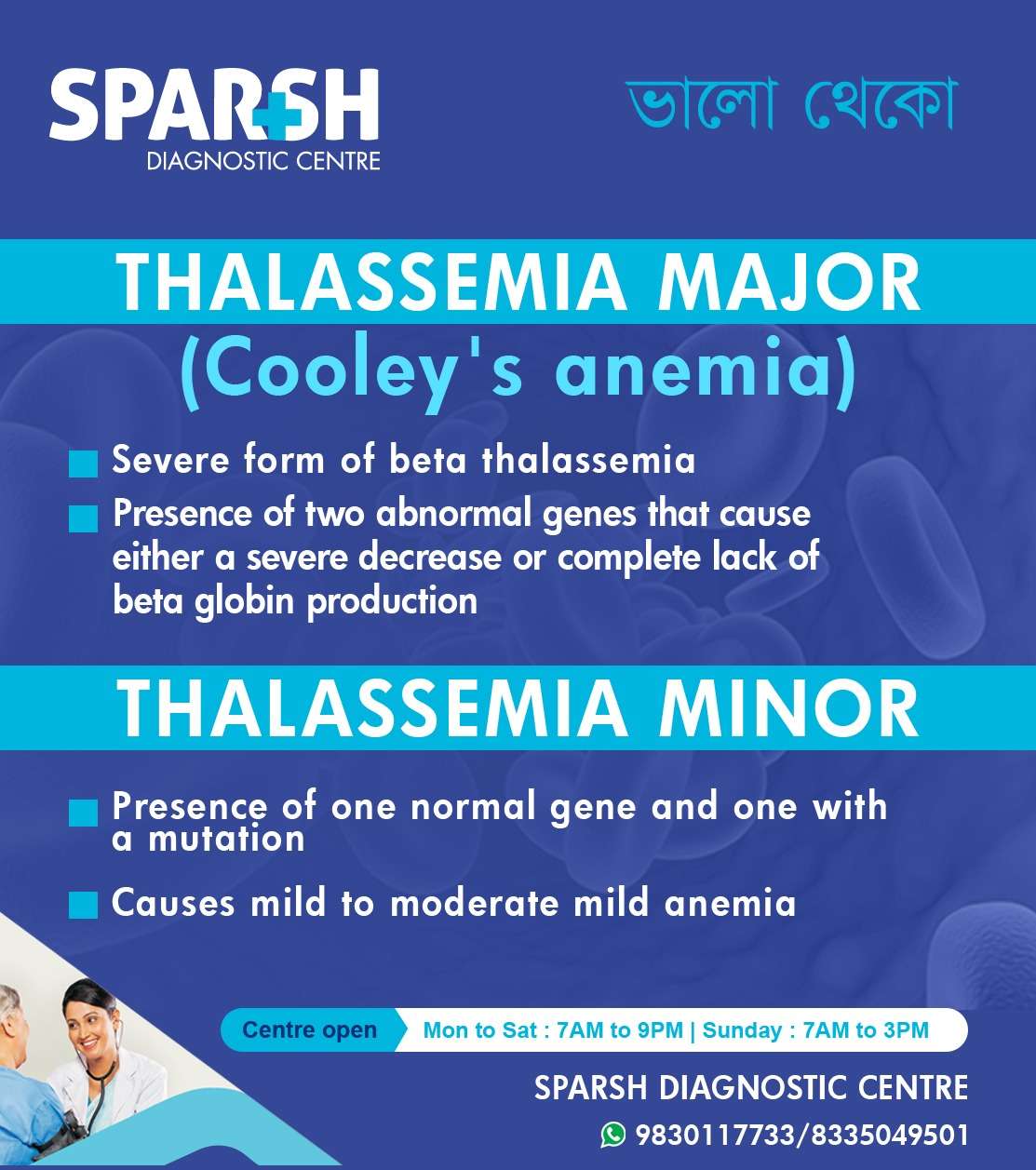
The good news is that diagnosis and treatment have improved significantly. Modern transfusion practices, iron-chelation medicines, stem-cell transplantation and newer disease-modifying and gene therapies are giving many patients better long-term outcomes than in the past.
What is thalassemia?
It is a group of inherited blood disorders in which the body produces insufficient or abnormal amounts of the globin chains needed to make haemoglobin.
Haemoglobin contains alpha and beta globin chains. Depending on which chain is affected, thalassemia is broadly classified as:
- Alpha thalassemia
- Beta thalassemia
Doctors also describe it according to its severity:
- Thalassemia trait or carrier
- Thalassemia minor
- Thalassemia intermedia
- Thalassemia major
Thalassemia trait may cause no symptoms or only mild anaemia, whereas severe forms can cause significant anaemia and may require regular blood transfusions.
What is thalassemia caused by?
It is caused by inherited changes or mutations in the genes responsible for producing alpha or beta globin.
It is not caused by something a person ate, a particular lifestyle, stress or an infection. The altered gene is passed from parents to their children.
For example, when both parents carry a beta-thalassemia trait, their child may inherit an altered gene from each parent and develop beta-thalassemia major. This is why carrier screening and genetic counselling are so important before pregnancy.
What are the symptoms of thalassemia?
Symptoms depend largely on the severity of the condition.
Symptoms of thalassemia minor or trait
Many people feel completely well. Some may have mild anaemia.
Possible symptoms include:
- Mild tiredness
- Weakness
- Pale skin
- Mild anaemia
The first clue may actually come from a routine blood test showing a low haemoglobin level or unusually small red blood cells.
Symptoms of moderate or severe thalassemia
More serious forms can cause:
- Severe fatigue
- Weakness
- Pale or yellowish skin
- Shortness of breath
- Fast heartbeat
- Dizziness
- Headaches
- Poor concentration
- Slow growth in children
- Delayed puberty
- Enlarged spleen
- Bone changes
- Jaundice
- Dark urine
Moderate and severe forms are often diagnosed during childhood because significant anaemia becomes apparent early in life. Milder forms may not be discovered until adolescence or adulthood, sometimes during a routine blood test.

What happens to a person with thalassemia?
The answer depends on the type.
In mild thalassemia, a person may have few or no symptoms and may not need any specific treatment.
In severe thalassemia, the body cannot make enough effective haemoglobin. As a result, tissues receive less oxygen and the bone marrow works harder to produce more red blood cells.
Over time, untreated severe thalassemia can cause:
- Severe anaemia
- Enlarged spleen
- Bone expansion and deformities
- Poor growth
- Delayed puberty
- Heart problems
- Liver complications
- Hormonal and endocrine problems
- Iron overload
Frequent blood transfusions can also cause iron to accumulate in the body. Excess iron is particularly dangerous because it can damage organs such as the heart, liver and endocrine glands.
What is the difference between anaemia and thalassemia?
This is an important distinction.
Anaemia is a condition, while thalassemia is an inherited disorder that can cause anaemia.
Anaemia means the blood does not have enough healthy red blood cells or haemoglobin to adequately carry oxygen. It can have many causes, including iron deficiency, vitamin B12 deficiency, blood loss, chronic disease and inherited disorders.
Thalassemia is specifically caused by inherited genetic changes affecting haemoglobin production.
So, a person can have anaemia without having thalassemia, but a person with significant thalassemia may develop anaemia.
This distinction matters because treating every case of anaemia with iron can be inappropriate. A person with thalassemia should not take iron supplements unless iron deficiency has actually been demonstrated.
Which thalassemia is more serious?
Generally, thalassemia major is more serious than thalassemia minor.
Thalassemia major, particularly transfusion-dependent beta-thalassemia, can cause severe anaemia and often requires regular blood transfusions.
Thalassemia minor or trait is usually much milder and often requires no treatment.
Thalassemia intermedia falls somewhere between these two, although the severity can vary considerably from person to person.
In simple terms:
Trait/minor → usually mild
Intermedia → variable/moderate
Major → severe, often transfusion-dependent
The exact clinical picture depends on the genetic changes involved, so labels alone do not tell the whole story.
Is thalassemia like leukemia?
No. Thalassemia and leukemia are completely different diseases.
Thalassemia is an inherited genetic disorder affecting haemoglobin production.
Leukemia is a type of cancer involving blood-forming tissues, particularly the bone marrow, that leads to abnormal production of blood cells.
Thalassemia does not mean a person has cancer, and having thalassemia does not automatically mean they will develop leukemia.
How to confirm thalassemia?
A diagnosis usually begins with a complete blood count (CBC).
Doctors may look for:
- Low haemoglobin
- Low MCV
- Low MCH
- Microcytic red blood cells
- A red-cell pattern suggestive of a haemoglobin disorder
Further testing may include haemoglobin analysis, HPLC or haemoglobin electrophoresis.
For beta-thalassemia trait, an elevated HbA2 level can be particularly useful. Genetic testing may be needed in certain cases, especially when alpha thalassemia is suspected or when the blood-test findings are unclear.
A practical diagnostic pathway is:
CBC → red-cell indices → HPLC/haemoglobin analysis → genetic testing when indicated
Importantly, haemoglobin electrophoresis alone cannot exclude every form of thalassemia, particularly some forms of alpha thalassemia.
At what age is thalassemia usually diagnosed?
The age of diagnosis depends on severity.
Severe thalassemia: often becomes apparent during infancy or early childhood.
Milder thalassemia: may be diagnosed during childhood, adolescence or adulthood, sometimes incidentally during a routine CBC.
Children with beta-thalassemia major are often relatively well at birth but can develop symptoms during the first two years of life.
Why can’t thalassemia minors marry?
This is a common question, particularly in India, but the statement that “thalassemia minors cannot marry” is incorrect.
A person with thalassemia minor can marry.
The important issue is whether the other partner is also a carrier.
If both partners carry certain thalassemia mutations, there may be a significant risk of having a child with a severe form of thalassemia.
That does not mean two carriers are forbidden from marrying. Instead, couples should be offered genetic counselling and appropriate reproductive options.
Depending on the specific genetic combination, doctors may discuss prenatal testing or assisted reproductive options such as IVF with preimplantation genetic testing.
This is why thalassemia screening before marriage or pregnancy can be valuable, particularly when there is a family history of the condition.
Why can’t thalassemia patients take iron?
This requires an important clarification: not every person with thalassemia has iron overload, and not every person with thalassemia must completely avoid dietary iron.
The concern is unnecessary iron supplementation.
Thalassemia can increase iron absorption, and people receiving repeated blood transfusions receive additional iron with each transfusion. The body has limited ability to remove excess iron naturally. Over time, iron can accumulate in organs and cause serious damage.
Therefore, iron tablets should not be taken simply because a blood test shows anaemia.
If a person with thalassemia genuinely has iron deficiency, a doctor may prescribe iron after confirming it with appropriate testing.
Can I take B12 if I have thalassemia?
Vitamin B12 is not automatically prohibited in thalassemia.
If someone has documented vitamin B12 deficiency, supplementation may be appropriate.
However, B12 does not treat the underlying genetic problem responsible for thalassemia.
Similarly, folic acid is sometimes prescribed because it supports red blood cell production.
The safest approach is to check whether a deficiency actually exists rather than taking supplements unnecessarily.
What food should thalassemia patients avoid?
There is no single universal “thalassemia diet.”
Dietary advice depends on the type of thalassemia, iron levels, transfusion history and other medical conditions.
For people at risk of iron overload, doctors may advise avoiding unnecessary iron supplements and iron-containing fortified products. However, patients should not drastically restrict nutritious foods without medical advice.
A balanced diet containing:
- Vegetables
- Fruits
- Whole grains
- Adequate protein
- Calcium-rich foods
- Appropriate vitamins and minerals
is generally important.
People with transfusion-dependent thalassemia should work with their treating doctor or dietitian rather than following generic internet lists of “forbidden foods.”
Which organs are most affected by thalassemia?
The organs most vulnerable to complications include the:
Heart: Iron overload can contribute to cardiomyopathy, heart failure and abnormal heart rhythms.
Liver: Excess iron can accumulate in the liver and cause progressive liver injury.
Endocrine glands: Iron deposition can affect the pancreas, pituitary and other hormone-producing organs, potentially contributing to diabetes, delayed puberty and fertility problems.
Spleen: Increased destruction of abnormal or damaged red blood cells can cause significant enlargement.
Bones: Increased bone marrow activity can cause bone expansion, thinning and deformities.
Regular monitoring is therefore an important part of long-term thalassemia care.
What kind of doctor treats thalassemia?
A haematologist is the main specialist who manages thalassemia.
Depending on the patient’s age and complications, care may also involve:
- Paediatricians
- Haematology specialists
- Endocrinologists
- Cardiologists
- Hepatologists
- Genetic counsellors
- Fertility specialists
Thalassemia is a long-term condition, so coordinated follow-up can be important, particularly for people requiring regular transfusions.
Can thalassemia be cured?
There is an important difference between treating thalassemia and potentially achieving a curative outcome.
For many patients, treatment focuses on controlling anaemia, reducing transfusion complications and preventing iron-related organ damage.
A haematopoietic stem-cell transplant (HSCT) can potentially cure thalassemia in selected patients, but it is not suitable for everyone and carries significant risks.
Gene therapies have also changed the treatment landscape for some patients with transfusion-dependent beta-thalassemia.
In the United States, for example, the FDA has approved gene therapies for eligible patients with transfusion-dependent beta-thalassemia. In July 2026, the FDA expanded approval of Casgevy (exagamglogene autotemcel) to patients aged 2 years and older with transfusion-dependent beta-thalassemia.
These treatments are specialised and their availability, eligibility, cost and long-term follow-up requirements vary by country and patient.
What is the best treatment for thalassemia?
There is no single best treatment for every patient.
Treatment depends on whether the person has trait, non-transfusion-dependent thalassemia or transfusion-dependent disease.
Treatment may include:
Blood transfusions
Regular red blood cell transfusions are a cornerstone of treatment for severe, transfusion-dependent thalassemia.
Iron chelation therapy
Repeated transfusions can cause iron overload. Chelation medicines help remove excess iron and reduce the risk of organ damage.
Folic acid
Folic acid may be recommended in some patients to support red blood cell production.
Disease-modifying medicines
Newer medicines can help some patients reduce transfusion requirements or improve haemoglobin levels.
A major recent development is mitapivat (Aqvesme). In 2025, the FDA approved it for adults with alpha- or beta-thalassemia-associated anaemia, making it the first approved oral treatment for beta-thalassemia and the first FDA-approved drug for alpha thalassemia.
Stem-cell transplantation and gene therapy
Selected patients may be candidates for potentially curative approaches such as stem-cell transplantation or gene therapy.
The newly published 2026 recommendations from the Indian Society of Haematology and Blood Transfusion also emphasise early diagnosis, rational transfusion, iron-overload monitoring, chelation, genetic counselling and newer disease-modifying and curative approaches.
What are the latest news on thalassemia?
Thalassemia treatment is moving beyond simply managing symptoms.
Three developments are particularly noteworthy:
1. Gene therapy is becoming more accessible.
The FDA’s July 2026 decision expanded Casgevy’s eligibility to younger children aged 2 years and above with transfusion-dependent beta-thalassemia.
2. New oral treatment options are emerging.
Mitapivat was approved for adults with alpha- or beta-thalassemia-associated anaemia. In clinical trials, it improved haemoglobin in some non-transfusion-dependent patients and reduced transfusion requirements in some transfusion-dependent patients.
3. India has updated its clinical recommendations.
The 2026 Indian Society of Haematology and Blood Transfusion recommendations address early diagnosis, transfusion practices, iron overload, endocrine and cardiac complications, genetic counselling, stem-cell transplantation and newer treatments.
These developments are encouraging, but newer treatments are not appropriate for everyone. Treatment decisions should be made by a specialist after assessing the patient’s exact thalassemia type, transfusion status, age and overall health.
How many years can a thalassemia patient live?
There is no single life expectancy number that applies to everyone with thalassemia.
A person with thalassemia trait may have a normal lifespan and usually does not require disease-specific treatment.
For people with severe thalassemia, life expectancy depends heavily on:
- Access to regular transfusions
- Quality of transfusion care
- Iron-chelation adherence
- Control of iron overload
- Heart and liver health
- Endocrine complications
- Infections
- Access to specialist care
- Eligibility for curative or disease-modifying treatment
Modern treatment has substantially improved outcomes compared with the past. Consistent transfusion and chelation therapy are particularly important for preventing severe anaemia and iron-related organ damage.
What are the dangers of thalassemia?
The major dangers are usually associated with moderate or severe disease and its complications.
These include:
- Severe anaemia
- Iron overload
- Heart failure
- Abnormal heart rhythms
- Liver damage
- Diabetes and other endocrine disorders
- Delayed puberty
- Fertility problems
- Bone deformities
- Enlarged spleen
- Increased infection risk
- Transfusion reactions
- Transfusion-transmitted infections, despite modern screening
- Complications related to treatment
Iron overload is one of the most important long-term concerns because iron can accumulate silently before organ damage becomes obvious.
Can thalassemia major cause death?
Yes, untreated or poorly controlled severe thalassemia can be life-threatening.
Severe anaemia itself can place considerable strain on the heart. Over time, iron overload can cause serious heart and liver complications and may become life-threatening.
However, this should not be interpreted as meaning that every person with thalassemia major will have a short life. Modern transfusion protocols, iron chelation, monitoring and newer treatments have significantly changed the outlook.
The key is early diagnosis and consistent specialist care.
Can thalassemia be prevented?
The genetic condition itself cannot usually be prevented after a person has inherited the relevant genes.
However, the risk of having a child with severe thalassemia can be assessed.
Carrier screening before marriage or pregnancy can identify people who carry thalassemia-associated gene changes. When both partners are carriers, genetic counselling can explain the possible risks and available reproductive options.
This makes screening especially valuable in families with a history of thalassemia.
Frequently Asked Questions About Thalassemia
Is thalassemia the same as iron-deficiency anaemia?
No. Iron-deficiency anaemia occurs when the body does not have enough iron to make adequate haemoglobin. Thalassemia is an inherited genetic disorder affecting globin production.
Can a person with thalassemia minor live normally?
Yes. Most people with thalassemia trait or minor have few or no symptoms and can lead normal lives. They should, however, know their carrier status because it can affect their children’s genetic risk.
Which thalassemia is worse?
Generally, thalassemia major is more severe than thalassemia minor. Transfusion-dependent beta-thalassemia is among the severe forms requiring regular medical management.
Can thalassemia minor turn into thalassemia major?
No. Thalassemia minor does not progressively transform into thalassemia major. They are different inherited genetic states.
Can thalassemia patients exercise?
Many people with well-managed thalassemia can exercise, but the appropriate level depends on disease severity, haemoglobin levels, heart health and treatment. Patients with severe disease should discuss exercise plans with their treating doctor.
Is thalassemia hereditary?
Yes. Thalassemia is inherited through genes passed from parents to children.
Does thalassemia require lifelong treatment?
Trait/minor usually does not require intensive treatment. Severe transfusion-dependent thalassemia generally requires long-term specialist care, including transfusions and management of iron overload.
Can a thalassemia patient take iron tablets?
Not unless iron deficiency has been confirmed and a doctor recommends supplementation. Unnecessary iron can contribute to iron overload.
Can thalassemia patients take vitamin B12?
Yes, when clinically indicated. B12 supplementation can be used to correct a confirmed deficiency, but it does not cure thalassemia.
Can two thalassemia carriers marry?
Yes. Being a carrier is not a reason someone cannot marry. However, if both partners are carriers, genetic counselling is strongly recommended before having children.
Is there a blood test for thalassemia?
Yes. A CBC can provide the initial clues, while haemoglobin analysis/HPLC, electrophoresis and, when necessary, genetic testing can help confirm the diagnosis.
Final thoughts
Thalassemia is a genetic blood disorder, not simply another form of anaemia. The severity ranges from an asymptomatic carrier state to severe transfusion-dependent disease.
The most important steps are recognising the condition early, confirming the exact type, avoiding unnecessary iron supplementation, monitoring for iron overload and maintaining regular specialist care when treatment is required.
For couples planning a family, thalassemia carrier screening and genetic counselling can be especially valuable. And for people already living with thalassemia, advances in transfusion medicine, chelation, disease-modifying medicines, stem-cell transplantation and gene therapy mean that treatment options are expanding.
If persistent anaemia, unusually low MCV, a family history of thalassemia or unexplained fatigue is present, appropriate blood testing can help determine whether further evaluation is needed.
Sparsh Diagnostic Centre can help with the laboratory investigations needed for evaluation of anaemia and suspected haemoglobin disorders. For testing information and appointments, contact 9830117733 / 8335049501.
This article is intended for general health education and should not replace consultation with a qualified haematologist or physician. Treatment and supplementation should always be individualised.
#BhaloTheko
Disclaimer:
No content on this site, regardless of date, should ever be used as a substitute for direct medical advice from your doctor or other qualified clinician.



[…] such as sickle cell anemia, thalassemia, or autoimmune hemolytic anemia cause the rapid breakdown of red blood cells, leading to the […]
[…] Thalassemia […]
[…] Understanding Thalassemia […]
Very informative. Thanks Sparsh for publishing this