Tonsils and adenoids are small collections of immune tissue that play an important role in protecting the body against infections. They are particularly active during childhood, when the immune system is still developing. Although most people have healthy tonsils and adenoids without ever experiencing problems, these tissues can sometimes become infected, enlarged or repeatedly inflamed.
Enlarged tonsils and adenoids are relatively common in children and may cause symptoms such as snoring, mouth breathing, recurrent throat infections, difficulty swallowing and disturbed sleep. In some cases, they can even interfere with normal breathing during the night.
But does having enlarged tonsils or adenoids always mean surgery is necessary? Not at all. Many cases can be managed with medication, observation and appropriate medical care. Surgery is generally considered when symptoms become persistent, infections recur frequently or enlarged tissues interfere with breathing and other essential functions.
Understanding the difference between tonsils and adenoids, recognising the warning signs and knowing when to consult an ENT (ear, nose and throat) specialist can help patients and parents make informed decisions about treatment.
What are tonsils and adenoids?
Tonsils and adenoids are part of the body’s immune system. They belong to a collection of lymphatic tissues known as Waldeyer’s ring, which forms a protective barrier around the entrance to the respiratory and digestive tracts.
Their primary function is to recognise germs entering through the mouth and nose and help the immune system respond to potential infections.
Although they perform similar functions, tonsils and adenoids are located in different parts of the throat.
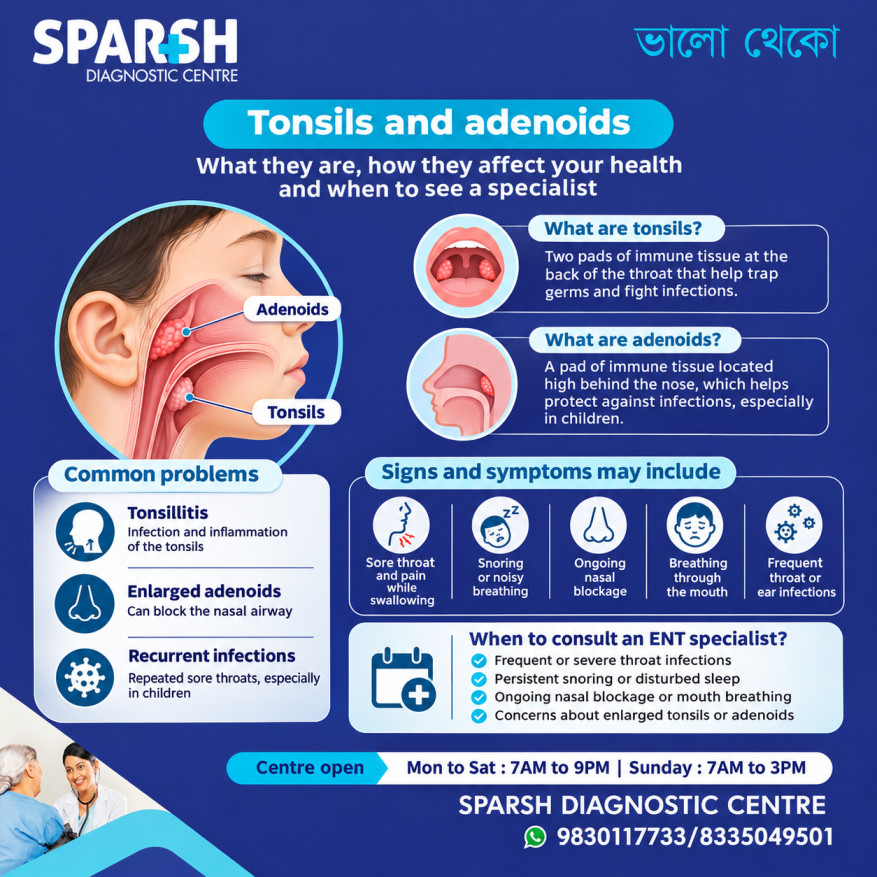
What are tonsils?
Tonsils are two oval-shaped masses of lymphatic tissue located at the back of the throat, one on either side. They can usually be seen by opening the mouth and looking towards the throat.
They help identify bacteria and viruses entering through the mouth and nose and contribute to the body’s immune response.
Tonsils are particularly active during childhood. However, they can sometimes become inflamed or infected, resulting in a condition known as tonsillitis.
What are adenoids?
Adenoids are a collection of lymphatic tissue located high behind the nose, above the roof of the mouth and towards the back of the nasal cavity.
Unlike tonsils, adenoids cannot normally be seen by simply opening the mouth. An ENT specialist may need to use a small flexible camera or other examination methods to assess them.
Adenoids help trap germs entering through the nose. However, when they become enlarged, they can obstruct airflow through the nasal passages and affect the functioning of the Eustachian tubes, which connect the middle ear to the back of the nose.
This may lead to nasal blockage, mouth breathing, snoring and recurrent ear problems, particularly in children.
What do tonsils and adenoids do?
Tonsils and adenoids act as the body’s first line of immune defence against germs entering through the mouth and nose.
Their important functions include:
Trapping germs: They come into contact with bacteria and viruses entering the respiratory and digestive tracts.
Supporting immune responses: They contain immune cells that help recognise and respond to harmful microorganisms.
Producing antibodies: They participate in the development of immune responses, including antibody production.
Supporting childhood immunity: They play a role in helping the developing immune system recognise different infectious agents.
Although these tissues are important during childhood, they are not essential for survival. Other parts of the immune system continue to protect the body if the tonsils or adenoids are removed.
What is the difference between adenoids and tonsils?
Tonsils and adenoids are similar in composition and function, but their location, visibility and the problems they cause are different.
| Feature | Tonsils | Adenoids |
|---|---|---|
| Location | Back of the throat, on either side | Behind the nose, above the roof of the mouth |
| Visibility | Usually visible when the mouth is opened | Not normally visible through the mouth |
| Main function | Help detect germs entering through the mouth and nose | Help detect germs entering through the nose |
| Common problems | Tonsillitis, enlarged tonsils and recurrent throat infections | Enlarged adenoids, nasal blockage and recurrent ear problems |
| Common symptoms | Sore throat, painful swallowing and fever | Mouth breathing, snoring and nasal congestion |
| Surgical removal | Tonsillectomy | Adenoidectomy |
Both structures are part of the immune system, and either can become enlarged or infected. Sometimes, both cause problems simultaneously, particularly in children with sleep-related breathing difficulties.
Common problems affecting tonsils and adenoids
Tonsils and adenoids can develop several problems, ranging from mild inflammation to significant enlargement that interferes with breathing.
1. Tonsillitis
Tonsillitis refers to inflammation of the tonsils, usually caused by a viral or bacterial infection. It is particularly common among school-going children but can affect adults as well.
Common symptoms include:
Red, swollen tonsils.
White or yellow patches on the tonsils.
Ear ache accompanying a throat infection.
Viral infections are a common cause of tonsillitis. Bacterial infections, particularly those caused by group A Streptococcus, can also be responsible.
Treatment depends on the underlying cause. Viral tonsillitis generally improves with supportive care, while confirmed or strongly suspected bacterial infections may require antibiotics prescribed by a doctor.
2. Enlarged tonsils
Sometimes, the tonsils become larger than normal, either because of repeated infections or natural tissue enlargement.
Enlarged tonsils do not always indicate an active infection. Some children have naturally large tonsils without experiencing any symptoms.
However, significantly enlarged tonsils can narrow the airway and cause:
Snoring and noisy breathing.
Difficulty breathing during sleep.
Pauses in breathing during the night.
A muffled or altered voice.
Restless sleep and daytime tiredness.
When enlarged tonsils interfere with normal breathing or swallowing, an ENT specialist should evaluate the condition.
3. Enlarged adenoids
Enlarged adenoids, also known as adenoid hypertrophy, occur when the adenoid tissue becomes excessively large.
This condition is particularly common in children because adenoids naturally grow during early childhood as the immune system develops.
Enlarged adenoids can partially or completely obstruct the nasal airway.
Common symptoms include:
Persistent nasal congestion.
Frequent mouth breathing.
Snoring during sleep.
Noisy breathing.
A blocked or nasal-sounding voice.
Recurrent ear infections.
Difficulty sleeping comfortably.
In some children, prolonged nasal obstruction can affect sleep quality, concentration and general well-being.
4. Recurrent infections
Repeated infections of the tonsils or adenoids can become troublesome, particularly when they interfere with school attendance, daily activities, sleep or eating.
Some children experience several episodes of tonsillitis every year. Others develop recurring ear infections associated with enlarged or infected adenoids.
Repeated infections may require further evaluation to determine whether medical management is sufficient or whether surgery should be considered.
What are the signs and symptoms of enlarged tonsils and adenoids?
The symptoms depend on which tissue is affected and how significantly it is enlarged or infected.
Some symptoms overlap, making it difficult for parents to distinguish between tonsil and adenoid problems without a medical examination.
The following signs deserve attention:
| Symptom | Possible association |
|---|---|
| Persistent sore throat | Tonsillitis |
| Painful swallowing | Tonsillitis or enlarged tonsils |
| Snoring | Enlarged tonsils or adenoids |
| Mouth breathing | Enlarged adenoids or tonsils |
| Persistent nasal blockage | Enlarged adenoids |
| Recurrent ear infections | Enlarged or infected adenoids |
| Pauses in breathing during sleep | Sleep-disordered breathing |
| Fever and swollen tonsils | Tonsillitis |
| Restless sleep | Airway obstruction during sleep |
One particularly important symptom is persistent snoring in children.
Occasional snoring during a cold is not necessarily concerning. However, regular snoring accompanied by gasping, choking or pauses in breathing may indicate obstructive sleep apnoea.
This condition occurs when the upper airway becomes partially or completely blocked during sleep. It can affect sleep quality and, in some children, contribute to behavioural difficulties, poor concentration and growth-related concerns.
Parents should not ignore persistent breathing problems during sleep.
Are adenoids a serious problem?
Enlarged adenoids are not necessarily serious. Many children experience some degree of adenoid enlargement during childhood, and the tissue often becomes smaller naturally as they grow older.
However, enlarged adenoids can become a significant health concern when they obstruct normal airflow or affect the middle ear.
Potential complications include:
1. Sleep-disordered breathing: Enlarged adenoids can obstruct airflow through the nose and contribute to snoring and obstructive sleep apnoea.
2. Recurrent ear infections: Adenoids are located close to the openings of the Eustachian tubes. Enlargement can interfere with normal middle-ear ventilation, potentially causing repeated ear infections or fluid accumulation.
3. Hearing difficulties: Persistent fluid in the middle ear may result in temporary conductive hearing loss.
4. Chronic nasal obstruction: Children may breathe through their mouths instead of their noses, particularly during sleep.
5. Disturbed sleep: Poor-quality sleep can contribute to daytime tiredness, irritability and difficulty concentrating.
6. Speech changes: Persistent nasal obstruction may alter the way a child sounds while speaking.
The seriousness depends on the degree of enlargement, the duration of symptoms and whether complications have developed.
A child with enlarged adenoids but no significant symptoms may only need observation. However, persistent nasal blockage, breathing difficulties or recurrent ear problems warrant an ENT assessment.
What causes enlarged tonsils and adenoids?
Several factors can contribute to enlargement of these tissues.
Infections: Repeated viral or bacterial infections can cause inflammation and enlargement of the tonsils and adenoids.
Immune system activity: Tonsils and adenoids are particularly active during childhood. Their natural growth and immune activity can make them relatively large.
Allergies: Allergic rhinitis and ongoing nasal inflammation may contribute to persistent nasal symptoms and associated adenoid problems.
Environmental irritants: Exposure to cigarette smoke, dust and other irritants can aggravate existing respiratory symptoms.
Individual anatomical differences: Some children naturally have larger tonsils or adenoids than others.
It is important to understand that enlarged tonsils or adenoids do not always mean an infection is present. The underlying cause needs to be assessed before treatment is recommended.
How are tonsil and adenoid problems diagnosed?
An ENT specialist generally diagnoses tonsil and adenoid problems through a combination of medical history, physical examination and, when necessary, additional investigations.
The evaluation may include:
1. Physical examination
The doctor examines the throat to assess the size, appearance and condition of the tonsils.
Redness, swelling, white patches and other abnormalities may indicate infection or inflammation.
2. Nasal endoscopy
Since adenoids are located behind the nose and cannot normally be seen through the mouth, a flexible nasal endoscope may be used.
This is a thin instrument with a light and camera that allows the specialist to examine the nasal passages and assess the size of the adenoids.
3. Throat swab
If bacterial tonsillitis is suspected, a throat swab or rapid antigen test may be recommended to identify a possible streptococcal infection.
4. X-ray of the nasopharynx
In selected cases, an X-ray may help assess adenoid enlargement and the degree of nasal airway obstruction. Nasal endoscopy generally provides a more direct assessment.
5. Sleep study
A sleep study, also known as polysomnography, may be recommended when a child has symptoms suggesting obstructive sleep apnoea.
It monitors breathing patterns, oxygen levels, heart rate and other parameters during sleep.
The specialist decides which investigations are necessary based on the patient’s symptoms and clinical findings.
How are enlarged tonsils and adenoids treated?
Treatment depends on the severity of symptoms, the underlying cause and whether complications are present.
Not every patient with enlarged tonsils or adenoids requires surgery.
1. Observation and monitoring
If the enlargement is mild and does not interfere with breathing, swallowing or sleep, the doctor may recommend regular monitoring.
This is particularly relevant for children because adenoids naturally shrink as they grow older.
2. Medication
Medication may be prescribed depending on the underlying condition.
Treatment options may include:
Antibiotics for appropriate bacterial infections.
Nasal corticosteroid sprays in selected cases of nasal inflammation and adenoid-related obstruction.
Antihistamines when allergic rhinitis is contributing to symptoms.
Pain-relieving medication for throat discomfort and fever.
Antibiotics are not effective against viral infections and should not be used without appropriate medical advice.
3. Tonsillectomy
Tonsillectomy is a surgical procedure in which the tonsils are removed.
It may be recommended when a patient experiences frequent, documented episodes of tonsillitis, significant airway obstruction or certain complications involving the tonsils.
4. Adenoidectomy
Adenoidectomy is the surgical removal of the adenoids.
It may be recommended when enlarged adenoids cause persistent nasal obstruction, sleep-disordered breathing or recurrent ear problems that do not improve with appropriate treatment.
5. Adenotonsillectomy
When both the tonsils and adenoids are contributing to significant symptoms, the ENT specialist may recommend removing both during the same operation.
This procedure is commonly known as adenotonsillectomy.
The decision should always be based on an individual clinical assessment rather than the size of the tissues alone.
Why do tonsils and adenoids need to be removed?
Tonsils and adenoids are not routinely removed simply because they are enlarged. Surgery is considered when their presence causes more problems than the benefits they provide.
The most common reasons for surgical removal include:
1. Recurrent tonsillitis: Frequent and documented episodes of tonsil infection that significantly affect the patient’s health and daily life may justify tonsillectomy.
2. Obstructive sleep apnoea: Enlarged tonsils and adenoids can obstruct the airway during sleep, causing repeated interruptions in breathing.
3. Persistent nasal obstruction: Severely enlarged adenoids may make it difficult to breathe through the nose, resulting in habitual mouth breathing.
4. Recurrent ear infections: Adenoid enlargement may contribute to repeated middle-ear infections and fluid accumulation, sometimes affecting hearing.
5. Difficulty swallowing: Very large tonsils can interfere with swallowing food and liquids.
6. Other complications: Recurrent abscesses around the tonsils and certain suspicious tissue changes may require surgical assessment.
For recurrent throat infections in children, widely used clinical guidelines consider the frequency and documentation of episodes before recommending surgery. Common thresholds include seven episodes in one year, five episodes per year for two years, or three episodes per year for three years.
These are clinical decision-making criteria, not automatic instructions to operate. The child’s overall health, severity of symptoms and other modifying factors also matter.
What are the disadvantages of removing tonsils and adenoids?
Like any surgical procedure, tonsillectomy and adenoidectomy have potential risks and disadvantages.
Although both procedures are commonly performed, patients and parents should understand the possible complications before making a decision.
1. Pain and discomfort
Throat pain is common after tonsil removal. It may make swallowing difficult for several days and can sometimes last up to two weeks.
Adenoidectomy generally causes less postoperative discomfort, although temporary throat soreness and ear pain may occur.
2. Risk of bleeding
Bleeding is one of the most important complications of tonsillectomy. It can occur immediately after surgery or during the recovery period.
Any bleeding from the mouth or throat following these procedures requires urgent medical assessment.
3. Risk of infection
As with other surgical procedures, there is a possibility of postoperative infection, although serious infections are uncommon.
4. Dehydration
Painful swallowing may cause children to drink less water than they need. This can lead to dehydration, particularly during the first few days after tonsil surgery.
5. Anaesthesia-related complications
Both procedures are generally performed under general anaesthesia. Although serious anaesthesia-related complications are uncommon, they remain a consideration.
6. Temporary voice changes
Some patients experience changes in their voice after surgery. Removing adenoids can temporarily alter the way air moves through the nasal passages, affecting speech resonance.
Most temporary changes improve as healing progresses. Persistent changes need medical evaluation.
7. Regrowth of adenoid tissue
In some cases, adenoid tissue can grow back after removal. This is uncommon but may occasionally cause symptoms to return.
8. Loss of some local immune tissue
Tonsils and adenoids contribute to immune defence, especially during childhood. Removing them eliminates these particular tissues.
However, the body has several other immune structures that continue to protect against infections. Available evidence does not suggest that routine, appropriately indicated removal causes a major loss of overall immune function.
The potential benefits and risks should be discussed with an ENT specialist before surgery.
At what age is it safe to remove adenoids?
There is no single age at which adenoid removal becomes safe or necessary. Adenoidectomy can be performed in children when there is a clear medical indication, provided the benefits outweigh the risks.
The decision depends on several factors:
The severity of nasal obstruction.
Whether the child has obstructive sleep apnoea.
The frequency of recurrent ear infections.
Whether hearing is affected.
The child’s general health and suitability for anaesthesia.
Adenoids naturally grow during early childhood and generally begin shrinking around the age of four. They usually become considerably smaller during adolescence.
However, doctors do not necessarily wait until adolescence if a child has significant breathing difficulties, persistent ear problems or other complications.
In younger children, the ENT specialist and anaesthesiologist carefully evaluate the risks before recommending surgery.
The important consideration is not the child’s age alone, but whether surgery is medically necessary.
Is it painful to remove adenoids?
Adenoidectomy is performed under general anaesthesia, so the patient does not feel pain during the operation.
After surgery, some discomfort may occur, but recovery is generally easier than after tonsil removal.
Possible postoperative symptoms include:
Mild throat soreness.
Ear discomfort.
Temporary nasal blockage.
Bad breath.
A temporary change in voice.
Mild difficulty swallowing.
Most children recover from an adenoidectomy within approximately one week, although individual recovery times vary.
Doctors may recommend appropriate pain-relieving medication, adequate hydration and a gradual return to normal activities.
Parents should follow the surgeon’s postoperative instructions carefully and seek medical attention if the child develops significant pain, fever, breathing difficulties or bleeding.
Can I talk after tonsil surgery?
Yes. Patients can generally talk after tonsillectomy, but speaking may be uncomfortable during the initial recovery period.
The throat remains sore after surgery, and talking can sometimes increase discomfort.
Some patients also notice temporary changes in their voice because of swelling and the healing process.
A few practical suggestions can make recovery more comfortable:
Avoid unnecessary prolonged conversations during the first few days.
Drink sufficient fluids to prevent throat dryness.
Follow the prescribed pain-management plan.
Avoid shouting or straining the voice.
Gradually return to normal speaking activities as discomfort improves.
There is generally no need to completely avoid speaking after tonsil surgery. However, adequate rest and following the surgeon’s advice are important.
Why do doctors no longer remove tonsils routinely?
In the past, tonsil removal was sometimes recommended quite readily, particularly for children who experienced repeated throat infections.
However, medical practice has evolved as research has improved our understanding of the immune system and the long-term benefits and risks of tonsillectomy.
Doctors now follow a more selective approach.
There are several reasons for this change:
1. Tonsils have an immune function: They help identify germs entering through the mouth and contribute to immune responses, particularly during childhood.
2. Many infections resolve naturally: Viral tonsillitis is common and usually improves without surgery. Even some children with recurrent infections experience fewer episodes as they grow older.
3. Surgery carries risks: Tonsillectomy can cause postoperative pain, bleeding, dehydration and complications related to general anaesthesia.
4. Not every enlarged tonsil causes a problem: Large tonsils do not automatically require removal if the patient can breathe, swallow and sleep normally.
5. Conservative treatment is often sufficient: Medication, appropriate infection management and observation can help many patients without requiring an operation.
However, this does not mean tonsillectomy is no longer recommended.
Surgery remains an important treatment option for selected patients with recurrent severe infections, obstructive sleep apnoea, significant airway obstruction and other medical complications.
The objective is to recommend surgery when it offers a meaningful health benefit rather than performing it routinely.
What happens during tonsil and adenoid surgery?
Tonsillectomy and adenoidectomy are generally performed under general anaesthesia.
Although they can be performed separately, both procedures may be carried out during the same surgical session when medically indicated.
Tonsillectomy procedure
During tonsillectomy, the surgeon accesses the tonsils through the mouth and removes them using an appropriate surgical technique.
There are no external cuts or visible scars on the neck.
The procedure generally takes around 30 to 60 minutes, although the duration varies.
Adenoidectomy procedure
During adenoidectomy, the surgeon removes the enlarged adenoid tissue located behind the nose.
The procedure is performed through the mouth, without an external incision.
The surgeon uses specialised instruments to remove the tissue while controlling bleeding.
The patient is monitored after surgery until they have recovered sufficiently from anaesthesia.
Many patients can return home on the same day, although some may require overnight observation depending on their age, health and clinical circumstances.
Recovery after tonsil and adenoid surgery
Recovery depends on whether the patient has undergone tonsillectomy, adenoidectomy or both.
Adenoidectomy generally involves a shorter recovery period, while tonsillectomy may require more time because the throat needs to heal.
Here are some general recovery recommendations:
Follow the surgeon’s instructions regarding medicines and pain relief.
Drink adequate fluids throughout the day.
Follow the recommended dietary instructions.
Avoid strenuous physical activities until medically cleared.
Attend the recommended follow-up appointment.
Monitor for fever, dehydration and other postoperative complications.
Important: Fresh bleeding from the mouth or nose after adenoid surgery, or from the throat after tonsil surgery, requires immediate medical attention. Do not wait for the bleeding to stop on its own.
When should you consult an ENT specialist?
It is advisable to consult an ENT specialist if you or your child experiences:
Frequent throat infections.
Persistent sore throat or painful swallowing.
Regular snoring or noisy breathing.
Difficulty breathing through the nose.
Mouth breathing during sleep.
Repeated ear infections.
Pauses in breathing during sleep.
Persistent nasal congestion.
Difficulty swallowing food.
Suspected hearing difficulties associated with recurrent ear problems.
A medical evaluation can help identify whether the symptoms are related to enlarged tonsils, enlarged adenoids, infection, allergies or another underlying condition.
Seek urgent medical attention if there is severe difficulty breathing, inability to swallow saliva or signs of significant dehydration.
Frequently asked questions about tonsils and adenoids
1. What is the main difference between tonsils and adenoids?
Tonsils are two collections of immune tissue located at the back of the throat and are usually visible when the mouth is opened. Adenoids are located behind the nose, above the roof of the mouth, and cannot normally be seen through the mouth. Both help protect the body against infections.
2. What do tonsils and adenoids do?
Tonsils and adenoids are part of the immune system. They help recognise bacteria and viruses entering through the mouth and nose, support immune responses and contribute to antibody production. They are particularly active during childhood.
3. Why do tonsils and adenoids need to be removed?
They may need to be removed when they cause recurrent infections, significant breathing difficulties, obstructive sleep apnoea, persistent nasal obstruction or recurrent ear problems. Surgery is recommended only when the expected benefits outweigh the risks.
4. Are enlarged adenoids a serious problem?
Not always. Mild enlargement may not require treatment and can improve naturally as a child grows. However, severely enlarged adenoids can cause persistent nasal blockage, snoring, sleep apnoea, recurrent ear infections and temporary hearing difficulties.
5. What are the disadvantages of removing tonsils and adenoids?
Possible disadvantages include postoperative pain, bleeding, infection, dehydration, anaesthesia-related complications and temporary voice changes. Adenoid tissue may occasionally grow back. However, most patients recover well when surgery is appropriately indicated.
6. Is it painful to remove adenoids?
No pain is experienced during the operation because it is performed under general anaesthesia. Mild throat soreness, ear discomfort and nasal blockage may occur afterwards. Most children recover within approximately one week.
7. At what age is it safe to remove adenoids?
There is no fixed minimum age that applies to every child. Adenoidectomy can be performed in younger children when medically necessary. The decision depends on the severity of symptoms, overall health and anaesthesia assessment.
8. Can I talk after tonsil surgery?
Yes. Patients can generally speak after tonsillectomy, although talking may be uncomfortable initially. Temporary voice changes are also possible. It is advisable to avoid shouting and prolonged conversations until recovery progresses.
9. Why do doctors no longer remove tonsils routinely?
Doctors now take a more conservative approach because tonsils contribute to immune defence, many infections resolve without surgery, and tonsillectomy carries risks. However, surgery is still recommended when recurrent infections or airway obstruction significantly affect health.
10. Do enlarged tonsils always require surgery?
No. Enlarged tonsils do not automatically require removal. If they do not cause significant symptoms or complications, observation may be sufficient. Surgery is considered when the enlargement affects breathing, swallowing or sleep.
11. Do adenoids shrink with age?
Yes. Adenoids usually begin shrinking around four years of age and continue to become smaller during adolescence. In many individuals, they become very small by adulthood.
12. Can enlarged adenoids cause snoring?
Yes. Enlarged adenoids can obstruct airflow through the nasal passages, leading to mouth breathing and snoring. If snoring is persistent or accompanied by pauses in breathing, an ENT assessment is recommended.
13. Can enlarged adenoids affect hearing?
Yes. Enlarged adenoids can interfere with the functioning of the Eustachian tubes, which help ventilate the middle ear. This may lead to fluid accumulation behind the eardrum and temporary hearing difficulties.
14. Can tonsils and adenoids grow back after removal?
Adenoid tissue can occasionally regrow after surgery, although this is uncommon. Complete tonsil removal generally prevents the original tonsils from growing back, but small amounts of residual tonsil tissue may sometimes remain and enlarge.
15. Is tonsillectomy and adenoidectomy performed together?
Yes. When both structures contribute to breathing difficulties, recurrent infections or other complications, an ENT specialist may recommend removing both during the same operation. This combined procedure is called adenotonsillectomy.
Tonsils and adenoids play an important role in the body’s immune defence, particularly during childhood. However, recurrent infections and excessive enlargement can sometimes cause significant problems, including sore throat, nasal obstruction, snoring, sleep apnoea and recurrent ear infections.
The good news is that not every case requires surgery. Many patients can be managed through observation, medication and appropriate medical care. When symptoms become persistent or interfere with normal breathing, sleeping or swallowing, surgical treatment may be considered.
Recognising the warning signs and seeking timely medical advice can help prevent complications and ensure appropriate treatment.
If you or your child experiences persistent snoring, recurrent throat infections, nasal obstruction or difficulty breathing during sleep, consult an ENT specialist for an appropriate evaluation.
At Sparsh Diagnostic Centre, Kolkata, we believe that understanding your health is the first step towards better well-being. Bhalo Theko!
To consult a Pediatrician or an ENT Surgeon at Sparsh Diagnostic Centre, call our helpline numbers +91 98301 17733 and +91 83350 49501.
#BhaloTheko
Disclaimer:
No content on this site, regardless of date, should ever be used as a substitute for direct medical advice from your doctor or other qualified clinician.

Sources and medical references
The following medical resources and clinical guidelines were consulted while preparing this educational article:
- ENT Health – American Academy of Otolaryngology–Head and Neck Surgery Foundation: Tonsils and Adenoids. Covers their functions, symptoms, causes, diagnosis and treatment options.
- North Dallas ENT: Tonsils and Adenoids. Reference for common ENT conditions, symptoms and treatment approaches.
- Phoenix Children’s Hospital: Tonsils and Adenoids – What Are They, Where Are They, and Do I Need Them? Explains their functions, location and indications for surgical removal.
- Boston Children’s Hospital: Enlarged Tonsils and Adenoid. Reference for symptoms, diagnosis and clinical management.
- Medscape: Tonsils and Adenoids – Overview. Clinical background on tonsil and adenoid conditions.
- San Diego ENT: Tonsils and Adenoids. Reference for ENT evaluation and treatment options.
- Nobel Medical Group: Tonsils and Adenoids. Reference for common symptoms and treatment considerations.
- Integrated ENT: Tonsils and Adenoids. Patient education and treatment approaches.
- Dr. Ankit Parakh: Enlarged Tonsils and Adenoids in Children – Diagnosis and Treatment. Reference for paediatric symptoms and management.
- NHS – National Health Service: Adenoidectomy. Information about surgical indications, recovery and possible complications.
- MedlinePlus – US National Library of Medicine: Adenoid Removal. Reference for the surgical procedure, anaesthesia and recovery.
- American Academy of Otolaryngology–Head and Neck Surgery Foundation: Clinical Practice Guideline: Tonsillectomy in Children (Update). Evidence-based recommendations on indications for tonsillectomy, watchful waiting and postoperative care.
- Ministry of Health and Family Welfare, Government of India: Standard Treatment Guidelines – Otorhinolaryngology (ENT). Reference for clinical assessment and management of ENT conditions.
This article is intended for general health education and should not replace an individual medical consultation. Diagnosis and treatment decisions should be made by a qualified medical professional.
Medical review and verification
This article has been medically reviewed and verified by Dr. Shubhayu Som to ensure the accuracy and reliability of the health information presented.
Medical reviewer: Dr. Shubhayu Som
Qualification: MBBS
Specialisation: General Physician
WBMC Registration Number: 81060
Medical registration: West Bengal Medical Council
Date reviewed on: 5th November 2026