Cryptosporidiosis is an intestinal infection caused by a microscopic parasite called Cryptosporidium. It is best known for causing sudden, watery diarrhea, but the infection can also lead to stomach cramps, nausea, vomiting, fever, loss of appetite and dehydration.
The infection can affect anyone, but it deserves particular attention in young children, older adults and people with weakened immune systems. In otherwise healthy people, cryptosporidiosis usually gets better without specific treatment. However, in people with impaired immunity, the diarrhea can become prolonged and severe and may lead to serious complications.
One reason Cryptosporidium spreads so easily is that its oocysts, the infectious form of the parasite, can survive in the environment and are relatively resistant to chlorine. Contaminated swimming pools, untreated water, food, surfaces and contact with infected people or animals can all play a role in transmission.
Understanding how cryptosporidiosis spreads, what its symptoms look like and how it is diagnosed can help you seek appropriate testing and treatment early.
What is cryptosporidiosis?
Cryptosporidiosis is a gastrointestinal infection caused by species of the protozoan parasite Cryptosporidium. The two species most commonly associated with human infection are Cryptosporidium hominis and Cryptosporidium parvum.
The parasite primarily infects the small intestine. After a person swallows infectious Cryptosporidium oocysts, the parasite releases forms that attach to intestinal cells and reproduce. New oocysts are eventually produced and passed out in the stool, allowing the infection to spread to other people or contaminate water, food and surfaces.
The infection is sometimes simply called “Crypto.” It should not be confused with cryptocurrency or other conditions using the same abbreviation.
What is cryptosporidiosis caused by?
Cryptosporidiosis is caused by infection with Cryptosporidium, a microscopic protozoan parasite.
Several species and genotypes can infect humans, but C. hominis and C. parvum account for many human infections. C. parvum is also commonly associated with cattle and other animals, making animal-to-human transmission possible.
The infection occurs when infectious oocysts enter the mouth and are swallowed. Because the infectious oocysts are passed in faeces, cryptosporidiosis is primarily a faecal-oral infection.
How is cryptosporidiosis transmitted?
Cryptosporidiosis is mainly transmitted when a person accidentally swallows Cryptosporidium oocysts that have originated from infected human or animal faeces.
Common routes include:
- Drinking contaminated or untreated water
- Accidentally swallowing contaminated swimming-pool, water-park, lake or river water
- Eating contaminated food
- Eating unwashed fruits or vegetables
- Drinking unpasteurised milk or juice
- Touching contaminated surfaces and then putting your hands in your mouth
- Caring for an infected child or changing contaminated nappies
- Contact with infected farm animals or calves
- Person-to-person transmission
- Sexual activity involving exposure to contaminated faecal material
Swimming pools and other recreational-water settings are particularly important because Cryptosporidium can survive exposure to chlorine levels normally used in swimming pools.
A person does not need to drink visibly dirty water to become infected. Even a small amount of contaminated water can potentially contain enough infectious organisms to cause illness.
Where is Cryptosporidium most commonly found?
Cryptosporidium occurs worldwide and can infect humans and many animals. The parasite is particularly associated with environments where faecal contamination can reach water, food, hands or surfaces.
It may be found in:
- Swimming pools and water parks
- Lakes, rivers, streams and other untreated water sources
- Drinking water contaminated with sewage or faecal matter
- Child-care environments
- Farms and animal-contact settings
- Contaminated food
- Household surfaces contaminated by infected stool
Outbreaks have been associated with swimming venues, untreated or contaminated water, unpasteurised dairy products and juices, animal contact, child-care settings and infected food handlers.
What foods is Cryptosporidium found in?
There is no particular food that naturally “contains” Cryptosporidium. Instead, food can become contaminated with the parasite through contact with infected faecal material.
Potential sources include contaminated raw fruits and vegetables, unpasteurised milk and unpasteurised juices or cider. Food can also become contaminated when it is handled by someone who has the infection and has inadequate hand hygiene.
Washing produce thoroughly, practising good hand hygiene and choosing pasteurised dairy products and beverages can reduce the risk.
What are the first signs of Cryptosporidium?
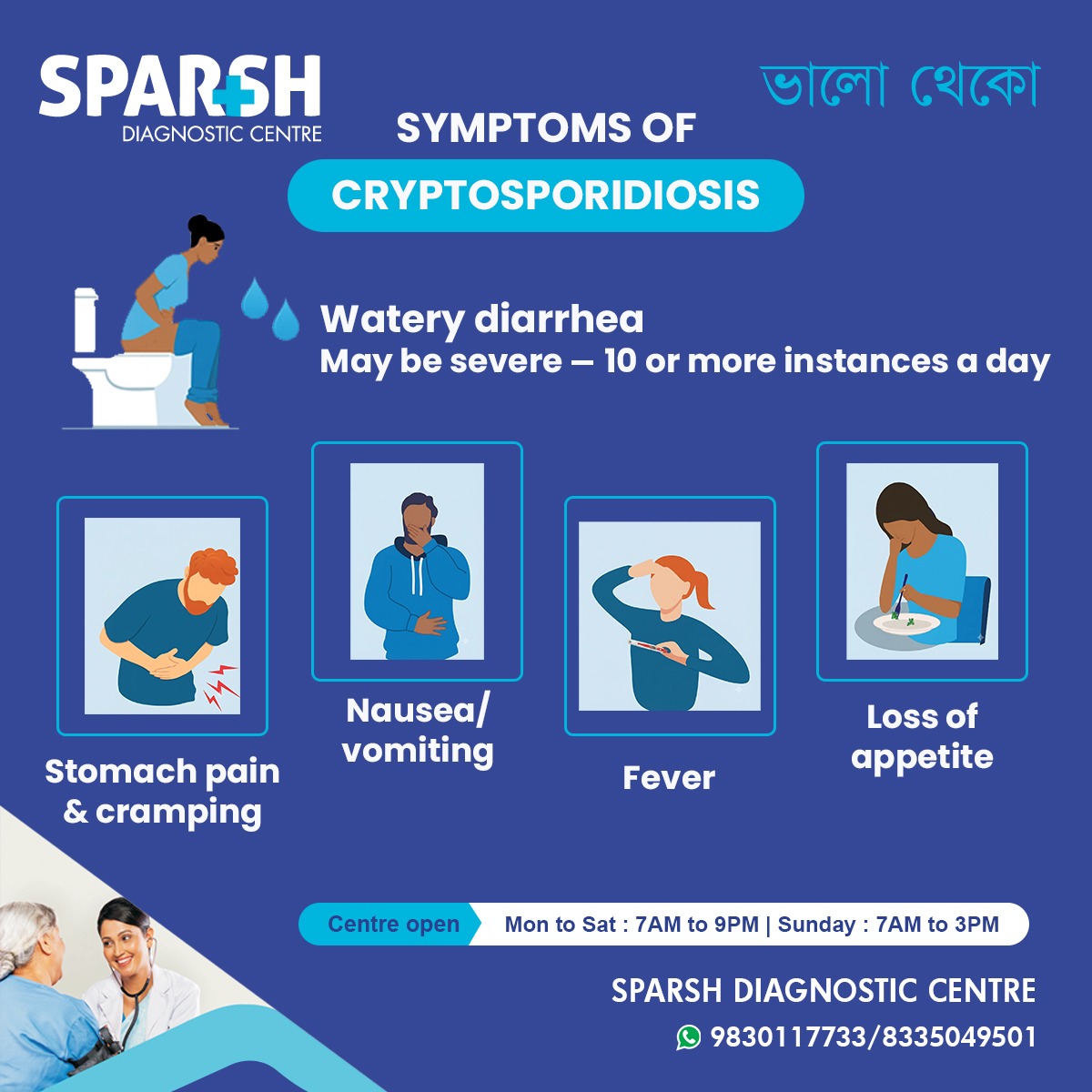
The first noticeable symptom is often watery diarrhoea. Symptoms generally appear after an incubation period averaging around seven days, although the reported range is approximately two to 10 days.
Early symptoms may include:
- Watery diarrhea
- Stomach pain or abdominal cramps
- Nausea
- Vomiting
- Low-grade fever
- Loss of appetite
- Fatigue
- Weight loss, particularly when diarrhea persists
Some infected people have no symptoms at all.
The watery diarrhea may occur several times a day and can sometimes be severe. The biggest immediate concern is often dehydration caused by losing large amounts of fluid and electrolytes.
What does cryptosporidiosis poop look like?
Cryptosporidiosis typically causes loose or watery diarrhea. It may be frequent and can sometimes be quite severe.
However, stool appearance alone cannot confirm Cryptosporidium. Watery diarrhoea can occur with many other infections, including viral and bacterial gastroenteritis, as well as some non-infectious intestinal conditions.
The parasite itself is microscopic, so you cannot reliably identify Cryptosporidium by looking at stool. Laboratory stool testing is required for confirmation.
How do I tell if I have Cryptosporidium?
You cannot reliably diagnose cryptosporidiosis based only on symptoms.
Watery diarrhoea following exposure to swimming pools, untreated water, infected individuals, child-care settings or farm animals may raise suspicion. However, other infections can cause very similar symptoms.
If your diarrhoea is persistent, severe, recurrent or associated with a known exposure, your doctor may recommend a stool test specifically looking for Cryptosporidium.
People with weakened immune systems should seek medical advice promptly if they develop diarrhoea or other symptoms of infection because the illness can become prolonged and more serious.
How to confirm Cryptosporidium?
Cryptosporidiosis is confirmed using a stool sample.
Depending on the laboratory and clinical situation, testing may include:
- Modified acid-fast staining and microscopic examination
- Direct fluorescent antibody testing
- Enzyme immunoassay (EIA)
- Rapid antigen tests
- Molecular testing such as PCR
Cryptosporidium can be difficult to detect because the number of oocysts passed in stool can vary. For this reason, more than one stool specimen may sometimes be requested, particularly when clinical suspicion remains high despite an initial negative result.
PCR-based testing can also help identify the species or genotype and may be particularly useful during outbreak investigations.
A routine stool examination does not necessarily include specific testing for Cryptosporidium. If the parasite is suspected, the clinician should request an appropriate test.
What is the treatment for Cryptosporidium?
Treatment depends largely on the person’s immune status and the severity of the illness.
For many people with a healthy immune system, cryptosporidiosis is self-limiting. The most important part of treatment is replacing the fluid and electrolytes lost through diarrhoea. Drinking adequate fluids and using oral rehydration solutions when appropriate can help prevent dehydration.
A doctor may also recommend medication to control diarrhoea in selected patients.
What medicine kills Cryptosporidium?
Nitazoxanide is the main prescription antiparasitic medication approved for treating cryptosporidiosis in people with healthy immune systems who are at least one year old. It is not appropriate for everyone and should be used only under medical guidance.
According to the CDC, the effectiveness of nitazoxanide in people with weakened immune systems is unclear. In such patients, managing the underlying immune problem is particularly important. For people with HIV, effective antiretroviral therapy can help restore immune function and may allow the body to clear the infection.
No medication should be started simply because diarrhoea looks like cryptosporidiosis. Testing and medical assessment are important, especially when symptoms are severe or prolonged.
How to clear Cryptosporidium?
For a person with a healthy immune system, the body’s immune response will usually clear the infection without specific antiparasitic treatment.
The practical priorities are:
- Replace lost fluids and electrolytes.
- Eat small, tolerable meals as your appetite returns.
- Take prescribed medication exactly as directed.
- Rest while recovering.
- Avoid spreading the infection to other people.
- Avoid swimming while ill and for at least two weeks after diarrhoea has stopped.
People with weakened immune systems may need a more individualised approach because the parasite can persist for much longer.
How long does cryptosporidiosis last?
In people with healthy immune systems, symptoms commonly last about two to three weeks, although the duration can vary. Some people may experience symptoms that come and go for several weeks.
The parasite may continue to be passed in stool after symptoms improve. This means a person who feels completely well may still be capable of transmitting the infection.
The situation can be very different in people with weakened immune systems. Diarrhoea may persist for months or, in some cases, much longer.
How long can Cryptosporidium stay in your body?
The duration varies considerably.
In an otherwise healthy person, the infection usually resolves within weeks. However, Cryptosporidium can remain detectable or continue to be shed after symptoms have disappeared. Johns Hopkins notes that the parasite can continue to be passed in stool for an extended period, while the CDC recommends avoiding swimming for two weeks after diarrhoea has resolved because infectious organisms can continue to be shed.
In people with significant immune suppression, infection may persist for months or longer and can become chronic.
Do you ever get rid of Cryptosporidium?
Yes. Most people with a healthy immune system eventually clear the infection and recover completely.
However, clearance can be much more difficult in people whose immune systems are severely weakened. In these situations, improving immune function and providing appropriate supportive care are central to management.
Persistent diarrhoea after an initial recovery does not necessarily mean the original infection is still present. Reinfection and other causes of diarrhoea are also possible, so persistent or recurrent symptoms should be evaluated rather than assumed to be ongoing cryptosporidiosis.
How serious is Cryptosporidium?
For most healthy people, cryptosporidiosis is uncomfortable but not usually life-threatening. The main complication is dehydration.
However, it can become serious in infants, older adults and people with weakened immune systems. Severe or prolonged diarrhoea can result in substantial fluid and electrolyte losses, weight loss and nutritional problems. In severely immunocompromised people, complications involving the biliary tract and other organs have also been reported.
Seek medical attention if diarrhoea is severe, persistent or associated with signs of dehydration such as very little urination, dark urine, dizziness or confusion.
How to heal from Cryptosporidium?
Recovery is mainly about giving your body enough time, fluids and nutritional support to recover.
Focus on hydration
Drink fluids regularly. Oral rehydration solutions can be particularly useful when diarrhoea is frequent because they replace both water and electrolytes.
Eat according to tolerance
You do not necessarily need a highly restrictive diet. Once your appetite returns, small, simple meals may be easier to tolerate. Avoiding alcohol and limiting drinks that worsen diarrhoea can also help.
Follow prescribed treatment
If a doctor prescribes nitazoxanide or another medication, take it exactly as directed. Do not self-medicate with antibiotics, as antibiotics do not treat Cryptosporidium.
Protect other people
Wash your hands thoroughly with soap and water after using the toilet and before preparing food. Alcohol-based hand sanitiser should not be relied upon to prevent Cryptosporidium transmission.
Is Cryptosporidium killed by hand sanitizer?
No. Alcohol-based hand sanitiser should not be relied upon to kill Cryptosporidium.
Soap-and-water handwashing is the preferred approach after using the toilet, changing nappies, caring for someone with diarrhoea or coming into contact with potentially contaminated material.
This is particularly important because Cryptosporidium oocysts have a protective outer structure and are resistant to several commonly used disinfectants.
How can cryptosporidiosis be prevented?
Good hygiene and safe water practices are the best ways to reduce the risk.
Important precautions include:
- Wash hands thoroughly with soap and water.
- Avoid swallowing water while swimming.
- Do not swim while experiencing diarrhoea.
- Wait at least two weeks after diarrhoea stops before returning to swimming.
- Avoid untreated drinking water.
- Take appropriate precautions when travelling to areas where water safety is uncertain.
- Wash fruits and vegetables before eating.
- Choose pasteurised milk and juices.
- Wash hands after contact with farm animals.
- Clean changing areas carefully after changing nappies.
- Avoid preparing food for other people while infected.
Because chlorine does not reliably eliminate Cryptosporidium from recreational water, good personal hygiene remains particularly important.
When should you get tested for cryptosporidiosis?
Consider medical evaluation when you have frequent or persistent watery diarrhoea, particularly if you have recently:
- Swallowed swimming-pool, lake or river water
- Travelled somewhere with questionable water or sanitation
- Had close contact with someone with prolonged diarrhoea
- Worked with livestock or farm animals
- Been in a child-care setting with an outbreak
- Consumed potentially contaminated or unpasteurised food or drinks
Testing is especially important when symptoms are severe, recurrent or prolonged, or when the patient has a weakened immune system.
A stool test can help distinguish cryptosporidiosis from other causes of diarrhoea and guide appropriate management.
Frequently asked questions about cryptosporidiosis
Is cryptosporidiosis contagious?
Yes. Cryptosporidiosis is highly transmissible because infectious oocysts are passed in stool. Person-to-person transmission can occur when contaminated hands, surfaces, food or water result in accidental ingestion.
Can you get Cryptosporidium from a swimming pool?
Yes. Swimming pools, splash pads and water parks can be sources of infection if the water becomes contaminated. Cryptosporidium is notably resistant to chlorine, which makes recreational-water transmission an important concern.
Can Cryptosporidium cause vomiting?
Yes. Nausea and vomiting can occur along with watery diarrhoea, abdominal cramps, fever and loss of appetite.
Can cryptosporidiosis cause dehydration?
Yes. Dehydration is one of the most important complications because repeated watery diarrhoea can cause substantial fluid and electrolyte loss. Infants and young children can become dehydrated particularly quickly.
Is there a vaccine for cryptosporidiosis?
There is currently no commercially available vaccine that prevents cryptosporidiosis. Prevention therefore relies heavily on safe water, food hygiene and handwashing.
Can you get cryptosporidiosis more than once?
Yes. Previous infection does not guarantee complete protection against future infection. Continued exposure to contaminated water, food, people or animals can result in reinfection.
Is Cryptosporidium a worm?
No. Cryptosporidium is a protozoan parasite, not an intestinal worm. It is microscopic and cannot be identified by simply looking at a stool sample.
Is cryptosporidiosis always caused by contaminated water?
No. Contaminated water is an important source, but infection can also spread through contaminated food, infected people, contaminated surfaces and infected animals.
Can Cryptosporidium go away without medicine?
Yes. Most people with healthy immune systems recover without specific antiparasitic treatment. Hydration and supportive care are important during recovery.
When is cryptosporidiosis an emergency?
Severe dehydration, confusion, faintness, very little or no urine, persistent vomiting or severe diarrhoea require prompt medical attention. People with weakened immune systems should seek medical advice early because the infection can become prolonged and severe.
The bottom line
Cryptosporidiosis is a common intestinal infection caused by the parasite Cryptosporidium. The classic symptom is watery diarrhoea, often accompanied by abdominal cramps, nausea, vomiting, fever and loss of appetite.
For most people with a healthy immune system, the illness settles within a few weeks. The priority is preventing dehydration and avoiding transmission to others. Nitazoxanide is an approved treatment option for people with healthy immune systems, but treatment decisions should be made by a healthcare professional.
Because symptoms can look like many other causes of diarrhoea, laboratory testing is the best way to confirm the infection. Stool testing may involve antigen detection, microscopy or molecular methods such as PCR.
If diarrhea is severe, persistent, recurrent or accompanied by signs of dehydration—or if the affected person has a weakened immune system—medical evaluation should not be delayed. Early diagnosis can help identify the cause, guide treatment and reduce the risk of spreading the infection.
To consult a Doctor or get full body check-up done at Sparsh Diagnostic Centre, call our helpline numbers 9830117733/ 8335049501.
#BhaloTheko
Disclaimer:
No content on this site, regardless of date, should ever be used as a substitute for direct medical advice from your doctor or other qualified clinician.