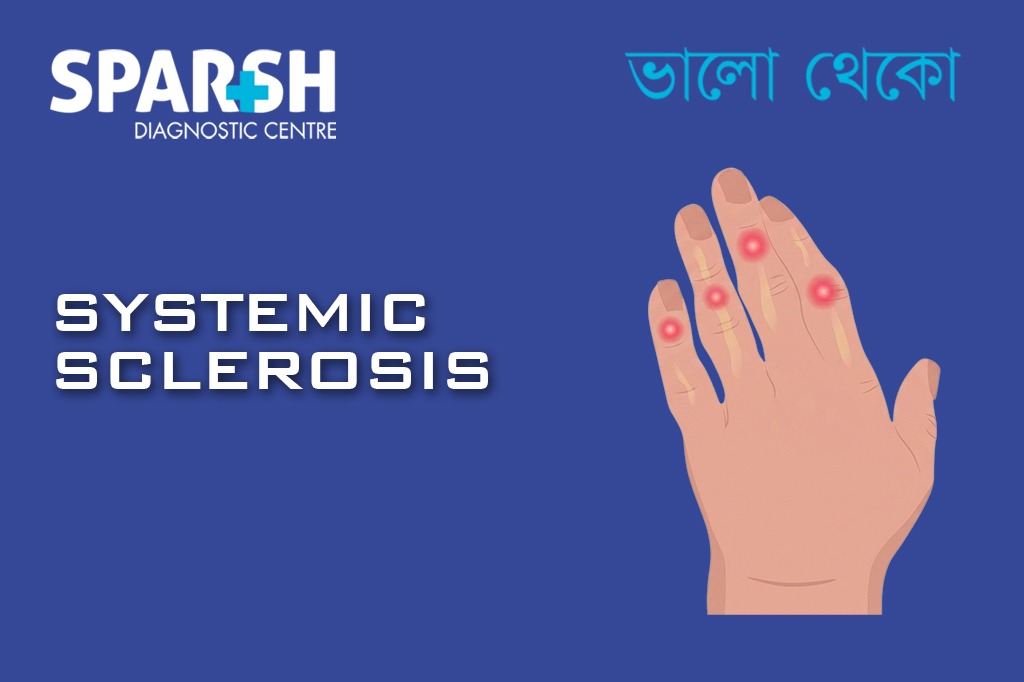
Systemic sclerosis, commonly called scleroderma, is a rare autoimmune connective tissue disease that can affect much more than the skin. It causes abnormal changes in small blood vessels, immune-system activity and excessive production of collagen, which can lead to thickening and hardening of the skin and, in some people, scarring or dysfunction of internal organs.
The condition can look very different from one person to another. Some people have mainly skin and circulation problems, while others develop significant involvement of the lungs, digestive tract, heart or kidneys. This is why early diagnosis and regular monitoring are so important. Modern treatment cannot cure systemic sclerosis, but it can control symptoms, protect organs and improve long-term outcomes.
What is systemic sclerosis?
Systemic sclerosis is an autoimmune disease in which the immune system becomes dysregulated and contributes to inflammation, blood-vessel abnormalities and excessive fibrosis, or scar-like tissue formation.
The word “systemic” is important. Unlike localized scleroderma, which primarily affects the skin, systemic sclerosis can involve internal organs.
There are two major clinical forms:
- Limited cutaneous systemic sclerosis: Skin thickening is generally restricted to the fingers, hands, face and areas below the elbows or knees. Internal organ complications can still occur, particularly pulmonary arterial hypertension and gastrointestinal disease.
- Diffuse cutaneous systemic sclerosis: Skin thickening extends more widely, often involving the upper arms, thighs, trunk or other areas closer to the body’s centre. This form tends to have a greater risk of early internal organ involvement.
A person may also have an overlap syndrome, in which features of systemic sclerosis occur alongside another autoimmune condition.
What causes systemic sclerosis?
The exact cause of systemic sclerosis is not known. Current evidence suggests that it develops through a combination of genetic susceptibility, immune-system abnormalities, blood-vessel injury and environmental influences.
In simple terms, several processes appear to occur together:
- Small blood vessels become damaged or dysfunctional.
- The immune system becomes abnormally activated.
- Signalling molecules stimulate fibroblasts and other cells.
- Excess collagen and other connective-tissue components accumulate.
- Tissue becomes thickened, stiff and fibrotic.
Genetic factors appear to influence susceptibility, but systemic sclerosis is not simply an inherited disease. Environmental exposures, including certain chemicals and occupational substances, have also been associated with increased risk in some people. However, an identifiable trigger is not found in most patients.
How does systemic sclerosis happen?
Systemic sclerosis develops through the interaction of vascular injury, autoimmunity and fibrosis.
Damage to blood vessels can cause narrowing and impaired circulation, contributing to Raynaud’s phenomenon and digital ulcers. At the same time, immune-system activation promotes inflammatory and fibrotic pathways. Fibroblasts then produce excessive amounts of collagen, resulting in the characteristic thickening and tightening of the skin and, in some patients, fibrosis of internal organs.
What are the early warning signs of scleroderma?
The earliest symptoms are not always dramatic. In fact, some people initially notice changes that seem unrelated to scleroderma.
Common early warning signs include:
- Fingers becoming swollen or puffy
- Fingers changing colour in response to cold or stress
- Numbness, tingling or pain in the fingers
- Skin becoming tight or shiny
- Thickening of the skin on the fingers
- Persistent heartburn or acid reflux
- Difficulty swallowing
- Joint or muscle pain
- Unexplained fatigue
- Small visible blood vessels on the skin
- Reduced movement of the fingers
Raynaud’s phenomenon is particularly important. Fingers or toes may turn white, blue or red when exposed to cold or during emotional stress. Raynaud’s can occur on its own and does not automatically mean someone has systemic sclerosis, but new-onset or severe Raynaud’s warrants medical assessment.
What are the first symptoms of systemic scleroderma?
For many patients, the first noticeable symptoms involve the hands.
The fingers may initially look puffy or swollen, followed by progressive tightening and thickening of the skin. Raynaud’s phenomenon may occur at the same time or even precede obvious skin changes.
Digestive symptoms such as heartburn, bloating or difficulty swallowing can also appear early. Some patients experience fatigue, joint pain or reduced exercise tolerance before more obvious signs develop.
The combination of new Raynaud’s phenomenon, puffy fingers and progressive skin tightening should raise suspicion for systemic sclerosis and should be evaluated by a healthcare professional.
What are the symptoms of systemic sclerosis?
Symptoms depend on which tissues and organs are affected.
Skin changes
Skin involvement is the hallmark of systemic sclerosis. The skin may become:
- Thickened
- Tight
- Shiny
- Less flexible
- Difficult to pinch or move
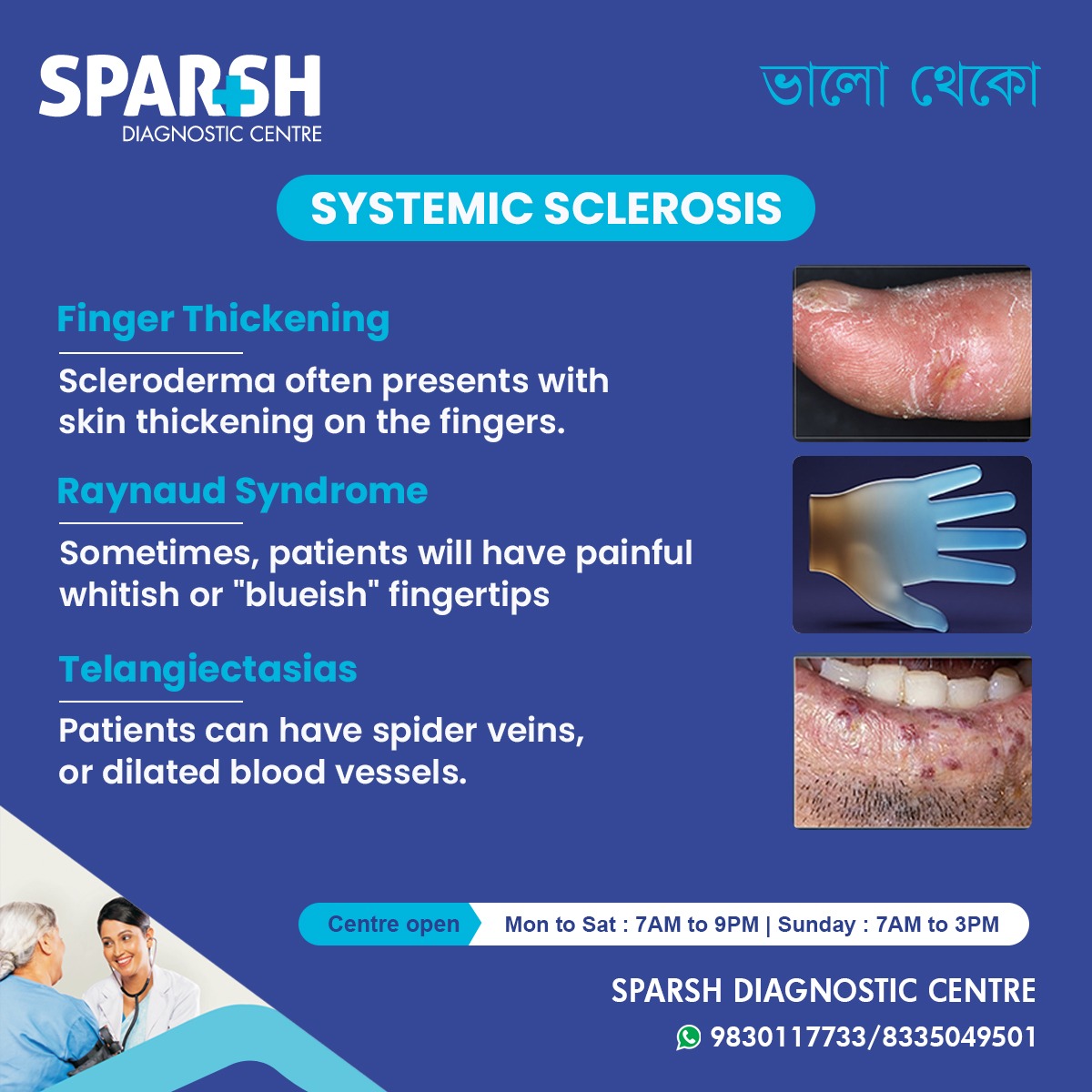
The fingers are commonly affected, producing sclerodactyly, or thickened, tight skin of the fingers.
Other skin manifestations include telangiectasias, calcium deposits, digital ulcers and changes in pigmentation. The face can also become tighter, sometimes reducing the ability to open the mouth fully.
Raynaud’s phenomenon
Raynaud’s phenomenon causes abnormal narrowing of small blood vessels, particularly in the fingers and toes. During an attack, the digits may become cold, numb or painful and change colour.
Severe or prolonged blood-flow restriction can result in fingertip ulcers or tissue damage.
Telangiectasias
Telangiectasias are small, visible dilated blood vessels that may appear on the face, lips, hands or other areas.
The image accompanying this article highlights several classic manifestations of systemic sclerosis, including finger thickening, Raynaud’s phenomenon and telangiectasias.
Digestive problems
Systemic sclerosis can affect almost any part of the gastrointestinal tract. Symptoms may include:
- Heartburn
- Acid reflux
- Difficulty swallowing
- Bloating
- Constipation
- Diarrhea
- Abdominal discomfort
- Problems with nutrient absorption
The oesophagus is particularly commonly affected because abnormal muscle movement can allow stomach acid to travel back upwards.
Lung symptoms
Lung involvement is one of the most important complications of systemic sclerosis.
Patients may develop interstitial lung disease (ILD), in which inflammation and fibrosis affect lung tissue. This may cause:
- Shortness of breath
- Persistent dry cough
- Reduced exercise tolerance
- Fatigue
Systemic sclerosis can also cause pulmonary arterial hypertension, in which blood pressure becomes abnormally high in the arteries carrying blood from the heart to the lungs.
Because lung complications can develop without obvious early symptoms, regular screening is an important part of systemic sclerosis care.
Which organs are most affected by systemic sclerosis?
The major organs and systems that can be affected include:
Lungs: Interstitial lung disease and pulmonary arterial hypertension are among the most clinically important complications.
Digestive tract: Reflux, swallowing difficulties and abnormal intestinal movement are common.
Heart: Systemic sclerosis can cause heart muscle fibrosis, rhythm abnormalities, heart failure and other cardiac complications.
Kidneys: A potentially dangerous complication called scleroderma renal crisis can cause a sudden rise in blood pressure and rapidly worsening kidney function.
Skin and blood vessels: Thickened skin, Raynaud’s phenomenon, digital ulcers and telangiectasias are characteristic features.
Not every patient develops problems in every organ. The pattern and severity of organ involvement vary considerably between individuals.
How is systemic sclerosis diagnosed?
There is no single test that can diagnose every case of systemic sclerosis. Diagnosis combines the patient’s symptoms, physical examination, blood tests and investigations for organ involvement.
A doctor may look for:
- Skin thickening or sclerodactyly
- Raynaud’s phenomenon
- Abnormal nailfold capillaries
- Digital ulcers or fingertip scars
- Telangiectasias
- Characteristic autoimmune antibodies
- Evidence of lung, heart, kidney or gastrointestinal involvement
Blood tests may include antinuclear antibody (ANA) testing and more specific antibodies such as anti-centromere, anti-Scl-70/topoisomerase I and anti-RNA polymerase III antibodies. These antibodies can support the diagnosis and may provide information about disease patterns, but a positive antibody test by itself does not establish systemic sclerosis.
Doctors may also use nailfold capillaroscopy, pulmonary function tests, high-resolution CT of the chest, echocardiography, ECG and other organ-specific investigations.
The 2013 ACR/EULAR classification criteria combine clinical, vascular, antibody and organ findings. A score of 9 or more supports classification as systemic sclerosis.
What is mistaken for scleroderma?
Several conditions can resemble systemic sclerosis.
These include:
- Localized scleroderma (morphea)
- Eosinophilic fasciitis
- Mixed connective tissue disease
- Systemic lupus erythematosus
- Dermatomyositis
- Rheumatoid arthritis with overlapping features
- Certain occupational or drug-related scleroderma-like conditions
- Other causes of Raynaud’s phenomenon
Morphea is particularly important to distinguish from systemic sclerosis. Morphea primarily causes localized patches or bands of hardened skin and does not produce the same pattern of systemic internal-organ disease.
Is systemic sclerosis serious?
It can be serious, but its severity varies greatly.
Some people have relatively limited disease that remains stable for many years. Others develop progressive lung, heart or kidney complications.
The most important factor is not simply how much skin is affected. Doctors also consider:
- The type of systemic sclerosis
- How quickly the disease is progressing
- Specific autoantibodies
- Lung function
- Presence of interstitial lung disease
- Pulmonary arterial hypertension
- Heart involvement
- Kidney involvement
- Response to treatment
Early identification of organ involvement makes it possible to intervene before complications become advanced. Current recommendations therefore emphasise regular screening and monitoring rather than waiting for severe symptoms to appear.
Can systemic sclerosis be cured?
At present, there is no established cure for systemic sclerosis.
However, saying that there is no cure does not mean that nothing can be done. Treatment has improved substantially and is tailored according to the organs involved and the severity of disease.
Treatment may include medicines to:
- Control Raynaud’s phenomenon and improve blood flow
- Prevent or treat digital ulcers
- Reduce inflammation and fibrosis
- Treat interstitial lung disease
- Manage pulmonary arterial hypertension
- Control acid reflux and other gastrointestinal symptoms
- Treat scleroderma renal crisis
- Manage heart complications
For systemic sclerosis-associated interstitial lung disease, current guidelines include options such as mycophenolate and, in appropriate patients, medicines including nintedanib, rituximab, tocilizumab or cyclophosphamide. The right treatment depends on the individual’s disease and should be determined by a specialist.
What is the leading cause of death in systemic sclerosis?
The major causes of systemic sclerosis-related mortality are lung and cardiovascular complications, particularly interstitial lung disease and pulmonary arterial hypertension.
DermNet notes that interstitial lung disease and pulmonary arterial hypertension together account for almost two-thirds of systemic sclerosis-related deaths.
This is one reason why routine lung and cardiovascular assessment is so important, even when a patient feels relatively well.
What are the final stages of scleroderma?
There is no single “final stage” that every person with systemic sclerosis goes through.
Systemic sclerosis does not follow one predictable sequence from mild disease to an inevitable terminal stage. Some patients have mild or slowly progressive disease, while others develop serious complications affecting several organs.
Advanced systemic sclerosis may involve severe lung fibrosis, pulmonary hypertension, significant heart disease, kidney failure, severe gastrointestinal complications or combinations of these problems.
It is more useful to think in terms of organ complications and disease progression rather than fixed stages. Early diagnosis and regular monitoring can identify complications when they are more treatable.
How long do people live with systemic sclerosis?
There is no single life-expectancy figure that applies to everyone with systemic sclerosis.
Survival depends on factors such as disease subtype, age at onset, antibody profile, extent of organ involvement and the presence or absence of serious lung, heart or kidney disease.
Importantly, outcomes have improved with better screening, earlier recognition of complications and advances in treatment. Patients with limited disease and little internal-organ involvement may have a substantially different prognosis from those with rapidly progressive diffuse disease and significant cardiopulmonary involvement.
So, if you are asking, “How long can I live with systemic sclerosis?”, the answer cannot be determined from the diagnosis alone. A specialist needs to assess the individual’s disease pattern and organ function.
Is systemic sclerosis common?
No. Systemic sclerosis is considered a rare disease.
Reported prevalence varies considerably between populations, with estimates ranging from approximately 30 to 500 cases per million people. It is more common in women than men.
Because it is uncommon and early symptoms can resemble other conditions, diagnosis may sometimes be delayed.
At what age does systemic sclerosis typically start?
Systemic sclerosis most often begins during adulthood.
Many patients develop symptoms between approximately 30 and 50 years of age, although onset can occur outside this range. DermNet reports a peak age of onset of roughly 35 to 55 years, while Mayo Clinic notes that people typically develop scleroderma between 30 and 50.
It is uncommon in children, although juvenile systemic sclerosis can occur.
What is another name for systemic sclerosis?
Scleroderma is the commonly used name associated with systemic sclerosis.
However, the terms should not always be treated as identical. “Scleroderma” can refer broadly to disorders involving skin hardening, including localized scleroderma such as morphea. Systemic sclerosis specifically refers to the systemic autoimmune disease that can affect the skin, blood vessels and internal organs.
Limited systemic sclerosis was historically associated with the term CREST syndrome, referring to calcinosis, Raynaud’s phenomenon, oesophageal dysfunction, sclerodactyly and telangiectasia.
How is systemic sclerosis monitored?
Diagnosis is only the beginning. Long-term monitoring is an important part of care because organ involvement may develop or progress over time.
Depending on the individual’s condition, monitoring may include:
- Regular blood pressure measurements
- Pulmonary function tests
- High-resolution CT when appropriate
- Echocardiography
- ECG
- Blood and urine tests
- Kidney-function monitoring
- Assessment of swallowing and gastrointestinal symptoms
- Nailfold capillary assessment
- Evaluation of skin thickness
Current British Society for Rheumatology guidance recommends baseline high-resolution CT and pulmonary function testing for people with systemic sclerosis to screen for interstitial lung disease. Patients with established disease may require repeated pulmonary function testing, particularly during the first several years after diagnosis.
When should you see a doctor?
You should consider medical evaluation if you develop new Raynaud’s phenomenon, persistent swelling or thickening of the fingers, unexplained skin tightening, digital ulcers, difficulty swallowing, persistent reflux or unexplained breathlessness.
A combination of Raynaud’s symptoms and puffy or thickened fingers deserves particular attention.
Because systemic sclerosis is uncommon and can resemble other autoimmune conditions, evaluation by a rheumatologist is often appropriate when the condition is suspected.
Frequently asked questions about systemic sclerosis
What causes systemic sclerosis?
The exact cause is unknown. It is thought to result from a combination of genetic susceptibility, abnormal immune-system activity, blood-vessel injury and environmental triggers. Excessive collagen production and fibrosis are central features of the disease.
How is systemic sclerosis diagnosed?
Diagnosis is based on clinical features such as Raynaud’s phenomenon and skin thickening, supported by nailfold capillary examination, autoimmune antibody testing and investigations for internal-organ involvement. Lung function tests, CT scans, echocardiography and other tests may be used depending on symptoms and risk factors.
How serious is systemic sclerosis?
It ranges from relatively mild disease to a potentially life-threatening multisystem condition. The seriousness depends largely on internal-organ involvement, particularly disease affecting the lungs, heart or kidneys.
Can systemic sclerosis be cured?
There is currently no cure. However, treatments can control symptoms, reduce complications and slow disease progression in affected organs.
How long do people live with systemic sclerosis?
Life expectancy varies widely. Prognosis depends on disease subtype, age, organ involvement and response to treatment. Advances in early diagnosis, screening and treatment have improved outcomes.
What is another name for systemic sclerosis?
Systemic sclerosis is commonly called scleroderma or systemic scleroderma. Localized scleroderma, such as morphea, is a different condition.
What are the early warning signs of scleroderma?
Early signs may include Raynaud’s phenomenon, puffy fingers, skin tightening, finger thickening, joint or muscle symptoms, fatigue and digestive problems such as heartburn or difficulty swallowing.
Which organs are most affected by systemic scleroderma?
The skin, blood vessels, lungs, digestive tract, heart and kidneys are among the most important areas affected. Not everyone develops involvement of every organ.
What are the first symptoms of systemic scleroderma?
Raynaud’s phenomenon and puffy or swollen fingers are common early manifestations. Skin tightening and thickening may develop later. Reflux, swallowing problems, fatigue and joint symptoms may also occur.
How does systemic sclerosis happen?
It develops through a complex interaction of vascular injury, immune-system dysfunction and excessive fibrosis. These processes can lead to abnormal blood flow and excessive collagen deposition in tissues.
What is the leading cause of death in systemic sclerosis?
Serious cardiopulmonary complications, particularly interstitial lung disease and pulmonary arterial hypertension, are major causes of death associated with systemic sclerosis.
What are the final stages of scleroderma?
There is no universal final stage. Advanced disease can involve severe lung, heart, kidney or gastrointestinal complications, but many people do not develop advanced disease. Regular monitoring is essential to identify complications early.
How long can I live with systemic sclerosis?
There is no fixed life expectancy for someone with systemic sclerosis. Individual prognosis depends on the disease subtype and the extent of internal-organ involvement. A rheumatologist can provide a more meaningful assessment after evaluating organ function and disease activity.
Is systemic sclerosis common?
No. It is a rare autoimmune disease. Prevalence varies between populations, and it occurs more frequently in women.
At what age does systemic sclerosis typically start?
It most commonly begins in adulthood, often between 30 and 50 years of age, although it can begin earlier or later.
What is mistaken for scleroderma?
Morphea, eosinophilic fasciitis, mixed connective tissue disease, lupus, dermatomyositis and some drug- or exposure-related conditions can produce features that resemble systemic sclerosis. A specialist assessment helps distinguish these conditions.
The importance of early evaluation
Systemic sclerosis can be frightening to hear about, but the diagnosis does not automatically mean severe disease or a poor outcome. The condition varies enormously between individuals.
The most important steps are to recognise suspicious symptoms early, establish whether internal organs are involved and continue appropriate monitoring. Modern treatment is increasingly tailored to specific manifestations such as Raynaud’s phenomenon, skin fibrosis, interstitial lung disease and pulmonary arterial hypertension.
If you notice persistent Raynaud’s symptoms, swollen or thickened fingers, tightening of the skin, unexplained breathlessness or other symptoms suggestive of systemic sclerosis, speak with a qualified healthcare professional rather than waiting for symptoms to become severe.
To consult a Doctor or get full body check-up done at Sparsh Diagnostic Centre, call our helpline numbers 9830117733/ 8335049501.
#BhaloTheko
Disclaimer:
No content on this site, regardless of date, should ever be used as a substitute for direct medical advice from your doctor or other qualified clinician.