Fanconi anemia (FA) is a rare inherited genetic disorder that primarily affects the bone marrow, reducing its ability to produce healthy blood cells. Although uncommon, it is a serious condition that can lead to bone marrow failure, congenital abnormalities, and an increased risk of developing certain cancers.
Early diagnosis plays a vital role in improving quality of life and preventing complications. Modern diagnostic techniques, including complete blood counts, chromosome breakage testing, genetic analysis, and imaging studies, help physicians identify the disorder before severe complications develop.
In this comprehensive guide, you’ll learn everything you need to know about Fanconi anemia, including its symptoms, causes, diagnosis, treatment options, prognosis, life expectancy, and frequently asked questions.
What is Fanconi Anemia?
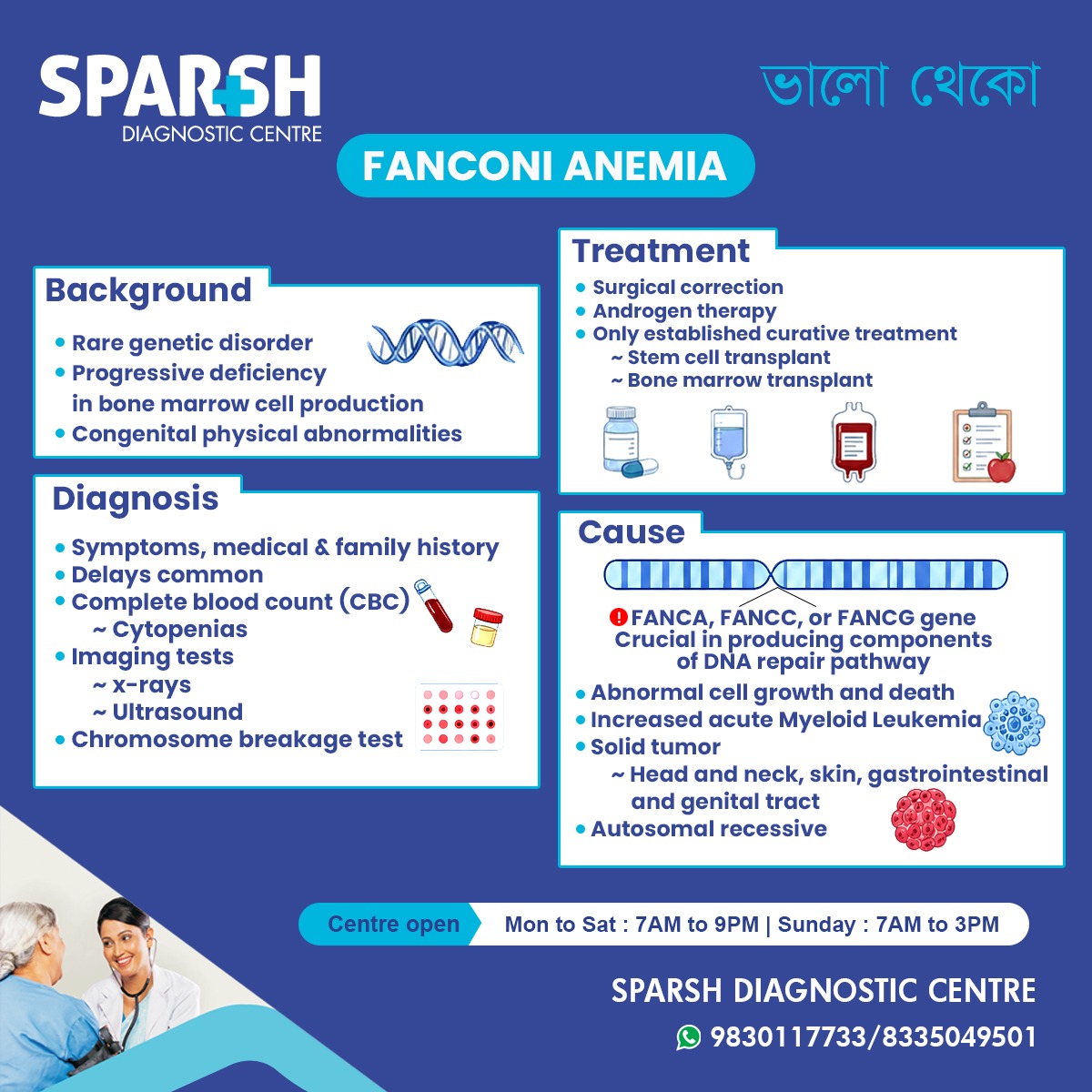
Fanconi anemia is an inherited disorder caused by mutations in genes responsible for repairing damaged DNA. Because the body’s cells cannot repair DNA properly, they become unstable and die prematurely or grow abnormally.
The disease mainly affects the bone marrow, resulting in decreased production of:
- Red blood cells (RBCs)
- White blood cells (WBCs)
- Platelets
This condition eventually leads to pancytopenia, where all three major blood cell types are reduced.
Besides affecting blood production, Fanconi anemia can also cause:
- Birth defects
- Growth problems
- Hormonal abnormalities
- Fertility issues
- Increased cancer risk
It usually becomes apparent during childhood, although some individuals are diagnosed later in adolescence or adulthood.
How Common is Fanconi Anemia?
Fanconi anemia is extremely rare.
- Around 1 in 130,000 to 160,000 births worldwide
- Affects both males and females
- More common in families where parents are closely related
- Certain ethnic groups have a higher carrier frequency
Because it is inherited, many families have no idea they carry the mutated gene until a child develops symptoms.
What Causes Fanconi Anemia?
Fanconi anemia is caused by mutations in one of more than 22 Fanconi anemia (FANC) genes, including:
- FANCA
- FANCC
- FANCG
- FANCD2
- FANCI
- FANCB
These genes normally repair damaged DNA.
When they fail to function correctly:
- DNA damage accumulates
- Cells become unstable
- Bone marrow cells die prematurely
- Cancer risk rises dramatically
Inheritance Pattern
Most cases follow an autosomal recessive inheritance pattern.
This means:
- Both parents carry one defective gene.
- Parents are usually healthy carriers.
- A child develops the disease only after inheriting two defective copies.
Each pregnancy has:
- 25% chance of Fanconi anemia
- 50% chance of being a carrier
- 25% chance of inheriting no defective gene
A rare form involving the FANCB gene follows an X-linked inheritance pattern.
What are the Symptoms of Fanconi Anemia?
The symptoms vary greatly from person to person. Some children have obvious birth defects, while others appear healthy until bone marrow failure develops.
Common symptoms include:
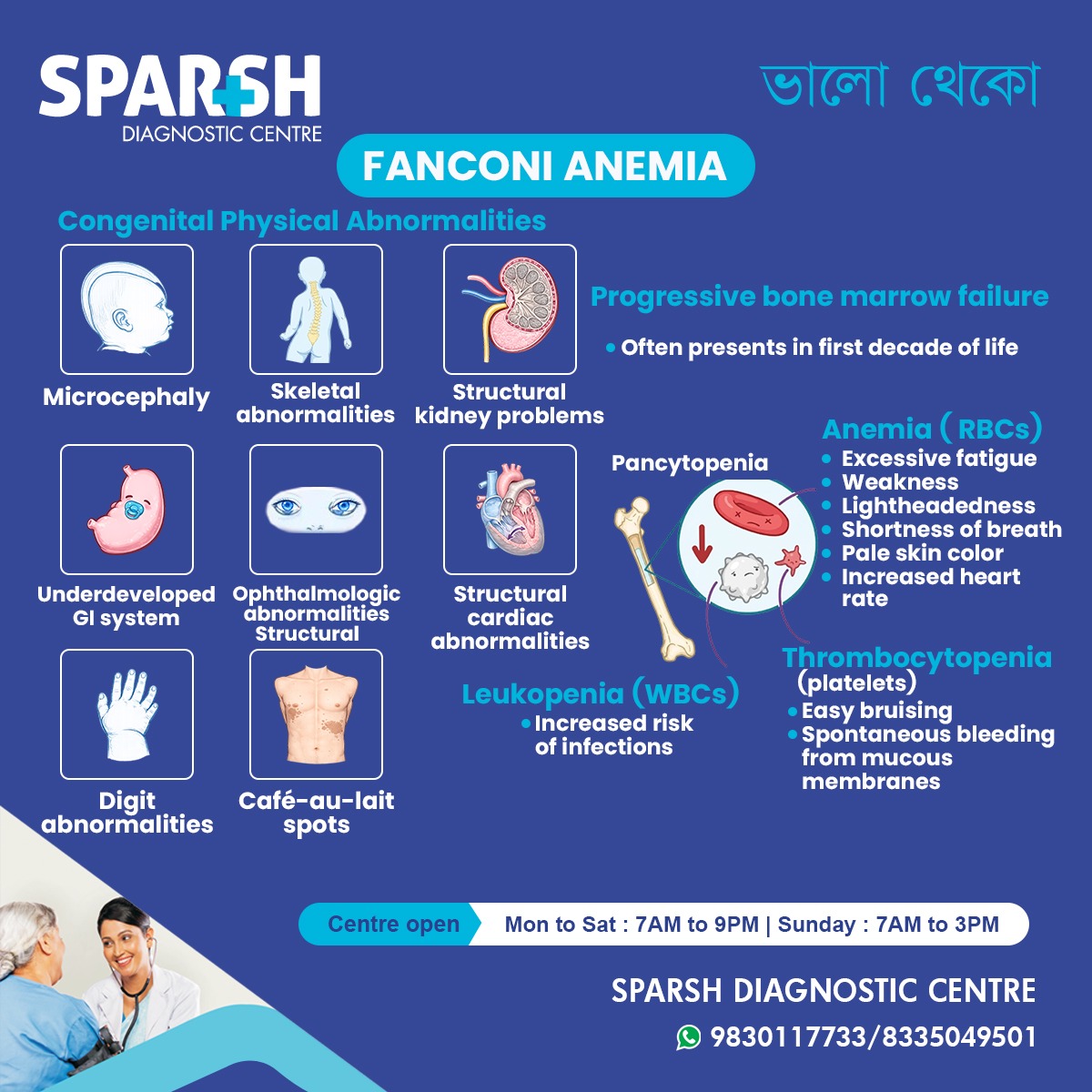
Due to Anemia (Low Red Blood Cells)
- Persistent fatigue
- Weakness
- Pale skin
- Shortness of breath
- Dizziness
- Rapid heartbeat
Due to Low White Blood Cells
- Frequent infections
- Slow recovery from illness
- Fever
- Mouth ulcers
Due to Low Platelets
- Easy bruising
- Nosebleeds
- Bleeding gums
- Heavy menstrual bleeding
- Tiny red spots (petechiae)
Congenital Physical Abnormalities
Many children are born with one or more physical abnormalities.
Examples include:
- Short stature
- Small head (microcephaly)
- Thumb abnormalities
- Missing thumb
- Abnormal fingers
- Skeletal deformities
- Kidney abnormalities
- Heart defects
- Eye abnormalities
- Hearing loss
- Skin pigmentation changes
- Café-au-lait spots
Developmental Problems
Some children experience:
- Delayed puberty
- Learning difficulties
- Poor growth
- Hormonal disorders
Not every patient develops all these symptoms.
Bone Marrow Failure in Fanconi Anemia
Bone marrow failure is the hallmark of Fanconi anemia.
Normally, bone marrow continuously produces blood cells.
In Fanconi anemia:
- Stem cells gradually disappear.
- Blood production declines.
- Pancytopenia develops.
Consequences include:
- Severe anemia
- Serious infections
- Bleeding complications
Without treatment, bone marrow failure can become life-threatening.
Increased Cancer Risk
One of the biggest concerns is a dramatically increased risk of cancer.
Patients are more likely to develop:
Blood cancers
- Acute Myeloid Leukemia (AML)
- Myelodysplastic Syndrome (MDS)
Solid tumors
Higher risk of cancers involving:
- Head and neck
- Mouth
- Esophagus
- Skin
- Liver
- Female reproductive tract
- Gastrointestinal tract
This is why lifelong surveillance is essential.
How is Fanconi Anemia Diagnosed?
Diagnosis involves multiple investigations.
1. Medical History
Doctors evaluate:
- Symptoms
- Birth defects
- Family history
- Frequent infections
- Bleeding tendency
2. Physical Examination
The doctor checks for:
- Growth abnormalities
- Skeletal deformities
- Skin pigmentation
- Thumb abnormalities
- Organ enlargement
3. Complete Blood Count (CBC)
A CBC often shows:
- Low hemoglobin
- Low white blood cells
- Low platelets
- Pancytopenia
4. Bone Marrow Examination
Bone marrow aspiration and biopsy help determine:
- Bone marrow cellularity
- Stem cell depletion
- Early leukemia
5. Chromosome Breakage Test
This is considered the gold standard screening test.
Blood cells are exposed to DNA-damaging chemicals.
Cells from patients with Fanconi anemia show excessive chromosome breakage.
6. Genetic Testing
DNA analysis identifies mutations in FANC genes.
Benefits include:
- Confirming diagnosis
- Carrier testing
- Prenatal diagnosis
- Family counselling
7. Imaging Studies
Doctors may recommend:
These identify congenital abnormalities affecting internal organs.
Treatment of Fanconi Anemia
Treatment depends on age, symptoms, and severity.
Supportive Care
Supportive treatment includes:
- Blood transfusions
- Platelet transfusions
- Antibiotics
- Growth factors
- Nutritional support
Androgen Therapy
Certain androgen medications stimulate blood cell production.
Benefits:
- Delays bone marrow failure
- Improves blood counts
However, long-term use may cause side effects such as liver problems and hormonal changes.
Bone Marrow (Stem Cell) Transplant
A hematopoietic stem cell transplant is the only established curative treatment for bone marrow failure caused by Fanconi anemia.
The best outcomes occur when:
- A matched sibling donor is available
- The transplant is performed before leukemia develops
- The procedure is carried out at an experienced transplant center
Even after a successful transplant, patients still require long-term follow-up because the risk of certain solid cancers remains higher than average.
Cancer Surveillance
Regular screening helps detect cancers early.
This includes:
- Blood tests
- Oral examinations
- Gynecological screening
- Skin examinations
- Imaging when necessary
Hormonal Treatment
Some patients require treatment for:
Living with Fanconi Anemia
Although Fanconi anemia is lifelong, many people lead meaningful lives with comprehensive medical care.
Patients benefit from:
- Regular blood tests
- Healthy nutrition
- Vaccinations
- Infection prevention
- Avoiding smoking and excessive alcohol
- Cancer screening
- Genetic counselling
- Emotional and psychological support
Families should work closely with hematologists, geneticists, pediatricians, and transplant specialists.
What is the Life Expectancy for Fanconi Anemia?
Life expectancy varies considerably and has improved over the past few decades thanks to advances in diagnosis, supportive care, and stem cell transplantation.
Factors that influence prognosis include:
- Severity of bone marrow failure
- Response to treatment
- Development of leukemia or other cancers
- Availability and timing of stem cell transplantation
- Overall health and ongoing medical follow-up
Historically, many individuals did not survive beyond early adulthood because of bone marrow failure or cancer. Today, many patients live into adulthood, and some live into middle age or longer, particularly with early diagnosis, appropriate treatment, and regular cancer surveillance.
Can Fanconi Anemia Be Prevented?
The disorder itself cannot be prevented because it is inherited.
However, families with a history of Fanconi anemia can benefit from:
- Genetic counselling
- Carrier testing
- Prenatal diagnosis
- Preimplantation genetic testing during IVF in selected cases
These options help prospective parents understand their reproductive risks.
Frequently Asked Questions (FAQs)
1. What are the symptoms of Fanconi anemia?
Common symptoms include fatigue, weakness, pale skin, frequent infections, easy bruising, bleeding, shortness of breath, delayed growth, skeletal abnormalities, thumb defects, kidney abnormalities, café-au-lait spots, and progressive bone marrow failure. Some people also have heart, eye, or hearing abnormalities from birth.
2. What is the triad of Fanconi syndrome?
Fanconi syndrome is different from Fanconi anemia. The classic triad of Fanconi syndrome refers to abnormalities of the kidney tubules that lead to:
- Excess glucose in the urine despite normal blood sugar (glycosuria)
- Loss of amino acids in the urine (aminoaciduria)
- Loss of phosphate in the urine (phosphaturia), which can cause low blood phosphate levels and weak bones
Although the names are similar, Fanconi syndrome and Fanconi anemia are distinct medical conditions.
3. What is the cause of Fanconi anemia?
Fanconi anemia is caused by inherited mutations in genes involved in DNA repair, most commonly FANCA, FANCC, or FANCG. These mutations impair the body’s ability to repair damaged DNA, leading to bone marrow failure, congenital abnormalities, and an increased risk of cancer.
4. What is the life expectancy for Fanconi anemia?
Life expectancy depends on the severity of bone marrow failure, complications, cancer risk, and treatment. With modern medical care and stem cell transplantation when appropriate, many individuals now survive well into adulthood, although they continue to need lifelong monitoring for complications.
5. Can Fanconi anemia be cured?
The only established curative treatment for the bone marrow failure associated with Fanconi anemia is a hematopoietic stem cell (bone marrow) transplant. However, it does not eliminate the inherited genetic defect or the increased lifetime risk of certain solid cancers, so ongoing follow-up remains essential.
6. Is Fanconi anemia inherited?
Yes. Most cases are inherited in an autosomal recessive pattern, meaning a child must inherit one faulty gene from each parent.
7. Is Fanconi anemia cancer?
No. Fanconi anemia is not a cancer. It is a genetic disorder that significantly increases the risk of developing leukemia and several solid tumors.
8. At what age is Fanconi anemia diagnosed?
Many children are diagnosed between the ages of 5 and 10 years, although some are identified in infancy because of congenital abnormalities or later in adolescence or adulthood if symptoms are milder.
9. Can adults have Fanconi anemia?
Yes. While many cases are diagnosed during childhood, milder forms may not become apparent until adulthood, particularly if blood abnormalities develop later.
10. Which tests diagnose Fanconi anemia?
Diagnosis may involve:
- Complete blood count (CBC)
- Bone marrow examination
- Chromosome breakage test
- Genetic testing
- Imaging studies to detect associated congenital abnormalities
Fanconi anemia is a rare inherited disorder that affects the body’s ability to repair DNA, leading to progressive bone marrow failure, congenital abnormalities, and a higher risk of cancer. Early recognition of symptoms such as fatigue, frequent infections, easy bruising, and growth delays allows timely diagnosis through specialized tests, including chromosome breakage testing and genetic analysis. While supportive therapies help manage complications, hematopoietic stem cell transplantation remains the only established curative treatment for bone marrow failure. Lifelong follow-up, cancer surveillance, and multidisciplinary care are essential for improving long-term health and quality of life.
If you or your child has symptoms suggestive of Fanconi anemia, consult a qualified hematologist or genetic specialist promptly. Early diagnosis and appropriate management can make a significant difference in long-term outcomes.